
Your elephant ears’ massive leaves can yellow or stay small if the soil is missing key nutrients. The right compost gives them steady food, good drainage, and the moisture balance they need to thrive. Here is which blends deliver that without burning roots or wasting money.
I’m Rikta — the co-founder and writer behind Lawn Gear Lab. This guide is built by comparing the manufacturers’ published specifications and the patterns across verified customer reviews, so you get each pick’s real strengths and trade-offs instead of marketing spin.
These picks help you find the right compost for elephant ears whether you plant in-ground, in a raised bed, or in a large container.
How To Choose The Best Compost For Elephant Ears
Elephant ears need rich, well-draining soil with a steady supply of organic nutrients. The wrong compost can stunt growth or burn tender roots, so a few key traits help you pick the one that turns leaves as big as dinner plates.
Organic Certification and Nutrient Profile
Look for compost that is OMRI Listed (Organic Materials Review Institute listed — means it meets strict organic standards) or labeled organic. Elephant ears need nitrogen for leaf growth, phosphorus for root development, and potassium for health. Worm castings are naturally high in all three without the risk of chemical burn.
Moisture Retention vs. Drainage
These plants like consistently moist soil but hate sitting in water. The best compost improves aeration in clay-heavy ground while holding enough moisture in sandy soil. Look for composts with aged forest products or cow manure that loosen dense earth and help light soil hold water longer.
Application Method and Quantity
Think about whether you are mixing into a large in-ground bed (you will need a 35-pound bag or more), top-dressing existing plants, or working with containers. A 4-pound bag of worm castings works for a few large pots, while a 0.75 cubic foot bag handles a small garden bed. Measure your area and match the volume.
Quick Comparison
On smaller screens, swipe sideways to see the full table.
| Model | Category | Best For | Key Spec | Amazon |
|---|---|---|---|---|
| Black Kow Composted Cow Manure | Cow Manure | In-ground beds & large plantings | 35 lb bag – 560 fl oz | Amazon |
| Espoma Organic Land and Sea | Lobster & Crab | Premium soil amendment | 1 cubic foot – 24 lb | Amazon |
| Ribbon Organics OMRI Compost | Premium Blend | Organic certified purity | 7.9 gal bag – 32-35 lb | Amazon |
| Uncle Jim’s Worm Castings | Worm Castings | Potting mix & top-dressing | 4 lb bag | Amazon |
| Espoma Mushroom Compost | Mushroom Compost | Flower beds & shrubs | 0.75 cu ft – 25 lb | Amazon |
| Malibu Compost Bu’s Blend | Biodynamic | Container gardens & tea brewing | 12 quart bag | Amazon |
| Life Cycle Organics Compost | Entry-Level | Small beds & beginners | 1 gallon – 128 fl oz | Amazon |
In‑Depth Reviews
1. Black Kow Composted Cow Manure 35 lb Bag

35 pounds (560 fluid ounces) of aged cow manure — more volume than any other pick on this list — makes the Black Kow the top choice for anyone planting a large 4×6 foot elephant ear bed in one purchase. Its slow-release NPK 0.5-0.5-0.5 formula delivers equal parts nitrogen, phosphorus, and potassium, so bulbs never get burned, and the organic matter improves both sandy and clay soil at once.
Reviewers report it “mixed well with soil and has added nutrients and growing power,” and one gardener noted that using it changed their rose colors entirely — a sign of rich bio-active compost. At 35 pounds it holds 8.8 times more material than Uncle Jim’s 4-pound worm castings, so you make fewer trips to the garden center for big projects. The catch? Some buyers report it costs more on Amazon than at local stores, and the weight varies with moisture content.
For elephant ears, this bag is the volume and nutrient balance winner.
Why it’s great
- Massive 35 lb bag covers large beds in one purchase
- Slow-release nutrients that won’t burn sensitive roots
- Improves both sandy and clay soil structure
Good to know
- Some reviewers mention it costs more on Amazon than at local stores
- Weight varies with moisture content
2. Espoma Organic Land and Sea Gourmet Compost

Compared to the Black Kow top pick, Espoma’s 1-cubic-foot bag delivers 24 pounds of compost with lobster and crab meal — ingredients the Black Kow does not contain — providing seafood-derived nitrogen and chitin (a natural compound that helps plants resist pests), plus a proprietary Myco-Tone blend of endo and ecto mycorrhizae (beneficial fungi that attach to roots to help them absorb more water and nutrients). For a container or raised bed where you want maximum leaf size, this mix delivers everything in one bag.
One reviewer says, “I have been using Espoma Organic Land and Sea compost for 3 years and I am happy with it,” and another notes their hostas grow “extremely well” — a good sign since both are foliage-focused plants. The downside is the smaller volume (1 cubic foot versus the Black Kow’s 35 pounds) and higher price per cubic foot.
Choose this over the top pick for a smaller, high-value planting area like a large pot or decorative bed where you want top growth without adding extra fertilizers.
Where it shines
- Lobster and crab meal add unique nutrients for leaf growth
- Includes mycorrhizae for better root absorption
- Trusted by long-term users for its consistent results
Worth noting
- Smaller volume (1 cu ft) than the Black Kow 35 lb bag for larger beds
- Higher price per cubic foot
3. Ribbon Organics OMRI Certified Organic Compost

If you want the strictest organic purity, this is it — OMRI Certified (the top organic seal in the US) means zero synthetic chemicals. Elephant ears’ shallow roots dry out fast in heat, and this compost’s excellent water retention acts like a sponge to reduce how often you need to water. At 32-35 pounds in a 7.9-gallon bag, it holds 4.4 times the volume of the Life Cycle Organics 1-gallon option, enough for several large containers or a small raised bed.
Buyers describe it as “rich, black, earthy-smelling compost” with “no sticks, plastic, metal, or glass” — careful professional screening. One reviewer mixed it 1/2 compost + 1/4 perlite + 1/4 orchid bark for sensitive plants like Clivias and orchids, which shows it is fine enough for specialty use. If you tend to forget watering or live in a dry climate, the water retention is your safety net. Expect a higher cost than big-box store options, and a smaller volume than the Black Kow for large beds.
With an OMRI seal that guarantees zero synthetics and a 4.4-times volume advantage over the smallest competitor, this is the bag that makes organic purity practical.
What stands out
- OMRI Certified for uncompromising organic purity
- Excellent water retention for thirsty elephant ears
- Clean, screened texture with no debris
The trade-offs
- Higher cost than big-box store options
- Smaller volume than the Black Kow for large beds
4. Uncle Jim’s Worm Farm Black Gold Worm Castings

The single number that matters most in this category is the nutrient concentration: these castings are 7 times richer in phosphates, 5 times richer in nitrogen, and 11 times richer in potash than average lawn soil. At 4 pounds, this bag holds 8.8 times less material than the 35-pound Black Kow, so it works best as a top-dressing for established plants or a potting soil mix-in rather than a full bed overhaul.
Reviewers love it for sunflowers — “soil works great for sunflowers; no leaf yellowing” — and one purchaser notes it smells like natural worm dirt and contains tiny beneficial white bugs that help soil balance. The price per pound is lower than premium blends like Malibu Compost, but the nutrient concentration is far higher than standard manure.
If you already have decent soil and just want to supercharge your elephant ears without buying 35 pounds, this is your pick. skip it if you need to fill an entire new bed from scratch — that gives a price-to-value read that favors concentrated power over bulk volume.
The upsides
- Extremely high nutrient concentration per pound
- Great for top-dressing existing elephant ears
- Contains beneficial microbes for root health
Keep in mind
- Small 4 lb bag won’t cover large beds
- Natural odor may be surprising indoors
5. Espoma Organic Mushroom Compost Blend
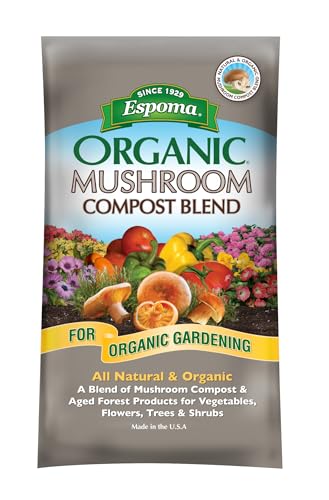
You get a 0.75 cubic foot bag (25 pounds) of rich organic matter blended with aged forest products in a 60:40 ratio that improves poor soil without overwhelming roots. It is designed to be mixed in at planting time to a depth of 4-6 inches, exactly where elephant ear bulbs settle. The mushroom compost base is slightly alkaline (neutral pH around 6.5-7.0), which suits elephant ears that prefer neutral to slightly acidic soil.
One reviewer applied it to peonies planted in spring instead of fall and reports “they have done terrific” — evidence of an immediate nutrient boost. Compared to the Land and Sea blend, you give up the added mycorrhizae and seafood meal, but you gain a lower price and a proven track record for vegetables, flowers, and shrubs. For a mid-sized flower bed where elephant ears share space with other plants, this is a versatile choice. Some buyers wish the price were lower, and it is not as nutrient-dense per pound as worm castings.
This is the perfect budget-friendly pick for the gardener who wants reliable organic enrichment at a lower price point without needing the extra boost of mycorrhizae or seafood meal.
Why we’d pick it
- Aged forest products improve soil texture immediately
- Perfect neutral pH for most garden soil
- Versatile enough for mixed flower and vegetable beds
A few caveats
- Some buyers wish the price were lower
- Not as nutrient-dense per pound as worm castings
6. Malibu Compost Bu’s Blend Biodynamic Compost

This 12-quart bag is perfect for the gardener who wants to repair their soil ecosystem at a deeper level rather than just feed a single plant. It is biodynamic (a farming method that treats soil as a living organism, using fermented herbal preparations) and works beautifully as a compost tea base — one long-term user reports “the compost tea is sooooo good… it really does work.” The manure is fully composted and odorless, so you can use it on a patio without smelling up your space.
Buyers call it “AAA quality living compost,” and at 16 ounces (item weight listed), it is lightweight for its 12-quart volume, meaning it is mostly finished compost with high biological activity. Choose this over the Black Kow if you prioritize soil microbiology over raw volume, especially for container gardens.
The trade-off: one reviewer found it contains langbeinite (a potassium-mineral additive) which could be toxic if your soil already has high potassium levels. Test your soil first or start with a small area.
Strong points
- Excellent for brewing nutrient-rich compost tea
- Odorless, fully composted manure
- Restores soil microbiology for long-term health
Before you buy
- Contains langbeinite; test soil potassium first
- Premium cost per bag
7. Life Cycle Organics Organic Compost 1 Gallon
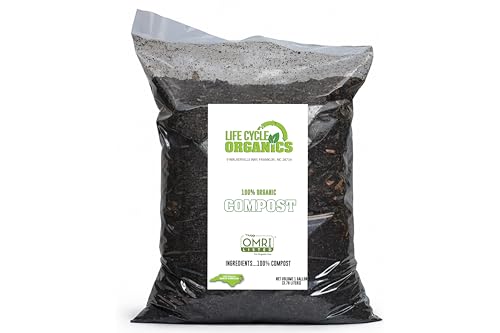
At roughly one-quarter the volume of the Black Kow option, this 1-gallon bag (128 fluid ounces) offers the lowest upfront cost in the guide while still carrying OMRI Listed certification for organic peace of mind. It holds 4.4 times less volume than the Black Kow’s 560 fluid ounces, but for a beginner with one or two elephant ear plants in pots, it is all you need. The compost is plain granulated material without added mycorrhizae, lobster meal, or biodynamic preparations — just ready-to-use organic compost.
One buyer calls it “perfect amount for small raised garden bed,” and it arrives ready to use right out of the bag — mix into existing soil at a 1:1 ratio. This is for the first-time elephant ear grower who does not want to invest in a 35-pound bag or a premium blend. You will need multiple bags for a full bed, and there are no added nutrients or biological enhancers, but it lets you see how your ears respond before scaling up.
Choose this when you want the smallest possible organic compost purchase to test elephant ear growth without committing to a large bag or a premium blend.
What we like
- OMRI Listed for organic peace of mind at a budget-friendly tier
- Ready-to-use granules straight from the bag
- Perfect small size for first-time elephant ear growers
The downsides
- Small volume; you will need multiple bags for a full bed
- No added nutrients or biological enhancers
Understanding the Specs
NPK Ratio
This three-number label on every compost bag stands for Nitrogen (N), Phosphorus (P), and Potassium (K) — the main nutrients your elephant ears need. Nitrogen drives leaf growth, phosphorus supports root development, and potassium boosts overall health. A balanced ratio like 0.5-0.5-0.5 on the Black Kow means it releases all three slowly, while worm castings are naturally more concentrated without synthetic additives.
Volume vs. Weight
Compost is sold by both volume (gallons, quarts, cubic feet) and weight (pounds). Weight varies with moisture content — a wetter bag weighs more but holds the same amount of compost. For elephant ears, a 35-pound bag covers roughly a 4×6 foot bed at a 2-inch depth, while a 4-pound bag of worm castings works as a concentrated top-dressing for a few large pots. Match the volume to your planting area.
FAQ
Can I use mushroom compost for elephant ears?
How much compost do elephant ears need per plant?
What is the best compost for elephant ears in containers?
Is there a difference between compost and manure for elephant ears?
Final Thoughts: The Verdict
For most buyers, the Black Kow Composted Cow Manure wins because it delivers the most volume for the price — a 35-pound bag that improves both sandy and clay soil and feeds roots slowly without burning. If you want a nutrient-dense premium option with lobster meal and mycorrhizae, grab the Espoma Organic Land and Sea. And for concentrated top-dressing on established plants or containers, Uncle Jim’s Worm Castings gives you the highest nutrient density per pound of any pick here.