
If your hydrangeas are producing pale flowers or weak growth, the culprit is almost always the soil pH (the measure of how acidic or alkaline your soil is) and the nutrient balance. You need a fertilizer that lowers the soil’s pH (makes it more acidic) so your plants can actually absorb the aluminum that creates those deep blue blooms. This guide compares seven specialized fertilizers to help you find the right one for your garden’s specific needs.
I’m Rikta — the co-founder and writer behind Lawn Gear Lab. This guide is built by comparing the manufacturers’ published specifications and the patterns across verified customer reviews, so you get each pick’s real strengths and trade-offs instead of marketing spin.
After comparing the formulas, coverage, and pH-adjusting abilities of the top products, you’ll know exactly which fertilizer for hydrangeas will give you the healthiest plants and the most vivid flower colors this season.
How To Choose The Best Fertilizer For Hydrangeas
Choosing the right fertilizer starts with knowing one simple thing: what color hydrangeas do you want? Blue blooms require acidic soil (pH below 6.0) with available aluminum, while pink blooms need more alkaline soil (pH above 6.0). The fertilizer you pick either helps create those conditions or just feeds the plant without changing the color.
Form and Application: Powder vs. Granule vs. Liquid
Powders (like the Miracle-Gro option) dissolve in water and get absorbed fast, which is great if your plants look hungry now. Granules (like Dr. Earth or Espoma Holly-Tone) release nutrients slowly over weeks or months, so you apply less often. Liquids (like Bloom City) are premixed or concentrate that you dilute, offering the fastest absorption but requiring more frequent application. For established hydrangeas, granules usually mean less work over the season.
The Role of Aluminum and Sulfur
If you want blue hydrangeas, the plant needs aluminum in the soil and the pH has to be low enough for the plant to take it in. Products like Grow More Hydrangea Blueing Formula contain aluminum sulfate, which both lowers the pH and supplies the aluminum. Others, like Ammonium Sulfate, just lower the pH, so your hydrangeas may turn blue only if aluminum is naturally present in your soil.
Organic vs. Synthetic: What Matters for Hydrangeas
Organic fertilizers (like Dr. Earth and Espoma) feed the soil microbes and build long-term soil health, but they work more slowly. Synthetic fertilizers (like Miracle-Gro) deliver nutrients to the plant roots in hours, making them effective for quick green-up and bloom support. Neither is “better” — it depends on whether you prioritize speed or soil-building.
Quick Comparison
On smaller screens, swipe sideways to see the full table.
| Model | Category | Best For | Key Spec | Amazon |
|---|---|---|---|---|
| Espoma Organic Holly-Tone (36 lb) | Premium | Long-lasting feeding for large gardens | N-P-K 4-3-4 with 5% sulfur | Amazon |
| Miracle-Gro Water Soluble (5 lb) | Mid-Range | Quick greening and fast results | Water-soluble powder, 5 lbs | Amazon |
| Grow More Hydrangea Blueing (2 lb) | Mid-Range | Turning pink hydrangeas blue | Aluminum sulfate formula, 2 lbs | Amazon |
| Dr. Earth Acid Lovers (4 lb) | Mid-Range | Organic, pet-safe feeding | Organic granules, N-P-K 0.3-0.4-3 | Amazon |
| True Organic Berry Food (4 lb) | Mid-Range | Organic feeding with pH adjustment | Organic granules, N-P-K 5-4-4 | Amazon |
| Bloom City Acid-Loving Liquid (32 oz) | Mid-Range | Quick liquid feeding for containers | Liquid concentrate, 32 oz | Amazon |
| Ammonium Sulfate 21-0-0 (2 lb) | Budget | Lowering soil pH on a budget | 21% nitrogen, 2 lbs | Amazon |
In‑Depth Reviews
1. Espoma Organic Holly-Tone 4-3-4 (36 lb)

With a 36-pound bag and a 4-3-4 N-P-K ratio plus 5% sulfur, this slow-release granular fertilizer is the top pick for any gardener with multiple acid-loving shrubs who wants a single, no-mix solution for the entire season. Its 4% nitrogen feeds leaves, 3% phosphorus supports roots and blooms, and 4% potassium promotes overall health, while the sulfur gently lowers soil pH over time for steady nutrition without overnight greening.
Buyers report that Holly-Tone creates “more blooms on your azaleas, hydrangeas, or any of your blooming plants” and call it “on the miracle level.” The 36-pound bag covers a huge area, making it the most cost-effective pick per square foot in this guide — especially compared to the 2-pound Grow More bag, which is 18 times lighter. You apply it in spring and fall by sprinkling it around the drip line and watering in, and that’s it.
The catch is the upfront cost is higher than other options, and if you only have one or two small hydrangea plants, you will have a lot of leftover bag. But for a garden with several acid-loving shrubs, this is the fertilizer that feeds the soil, not just the plant, and the results speak for themselves. skip it if you only have a single potted hydrangea — the 36-pound bag will take years to finish. For a row of hydrangeas, this is the bag you buy once and forget about for months.
Why it’s great
- Massive 36 lb bag covers large gardens for multiple seasons
- Organic and OMRI-listed (approved for organic gardening)
- Contains exclusive Bio-tone microbes for root health
- Safe for all acid-loving plants, not just hydrangeas
Good to know
- Large bag may be too much for small container gardens
- Slow-release means you won’t see instant results like with liquids
2. Miracle-Gro Water Soluble Azalea, Camellia, Rhododendron Plant Food (5 lb)

While the Espoma Holly-Tone is best for slow, sustained feeding, the Miracle-Gro powder wins if you need fast, visible results in a matter of days — not weeks. It dissolves in water and feeds instantly; one reviewer noted it “helped our rhododendron to recover and look stunning this summer” and noted visible greening within a week. That speed is the real reason to choose this over the slower organic options. It is a synthetic formula, so it delivers nutrients to the plant roots right away rather than building soil microbes.
The 5-pound bag mixes with water at one tablespoon per gallon for outdoor feeding every 7-14 days, and you can use it with a watering can or a hose-end sprayer. Buyers with 30+ years of experience call it “the best fertilizer used for 30+ years on all plants, shrubs, trees,” highlighting its reliability across multiple acid-loving species including hydrangeas, azaleas, and camellias. It is also 2.5 times heavier than the Grow More 2-pound bag, so it lasts longer for general feeding, though you do have to mix it fresh each time.
Choose this over the Espoma if you are container-gardening or if your hydrangeas look pale and need an immediate nutrient boost. The downside is you have to mix and apply more often, but the control over feeding frequency is worth it for many gardeners. It is not suitable for organic gardening, so pass on it if that matters to you.
Where it shines
- Fast-acting — visible results in 7 days
- Resealable bag keeps powder dry and fresh
- Safe for indoor and outdoor acid-loving plants
- Can be used with a Miracle-Gro sprayer for easy application
Worth noting
- Requires mixing every 1-2 weeks, not a set-it-and-forget-it option
- Synthetic formula, not suitable for organic gardening
3. Grow More Hydrangea Blueing Formula (2 lb)
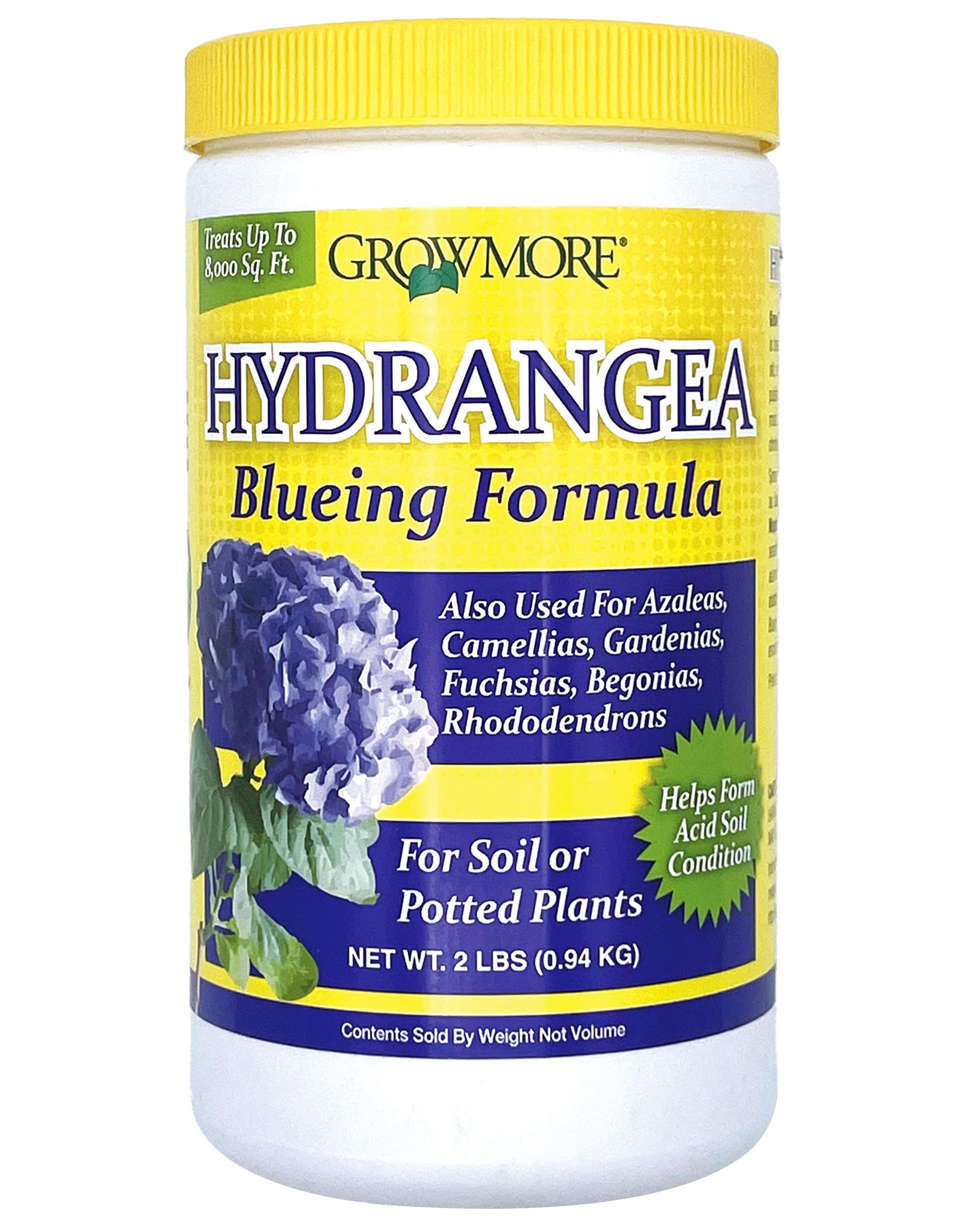
If your hydrangeas are producing pink flowers and you want them blue, this 2-pound bag of aluminum sulfate powder is the most direct tool for that job. Unlike general-purpose fertilizers that simply feed the plant, this formula delivers aluminum directly to the soil and lowers pH so the plant can absorb it — creating that deep blue or purple color change. It is built for a single purpose: color modification, not general nutrition.
Buyers in the Pacific Northwest report that “in slightly basic soil, turned pink hydrangeas blue/purple after consistent early spring application per directions.” One buyer mentioned that “one jar lasts several seasons for one plant,” meaning the 2-pound bag goes a long way even though it is 2.5 times smaller by weight than the 5-pound Miracle-Gro bag. It also works on azaleas, gardenias, and fuchsias. Compared to the Espoma or Miracle-Gro, this one does not provide balanced plant food at all — it is strictly for color change.
The key spec here is the aluminum sulfate content — this is not a general fertilizer; it is a targeted color modifier. You will still need a separate balanced fertilizer (like the Espoma or Miracle-Gro) for overall plant health. But for color control, nothing in this lineup beats it. It is for the gardener who has pink hydrangeas and absolutely wants them blue this season — and it is not for anyone who just wants general plant food.
What stands out
- Directly supplies aluminum to turn hydrangeas blue
- Long-lasting — one bag can last several seasons for one plant
- Also lowers soil pH for better nutrient uptake
- Made in the USA
The trade-offs
- Will not provide balanced nutrition; you need a separate fertilizer
- Only effective if your soil pH is already close to acidic range
4. Dr. Earth Acid Lovers Azalea, Camellia, Rhododendron & Maple Fertilizer (4 lb)

The single most important number for many organic gardeners is the certification count — and Dr. Earth carries OMRI (Organic Materials Review Institute), OIM, CCOF, NOP, and Non-GMO Project verification, making it the most transparently vetted product here. It is made from human and feed-grade ingredients with no synthetic chemicals, GMO-infested chicken manure, or toxic ingredients, so it is safe around pets and children. It is the pick for those who want a written guarantee of purity, not just a label claim.
The trade-off you accept with organic granules is speed. Owners mention that Dr. Earth works when you “just toss and water” without digging or making tea, and one owner reported their “rhododendron (which hadn’t bloomed for two years) sprang to life and was covered with huge pink flowers in no time.” The N-P-K of 0.3-0.4-3 is very low in nitrogen, which means it will not push excessive leaf growth — it focuses on root and bloom support.
At 16 ounces (1 lb), this is a lighter bag than the 4-pound True Organic Berry Food, but the multi-certification and the fact that one bag revived a two-year non-blooming rhododendron makes it a strong value for dedicated organic gardeners who want proof of purity. It is for the gardener who will not use anything without an OMRI seal, and it is not for someone who wants a fast green-up in days.
The upsides
- Multiple organic certifications (OMRI, Non-GMO, CCOF)
- Pet and people safe with no toxic ingredients
- Enriched with humic acids and trace minerals for soil health
Keep in mind
- Low nitrogen means slower leaf greening compared to synthetic options
- Granules take several weeks to break down and show full effect
5. True Organic Berry Food (4 lb)

At this lower price you get a 4-pound bag of organic granules with a 5-4-4 N-P-K ratio, delivering higher nitrogen than the Dr. Earth option for faster leaf growth and greener foliage right away. The sulfur content helps lower soil pH naturally, so it serves double duty — feeding the plant while moving the soil toward the acidity hydrangeas love. It is a more aggressive organic feed than the Dr. Earth, better suited for plants that need to catch up.
Customers note that it “revived neglected raspberry patch; older plants now produce beautiful berries,” and one gardener noted their plants grew to 4 feet tall in just 2 weeks after application. The blend of seabird guano, shrimp and crab shell meal provides a steady release of nutrients for about 3-4 weeks per application, and the 4-pound bag covers up to 58 square feet. Compared to the Espoma, this is a smaller bag but with a higher nitrogen punch for quicker greening — though it still works slower than the Miracle-Gro synthetic powder.
One limitation is that this is formulated specifically for berries and acid-loving plants, so the N-P-K is heavier on nitrogen than a bloom-specific fertilizer. If your hydrangeas are already leafy but not flowering, you may want something lower in nitrogen. But for overall plant health and greening, this organic blend is hard to beat at this price tier. It is for the organic gardener who wants faster green-up than the Dr. Earth can deliver, and it is perfect for the budget buyer who prioritizes quick foliage greening over dedicated bloom boosting.
Why we’d pick it
- Higher nitrogen than most organic options for stronger leaf growth
- Contains sulfur to naturally lower soil pH
- Made from seabird guano and shellfish meal for slow release
A few caveats
- Labeled for berries, so not specifically marketed for hydrangeas
- Requires monthly reapplication during growing season
6. Bloom City Acid-Loving Plant Fertilizer (32 oz)

Perfect for container growers or anyone who wants a fertilizer that works instantly, this 32-ounce liquid concentrate is the fastest-acting option in the lineup — faster even than the Miracle-Gro powder because the liquid is already dissolved. You add 2-4 teaspoons per gallon of water and water your plants — no waiting for granules to break down, no measuring powder. It is designed specifically for acid-loving plants like hydrangeas, blueberries, and azaleas, and it works immediately on the roots.
Reviewers point out their “azaleas love this” and one gardener with 8-year-old blueberry bushes reported “plants became healthier, fuller, vigorous with improved leaves and growth” after using Bloom City. The liquid form means you have total control over dosage, and the 32-ounce bottle makes many batches before running out. Compared to the Espoma granules, this gives you precise control but demands far more frequent attention — you are mixing every 1-2 weeks instead of applying twice a year.
The honest limit is that liquid fertilizers require more frequent application than granules — typically every 1-2 weeks during the growing season. If you have a large garden with many plants, mixing liquid every week becomes a chore compared to sprinkling granules once a season. This is best for container growers or those with just a few special hydrangeas they want to pamper. It is not cost-effective per square foot compared to the 36-pound Espoma bag, so it’s not for you if you have a large in-ground bed.
Strong points
- Fast absorption — results visible within days
- Easy to mix and apply with a watering can
- Perfect for container-grown hydrangeas
Before you buy
- Requires reapplication every 1-2 weeks
- Not as cost-effective per square foot as large granule bags
7. Ammonium Sulfate 21-0-0 (2 lb)
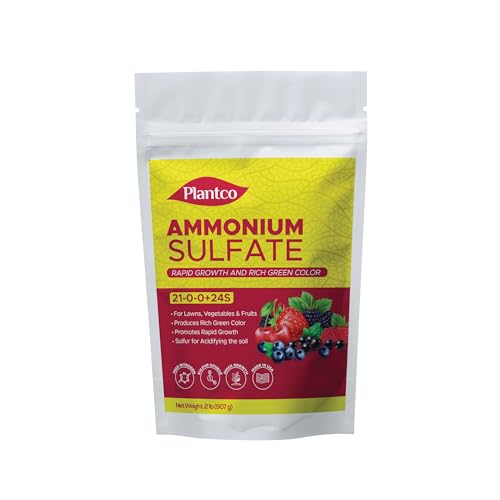
This 2-pound bag is the most budget-friendly entry point in the guide, and what you get for the money is a powerful pH-lowering nitrogen source. With a 21-0-0 N-P-K (21% nitrogen, zero phosphorus, zero potassium), it delivers a massive nitrogen punch that turns leaves deep green while the sulfur component actively lowers soil pH — creating the acidic environment hydrangeas need. There is no cheaper way to drop your soil pH fast.
What you give up is balanced nutrition. There is no phosphorus for bloom development and no potassium for root and stem strength, so you cannot use this as your only hydrangea fertilizer. Buyers still rave about the results — one said “just 1 T per hydrangea… works like miracle!” — but they are pairing it with other fertilizers for complete care. The 2-pound bag is small, so it will not cover a large garden for long. Compared to the Espoma, this is a specialty booster, not a full-season feed.
This is the perfect pick for the gardener who already has a balanced fertilizer but needs a cheap, effective pH-lowering booster. If your soil is alkaline and your hydrangeas are pale, a tablespoon of this per plant is the fastest, cheapest fix in the guide. Just do not expect it to feed your plants fully on its own. It is for the budget-conscious gardener who knows exactly what they need — a pH adjuster with some nitrogen — and not for anyone looking for a complete all-in-one plant food.
What we like
- Very high nitrogen (21%) for fast leaf greening
- Effectively lowers soil pH for acid-loving plants
- Extremely affordable — a little goes a long way
The downsides
- No phosphorus or potassium — not a complete plant food
- Needs to be used with a balanced fertilizer for best results
Understanding the Specs
N-P-K Ratio
The three numbers on a fertilizer bag (like 4-3-4 or 21-0-0) stand for nitrogen-phosphorus-potassium. Nitrogen makes leaves green and bushy. Phosphorus helps roots grow strong and supports flower development. Potassium boosts overall plant health and disease resistance. For hydrangeas, a balanced ratio like 4-3-4 or 5-4-4 works well for general feeding, while high-nitrogen options like 21-0-0 are better for targeted pH adjustment and leaf greening.
Soil pH and Acidification
Hydrangeas absorb aluminum (the element that creates blue pigment in the flowers) only when the soil pH is below 6.0. Products like aluminum sulfate and ammonium sulfate lower the soil pH by adding sulfur, which soil bacteria convert to sulfuric acid. If your hydrangeas are pink and you want them blue, you need a product that lowers pH and supplies or unlocks aluminum. Organic options with sulfur do this slowly; aluminum sulfate does it directly.
FAQ
How often should I fertilize my hydrangeas?
Can I use regular all-purpose fertilizer on hydrangeas?
Will any fertilizer turn my hydrangeas blue?
Should I use organic or synthetic fertilizer for my hydrangeas?
Final Thoughts: The Verdict
For the majority of shoppers, the fertilizer for hydrangeas winner is the Espoma Organic Holly-Tone (36 lb) because it provides season-long slow-release nutrition, lowers pH naturally, and is approved for organic gardening — all in a single massive bag that covers your entire garden. If you want fast, visible leaf greening and do not mind mixing every two weeks, grab the Miracle-Gro Water Soluble (5 lb). And for turning pink hydrangeas into deep blue blooms with a targeted formula, the standout is the Grow More Hydrangea Blueing Formula (2 lb).