
Snap peas climb using tendrils, which need a grid of thin, sturdy material to grab onto as they grow. A trellis that is too coarse or too slippery will leave your vines tangled on the ground, exposed to rot and pests, while the right one keeps every pod within easy reach and your harvest clean. This guide compares six trellis options, from massive netting rolls to ready-made A-frame supports, focusing on the mesh size, material strength, and outdoor durability that matter most for a heavy pea crop.
I’m Rikta — the co-founder and writer behind Lawn Gear Lab. This guide is built by comparing the manufacturers’ published specifications and the patterns across verified customer reviews, so you get each pick’s real strengths and trade-offs instead of marketing spin.
When the tendrils of your sugar snap peas have nothing reliable to curl around, your entire growing season suffers — which is why choosing the right trellis for snap peas is the single most impactful decision you make between planting and harvesting.
How To Choose The Best Trellis For Snap Peas
Snap pea tendrils are thin and need a grid they can easily wrap around — anything larger than a 6-inch square or made of slippery plastic will leave your plants unsupported. Here are the three biggest factors to check before you buy.
Mesh Size and Material Texture
The holes in the netting (the mesh) should be small enough for tendrils to grip — 6 inches by 6 inches is the sweet spot for snap peas. A mesh that is too large forces the plant to stretch across gaps, and a material that is too slick (like some polypropylene nets) makes it hard for tendrils to hold on. Look for nylon or textured polyester because their fibers give pea tendrils something to latch onto.
UV Resistance and Weather Durability
A trellis net that sits in the sun all summer will degrade if it is not “UV-stabilized” (treated with a chemical that stops the material from breaking down under sunlight). Nylon and UV-stabilized polypropylene nets hold up for multiple seasons, while a non-treated plastic can become brittle and crack within one year. If you plan to reuse the trellis, check that “UV-stabilized” or “weather-resistant” appears in the specs.
Roll Length vs. Rigid Frame
Continuous netting rolls (50 to 350 feet long) let you cut exactly the size you need for rows, fences, or custom A-frames, but they require stakes or poles to hold them up. Rigid A-frame trellises come ready to use with no assembly beyond pushing them into the ground, so they are ideal for small raised beds where you want a neat, freestanding structure. Choose a roll if you have a long row of peas; choose a frame if you need a self-supporting unit for a compact garden.
Quick Comparison
On smaller screens, swipe sideways to see the full table.
| Model | Category | Best For | Key Spec | Amazon |
|---|---|---|---|---|
| Gardeneer by Dalen | Mid-Range | Multi-season support for heavy vines | 7-inch mesh, 5’x60′, nylon | Amazon |
| Tenax Hortonova | Value | Tall, strong polypropylene netting for upright wind protection | 6.5’x50′, 6×6″ mesh, polypropylene | Amazon |
| Toolazy 59″x328′ | Best Value | Large-scale gardens needing massive coverage | 59″x328′, 6″ mesh, UV-stabilized polypropylene | Amazon |
| Toolazy 5×350′ Nylon | Premium | Soft nylon for delicate stems in multi-year setups | 5’x350′, 6″ mesh, nylon | Amazon |
| Yotoworth A-Frame | Premium | Ready-made raised bed trellis for easy setup | 70.8″x31.5″, PE-coated metal | Amazon |
| AlpineReach | Premium Value | Long-lasting braided polyester for heavy-duty seasonal use | 5’x350′, 6″ mesh, polyester | Amazon |
In‑Depth Reviews
1. Gardeneer by Dalen Trellis Netting

The 7-inch nylon mesh rated to hold up to 60 lbs makes the Gardeneer by Dalen the top pick for any home gardener who wants a reusable, heavy-duty trellis that can support a full crop of snap peas without tearing. The 5-foot by 60-foot sheet weighs just 7.04 ounces, light enough to drape over PVC conduit or wooden stakes without sagging, yet one reviewer noted it took a load of acorn squash without tearing. The 7-inch reach-through gaps also let you grab pods fast — you do not have to push the net aside or untangle vines to harvest.
Real buyers report it has lasted 12 years for heavy pickles and tomatoes, which is longer than you will get from a polypropylene net. If you want a durable, reusable net that is specifically praised for sugar snap peas in real reviews, this is the best all-around choice for the home gardener.
The catch is that some buyers found the actual dimensions to be slightly smaller than advertised (closer to 4 feet by 50 feet), so measure your space with a little margin. skip it if you need the full height of the Tenax Hortonova for extra-tall pole beans. For a reliable, long-lasting snap pea trellis, the Gardeneer by Dalen is the clear winner.
Why it’s great
- 60-lb load rating handles the heaviest pea and tomato vines
- Easy to harvest through 7-inch reach-through mesh
Good to know
- Actual dimensions may run slightly smaller than listed
2. Tenax Hortonova Plant Trellis Net, 6.5′ x 50′

The Tenax Hortonova is 6.5 feet tall, a full 1.5 feet taller than the Gardeneer by Dalen, so it is a better pick if you are growing tall pole beans alongside your peas or need extra reach to wrap over a fence. It is made from UV-treated polypropylene (a stiff plastic treated to resist sunlight damage) with 6×6-inch mesh and welded cross points — the joints are fused, not just woven — which owners mention keeps plants upright against wind without fraying.
One reviewer used it horizontally over t-posts to stabilize tall crops against wind, and another ran high-tension electric wire through the top row and ratcheted the net up to 8 feet. The 600-inch length (50 feet) gives you a long continuous run for planting rows.
Pick the Tenax over the Gardeneer if you need extra vertical clearance for tall vining crops or a polypropylene net that resists fraying when you cut and tension it. Its taller profile and reinforced welded nodes make it a rugged choice for exposed garden beds.
Where it shines
- Welded cross-points resist fraying under tension
- 79 inches wide and 6.5 feet high covers tall crop rows
Worth noting
- Polypropylene can be slightly slicker than nylon for tendril grip
3. Toolazy Trellis Netting 59″ x 328′

If you are covering a large garden or multiple raised beds and want a single roll to last years, the Toolazy 59″ x 328′ netting delivers over 1,615 square feet of support — that is roughly 15 times the area of a standard 5’x50′ roll. It is made from UV-stabilized polypropylene (plastic treated to resist sun damage) with a 6-inch square mesh, meaning each hole is exactly the right size for snap pea tendrils to wrap around easily.
Customers note that this netting has been out in all weather for 2 years full time with no issues, holding cucumber, beans, and even tomato plants. The roll is tangle-free when you unroll it, and you can cut it with regular scissors without the edges fraying.
The standout spec is its 59-inch width — that extra 9 inches over a standard 50-inch net gives you a taller support wall for tall-growing peas without needing to double-layer the netting.
What stands out
- 328-foot roll covers very large gardens with a single purchase
- 59-inch width supports taller pea varieties without double-stacking
The trade-offs
- Polypropylene can feel slick — ensure it’s tensioned properly
4. Toolazy Trellis Netting 5 x 350 ft (Nylon)

When a gentle material matters most, the 5′ x 350′ Toolazy nylon netting is the softest option here — made from corrosion-resistant nylon fibers that are free of harsh chemicals and safe for organic gardens. Its 6-inch square mesh supports snap peas without cutting into delicate stems, and one reviewer called it “strong, versatile, and easy to use for garden trellising,” noting the durable nylon mesh supports climbing plants without sagging or tearing.
The downside for that softness is that the net has slightly looser knots that can slip under very high wind — one buyer in 30 mph gusts noted it was “a little loose on the knots.” It still held flowers in those conditions, but in exposed, windy locations you may need to add extra tie-downs. At 2 lbs total weight for 1,750 square feet of coverage, it is the lightest large-format option, which makes it easy to handle but also means it flaps more in strong gusts than a stiff polypropylene or polyester net would.
The value is in the sheer volume: one roll covers several growing seasons of peas, and the nylon material resists UV rays and chemicals longer than untreated polypropylene. If you want a plant-safe, multi-year net that is gentle on tendrils, this is your pick.
The upsides
- Soft nylon is gentle on delicate pea stems and organic-safe
- 350-foot roll covers many seasons of planting
Keep in mind
- Loose knots can slip in high winds; extra ties may be needed
5. Yotoworth A-Frame Cucumber Trellis for Raised Garden Bed
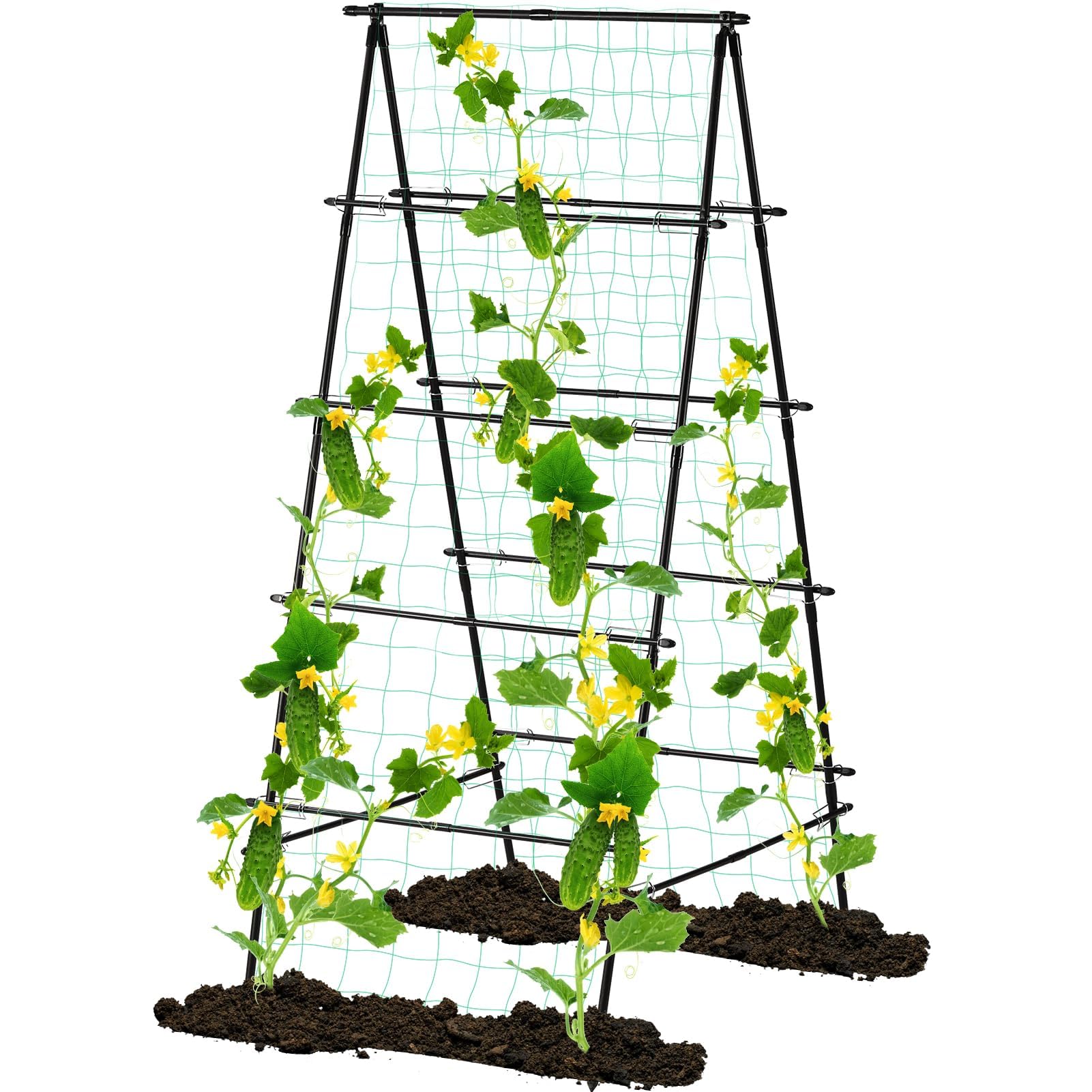
What you actually get at this lower price is a complete freestanding metal frame that pushes directly into the soil — no stakes, poles, or scissors required. It stands 70.8 inches tall and is 31.5 inches wide, made from durable metal pipes with a PE coating (a plastic outer layer that prevents rust and protects plants from overheating), and uses strong clamps and A-frame supports for stability.
One reviewer was “absolutely blown away” and grew 30+ watermelons on a single trellis, proving its load capacity far exceeds what snap peas will throw at it. Assembly takes about 20 minutes with clear instructions, and the pointed bottom legs slide into dirt easily.
However, a separate verified buyer gave it 1 star, calling it “unstable and unusable” due to poor connections, so quality control may vary between units — tighten every clip carefully. This is a great pick if you have a small raised bed (about 2.5 feet) and want a self-contained trellis that needs no hardware or cutting, but choose a netting roll instead if you need to cover a long row or want flexibility in shape — it is perfect for the budget buyer who wants a drop-in, no-assembly-required trellis for a compact garden bed.
Why we’d pick it
- Complete frame, no tools, stakes, or cutting needed
- Held watermelons, so snap peas are a light load
A few caveats
- Some units have been reported unstable; tighten all connections
6. AlpineReach Trellis Netting 5 x 350 ft

The AlpineReach Trellis Netting is perfect for the gardener who wants a premium, heavy-duty net that feels more like braided rope than standard plastic, and is willing to trade a bit of setup hassle for exceptional durability. At 5 feet by 350 feet with a 6-inch mesh, it offers the same generous coverage as the Toolazy nylon roll but with a stiffer, braided polyester texture that holds up better against wind and heavy fruit loads.
That stiffness has a downside: multiple reviewers point out the netting is difficult to untangle when you first open it, so plan on spending 10 to 15 minutes carefully separating the folds before installation. Once up, however, it held winter peas and green beans all season and is now being tested for cucumbers, with the braided structure keeping pods off the ground reliably.
If you are willing to spend a little time on the initial setup for a material that feels tougher than standard polypropylene or nylon, the AlpineReach is a strong contender for gardeners who want a premium, long-lasting trellis net that will not fray or sag through multiple seasons of heavy vines—just be prepared for that stubborn first untangling.
Strong points
- Braided polyester feels stronger and more durable than plastic nets
- 350-foot roll gives multi-year coverage for large gardens
Before you buy
- Netting is prone to tangling on first unboxing; patience required
Understanding the Specs
Mesh Size
The distance between each strand of netting, measured in inches — a 6-inch mesh means every hole is 6 inches wide. Snap pea tendrils curl around thin strands, so a smaller mesh (like 6×6 or 7×7 inches) gives them more points of contact. Mesh that is too large (8 inches or more) forces the plant to stretch and makes the tendrils slip off.
UV Stabilization
A chemical treatment built into the plastic or nylon that stops the material from breaking down under constant sunlight. Without UV stabilization, a trellis net can become brittle and crack within one growing season. Look for “UV-stabilized” or “UV-treated” in the specs — it usually means the net will last two to three seasons of full sun use.
Material: Nylon vs. Polypropylene vs. Polyester
Nylon is soft, plant-safe, and long-lasting but can stretch slightly under heavy loads. Polypropylene is stiffer and holds its shape better but can be slippery for tendrils. Polyester (like the AlpineReach braided net) is the toughest and most weather-resistant, but it can tangle more during setup. All three work for snap peas — the real difference is how many seasons they last and how easy they are to handle.
Roll Length and Coverage
Netting rolls range from 50 feet (good for a single raised bed or a short row) to 350 feet (enough for a large garden or multiple seasons). The weight of the roll (measured in pounds or kilograms) tells you how dense and thick the material is — heavier rolls usually mean a sturdier net, but also a stiffer one that may be harder to cut and handle.
FAQ
What size mesh is best for snap peas?
Can I use a tomato trellis for snap peas?
How do I attach trellis netting to stakes or a frame?
Will a netting trellis last more than one season?
Is a rigid A-frame trellis better than a netting roll?
Final Thoughts: The Verdict
When it comes down to it, the trellis for snap peas winner is the Gardeneer by Dalen because its 7-inch nylon mesh hits the perfect balance of durability, gentle material, and proven performance for heavy loads like tomatoes and acorn squash. If you want massive coverage to last multiple seasons, grab the Toolazy 59″ x 328′ for over 1,600 square feet of UV-stabilized support. And for a no-fuss, ready-made frame for a compact raised bed, the standout is the Yotoworth A-Frame in ease of installation.