
Orchids are epiphytes, meaning their roots are designed to cling to tree bark and absorb moisture from the air, not sit in dense, waterlogged soil. The wrong potting mix suffocates those sensitive aerial roots, leading to root rot, yellowing leaves, and a plant that never reblooms. A proper orchid potting mix must balance fast drainage with just enough moisture retention while providing a chunky, airy structure that mimics the orchid’s natural habitat.
I’m Rikta — the co-founder and writer behind Lawn Gear Lab. I’ve spent dozens of hours cross-referencing bark chip sizes, comparing aeration profiles, analyzing moisture retention data, and studying hundreds of verified owner experiences to determine which mixes actually deliver the drainage and longevity orchids demand.
This guide evaluates the top seven formulations on the market, from budget-friendly bark-only bags to premium biochar blends, to help you find the best orchid potting mix for your specific species and growing conditions.
How To Choose The Best Orchid Potting Mix
Choosing the right orchid potting mix comes down to understanding your orchid’s specific needs and the physical properties of the medium. Not all bark is created equal, and the wrong chip size or ingredient balance can turn a healthy orchid into a struggling one within weeks.
Bark Type and Chip Size
The primary structural component of any orchid mix is the bark. Douglas fir bark is naturally water-repellent and resists breakdown, making it ideal for moisture-sensitive orchids. Pine bark holds slightly more moisture and breaks down faster, which can be beneficial for species that prefer consistent dampness but requires more frequent repotting. Chip size matters immensely: 1/2-inch to 3/4-inch chunks create large air pockets for Phalaenopsis and Cattleyas, while finer bark (1/4-inch) works better for smaller-rooted genera like Oncidiums.
Added Amendments: Perlite, Pumice, Sphagnum, and Biochar
Many premium mixes include additional components to fine-tune the environment. Perlite and pumice increase aeration and prevent compaction without adding weight. Sphagnum moss retains moisture around the root zone, which is helpful in dry homes or for newly repotted orchids adjusting to a new medium. Biochar and mycorrhizae, found in newer formulations, support microbial activity and nutrient uptake while being carbon-negative. Some growers prefer a straight bark mix for maximum control, while others benefit from an all-in-one blend that balances moisture and airflow out of the bag.
Organic Certification and Sourcing
If you grow organically or want to avoid synthetic additives, look for an OMRI-listed mix. Several products in this guide are certified for use in organic production. Sourcing also matters — bark sourced from old-growth forests or processed with fungicides can introduce unwanted chemicals. US-sourced pine and fir or New Zealand radiata pine are common benchmarks for clean, sustainable production.
Longevity and Repotting Frequency
Bark breaks down over time, turning into fine particles that hold too much water and suffocate roots. A mix that lasts 2-3 years before needing replacement saves labor and reduces root disturbance. Orchiata’s New Zealand radiata bark is specifically engineered to resist decomposition for 5+ years, while standard pine bark may need replacement every 12-18 months. If you prefer low-maintenance repotting schedules, prioritize a mix with proven longevity.
Quick Comparison
On smaller screens, swipe sideways to see the full table.
| Model | Category | Best For | Key Spec | Amazon |
|---|---|---|---|---|
| Orchiata Power 3/8″–1/2″ | Premium Bark | Long-term potting (5+ years) | 100% New Zealand radiata pine | Amazon |
| Rosy Soil Orchid Mix | Biochar Blend | Microbe-enhanced root development | Peat-free with mycorrhizae | Amazon |
| Riare Orchid Repotting Kit | 4-in-1 Mix | All-in-one convenience for beginners | Bark + moss + perlite + coco peat | Amazon |
| Rio Hamza 100% Organic Bark | Single-Source Bark | US-sourced pine/fir mix | Loblolly & Southern Yellow Pine | Amazon |
| Harris Premium Orchid Mix | Balanced Blend | Heat-treated fir bark with peat | Douglas fir + peat + pumice + perlite | Amazon |
| Cz Garden Fir Bark | OMRI Organic Bark | Organic production and terrariums | All-natural fir bark, OMRI-listed | Amazon |
| Perfect Plants Pine Bark | Chunky Pine Bark | Budget-friendly mulching and terrariums | 100% natural long-leaf pine chips | Amazon |
In‑Depth Reviews
1. Orchiata Orchid Bark | 100% Pure New Zealand Pinus Radiata | Power 3/8″ to 1/2″

Orchiata stands apart from every other mix in this guide due to its engineered longevity. The 100% New Zealand Pinus radiata bark is heat-treated and graded to a consistent 3/8-inch to 1/2-inch chip size, creating large, stable air channels that resist compaction for years. Professional growers routinely report that this bark remains structurally sound for 5 to 10 years without significant decomposition, which means far fewer repotting cycles compared to domestic pine or fir mixes that break down in 12-18 months. The outer surface of each chip is slightly rough, giving orchid roots a natural texture to anchor onto while still allowing water to wick away quickly.
In practical terms, this bark behaves more like a permanent substrate than a consumable medium. After a thorough initial soak, the chips hold a thin film of moisture on their surface while the interior remains dry, preventing the waterlogged conditions that cause root rot. This makes it particularly effective for heavy-handed waterers and for growers who maintain large collections where frequent repotting is impractical. The bark arrives ready to use straight from the resealable bag with no dust, fines, or debris that can clog air pockets.
The trade-off is the upfront cost, which is the highest per-quart in this lineup. However, when amortized over its 5+ year lifespan, Orchiata often proves more economical than replacing cheaper bark every year. Some users note that the chips are on the larger side, making it less suitable for miniature orchids or seedlings with fine root systems. For standard Phalaenopsis, Cattleya, and Dendrobium specimens, this mix is the gold standard for longevity and structural integrity.
What works
- Engineered to last 5+ years without rotting or compacting
- Consistent 3/8″ to 1/2″ chip size provides ideal aeration
- Rough bark texture supports strong root anchoring
- Zero dust or fines straight from the bag
What doesn’t
- Higher per-bag cost compared to domestic bark options
- Large chip size less ideal for miniatures or fine-rooted seedlings
- Limited availability compared to mass-market brands
2. Rosy Soil Orchid Potting Mix – Biochar & Mycorrhizae Blend, Peat-Free
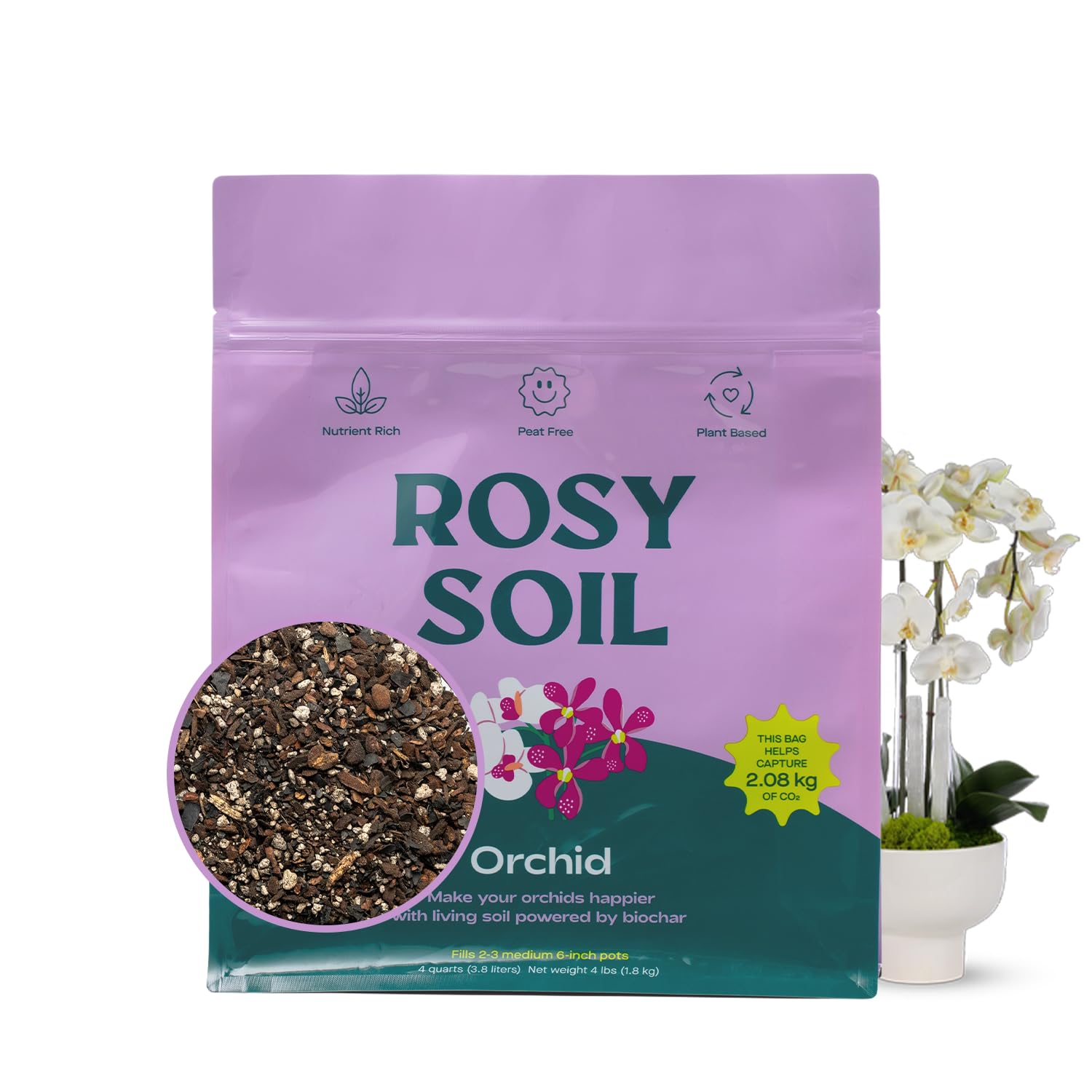
Rosy Soil’s orchid mix stands out because it treats the growing medium as a living ecosystem rather than just an inert support structure. The custom blend combines chunky orchid bark, pumice, and biochar with mycorrhizae and beneficial microbes that actively support root development and nutrient uptake. This microbial network works alongside the orchid’s roots, helping the plant establish faster and bloom more reliably over successive cycles. The inclusion of worm castings adds a gentle, slow-release nutrient source without the risk of fertilizer burn.
The biochar component is particularly noteworthy for its environmental angle — it is carbon-negative by design, locking carbon in the soil for centuries. More practically for the grower, biochar’s porous structure creates microscopic air pockets that improve moisture regulation and provide surface area for beneficial microbes to colonize. The mix drains quickly enough for epiphytic orchids while retaining slightly more moisture than pure bark alone, which is an advantage in centrally heated homes where ambient humidity is low. One 4-quart bag fills two to three 6-inch pots.
The downsides center on cost and availability. This is one of the more expensive options on a per-bag basis, though the resealable packaging keeps unused mix fresh for future repotting sessions. A small number of users have noted that the bag size feels modest for the price, but the consistent positive feedback about improved root health and faster blooming offsets the premium for most dedicated orchid hobbyists.
What works
- Mycorrhizae and beneficial microbes boost root development and bloom frequency
- Biochar provides carbon-negative sustainability with improved moisture regulation
- Peat-free formulation avoids environmental concerns of peat harvesting
- Fast-draining yet retains enough moisture for dry indoor environments
What doesn’t
- Premium pricing per quart compared to bark-only options
- Bag may look small relative to price for first-time buyers
- Not suitable for growers who prefer pure bark with no amendments
3. Riare 4QT Orchid Potting Mix – Orchid Repotting Kit with Moss, Pine Bark, Perlite, Coco Peat
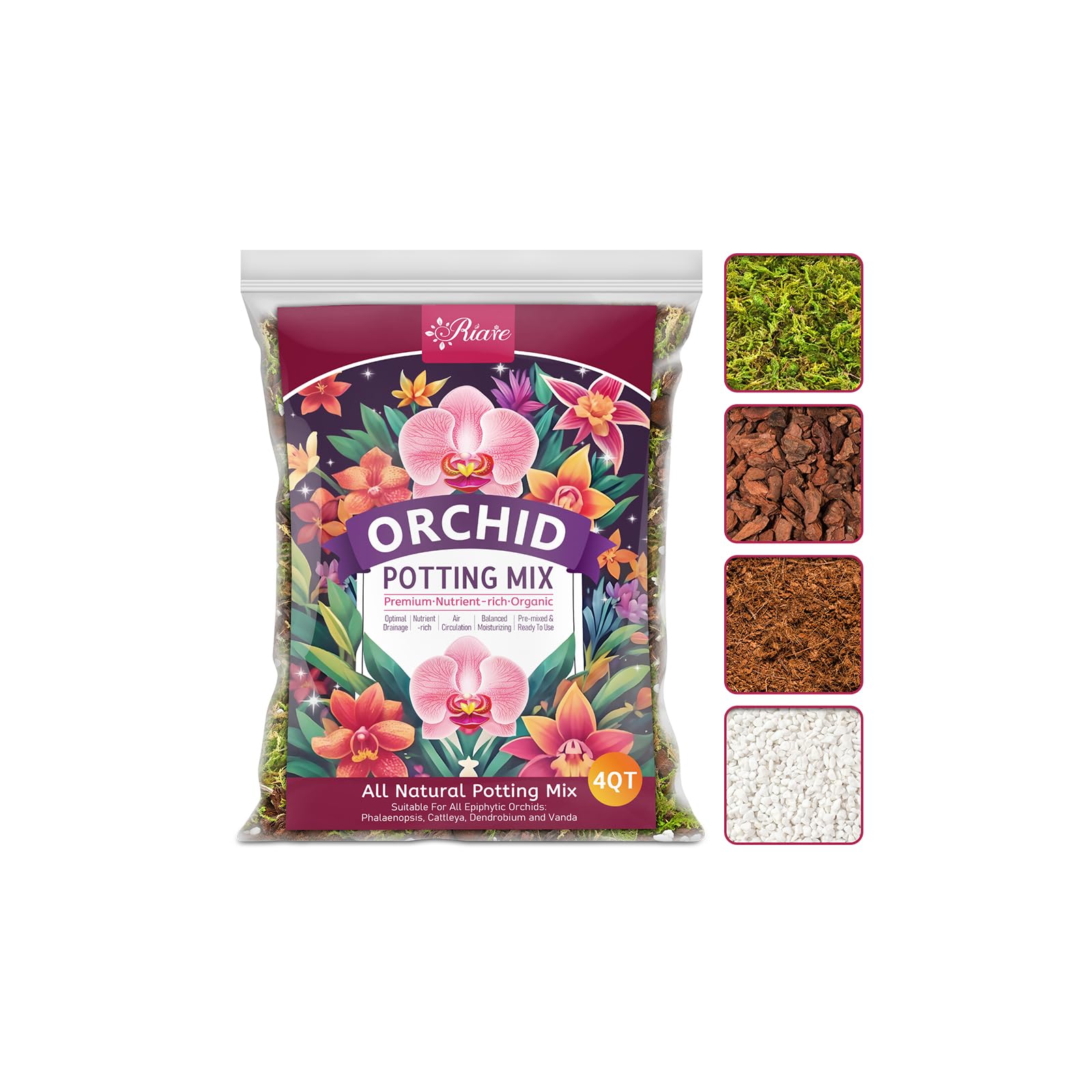
Riare’s repotting kit bundles four distinct components — pine bark, perlite, coco peat, and forest moss — into a single ready-to-use mix designed to simulate the bark-and-moss environments epiphytic orchids naturally cling to. The combination is thoughtful: bark chunks provide the structural aeration, perlite prevents compaction over time, coco peat retains moisture without becoming waterlogged, and the moss layer helps maintain humidity directly around the root zone. This is especially beneficial for Phalaenopsis owners whose plants sit in dry living rooms where humidity often drops below 40%.
User reports highlight rapid root growth after repotting, with multiple reviews noting new leaves and bloom stalks appearing within a week of transfer. The mix arrives noticeably moist and fresh, which is a good sign for growers repotting a dehydrated or stressed orchid that needs a gentle transition. The resealable bag is practical for storing leftover medium — a single 4-quart bag is enough for three small orchids or two medium specimens, so most users will have a partial bag for future repotting.
The main criticism is that the bag is smaller than it appears in product images, leading some buyers to feel the value doesn’t match the visual expectation. A few users also note that the moss component can retain too much moisture if the pot doesn’t have excellent drainage, so growers should pair this mix with a slotted orchid pot or one with ample bottom holes. For the price, this is the most complete all-in-one solution for newcomers who want a balanced medium without buying separate ingredients.
What works
- Four-ingredient blend covers drainage, aeration, and moisture retention
- Fresh, moist consistency ideal for repotting stressed orchids
- One bag handles multiple medium-sized repotting jobs
- Resealable packaging keeps leftover mix fresh
What doesn’t
- Bag size appears smaller than product photography suggests
- Moss component may hold too much water in poorly draining pots
- Not suitable for growers who prefer pure bark without additives
4. Rio Hamza Trading 100% Organic All Natural Orchid Bark (4 Quarts)
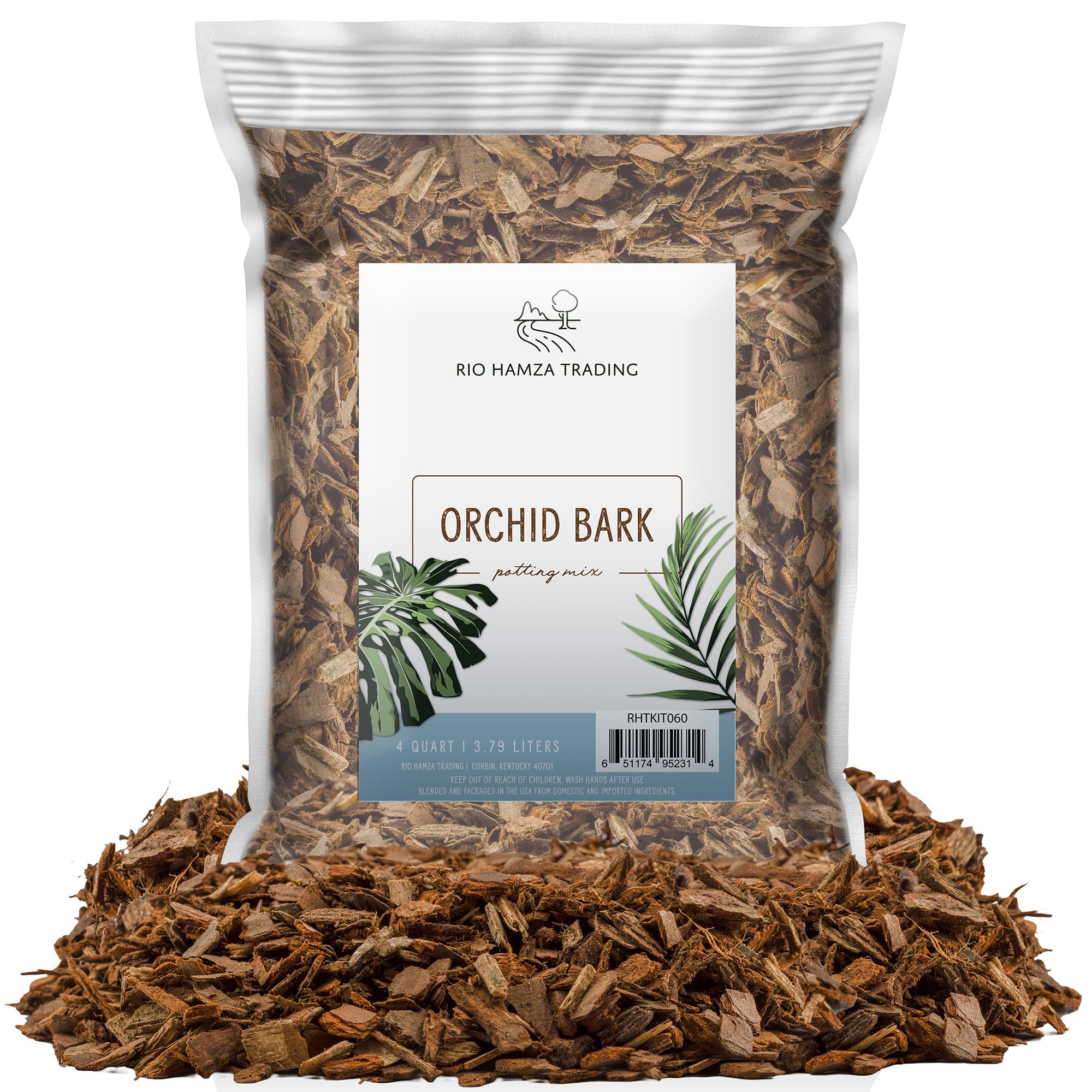
Rio Hamza’s orchid bark is a single-source product made from a mixture of Loblolly and Southern Yellow Pine grown in Eastern North Carolina and Southern Virginia. This regional sourcing gives the bark a consistent texture and breakdown rate that growers can rely on. The chips are medium-sized — smaller than Orchiata’s large chunks but larger than the fines found in many bargain bags — striking a balance that works well for standard Phalaenopsis and Dendrobium repotting. The bark is untreated and contains no synthetic additives, making it a clean base for growers who want to customize their own mix by adding perlite or sphagnum separately.
The bark arrives dry and free of mold or pest issues, which several users specifically praise after bad experiences with other brands that introduced fungus gnats or mold into their collections. The chip size distribution is relatively uniform, though some bags contain a higher proportion of smaller pieces that can settle to the bottom and reduce aeration over time. Growers can sift out the fines before potting to maintain the open structure orchids need. The 4-quart volume is generous for the price, making this a strong choice for anyone repotting multiple orchids at once.
The primary drawback is that pure bark without any moisture-retentive amendments tends to dry out quickly in low-humidity environments. Growers in dry climates or who water infrequently may need to supplement with sphagnum moss on the top layer or soak the pot more frequently. The bark also breaks down faster than New Zealand radiata, typically requiring repotting every 12-18 months depending on watering frequency and local humidity levels.
What works
- US-sourced Loblolly and Southern Yellow Pine with consistent quality
- Clean delivery with no mold, gnats, or synthetic chemicals
- Generous 4-quart bag at a budget-friendly price point
- Uniform chip size suitable for most epiphytic orchid varieties
What doesn’t
- Pure bark dries quickly in low-humidity environments
- Some bags contain fines that need sifting before use
- Shorter lifespan (12-18 months) compared to premium bark options
5. Harris Premium Orchid Potting Mix, Optimal Coarse Mix for All Types of Orchids, 4qt

Harris uses heat-treated Douglas fir bark as the backbone of this mix, which is a meaningful differentiator. Douglas fir is naturally more water-repellent than pine, and the heat treatment further stabilizes the bark so it resists rot and fungal growth. Combined with peat moss, pumice, and perlite in a balanced ratio, this mix drains freely while retaining just enough moisture to prevent the root zone from drying out completely between waterings. The result is a medium that suits a broad range of epiphytic orchids including Phalaenopsis, Cattleya, Dendrobium, and Oncidium without requiring custom amendments.
A notable practical concern reported across multiple user reviews is the dust level. The mix contains a significant amount of fine particles that can coat roots and reduce aeration if not rinsed before potting. Several owners recommend sifting or lightly rinsing the mix outdoors before use, especially if the orchid has recently undergone root trimming and is vulnerable to smothering. Once the dust is removed, the remaining structure performs well, with multiple reviewers reporting that their orchids recovered from drooping leaves and root stress within weeks of repotting.
The 4-quart bag is on the smaller side for the price tier, and some buyers were surprised by the modest volume. However, the heat-treated fir bark does last longer than untreated pine, typically maintaining its structure for 2-3 years before needing replacement. This makes the per-year cost more competitive than the initial bag price suggests. The main caveat is the pre-potting prep work — this mix is not ready to use straight from the bag for growers who want zero-fuss repotting.
What works
- Heat-treated Douglas fir bark resists rot and lasts 2-3 years
- Balanced blend of bark, peat, pumice, and perlite for broad orchid compatibility
- Excellent drainage with sufficient moisture retention for indoor growing
- Multiple users report recovery of stressed orchids after repotting
What doesn’t
- High dust and fine particle content requires sifting or rinsing before use
- Bag volume feels small relative to the price
- Not a straight-out-of-bag solution without prep work
6. Cz Garden Supply Orchid Potting Bark – All-Natural Fir Bark, OMRI Listed, 4 Liters

Cz Garden’s fir bark is OMRI-listed, meaning it meets the strict organic standards required for certified organic food production. This certification assures growers that no synthetic fertilizers, dyes, or additives have been introduced during processing. The bark is sourced and processed in the United States in a bug-free facility, which directly addresses the common frustration of discovering fungus gnats or other pests hiding in bagged potting mediums. Multiple users explicitly note that this bark arrived clean and pest-free, unlike other brands they had tried.
The bark has a fresh, pleasant aroma resulting from rapid processing after cutting — old, saturated bark develops mildew odors, but Cz Garden’s quick turnaround prevents that. The chips are on the smaller side compared to premium options like Orchiata, which gives them a larger surface area for moisture absorption but also means they break down faster. The resealable pouch is heavy-duty and easy-pour, allowing precise application without spilling fines all over the workspace. The 4-liter volume is slightly larger than a standard 4-quart bag, offering marginally more medium for the price.
The smaller chip size is a double-edged sword. It works well for mixing into potting soil as an amendment for succulents or terrariums, and it provides good aeration when layered with sphagnum moss. But as a standalone orchid medium, the smaller pieces can settle and compact faster than chunkier bark, potentially reducing air circulation to the root zone over time. Growers who prefer large, open bark channels for their Cattleyas or Vandas may find this bark too fine for their taste.
What works
- OMRI-listed for certified organic production and food-safe gardening
- Clean, bug-free processing eliminates pest introduction concerns
- Freshly processed with a pleasant natural aroma
- Heavy-duty resealable pouch with easy-pour design
What doesn’t
- Smaller chip size settles and compacts faster than chunkier bark
- Not ideal as a standalone mix for orchids that prefer large bark channels
- Faster breakdown rate compared to larger-chip premium options
7. Perfect Plants Premium Orchid Bark 4qt – Mulch Mix for Epiphytic Plants
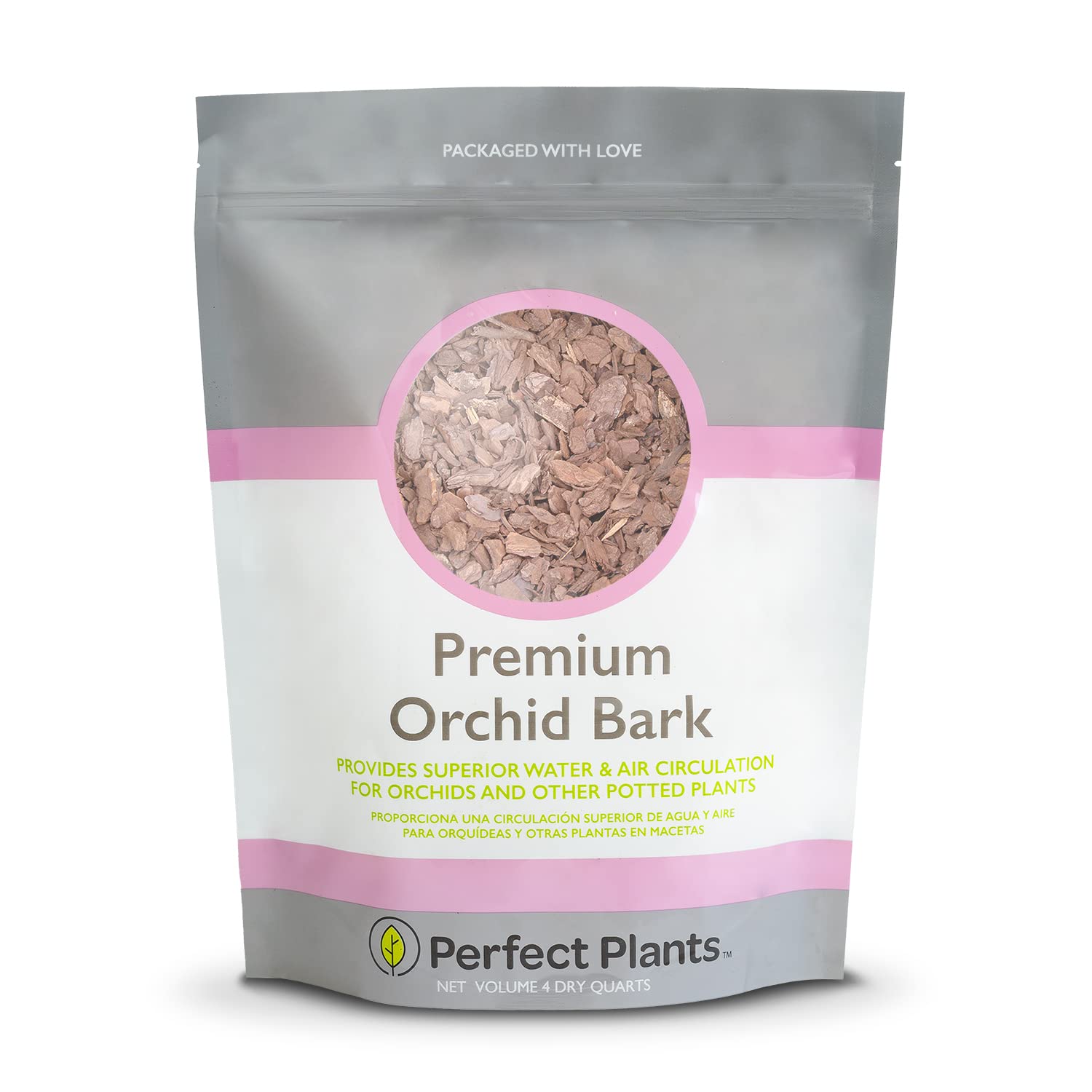
Perfect Plants offers a straightforward pine bark mulch that is 100% natural and sourced from locally grown long-leaf pine trees in the United States. The chips are chunky and provide good air circulation when used as a base for orchid potting mix, though the bark is not specifically formulated as a standalone orchid medium. It works best as a soil amendment blended with perlite or sphagnum moss to create a custom mix, or as a top dressing for moisture control. Many terrarium builders also use this bark as a substrate layer for bioactive setups, where its natural decomposition supports microfauna.
The bark’s oversized chips are a significant point of contention. A substantial number of user reviews note that the pieces are too large to use directly for most orchids without cutting them down to size by hand. For a Phalaenopsis pot, chips that are 1-inch or larger create cavernous air pockets that leave roots dangling without contact with the medium, which defeats the purpose of potting. This additional labor requirement makes the mix less convenient than competitors that offer ready-to-use chip sizes out of the bag.
For growers willing to do the prep work, the bark itself is good quality — no synthetic additives, no dyes, and a long-lasting structure once broken down to appropriate sizes. The heavy-duty resealable bag preserves the remainder for future use. This is a budget-friendly entry point for those who already have perlite and moss on hand and want a bulk bark source without paying for a pre-blended premium mix. But for anyone seeking a true open-and-pot solution, the chip size inconsistency is a dealbreaker.
What works
- 100% natural long-leaf pine bark with no synthetic additives
- Good base ingredient for custom orchid mix blending
- Suitable for terrarium and bioactive substrate applications
- Resealable bag for convenient storage of unused bark
What doesn’t
- Chips are often too large and require hand-cutting to usable sizes
- Not ready-to-use as a standalone orchid potting medium
- Inconsistent chip size distribution across different bags
Hardware & Specs Guide
Bark Chip Size
Chip size directly determines the air-to-water ratio in the pot. Larger chips (3/8″–1/2″) create bigger air channels and dry faster, suiting orchids like Cattleya and Vandas that need quick drying between waterings. Smaller chips (1/8″–1/4″) hold more moisture and are better for Oncidiums and Phalaenopsis that prefer consistent light moisture. Very fine bark or high dust content can clog air spaces and cause root suffocation regardless of the bark type.
Moisture Retention Additives
Sphagnum moss, peat moss, coco peat, and worm castings all act as moisture buffers in orchid mixes. They absorb water and release it slowly, which is helpful in low-humidity homes but can cause root rot if the pot lacks drainage holes. Pumice and perlite serve the opposite function — they create rigid pore spaces that prevent the medium from compacting and ensure excess water drains freely. The ideal ratio depends on your local humidity and watering habits.
Longevity and Decomposition Rate
Bark is organic and will eventually decompose into fine particles that hold too much water. Premium New Zealand radiata pine (Orchiata) is heat-treated to resist decay for 5+ years. American pine and fir typically break down in 12-24 months, depending on watering frequency and temperature. Douglas fir bark sits in between, lasting 2-3 years before structural breakdown begins. Using decomposed bark past its prime is a common hidden cause of unexpected root rot.
Organic Certification and Sourcing
OMRI-listed mixes guarantee no synthetic fertilizers, pesticides, or dyes were added during processing. This matters for growers who want to avoid chemical residues accumulating in the root zone. US-sourced pine and fir bark from managed forests ensures sustainable harvesting, while New Zealand radiata is typically plantation-grown and renewable. Some cheaper imports may contain old-growth wood or be treated with fungicides that can harm beneficial soil microbes.
FAQ
Can I use regular potting soil for my orchid?
What size bark chips should I use for Phalaenopsis?
How often should I repot my orchid in a bark-based mix?
Should I rinse or sift bark mix before potting?
Can I mix bark with sphagnum moss for better moisture retention?
Final Thoughts: The Verdict
For most gardeners, the orchid potting mix winner is the Rosy Soil Orchid Mix because it combines biochar-enhanced aeration, mycorrhizae-driven root support, and peat-free sustainability into a convenient all-in-one bag that works across multiple orchid genera. If you want maximum longevity and hate frequent repotting, grab the Orchiata Orchid Bark — its 5+ year lifespan is unmatched and preferred by professional growers. And for budget-conscious repotting of multiple orchids, nothing beats the Rio Hamza 100% Organic Bark for its generous volume and clean US-sourced pine chips.