
A homemade hoop house for your patio can be the difference between losing tender seedlings to a late frost and harvesting basil through November. The problem is that flimsy frames collapse under the first gust, thin covers rip, and zippers fail after a single season — leaving your plants exposed just when they need protection most. A well-built miniature greenhouse locks in humidity, buffers temperature swings, and extends your growing window without taking over your entire yard.
I’m Rikta — the co-founder and writer behind Lawn Gear Lab. I’ve spent weeks comparing frame gauges, cover thicknesses, zipper durability, and shelf load ratings across dozens of mini greenhouse models, cross-referencing hundreds of verified owner experiences to separate the sturdy enclosures from the plastic tents that fold in a breeze.
Whether you are hardening off tomato starts on a condo balcony or overwintering herbs in an unheated garage, this guide cuts through the noise to help you choose the right diy miniature greenhouse for your specific growing space and climate conditions.
How To Choose The Best DIY Miniature Greenhouse
Choosing a compact greenhouse means balancing footprint against function, cover transparency against heat retention, and price against the wind loads your location actually delivers. Here are the three specifications that separate a productive microclimate from a frustrating plastic heap.
Frame Material and Coating Integrity
The frame is the skeleton that determines whether your greenhouse survives a spring thunderstorm. Most entry-level units use hollow steel tubing, but the critical differentiator is the surface treatment. An electrophoretic coating (often called e-coating) bonds at the molecular level and resists rust far longer than basic powder coating. Bare or lightly painted tubes will show corrosion within one season if exposed to condensation or rain. Look for frames with at least a 5/8-inch diameter for vertical stability — thinner tubes wobble under cover tension. Also inspect joint connectors: plastic snap-together joints are the first failure point in high wind, while screw-locked metal collars offer significantly more rigidity.
Cover Material, Thickness, and UV Resistance
The cover is what actually creates the greenhouse effect, so material choice matters enormously. Polyethylene (PE) covers are lightweight and affordable but degrade faster under direct sunlight unless stabilized with UV inhibitors. Polyvinyl chloride (PVC) covers offer better clarity and tear resistance, though they can off-gas a temporary plastic smell. Thickness is the single easiest metric to verify: anything below 0.10 mm is essentially cling wrap that will shatter in cold weather or tear at the first zipper pull. A minimum of 0.12 mm is the baseline for reliable service. Thicker covers also retain heat better overnight, reducing temperature drops that shock seedlings. Transparent or lightly tinted covers maximize light transmission, while tinted green covers reduce glare but can cut photosynthetic light.
Shelf Configuration and Weight Capacity
Not all mini greenhouses are created equal when it comes to actually holding plants. A four-tier unit sounds spacious, but if each shelf only supports eight pounds, you cannot fill it with wet potting soil and gallon pots without collapse. Look for shelves rated at least 20 pounds per tier for real utility. Mesh shelves allow air circulation and prevent water pooling, but solid shelves catch drips and make watering cleaner. Adjustable shelf heights are a major advantage — they let you accommodate tall tomato cages one month and low seed trays the next. Also check whether the shelves are held by plastic clips or metal brackets; clips frequently pop loose when the unit is moved, while brackets provide permanent positioning that stays put season after season.
Quick Comparison
On smaller screens, swipe sideways to see the full table.
| Model | Category | Best For | Key Spec | Amazon |
|---|---|---|---|---|
| Purlyu 4-Tier | Premium | Windy locations, heavy shelf loads | 33 lb per tier, e-coated frame | Amazon |
| Worth Garden 5-Tier | Mid-Range | Maximum vertical capacity | 23 lb per tier, 75 inch height | Amazon |
| Miracle-Gro 4-Tier | Mid-Range | Tall vertical tents for herbs | 5/8 inch powder-coated steel | Amazon |
| Ohuhu Tabletop | Mid-Range | Patio seedling protection | PVC cover, e-coated frame | Amazon |
| U’Artlines Portable | Budget | Single-fern cold protection | 36x18x33 inch, PE cover | Amazon |
In‑Depth Reviews
1. Purlyu 4-Tier Mini Greenhouse

The Purlyu greenhouse stands out because of its electrophoretic-coated steel frame — a surface treatment that resists rust far longer than standard powder coating. Each of the four shelves holds up to 33 pounds, which means you can stack heavy nursery pots or multiple seed trays without worrying about bowing. The 0.12 mm PE cover is thick enough to withstand punctures during assembly and offers decent light transmission for seedlings. Owners consistently report this unit surviving 60-mph wind gusts after anchoring with sandbags or rebar stakes, which is exceptional for a mini greenhouse at this tier.
The roll-up zippered door provides two screened ventilation panels that help regulate temperature on sunny days. Assembly takes about an hour solo and the instructions are straightforward, though getting the cover over the frame without snagging requires patience. The included fixed shelf clips are a thoughtful upgrade over the friction-fit plastic rings used on cheaper models — they lock the shelves in place and prevent the shelves from tipping when you move the unit. Several long-term owners note that the plastic joint connectors are still the eventual failure point after five or six years, but that lifespan is double what most competitors deliver.
For a gardener who wants one compact greenhouse that can handle everything from indoor seed starting in March to outdoor overwintering in December, the Purlyu 4-Tier is the most balanced option. The e-coating eliminates the rust spotting that plagues cheaper frames, and the 33-pound shelf rating means you are not constantly counting ounces to stay under the limit. If you live in a windy area or plan to keep this unit outside year-round, this is the model to beat.
What works
- Shelf rating of 33 pounds per tier is genuinely usable for gallon pots
- E-coated steel resists rust even in humid or coastal environments
- Screened ventilation panels prevent heat buildup in direct sun
What doesn’t
- Plastic joint connectors will eventually degrade after several years of UV exposure
- Cover installation is fiddly and can tear if pulled too aggressively
- Shelves require zip ties or cable ties to prevent wind from knocking plants off
2. Worth Garden 5-Tier Mini Greenhouse
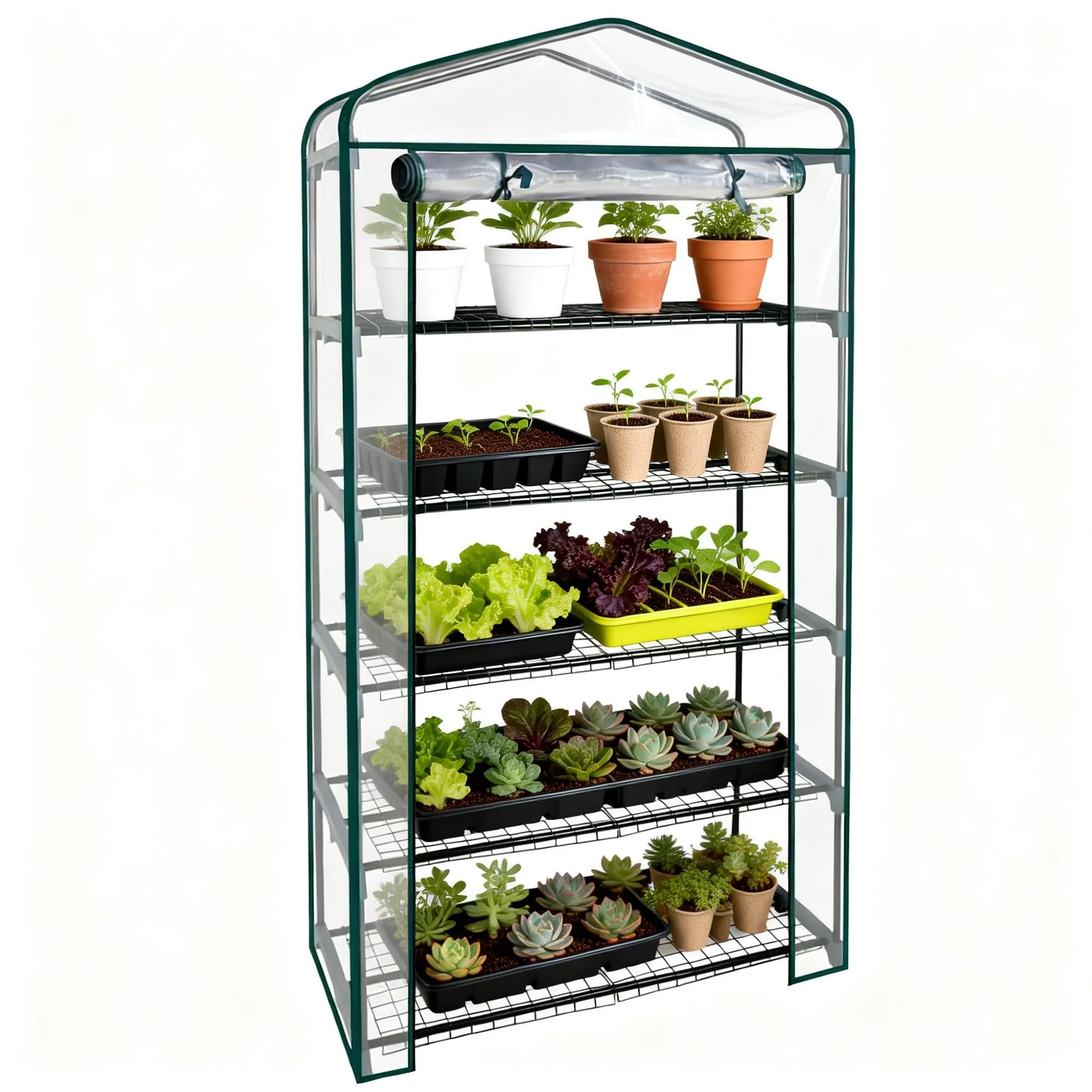
The Worth Garden 5-Tier delivers the most vertical growing space in its class, standing 75 inches tall with five mesh shelves that each hold 23 pounds. That height is enough to accommodate tomato cages, pepper plants, or multiple levels of seed trays without the top shelf being too close to the cover. The 0.12 mm PE cover is comparable to the Purlyu in thickness, though the transparent plastic off-gasses a noticeable chemical smell for the first week. Owners report that airing it out for two to three days before adding plants eliminates the odor.
Assembly is genuinely tool-free and takes under 20 minutes once you figure out the snap-together pole system. The roll-up zippered door on the front provides decent access, though the zipper can stick if the cover is stretched too tight during installation. A clever detail is that the shelves are held by plastic clips that you can reposition, allowing you to customize spacing for taller plants. However, those same clips are prone to popping loose if you drag the greenhouse across a patio — always lift the unit to move it. Several owners mention using cable ties to lock the shelves permanently, which is a quick fix that dramatically improves stability.
Where this model really shines is sheer value per cubic foot of growing space. The 75-inch height means you can fit eight standard 10×20 seed trays comfortably across the five tiers, making it the right choice for a serious seed starter with limited floor area. The frame is sturdy enough for indoor use in a basement or garage, though owners in exposed outdoor locations recommend anchoring it — the tall profile catches wind like a sail. For a budget-conscious grower who needs maximum shelf space without spending on premium frame coatings, this is the smartest pick.
What works
- Five adjustable shelves at 23 lb capacity each provide exceptional growing room
- 75-inch height accommodates tall plants and multiple tray levels
- Tool-free assembly is genuinely fast at under 20 minutes
What doesn’t
- Plastic cover emits a chemical odor that requires airing out before use
- Shelf clips pop loose easily if the unit is dragged rather than lifted
- Tall design acts as a wind sail and needs anchoring in outdoor locations
3. Miracle-Gro 4-Tier Mini Greenhouse
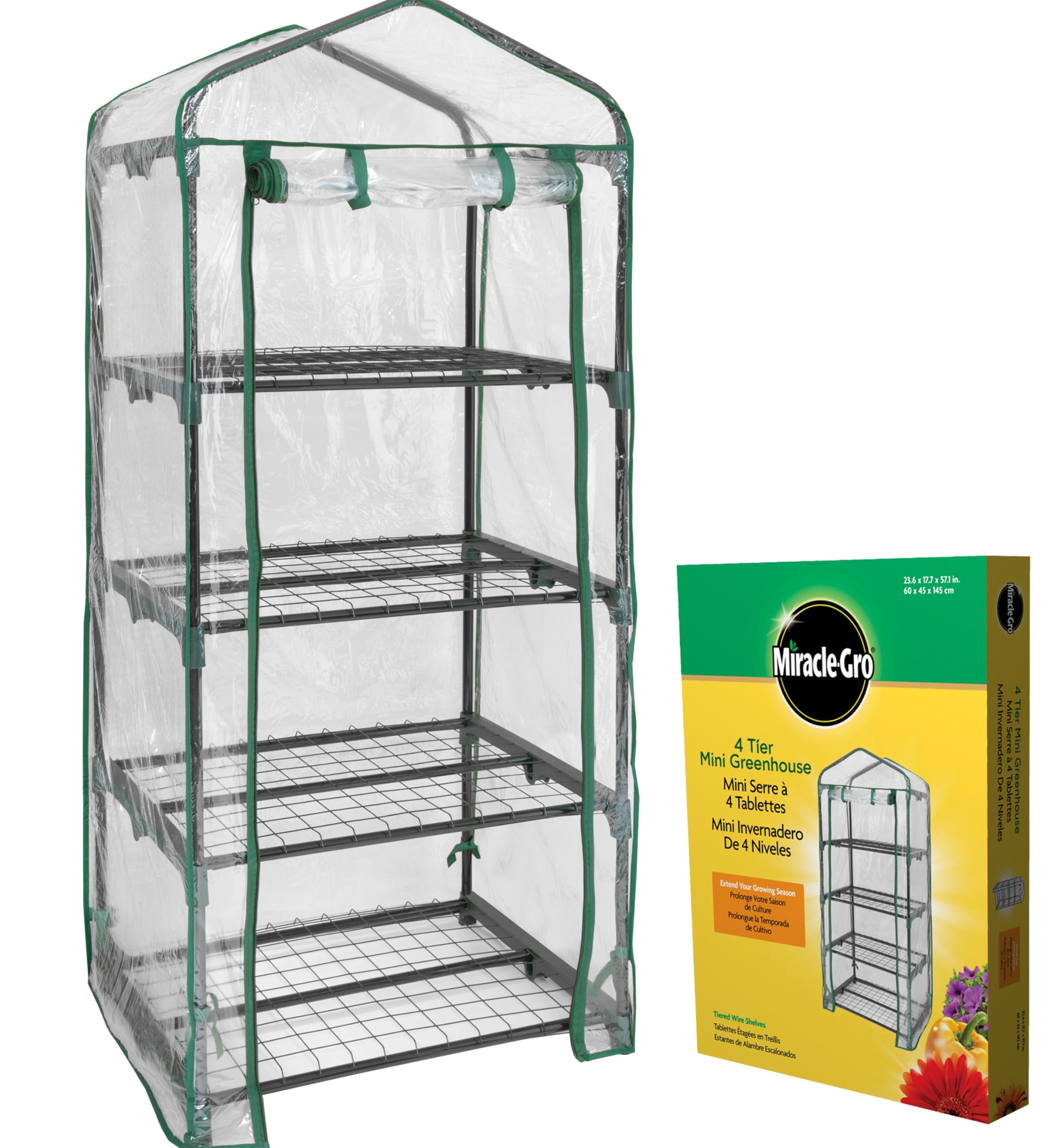
Miracle-Gro brings its brand reputation to a 4-tier vertical tent that measures 23 by 17 inches at the base and reaches 57 inches tall. The standout feature here is the 4.4 oz PVC cover material — that is significantly thicker than the 0.10 to 0.12 mm PE covers used by most competitors. The heavier PVC resists tearing during assembly, filters out some UV radiation to reduce plant stress, and provides noticeably better heat retention on cool nights. The frame uses 5/8-inch powder-coated steel tubing, which is sturdy enough for indoor use but has drawn criticism from buyers who placed it in exposed windy locations.
The roll-up zipper door runs the full height of the unit, giving you easy access to all four wire shelves. The shelves themselves are removable, which is helpful when you need to accommodate an oversized pot or a humidity tray. Owners praise how quickly the greenhouse assembles — most report 15 to 20 minutes solo — though the instructions are minimal. The most common complaint is that the plastic joint connectors are the weak link: several buyers reported that 30-mph gusts snapped the connectors, causing the frame to collapse. Adding zip ties at every joint and staking the unit to the ground is mandatory for outdoor use.
This greenhouse is best suited for indoor or sheltered patio use where wind is not a daily factor. The thick PVC cover is genuinely premium and will outlast the thinner PE covers season after season. If you plan to start seeds in a garage, overwinter plants on a covered porch, or keep the unit on a balcony shielded from gusts, the investment in the better cover material pays off through multiple growing cycles. For exposed gardens, the frame connectors simply are not robust enough without significant reinforcement.
What works
- Thick 4.4 oz PVC cover provides excellent tear resistance and heat retention
- Full-height roll-up zipper door offers convenient access to all tiers
- Shelves are removable for flexibility with oversized pots
What doesn’t
- Plastic frame connectors are brittle and snap under moderate wind loads
- Powder-coated steel will rust faster than e-coated frames in humid conditions
- No ventilation flaps — heat buildup requires manual door management
4. Ohuhu Tabletop Mini Greenhouse
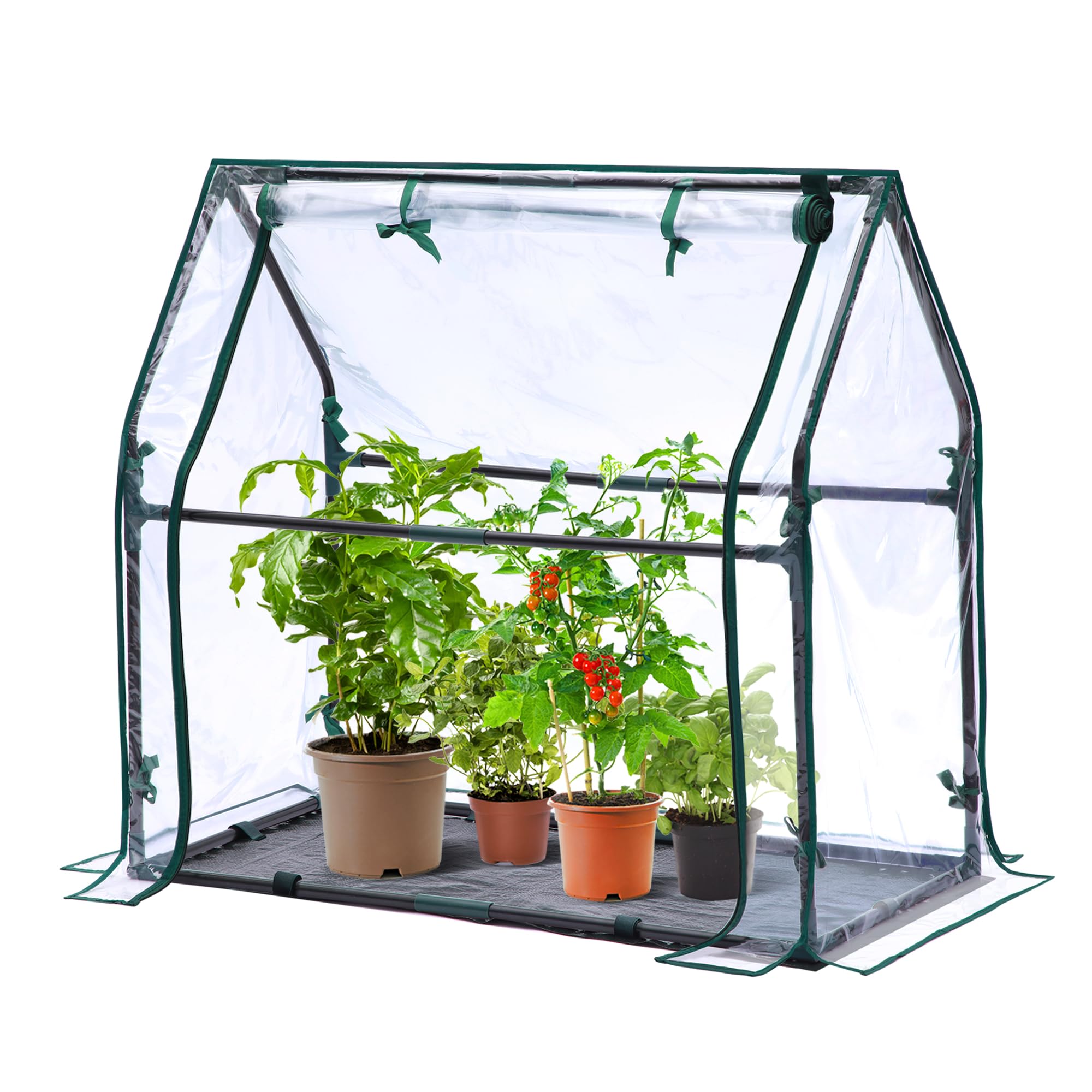
The Ohuhu Tabletop greenhouse uses a PVC cover paired with an electrophoretic-coated metal frame — a combination normally found at higher price points. The dimensions are 36 by 18 by 33 inches, which slots neatly onto a patio table, balcony railing, or deck corner without dominating the space. The PVC cover is clearer than the PE alternatives, allowing 90 percent light transmission ideal for sun-loving seedlings like tomatoes and peppers. The included waterproof PE base mat is a practical addition that catches drainage water and prevents dirty runoff on wooden decks.
The zippered door on the front rolls up and can be tied open for ventilation. Owners consistently praise the 15-minute assembly time and the rust-resistant frame, which shows no corrosion even after a full season of outdoor exposure. The reinforcement grid pattern on the cover adds structural rigidity and prevents the plastic from sagging against the plants. However, the compact size means you are limited to small pots — 4-inch nursery pots fit comfortably, but gallon containers crowd the space quickly. Multiple buyers noted that the cover can cause sunburn on sensitive plants in full afternoon sun, so partial shade placement or shade cloth is recommended during hot months.
This is the right greenhouse for a gardener who needs a portable, compact enclosure for a specific microclimate task: hardening off 30 seedlings, protecting a tray of cuttings from birds, or giving a large fern a warm winter spot. The build quality is noticeably better than the budget-tier models, with thicker tubing and more robust zippers. If your growing needs fit within a 36-inch footprint, the Ohuhu delivers premium construction at a mid-range investment. It is not the solution for a full seed-starting operation, but for focused small-scale use, it is one of the best-built options available.
What works
- PVC cover with reinforcement grid provides excellent clarity and sag resistance
- E-coated metal frame resists rust better than powder-coated alternatives
- Waterproof base mat prevents deck staining and simplifies cleanup
What doesn’t
- Compact size limits use to small pots and modest plant counts
- Cover can cause leaf sunburn in direct afternoon sun without shade
- Gap at bottom allows wind entry unless the base is weighed down
5. U’Artlines Portable Mini Greenhouse

The U’Artlines Portable is the most affordable option in this roundup, built around a PE cover and an alloy steel frame with a basic powder coating. At 36 by 18 by 33 inches, it matches the Ohuhu in footprint but uses thinner plastic and a less robust frame. The selling points are simplicity and speed — assembly takes about five minutes, making it the easiest greenhouse to set up and tear down. The zippered front door rolls up and ties open for access, and the included waterproof mat helps keep the growing area clean.
Owner feedback is mixed but tells a clear story: the unit works well for light-duty indoor or sheltered use, but it struggles in outdoor conditions. The side zipper on the cover detached on one owner’s unit after the first use, forcing them to use clamps to close gaps. The plastic tubing frame is light enough that it shifts in wind unless anchored. On the positive side, buyers who use it on a covered porch, inside a garage, or as a temporary hardening-off station report that it delivers exactly what a budget greenhouse should — a warm, humid microclimate for a handful of plants. The PE cover is thicker than bargain-basement plastic sheeting and does resist tearing during normal handling.
This greenhouse is best understood as a single-season or light-duty tool. If you need a quick enclosure for a large fern, a protective tent for a few tomato starts during a cold snap, or a portable unit that you can break down and store each year, the U’Artlines gets the job done at a minimal cost. It is not built for year-round outdoor exposure, heavy shelf loads, or windy climates. For the gardener who wants to test whether a mini greenhouse fits their routine before committing to a larger investment, this is the safest entry point.
What works
- Five-minute assembly is the fastest in this roundup
- Waterproof base mat protects floors and decks from soil runoff
- PE cover is thicker than typical budget plastic and resists normal handling tears
What doesn’t
- Side zipper on cover is prone to detaching after limited use
- Lightweight frame shifts easily in wind and requires anchoring
- Powder-coated frame shows rust quickly in outdoor or humid conditions
Hardware & Specs Guide
Cover Material and Thickness
The cover is the heart of any mini greenhouse, and material choice directly determines light transmission, heat retention, and longevity. Polyethylene (PE) is the most common entry-level material, typically offered in thicknesses from 0.08 mm to 0.15 mm. PE covers are inexpensive and lightweight but degrade under UV exposure within one to two seasons unless stabilized. Polyvinyl chloride (PVC) covers are thicker, clearer, and far more tear-resistant, but they cost more and can off-gas during the first week. For year-round outdoor use, seek a minimum of 0.12 mm thickness regardless of material. Thinner covers tear at zipper attachment points and fail to buffer nighttime temperature drops, which defeats the purpose of owning a greenhouse.
Frame Construction and Corrosion Resistance
The frame must resist rust from condensation and rain while providing enough rigidity to hold the cover taut. Three finish types dominate this category: basic powder coating, electrophoretic coating (e-coating), and galvanization. Powder coating is the baseline — it looks good initially but chips easily, exposing the steel to moisture. E-coating provides a more uniform, corrosion-resistant layer that bonds to the metal at the molecular level, significantly extending frame life. Galvanized frames are the gold standard but are rare at this scale. Also examine joint construction: plastic snap connectors are the norm in budget and mid-range units, but they become brittle in cold weather. Metal bracket connectors or screw-locked collars offer dramatically better wind resistance and longevity.
Shelf Design and Load Limits
Shelves determine how many plants your greenhouse can actually hold. Two material types dominate: wire mesh and solid stamped metal. Wire mesh shelves allow air circulation and prevent water pooling, which reduces mold risk, but they require trays to hold loose soil. Solid shelves catch drips and are easier to clean but block airflow to plants on lower tiers. Weight capacity is the critical spec here — budget greenhouses often claim shelves that can hold 10 to 12 pounds, which is insufficient for wet soil in anything larger than a 4-inch pot. Look for shelves rated at 20 pounds or higher for real utility. Adjustable shelf heights are a major convenience feature that lets you reconfigure the interior layout as your plants grow through different stages.
Ventilation and Zipper Quality
Temperature control inside a mini greenhouse is a constant challenge. Without ventilation, interior temperatures can exceed ambient by 30 degrees Fahrenheit on a sunny day, cooking your seedlings. Look for units with one or two roll-up windows or ventilation panels with mesh screening. A full-length roll-up zipper door also provides ventilation when tied open. Zipper quality matters enormously — cheap zippers fail after a few cycles, leaving you unable to close the greenhouse properly. Nylon zippers with large teeth and smooth action are preferable to basic metal zippers that corrode or snag on the cover material. The zipper should also have a protective flap or reinforced stitching where it attaches to the cover, as this is the most common stress failure point reported by owners.
FAQ
Can I leave my DIY miniature greenhouse outside year-round?
How do I prevent my mini greenhouse from overheating on sunny days?
What size mini greenhouse do I need for starting vegetable seeds?
Final Thoughts: The Verdict
For most gardeners, the diy miniature greenhouse winner is the Purlyu 4-Tier because it combines the most durable e-coated frame with a 33-pound-per-shelf rating that actually lets you fill the unit without compromise. If you want maximum vertical capacity for seed starting on a tight budget, grab the Worth Garden 5-Tier — five adjustable shelves in a 75-inch frame offer the best cubic-foot value in this category. And for a compact, portable greenhouse that punches above its price point with a PVC cover and rust-resistant frame, nothing beats the Ohuhu Tabletop.