
Most potted citrus trees fail within six months not from disease or pests, but from soil that holds too much water. The root system of a lemon, lime, or orange tree demands sharp drainage and a slightly acidic pH—two specs that generic potting mixes simply cannot provide.
I’m Rikta — the co-founder and writer behind Lawn Gear Lab. I spend hours comparing soil formulas, analyzing pH ranges against published horticultural data, and cross-referencing real owner feedback to separate the mixes that actually deliver on their claims.
Whether you are repotting a Meyer lemon or starting a dwarf orange in a container, finding the right mix changes everything. This guide breaks down the top contenders so you can confidently pick the best soil for citrus trees without guessing or overpaying for bagged dirt.
How To Choose The Best Soil For Citrus Trees
Citrus roots are sensitive to compaction and moisture. Choosing a soil mix means checking a few non-negotiable specs—here is what separates a good citrus mix from one that will drown your tree.
Drainage and Aeration
The fastest way to kill a citrus tree is to let its roots sit in wet soil. High-quality citrus mixes incorporate extra perlite, coarse sand, or coconut coir to create air pockets. Look for a formula that feels light and chunky, not dense and mud-like when damp.
pH Level
Citrus trees demand slightly acidic soil, ideally between 5.5 and 6.5. Outside that range, nutrient uptake stalls and yellowing leaves appear. Many premium mixes include dolomite lime or acidic compost to lock in that target pH without the need for constant adjustment.
Included Nutrients
Some citrus soils come pre-loaded with slow-release fertilizer that feeds the tree for months. Others are bare substrate and require you to add your own citrus-specific fertilizer. Decide whether you want a complete package or prefer to control feedings yourself.
Quick Comparison
On smaller screens, swipe sideways to see the full table.
| Model | Category | Best For | Key Spec | Amazon |
|---|---|---|---|---|
| Soil Sunrise (12 Qt) | Mid-Range | Volume buyers on a budget | 12 quarts of mix | Amazon |
| DUSPRO (10 Qt) | Mid-Range | Versatile indoor/outdoor use | Screened natural ingredients | Amazon |
| Miracle-Gro 3-Pack | Mid-Range | Multi-plant households | 3 bags x 8 quarts each | Amazon |
| GARDENWISE Premium Organic | Premium | Complete organic feed solution | pH stable with dolomite lime | Amazon |
| CitrusPon (Lechuza) | Premium | Long-term, self-contained substrate | 12 liters / 2.7 dry gal | Amazon |
| GARDENERA (3 Qt) | Entry-Level | Single small pot or seed starting | 3 quarts, hand blended | Amazon |
| GARDENWISE Lemon Tree Soil | Entry-Level | First-time citrus growers | 3 quarts with 6-month fertilizer | Amazon |
In‑Depth Reviews
1. Soil Sunrise Citrus Tree Potting Soil Mix (12 Quarts)

This bag delivers 12 quarts of mix at a per-quart cost that undercuts almost every other citrus-specific option on the market. The blend of peat moss and potting soil creates the drainage profile citrus roots need, while the balanced pH eliminates guesswork for new owners.
Users consistently report rapid leaf sprouting and strong root establishment after repotting lime trees, lemon trees, and even guava trees into this mix. The 5.2-pound bag is dense enough to fill a standard 7-gallon container without needing supplemental substrate.
The only downgrade is the plastic-bag-in-a-cardboard-box packaging, which can spill during shipping if the box is crushed. But for the volume you get at this price point, the value proposition is hard to beat for anyone maintaining multiple potted citrus trees.
What works
- Best price per quart among citrus-specific mixes
- Consistent aeration supports fast root development
- Works well for both established trees and seed starting
What doesn’t
- Bag inside box is not resealable
- Some spillage reported during shipping
2. GARDENWISE Premium Organic Citrus Potting Soil (3 Quarts)
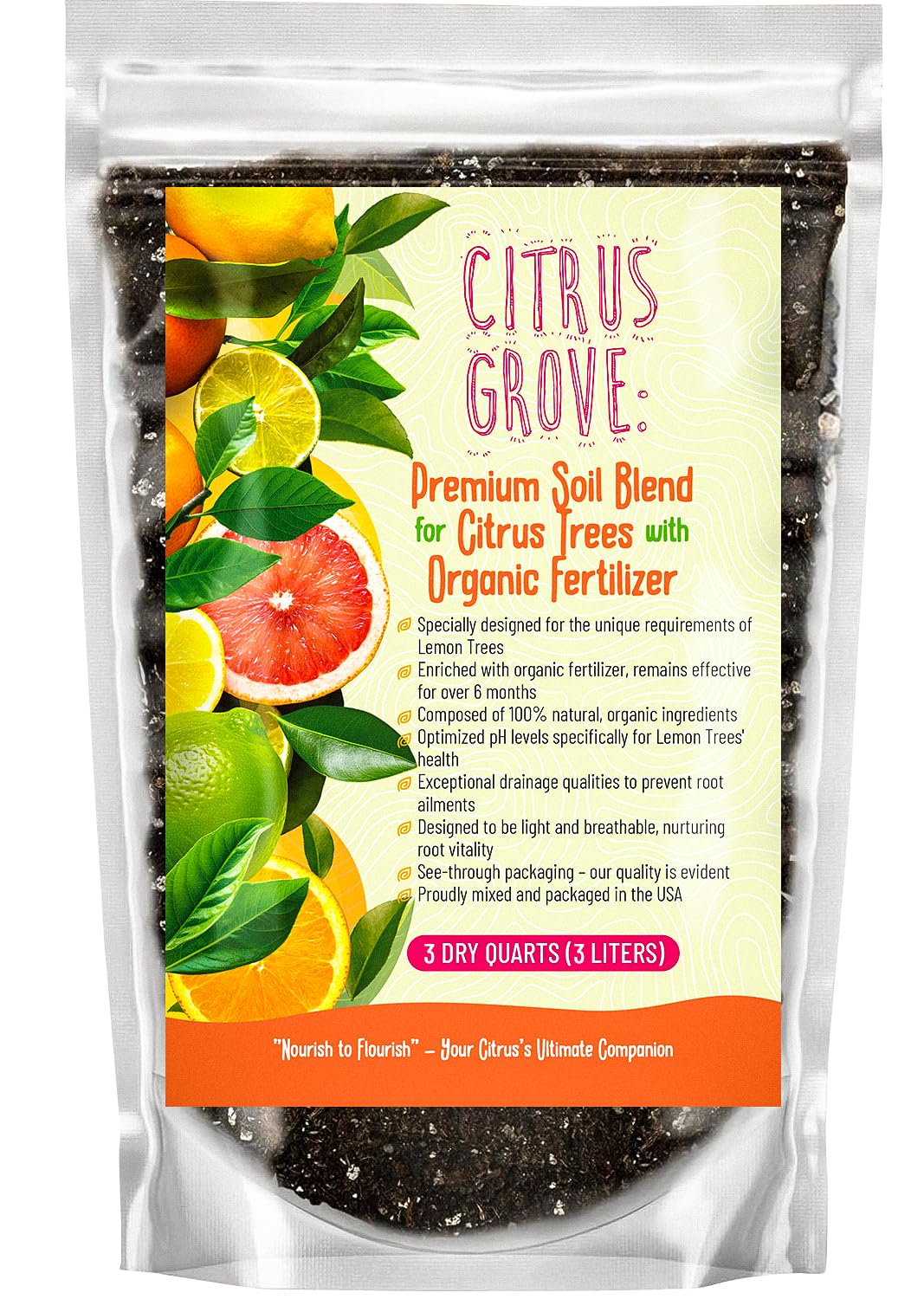
GARDENWISE packs a full nutrient arsenal into this 3-quart bag—perlite, coarse sand, compost, peat moss, and dolomite lime that stabilizes pH between 5.5 and 6.5. The added iron, magnesium, and manganese formula targets the micronutrient deficiencies that cause leaf yellowing in citrus.
Multiple owners of Meyer lemon trees and grapefruit plants report fast, thick new growth within two weeks of repotting. The mix holds moisture without becoming soggy, and the inclusion of vermiculite adds an extra layer of root protection against overwatering.
The 3-quart size is priced at a premium tier that makes it better suited for a single potted tree rather than a full garden refresh. If you have one prized citrus specimen, this mix gives it the most complete environment from the bag.
What works
- pH stable and pre-adjusted for citrus
- Micronutrient blend prevents yellowing leaves
- Excellent drainage with extra perlite and sand
What doesn’t
- Small bag volume is pricey for larger containers
- Not the best value for multi-tree plantings
3. DUSPRO Citrus Tree Potting Soil Mix (10 Quarts)
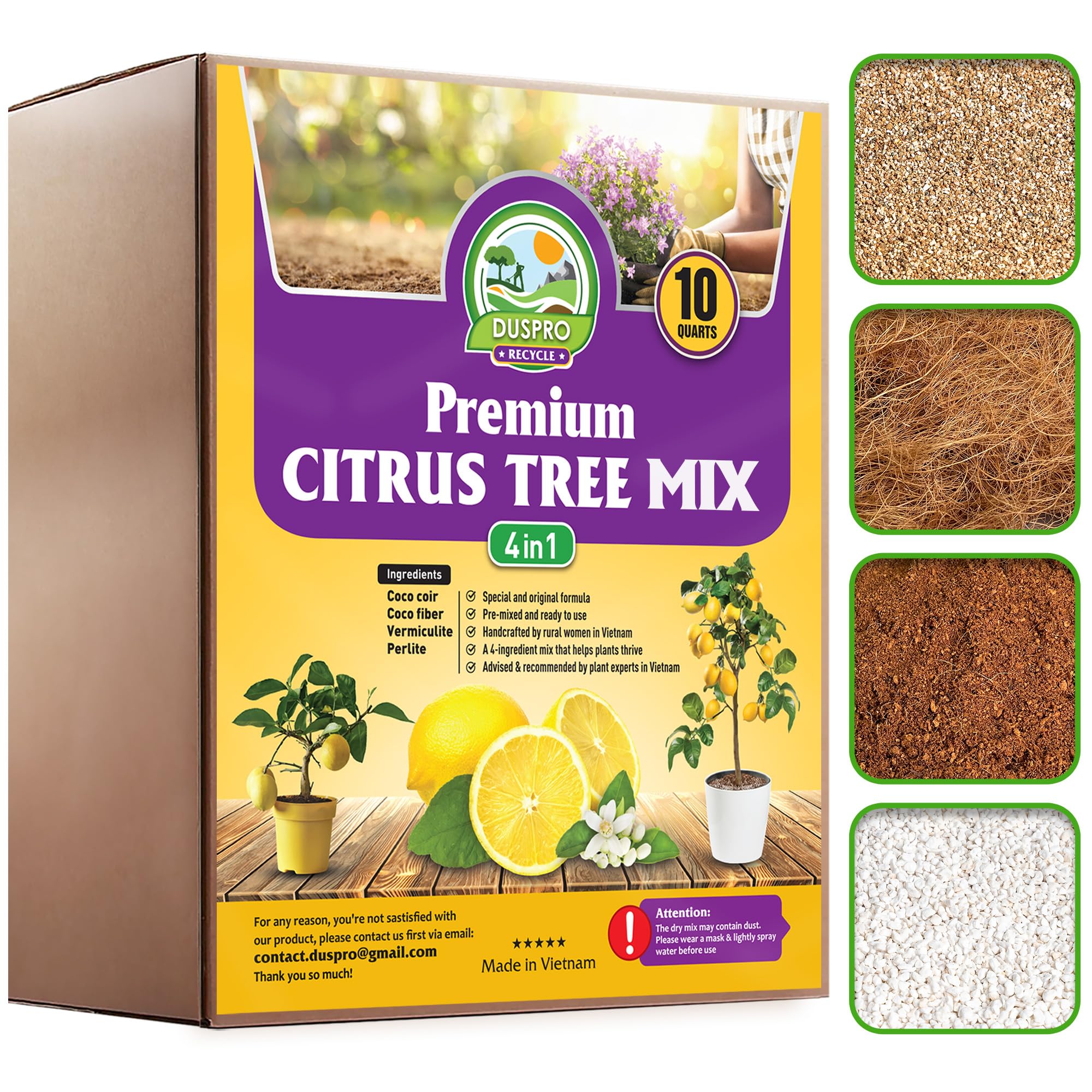
DUSPRO double-screens every raw ingredient to remove large debris and dust clumps, so you get a uniform, fine-grain mix that flows easily into containers. The 10-quart bag strikes a middle ground between small trial sizes and bulky 20-quart sacks that can be hard to store.
Owners report that this mix revived orange trees that looked “peaked” and prompted new leaf growth on money trees within weeks. The formula is rich enough to work as a standalone substrate but light enough to blend with existing soil if you prefer a custom ratio.
Dust is a minor drawback—the bottom of the bag can produce fine particles that kick up when pouring. Wearing a mask during repotting is a smart precaution. The included tree care ebook is a nice bonus for first-time citrus growers.
What works
- Double-screened for consistency and cleanliness
- 10 quarts fills several medium pots
- Works for citrus, avocado, and money trees
What doesn’t
- Dusty at the bottom of the bag
- Not pre-fertilized for long-term feeding
4. Miracle-Gro Cactus, Palm and Citrus Potting Mix (3-Pack, 8 Qt. Bags)

This 3-pack delivers 24 total quarts of mix at a per-unit cost that is hard to beat for the brand recognition alone. The formula is fast-draining by design and works for cacti, succulents, and palms in addition to citrus, making it a flexible option for households with diverse plant collections.
Experienced owners often blend one bag of this mix with one bag of standard potting soil and a dose of fertilizer to create a custom citrus formula. The granules are coarse enough to prevent compaction and the included plant food provides a modest nutrient boost out of the bag.
The mix is not citrus-specific in the way that other products on this list are—it lacks the targeted pH range and micronutrient profile that dedicated citrus mixes offer. For serious citrus growers, it works better as a base component than a standalone solution.
What works
- Excellent value for the total volume
- Fast-draining formula reduces root rot risk
- Works across multiple plant types
What doesn’t
- Not optimized strictly for citrus pH needs
- Lacks the micronutrient blend of premium mixes
5. CITRUSPON Pre-fertilized Potting Soil for Citrus Trees (2.7 Dry Gal)
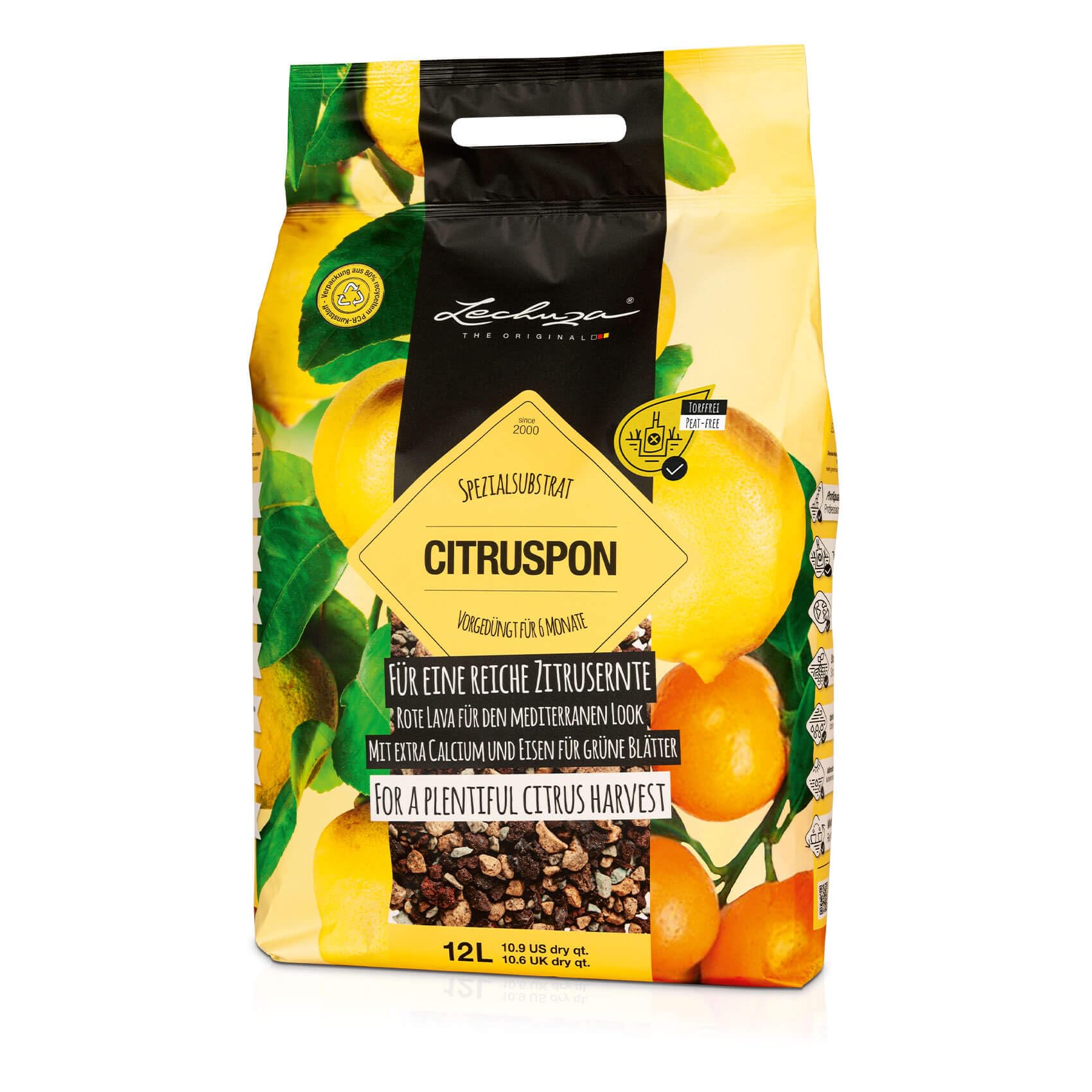
Lechuza brings a decade of German engineering into this 12-liter bag of pre-fertilized citrus substrate. The mix is designed for long-term use in self-watering planters, with a structure that maintains aeration for years without breaking down or compacting.
European citrus growers report that kumquats and lemons thrive in this substrate, producing steady blooms and fruit even in indoor environments. The pre-loaded fertilizer reduces the need for supplemental feeding during the first growing season, simplifying care for busy plant parents.
The sticker price places this firmly at the premium end of the category. If you are tending a single high-value citrus tree in a quality container, the long-term performance justifies the cost. For casual growers with multiple small trees, cheaper options make more sense.
What works
- Long-lasting structure resists compaction
- Pre-fertilized for season-long feeding
- Proven in self-watering container systems
What doesn’t
- Highest cost per quart on this list
- Overkill for small temporary plantings
6. GARDENERA Citrus Tree Potting Soil Mix (3 Quart Bag)
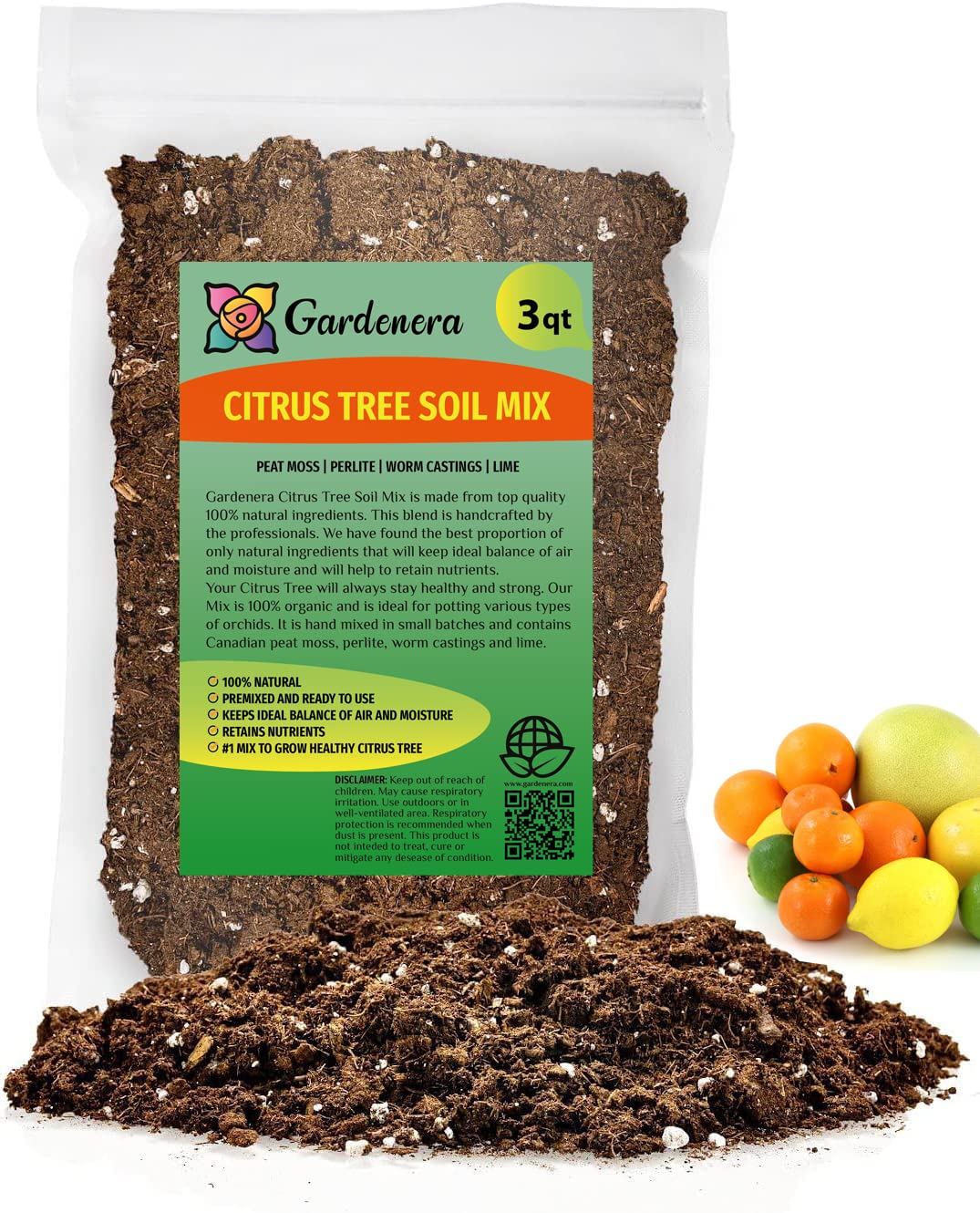
GARDENERA hand-blends each batch in small quantities on a family farm in the USA, using Canadian peat moss, perlite, worm castings, and lime. The mix includes extra perlite and low-salt coconut coir to accelerate root development in small starter pots.
One owner reported that this soil revived a Buddha hand lemon tree that had suffered a scale infestation, with the plant resuming full growth after repotting. The lightweight, chunky texture makes it easy to work with, and it comes free of chemical additives for organic growing.
The biggest limitation is the 3-quart volume—some buyers were caught off guard by how small the bag really is. At this size, you get enough mix for a single 8-inch pot, not a full container tree. Consider it a refresher for a small plant rather than a full garden substrate.
What works
- Hand blended with high-quality ingredients
- No chemical additives, great for organic setups
- Excellent for small pots and seed starting
What doesn’t
- Very small bag for the price
- Not enough volume for large containers
7. GARDENWISE Organic Lemon Tree Soil (3 Quarts)
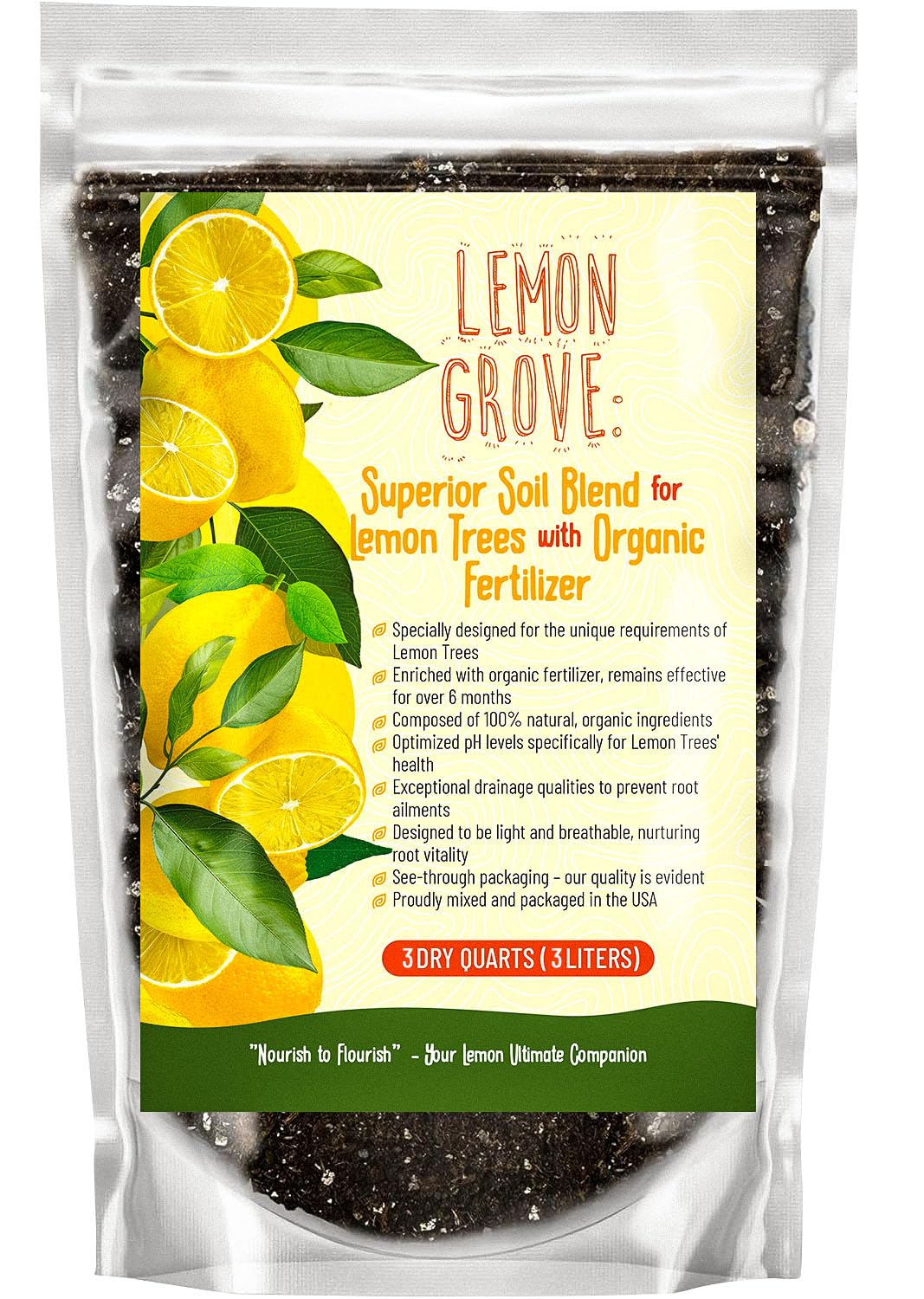
GARDENWISE packs this 3-quart bag with organic fertilizer that feeds citrus trees for up to six months, saving you the step of mixing in separate nutrients. The formula includes coarse sand and extra perlite for superior drainage, plus coconut coir and vermiculite to regulate moisture.
Multiple verified reviews show Meyer dwarf lemon trees pushing new sprouts within two weeks of repotting. The mix targets the ideal pH range of 5.5 to 6.5 and includes iron, magnesium, and manganese to support foliage and fruit development.
The trade-off is the small bag size—3 quarts is enough for a single small pot but runs out fast if you have multiple trees or a larger planter. The per-quart cost is reasonable for the organic fertilizer inclusion, making it a solid entry point for new citrus growers.
What works
- Organic fertilizer feeds for six months
- Includes iron and magnesium for leaf health
- Quick results—new growth reported in 2 weeks
What doesn’t
- Small bag limits use to one small pot
- Per-quart cost rises if you need multiple bags
Hardware & Specs Guide
pH Level 5.5–6.5
Citrus trees are acid-loving plants that struggle to absorb iron and magnesium when the soil pH rises above 6.5. Premium mixes like GARDENWISE and Soil Sunrise lock in this range using dolomite lime and acidic organic compost. Always check the pH on the bag—mixes formulated for general use often test too alkaline for citrus.
Drainage Ingredients
The presence of perlite, coarse sand, and coconut coir separates a good citrus mix from a marsh-in-a-pot. Perlite creates air pockets that allow oxygen to reach the roots, while coarse sand adds weight and prevents water from pooling at the bottom. Avoid mixes heavy on fine peat moss alone—they hold too much moisture for citrus roots.
FAQ
Can I use regular potting soil for my citrus tree?
How often should I repot a citrus tree with fresh soil?
What does dolomite lime do in citrus soil?
Final Thoughts: The Verdict
For most gardeners, the soil for citrus trees winner is the Soil Sunrise Citrus Tree Potting Soil Mix because it delivers 12 quarts of well-draining, pH-balanced mix at a per-quart cost that beats every other citrus-specific bag. If you want a complete organic feed solution, grab the GARDENWISE Premium Organic Citrus Potting Soil. And for long-term performance in a single premium container, nothing beats the CITRUSPON from Lechuza.