
Peonies demand a specific kind of root real estate: a porous, nutrient-dense environment that never stays soggy yet never dries to dust. In pots, the margin for error shrinks, and choosing a mix that balances aeration, moisture retention, and pH stability becomes the single most important decision for healthy growth and reliable blooms. Generic potting soil often compresses around peony roots, blocking the airflow they need to establish and overwinter successfully.
I’m Rikta — the co-founder and writer behind Lawn Gear Lab. I’ve spent hundreds of hours comparing soil formulations, analyzing horticultural research on container-grown perennials, and cross-referencing real owner feedback to pinpoint which mixes actually deliver the loose structure and consistent drainage peonies need in pots.
After reviewing dozens of formulations, I’ve narrowed it down to the seven that truly hold up. This is the most practical, data-backed guide to finding the best soil for peonies in pots on the market today.
How To Choose The Best Soil For Peonies In Pots
Peonies are heavy feeders with thick, fleshy roots that rot quickly in waterlogged conditions. The right mix for a container must feel loose, drain freely, and still hold enough moisture to support buds and foliage during the growing season. Here are the three specs that matter most.
Drainage and Aeration
A peony’s root system needs oxygen. Look for mixes containing perlite, pumice, lava rock, or coarse sand — these create air pockets that prevent compaction. Heavy clay-based or dense garden soils will suffocate roots within weeks. A chunky structure with visible particles is a good sign for container peonies.
pH and Nutrient Profile
Peonies prefer a slightly acidic to neutral pH (6.5 to 7.0). Many quality potting soils are pH-adjusted, but it’s worth verifying. Organic matter like compost, worm castings, or well-aged manure provides slow-release nutrition without burning tender feeder roots. Avoid mixes with synthetic quick-release fertilizers that can shock newly potted peonies.
Moisture Retention Without Saturation
In a pot, the soil can’t wick away excess water like it would in the ground. A mix that balances sphagnum peat moss or coco coir (for moisture) with perlite or pumice (for drainage) hits the sweet spot. Mixes that stay wet for days after watering are a red flag for peony root health.
Quick Comparison
On smaller screens, swipe sideways to see the full table.
| Model | Category | Best For | Key Spec | Amazon |
|---|---|---|---|---|
| Coast of Maine Bar Harbor Blend | Organic Premium | Deep root development | Lobster/crab shell meal + perlite | Amazon |
| Grow Queen Craft Mix | Chunky Bioactive | Overwatering prevention | Douglas fir bark + lava rock | Amazon |
| Michigan Peat All Purpose | Bulk Value | Large containers & raised beds | Reed sedge peat + perlite + sand | Amazon |
| Miracle-Gro Potting Mix | All-Purpose | Quick growth & convenience | Feeds up to 6 months | Amazon |
| Coast of Maine Tomato & Veg | Organic Blend | Nutrient-rich container gardens | Composted manure + sphagnum peat | Amazon |
| Midwest Hearth Premium Mix | pH Balanced | Controlled growing environments | Peat moss + vermiculite + perlite | Amazon |
| DUSPRO 8in1 Aroid Mix | Chunky Starter | Small pots & budget-friendly | Pine bark + LECA + zeolite | Amazon |
In‑Depth Reviews
1. Coast of Maine Bar Harbor Blend Potting Soil
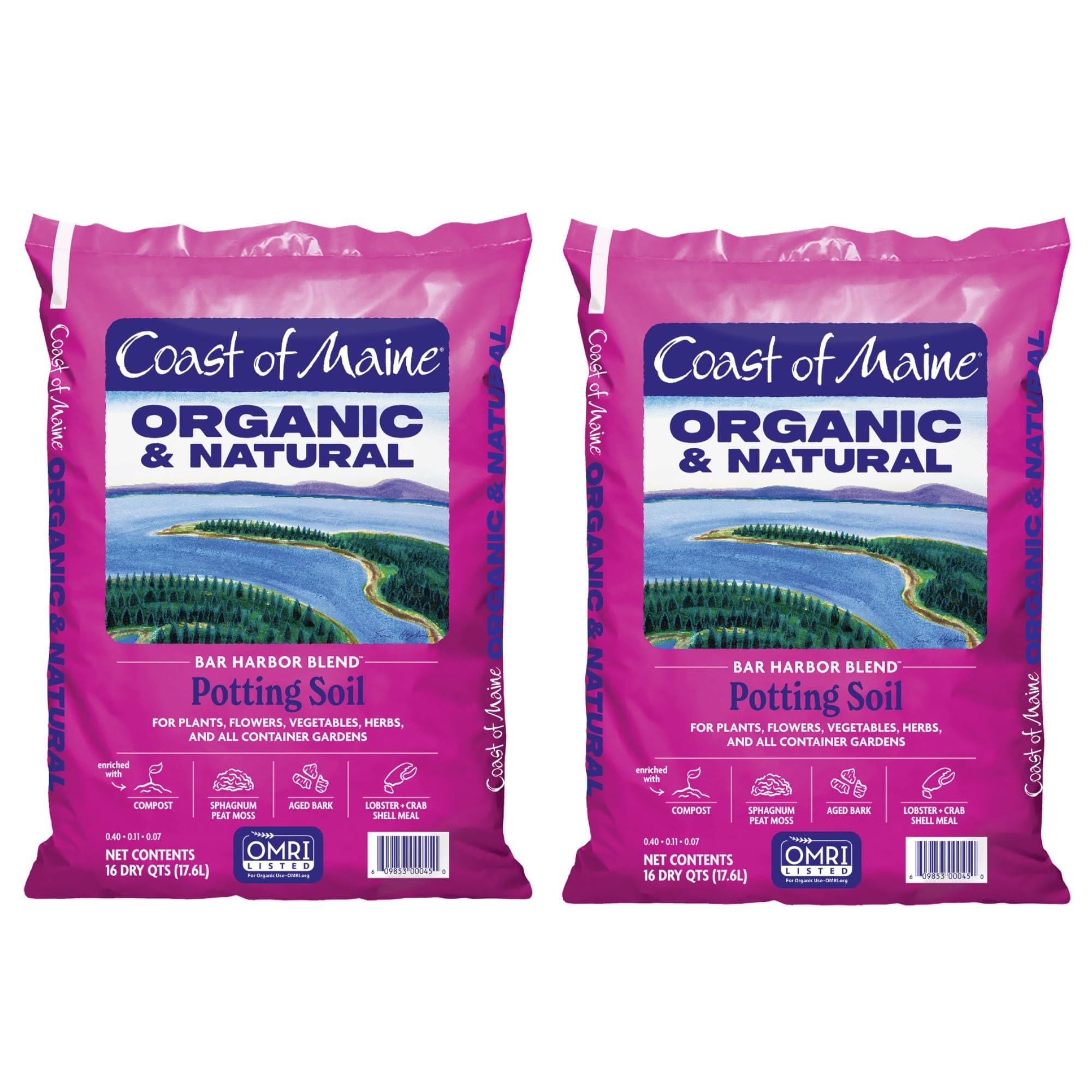
The Bar Harbor Blend stands out for its complex organic base: sphagnum peat moss, compost, perlite, lobster and crab shell meal, and kelp meal. This combination delivers slow-release nitrogen and trace minerals that peonies love, while the perlite ensures the mix stays airy enough for deep root exploration in a container. The 16-quart size is ideal for several 12- to 14-inch pots without leaving waste.
Multiple owners report noticeably darker foliage and stronger stem growth after switching to this mix. The inclusion of lobster shell meal provides a natural calcium boost that supports cell wall strength in developing peony buds. The soil also arrives with a rich, earthy smell rather than the stagnant odor of over-processed composts.
One reviewer noted their tomatoes never looked better after switching to this brand, and another mentioned the compost content gives it a darker color with lower peat moss ratio — exactly the kind of balanced organic matter that peonies need without excessive acidity.
What works
- Nutrient-dense with natural slow-release amendments
- Excellent drainage and aeration for container roots
- OMRI listed for organic gardening
What doesn’t
- Premium price per quart versus basic mixes
- Heavier than perlite-heavy blends
2. Grow Queen Craft Houseplant Potting Mix
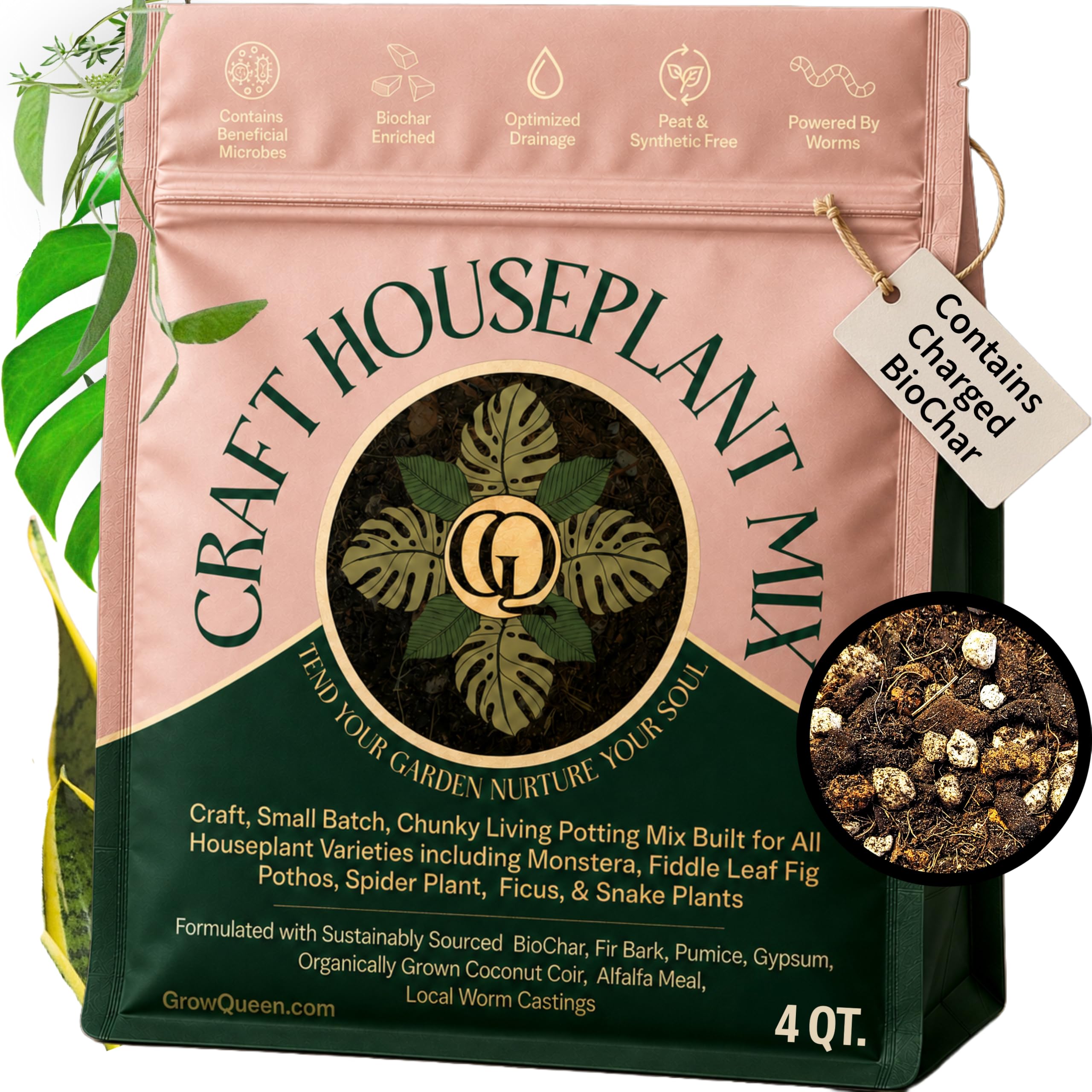
This mix is engineered to resist overwatering — a problem that kills more potted peonies than anything else. The chunky blend of Douglas fir bark fines, lava rock, and pumice creates large air pockets that let water run through quickly while still holding enough moisture between bark pieces. It arrives pre-moistened, so you never fight dry hydrophobic patches when potting up new peony divisions.
The bioactive formulation includes premium organic worm castings that feed roots without burning, and charged biochar technology helps retain nutrients even in small containers. Peonies with fleshy, thick roots benefit enormously from the open structure that prevents the soil collar from compacting around the crown over time.
Monstera owners rave about this mix, but the same drainage physics apply perfectly to peonies. One reviewer specifically noted their Monstera Thai Constellation unfolded a new leaf after repotting — that kind of root response translates directly to peony root establishment in containers.
What works
- Near-impossible to overwater with this structure
- Peat-free and perlite-free for cleaner handling
- Pre-moistened to reduce transplant shock
What doesn’t
- 4-quart bag is small for large pots
- Price per quart is higher than all-purpose blends
3. Michigan Peat All Purpose Premium Potting Soil

When you’re filling multiple large containers or a raised bed section, the 50-pound Michigan Peat bag offers unmatched value without sacrificing quality. The mix combines rich dark reed sedge peat with perlite and sand to create a stable structure that doesn’t collapse under the weight of heavy peony root systems. Starter and slow-release fertilizers are already blended in, providing a steady nutrient supply for the first few months.
This soil arrives consistently moist, which is a plus for immediate planting but requires some aeration if stored before use. The sand component adds enough weight to anchor peony roots in taller pots, reducing the chance of the plant toppling over in wind. Multiple gardeners confirm the consistency is reliable bag after bag.
Some buyers have noted fungus gnats emerging from the bag, which is a common risk with organic peat-based mixes. Air-drying the soil or treating with neem oil before potting can mitigate this issue. The sheer volume makes it a top choice for serious peony collectors with many pots to fill.
What works
- Excellent volume for the investment
- Includes slow-release fertilizer for early growth
- Sand adds weight for stable container positioning
What doesn’t
- Some reports of fungus gnats
- Heavy bag can be difficult to transport
4. Miracle-Gro Potting Mix (3-Pack)

Miracle-Gro’s potting mix is the benchmark for consistency in container gardening. The three 8-quart bag bundle gives you 24 quarts total, which is enough to fill three 14-inch pots or five 10-inch pots for peonies. The mix is lightweight, drains reliably, and includes a fertilizer that feeds for up to six months — a useful feature for peonies that demand consistent nutrition during their spring growth surge.
The texture stays loose throughout the growing season, resisting the hard compaction that chokes peony roots in cheaper soils. Water channels through the mix evenly, and the perlite content remains visible even after several waterings. For gardeners who want predictable results without custom-blending, this is a solid choice.
One reviewer highlighted how the soil doesn’t pack down hard around roots, making it easy to keep loose and ensure water reaches the root zone. The smaller bag size also means you can store unused portions without wrestling a 50-pound sack.
What works
- Consistent drainage across every bag in the pack
- Built-in fertilizer reduces early-season feeding
- Lightweight and easy to handle for multiple pots
What doesn’t
- Not organic — uses synthetic fertilizer
- Can develop hydrophobic spots if allowed to dry completely
5. Coast of Maine Tomato & Vegetable Planting Soil

This 20-quart bag from Coast of Maine brings a composted manure and sphagnum peat moss base that is rich in organic matter without being heavy. Peonies appreciate the slow decomposition of composted manure, which releases nitrogen, phosphorus, and potassium steadily over weeks rather than in a single surge. The mix holds moisture well but drains freely enough for container use.
Multiple gardeners specifically recommend this blend for heirloom tomatoes, which share peonies’ need for good drainage and rich organic content. The lightweight texture makes it easy to work into large pots, and the OMRI listing confirms it meets organic standards. The cedar and aromatic wood content noted by some users may help deter insects around the soil surface.
One reviewer mentioned that the soil holds moisture well, drains well, and is high in nutrients while remaining lightweight — exactly the trifecta peonies need. Some users did report fungus gnats, so airing out the mix before potting is advisable.
What works
- Rich organic base with composted manure
- Lightweight texture for easy container filling
- Good moisture retention without waterlogging
What doesn’t
- Some bags may contain wood chips
- Fungus gnats possible in organic compost blends
6. Midwest Hearth Premium Potting Soil Mix

Midwest Hearth’s formula uses the professional grower blend of peat moss, vermiculite, and perlite, each chosen for its specific role. The peat moss provides consistent moisture retention, the vermiculite adds cation exchange capacity to hold nutrients, and the perlite ensures drainage channels stay open. The pH is controlled to sit in the 6.5 to 7.0 range, aligning perfectly with peony preferences.
The 8-quart bag is compact but sufficient for a couple of 12-inch pots or one deeper container. Users report the soil has a light, fluffy texture that avoids the hardening that can strangle peony roots over a full season. It arrived free of weeds and insects, a bonus for indoor use.
A reviewer growing petunias commented that the soil promoted strong germination and root growth, and noted the resealable bag keeps unused mix fresh. One user did observe that dry soil can repel water if not pre-soaked — a quick misting before potting solves this.
What works
- pH stabilized for neutral-loving perennials
- Fluffy texture resists compaction in pots
- Made in USA with consistent quality control
What doesn’t
- Smaller bag size limits large-scale use
- Can be hydrophobic if allowed to dry out completely
7. DUSPRO 8in1 Aroid Potting Mix
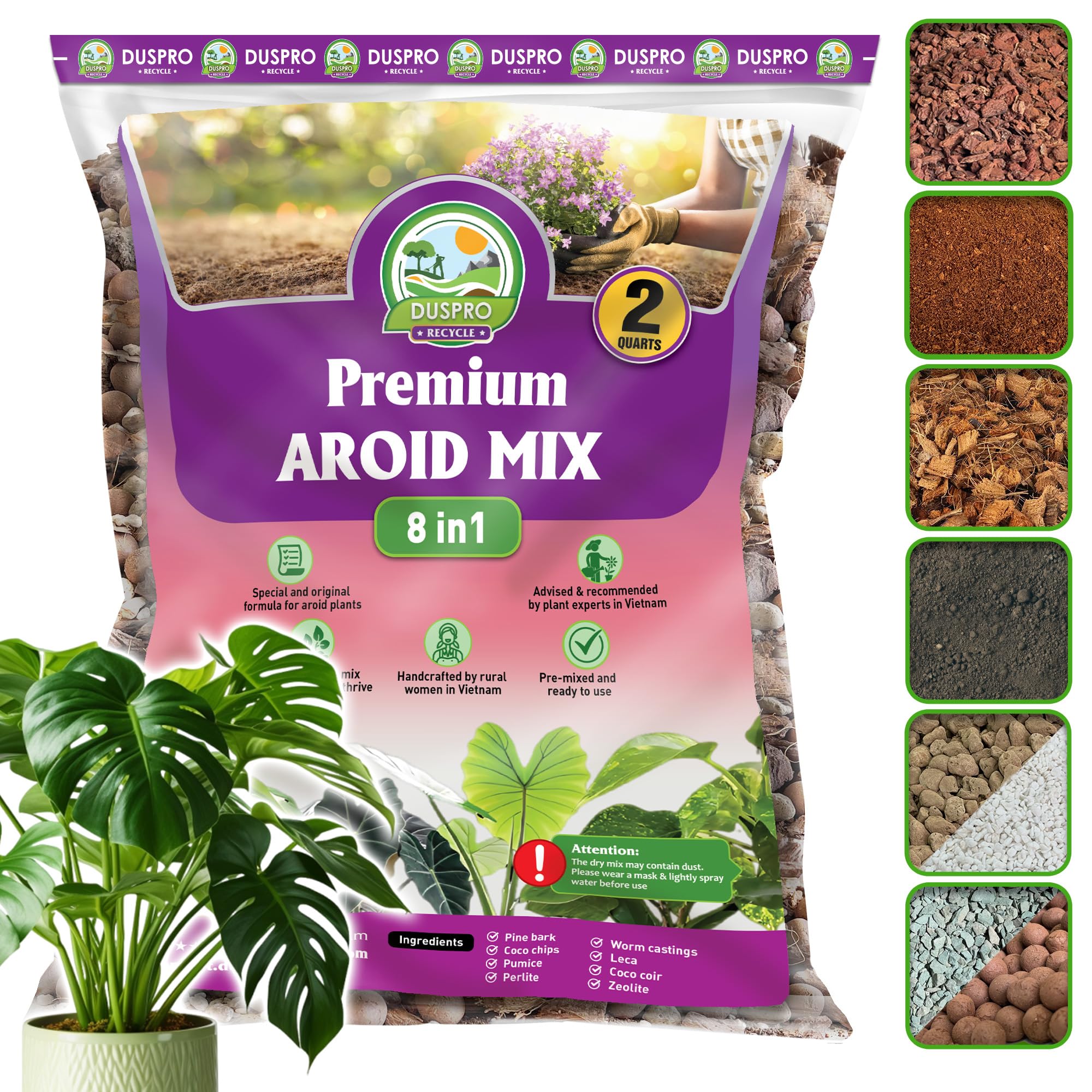
The DUSPRO 8in1 is a chunky pre-mixed blend featuring pine bark, coco chips, pumice, LECA, perlite, zeolite, and worm castings. While marketed for aroids, its open structure and balanced moisture management make it a viable candidate for small peony pots where drainage is critical. The 2-quart size is best for a single compact pot or emergency repotting when you need a quick, well-draining option.
Each component serves a purpose: pine bark and coco chips maintain structure, pumice and LECA provide weight and air pockets, and zeolite helps buffer nutrient availability. The worm castings add gentle organic nutrition without overwhelming a newly potted peony division. It arrives ready to use with no mixing required.
One reviewer successfully used this mix to revive an orange tree by replacing heavy soil around the roots — a good sign that the drainage improvement is real. The bag can get dusty toward the bottom, and 2 quarts goes fast if you’re potting multiple plants.
What works
- Extremely chunky structure prevents waterlogging
- Pre-mixed and ready to use from the bag
- Worm castings provide gentle organic nutrition
What doesn’t
- Small bag size limits large container use
- Dusty toward the bottom of the bag
Hardware & Specs Guide
pH Range
Peonies perform best when soil pH sits between 6.5 and 7.0. Most premium potting mixes are pre-adjusted to this range, but blends heavy in uncomposted peat can dip below 6.0. A simple soil pH test before planting can save you from yellowing leaves and stalled growth later in the season. Mixes containing dolomitic lime or oyster shell flour are often pre-balanced for neutral-loving plants.
Drainage Speed
The ideal potting soil for container peonies should drain excess water within 1 to 2 hours after a thorough watering. You can test this by watering a filled pot and checking for standing water. Mixes with perlite, pumice, or coarse sand consistently pass this test. Soils that remain saturated for 4+ hours will promote root rot in peony’s thick storage roots.
FAQ
Can I use regular garden soil for peonies in pots?
Should I add extra perlite to my peony potting mix?
How often should I repot peonies with fresh soil?
Final Thoughts: The Verdict
For most gardeners, the soil for peonies in pots winner is the Coast of Maine Bar Harbor Blend because its lobster shell and kelp meal provide the slow-release organic nutrition and calcium peonies need, while the perlite and compost ensure consistent drainage in containers. If you want a mix that is nearly impossible to overwater and arrives pre-moistened, grab the Grow Queen Craft Mix. And for bulk value when filling multiple large pots, nothing beats the Michigan Peat All Purpose 50-pound bag.