
The difference between a garden that merely survives and one that produces an overwhelming harvest often comes down to one choice you make before a seed even hits the soil. Granular synthetics push fast green growth but leave your soil biology starved, while organic options feed the microbial engine that makes nutrients plant-available over time — picking the wrong one can lock you into a cycle of dependency and diminishing returns.
I’m Rikta — the co-founder and writer behind Lawn Gear Lab. I’ve spent hundreds of hours comparing NPK ratios, analyzing micronutrient profiles, studying how different organic carriers release their payloads, and cross-referencing verified owner feedback to separate the truly effective formulations from the marketing claims.
This guide breaks down the top performers across different garden scenarios so you can match a formulation to your specific crop and soil strategy. Whether you’re planting tomatoes, peppers, leafy greens, or ornamentals, finding the best garden fertilizer comes down to understanding what your plants actually need at each growth stage.
How To Choose The Best Garden Fertilizer
Every bag or bottle of garden fertilizer carries three bold numbers — the NPK ratio — that most beginners glance at without understanding their real meaning. The first number (Nitrogen) drives leafy green growth, the second (Phosphorus) supports root development and flower formation, and the third (Potassium) boosts overall plant health and disease resistance. Matching these ratios to your crop’s current growth stage determines whether your plants thrive or just survive.
NPK Ratios for Specific Crops
Leafy greens like lettuce, kale, and cabbage respond best to a higher first number — something in the 5-1-1 or 4-3-3 range pushes lush foliage without sacrificing root strength. Fruiting crops like tomatoes, peppers, and squash benefit from a more balanced or slightly phosphorus-forward formulation such as 3-4-4 or 4-6-2, which encourages bloom set and fruit development without excessive vegetative growth that can delay ripening.
Granular vs. Liquid Delivery
Granular fertilizers release nutrients slowly as soil microbes break them down, making them ideal for pre-planting soil amendment and monthly maintenance feeding. Liquid formulations provide an immediate nutrient boost that reaches roots within hours, perfect for correcting mid-season deficiencies or giving transplants a quick start. The best approach often combines a granular base feed with periodic liquid supplements during peak fruiting.
Organic Certification and Microbial Content
OMRI listing confirms a product meets USDA organic production standards, but the real differentiator is what else is in the bag. Premium organic fertilizers include mycorrhizal fungi, beneficial bacteria, or humates that improve nutrient uptake beyond what the NPK numbers alone deliver. Products with Bio-tone or similar proprietary microbial blends can significantly reduce transplant shock and improve root establishment compared to straight composted manure or single-source meals.
Quick Comparison
On smaller screens, swipe sideways to see the full table.
| Model | Category | Best For | Key Spec | Amazon |
|---|---|---|---|---|
| FoxFarm Happy Frog All Purpose | Granular Organic | General garden feeding with microbial boost | 6-4-5 NPK with soil microbes | Amazon |
| Alaska Fish Fertilizer 5-1-1 | Liquid Organic | Vegetative growth and leafy greens | 5-1-1 NPK liquid concentrate | Amazon |
| Espoma Organic Garden-Tone 3-4-4 | Granular Organic | Tomatoes, peppers, and warm-season crops | 3-4-4 NPK with 5% calcium | Amazon |
| Down To Earth All Purpose 4-6-2 | Granular Organic | Transplants and container vegetables | 4-6-2 NPK with kelp meal | Amazon |
| Espoma Bio-Tone Starter Plus 4-3-3 | Granular Starter | Transplanting and root establishment | 4-3-3 with endo/ecto mycorrhizae | Amazon |
| The Grow Co Fish Emulsion 2-3-1 | Liquid Organic | Frequent light feeding all season | 2-3-1 NPK, 128 oz per gallon | Amazon |
| Jobe’s Organics All Purpose 4-4-4 | Granular Organic | Large gardens and broad-spectrum feeding | 4-4-4 NPK, 16 lb resealable bag | Amazon |
In‑Depth Reviews
1. FoxFarm Happy Frog All Purpose Fertilizer

The Happy Frog All Purpose formula from FoxFarm stands apart because of its 6-4-5 NPK profile, which is notably higher in nitrogen than most organic granular blends — making it especially effective for leafy greens and heavy-feeding ornamentals while still providing balanced phosphorus and potassium for general garden use. The inclusion of active soil microbes and mycorrhizal fungi gives it a biological edge that straight composted meals lack, improving nutrient cycling and water absorption at the root zone.
Owner reports consistently mention explosive growth after monthly application, with several gardeners noting that yellowing tomato and zucchini plants regained deep green color within a week. The formulation is OMRI listed and works equally well for in-ground beds, raised planters, and large container setups. The granules are fine enough to work into the topsoil easily without clumping, and the 4-pound bag covers a surprising amount of ground given the concentration level.
The primary drawback is the strong barnyard odor, which can be off-putting for indoor container growing — several users recommend wearing gloves and keeping windows open after application. A few owners also reported white mold forming on the soil surface when they sprinkled the granules too thickly without raking them in. Still, for a single-bag solution that covers vegetables, flowers, and ornamentals with added biological activity, this is the most versatile entry in the category.
What works
- High 6-4-5 NPK provides fast visible greening for hungry plants
- Active soil microbes and mycorrhizae improve long-term soil health
- OMRI listed and safe for organic vegetable production
What doesn’t
- Strong odor lingers for several hours after application
- Thick surface application can lead to white mold growth if not mixed in
- 4-pound bag is relatively small for large garden plots
2. Alaska Fish Fertilizer 5-1-1
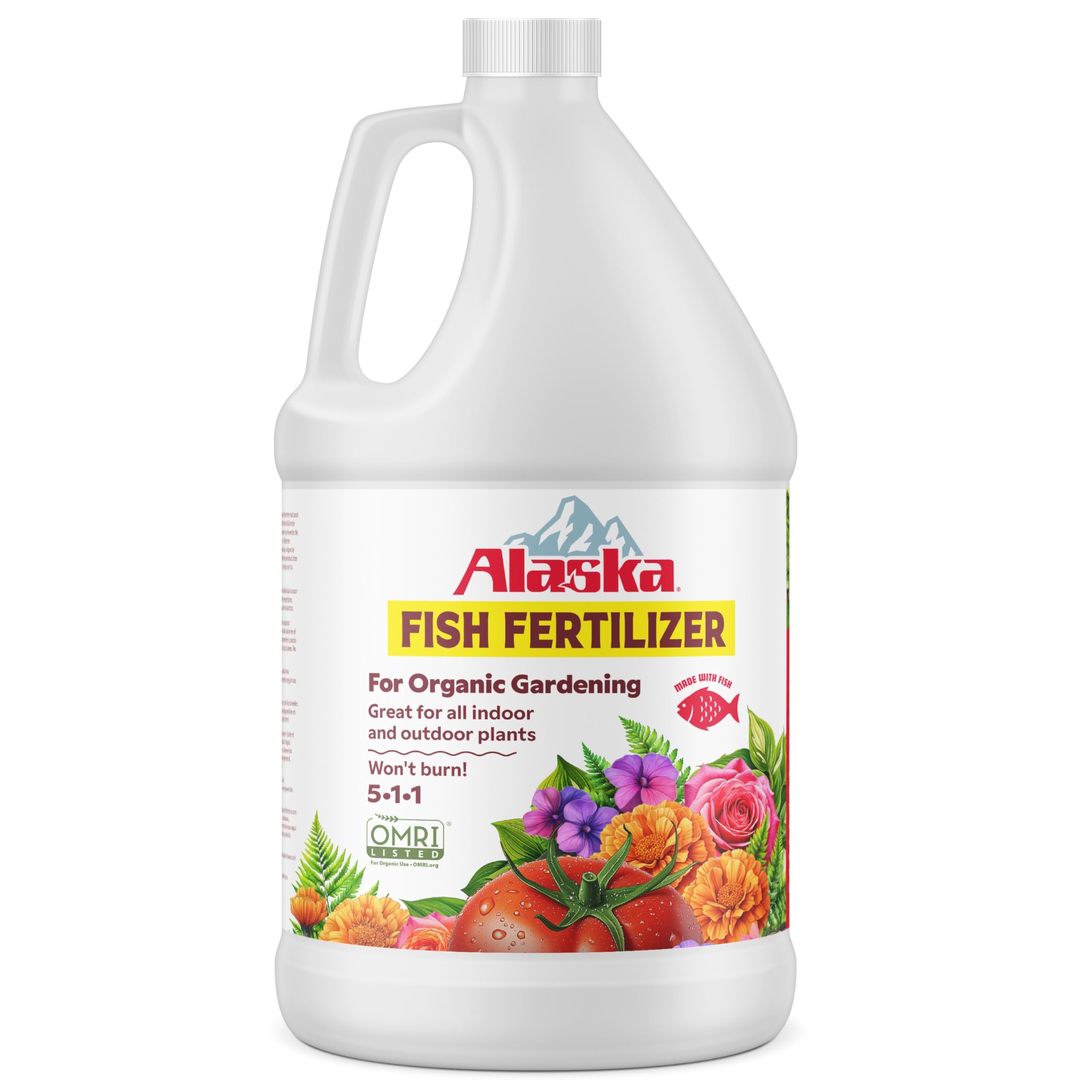
Alaska Fish Fertilizer has been a staple in organic gardening circles for generations, and the 5-1-1 liquid concentrate formulation explains exactly why: the high nitrogen content drives rapid vegetative growth in leafy greens, herbs, and transplant starts without the risk of synthetic burn. The cold-processed hydrolysis preserves amino acids and micronutrients that granular fertilizers cannot deliver, making it an excellent choice for foliar feeding or soil drenching during the early growth phase.
Long-time users report that consistent application every three weeks produces visibly thicker stems, deeper leaf color, and significantly reduced transplant shock when moving seedlings into the garden. The OMRI listing confirms it meets organic production standards, and the 115-fluid-ounce bottle treats up to 1,000 square feet when mixed according to directions. Multiple verified reviewers mention that their vegetable yields improved markedly after switching from synthetic to this fish-based formulation.
The fishy odor is the most commonly cited complaint, though most owners note it dissipates within 24 hours when watered in properly. A few users caution against getting the concentrate on leaves in direct sun, as the oil content can cause burn spots. For gardeners focused on pushing vegetative growth in cool-season crops or giving heavy feeders a nitrogen boost, this liquid delivers results faster than any granular alternative.
What works
- 5-1-1 NPK is ideal for leafy greens and early vegetative push
- Cold-processed liquid preserves natural micronutrients and amino acids
- OMRI listed and safe for all organic garden applications
What doesn’t
- Strong fishy smell can be overwhelming, especially indoors
- Lower phosphorus and potassium may require supplement for fruiting crops
- Liquid concentrate requires measuring and mixing each application
3. Espoma Organic Garden-Tone 3-4-4

The Espoma Garden-Tone 3-4-4 granular formula is specifically engineered for vegetables, with a phosphorus-forward NPK ratio that encourages strong root development and abundant flower set in warm-season crops like tomatoes, peppers, squash, and melons. The 5% calcium content is a critical differentiator — calcium deficiency is the primary cause of blossom-end rot in tomatoes, and this formulation provides a steady supply through the growing season without requiring separate amendments.
Verified owners consistently describe this as their go-to fertilizer, noting that it does not burn plants even when applied generously around the drip line. One urban gardener reported harvesting 400 pounds of tomatoes and 100 pounds of carrots from a single-season garden using Garden-Tone as the primary feed. The Bio-tone proprietary microbial blend enhances nutrient cycling in the root zone, and the 4-pound bags come as a two-pack, providing good coverage for a medium-sized vegetable garden through the full season.
The granules do produce a noticeable organic odor, though most users find it milder than fish-based or manure-based alternatives. A small number of reviewers mentioned that the initial application felt slightly hot on young transplants, but the plants recovered quickly once the microbes established. For dedicated vegetable gardeners who want a single-bag solution tailored to fruiting crops with built-in calcium protection, this is the most targeted option available.
What works
- 3-4-4 NPK with 5% calcium prevents blossom-end rot in tomatoes
- Bio-tone microbes improve nutrient availability in the root zone
- Two-pack format provides full-season coverage for medium gardens
What doesn’t
- Organic odor is present, though less intense than fish emulsion
- Can feel slightly hot on very young transplants if over-applied
- Requires monthly reapplication throughout the growing season
4. Espoma Organic Bio-Tone Starter Plus 4-3-3
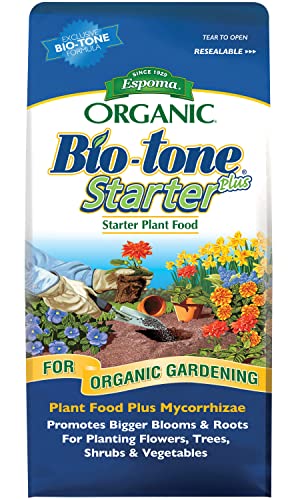
The Espoma Bio-Tone Starter Plus is not designed for ongoing maintenance feeding — it is a specialized transplant and seeding formula that includes both endo and ecto mycorrhizal fungi, giving roots a biological head start that straight granular fertilizers cannot provide. The 4-3-3 NPK analysis is intentionally balanced to support initial root exploration without pushing excessive top growth, and the 5% calcium helps strengthen cell walls during the vulnerable establishment phase.
Gardeners who use this product for transplanting report dramatically reduced wilting and faster resumption of growth compared to planting in unamended soil. The application method is straightforward — mix the granules thoroughly with the backfill soil so the mycorrhizae are in direct contact with the root ball. Multiple long-time users, including prominent garden influencers, cite Bio-Tone as an indispensable part of their planting routine, with several reviewers saying they will not use anything else for new plants.
The smell is notably strong, with many owners describing it as one of the most pungent organic fertilizers they have used — one reviewer called it a stinker but said the results justify the brief olfactory discomfort. The 4-pound bags come as a two-pack, and a single application per plant lasts the entire establishment period. For anyone starting seeds, transplanting seedlings, or installing new perennials, this is the most biologically active option for giving roots a rapid, healthy start.
What works
- Endo and ecto mycorrhizae dramatically improve root establishment
- 4-3-3 NPK is balanced for early root development without burn
- 5% calcium strengthens cell walls during transplant shock recovery
What doesn’t
- Extremely pungent odor that lingers for days
- Formulated for starter use only — not for ongoing maintenance
- Requires thorough mixing into backfill soil for proper efficacy
5. Down To Earth All Purpose Tomato & Vegetable Mix 4-6-2

The Down To Earth All Purpose Mix delivers a 4-6-2 NPK ratio that is noticeably higher in phosphorus than most all-purpose blends, making it particularly effective for promoting flower and fruit development in tomatoes, peppers, and other fruiting vegetables. The ingredient list reads like a soil-building wish list — fish bone meal, blood meal, feather meal, rock phosphate, langbeinite, greensand, humates, and kelp meal — each contributing specific micronutrients that synthetic single-source fertilizers cannot match.
OMRI listed and formulated to be gentle enough for containers and transplants, this granular mix works well both as a pre-planting soil amendment and as a side-dressing during the growing season. Verified reviewers consistently describe it as a complete organic fertilizer that simplifies what would otherwise require multiple separate amendments. Several gardeners noted that their vegetable plants showed visible improvement within two weeks of application, with fuller foliage and more abundant blooms than previous seasons.
The primary trade-off is the strong organic smell, though most users find it dissipates within a few days after watering in. The 5-pound box is a manageable size for small to medium gardens, but gardeners with large plots may need multiple boxes to cover the entire season. For value-conscious organic growers who want high phosphorus for fruit production without paying for premium branding, this formulation delivers excellent results at a reasonable per-pound cost.
What works
- 4-6-2 NPK is phosphorus-rich for strong flower and fruit development
- Diverse ingredient blend provides broad micronutrient coverage
- OMRI listed and gentle enough for containers and transplants
What doesn’t
- Strong organic odor is noticeable for several days after application
- 5-pound box runs out quickly for large garden plots
- Granules can clump in humid storage conditions
6. Jobe’s Organics All Purpose Granular Fertilizer 4-4-4

The Jobe’s Organics All Purpose 4-4-4 granular fertilizer is the most straightforward option in this guide — a perfectly balanced NPK ratio that works for vegetables, flowers, shrubs, trees, and lawns without requiring crop-specific calculations. The 16-pound resealable bag provides enough volume to handle large gardens and multiple applications throughout the season, making it the most cost-effective choice for serious home food production.
Verified owners report impressive yield increases across a wide range of crops, with one reviewer noting that their squash, cucumber, and pepper harvests grew so large that their family could not keep up. The granules are fine enough to work with handheld or broadcast spreaders, and several users mention using it as a liquid feed by steeping one cup of granules in a gallon of dechlorinated water for 24 hours — a versatile approach that provides both granular and liquid options from a single product. The OMRI listing and absence of synthetic chemicals make it suitable for organic gardeners who prioritize soil health over quick green-up.
The 4-4-4 ratio is intentionally conservative, which means heavy-feeding crops like tomatoes and corn may benefit from supplemental phosphorus or nitrogen during peak fruiting. The smell is present but notably milder than manure-based or fish-based alternatives, and the resealable bag design helps keep the granules fresh between applications. For gardeners managing large plots who want a single, balanced organic fertilizer that covers all bases, this is the most practical option in the lineup.
What works
- 16-pound bag provides excellent value for large gardens
- Balanced 4-4-4 NPK works across vegetables, flowers, shrubs, and lawns
- Resealable bag and fine granules work with broadcast spreaders
What doesn’t
- Conservative NPK ratio may need supplemental feeding for heavy-fruiting crops
- Granules require thorough watering in to activate microbial breakdown
- Stronger smell than some synthetic organic blends
7. The Grow Co Organic Fish Emulsion Fertilizer 2-3-1

The Grow Co’s Organic Fish Emulsion takes a different approach from the Alaska 5-1-1 by offering a 2-3-1 NPK ratio that is slightly phosphorus-forward, making it more suitable for plants transitioning from vegetative growth into flowering and fruiting. The 128-ounce bottle is concentrated at a 1:100 mixing ratio, meaning a single bottle can produce over 160 gallons of liquid feed — stretching further than any other liquid option in this guide and making it the most economical choice for large gardens that use weekly liquid feeding.
Long-time organic gardeners praise the formulation for its sustainably sourced, cold-pressed processing that preserves natural vitamins and amino acids. The lower nitrogen content reduces the risk of leaf burn during hot weather applications, and several reviewers report excellent results using it as a soil drench to stimulate beneficial microbial activity. One 50-year gardening veteran noted that combining this fish emulsion with rainwater tea and kelp produced the most vigorous growth and abundant vegetable harvest they had ever achieved.
The fishy odor is authentic and strong — the manufacturer explicitly states that if it does not smell like fish, it is not real product. The consistency is thinner than some competing emulsions, which makes measuring easier but can feel less concentrated than what some gardeners expect. For budget-conscious growers who want a liquid organic feed that supports bloom development and can be applied frequently without overloading nitrogen, this gallon-sized bottle delivers the best cost-per-gallon coverage.
What works
- 2-3-1 NPK is balanced for flowering and fruiting stage feeding
- 1:100 concentration produces over 160 gallons of liquid feed per bottle
- Sustainably sourced and cold-pressed to preserve natural nutrients
What doesn’t
- Strong fishy odor requires outdoor mixing and application
- Thinner consistency than some thicker salmon emulsions
- Requires weekly mixing and measuring for consistent results
Hardware & Specs Guide
NPK Ratios Decoded
Every fertilizer label displays three numbers representing the percentage by weight of Nitrogen, Phosphorus, and Potassium. A 5-1-1 formula contains 5% nitrogen, 1% phosphorus, and 1% potassium — the remaining weight is filler material and micronutrients. For leafy greens and early vegetative growth, choose a ratio where the first number is highest. For flowering and fruiting crops, look for a higher middle or balanced ratio like 3-4-4 or 4-6-2. The total sum of the three numbers indicates how concentrated the fertilizer is; higher totals mean you use less product per application.
Mycorrhizae and Microbial Inoculants
Mycorrhizal fungi form symbiotic relationships with plant roots, extending the root system’s reach into the soil and improving phosphorus and water uptake. Premium organic fertilizers often include endo mycorrhizae (which penetrate root cells) and ecto mycorrhizae (which wrap around root surfaces). Products like Espoma’s Bio-Tone Starter Plus include both types, making them particularly effective for transplants and seedlings where rapid root establishment is critical. Beneficial bacteria in the soil also break down organic matter into plant-available nutrients, which is why microbial-rich fertilizers consistently outperform sterile synthetic blends in long-term soil health trials.
FAQ
How often should I apply granular organic fertilizer to my vegetable garden?
Can I use the same fertilizer for vegetables and flowers in raised beds?
Why does organic fertilizer smell so strong and does the odor harm my plants?
Final Thoughts: The Verdict
For most gardeners, the best garden fertilizer winner is the FoxFarm Happy Frog All Purpose because its 6-4-5 NPK ratio, active soil microbes, and OMRI certification provide the most complete single-bag solution for vegetables, ornamentals, and containers alike. If you want targeted feeding for tomatoes and peppers with built-in calcium protection, grab the Espoma Organic Garden-Tone 3-4-4. And for large gardens where cost per square foot matters most, nothing beats the volume and versatility of the Jobe’s Organics 4-4-4 in its 16-pound resealable bag.