
Thick blackberry brambles, 2-inch saplings, and dense overgrowth that stops a standard string trimmer cold are the real-world tests of a serious brush cutter. The difference between a tool that fights you and one that chews through is in the engine displacement, blade design, and shaft construction—details that separate the pasture-clearing workhorses from the weekend weed wackers.
I’m Rikta — the co-founder and writer behind Lawn Gear Lab. After many hours spent analyzing motor specs, gear ratios, blade materials, and owner feedback across dozens of models, this guide zeroes in on the concrete metrics that actually predict brush-cutting performance.
Whether you manage a large rural lot or need professional-grade clearing power, understanding your options starts with a clear-eyed look at the best brush cutter models that deliver real cutting torque where it counts.
How To Choose The Best Brush Cutter
A brush cutter is a different beast from a string trimmer, though many tools combine both functions. The core difference is the blade—a metal disc with teeth—that chops woody stems rather than slicing grass blades. Three variables dominate the buying decision: engine or motor displacement, blade type and diameter, and the ergonomic system that lets you swing this weight for hours.
Engine Displacement: The Real Power Number
Ignore peak horsepower claims. For gas brush cutters, the displacement in cubic centimeters (cc) tells you what you can reliably cut. A 26cc engine handles thick grass and light brush up to about 1/2 inch. A 30.5cc professional engine (like the ECHO SRM-3020T) delivers the torque to chew through 1-inch saplings and 6-foot brush without bogging down. For battery-powered units like the Makita 36V system, look at the brushless motor RPM tiers—7100 RPM in high gear with variable speed control gives you the fine-grained power management that gas lacks.
Blade Design: Tooth Count and Material
The blade determines what you can actually cut. A 2-tooth grass blade is light and efficient for tall grass and light weeds. A 3-tooth steel blade (like the EGO Power+ BCA1220) handles blackberries and saplings up to 2 inches. A 4-tooth or multi-tooth blade with carbide tips extends into professional clearing territory. Diameter matters too—a 10-inch blade fits most universal brush cutter heads, while 12-inch blades offer more leverage but require a more powerful engine to spin effectively. The material (hardened steel vs stamped steel) determines how often you need to sharpen or replace the blade.
Shaft Construction: Carbon Fiber vs Steel vs Aluminum
The shaft transmits torque from the engine to the blade, but more importantly, it absorbs vibration. Carbon fiber shafts (found on the EGO BCA1220) are the lightest and transmit the least vibration—critical for long clearing sessions. Steel shafts (common on budget gas trimmers) are durable but heavy and transmit more vibration to your hands. Aluminum shafts sit in between, balancing weight and cost. Look for a solid steel drive shaft inside the outer tube, not a flexible cable, for reliable torque delivery to the blade head.
Ergonomics and Support System
Brush cutting is strenuous work. A proper harness or shoulder strap distributes the 12-23 pound weight of the machine across your shoulders rather than your arms. Look for an adjustable harness with a quick-release buckle—the Husqvarna models include a barrier bar with J-handle that encourages safer working positions. Loop handles (bike-style) give two-handed control for precision, while J-handles allow one-handed swinging for long passes. Anti-vibration systems (LowVib on Husqvarna, aluminum engine support on Wild Badger Power) reduce fatigue directly.
Quick Comparison
On smaller screens, swipe sideways to see the full table.
| Model | Category | Best For | Key Spec | Amazon |
|---|---|---|---|---|
| Husqvarna 330LK | Mid-Range | Large area trimming & brush | 28cc, 20″ cutting width, 8000 RPM | Amazon |
| Makita XUX01ZM5 | Premium | Battery power users | 36V Brushless, 7100 RPM, 3-speed | Amazon |
| ECHO SRM-3020T | Premium | Professional brute force | 30.5cc, 1.8HP, 2:1 gear ratio | Amazon |
| Husqvarna 122RJ | Mid-Range | Multi-purpose brush clearing | 26cc, 17″ cutting width, grass blade | Amazon |
| ECHO PAS-225VP | Mid-Range | Versatile PAS system | 21.2cc, 17″ cutting width, edger | Amazon |
| EGO Power+ BCA1220 | Mid-Range | Battery attachment system | 12″ 3-tooth steel blade, carbon fiber shaft | Amazon |
| Wild Badger Power WB26MTSE | Budget | Multi-tool value bundle | 26cc, 17″ string, 10″ blade, hedge trimmer | Amazon |
| AMERISUN 26cc | Budget | Entry-level gas brush cutting | 26cc, 16″ cutting width, metal blade | Amazon |
| Ryobi OBC1820B | Budget | 18V ONE+ battery system | 18V, 20cm blade, 30cm line path | Amazon |
In‑Depth Reviews
1. ECHO X Series SRM-3020T
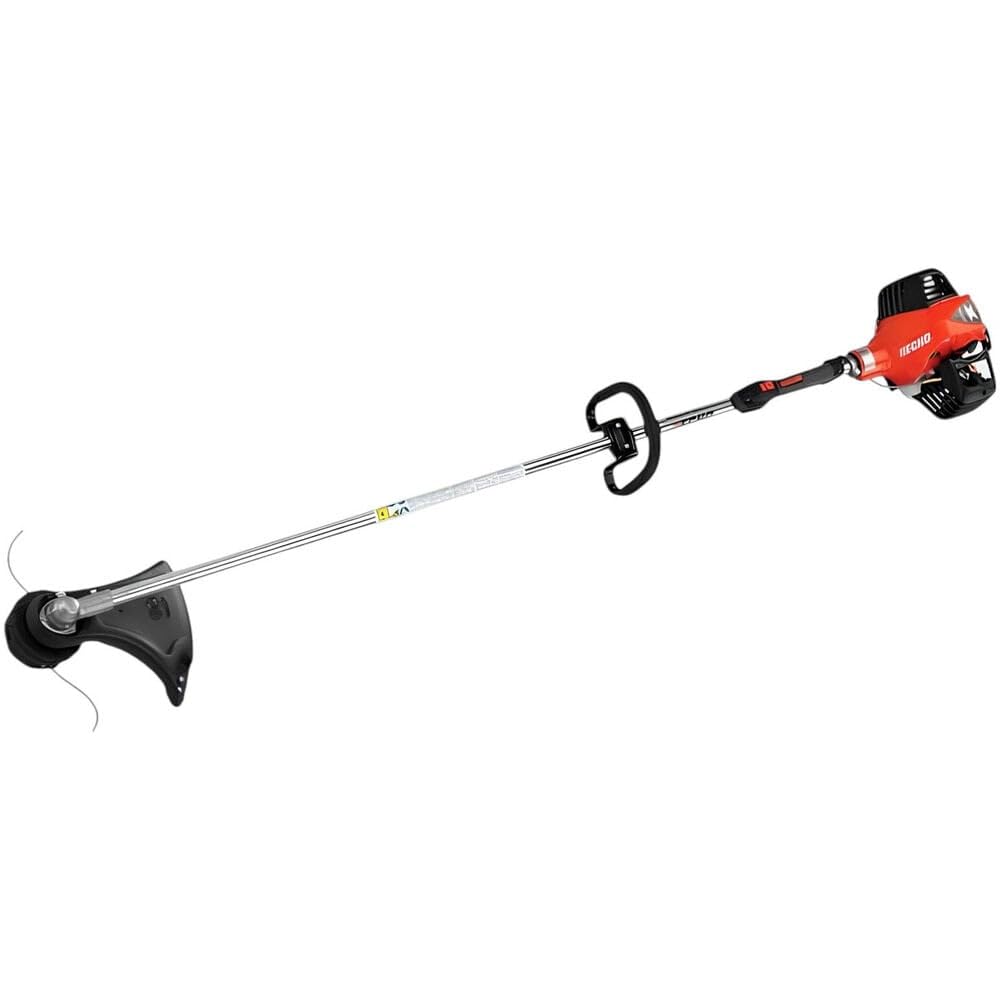
The ECHO SRM-3020T sits at the top of the displacement chart with a 30.5cc professional-grade engine that belts out 1.8HP and spins up to 10,000 RPM. The 2:1 high-torque gear ratio is the defining spec here—it trades top speed for grinding torque, letting the blade plow through 1-inch saplings and 6-foot brush without bogging down. Owner feedback confirms it loads .155-inch trimming line without modification and pulls aggressively through tough overgrowth.
The two-stage air filtration system is a genuine professional feature, dramatically extending cleaning intervals compared to basic foam filters. Tool-less access means you can service the air filter in the field without carrying a wrench. Rubber front and rear grips reduce vibration transfer, though the total unit weight approaches 13 pounds, making the harness mandatory for extended use.
The 12-inch cutting width is narrower than some entry-level models, but the trade-off is deliberate—smaller diameter keeps the blade speed high for dense material. The 5-year consumer and 2-year commercial warranty reflects ECHO’s confidence in the pro-grade build. For landowners clearing heavy overgrowth weekly or commercial landscapers needing reliable torque, this is the benchmark unit.
What works
- 30.5cc engine delivers class-leading torque through 1-inch saplings
- Two-stage air filtration with tool-less access for long service intervals
- 2:1 high-torque gear ratio prevents stalling in dense brush
What doesn’t
- Narrow 12-inch cutting width requires more passes on open fields
- Heavy unit demands a good harness for full-day use
- Some owners report cold-start difficulty despite the air purge system
2. Makita XUX01ZM5 36V Brushless

The Makita XUX01ZM5 redefines what battery-powered brush cutting can do. Running on two 18V LXT batteries wired in series for 36V, the brushless motor offers three speed tiers—4,200, 6,000, and 7,100 RPM—with a variable-speed trigger for precise control. Owner reports confirm runtime up to 2 hours on a pair of 5.0Ah batteries, outperforming 25cc gas trimmers in both power and endurance for typical clearing tasks.
The 15-inch cutting width with the included string trimmer attachment is narrow enough to maintain blade speed, and the lever-style lock system lets you swap attachments without tools. The couple shaft system is proprietary—Makita-compatible attachments only—but the build quality is exceptional, with a solid steel drive shaft and robust gear head. The unit ships with a storage bag, though the shoulder harness the manual recommends is not included, a notable omission given the 9.8-pound weight.
Owners note the tap-and-feed string head works well with 2.3mm line, and the hedge trimmer attachment can cut limbs up to 3/4 inch. The 3-year limited warranty covers the tool, but batteries and charger are sold separately, raising the effective entry cost. For users already invested in Makita’s 18V LXT platform, this is the most compelling battery brush cutter on the market, delivering gas-equivalent power without the pull-start hassle.
What works
- Brushless motor with 3-speed control offsets gas-level torque
- Up to 2 hours runtime on two 5.0Ah batteries for serious clearing
- Lever-lock attachment system enables tool-free swaps in seconds
What doesn’t
- Batteries and charger sold separately, raising total cost
- Proprietary couple shaft incompatible with universal attachments
- Shoulder harness not included despite 9.8-pound weight
3. Husqvarna 330LK

The Husqvarna 330LK is a 28cc 2-cycle trimmer that doubles as a brush cutter thanks to its attachment-capable design and customizable cutting width. You can switch between 20 inches for maximum coverage on open grass and 18 inches for denser vegetation, giving you two tools in one. The spring-assisted starting system reduces pull effort by 30 percent, and the air purge removes carburetor air for faster startup—owner feedback confirms it starts reliably after the break-in period.
The Rapid Replace trimmer head is a standout convenience feature—just align, load, and twist to reload string without disassembling the head. The straight shaft uses a solid steel drive shaft that delivers reliable torque, and the LowVib anti-vibration system reduces hand fatigue during long sessions. The bike handle design provides two-handed control, ideal for the precision needed when edging near flower beds or fences.
At 12.9 pounds, the 330LK is not light, but the adjustable harness distributes the weight. The detachable shaft opens up the Husqvarna attachment ecosystem—brush cutter blades, pole saws, and cultivators all click on. Some owners report the handle loosening during break-in, but tightening resolves the issue. For large-property owners who need both trimming and brush cutting from one power head, the 330LK strikes an excellent balance of power and versatility.
What works
- 28cc engine with 20-inch cutting width covers large area quickly
- Rapid Replace head enables fast string reload without tools
- Anti-vibration LowVib system reduces arm fatigue
What doesn’t
- Low handle position feels awkward to some users during edging
- Heavy at 12.9 pounds; harness essential for long sessions
- Reported handle loosening issue during break-in period
4. Husqvarna 122RJ
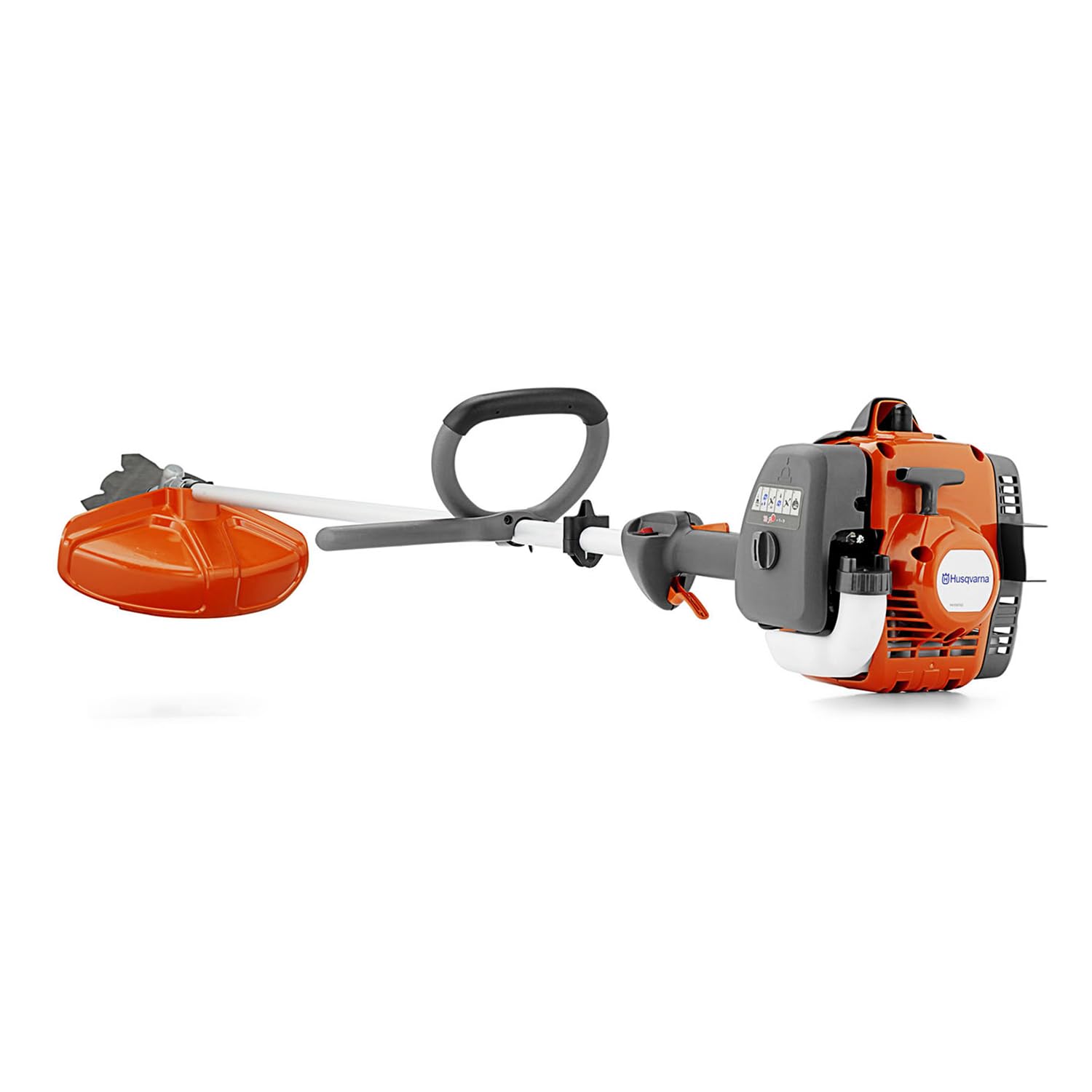
The Husqvarna 122RJ is purpose-built as a brushcutter first, with a 26cc engine, string trimmer head, and a grass blade included in the box. The Smart Start technology combines a specially designed engine and starter for fast, low-effort pulling, and the air purge system removes carburetor air for reliable cold starts. Owner feedback confirms it starts easily and idles smoothly, cutting 1/2-inch brush with authority and handling 1-inch branches in multiple passes.
The barrier bar with J-handle encourages a safer working posture by keeping the blade away from the operator’s body during swinging motions. The straight shaft extends reach for clearing under fences and bushes without stooping. The 17-inch cutting width is narrower than the 330LK but the trade-off is deliberate—the 122RJ is a dedicated brushcutter, not a trimmer that can also cut brush, and the blade placement reflects that focus.
Some units arrived with the protective guard detached or the front plastic plate broken in box, which suggests packaging density issues. The manual does not include restring instructions for the trimmer head, requiring owners to look up the process online. The adjustable harness provides good weight distribution for the 12.6-pound unit. For buyers seeking a dedicated gas brushcutter with proven reliability, the 122RJ delivers consistent cutting performance.
What works
- Dedicated brushcutter design with included grass blade for immediate use
- Smart Start and air purge enable fast, reliable cold starts
- Barrier bar with J-handle improves cutting safety posture
What doesn’t
- Some units arrive with guard detached or plastic damaged in box
- Manual lacks restring instructions for the trimmer head
- Reported motor power loss after 10 hours on a single unit
5. ECHO PAS-225VP
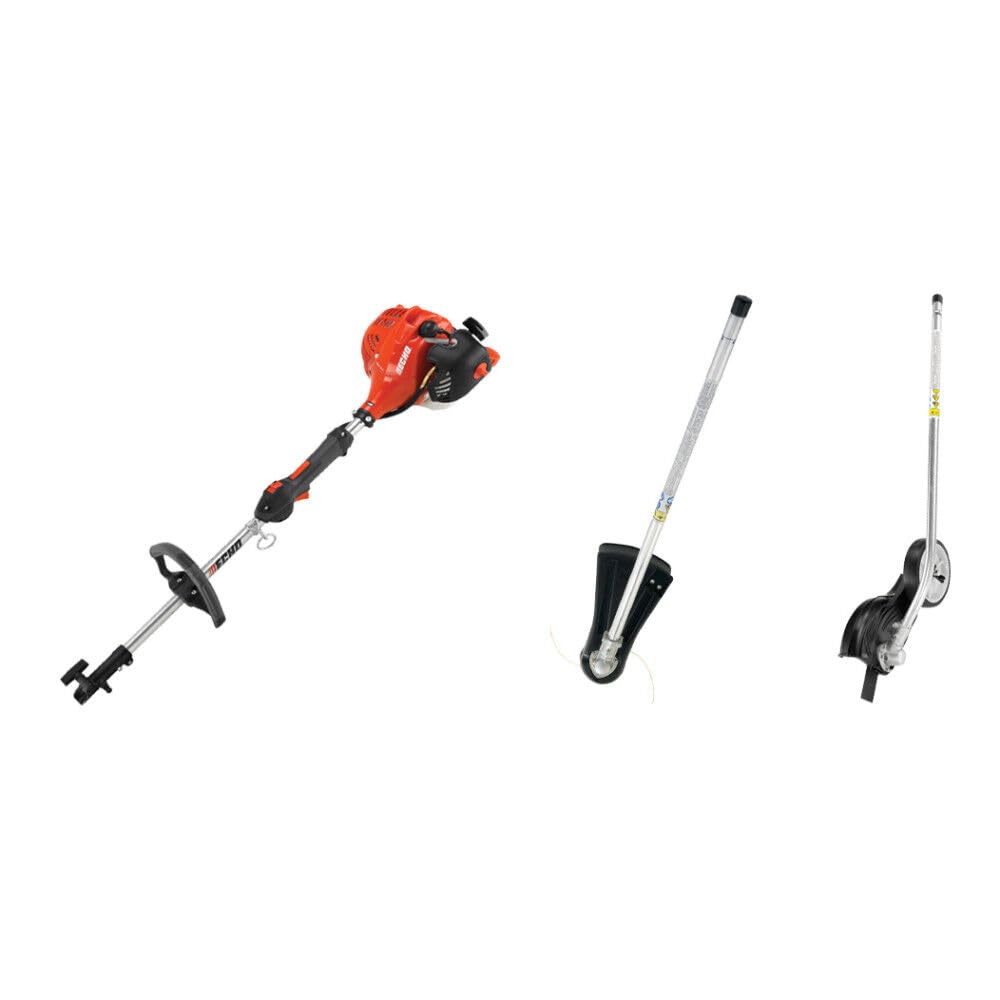
The ECHO PAS-225VP is the entry point into ECHO’s Professional Attachment System (PAS), using a 21.2cc engine that powers both the included string trimmer and edger attachments. At 16.2 pounds it is heavier than most single-function trimmers, but the engine delivers smooth, reliable power that starts on the first pull after priming. Owner feedback from large-property users (30,000 sq ft) confirms the gas power head outperforms 12A electric edgers and eliminates battery life anxiety.
The quick-attach coupler lets you swap between trimmer, edger, brush cutter, and other PAS attachments without tools. The edger attachment is particularly praised for its power—owners report it cuts clean edges in compacted soil without bogging down. The 17-inch cutting width on the trimmer is standard, but the brush cutter attachment (sold separately) uses the same gear head for a 3-tooth steel blade that handles light brush effectively.
The two-stroke engine requires a 50:1 gas-oil mix, and the air filter is accessible without tools for basic maintenance. The vibration levels are moderate—not as refined as Husqvarna’s LowVib system, but acceptable for weekend use. The PAS system is the main selling point: start with the trimmer/edger kit and add attachments as your needs grow. For property owners who want a single power head for multiple tasks, the PAS-225VP is a proven, serviceable platform.
What works
- Proven PAS system with tool-free attachment swapping
- Reliable starting after priming, even in cooler weather
- Edger attachment outperforms 12A electric edgers in power
What doesn’t
- 21.2cc engine is underpowered for heavy brush over 1/2 inch
- Heavy unit at 16.2 pounds without attachments
- Brush cutter attachment sold separately, raising total cost
6. EGO Power+ BCA1220

The EGO Power+ BCA1220 is a brush cutter attachment for EGO’s multi-head system (compatible with PH1420 and similar power heads), using a 3-tooth hardened steel blade with a 12-inch cutting width. The defining feature is the carbon fiber shaft, which reduces overall weight to just 2.2 pounds for the attachment alone and significantly dampens vibration compared to steel or aluminum shafts. Owner feedback is emphatic—this attachment cuts blackberries and saplings up to 2 inches with the aggression of a gas unit, clearing 1,000 sq ft of 8-foot saplings in 30 minutes on low speed.
The maximum speed of 6,000 RPM is lower than some gas offerings, but the 3-tooth blade geometry and carbon fiber shaft make the tool feel lighter and more responsive than the weight would suggest. The IPX4 weather-resistant construction means it can handle damp grass and light rain without worry. The lifetime warranty on the carbon fiber shaft adds confidence, though the plastic guard on the attachment is noted by owners as a weak point that can break under heavy side-loading.
The attachment is exclusively compatible with EGO’s multi-head system, which uses a dedicated power head (sold separately). This makes the BCA1220 ideal for existing EGO users who want to add brush-cutting capability to their tool lineup without buying a second engine. For battery-powered brush cutting, this attachment, paired with a high-capacity EGO battery, delivers gas-equivalent performance with instant-on torque and zero pull-start frustration.
What works
- Carbon fiber shaft is exceptionally light and reduces vibration
- 3-tooth steel blade cuts saplings up to 2 inches aggressively
- IPX4 weather-resistant for damp conditions
What doesn’t
- Plastic blade guard is fragile and breaks under side load
- Exclusive to EGO multi-head power head (sold separately)
- Narrow 12-inch cutting width requires more passes
7. Wild Badger Power WB26MTSE
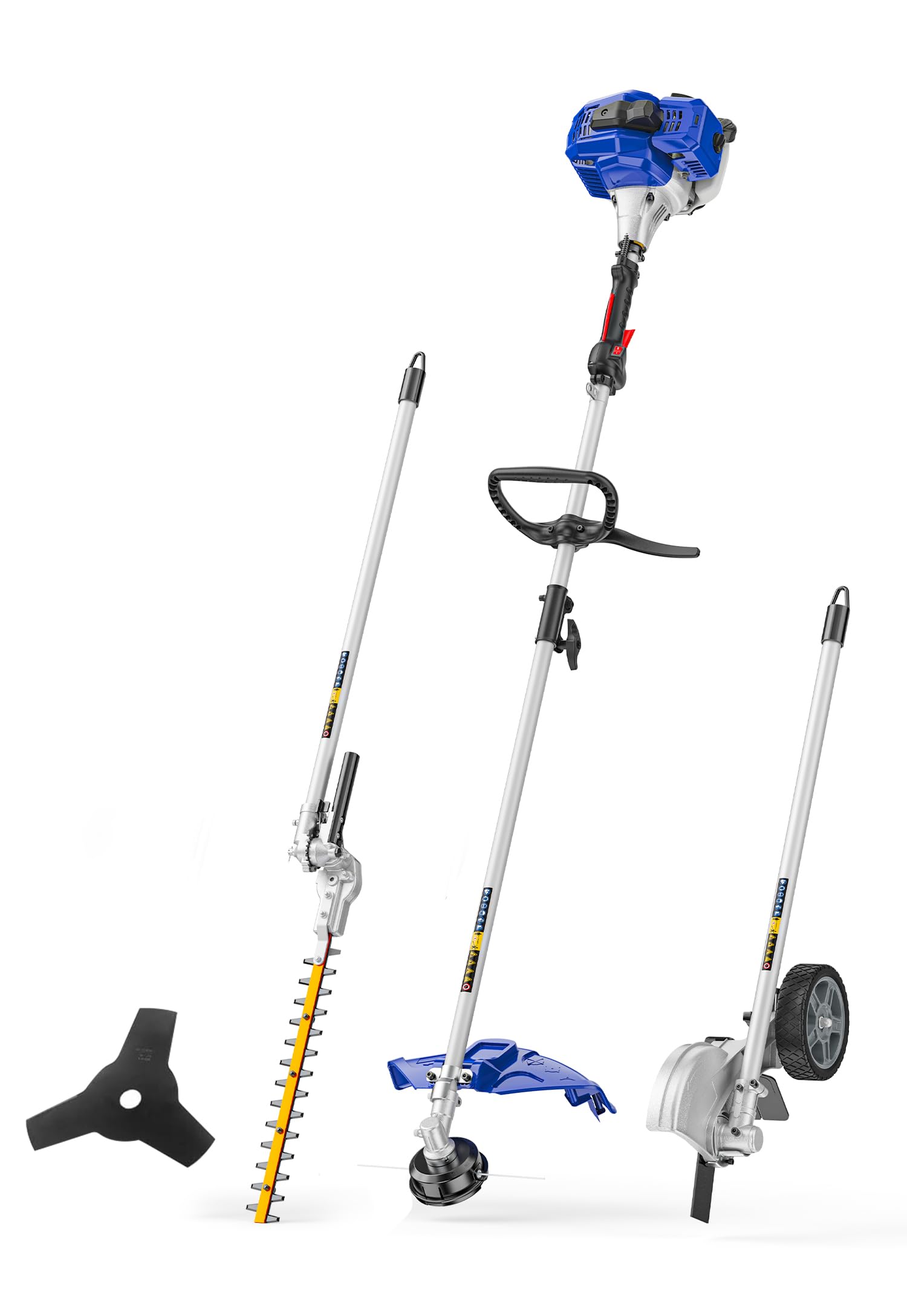
The Wild Badger Power WB26MTSE is a 4-in-1 gas tool that bundles a 17-inch string trimmer, 9-inch wheeled edger, 16-inch hedge trimmer, and a 10-inch brush cutter blade, all driven by a 26cc full-crank 2-cycle engine. The aluminum engine support is a thoughtful design choice—it reduces vibration transfer to the shaft compared to plastic-supported engines at similar price points. Owner feedback reports the brush cutter blade handles thick Weeds and light brush effectively, with the engine staying fuel-efficient for multi-day projects.
The attachment system is compatible with Wild Badger Power’s attachment ecosystem, locking in securely with a tool-less coupler. The 10-inch brush cutter blade is pressed steel, adequate for clearing blackberries and tall weeds but not for saplings over 1/2 inch—the 26cc engine does not have the low-end torque to sustain blade speed through heavier woody material. The wheeled edger attachment is a standout, with a large robust blade that cuts clean edges along driveways and sidewalks.
The pull starter is positioned at an angle that some owners find awkward, and the total weight of 23.85 pounds with all attachments is the heaviest in this guide—the shoulder strap is mandatory, not optional. Some units report fuel tank leakage when tilted during operation, and the hedge trimmer head does not rotate, requiring the entire machine to be tilted for angle cuts. For budget-conscious buyers who need multiple tools from one power head, the Wild Badger delivers impressive attachment variety for the investment.
What works
- Four tools from one power head saves space and money
- Aluminum engine support reduces vibration effectively
- Wheeled edger attachment cuts clean edges with robust blade
What doesn’t
- Heaviest unit in guide at 23.85 pounds with attachments
- Fuel tank can leak when tilted for hedge trimming
- Engine loses RPM quickly under heavy brush load
8. AMERISUN 26cc Gas Weed Wacker
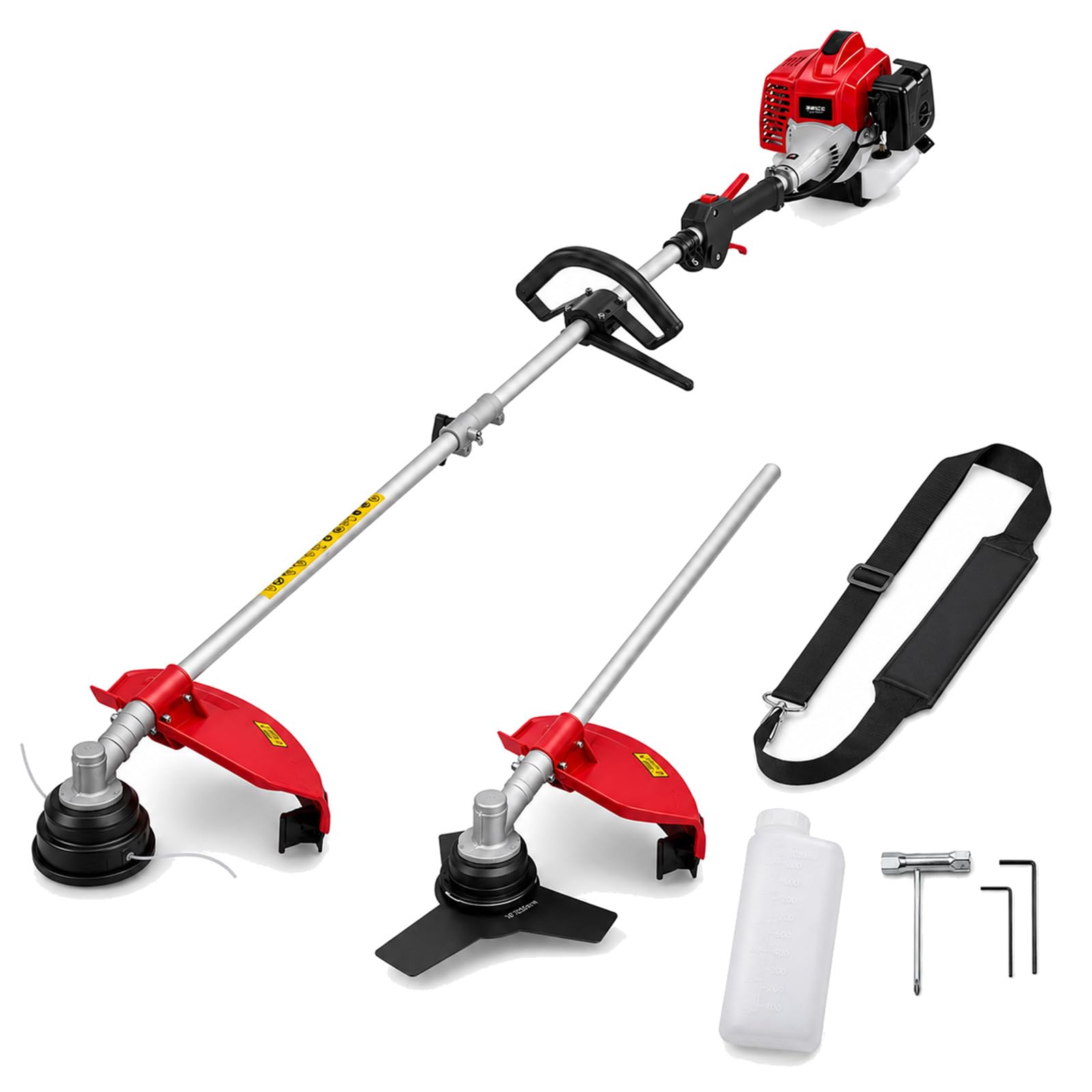
The AMERISUN 26cc is a 3-in-1 gas tool that switches between a 10-inch metal brush cutter blade, a string trimmer head for grass, and an edger setup. The 26cc air-cooled 2-cycle engine with a vertical piston valve delivers consistent torque for its class, with a 16-inch cutting swath that clears large sections in fewer passes. Owner feedback is polarized: some report the tool “rocks” and cleared 5 acres of tumbleweeds in high desert conditions, while others note the trigger broke after two uses and the string feed head is cumbersome to reload.
The aluminum shaft keeps weight manageable at 8.69 kilograms (19.1 pounds), and the rubber handle and shoulder strap reduce fatigue during extended use. The 10-inch metal blade is adequate for thick weeds and light brush, but the engine shows its limitations on woody material over 1/2 inch—it lacks the torque reserve of the ECHO 30.5cc and will bog if pushed too hard. The assembly is straightforward, with breakdown for transport being a notable convenience.
The customer service experience is inconsistent—one owner reported a non-working unit and unhelpful support, while another received a refund for a broken trigger and kept the tool. The string head is noted as difficult to reload, with many owners replacing it with a SpeedFeed 400 aftermarket head. For buyers on a tight budget who need a gas-powered brush cutter for light clearing, the AMERISUN offers usable performance if you are comfortable with potential quality variance.
What works
- 26cc engine starts within 1-3 pulls and runs fuel-efficiently
- 16-inch cutting swath clears large brush areas in fewer passes
- Lightweight for a gas tool; breaks down for compact transport
What doesn’t
- String head is difficult to reload; many replace it immediately
- Reported quality issues: trigger breakage and non-functional units
- Customer service response is inconsistent and slow
9. Ryobi OBC1820B 18V ONE+ Brush Cutter

The Ryobi OBC1820B is an 18V ONE+ brush cutter sold as a tool-only unit, meaning it is intended for users already invested in Ryobi’s 18V battery ecosystem. It includes a 20cm (approximately 7.9-inch) hardened steel Triarc cutting blade and a 30cm (approximately 11.8-inch) line trimmer cutting path, giving you two cutting modes from one tool. The soft-grip bike handle design with variable speed control gives good control for trimming along fence lines and garden beds.
The 18V motor delivers adequate power for tough grass and long weeds, but it struggles with woody stems and saplings over 1/4 inch—this is a line trimmer that can also run a small blade, not a true brush cutter. The British/European model designation (OBC1820B) means Ryobi USA does not officially support it, and some owners report the unit stops running after a few minutes of use after several months. The variable speed trigger helps extend runtime, but without the high-torque gear reduction of the Makita or EGO systems, the blade speed drops significantly under load.
The assembly instructions are a consistent complaint—owners describe them as picture-only diagrams with no written guidance, leading to confusion about part placement. The harness is noted as uncomfortable and difficult to adjust. This tool is only viable for Ryobi ONE+ owners who need occasional light brush trimming from their existing battery platform. For dedicated brush cutting, the power deficit versus gas options is too wide to recommend as a primary tool.
What works
- Dual blade and line trimmer heads for versatile cutting
- Variable speed trigger and bike handle for control
- Compatible with existing Ryobi 18V ONE+ batteries
What doesn’t
- 18V motor lacks torque for woody stems over 1/4 inch
- Not officially supported by Ryobi USA; European model
- Assembly instructions are poor; harness is uncomfortable
Hardware & Specs Guide
Engine Displacement (cc)
Measured in cubic centimeters, this is the single most predictive spec for gas brush cutter capability. A 26cc engine handles grass, light weeds, and occasional brush up to 1/2 inch. A 28cc engine (like the Husqvarna 330LK) pushes into medium brush territory. Professional-grade engines at 30.5cc (ECHO SRM-3020T) deliver the torque reserve needed for saplings up to 1 inch and continuous heavy clearing without bogging.
Blade Design and Diameter
Brush cutter blades use tooth count to determine cutting aggression. A 2-tooth grass blade is light and efficient for tall grass. A 3-tooth steel blade (EGO BCA1220) handles blackberries and light saplings aggressively. A 4-tooth or multi-tooth blade with carbide tips is for heavy professional clearing. Blade diameter directly affects tip speed—a 10-inch blade spins faster than a 12-inch blade on the same engine, trading cutting width for cutting aggression.
Gear Ratio
The gear ratio between the engine crankshaft and the blade head determines torque multiplication. A standard ratio (around 1.2:1) optimizes for speed and is fine for grass trimming. A high-torque ratio (2:1, as in the ECHO SRM-3020T) trades maximum blade speed for grinding torque, allowing the blade to maintain rotation through dense woody material. This spec matters more than peak RPM for brush cutting applications.
Shaft Construction
The shaft transfers engine power to the blade while absorbing vibration. Carbon fiber (EGO BCA1220) is the lightest and most vibration-dampening material, reducing fatigue during long sessions. Steel shafts are durable and inexpensive but transmit more vibration. Aluminum shafts split the difference. The internal drive shaft should be solid steel, not a flexible cable, to maintain consistent torque delivery to the blade head without twisting or binding.
FAQ
What size brush cutter do I need for clearing 1-inch saplings?
Can I use a brush cutter blade on a standard string trimmer?
How often should I sharpen a brush cutter blade?
Is a battery brush cutter as powerful as a gas one?
Final Thoughts: The Verdict
For most gardeners, the best brush cutter winner is the Husqvarna 330LK because its 28cc engine, 20-inch cutting width, and attachment capability give you both wide-area trimming and brush cutting from one power head with reliable starting. If you want professional-grade torque for heavy sapling clearing, grab the ECHO SRM-3020T with its 30.5cc engine and 2:1 gear ratio that grinds through 1-inch wood without hesitation. And for battery-powered operation with gas-equivalent speed, nothing beats the Makita XUX01ZM5 36V brushless system for quiet, instant-torque clearing on large properties.