
There is nothing more frustrating than unbagging a brand-new potting mix only to find it crawling with fungus gnats, packed with woody debris, or so dense it suffocates your roots. A good all-purpose soil is the silent foundation of every healthy container garden — it must drain freely, hold moisture without becoming sludge, and deliver a steady supply of nutrients from the first watering to the final harvest.
I’m Rikta — the co-founder and writer behind Lawn Gear Lab. I’ve spent hundreds of hours cross-referencing soil chemistry, bag composition, and verified owner feedback to isolate the blends that actually perform as advertised and those that just fill a bag with filler.
For this guide, I focused exclusively on mixes designed to handle a wide variety of plants — from vegetables and flowers to houseplants and shrubs. If you need a reliable, versatile foundation that won’t introduce pests or compact into concrete, you’re in the right place. This is my curated list of the best all purpose potting soil you can buy online right now.
How To Choose The Best All Purpose Potting Soil
Not all potting soils are created equal, and a bag that works beautifully for succulents might drown a peace lily within weeks. When you are comparing blends, focus on four key pillars: texture, pH, nutrient content, and purity. The right mix should feel light and crumbly in your hand, never heavy or muddy.
Texture and Drainage: The Perlite and Vermiculite Equation
Perlite — those small white volcanic glass particles — creates air pockets that allow roots to breathe and water to drain. Vermiculite, on the other hand, soaks up moisture and releases it slowly. A good all-purpose mix contains both: enough perlite to prevent compaction and enough vermiculite to prevent the soil from drying out completely between waterings. If you see a bag that looks like fine dirt with no visible perlite, expect drainage issues and root rot in all but the thirstiest plants.
pH Range: Why 6.3-6.8 is the Sweet Spot
Most vegetables, flowers, and houseplants thrive in a slightly acidic to neutral range. A mix that is too alkaline will lock up iron and cause yellowing leaves; one that is too acidic can damage root hairs. Reputable brands list their pH on the bag or in the product description. If the brand does not mention pH at all, assume it hasn’t been tested, and prepare to adjust with lime or sulfur yourself.
Fertilizer: Slow-Release vs. Natural Organics
Some mixes come pre-loaded with synthetic slow-release fertilizer that feeds for months — convenient for heavy feeders like tomatoes but potentially too hot for seedlings or sensitive houseplants. Organic blends rely on compost, worm castings, kelp meal, or bone meal, which release nutrients more gradually and improve soil biology. There is no wrong answer here, but you must match the feeding style to your specific plants. Seedlings prefer a gentle organic base; established annuals appreciate the buffet of synthetic time-release.
Purity: Watch Out for Fillers and Pests
The biggest complaint in the potting-soil world is bags filled with bark chunks, wood chips, and sticks. These are cheap fillers that do not hold moisture or nutrients and can actually steal nitrogen from your plants as they decompose. Second to filler is the fungus gnat problem — many bags arrive infested because they were stored wet. Reading recent customer reviews for bug reports is the single best way to avoid a gnat outbreak in your living room.
Quick Comparison
On smaller screens, swipe sideways to see the full table.
| Model | Category | Best For | Key Spec | Amazon |
|---|---|---|---|---|
| Coast of Maine Bar Harbor | Organic | Container Vegetables & Herbs | Crab/Lobster Shell & Kelp Meal | Amazon |
| Brut Organic Potting Soil | Organic | Houseplants & Seedlings | OMRI Listed, pH 6.3-6.5 | Amazon |
| Miracle-Gro Potting Mix | Synthetic Feed | Heavy-Feeding Annuals | Feeds Up to 6 Months | Amazon |
| Michigan Peat Baccto | Value | Raised Beds & Bulk Planting | 50-lb Bag, Slow-Release Fertilizer | Amazon |
| Midwest Hearth Premium | Professional | Seed Starting & Rooting Cuttings | Peat Moss + Perlite + Vermiculite | Amazon |
| Black Gold All Organic | Organic | Fungus Gnat Avoidance | Premium Organic, No Gnats Reported | Amazon |
| Lambert Potting Mix | Entry-Level | Budget-Friendly Repotting | 8 Quarts, Eco-Friendly | Amazon |
In‑Depth Reviews
1. Coast of Maine Bar Harbor Blend Potting Soil
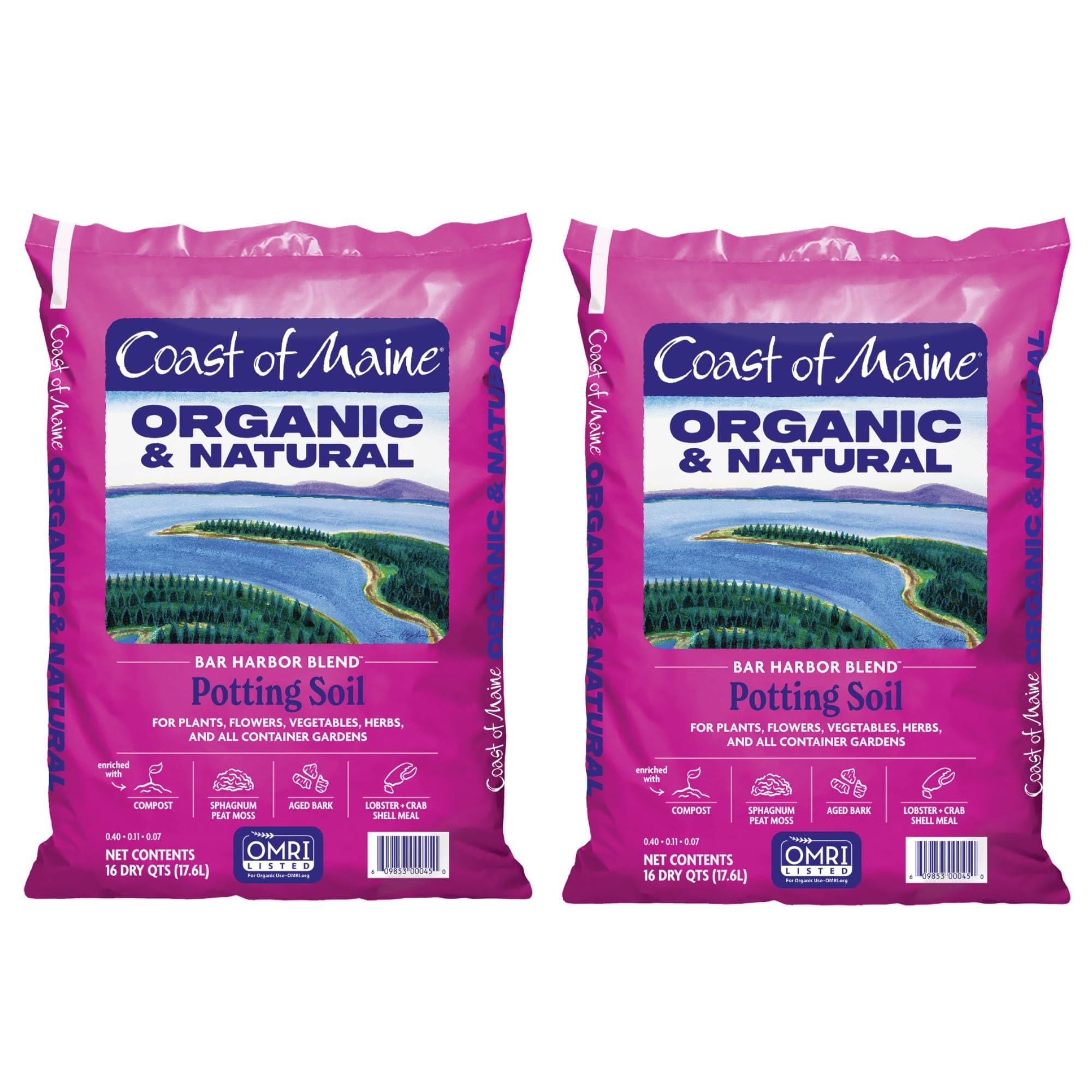
Coast of Maine has been formulating regionally specific organic soils for decades, and the Bar Harbor Blend is their flagship all-purpose mix. It combines sphagnum peat moss, compost, perlite, lobster and crab shell meal, and kelp meal into a dark, rich texture that feels alive straight out of the bag. The marine-sourced ingredients provide a steady supply of trace minerals and chitin, which naturally suppresses soil-borne pests like nematodes.
Users consistently praise its performance for container vegetables — tomatoes, peppers, and peas show noticeably deeper leaf color and more vigorous growth compared to generic big-box mixes. The compost content gives it a dark, earthy color and a crumbly structure that holds moisture without becoming a mud puddle. Several reviewers mentioned that they switched to Coast of Maine after battling poor results from other brands and saw immediate improvement.
At roughly 16 quarts per bag, it offers excellent value for the premium ingredients packed inside. The only real consideration is that it contains real compost and organic matter, so it will settle more over a season than a fluffy peat-perlite synthetic mix. For gardeners who want a truly organic, nutrient-dense foundation that works in pots, raised beds, and hanging baskets alike, this is the top choice.
What works
- Rich compost base with marine meals provides long-term organic nutrition.
- Excellent moisture retention without pooling or compaction.
- Proven results in both outdoor containers and indoor houseplants.
What doesn’t
- Bags can be heavy due to moisture content; plan for shipping weight.
- Settles more than synthetic blends over a growing season.
2. Brut Organic Potting Soil
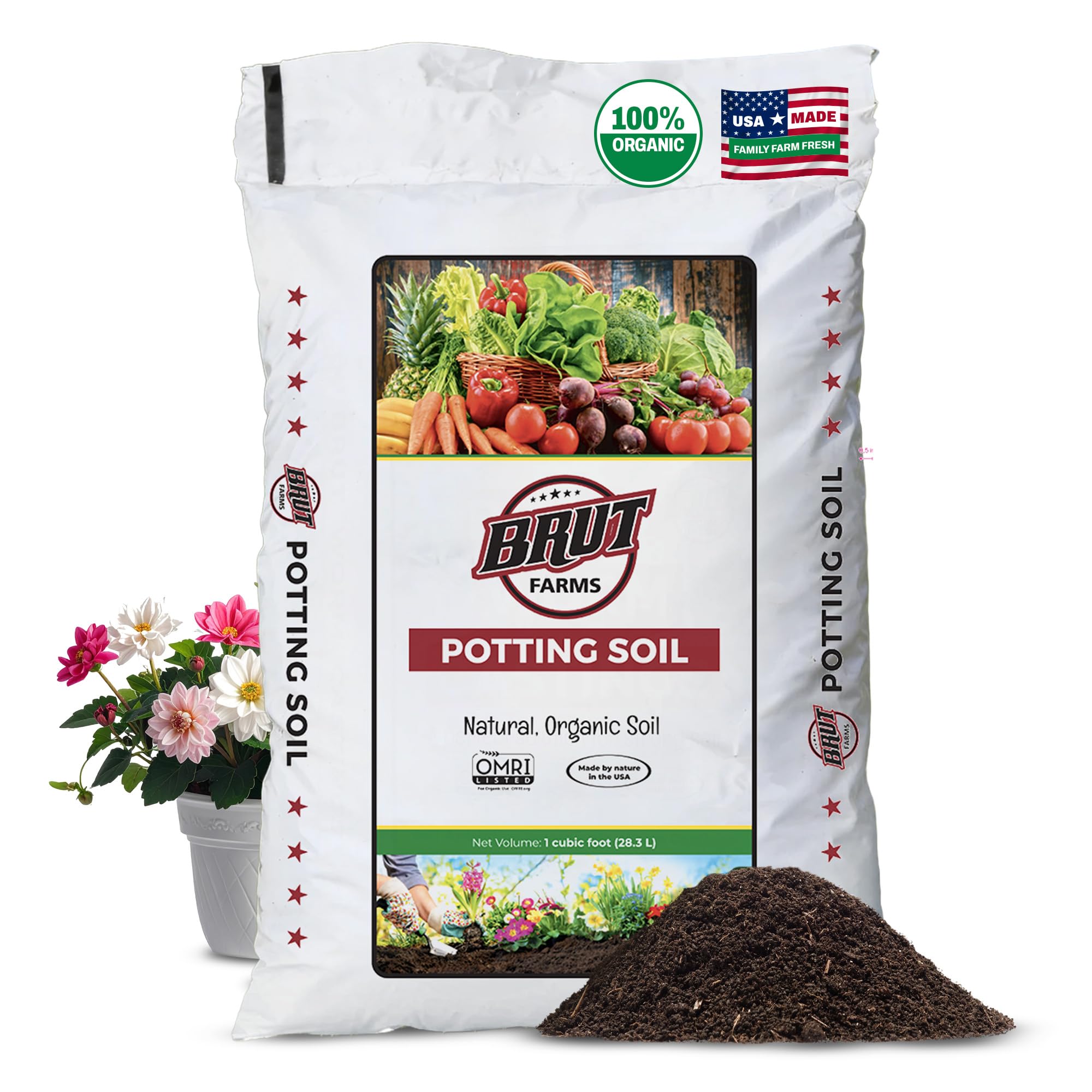
Brut Worm Farms built this mix around microbe-rich worm castings, Azomite trace minerals, and kelp — three ingredients that work synergistically at the root zone rather than just sitting on top. The bag contains no synthetic fertilizers, no wood chips, and no sticks, which is a breath of fresh air in a category where filler is the norm. The texture is fine and uniform, making it exceptionally easy to work with for detailed repotting jobs.
Verified buyers report that their tomato and citrus seedlings show new growth within 48 hours of transplanting, which is a testament to the bio-available nutrients in the worm castings. The pH is naturally buffered between 6.3 and 6.5, which covers the vast majority of houseplants, vegetables, and herbs without needing amendments. A few users noted that the high organic content can attract fruit flies if the soil is left sitting wet on top — a simple layer of sand or gravel solves the issue.
The bag size is 21 quarts, which is generous for the premium price tier. The fine particulate nature means it works beautifully for seed starting and small cuttings where large bark chunks would be a problem. If you prioritize a completely chemical-free, filler-free organic base with proven mycorrhizal activity, Brut delivers consistently.
What works
- Fine, uniform texture is ideal for seed starting and delicate roots.
- Worm castings and trace minerals promote rapid root development.
- Certified organic with no synthetic additives or fillers.
What doesn’t
- Premium pricing per cubic foot compared to standard blends.
- Wet surface can attract flies if not covered with a top layer.
3. Miracle-Gro Potting Mix 3-Pack

Miracle-Gro is the household name for a reason — this potting mix includes a proprietary slow-release fertilizer that feeds container plants for up to six months. That built-in nutrient charge means you can plant heavy feeders like petunias, tomatoes, and annual flowers and not worry about adding liquid fertilizer for the entire season. The formula is designed to grow plants twice as big as unfed soil, and the sheer volume of positive reviews confirms the results are real.
The texture leans toward the lighter, fluffier side thanks to a blend of peat moss and perlite that stays airy even after repeated watering. Users appreciate that it does not compact into a hard layer around the root ball, which is a common complaint with cheaper bagged soils. The 3-pack of 8-quart bags is convenient for gardeners who need smaller amounts spread across multiple containers or who want to avoid hauling a single giant bag.
On the downside, this mix contains synthetic fertilizers, so organic purists will want to look elsewhere. A small number of users reported that the bag sometimes arrives with high moisture content, which can lead to mold if stored improperly. For mainstream container gardening where raw growth speed and convenience are the priorities, this mix is still the benchmark.
What works
- Built-in slow-release fertilizer eliminates the need for additional feeding for months.
- Light, fluffy texture resists compaction and promotes root oxygenation.
- Smaller bag sizes are easy to handle and store.
What doesn’t
- Contains synthetic fertilizers; not suitable for organic gardeners.
- Bags can arrive overly moist if stored in non-climate-controlled warehouses.
4. Michigan Peat Baccto Premium Potting Soil

When you need to fill multiple raised beds, large pots, or a whole patio container garden, the Michigan Peat Baccto 50-pound bag is the smartest cost-per-cubic-foot option on this list. It uses a proven blend of dark reed sedge peat, perlite, and sand, plus starter and slow-release fertilizers already mixed in. No additional mixing or amending is required — you can open the bag and plant immediately.
The reed sedge peat gives this mix a darker, richer color than standard sphagnum-based soils, and it holds moisture well without becoming waterlogged. Reviewers with large container vegetable gardens reported excellent results across tomatoes, peppers, and flowers. The inclusion of both quick-start and extended-release fertilizers means the plants get an initial boost followed by steady feeding over the season.
However, the biggest caution is that several users reported a fungus gnat problem emerging from the bag. This appears to be an occasional batch issue rather than a consistent flaw, but it is worth noting if you are bringing the soil indoors. For outdoor raised beds and bulk container projects where a little gnat activity is manageable, the sheer value and performance of this soil are hard to beat.
What works
- Massive 50-lb bag offers the best value for large-scale planting.
- Dual fertilizer system (starter + slow-release) supports sustained growth.
- Ready-to-use straight from the bag with no mixing required.
What doesn’t
- Occasional fungus gnat issues reported in some batches.
- Heavy bag (50 lbs) is difficult to carry and ship.
5. Midwest Hearth Premium Potting Soil Mix

Midwest Hearth uses the same three-ingredient formula that professional greenhouse growers rely on: sphagnum peat moss for moisture retention, perlite for aeration, and vermiculite for capillary water movement. The result is a light, fluffy mix that roots can penetrate easily without encountering dense clumps or large debris. The pH is controlled to a balanced level suitable for a broad spectrum of plants, from petunias to houseplants.
The 8-dry-quart bag comes in a resealable package, which is a thoughtful touch for gardeners who use soil in small batches. Users have reported outstanding results germinating petunias and other small seeds, noting that the fine, consistent texture allows delicate roots to establish quickly. The lack of added synthetic fertilizer makes this a blank canvas — you control exactly what nutrients your plants receive.
One minor critique is that the soil is so light that it can drain quickly on the first watering if not pre-moistened. Users recommend wetting the mix before potting to prevent water from channeling straight through the container. For seed starters, indoor plant enthusiasts, and anyone who wants a pure, uncontaminated base mix, Midwest Hearth offers professional-grade consistency at a reasonable price.
What works
- Professional three-part blend ensures excellent aeration and drainage.
- Resealable bag keeps unused soil fresh for future projects.
- No added synthetic fertilizers — you control the feeding schedule.
What doesn’t
- Requires pre-moistening to prevent initial water channeling.
- No built-in fertilizer means you must supplement for heavy feeders.
6. Black Gold All Organic Potting Soil 2-Pack

Black Gold has earned a cult following among indoor gardeners precisely because it reliably arrives free of fungus gnats — a persistent plague with many other bagged soils. This all-organic formula uses high-quality composted ingredients that feel rich and moist to the touch without being swampy. Multiple verified buyers specifically mention that they switched to Black Gold after battling gnat infestations and saw an immediate clean break.
Beyond the pest-free reputation, the soil itself performs beautifully for container plants. Users report that vegetables like peppers and tomatoes in containers show noticeably improved growth compared to generic brands. The texture does not compact or form a hard crust on the surface, which improves water infiltration over time. The 2-pack of 8-quart bags is a practical size for medium-scale repotting sessions without committing to a massive single bag.
The primary trade-off is the price point — on a per-cubic-foot basis, Black Gold costs more than standard blends. However, for houseplant owners who value the peace of mind that comes with a gnat-free guarantee, the premium is well justified. If you are tired of sticky traps and yellowing leaves caused by soil-dwelling pests, this is the organic mix that solves that specific headache.
What works
- Consistently arrives free of fungus gnats, unlike many competitors.
- Rich organic composition supports vigorous plant growth.
- Does not crust or compact on the surface over time.
What doesn’t
- Higher per-quart cost compared to standard all-purpose mixes.
- Bag size (8 quarts each) is better suited for houseplants than large raised beds.
7. Lambert Potting Mix
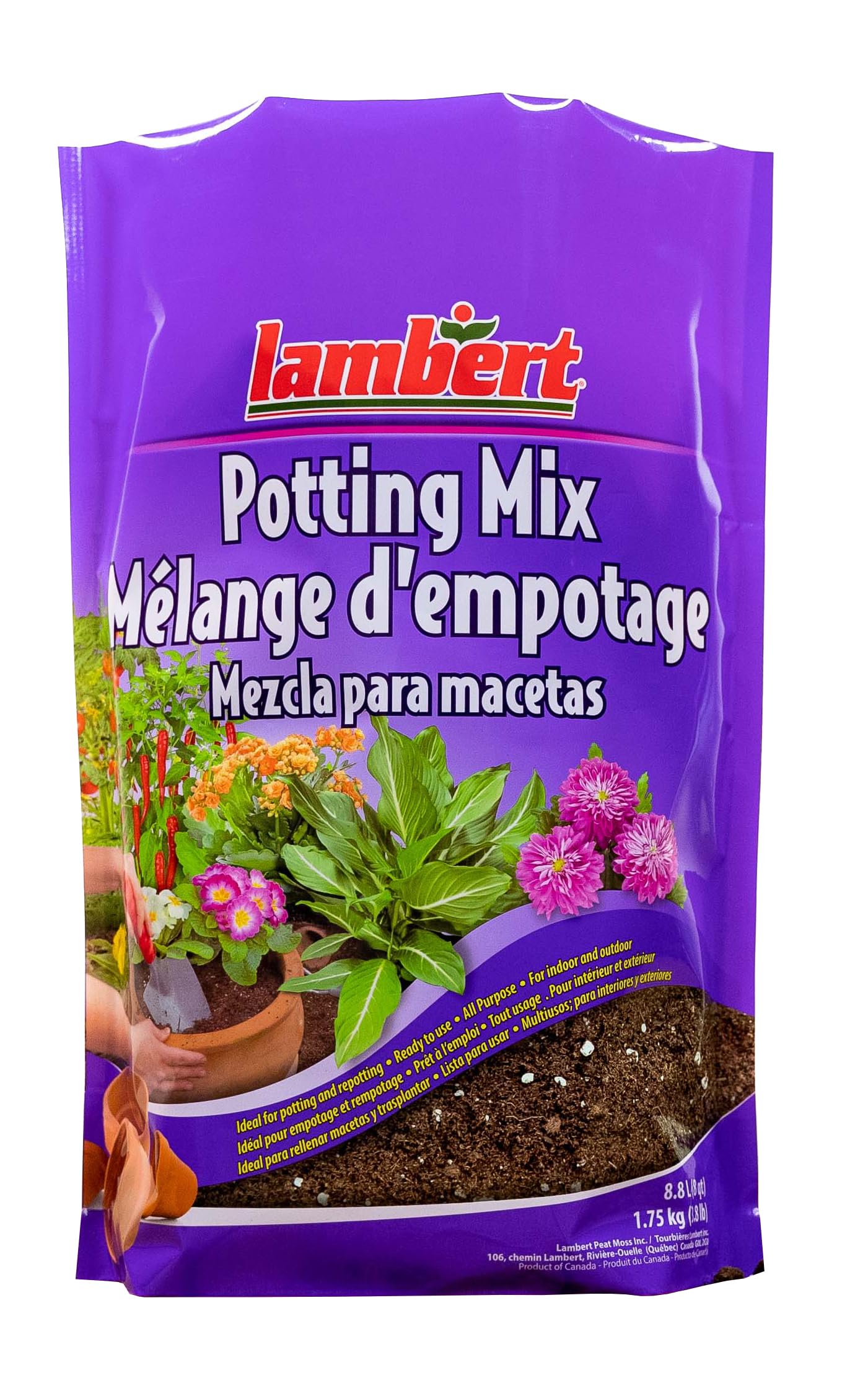
Lambert Peat Moss has been in the growing-medium business for decades, and this ready-to-use potting mix is a straightforward, no-fuss option for general-purpose gardening. It is formulated for indoor and outdoor use — flowers, vegetables, hanging baskets, foliage, cuttings, shrubs, and tropical plants all fall within its scope. The bag is eco-friendly and the texture is clean, with noticeably fewer sticks and bark chunks than many discount competitors.
Users who have repotted struggling houseplants with Lambert report a dramatic turnaround — plants that were hanging lifeless show visible rebound within a few days. The mix drains well and holds adequate moisture without becoming soggy. It works as a seed-starting medium, though some users note that sifting out the larger bits is helpful for tiny seeds like petunias. It is also light enough that a single bag is easy to lift and pour.
The biggest limitation is the lack of added fertilizer. Lambert is essentially a clean peat-perlite base, which means you absolutely need to add compost, worm castings, or a liquid feed within the first few weeks for long-term plant health. For quick repotting jobs and as a general mixing component, it is a solid entry-level choice that avoids the worst sins of cheap soil.
What works
- Clean, consistent texture with minimal filler material.
- Works well for reviving weak or struggling houseplants.
- Eco-friendly brand with a long history in peat products.
What doesn’t
- Contains no added fertilizer — must supplement for long-term growth.
- May require sifting for very small seed-starting applications.
Hardware & Specs Guide
Understanding NPK in Potting Soil
While most all-purpose mixes do not display a guaranteed NPK analysis like a fertilizer bag, the nutrient availability is determined by its organic content. Blends with compost, worm castings, or kelp meal provide a slow-release supply of nitrogen (N), phosphorus (P), and potassium (K). Mixes fortified with synthetic time-release fertilizer will list an NPK ratio — typically around 0.21-0.11-0.16 for standard Miracle-Gro types. For organic mixes, the nutrient content is more variable but supports soil microbiology that synthetic salts cannot replicate.
Perlite vs. Vermiculite Ratio
Perlite is volcanic glass that maintains its structure and creates drainage channels; vermiculite is a mica mineral that expands and holds water. An all-purpose potting soil should contain both. A good rule of thumb: if the bag feels heavy like damp sand, it lacks enough perlite and will compact. If it feels as light as packing peanuts, it likely needs vermiculite to hold moisture. Professional growers aim for a 70/30 peat-to-perlite ratio with a handful of vermiculite mixed in.
FAQ
Can I use all-purpose potting soil for succulents and cacti?
Why does my bag of potting soil have bugs or fungus gnats?
How long does an opened bag of potting soil stay good?
Final Thoughts: The Verdict
For most gardeners, the all purpose potting soil winner is the Coast of Maine Bar Harbor Blend because it delivers a rich, compost-based organic foundation with marine meals that fuel vigorous growth across vegetables, herbs, and flowers without synthetic chemicals. If you want a gnat-free organic mix with ultra-fine texture for houseplants and seedlings, grab the Brut Organic Potting Soil. And for high-volume raised bed planting or bulk container gardening, nothing beats the sheer value of the Michigan Peat Baccto 50-pound bag.