
The crisp, sharp line between a healthy lawn and a garden bed is the hallmark of a well-kept yard. But achieving that magazine-cover edge without a gas-powered tool often means guessing which manual or electric device actually saves you time instead of creating more work. The wrong choice leads to uneven cuts, back strain from constant bending, or blades that dull after a single season.
I’m Rikta — the co-founder and writer behind Lawn Gear Lab. I’ve spent hundreds of hours analyzing blade geometries, handle mechanics, and step-platform designs while cross-referencing thousands of real owner experiences to find the tools that truly deliver on their cutting promise.
Whether you maintain a postage-stamp city lawn or a sprawling suburban landscape, choosing the right grass edging tool determines whether your weekend chore feels like a workout or a walk in the park.
How To Choose The Best Grass Edging Tool
The market offers everything from simple hand shears to multi-function digging edgers with serrated blades. Your decision hinges on three core factors: lawn area, soil density, and the source of power (your arms, your foot, or a battery).
Blade Shape & Cutting Action — Half-Moon, Round, or Rotary
Half-moon blades are the classic choice for slicing a clean vertical line between turf and bed, ideal for clay or loam soils where you want a deep, permanent edge. Round edgers with a curved tip work better for trenching along sidewalks and cutting through thatch. Rotary wheel edgers use a star-shaped or serrated blade that spins as you push, chopping grass overhanging hard surfaces — these demand less downward force but struggle with thick roots.
Handle, Shaft, and Leverage
A shaft length of 36 to 58 inches determines how much you have to bend. Taller gardeners need the longer end of that range. Fiberglass shafts dampen vibration and resist rust better than steel, though steel provides more torsional rigidity for heavy digging tasks. T-style grips and doughnut-shaped handles allow you to use both hands for pushing rather than relying on arm strength alone, meaning less fatigue when edging 100 feet of driveway curb.
Foot Platform Design
If you are buying a step-on edger, the foot platform’s width and surface texture matter. A platform that is too narrow forces your foot off center, causing the blade to skew. Look for a platform at least 3 inches wide with a textured or serrated step surface; this lets you transfer maximum body weight into the cut with each stomp, even on damp mornings when the blade tends to glance off hard soil.
Quick Comparison
On smaller screens, swipe sideways to see the full table.
| Model | Category | Best For | Key Spec | Amazon |
|---|---|---|---|---|
| Bully Tools Manual Lawn Edger | Step Edger | Heavy trenching & thick roots | 12-gauge steel edge; USA-made | Amazon |
| Root Slayer 22711 XL Edger | Half-Moon Edger | Serrated cutting through compact soil | 10×6 in. blade; serrated edge | Amazon |
| Roamwild Multi-Digger Edger | Multi-Digger | All-in-one digging & edging | Dual AIR Light grip; wedge tines | Amazon |
| Radius Garden Pro-Lite Edger | Step Edger | Ergonomic step edging & safety | 9×5 in. carbon steel blade | Amazon |
| Corona GS 6750D Grass Shear | Hand Shear | Detail work & tight spots | 4.5 in. alloy steel blades | Amazon |
| Yard Butler EDGE-180 | Step Edger | Trenching & edging training | Powder-coated alloy steel build | Amazon |
| YEELOR Wheel Rotary Edger | Wheel Rotary | Quick trimming along hardscapes | 58-inch adjustable handle | Amazon |
In‑Depth Reviews
1. Bully Tools Manual Lawn Edger

The Bully Tools edger is a commercial-grade weapon for anyone fighting against compacted clay, thick sod, and tangled root networks. The 12-gauge steel edge is noticeably thicker than what you find on most sub- edgers, and the all-steel construction — including the detachable 36-inch head — means there is zero plastic to crack or flex under heavy stomping. This tool is built in the USA, a rarity that speaks to its material quality control.
At 61.5 inches total length, taller users can maintain upright posture while driving the blade. The T-style steel grip provides solid leverage but the rubber handgrips are not bonded to the shaft; some owners report they rotate loose after 15 minutes of use, requiring a dab of construction adhesive to lock them in place. That minor inconvenience aside, the foot platform is wide and functional, distributing weight evenly for clean, deep trenching passes.
For homeowners who need to cut a trench for landscape edging or sever roots that would snap string trimmer line in seconds, this edger delivers unmatched bite per dollar. The raw thickness of the steel means it resists bending even when you hit buried rocks — something lighter-gauge tools simply cannot promise.
What works
- Extra-thick 12-gauge steel edge handles hard soil without flexing
- Tall 61.5-inch shaft keeps posture upright for tall gardeners
- All-metal construction with no plastic failure points
What doesn’t
- Rubber handles loosen and spin during extended use
- Heavier than many half-moon edgers at nearly 4 pounds
2. Root Slayer 22711 XL Serrated Garden Edger

The defining feature of the Root Slayer XL is its inverted V-shaped tip combined with aggressive serrated teeth across the cutting edge. This geometry is specifically engineered to grab and sever shallow roots rather than just sliding over them like a straight blade. The serrations also help the blade self-feed into compact soil, reducing the need for repeated stomps on dry ground.
Blade dimensions of roughly 10 by 6 inches give it a large footprint per pass, so you can define a border faster than with narrower half-moon tools. The powder-coated carbon steel resists corrosion, though the coating will eventually wear at the edges where the serrations bite. The reinforced fiberglass shaft is noticeably lighter than a steel equivalent — at about 5 pounds it strikes a good balance between heft for driving and weight for carrying across the yard.
Some petite users find the 52.5-inch length and the tool’s weight distribution awkward; it is not a tool for one-handed operation. But for a weekend warrior who wants clean, professional-looking lawn borders without renting a power edger, the Root Slayer’s serrated action makes it one of the few manual edgers that can handle neglected, root-choked borders in a single pass.
What works
- Serrated edge cuts through roots that stop straight blades cold
- Large blade footprint reduces number of passes needed
- Lightweight fiberglass shaft reduces fatigue
What doesn’t
- Heavier than advertised; some users find it cumbersome
- Powder coating chips at the cutting edge over time
3. Roamwild Multi-Digger Garden Edger

The Roamwild Multi-Digger blurs the line between a digging fork and an edger, using diamond-pointed tines that taper into wedge-shaped lump-breaking blades. This hybrid approach lets you slice an edge, pry up soil, and break clods without switching tools. The dual-grip handle gives you an upper hold for straight edging and a lower hold for close-up detail work near plants or curbs.
Weighing only about 2.2 pounds, it is by far the lightest full-size edging tool in this roundup. The fiberglass shaft and AIR Light grip technology reduce vibration transfer, making it easier on the wrists during repeated cutting motions. The wide foot flanges let you apply full body weight without the blade tipping, even when working along uneven sidewalks.
Bermuda grass and other thick, rhizomatous turfgrasses still require substantial effort — no manual tool eliminates that work entirely. But the Roamwild’s combination of low weight, dual-position grips, and integrated lump-breaking capability makes it the best multi-tasker for gardeners who need to edge, dig, and cultivate in a single session without changing tools.
What works
- Exceptionally lightweight at just over 2 pounds
- Diamond-pointed tines double as lump breaker and soil aerator
- Dual-position grips offer leverage for both edging and close cuts
What doesn’t
- Wedge tines less effective on very hard, dry clay compared to solid blades
- Not designed for deep trenching like a dedicated step edger
4. Radius Garden 25602 Pro-Lite Carbon Steel Edger

The Radius Garden Pro-Lite hits the sweet spot between price and ergonomics. Its signature feature is the elevated forward step platform that doubles as a balance support, so you can plant your foot squarely without feeling unstable on uneven ground. The carbon steel blade measures 9 by 5 inches, large enough to cut a defined line in one stomp but not so wide that it binds in tight curves around flower beds.
The fiberglass shaft weighs about 4 pounds, making it lighter than all-steel competitors while still feeling solid when you lean into the cut. The doughnut-style handle provides multiple gripping positions; you can hold it like a steering wheel for two-handed control or choke up near the blade for precision work. Owners consistently report that this tool creates sharper, cleaner edges than a weed whacker, especially when used after a rain when the soil is slightly moist.
The blade does require wiping clean after each use to prevent rust on the heat-treated carbon steel, and some users wish the edge came sharper from the factory. A few minutes with a metal file solves that. For the gardener who wants a reliable, comfortable step edger that balances performance and cost without feeling flimsy, the Pro-Lite is the most versatile single-tool choice.
What works
- Elevated step platform enhances balance and safety on slopes
- Donut handle offers multiple grip positions for varied leverage
- Lightweight fiberglass construction reduces arm fatigue
What doesn’t
- Blade could be sharper out of the box
- Requires post-use cleaning to prevent carbon steel rust
5. Corona GS 6750D ClassicCUT Grass Shear
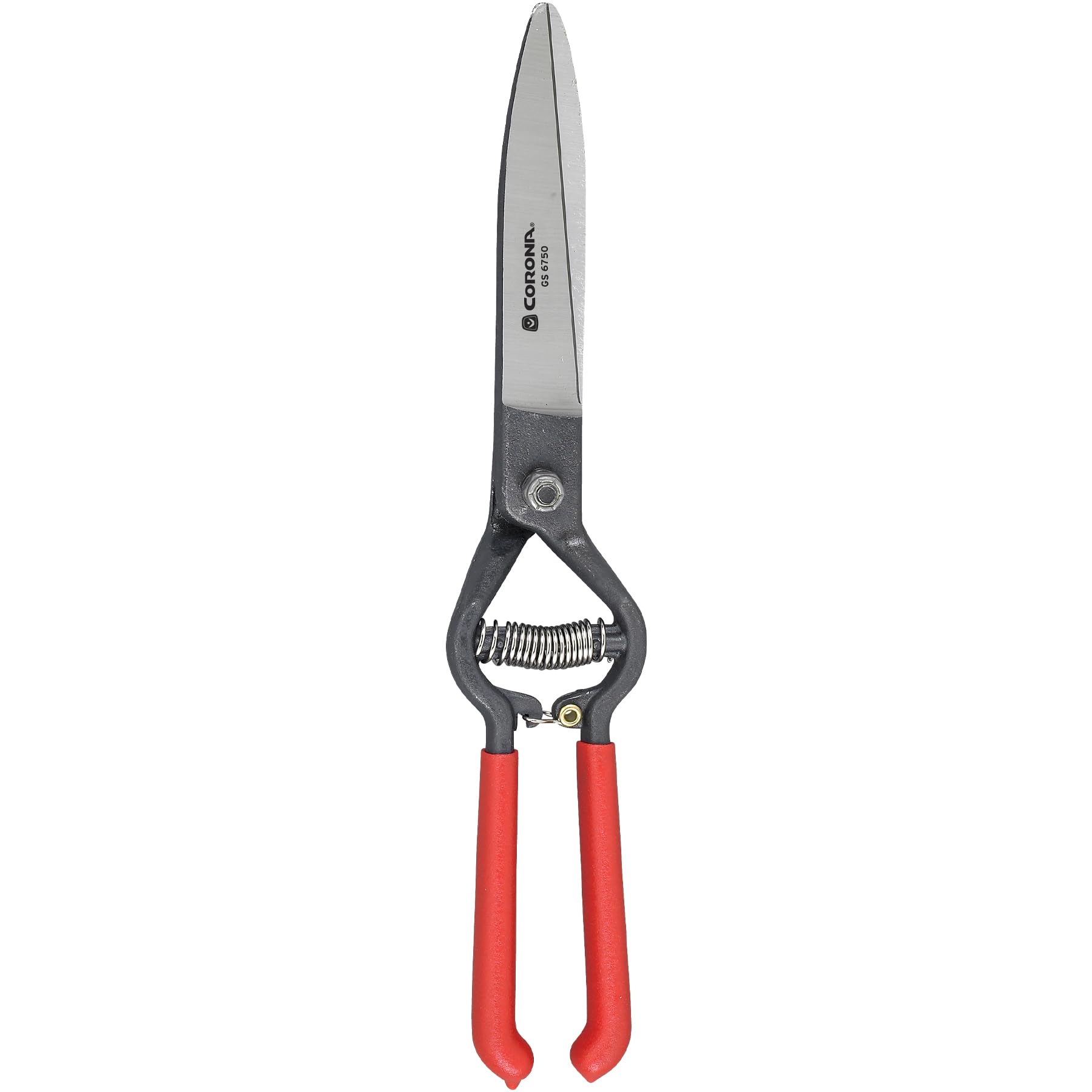
When you need to clean up grass along a fence line, under a chain-link gate, or around delicate flower bulbs, the Corona ClassicCUT is the precision tool that belongs in every gardener’s hand. The 4.5-inch alloy steel bypass blades create a scissor-like cut that slices cleanly without tearing the grass blades, which promotes healthier regrowth compared to the ragged cut of a string trimmer.
The all-metal construction — including the spring mechanism — gives it a reassuring heft. It is heavier than plastic-handled shears, but that weight translates to cutting inertia: each squeeze drives the blades through thick grass clumps without stalling. The natural wood handles with vinyl coating offer a comfortable grip even when your hands are sweaty, and the ambidextrous design makes it accessible to left-handed users.
These shears are not for edging an entire lawn perimeter — the 4.5-inch cutting width makes that impractical. But as a companion tool for the finish work that no power edger or step tool can reach, the Corona shear is unmatched for control and cut quality. The blades are re-sharpenable, so with proper care this tool will outlast three or four cheaper alternatives.
What works
- Bypass blades produce a clean, non-fraying cut
- All-metal build with re-sharpenable blades lasts for years
- Comfortable vinyl-coated handles reduce hand fatigue
What doesn’t
- Slow for large areas — best for detail work only
- Firm spring action may be hard for users with weak grip strength
6. Yard Butler Step Edger EDGE-180

The Yard Butler EDGE-180 is a straightforward, old-school step edger designed for trenching and creating boundaries along sidewalks and driveways. The powder-coated alloy steel body resists rust far better than raw steel alternatives, and the cushioned handles offer a comfortable grip during repetitive stomping sessions. The foot bar is wide enough to apply force without your foot slipping off, even in wet grass.
Where this tool truly excels is in soil that has been softened by recent rain or irrigation. In hard, dry clay or thick St. Augustine grass stolons, the blade’s factory edge is not aggressive enough to cut cleanly — multiple passes are required, and the blade tends to ride up instead of digging in. Several owners have noted that it works beautifully as a trenching tool for burying cable or irrigation line rather than as a routine lawn edger.
If you need a durable, no-nonsense tool for periodic edging in well-maintained soil, the Yard Butler represents good value backed by a lifetime warranty. But if you face heavy clay, rocks, or neglected borders, you may find yourself wishing for a sharper, thicker blade.
What works
- Rust-resistant powder coating extends tool life
- Wide foot bar provides stable weight transfer
- Lifetime warranty offers peace of mind
What doesn’t
- Blade not sharp enough for dry, tough grass or compact soil
- Requires multiple passes even in moderately dense earth
7. YEELOR Wheel Rotary Edger

The YEELOR Wheel Rotary Edger is a very different proposition from the step-and-stomp tools above. It uses a star-shaped sawtooth wheel that rotates as you push it forward, gathering overhanging grass and slicing it off along hard surfaces like concrete curbs and asphalt driveways. The adjustable handle telescopes from 30.7 to 58.3 inches, accommodating users of different heights and allowing you to switch between walking and stooping postures.
Assembly is straightforward — snap the wheel onto the frame and extend the handle to your preferred length. The self-cleaning blade design means grass clippings are ejected rather than clogging the wheel, which keeps the tool working continuously without stops. On a small, well-maintained lawn, this edger can tidy up the edges in a fraction of the time it would take with a manual step edger, and with less physical strain.
The trade-off is that the sawtooth wheel cannot handle thick, overgrown turf in a single pass. On neglected edges where the grass has grown several inches over the sidewalk, you will need to make repeat passes, and the effort increases significantly. The plastic threading on the adjustment mechanism also raises long-term durability questions. For weekly maintenance of a small yard, however, this is the fastest and easiest option.
What works
- Wheeled design requires no stomping — just push and walk
- Adjustable handle suits multiple user heights
- Self-cleaning blade prevents grass buildup
What doesn’t
- Struggles with thick, overgrown edges without repeat passes
- Plastic adjustment threads may wear over time
Hardware & Specs Guide
Blade Steel & Edge Geometry
Carbon steel blades (found on the Radius Garden Pro-Lite and Root Slayer) offer the best balance of edge retention and sharpenability. Alloy steel (Corona GS 6750D) is slightly less hard but more impact-resistant, which matters if you frequently hit hidden rocks. Heat-treated blades resist dulling longer, while powder-coated finishes (Yard Butler) protect against rust but wear at the cutting edge. Straight edges create clean vertical cuts; serrated edges (Root Slayer) grip and shred roots.
Shaft Material & Length Range
Fiberglass shafts (Radius Garden, Root Slayer, Roamwild) weigh 20-30% less than steel while resisting corrosion, but they absorb less torsional stress — avoid using them as a pry bar. Steel shafts (Bully Tools, Corona) transfer more leverage but add weight. A length of 52-61 inches suits average to tall users; tools under 40 inches (Corona shear) are for kneeling or close-up work. The YEELOR’s 58-inch handle is the most adjustable, ranging down to 30.7 inches for compact storage.
FAQ
Should I get a step edger or a wheel rotary edger for Bermuda grass?
How often do I need to sharpen a manual grass edging tool?
Can I use a grass edging tool to cut a trench for landscape fabric or irrigation tubing?
Final Thoughts: The Verdict
For most gardeners, the grass edging tool winner is the Radius Garden Pro-Lite because its elevated step platform, carbon steel blade, and ergonomic donut handle offer the best balance of cutting performance, comfort, and price. If you want aggressive root-slicing power for neglected borders, grab the Root Slayer XL. And for detail work around fences and flower beds, nothing beats the Corona GS 6750D hand shear.