
The success of your tomato harvest depends almost entirely on the container you choose. A pot that traps water, restricts root growth, or heats up in the sun will sabotage weeks of care, while the right pot creates a microclimate where roots spread freely, oxygen circulates, and the plant channels energy into producing fruit instead of fighting stress.
I’m Rikta — the co-founder and writer behind Lawn Gear Lab. I’ve spent hundreds of hours analyzing fabric density specs, reservoir capacities, trellis load ratings, and thousands of owner reports to build this guide on finding the right pot for your tomato plants.
After comparing over 40 models across material types, drainage mechanisms, and volume ratings, I’ve filtered the market down to the seven best performers. This is the definitive guide to choosing the best pots for tomatoes this season, backed by real specifications and verified buyer experiences.
How To Choose The Best Pots For Tomatoes
Tomatoes are heavy feeders with aggressive root systems that demand more volume and better drainage than most other garden vegetables. Picking the wrong container means stunted growth, soil-borne diseases, or a plant that outgrows its support structure before the first fruit sets. Focus on these five criteria to find a pot that works with your plant, not against it.
Volume: The 5-Gallon Floor Is Non-Negotiable
A single determinate tomato plant needs at least 5 gallons of soil to develop a root system capable of supporting fruit production. Indeterminate or heirloom varieties often require 10 gallons or more. Smaller pots dry out faster, constrict root spread, and force the plant into survival mode instead of fruit production. Always go one size larger than you think you need — a 10-gallon bag nearly always outperforms a 5-gallon bag for the same variety.
Drainage: Airflow Below Ground Level Matters More Than You Think
Standing water in a tomato pot kills roots within hours by excluding oxygen and inviting fungal pathogens. Traditional nursery pots rely on bottom drainage holes, but fabric grow bags and self-watering planters with a wicking reservoir offer superior control. Fabric pots allow moisture to evaporate through the sides, preventing waterlogged soil even after heavy rain. If you choose a rigid pot, ensure the bottom has at least four half-inch drainage holes and the container is elevated off the ground on pot feet or casters.
Material: Fabric vs. Plastic vs. PP Resin
Thickened nonwoven fabric (300 GSM or higher) delivers the best root health through air pruning — roots stop when they hit the air at the bag wall, forcing the plant to branch into a dense, fibrous root ball. Plastic pots retain heat and moisture longer, which can be an advantage in cool climates but a risk in hot summers. Polypropylene resin planters combine the structural rigidity of plastic with UV resistance, making them a strong choice for patio setups that need to last multiple seasons without fading or cracking.
Integrated Support: Trellises and Cages Save Your Plants From Collapse
An indeterminate tomato plant can reach 6 to 8 feet tall and carry 20 pounds of fruit at peak season. A pot without a built-in trellis or cage forces you to drive stakes into the root zone, risking root damage every time you drive or adjust the support. Self-contained planters with a steel trellis or a three-ring cage eliminate this problem entirely. The best designs use powder-coated alloy steel rods that lock into the planter base, distributing the weight of the plant away from the soil.
Self-Watering Reservoirs: The Difference Between Consistency and Stress
Tomatoes are sensitive to uneven watering — a dry period followed by heavy saturation causes fruit cracking and blossom-end rot. Self-watering planters with a 1-gallon or larger reservoir allow the plant to wick moisture from below as needed, maintaining even soil moisture for days at a time. This feature is especially valuable for gardeners who travel or live in regions with sporadic summer rain. The best systems include a water level indicator so you can refill without guessing.
Quick Comparison
On smaller screens, swipe sideways to see the full table.
| Model | Category | Best For | Key Spec | Amazon |
|---|---|---|---|---|
| Gardzen 10-Pack 10 Gal | Fabric Bag | Best Overall Value | 300 GSM fabric, 10-gal capacity | Amazon |
| Hydrofarm GCTB2 | Self-Watering Barrel | Best Premium All-in-One | 1.3-gal reservoir, 4-ft trellis | Amazon |
| ANPHSIN 3-Set Cage+Grow Bag | Kit (Bag+Cage) | Best Kit for Heavy Crops | 17-gal bag, 46-in steel cage | Amazon |
| LINEX Raised Bed w/ Trellis | Planter + Cage | Best Compact Patio Option | Self-watering, lockable casters | Amazon |
| DXront Tomato Planter | Planter + Cage | Best Entry-Level Trellis Planter | PP resin, 41-in alloy steel trellis | Amazon |
| Tespher 3-Pack 30 Gal | Fabric Bag | Best Oversized Bulk Bag | 300 GSM, 30-gal, includes gloves | Amazon |
| GroBucket 3-Pack Insert | Self-Watering Insert | Best DIY Upgrade | 1-gal reservoir, water level indicator | Amazon |
In‑Depth Reviews
1. Gardzen 10-Pack 10 Gallon Grow Bags

These Gardzen bags hit the ideal balance for tomato growers: 10-gallon capacity is enough for indeterminate varieties, and the 300 GSM nonwoven fabric delivers the air-pruning effect that builds a dense, fibrous root ball. The material is thick enough to hold its shape when filled with damp soil but still breathes well enough to prevent waterlogging. At 16 inches in diameter and 12 inches tall, each bag provides the lateral root spread that tomatoes need without forcing roots to circle the pot wall.
The reinforced X-shaped stitching on the handles is a detail that matters more than most buyers realize. Fully loaded with a mature tomato plant and wet soil, a single bag can weigh 40 to 50 pounds — standard poorly attached handles rip out within weeks. These handles are bar-tacked with cross-stitching that distributes tension across the fabric panel, making it safe to drag the bag across a patio or lift it onto a cart without failure. The 10-pack pricing brings the per-unit cost well below what individual fabric pots cost at garden centers.
Some owners note that the 10-gallon size is slightly smaller than some competing brands labeled as 10-gallon — the actual soil volume lands closer to 8.5 gallons when measured precisely. This is worth knowing if you plan to grow extra-large indeterminate varieties like Beefsteak or Brandywine. For standard Roma, Cherry, or Early Girl tomatoes, the volume is perfectly adequate, and the drainage performance is too good to pass up at this price point.
What works
- Thick 300 GSM fabric holds up to full sun and repeated watering
- X-stitched handles survive heavy lifting without tearing
- Excellent airflow prevents root circling and promotes root branching
What doesn’t
- Actual soil volume is slightly less than 10 gallons
- Sides may droop if soil is compacted or too dry
2. Hydrofarm GCTB2 Heavy Duty Tomato Barrel
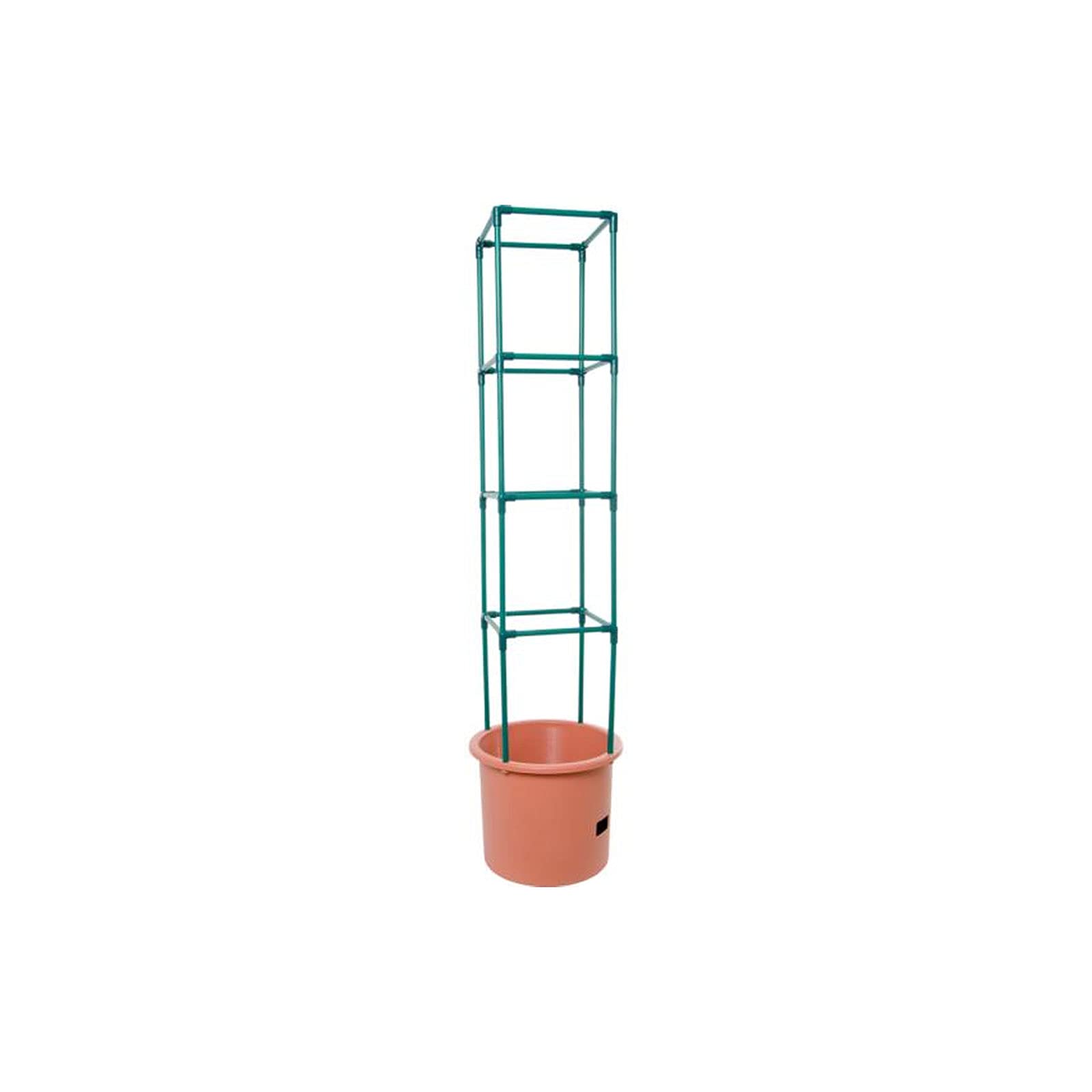
The Hydrofarm GCTB2 is the only self-contained system in this lineup that includes both a substantial water reservoir and a full 4-foot trellis in a single unit. The barrel holds approximately 14 liters (3.7 gallons) of soil, and the integrated 1.3-gallon reservoir sits below the root zone, drawing water upward through hollow tube risers that also serve as the trellis structure. This capillary action design delivers consistent moisture to the root ball without the soil surface staying wet, which reduces fungal pressure around the stem base.
Assembling the 16 vertical risers and 16 horizontal crossbars creates a cage that supports a single indeterminate tomato plant through full maturity. The trellis sections snap together without tools, and users report the finished structure is noticeably sturdier than cone-style wire cages found at big-box retailers — it can support the weight of a fully grown plant pushing 15 to 20 pounds of fruit without collapsing. The green color blends into foliage reasonably well, making it acceptable for front-yard or deck-side use where aesthetics matter.
A common frustration reported by long-term owners is that Hydrofarm does not sell replacement parts — broken inserts or missing risers require buying an entirely new barrel. Several experienced buyers now keep spare parts on hand. The reservoir also lacks a dedicated fill tube, meaning you have to water through the soil surface or use a funnel to reach the bottom chamber. These are minor annoyances, but they stop this system from being perfect. For the gardener who wants a true all-in-one solution and is willing to manage these quirks, the GCTB2 produces exceptional results.
What works
- Self-watering reservoir keeps soil evenly moist for days
- Full 4-foot steel trellis supports heavy fruit loads without collapsing
- Compact footprint fits on balconies and small patios
What doesn’t
- No dedicated fill tube — refilling the reservoir is messy
- Replacement parts are nearly impossible to buy separately
3. ANPHSIN Sturdy Square Tomato Cage with 17 Gal Grow Bags
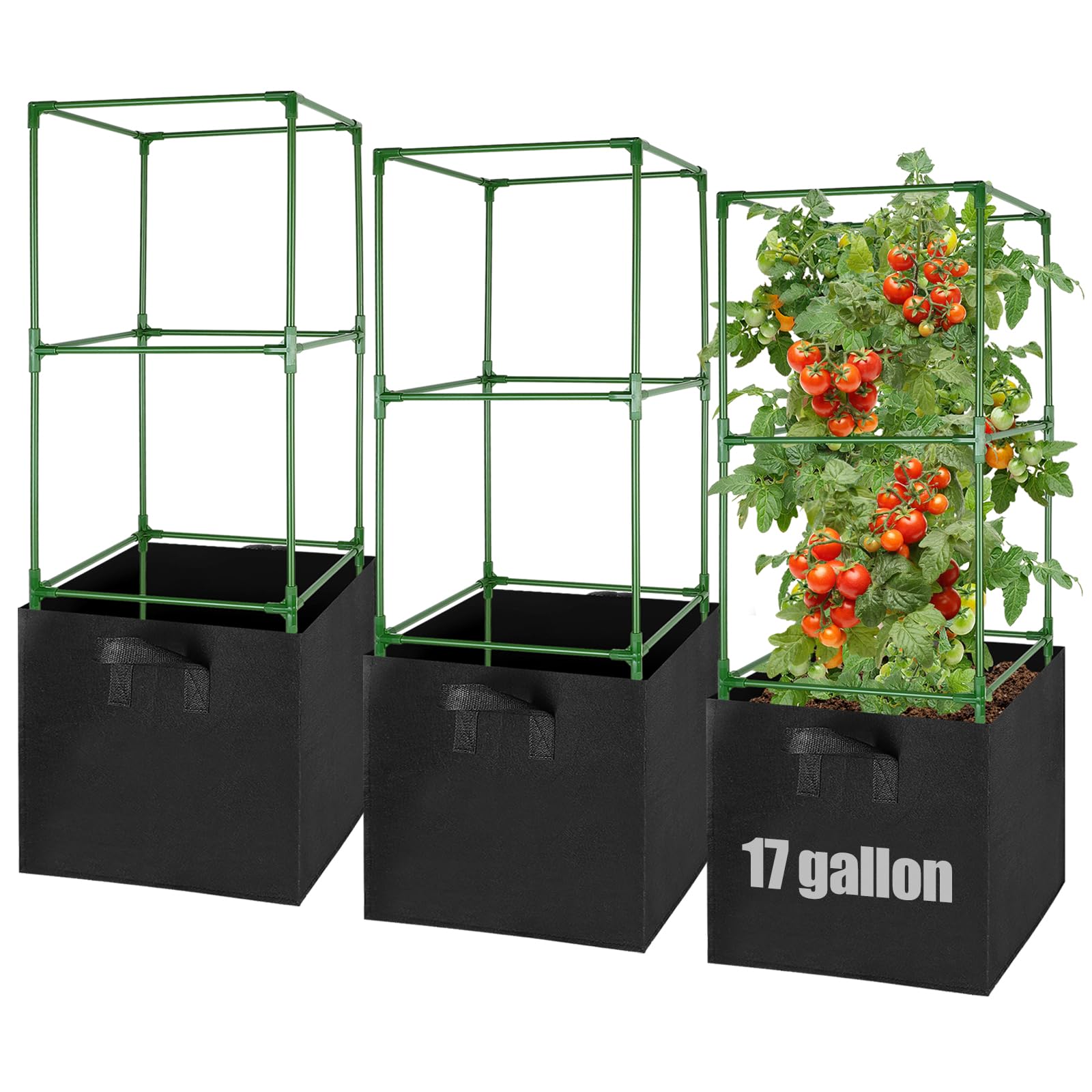
The ANPHSIN kit solves a problem that every fabric grow bag user eventually faces: supporting a heavy tomato plant without driving stakes through the root zone. Each of the three sets includes a 17-gallon nonwoven fabric bag and a separate square steel cage that measures 13.7 inches wide and extends to 46 inches tall. The cage is constructed from a plastic-coated steel core that resists rust far better than bare wire cages, and the square shape provides more interior growing space than round cages of the same diameter.
Assembly requires inserting 72 rods into 36 connectors, which sounds tedious but takes about 15 minutes per cage once you identify the pattern. The modular design allows you to increase height by adding more pole segments, which is essential for fast-growing indeterminate tomatoes that can add two feet of new growth in a single hot week. Owners report that the combined weight of the 17-gallon bag filled with soil creates a stable base that prevents the cage from tipping over in high winds — a common failure point with traditional cone cages placed into undersized pots.
The 17-gallon bag is significantly larger than the 10-gallon standard, meaning you can plant one tomato plus a few basil or marigold companions in the same container without overcrowding. The handles are reinforced and well-positioned, though moving a fully saturated 17-gallon bag is a two-person job. One tradeoff: the cage rods are thin enough that aggressive plants with heavy side branches may push them outward over the course of a season. Some owners solve this by zip-tying adjacent poles for added lateral rigidity.
What works
- Massive 17-gallon volume supports the largest tomato varieties
- Plastic-coated steel cage won’t rust or degrade in wet conditions
- Modular height adjustment accommodates indeterminate growth spurts
What doesn’t
- Rod-and-connector assembly is time-consuming for three cages
- Thin rods may bow outward under heavy fruit loads without reinforcement
4. LINEX Raised Garden Bed Planter Box with Trellis
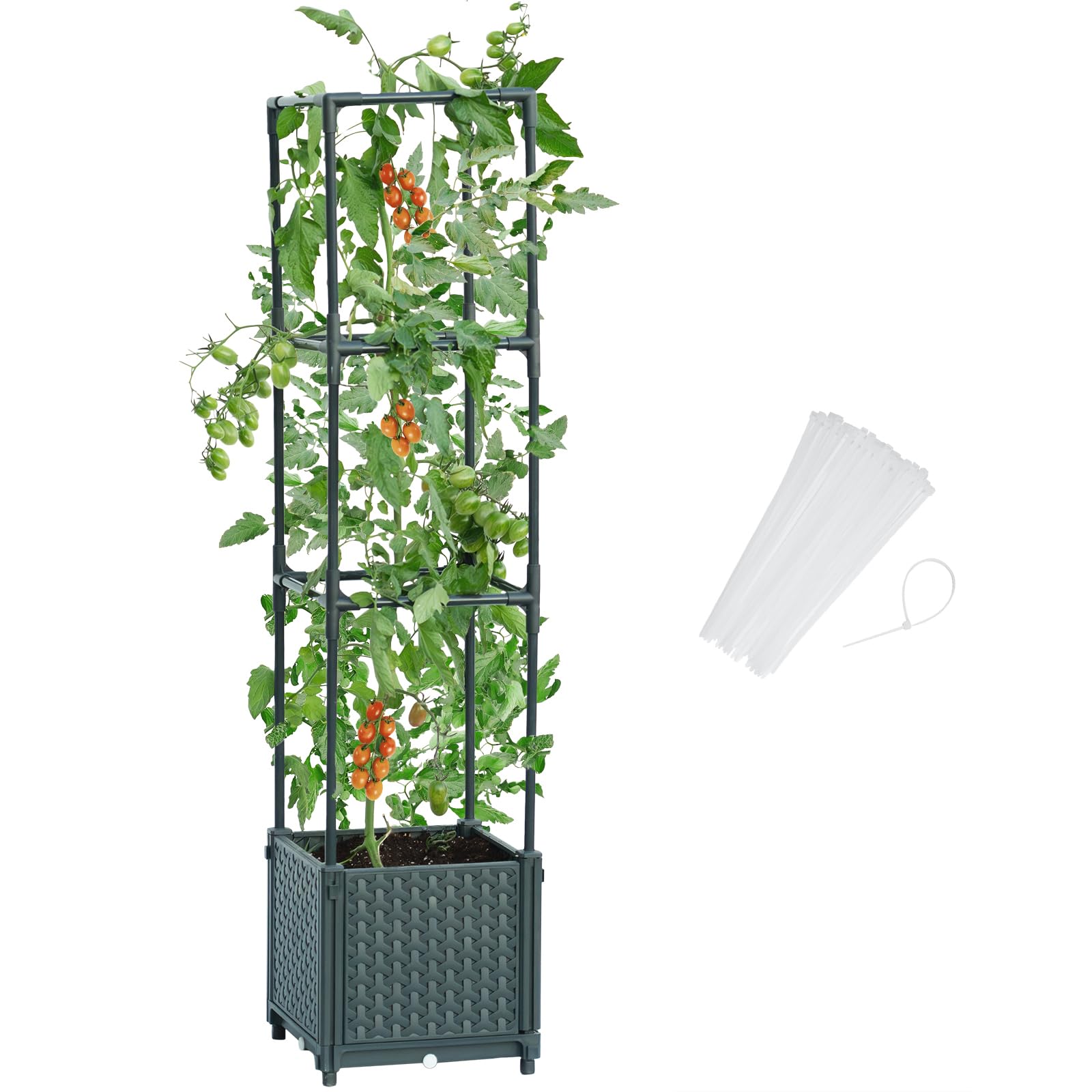
The LINEX planter brings together a self-watering reservoir, a detachable trellis, and lockable casters in a compact 9.84-inch square footprint that fits on the smallest balconies. The body is made from fade-resistant polypropylene that withstands full-sun exposure without becoming brittle, and the trellis frame is constructed from powder-coated alloy steel. The self-watering reservoir holds roughly 1.3 liters of water and uses a wicking design that hydrates soil from below, reducing surface evaporation and keeping roots cool during heatwaves.
Assembly is genuinely tool-free — the trellis sections click together with connectors, and the casters snap into the base. The entire setup takes under 10 minutes. The reservoir has four overflow drainage holes positioned near the top of the water chamber, which prevents overfilling while still retaining several days’ worth of water. A square planter box with a removable plug makes it easy to drain the reservoir before winter storage or to flush out salt buildup from fertilizer applications. The wheels are lockable, which is critical for keeping the planter stationary on sloped decks or windy rooftops.
The biggest limitation is capacity. At roughly 4 gallons, this planter is suitable for determinate or dwarf tomato varieties, not full-size indeterminates. Owners who try to grow large heirlooms in this container report root binding and stunted yield. The trellis, while well-made, stops at around 41 inches — not tall enough for a vigorous indeterminate that wants to climb past 6 feet. For cherry tomatoes, patio varieties, or compact bush tomatoes, this is a premium setup. For a full-sized garden tomato, you need more volume.
What works
- Self-watering reservoir with visible overflow protection prevents root rot
- Lockable casters make it easy to chase sun or move under cover
- Tool-free assembly in under 10 minutes
What doesn’t
- 4-gallon capacity is too small for indeterminate tomato varieties
- Trellis height is limited to 41 inches — not tall enough for climbing plants
5. DXront Tomato Planter with Trellis
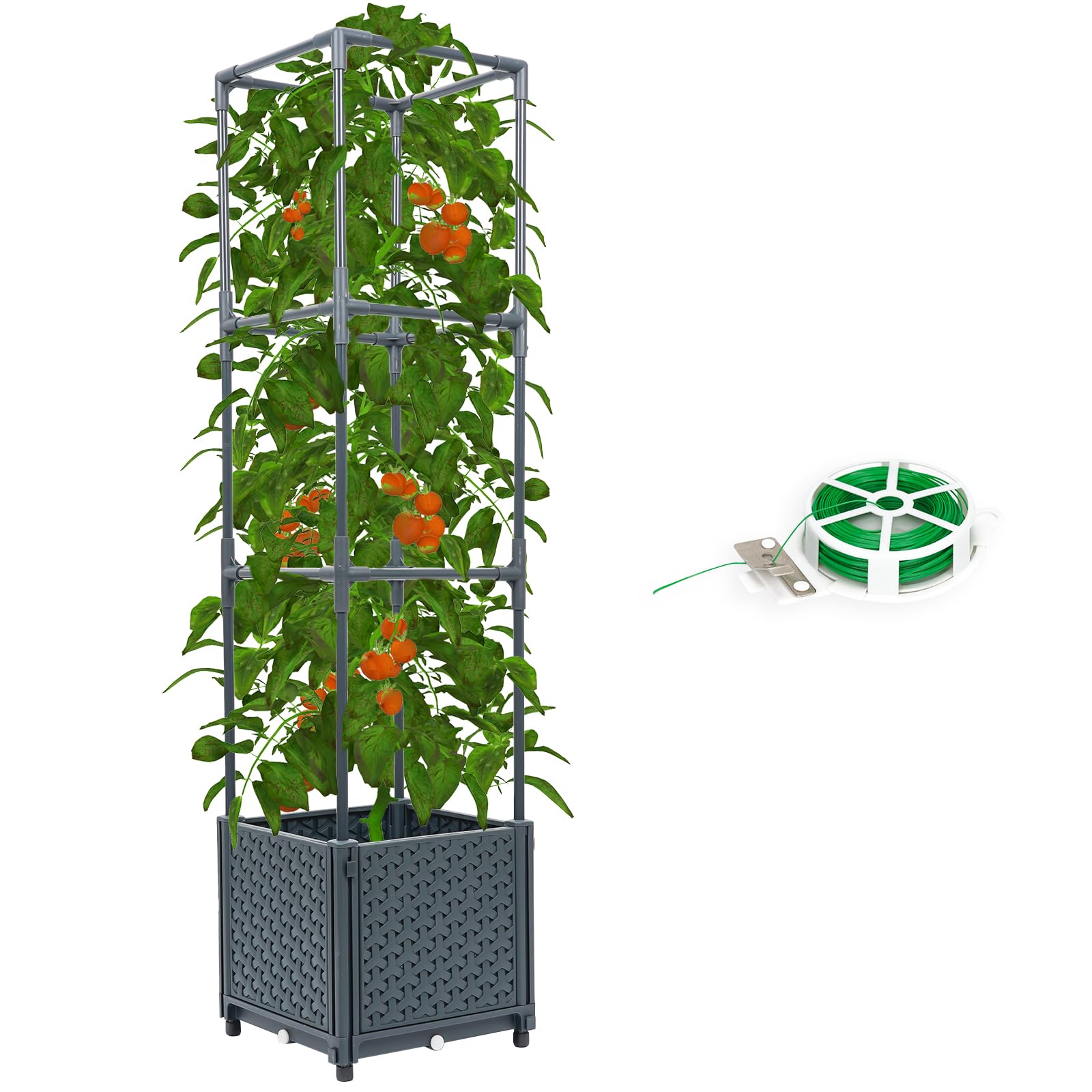
The DXront planter is nearly identical in design to the LINEX but lands at a slightly lower price tier, making it a strong entry-level choice for gardeners who want a self-contained trellis system without spending premium money. The polypropylene body is heavy-duty and resistant to UV fading, and the alloy steel trellis rods lock together without wobbling. Four lockable swivel casters allow you to reposition the planter throughout the day to maximize sun exposure — a real advantage for tomato plants that need 8+ hours of direct light.
The self-watering mechanism works the same way as the LINEX system: a bottom reservoir with a water plug lets you hydrate from below while excess drains from side overflow holes. This design keeps the soil surface dry, which dramatically reduces the incidence of damping-off disease in young seedlings and discourages fungus gnats. The trellis rods are 41 inches tall, which is adequate for determinate varieties but falls short for indeterminates — the manufacturer does not offer extension sections. Some owners have solved this by zip-tying bamboo poles to the existing trellis.
The most frequently reported issue is leaking from the reservoir, especially when the planter is filled to capacity and moved. The bottom seam can weep water if the planter is tilted or carried. This is a non-issue if the planter stays outdoors on a patio, but it can be a problem if you plan to use it indoors or on a wooden deck where you want to avoid water damage. Sealing the bottom seam with silicone caulk before filling is a simple fix. For the price, this is a capable system that just needs one small modification to be excellent.
What works
- Lockable casters make repositioning effortless throughout the day
- UV-resistant polypropylene body holds color through multiple seasons
- Self-watering reservoir reduces watering frequency significantly
What doesn’t
- Bottom seam may leak when the planter is moved while full
- 3.1-gallon capacity is restrictive for larger tomato varieties
6. Tespher 3-Pack 30 Gallon Thickened Plant Grow Bags

The Tespher 30-gallon grow bags are oversized even by fabric pot standards. Each bag measures 24 inches in diameter and 16 inches tall, offering enough soil volume to plant two indeterminate tomatoes or one tomato plus sprawling companions like basil, marigolds, and peppers in the same container. The 300 GSM nonwoven fabric is identical in density to the Gardzen bags but cut into a much larger panel, which means the structural integrity actually improves — larger bags experience less sidewall stress per square inch of fabric.
The 3-pack includes a pair of waterproof gardening gloves, a small but thoughtful inclusion that signals the manufacturer understands the customer. The double-stitched nylon handles are positioned on opposite sides of the bag for balanced lifting, though a fully saturated 30-gallon bag can weigh over 150 pounds — these handles are more useful for dragging the bag into position before filling or for empty storage than for lifting once full. The fabric is washable and foldable, and owners report that these bags hold up well over three to four growing seasons with proper winter storage.
One functional detail: the 30-gallon bags are so large that they tend to fold inward at the sides when partially filled. To maintain the cylindrical shape, you need to fill them nearly to the top with soil from the start, which means you need a lot of potting mix. For growers who want maximum root volume and are willing to buy the extra soil, these bags produce massive root balls that translate directly to bigger yields. For smaller-space gardeners, the 10-gallon Gardzen bags are a more practical fit.
What works
- Massive 30-gallon volume allows multiple plants per bag
- Thick 300 GSM fabric lasts multiple seasons without degradation
- Includes durable waterproof gardening gloves as a bonus
What doesn’t
- Requires a large volume of potting soil to fill completely
- Bags can fold inward at the sides when not fully filled
7. GroBucket Self Watering Planter Insert 3-Pack
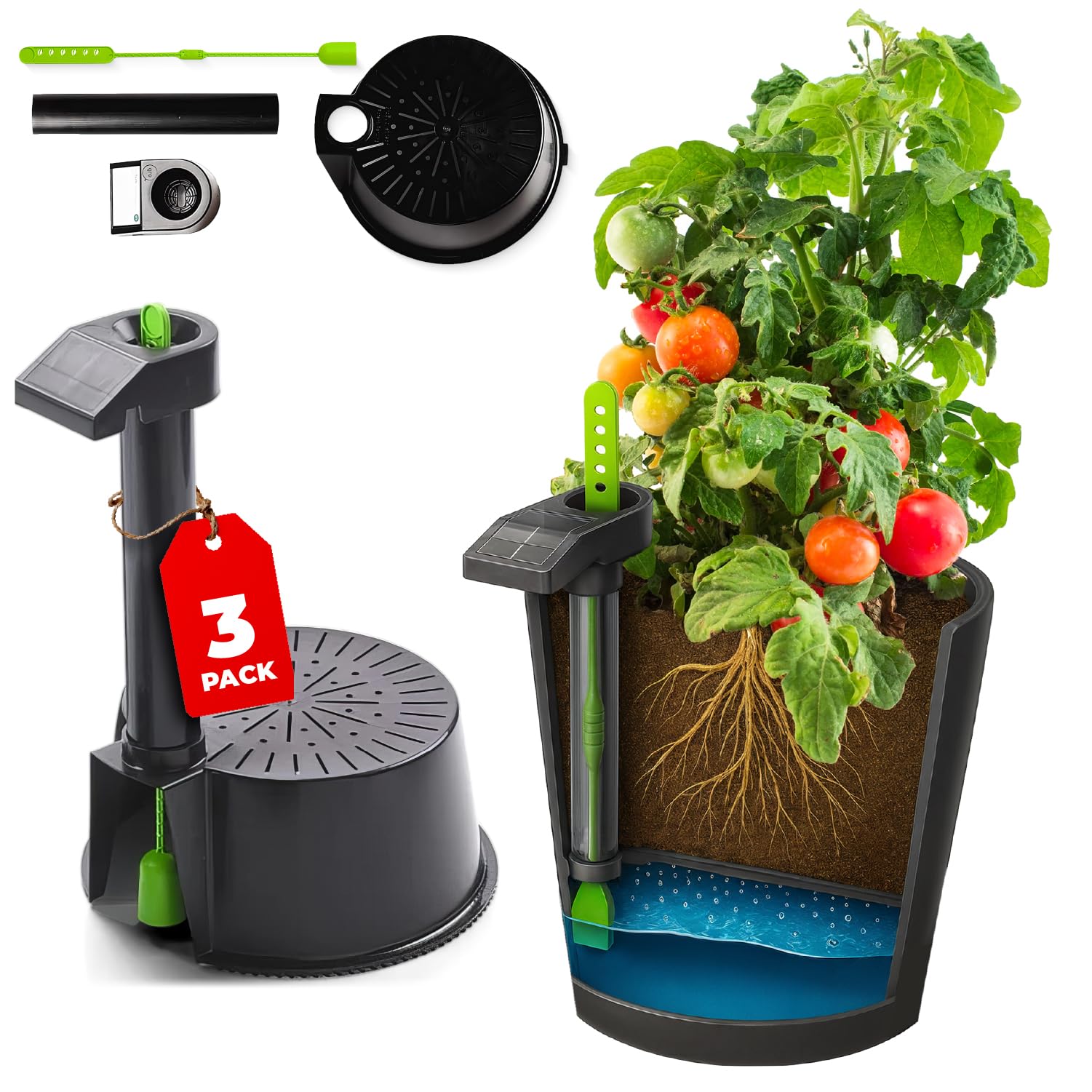
The GroBucket insert is the most versatile product in this list because it transforms any standard 5-gallon bucket — the kind you can get for free from bakeries or construction sites — into a self-watering planter. Each insert creates a 1-gallon water reservoir at the bottom of the bucket, separated from the soil by a perforated platform. A water level indicator tube runs to the top so you can see exactly how much water is left without tipping the bucket or digging into the soil. This is the best solution for gardeners who already have a collection of buckets or who want to expand their container garden without buying new pots every season.
The LifeTested design allows the plant to wick water from the reservoir through capillary action, keeping the root zone consistently moist without requiring daily top-watering. A pencil-sized drain hole near the top of the bucket prevents overflow. The insert lifts the soil out of standing water, which prevents anaerobic conditions and root rot. Assembly involves placing the insert into the bucket, drilling one hole, and filling with soil — it takes about five minutes per bucket. For a single determinate tomato in a 5-gallon bucket, this system maintains even moisture for up to seven days between refills during moderate weather.
The clear weakness is that the bucket itself is not included — you have to source your own food-grade 5-gallon buckets. Food-safe buckets can be purchased at hardware stores for a few dollars each, but the total cost adds up. The 3-pack of inserts also does not include a drill bit or any mounting hardware. The water level indicator is accurate but fragile — it can break if the bucket is dropped or knocked over. Despite these minor shortcomings, the GroBucket system delivers self-watering performance at the lowest ongoing cost of any option here, and it allows you to replace or swap buckets individually without discarding the whole system.
What works
- Converts any 5-gallon bucket into a self-watering planter for very little cost
- Water level indicator removes guesswork from the refill schedule
- Portable bucket design makes overwintering and repositioning easy
What doesn’t
- Buckets are not included and must be sourced separately
- Water level indicator is not impact-resistant and can snap off
Hardware & Specs Guide
Fabric Density (GSM)
The thickness of a fabric grow bag is measured in grams per square meter. A 200 GSM bag may last one season before tearing at the seams, while a 300 GSM bag can survive three to four seasons of full sun, rain, and regular handling. The Gardzen and Tespher bags both use 300 GSM fabric, which is the minimum weight recommended for heavy tomato plants in hot climates. Anything below 250 GSM is likely to develop pinhole leaks or seam separation by midsummer.
Reservoir Capacity vs. Soil Volume
Self-watering planters require a balance between the water reservoir below and the soil volume above. A 1-gallon reservoir is sufficient for a 5-gallon pot but will need refilling every 3-5 days during peak summer heat. The Hydrofarm GCTB2 uses a 1.3-gallon reservoir paired with a 14-liter soil chamber — this ratio keeps a single tomato plant hydrated for nearly a full week. Smaller reservoirs (under 1 gallon) in compact trellis planters must be refilled every other day, which undercuts the convenience of the self-watering mechanism.
FAQ
Can I grow a full-size tomato plant in a 5-gallon bucket?
Do fabric grow bags need a saucer or tray underneath?
How often should I water tomatoes in fabric pots vs. plastic pots?
What is air pruning and why is it important for tomatoes?
Final Thoughts: The Verdict
For most gardeners, the pots for tomatoes winner is the Gardzen 10-Pack 10 Gallon Grow Bags because they combine the proven 300 GSM fabric density, adequate volume for indeterminate varieties, and reinforced handles at a per-unit cost that beats every comparable option. If you want a self-contained system with a serious water reservoir, grab the Hydrofarm GCTB2 Tomato Barrel. And for the budget-conscious gardener who wants to repurpose existing buckets into self-watering planters, nothing beats the GroBucket Insert 3-Pack.