
Aphids clustering on tender new shoots. Black spot turning leaves into yellow-spotted messes. Sawfly larvae skeletonizing foliage overnight. Rose growing isn’t for the faint of heart—it’s a constant battle against a long list of fungal diseases and sap-sucking pests that can turn a prize-winning bloom into a leafless stick in a matter of weeks. The difference between a thriving rose garden and a disease-ridden one often comes down to a single choice: the active ingredient you spray.
I’m Rikta — the co-founder and writer behind Lawn Gear Lab. I spend my time comparing the chemical profiles, OMRI listings, and systemic uptake rates of dozens of pest control products to give you a data-backed recommendation you can trust without spraying a single test plant yourself.
Whether you’re fighting powdery mildew on your hybrid teas or trying to stop thrips from ruining your floribundas, the right pesticide for roses must match the specific enemy you’re facing, the growth stage of your plant, and your tolerance for reapplication frequency.
How To Choose The Best Pesticide For Roses
Not all spray bottles are created equal. A neem oil concentrate that works wonders on powdery mildew won’t touch a rose slug infestation. A systemic insecticide that annihilates thrips may not be safe for edible plants. Before you buy, you need to match the active ingredient to your specific rose problem.
Identify Your Enemy: Fungal vs. Insect
The first split is the easiest. If you see white powder on leaves, black spots with fringed margins, or orange rust pustules on the undersides, you’re dealing with a fungal disease and need a fungicide. If you see aphids, thrips, spider mites, or sawfly larvae, you need an insecticide. Some premium products—like the multi-action sprays on this list—cover both bases, but most specialists perform far better than generalists in one category.
Contact vs. Systemic Delivery
Contact sprays sit on the leaf surface and kill only what they touch. They wash off in rain and require reapplication every 7–10 days. Systemic products are absorbed into the plant’s vascular system, moving through the leaves and stems so they protect new growth and can’t be washed away by rain. For established rose bushes, a systemic fungicide like propiconazole offers up to 28 days of protection per application—far less labor than a weekly contact spray schedule.
Organic Certification and Plant Safety
If you grow vegetables near your roses or have pollinator concerns, look for OMRI-listed products. Spinosad-based sprays and biological fungicides containing Bacillus subtilis deliver targeted pest control without persistent chemical residues. However, even organic options can burn tender rose foliage if applied in direct midday sun. Always follow label dilution rates and spray during the cooler hours of early morning or late evening.
Quick Comparison
On smaller screens, swipe sideways to see the full table.
| Model | Category | Best For | Key Spec | Amazon |
|---|---|---|---|---|
| Atticus Gunner 14.3 MEC | Fungicide | Advanced black spot control | 14.3% Propiconazole | Amazon |
| Ortho Rose & Flower Disease Control | Fungicide | Rain-resistant rose disease prevention | Systemic Formula | Amazon |
| Bonide Systemic Insect Control | Insecticide | Long-lasting ornamental insect control | 16 Gallons per Concentrate | Amazon |
| Monterey Spinosad Insecticide | Insecticide | Organic sawfly & caterpillar control | OMRI Listed | Amazon |
| Bonide Captain Jack’s Orchard Spray | Multi-Purpose | All-in-one fungus + insect protection | 32 oz Concentrate | Amazon |
| Garden Safe Fungicide3 | Multi-Purpose | Neem oil organic prevention | 1 Gallon RTU Spray | Amazon |
| Southern Ag Biological Fungicide | Biological | Root drench disease prevention | Bacillus subtilis | Amazon |
In‑Depth Reviews
1. Atticus Gunner 14.3 MEC Propiconazole Fungicide
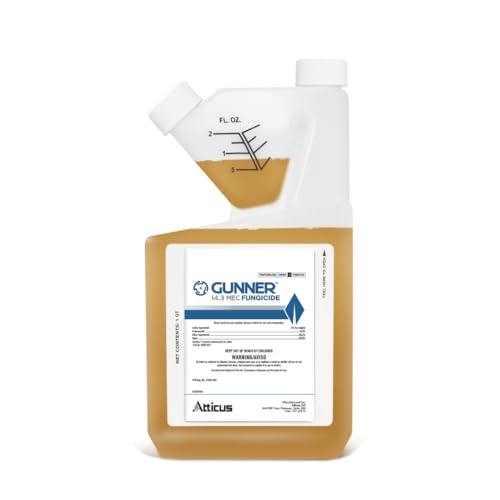
The Atticus Gunner 14.3 MEC uses the same propiconazole active ingredient found in the professional-grade Banner Maxx, but at a price point that home rose growers can justify for serious infestations. This is a microemulsion concentrate, meaning the particles are incredibly fine, so the liquid mixes into water instantly without settling out in your tank sprayer. Once applied and dry, it resists wash-off from rain, maintaining a protective barrier inside the rose’s vascular system for up to a full month.
Gunner eliminates black spot with remarkable reliability—multiple verified reviews report that infected leaves dropped and new leaves emerged completely clean after just one application. It also handles powdery mildew, rust, brown patch, and a wide range of blights that plague roses during humid summer months. The low-odor formulation is a welcome relief for anyone who has gagged through a sulfur-based spray session.
This product is not for sale in Alaska, DC, Hawaii, Puerto Rico, or Vermont, so check regional restrictions before ordering. The label instructions are printed quite small, but the mixing ratios for ornamental roses are straightforward. For the advanced rose grower battling a persistent fungal cycle, this is the most concentrated and longest-lasting solution available.
What works
- Systemic 28-day residual protection eliminates black spot with one application
- Fine MEC particle size prevents separation in the sprayer
- Nearly odorless formula compared to sulfur or copper-based fungicides
What doesn’t
- Not registered for sale in several states and territories
- No insecticidal action—sawfly and aphid protection requires a separate product
2. Ortho Rose & Flower Disease Control Concentrate

Ortho’s Rose & Flower Disease Control is the go-to systemic fungicide for rose growers who need a trusted, widely available solution for black spot, rust, and powdery mildew. It begins working within 24 hours of application and, once it dries, it cannot be washed off by rain—a critical advantage if you live in a region with unpredictable afternoon showers. The systemic uptake means the protection moves through the leaf tissue, reaching areas you might have missed with a contact spray.
The concentrate dilutes to treat a substantial number of plants, and a single application holds for up to four weeks. Verified buyers report that yellow-spotted rose leaves turned green again after treatment, and bushes that looked doomed recovered fully within a week. This product is specifically formulated for flowers and ornamentals, so it’s safe on roses, azaleas, camellias, and other blooming shrubs.
The one consistent gripe is packaging safety—multiple customers received bottles that leaked during transit, which is a serious concern with a chemical fungicide. The 16-ounce bottle is effective but relatively small, so large-scale rose gardens with dozens of bushes will need multiple bottles. Still, for the average home rose bed of 10–20 bushes, this is a reliable, no-fuss solution.
What works
- Rainproof once dried—no reapplication after storms
- Starts killing disease within 24 hours of spraying
- Four-week residual protection reduces labor
What doesn’t
- Some bottles arrive leaking due to poor packaging
- Not labeled for use on edible plants near roses
3. Bonide Systemic Insect Control Concentrate

When the problem is thrips, mealybugs, scale, or two-spotted spider mites, contact sprays often fail because these pests hide in leaf nodes and under sepals. Bonide Systemic Insect Control uses acephate, a fast-acting systemic insecticide that the rose absorbs and distributes throughout its vascular system, so every leaf and stem becomes a trap for feeding insects. A single 16-ounce bottle makes 16 gallons of finished spray, making it one of the most economical treatments for rose growers with large collections.
The immediate action is notable—verified reviews mention seeing dead fungus gnats and thrips within hours of application. The concentrate comes with a built-in measuring cup, so you don’t need extra tools to mix the correct ratio. This product is specifically labeled for use on roses, flower beds, shrubs, and other ornamental plants, so you don’t have to worry about phytotoxicity with proper application.
The smell is the tradeoff. Users consistently describe the odor as extremely strong, akin to a hot dumpster or barnyard manure. The odor dissipates after watering, but mixing and spraying it is an unpleasant experience. Additionally, this product is not intended for vegetable or fruit plants, so do not use it if your roses are interplanted with edibles. Apply during shaded hours to avoid leaf burn from the active ingredient interacting with direct sunlight.
What works
- Systemic delivery reaches hidden thrips, scale, and spider mites
- 16-gallon yield from one concentrate bottle
- Built-in measuring cup for precise mixing
What doesn’t
- Extremely strong odor during and after spraying
- Not safe for use on edible plants near roses
4. Monterey Spinosad Insecticide Concentrate
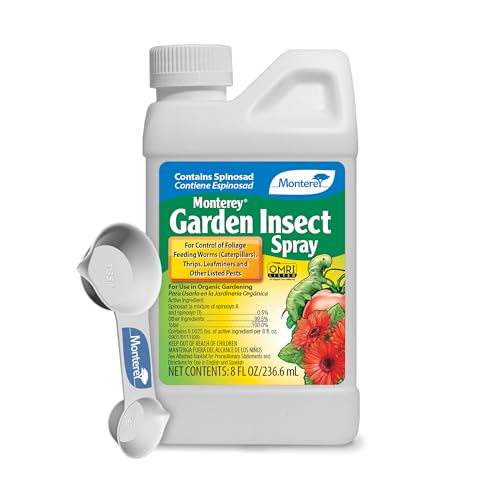
Sawfly larvae—often called rose slugs—are one of the most frustrating pests for rose growers because they skeletonize leaves so quickly that a healthy bush can look half-dead in 48 hours. Monterey Spinosad is the recommended organic solution for this exact problem. The active ingredient is a bacterial fermentation byproduct that is OMRI-listed for organic gardening, yet it delivers knockout control against caterpillars, leafminers, thrips, and fire ants on contact.
Verified rose growers report that a single spray eliminated sawfly caterpillars completely, with no damage to the blooms or surrounding pollinators once the spray dried. The product is odorless, which is rare for an insecticide, and mixes easily into a trigger sprayer, backpack, or hose-end applicator. It also controls borers and codling moths, so if you have fruit trees near your rose garden, this single bottle covers multiple plant groups.
The 8-ounce concentrate is small compared to other options on this list, so large-scale applications with many bushes will require multiple bottles or more frequent re-orders. It’s also strictly a contact insecticide—once it dries, it doesn’t provide systemic protection, so you’ll need to reapply weekly during heavy infestations or after rain. For organic rose care that actually works on sawfly, this is the go-to.
What works
- OMRI-listed organic gardening certification
- Highly effective against sawfly larvae and leafminers
- Odorless formula is pleasant to apply
What doesn’t
- Contact-only action requires weekly reapplication during outbreaks
- 8-ounce bottle is small for extensive rose gardens
5. Bonide Captain Jack’s Citrus, Fruit & Nut Orchard Spray

Captain Jack’s Orchard Spray is a multi-purpose solution that combines fungicide, insecticide, and miticide in one bottle—perfect for rose growers who don’t want to diagnose whether their problem is black spot, powdery mildew, rust, or Japanese beetles all at once. The 32-ounce concentrate makes up to 6.4 gallons of finished spray, and with a dilution rate as low as 2.5 fluid ounces per gallon, this bottle goes a long way across a medium-sized rose bed.
It controls a massive list of targets: beetles, fruit flies, caterpillars, mealybugs, spider mites, thrips, scale, leafhoppers, powdery mildew, rust, blight, brown rot, and leaf spots. Users report noticeable greening of apple tree foliage within days, and rose growers note effective control of Japanese beetles that would otherwise shred their blooms. It’s labeled for use up to the day before harvest, which adds versatility if you grow edibles near your roses.
The downside is a slight powdery leaf residue from the sulfur component, which is cosmetic but may bother exhibitors entering rose shows. Rain can wash the product off, so reapplication after storms is necessary. It also lacks the systemic protection that dedicated fungicides offer, so it works best as part of a preventive weekly spray schedule rather than a rescue treatment for advanced black spot.
What works
- One product covers fungus, insects, and mites
- High-yield concentrate dilutes to over 6 gallons
- Safe to use up to day before harvest on edibles
What doesn’t
- Leaves a powdery sulfur residue on foliage
- Non-systemic—washes off and requires reapplication
6. Garden Safe Fungicide3 Neem Oil Spray
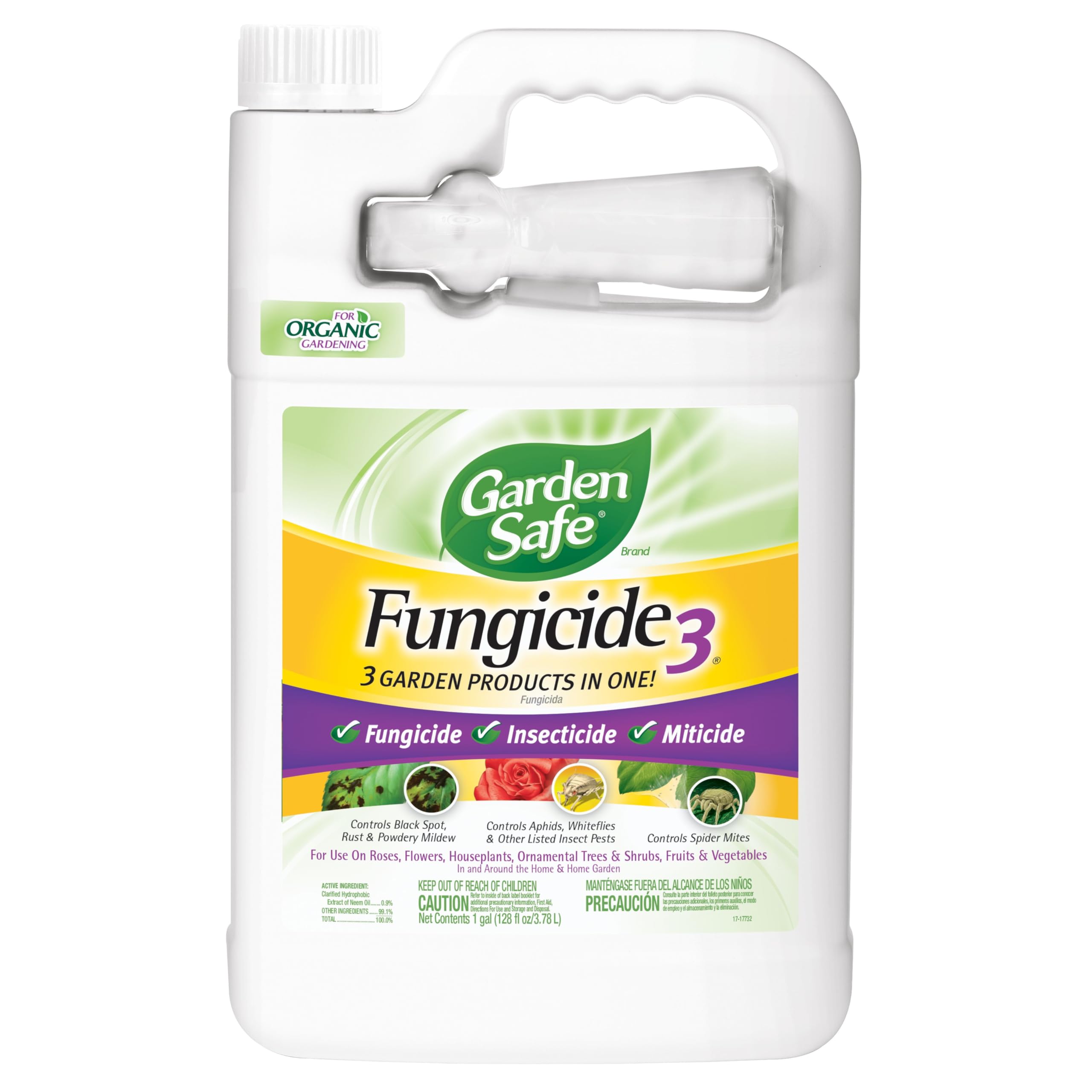
Garden Safe Fungicide3 is the ready-to-use neem oil spray that rose growers reach for when they want a gentle, organic option that won’t scorch their most delicate tea roses. It works as a fungicide against black spot, rust, and powdery mildew, and as an insecticide against aphids, whiteflies, and spider mites. The clarified hydrophobic extract of neem oil coats leaves in a thin layer that suffodes fungal spores and soft-bodied insects on contact.
The ready-to-use 1-gallon container comes with a built-in sprayer, which is incredibly convenient for quick spot-treatments on a few rose bushes. Users report that weekly application prevents mildew recurrence on hybrid teas and keeps aphid populations below damaging levels. The organic formulation means you can use it on vegetables, herbs, and edible flowers growing alongside your roses without worrying about chemical residues.
The built-in sprayer is a frustration point—several users describe it as having only 4 inches of reach from the container, requiring you to hold the heavy gallon jug awkwardly close to each plant. Neem oil can also burn foliage if applied in full midday sun, so timing is critical. For a low-stakes, organic entry point for rose pest prevention, this is the most accessible option, but it lacks the knockdown power of concentrated systemic products.
What works
- Ready-to-use convenience with built-in sprayer
- Organic formulation safe for edibles and pollinators
- Effective preventive for mildew and aphids
What doesn’t
- Integrated sprayer has very short reach
- Can burn leaves if applied during direct sunlight
7. Southern Ag Garden Friendly Biological Fungicide

Southern Ag Biological Fungicide uses the beneficial bacterium Bacillus subtilis to colonize rose root systems and foliage, creating a living barrier against soil-borne and foliar fungal pathogens. This is a preventive biological approach rather than a knockdown chemical cure—you apply it as a soil drench and foliar spray, and the bacteria outcompete disease organisms like blight, root rot, and powdery mildew for resources in the root zone.
The results are visible within 24 hours for stressed plants—verified users report tomato plants with drool-like symptoms fully recovered the next day after a root drench. For roses, this product works exceptionally well as a soil drench during the early growing season to prevent fungal infections before they start. It also acts as a mild bio-fertilizer, darkening leaves and promoting overall vigor that makes roses less susceptible to pest attacks.
Multiple applications are required to establish a strong bacterial colony, and it doesn’t provide the instant eradication that chemical fungicides offer to an active black spot outbreak. The bottle opening is poorly designed and tends to dribble liquid during measurement, creating a mess. For rose growers committed to organic, no-chemical disease prevention who are willing to invest in a regular drenching schedule, this is an excellent foundational product.
What works
- Living biological protection colonizes root system
- Acts as a bio-fertilizer to improve leaf color and vigor
- Safe for use on all plants with no chemical residue
What doesn’t
- Requires multiple applications to establish effectiveness
- Bottle opening causes messy dribbling during pouring
Hardware & Specs Guide
Active Ingredient Concentration
The percentage of active ingredient in a concentrate determines how concentrated your solution will be and how far a bottle goes. Propiconazole at 14.3% provides powerful systemic protection against fungal diseases with as little as 0.5 fluid ounces per gallon of water. Spinosad at 0.5% is less concentrated but safe for organic use and effective against caterpillars and thrips at full strength. Always check the active ingredient percentage before comparing price-per-ounce between competing products.
Systemic vs. Contact Delivery
Systemic products like propiconazole and acephate are absorbed into the rose’s vascular tissue, protecting the entire plant including new growth. They cannot be washed off by rain once dried. Contact products like neem oil and spinosad remain on the leaf surface and must directly hit the pest or fungal spore. Contact formulas require thorough spray coverage and reapplication after rain or overhead irrigation. For established rose beds, systemic products dramatically reduce application frequency.
FAQ
What is the best time of day to spray pesticide on roses?
Can I use a fruit tree pesticide on my roses?
How often should I reapply systemic fungicide to roses?
Will organic rose pesticide kill bees and pollinators?
Final Thoughts: The Verdict
For most gardeners, the pesticide for roses winner is the Atticus Gunner 14.3 MEC because its propiconazole-based systemic formula provides a full month of black spot, rust, and powdery mildew protection with just one application and no odor. If you need a rainproof systemic insecticide for thrips and scale, grab the Bonide Systemic Insect Control. And for organic sawfly and caterpillar control, nothing beats the Monterey Spinosad Insecticide.