
A lawn mower blade that tears instead of shears leaves grass vulnerable to disease, discoloration, and slow recovery. The difference between a ragged, brown lawn and a crisp green cut comes down to edge geometry — and the tool that maintains it. A sharpener designed specifically for mower blades removes the guesswork of freehand grinding and delivers a consistent bevel across the entire cutting surface.
I’m Rikta — the co-founder and writer behind Lawn Gear Lab. I’ve spent many hours analyzing blade sharpener designs, studying owner feedback on angle consistency, motor durability, and blade-balancing accuracy to build this guide around real-world performance data.
Whether you maintain a single residential mower or a fleet of commercial decks, finding the right blade sharpener for mower depends on understanding angle range, build stability, and whether you need a cordless portable unit or a dedicated bench grinder.
How To Choose The Best Blade Sharpener For Mower
Selecting the right sharpener hinges on three core decisions: the sharpening method (jig-based vs. bench grinder vs. cordless rotary), the build quality that determines repeatable angle accuracy, and whether the tool includes or works with a blade balancer. The wrong choice leads to uneven edges, overheated steel, and a lawn that looks worse than before you removed the deck.
Angle Adjustability and Range
Most residential mower blades require a bevel between 30° and 45°. A sharpener with a 15°–45° range covers everything from standard straight blades to mulching and high-lift profiles. Look for a thumb-screw or detent system that locks the angle securely — a jig that shifts under grinder pressure will round off the edge rather than produce a clean, flat bevel.
Build Stability and Material
A sharpener jig made from thick steel or anodized aluminum resists flex when you apply lateral grinding force. Plastic components in the clamping mechanism or guide-pin bushing introduce wobble that transfers to the blade edge. For bench grinders, look for a solid steel base and blade-fixing brackets that prevent vibration — units weighing over 30 pounds stay planted during heavy use.
Blade Balancing Integration
Removing metal unevenly during sharpening creates a blade imbalance that vibrates through the spindle, wears bearings prematurely, and produces a rough cut. A sharpener kit that includes a magnetic cone balancer or a bearing-style balancer lets you check and correct balance immediately after grinding. The balancer should be sensitive enough to detect a gram or two of asymmetry — a stiff bearing reduces that sensitivity.
Quick Comparison
On smaller screens, swipe sideways to see the full table.
| Model | Category | Best For | Key Spec | Amazon |
|---|---|---|---|---|
| All American Sharpener 5005 Gen 2 | Premium Jig | Angle-precision purists | 15°–45° adjustable, 16 oz | Amazon |
| VEVOR 2/3HP Bench Sharpener | Bench Grinder | High-volume & varied blade types | 500W motor, 7″ ceramic wheel | Amazon |
| Oregon Economy 88-025 | Heavy-Duty Bench | Commercial durability | 1/3 HP, 1750 RPM, 41 lb | Amazon |
| SporGain Combo (Sharpener + Balancer) | Jig + Balancer Kit | Complete DIY maintenance | 15°–45° adjustable, metal base | Amazon |
| Kimgsoak Sharpener + Balancer Kit | Value Jig Kit | Budget-conscious homeowners | 15°–45°, aluminum alloy jig | Amazon |
| SporGain Adjustable Jig | Starter Jig | Entry-level precision sharpening | 1.65″–3.60″ blade width | Amazon |
| Sharp Pebble Cordless Rotary | Cordless Rotary | On-mower touch-ups | 20°–40° guide, 5k–30k RPM | Amazon |
In‑Depth Reviews
1. All American Sharpener Model 5005 Gen 2
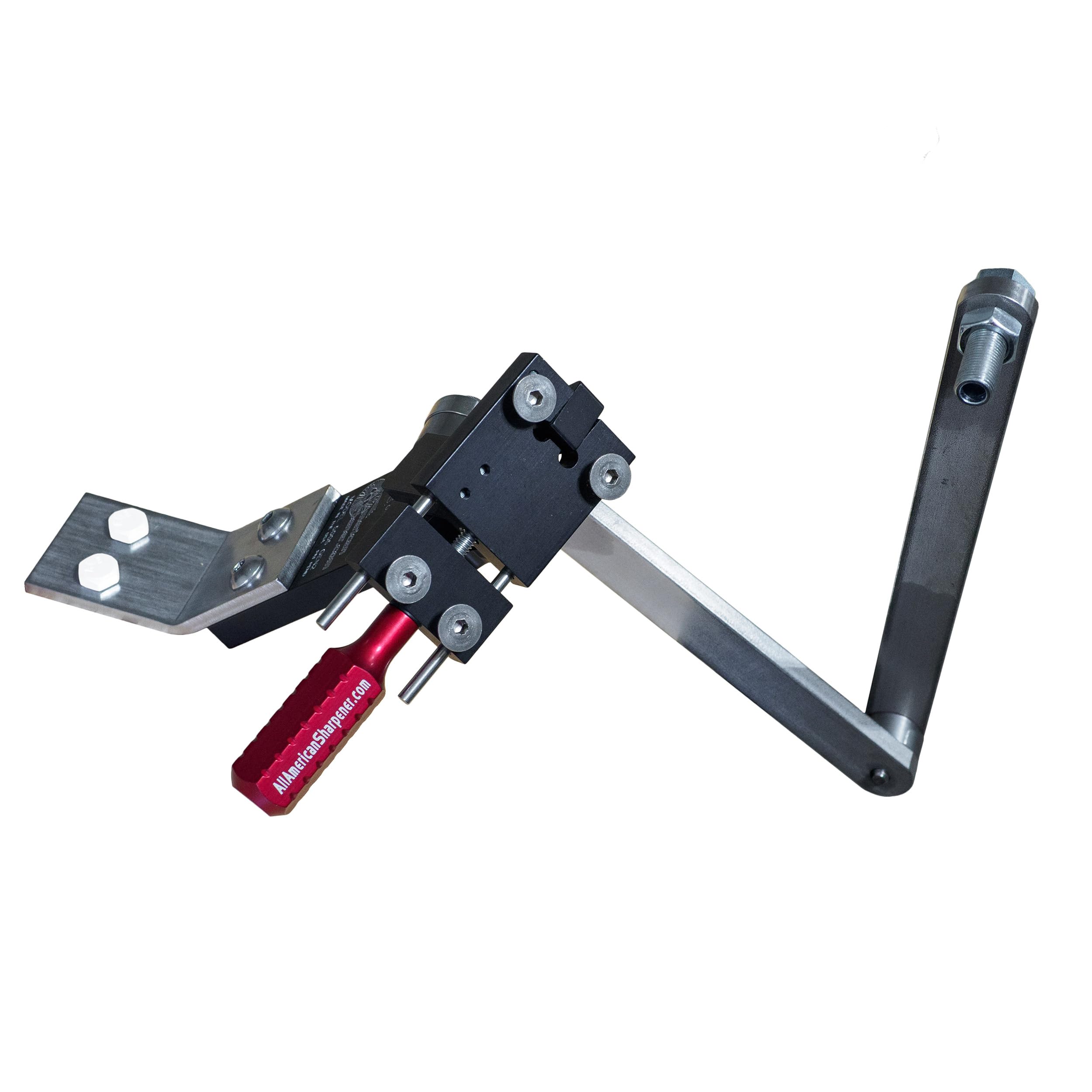
The All American Sharpener 5005 Gen 2 is the gold standard for angle-accurate jig sharpeners. Its solid stainless steel arms resist flex under grinder pressure — a critical advantage over hollow-tube knockoffs that bend and throw your bevel off. The 15°–45° range covers every common residential blade profile, and users report that every blade checked after sharpening measured exactly 30° as set, proving the jig’s repeatability.
This unit shines in portability: it weighs just 16 ounces and works with any cordless angle grinder, so you can sharpen right next to the mower without hauling the deck to a bench. The anodized aluminum base stays flat, and the stainless steel guide pins accept the four bushing sizes needed for most grinder arbor configurations. The included plastic thumb screw for angle adjustment is the only minor compromise on an otherwise all-metal build.
Built in the USA and backed by a lifetime warranty, the 5005 Gen 2 is aimed at the owner who values precise edge geometry over convenience features. It will not balance your blades — you will need a separate balancer — but for pure bevel accuracy, nothing in this lineup matches its consistency.
What works
- Stainless steel arms eliminate flex for exact angle repeatability
- Ultra-light 16-ounce design makes it fully portable with a cordless grinder
- Lifetime warranty and domestic manufacturing support long-term value
What doesn’t
- Plastic thumb screw feels mismatched to the otherwise premium build
- Requires a separate blade balancer for complete maintenance
2. VEVOR 2/3HP 500W Bench Sharpener

The VEVOR bench sharpener brings a 500-watt motor and a 7-inch 60-grit ceramic wheel to handle everything from high-lift gator blades to standard flat profiles. Its 1700 RPM operating speed is slow enough to avoid overheating the blade edge during prolonged passes, a common failure with higher-speed side grinders. The integrated steel base and blade-fixing brackets keep vibration minimal during use.
Setup takes three steps — mount the wheel, install the 40° sharpening brackets, and lock the blade in place. The included spare ceramic sandpaper pair extends the wheel’s life, though several users recommend swapping the stock disc for a higher-grit option to finish with a polished edge. The 33-pound weight keeps the unit planted on a workbench without bolting it down.
For the homeowner or landscaper who sharpens multiple blade types each season, the VEVOR bench unit offers a faster workflow than any jig-based system. The trade-off is that it is a fixed-position tool — not portable — and the ceramic wheel is better suited to removing dull steel than repairing chipped or deeply nicked edges.
What works
- 500W motor and slow 1700 RPM prevent heat damage to blade steel
- 7-inch ceramic wheel handles high-lift, gator, and flat blades
- Sturdy steel base and brackets minimize vibration during sharpening
What doesn’t
- Fixed bench location limits portability for on-site sharpening
- Stock sandpaper disc wears faster than a bonded stone wheel
3. Oregon Economy Lawn Mower Blade Sharpener 88-025
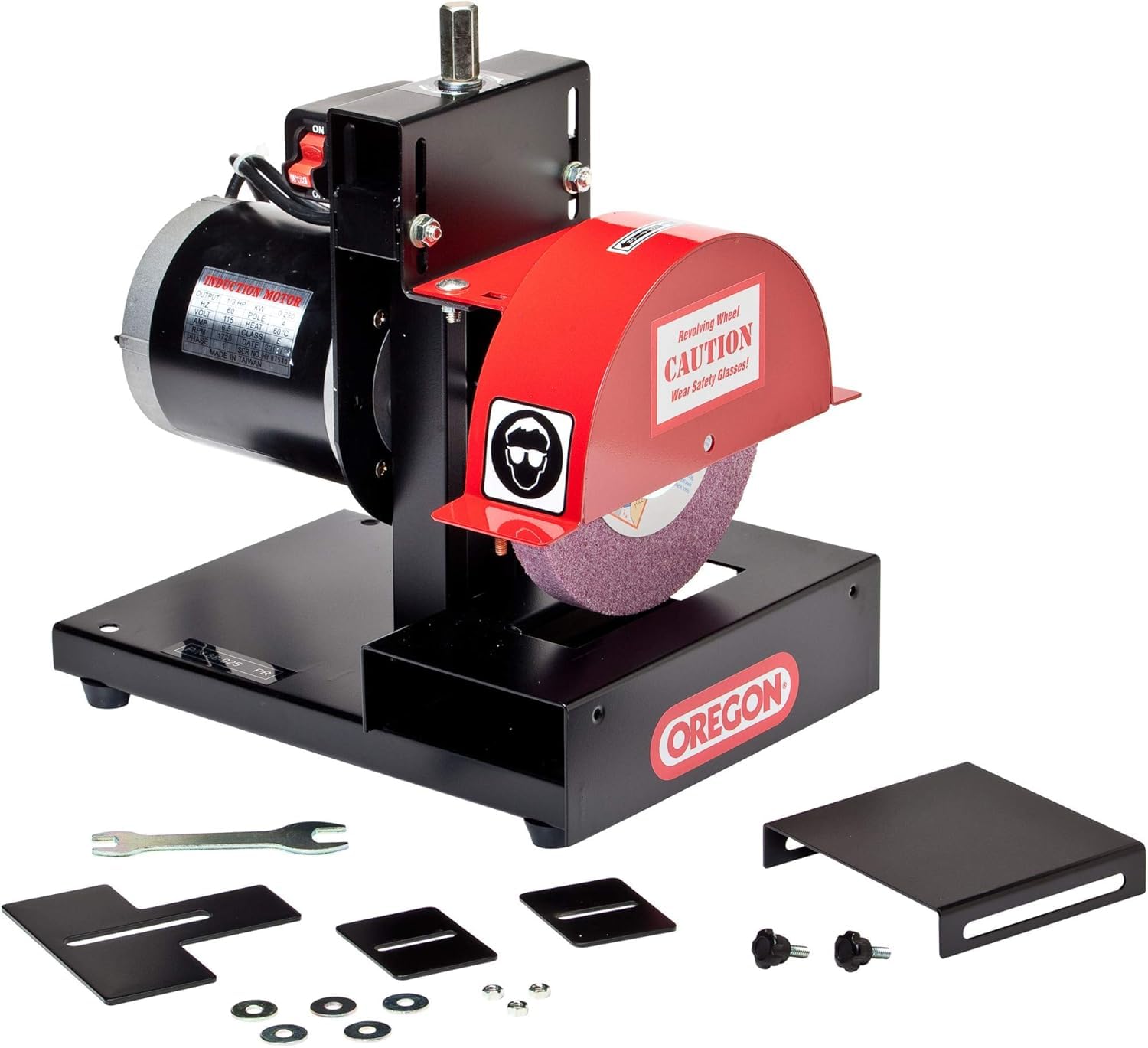
The Oregon 88-025 is a dedicated blade grinder built for heavy-duty use. Its 1/3-horsepower motor drives an 8-inch sharpening stone at 1750 RPM, delivering a controlled grind that matches the factory bevel angle more closely than a hand-held grinder can. The motor torque is sufficient for residential and light commercial blades up to 9 inches long, though applying heavy pressure on thick 0.20-inch steel will slow it down.
The unit includes a built-in safety kill switch and a lockable miter-style blade holder that repeats the same angle across multiple blades. Users note that the grinder runs quieter than a standard bench grinder and produces very little vibration thanks to the heavy 41-pound steel construction. The included 46-grit stone removes metal efficiently, but you will need to buy a separate blade balancer to complete the maintenance cycle.
At over 40 pounds, the Oregon is a permanent workbench fixture — not something you move between jobs. The motor does run hot during extended sharpening sessions, so letting it cool between sets of blades extends its lifespan. For the homeowner who sharpens two or three times per season, this unit is overbuilt; for a landscaping operation, it earns its place.
What works
- 8-inch stone and 1750 RPM deliver slow, controlled bevel grinding
- Heavy 41-pound steel base eliminates vibration during sharpening
- Built-in safety kill switch adds protection during operation
What doesn’t
- Motor can overheat under continuous heavy use without cool-down pauses
- No blade balancer included — requires separate purchase for full maintenance
4. SporGain Lawn Mower Blade Sharpener & Balancer Combo
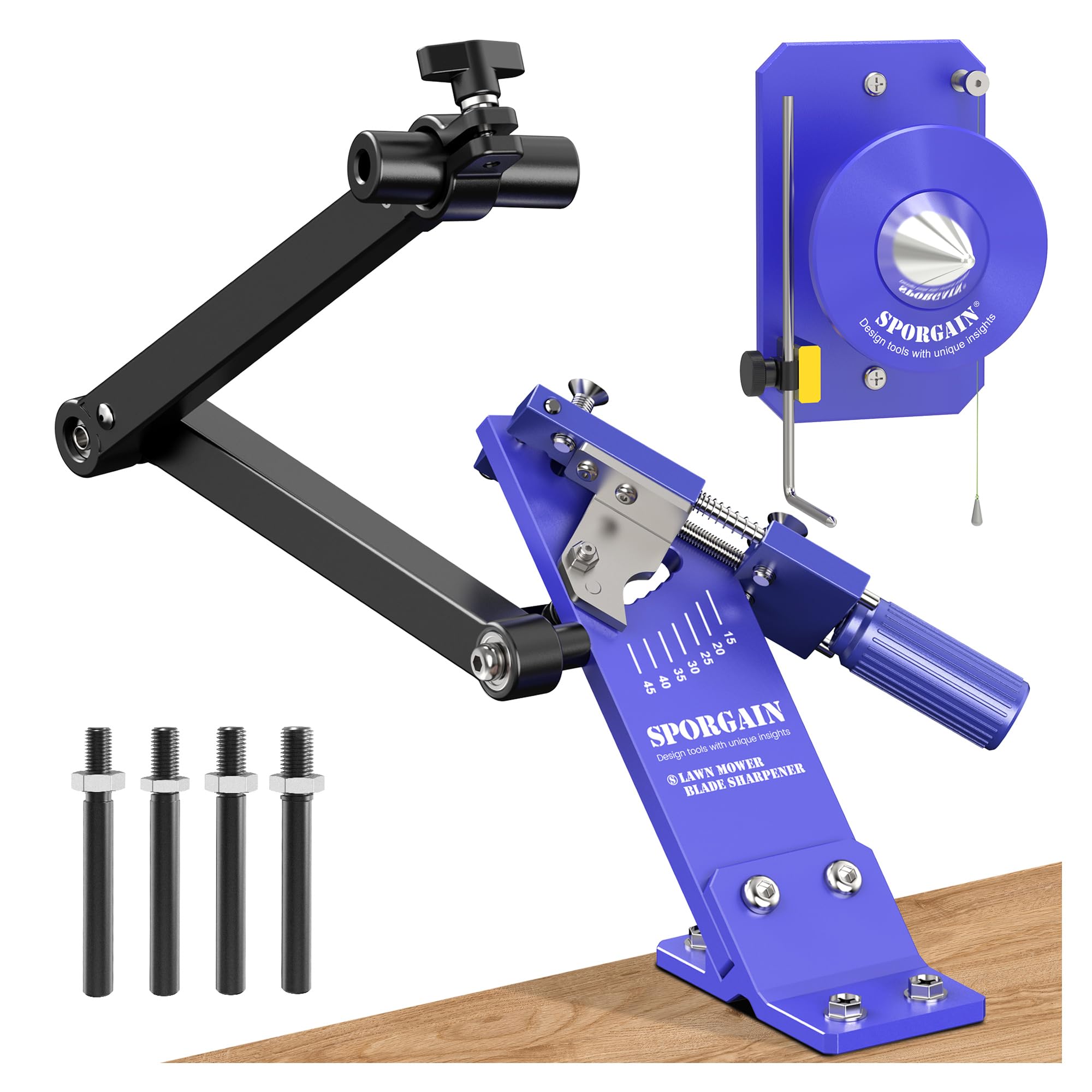
The SporGain combo pairs a thick-metal sharpening jig with a hidden-magnetic cone balancer, creating a single-purchase solution for both edge restoration and balance correction. The sharpener uses ball bearings and a 25-millimeter enlarged handle to grip the blade securely, with a 15°–45° stepless adjustment that locks via thumb screws. The balancer uses advanced finishing and a hidden magnet to detect even minor asymmetry.
Users report that the sharpener jig works well on standard straight blades up to 32 inches, but several note that forcing the jig on curved or high-lift blades flexes the assembly and produces uneven results. The balancer bearing arrived stiff on some units, requiring lubrication before it would spin freely enough to detect small imbalances. Once dialed in, the combo reduces vibration noticeably during the next mow.
This kit is ideal for the DIY homeowner who wants a complete maintenance station without buying separate tools. The metal construction of the jig is a step up from mixed-material alternatives, though the balancer’s sensitivity varies between units. If you sharpen mostly straight residential blades, this combo delivers excellent value.
What works
- Combines sharpener and magnetic balancer in one purchase for complete care
- Thick metal jig with ball bearings holds blade securely during grinding
- Stepless 15°–45° adjustment covers standard residential blade profiles
What doesn’t
- Balancer bearing stiffness on some units reduces sensitivity to minor imbalance
- Jig frame flexes under heavy pressure on curved or high-lift blades
5. Kimgsoak Lawn Mower Blade Sharpener with Balancer
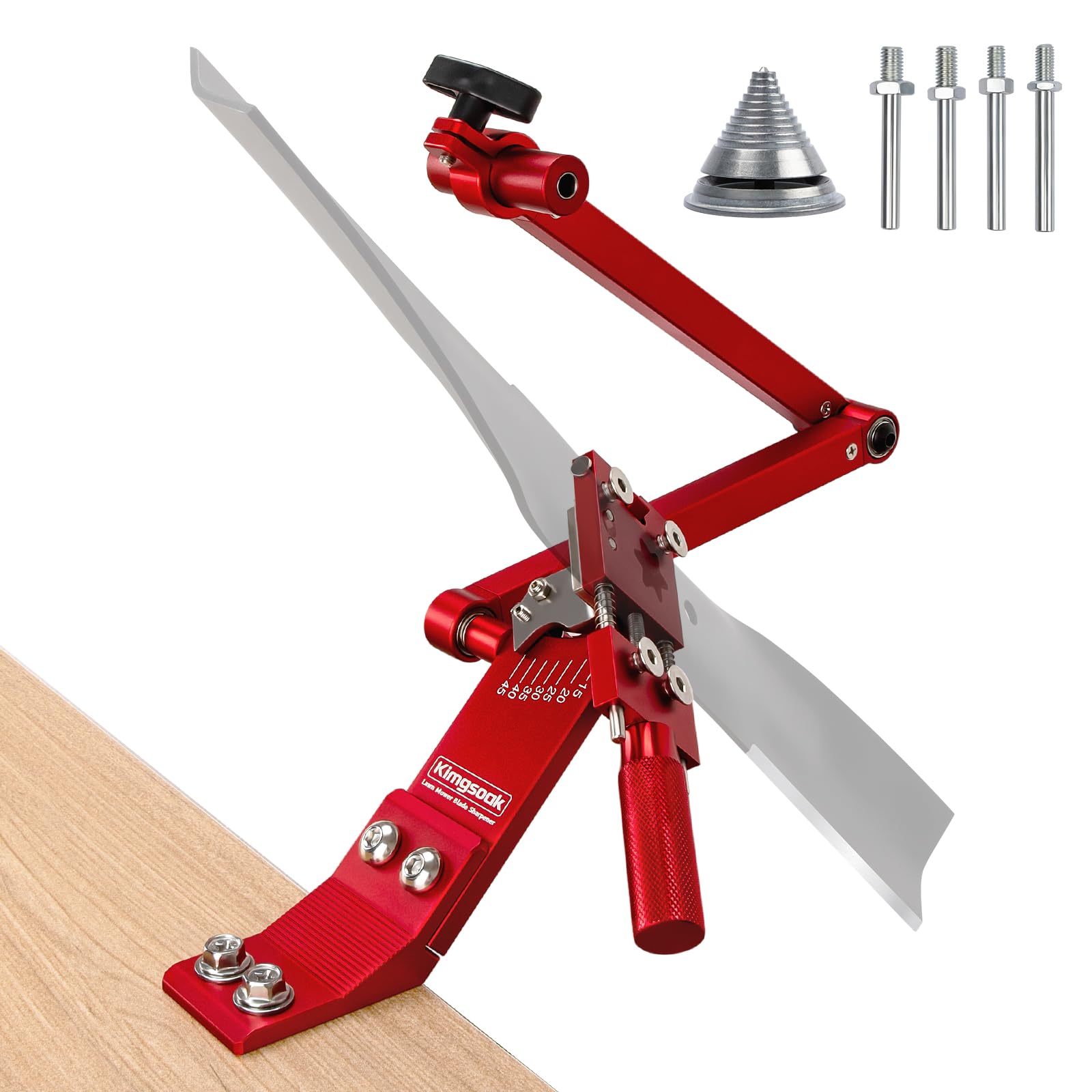
The Kimgsoak kit combines a high-density aluminum alloy jig with a premium zinc alloy balancer, hitting a competitive price point while covering the two essential post-sharpening steps. The jig accepts blades from 1.69 to 3.54 inches wide and adjusts from 15° to 45°, with four guide pins that match most angle grinder arbors. Bushing-to-pin fit is snug enough to reduce wobble during the pass.
Users report that the jig is intuitive to set up — one reviewer sharpened three blades in about 15 minutes on the first attempt. The balancer spins freely and catches visible imbalance, though it is best used as a secondary check after the sharpener jig. Some owners note that aluminum alloy is lighter than steel, so clamping the jig firmly to the workbench is essential to prevent shifting during grinding.
For the homeowner who sharpens a couple of blade sets per season, the Kimgsoak kit provides everything needed without overspending. The balancer adds genuine value by catching the imbalance that a jig alone cannot prevent. The trade-off is that the aluminum jig does not feel as indestructible as a steel unit under heavy commercial use.
What works
- Zinc balancer is sensitive enough to detect minor imbalance after sharpening
- Aluminum alloy jig with four guide pins reduces wobble during grinding
- Fast setup — users sharpen multiple blades in under 15 minutes
What doesn’t
- Aluminum jig needs firm bench clamping to avoid shifting under heavy passes
- Not as durable as steel jigs for daily commercial use
6. SporGain Adjustable Lawn Mower Blade Sharpener Jig
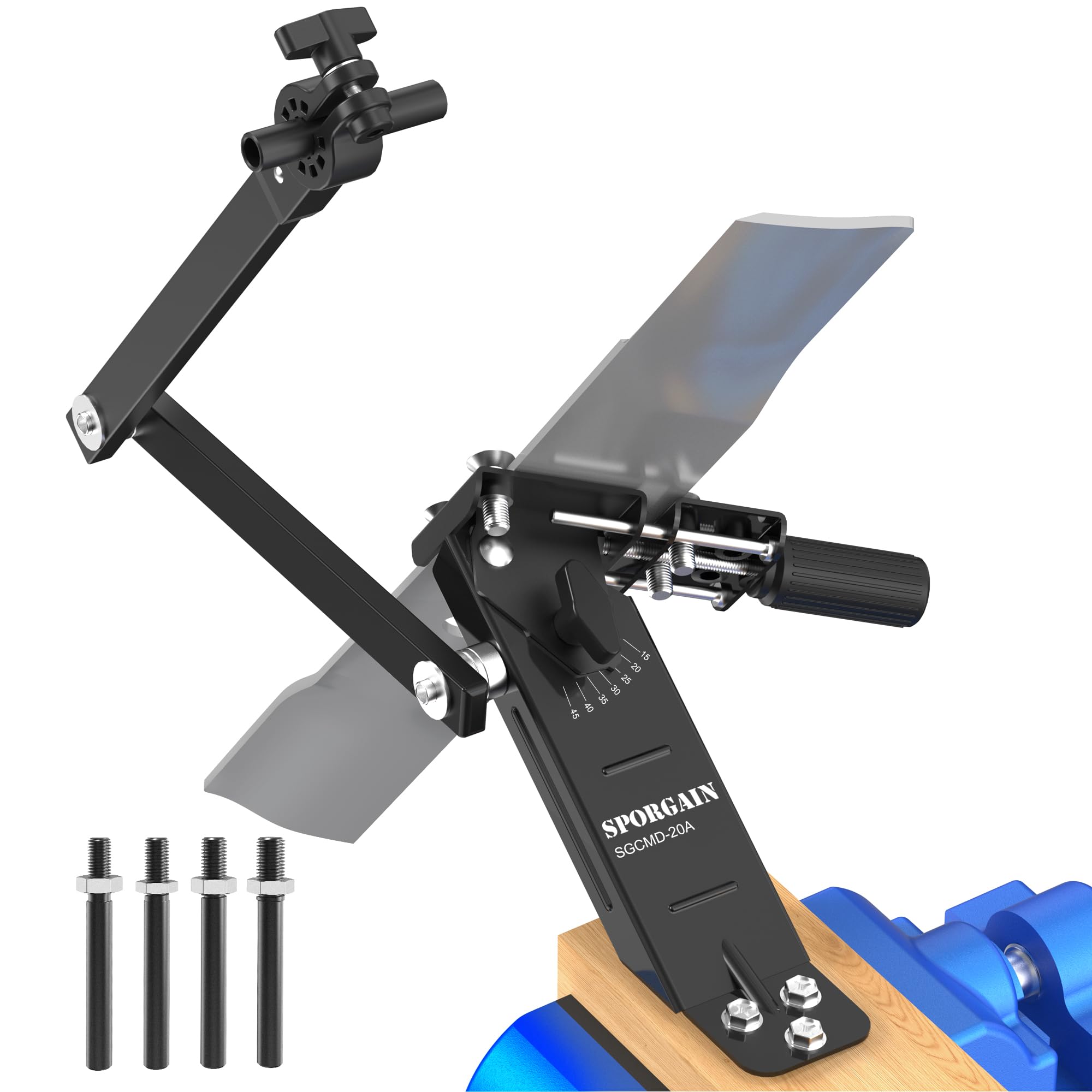
The stand-alone SporGain jig focuses purely on angle accuracy without bundling a balancer, making it the lowest-cost entry point for precise mower blade sharpening. It accepts blades from 1.65 to 3.60 inches wide and adjusts from 15° to 45° via thumb screws. Four guide pins cover most angle grinder brands, and the bushing-and-pin fit minimizes wobble during the sharpening pass.
Users transitioning from freehand vice-and-grinder methods report immediate improvement in edge consistency — one reviewer noted that his previous attempts left blade angles off, while the jig set a precise bevel that kept the edge sharper longer. The assembly does show some wobble under heavy lateral pressure, so light-to-moderate passes produce the best results. Clamping the jig to a stable work surface is essential.
This jig is an excellent choice for the budget-conscious homeowner who already owns an angle grinder and does not need a balancer. It will not handle the highest-volume sharpening loads, but for seasonal maintenance of two or three mowers, it delivers reliable bevel accuracy at a minimal investment.
What works
- Lowest entry cost for precise jig-based mower blade sharpening
- Four included guide pins ensure compatibility with most angle grinders
- Adjustable 15°–45° range covers standard straight and mulching blades
What doesn’t
- Some wobble reported under heavy lateral grinding pressure
- No blade balancer included — separate purchase required for balance check
7. Sharp Pebble Cordless Lawn Mower Blade Sharpener
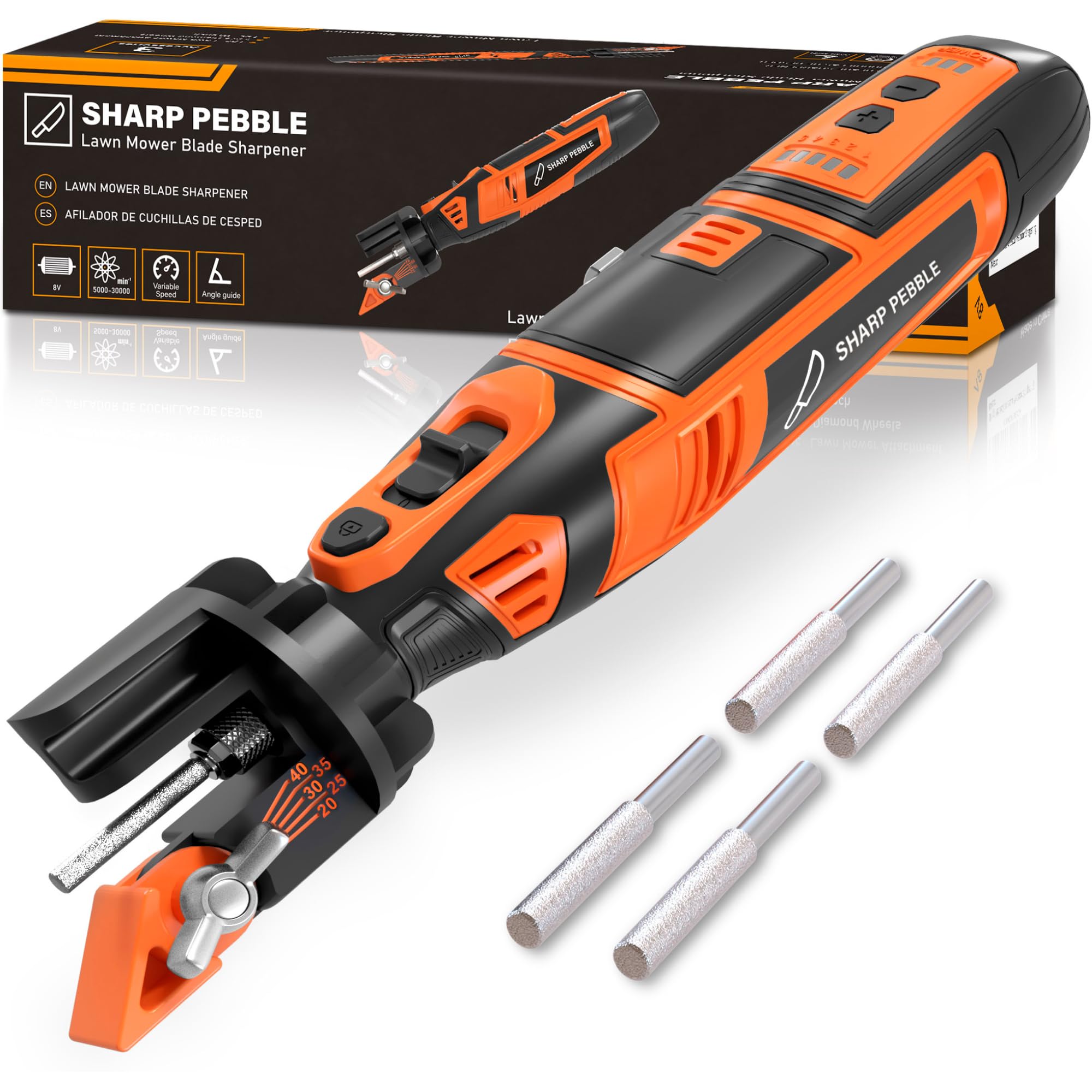
The Sharp Pebble Cordless Sharpener is a rotary tool with an adjustable 20°–40° angle guide, designed for on-mower touch-ups without removing the blade. Its variable-speed motor ranges from 5,000 to 30,000 RPM, and the lightweight 1.37-pound body lets you work one-handed. The rechargeable battery charges via USB-C and holds enough power to sharpen one to two standard residential blades per full charge.
Users appreciate the convenience of not pulling the deck, particularly for a quick mid-season refresh. The tool works best on mildly dull edges — it is explicitly a sharpener, not a grinder — so blades with chips, deep dents, or missing metal need a bench unit first. The included rotary bits wear faster than traditional grinding wheels, and the wing nut that locks the angle can loosen during operation if not cinched tightly.
This cordless rotary is a niche product suited to the homeowner who sharpens frequently enough to justify a dedicated tool but values speed and portability over industrial durability. For robot mower blades or small residential decks, it is a practical grab-and-go option. For standard walk-behind blades that are heavily worn, start with a jig or bench grinder instead.
What works
- On-mower sharpening saves the time and hassle of blade removal
- Lightweight and cordless design allows one-handed operation anywhere
- Variable-speed motor provides control for finishing passes
What doesn’t
- Not suitable for blades with chips, dents, or missing metal — only for dull edges
- Bits wear relatively fast, and the angle wing nut can loosen during use
Hardware & Specs Guide
Jig vs. Bench Grinder vs. Rotary
A jig sharpener clamps to a workbench and guides your angle grinder along a fixed path, producing a repeatable bevel with minimal investment. Bench grinders use a dedicated motor and abrasive wheel for hands-free operation — ideal for high-volume sharpening but fixed in place. Cordless rotary tools offer portability and on-mower convenience but lack the torque to repair damaged edges. Your choice should match the volume of blades you sharpen per season and whether you prioritize portability or throughput.
Angle Range and Blade Geometry
Residential mower blades typically require a bevel between 30° and 45°. A sharpener that adjusts across 15° to 45° covers standard straight blades, mulching blades, and some low-lift profiles. High-lift and gator blades may benefit from a steeper angle at the trailing edge. The lock mechanism matters more than the range — thumb screws or detents that hold firm under lateral pressure produce a cleaner edge than designs that drift mid-pass.
FAQ
How often should I sharpen my mower blade?
Can I sharpen a mower blade without removing it from the deck?
Does a sharper blade make the lawn healthier?
Final Thoughts: The Verdict
For most gardeners, the blade sharpener for mower winner is the All American Sharpener 5005 Gen 2 because it delivers unmatched angle repeatability in a lightweight, portable jig backed by a lifetime warranty. If you want the speed of a dedicated bench unit with a 7-inch ceramic wheel, grab the VEVOR 2/3HP Bench Sharpener. And for a complete budget-friendly kit that includes a blade balancer and does not sacrifice accuracy, nothing beats the Kimgsoak Sharpener with Balancer.