
Mud, slush, rain, and farm muck all share one enemy: a properly engineered Wellington boot that seals water out and keeps your feet dry for hours. The difference between a boot that soaks through after one season and one that holds up to daily abuse comes down to the quality of the rubber shell, the thickness of the neoprene lining, and the tread pattern on the outsole.
I’m Rikta — the co-founder and writer behind Lawn Gear Lab. I’ve spent hundreds of hours studying owner feedback, comparing rubber compound durability, and analyzing neoprene insulation specs to separate genuinely rugged Wellington boots from those that fail in the field.
This guide breaks down the best options for everything from mucking stalls to creek crossings so you can find the right pair of best wellington boots for your specific outdoor work or wet-weather routine.
How To Choose The Best Wellington Boots
Wellington boots look simple, but the materials and construction details determine whether they last one season or five. Focus on these four factors before you buy.
Shaft Height and Calf Fit
Standard Wellington boots sit around 12 to 15 inches tall. A taller shaft keeps water from splashing over the top when you step into deep puddles, but it also needs to fit your calf circumference. Many budget boots have a fixed wide calf that allows water to slosh in if you squat or bend. Look for boots with an adjustable or snug calf fit, especially if you have narrow legs.
Neoprene Thickness and Insulation Rating
The neoprene layer between the rubber shell and your foot traps body heat. A 3mm layer works for mild rain and light spring chores, while 5mm or 6mm neoprene keeps feet warm down to freezing temperatures. If you work outside in snow or deep mud during winter, prioritize 6mm neoprene. Thicker neoprene also adds cushioning, which reduces foot fatigue on concrete barn floors.
Outsole Tread Pattern and Steel Shank
Mud and wet grass demand deep, aggressive lugs that self-clean as you walk. Flat or shallow treads clog quickly and turn your boot into a slick platform. A steel shank embedded in the sole adds torsional rigidity, which lets you walk on uneven ground and ladder rungs without the boot twisting underfoot. Boots without a shank feel floppy and cause arch pain after a few hours.
Rubber Compound Quality
Cheap rubber boots use a hard, brittle compound that cracks in cold weather or after repeated flexing at the ankle. Premium boots use a CR (chloroprene) flex-foam rubber that stays pliable in subzero temperatures and resists punctures from barn nails or sharp rocks. If the product description doesn’t mention flex-foam or CR rubber, expect the boot to stiffen and split within two winters.
Quick Comparison
On smaller screens, swipe sideways to see the full table.
| Model | Category | Best For | Key Spec | Amazon |
|---|---|---|---|---|
| Trudave (Steel Shank) | Rubber / Neoprene | All-day outdoor work | 6mm Neoprene + Steel Shank | Amazon |
| Kalkal Men’s | Rubber / Neoprene | Mud and wet grass traction | 12-inch shaft / 6mm Neoprene | Amazon |
| Edgewater Muck | CR Flex-Foam | Multi-season ranch work | 15-inch shaft / Breathable Airmesh | Amazon |
| HISEA Women’s | Rubber / Neoprene | Gardening and chicken chores | Flex-foam upper / Pull Tab | Amazon |
| Trudave (Men’s) | Rubber / Neoprene | Hunting and fishing trips | 5mm Neoprene / Protective Toe | Amazon |
| Georgia Pull On | SPR Leather | Chemical-resistant farm work | SPR Leather / Wedge Outsole | Amazon |
| Irish Setter Two Harbors | Leather / Steel Toe | Oil rig and heavy industrial | Steel Safety Toe / 11-inch | Amazon |
In‑Depth Reviews
1. Trudave Rubber Boots for Men & Women with Steel Shank
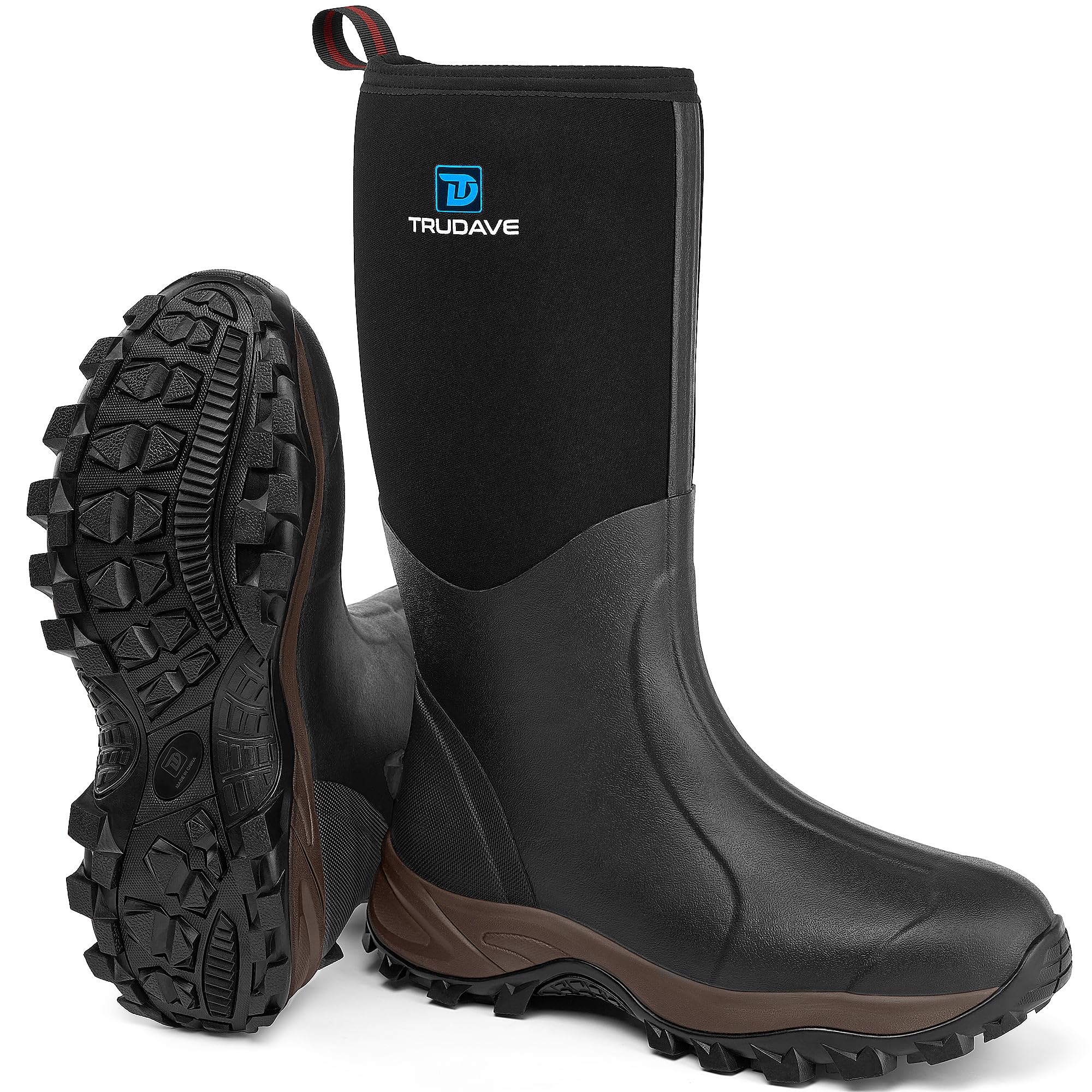
The Trudave unisex boot hits the sweet spot between premium features and everyday affordability. The 6mm neoprene lining provides enough insulation to keep feet warm down to -20°F with thick socks, while the breathable mesh lining wicks moisture to prevent sweat buildup during warmer months. Owner reports confirm the boot maintains waterproof integrity through six months of daily barn and yard use without delamination or cracking at the ankle flex point.
The steel shank embedded in the sole gives this boot a rigid platform that supports arch-heavy days on concrete or uneven pasture ground. The reinforced protective toe adds another layer of security when kicking through brush or stepping on hidden rocks. At roughly 4.5 pounds per pair, the weight sits in the middle of the category — lighter than heavy leather wellingtons but heavier than thin rain boots, which translates to better durability without causing leg fatigue.
Traction on mud and wet grass is excellent thanks to the deep, self-cleaning lugs. Multiple verified buyers reported zero slips while crossing slick creek banks or working on dewy slopes. The pull tabs at the back and front make entry quick, though the calf opening is generous so narrow-legged users may want to wear thick pants to fill the space.
What works
- Steel shank provides real arch support and torsional rigidity
- Breathable mesh reduces foot sweat compared to solid rubber liners
- Deep lug tread sheds mud without clogging
- Reinforced toe protects against barn hazards
What doesn’t
- Calf fit is wide; narrow legs may feel loose
- Top edge can chafe when worn fully unfolded for hours
2. Edgewater Original Men’s 15″ Field Boot

The Muck Boot Company built its reputation on the Edgewater, and after two decades it remains the benchmark for all-day comfort in wet, cold conditions. The CR flex-foam rubber shell stays pliable even when temperatures drop below freezing — it doesn’t stiffen into a rigid tube like budget rubber boots do. The 15-inch shaft extends high enough to keep snow out when you step into a drift, and the breathable airmesh lining prevents the clammy feeling that plagues cheaper neoprene liners.
Owners consistently report these boots lasting three to five years of daily farm, electrician, and outdoor work. The slip-resistant rubber outsole uses a multi-directional tread pattern that grips wet wood decks, muddy hillsides, and smooth concrete equally well. At 4.5 pounds the Edgewater feels substantial but not heavy, and the calf-hugging design keeps water from splashing in even when you squat down to fix fence wires.
The trade-off for that premium compound is that the Edgewater costs noticeably more than entry-level neoprene boots. It also runs true to size, so if you plan to wear heavy wool socks you may want to size up half a step. For anyone who works outdoors year-round, the Edgewater’s material durability justifies the investment — it’s the boot you buy once instead of replacing every winter.
What works
- CR flex-foam stays flexible in subzero temperatures
- Airmesh lining reduces sweat and speeds drying
- Calf-hugging design blocks splashes effectively
- Outsole provides reliable grip on wet wood and steel
What doesn’t
- Priced well above entry-level neoprene boots
- True-to-size fit may require sizing up for thick socks
3. Kalkal Rubber Boots for Men
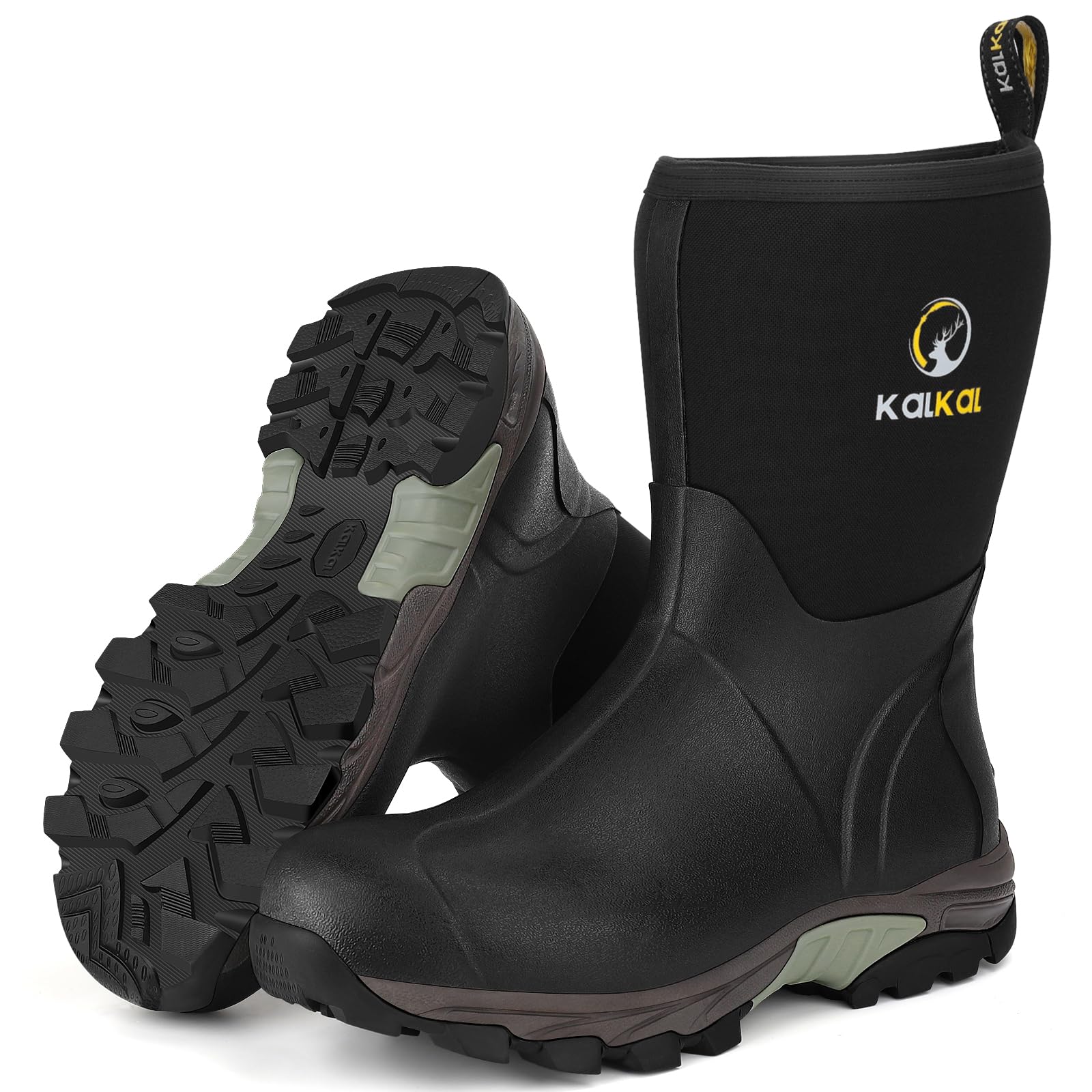
The Kalkal men’s boot delivers serious traction for anyone who spends hours on slick, uneven ground. The rubber outsole uses a chevron-style tread pattern with wide spacing that sheds mud naturally — owners report never slipping on greasy barn floors or wet creek rocks. The 12-inch shaft height is shorter than the Trudave or Edgewater, which improves ankle mobility for kneeling or climbing into truck beds.
The 6mm neoprene liner keeps feet warm from around 25°F up to 70°F without overheating. Multiple reviewers who wore these for fishing trips and standing in cold water confirmed the insulation holds up through an entire day without cold spots at the toe. The boot runs half a size large in length, so ordering down one half-size with normal socks provides a snug fit that prevents heel slip during walking.
One durability gap shows up after extended use: the insoles are comfortable out of the box but aren’t sold separately for replacement, and several long-term users noted the insoles wore flat after several months. The roomy toe box is a plus for wide-footed buyers, but the ankle area requires tall socks to prevent chafing from the neoprene seam. For wet, muddy work where traction is the top priority, the Kalkal is hard to beat at its price point.
What works
- Exceptional tread grip on mud, grease, and wet floors
- Roomy toe box accommodates wide feet
- 6mm insulation handles freezing conditions without overheating
- Half-size-down sizing gives a locked-in heel fit
What doesn’t
- Insoles flatten after months of daily use; no replacement available
- Ankle seam can cause blisters without tall socks
4. HISEA Women’s Mud Rain Boots
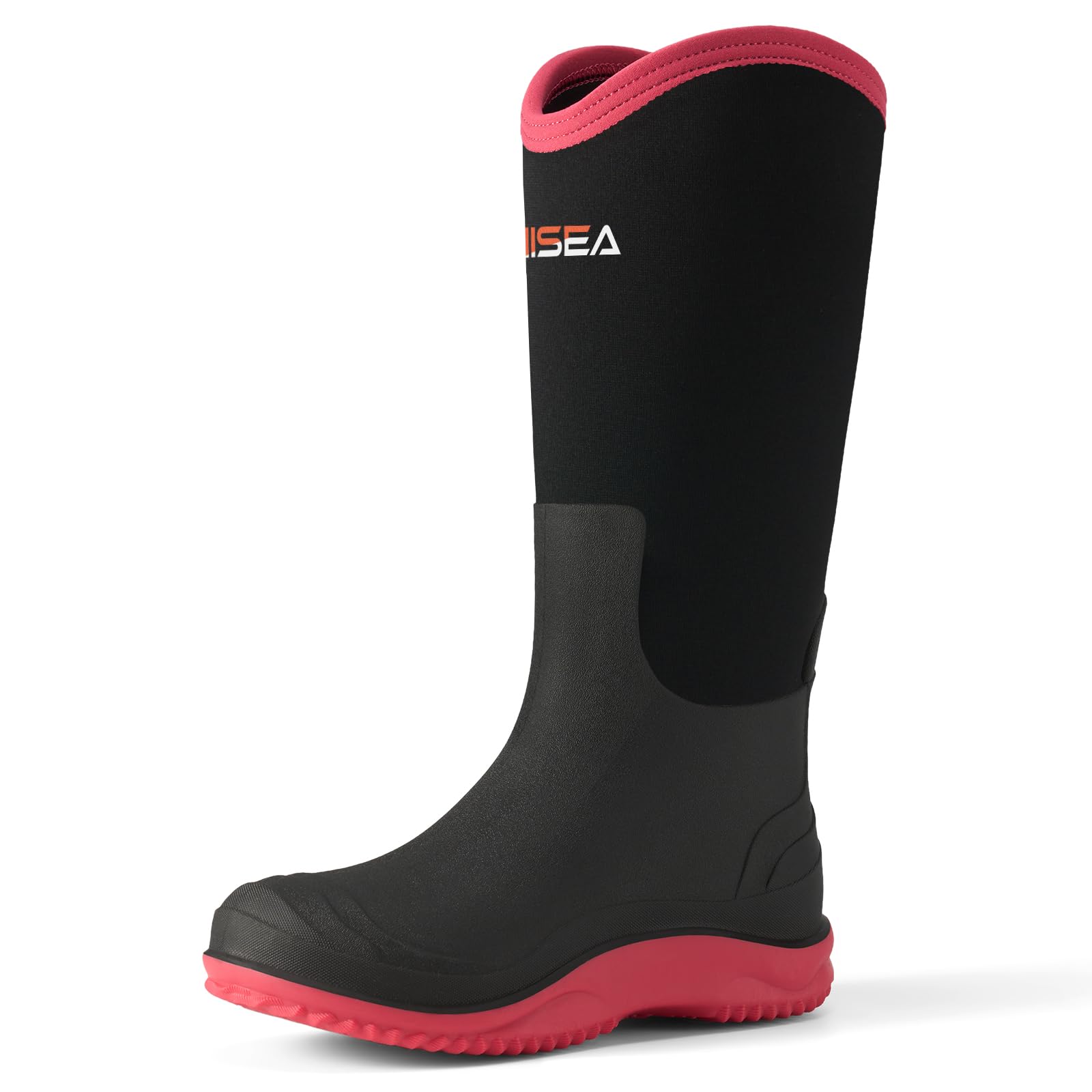
The HISEA women’s boot solves the most common frustration with rubber Wellington boots: getting them on and off without a wrestling match. The flex-foam upper is softer than standard rubber, and the pull tab at the back allows hands-free entry — you can step in and push the boot down without bending over. The seamless construction also means no internal seams rub against the front of your ankle during long gardening sessions.
Women who wear these for daily chicken chores, gardening, and wet yard work consistently praise the roomy toe box, which accommodates thicker socks without compressing toes. The boot runs large enough that many buyers size down one full step from their normal shoe size. The 15-inch shaft rolls down easily for a shorter cut, which is useful for summer rain wear when you want more ventilation around the calf.
The waterproof base holds up well against standing water, and the outsole provides secure grip on wet grass and muddy soil. The fuchsia accent color adds visual appeal, but the real value is in the calf fit — wider than typical women’s rain boots, which helps women with larger calves avoid the tight squeeze that makes other boots unwearable. For light-duty wet-weather wear around the house and garden, the HISEA hits a comfort sweet spot that cheaper boots miss.
What works
- Hands-free entry with pull tab design
- Seamless construction prevents ankle rubbing
- Wide calf accommodates larger legs comfortably
- Roll-down shaft adds ventilation options
What doesn’t
- Runs large; most buyers must size down
- Not insulated for freezing winter temperatures
5. Trudave Rubber Boots for Men with Steel Shank

The men’s Trudave boot competes directly with the unisex version but uses a 5mm neoprene liner instead of 6mm, making it a better choice for milder climates where you don’t need maximum insulation. The hard plastic protective toe cap adds impact resistance for barn work where heavy objects might drop, and the steel shank provides the same torsional stability as the unisex model. Alaska travelers confirmed these boots held up to Zodiac landings and hiking through wet tundra without leaks.
The traction pattern on the outsole uses deep chevron lugs that bite into loose mud and snow. Owners report these boots clean up easily under a tap, with no rubber sticking or cracking after repeated washing. The sizing runs large — several buyers who normally wear size 14 needed to exchange for 13 — so ordering down one full size with thin socks is the safe approach.
The pull tabs are sturdy and the calf opening works well with waders for fishing. If you work in conditions where temperatures stay above 20°F and you don’t need the extra warmth, this boot saves money without cutting corners on durability.
What works
- Steel shank provides solid arch support for long standing hours
- Protective toe cap adds impact safety for barn work
- Deep lugs self-clean in mud and snow
- Washes clean easily without rubber degradation
What doesn’t
- Sizing runs large; most buyers need to size down a full step
- 5mm insulation insufficient for subzero winter conditions
6. Georgia Boot Farm and Ranch Pull On Work Boot

The Georgia Boot takes a completely different approach from the rubber and neoprene category — it uses SPR leather that is three times stronger than standard cowhide and resists barnyard chemicals that dissolve rubber boots over time. The direct-attached polyurethane suspension wedge outsole provides cushioning that rubber boots cannot match, making this the best choice for anyone who stands on concrete barn floors for eight-hour shifts.
The leather construction makes these boots heavier than any rubber Wellington on this list, but the weight comes with puncture resistance and abrasion protection that rubber simply cannot deliver. Owners report two years of daily ranch and hunting use with the soles barely showing wear and the leather holding shape after brushing. The pull-on design with side elastic panels makes entry faster than lace-up work boots, though the leather stretches significantly during break-in — most buyers should size down half a step to account for the eventual loosening.
The chemical resistance is genuine: the outsole resists oil, diesel, and fertilizer compounds that would soften or swell a standard rubber boot within weeks. The trade-off is that the Georgia Boot is not fully waterproof to the same degree as a neoprene-lined rubber boot — it handles ankle-deep water, but submerging the foot will eventually wet out the leather. This boot is purpose-built for dry, chemically aggressive farm environments where rubber would fail.
What works
- SPR leather resists chemicals that destroy rubber boots
- Wedge outsole cushions concrete floors all day
- Durable welt and sole last multiple seasons with little wear
- Puncture resistance far exceeds rubber construction
What doesn’t
- Heavier than rubber Wellington boots
- Not fully submersible; leather will wet out in deep water
- Leather stretches significantly; sizing down is required
7. Irish Setter Two Harbors Steel Safety Toe Work Boot

The Irish Setter Two Harbors is the most expensive boot in this guide, but it earns the price tag through construction that survives oil rig floors where standard boot soles literally melt off. The steel safety toe meets ASTM standards, and the outsole compound resists petroleum degradation — multiple oil field workers report these are the only boots that hold up to daily exposure to drilling mud and chemical washdowns. The 11-inch shaft is shorter than the field boots, which makes these easier to wear under rain pants or coveralls.
The waterproofing stays intact through rain and snow exposure, with no leaks reported even after 15 months of continuous use. The anti-slip outsole keeps traction on wet steel grating and slick concrete, which is critical for safety in industrial environments.
The main drawback is weight — the combination of steel toe, sturdy leather, and thick sole makes these noticeably heavier than any rubber Wellington. They also cost roughly double what a standard neoprene boot runs, so they only make financial sense if your job requires steel-toe protection or chemical resistance. For anyone who needs a boot that survives oil field or heavy industrial conditions, the Two Harbors delivers a lifespan that offsets the higher upfront investment.
What works
- Steel safety toe meets ASTM industrial standards
- Outsole resists petroleum degradation on oil rig floors
- Zero break-in needed; comfortable on day one
- Waterproofing lasts through 15+ months of daily use
What doesn’t
- Heavier than all rubber and neoprene Wellington boots
- Premium pricing limits appeal to casual users
Hardware & Specs Guide
Neoprene Thickness vs Temperature
3mm neoprene works for rain and light mud down to about 40°F. 5mm neoprene handles 25–50°F and is the most common mid-range option. 6mm neoprene pushes the comfort zone to -20°F when paired with wool socks but can feel too warm for summer wear. If you need one boot for all seasons, 5mm is the practical compromise — warm enough for winter chores without baking your feet in July.
Steel Shank vs No Shank
A steel shank is a flat bar embedded between the outsole and the midsole that prevents the boot from twisting under load. Boots without a shank feel flexible and may cause arch fatigue after four to six hours of standing on hard surfaces. Boots with a steel shank feel stiffer out of the box but provide essential support for walking on ladder rungs, uneven pasture, or barn concrete. Always choose a shank if your work involves ladders or uneven ground.
FAQ
Do I need to size down for neoprene Wellington boots?
How do I clean and store rubber Wellington boots so they last?
Can I wear Wellington boots for hiking on wet trails?
Final Thoughts: The Verdict
For most gardeners, the best wellington boots winner is the Trudave with Steel Shank because it combines 6mm insulation, genuine arch support, and deep-tread traction at a price that undercuts premium brands by a wide margin. If you want a premium compound that stays flexible in extreme cold, grab the Edgewater Muck Boot. And for heavy industrial conditions where steel-toe protection and chemical resistance are mandatory, nothing beats the Irish Setter Two Harbors.