
Anthuriums are epiphytic by nature, which means their roots are designed to cling to tree bark and absorb moisture from humid air, not to sit in a heavy, waterlogged medium. Standard potting soil holds too much moisture and suffocates the sensitive root system, leading to yellowing leaves, root rot, and a plant that just won’t bloom. The right soil for anthurium must be chunky, coarse, and incredibly fast-draining to mimic the airy conditions of a tropical canopy floor.
I’m Rikta — the co-founder and writer behind Lawn Gear Lab. I’ve spent hours cross-referencing dozens of pre-mixed blends against the specific drainage, aeration, and pH requirements that anthuriums demand, while filtering through hundreds of verified owner experiences to find the mixes that consistently deliver.
My research reveals that the difference between a thriving anthurium and a struggling one comes down to two things: particle chunk size and the absence of moisture-retaining fillers. If you want a mix that supports vigorous root systems and continuous flowering, finding the best soil for anthurium means prioritizing coarse structure and organic amendments over standard peat-based formulas.
How To Choose The Best Soil For Anthurium
Choosing the wrong potting medium is the fastest way to kill an anthurium. Because these plants are epiphytes, their root systems demand high oxygen levels and rapid water drainage. Standard bagged potting soil is almost always too dense. Focus on three critical factors to find a blend that keeps your anthurium growing and flowering year-round.
Particle Size and Texture
The physical structure of the soil is the single most important variable. Anthurium roots need large air pockets between particles. Look for mixes that contain visible chunks of pine bark, Douglas fir bark, or orchid bark that are at least a quarter-inch across. Pumice and lava rock are excellent additions because they create permanent drainage channels that never break down. Avoid anything that looks like fine, powdery dirt — that texture compacts quickly and traps water around roots.
Drainage Versus Moisture Retention Balance
Anthurium soil must drain fast enough that excess water exits the pot within seconds, but it should still hold some moisture around the bark and coir particles so roots don’t dry out completely between waterings. Ingredients like coco coir and sphagnum peat provide that light moisture buffer without becoming soggy. Charcoal is a useful component because it absorbs impurities and improves drainage without retaining excess water. Steer clear of blends heavy in vermiculite or fine sand, both of which can trap moisture.
Nutrient Content and pH
Anthuriums prefer a slightly acidic pH between 5.5 and 6.5. Worm castings and mycorrhizae are valuable additions because they provide slow-release nutrition and support beneficial microbial activity around the roots. Chemical fertilizers in a premix are less important than the physical structure — you can always supplement with liquid fertilizer later. Peat-free blends using biochar or tree fern fiber are increasingly common and often provide better long-term porosity than standard peat-laden mixes.
Quick Comparison
On smaller screens, swipe sideways to see the full table.
| Model | Category | Best For | Key Spec | Amazon |
|---|---|---|---|---|
| Rosy Soil Aroid Mix | Peat-Free Living | Microbially active, carbon-negative blend | 4 qt with biochar, pumice, worm castings | Amazon |
| Top Tier Genetics Aroid 4QT | Chunky Premium | Complete ready-to-use aroid formula | 4 qt with orchid bark, pumice, biochar | Amazon |
| Grow Queen Craft Aroid Mix | Eco Peat-Free | Pet-safe sustainable blend with NZ fern | 2 qt with lava rock, pumice, fir bark | Amazon |
| Soil Sunrise Anthurium Mix | Species-Specific | Directly formulated for anthurium needs | 8 qt with peat, pine bark, charcoal, perlite | Amazon |
| Perfect Plants Aroid Mix | Large Volume | Cost-effective big bag for multiple pots | 8 qt with charcoal, perlite, sponge rock | Amazon |
| Gardenera Anthurium Mix | Targeted Blend | Small-bag precision for single repotting | 3 qt with Canadian peat, NZ bark, perlite | Amazon |
| Top Tier Genetics Aroid 2QT | Compact Starter | Small-scale repotting for one or two plants | 2 qt with coco husk, pumice, biochar | Amazon |
In‑Depth Reviews
1. Rosy Soil Aroid Soil Mix
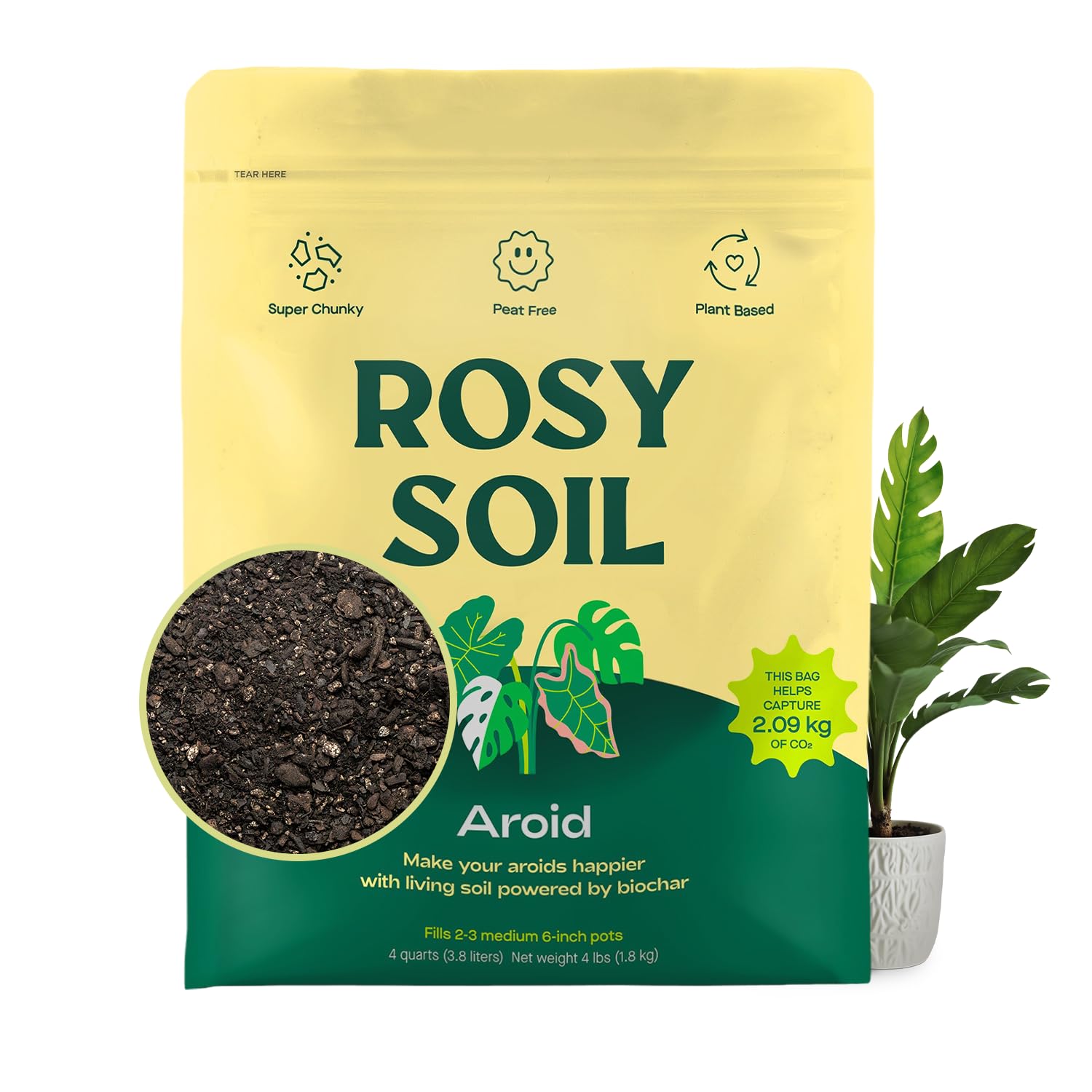
Rosy Soil’s aroid blend stands out because it uses biochar and volcanic pumice instead of peat, creating a structure that stays chunky and aerated for years rather than breaking down into fine silt. The pine bark fines provide the large air pockets anthurium roots crave, while the worm castings and mycorrhizae deliver consistent nutrient availability without chemical salts that can burn sensitive roots. This is a carbon-negative, living soil that actively supports microbial activity around the root zone.
Owner experiences confirm that plants repotted into this mix show new growth within a week, and the fast drainage essentially eliminates the risk of overwatering for those who tend to be generous with the watering can. Multiple users report switching from premium brands like Ocean Forest specifically because this mix stays looser longer. The 4-quart bag fills two to three 6-inch pots, making it a practical choice for a small collection.
The one trade-off is that the texture is less chunky than some orchid-bark-heavy competitors, which may be a concern for those growing anthurium species with extremely thick, air-hungry roots. It also dries relatively fast, requiring more frequent watering in low-humidity homes. But for a balanced, eco-conscious formula that prioritizes root health, this is the most complete option available.
What works
- Living biochar formula supports long-term porosity
- Peat-free design is carbon-negative and sustainable
- Drains fast enough to prevent root rot in most conditions
What doesn’t
- Less chunky than heavy orchid-bark blends
- Requires more frequent watering in dry air
2. Top Tier Genetics AROID Potting Mix (4QT)
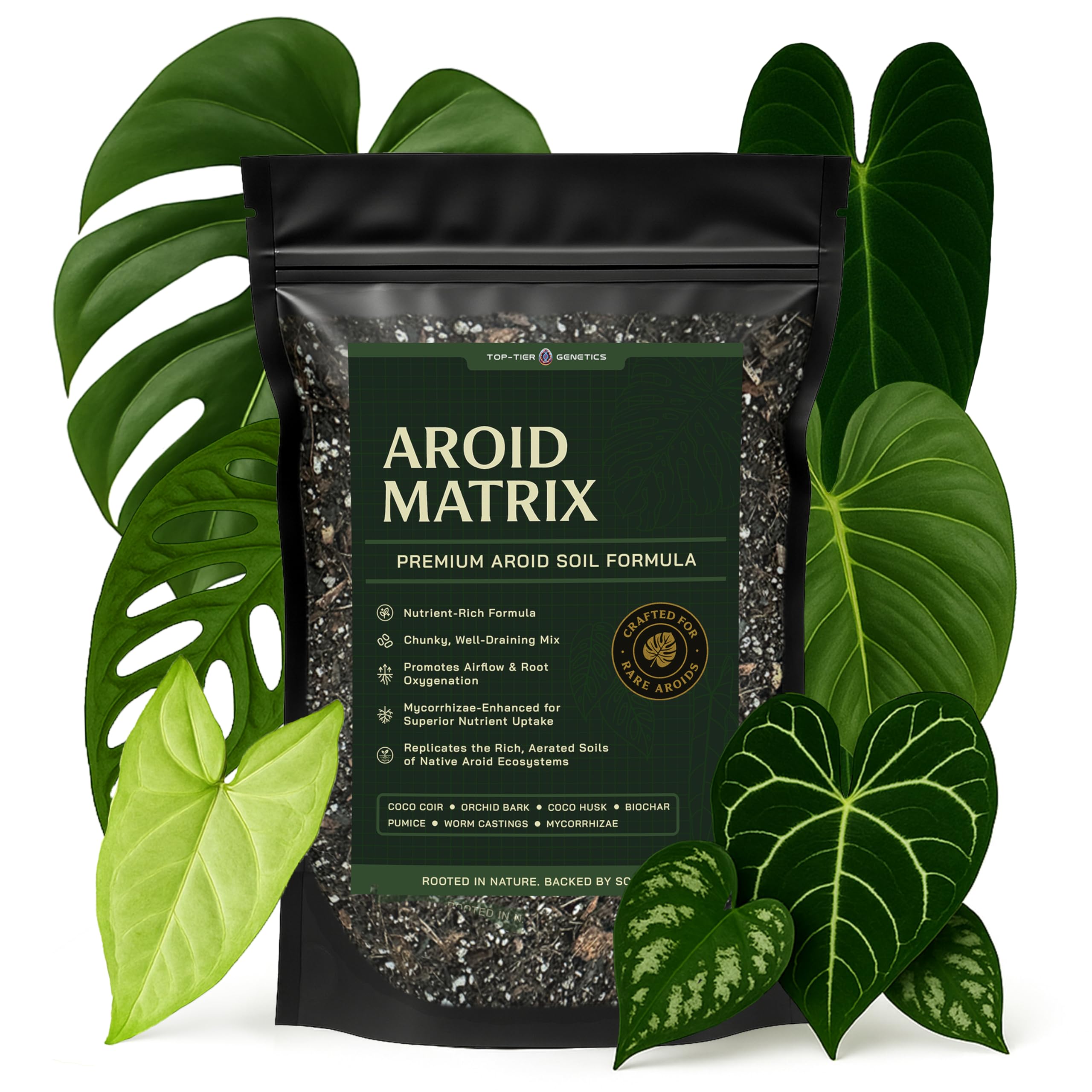
Top Tier Genetics delivers a chunky, ready-to-use blend that combines orchid bark, coco husk, pumice, and biochar to create a coarse texture that mimics the natural growing medium anthuriums would cling to in the wild. The inclusion of worm castings and mycorrhizae provides a slow-release nutrient base that fuels root development without requiring additional amendments immediately. The particle size distribution is notably varied, with large bark pieces creating visible air pockets throughout the bag.
Users consistently report that plants perk up within two to three days of repotting, with explosive root growth and healthier foliage as the standard outcome. The mix is described as light, airy, and fresh-smelling, with no sour or musty odor that sometimes accompanies bagged soils that have been stored improperly. It works equally well for Monstera, Philodendron, and Alocasia, making it a versatile option for mixed aroid collections.
The downside is that the 4-quart bag is relatively compact, and owners of larger collections will need multiple bags for a full repotting session. Some users note that the mix drains very quickly, meaning that in low-humidity environments, plants may need watering more often than with a peat-based alternative. But for those prioritizing root oxygen over moisture retention, this blend performs exactly as advertised.
What works
- Visibly chunky texture with large bark pieces
- Mycorrhizae and worm castings for natural feeding
- Ready to use with zero mixing required
What doesn’t
- Small bag size for the price point
- Dries very fast in arid indoor conditions
3. Grow Queen Craft Aroid Potting Mix
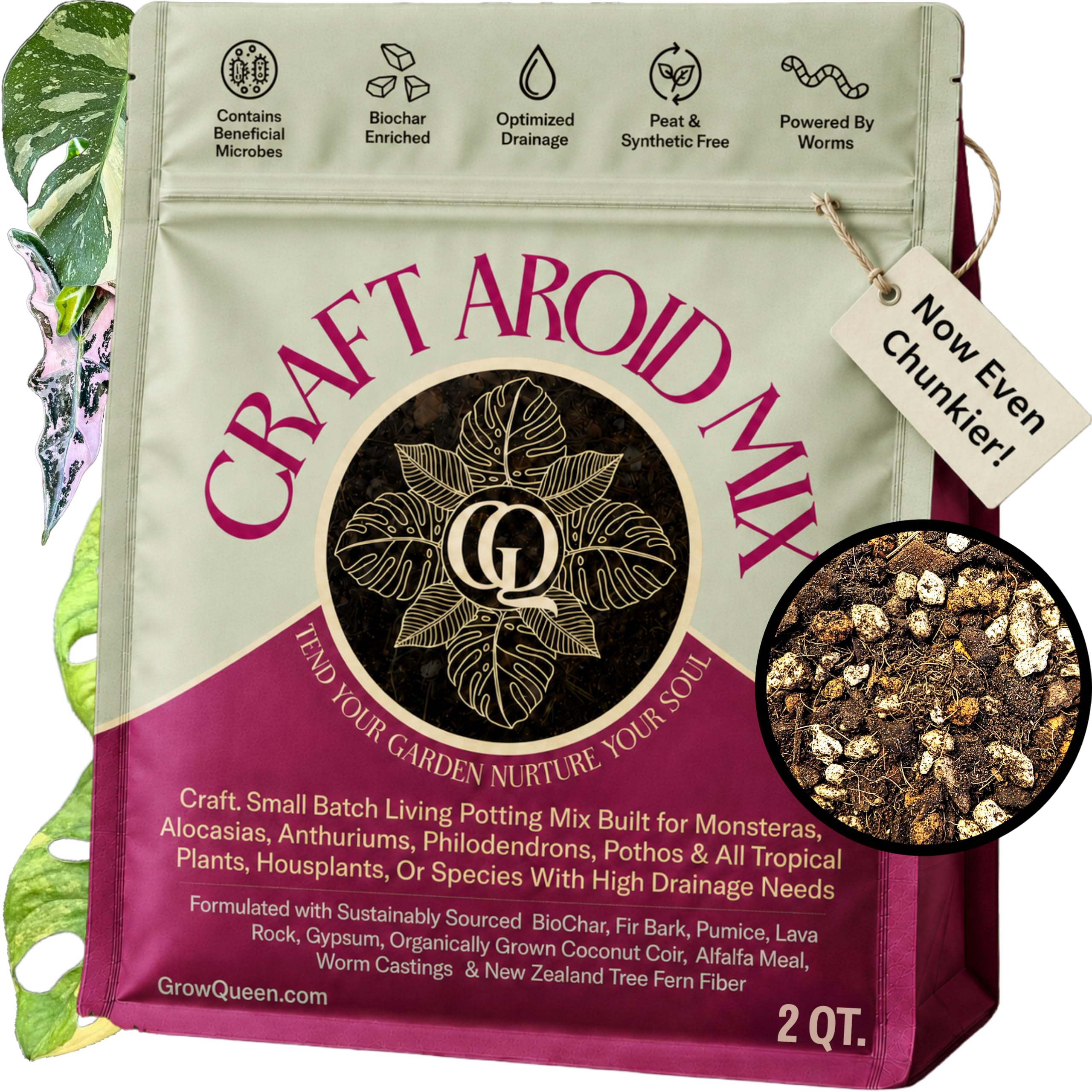
Grow Queen’s Craft Aroid Mix sets itself apart with the inclusion of New Zealand Tree Fern Fiber, an ingredient that acts as a natural soil conditioner and neutralizes pH to around 6.0 — right in the sweet spot for anthurium roots. The blend uses Douglas fir bark fines, lava rock, and pumice instead of perlite and peat, which means it won’t break down into compacted sludge over time. It is also certified organic coco coir that has been washed more thoroughly than most to remove excess salts.
Reviews consistently mention that this mix is light yet chunky, drains exceptionally well, and produces no mold or pests even after a month of use. The texture is described as breathable, with enough structure to allow roots to grip and spread naturally. The bag is pet-friendly and non-toxic, which is a meaningful consideration for households with curious animals that might dig into potted plants. The included sample of liquid fertilizer is a nice bonus for jump-starting growth.
The main limitation is the 2-quart bag size, which is suitable for one or two medium pots but runs out quickly when repotting a larger collection. Some users also note that the mix is not as chunky as dedicated orchid bark blends, though the trade-off is a more balanced moisture retention that works well for anthuriums that prefer consistent humidity around the roots.
What works
- Tree fern fiber actively buffers pH to ideal range
- Peat-free and perlite-free with recycled materials
- Consistently free of pests and mold across multiple orders
What doesn’t
- 2-quart bag is small for larger collections
- Less chunky than some premium bark-heavy mixes
4. Soil Sunrise Anthurium Plant Potting Soil Mix
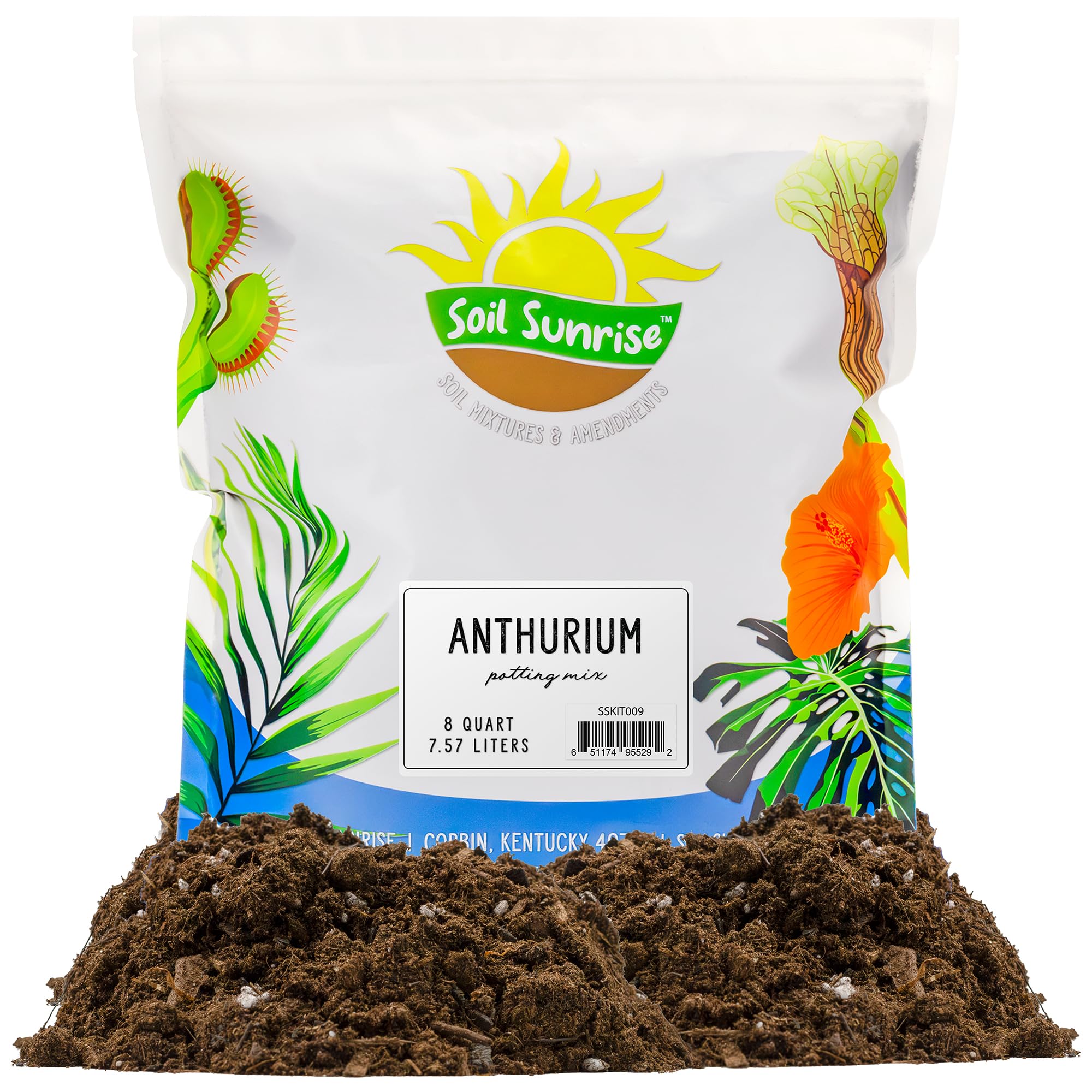
Soil Sunrise offers one of the few blends explicitly marketed for anthurium rather than generic aroids, and the formulation reflects that focus. The mix combines peat moss, pine bark, horticultural charcoal, perlite, sand, and lime to create a well-draining medium that still holds enough moisture to prevent the root zone from drying out completely. The charcoal helps filter impurities and keeps the soil fresh between waterings, while the lime adjusts pH to the slightly acidic range anthuriums prefer.
Owner feedback highlights that anthuriums struggling with brown leaf edges and persistent wet soil recovered quickly after being switched to this mix. Several users report that their plants started producing new flowers within weeks of repotting, a sign that the nutrient balance and aeration are well-calibrated. The 8-quart bag provides excellent value for money, easily handling multiple repots for those with a modest collection.
The mix does contain peat moss, which is less sustainable than peat-free alternatives and can become compacted over time if the pot is not carefully monitored. Some experienced growers note that they still add extra pumice or orchid bark to increase the chunkiness for anthurium species with particularly thick roots. But for a balanced, reliable, and budget-conscious option, this is a solid starting point.
What works
- Specifically formulated for anthurium species
- Large 8-quart bag at accessible price
- Charcoal helps keep soil fresh and odor-free
What doesn’t
- Contains peat moss — less sustainable option
- May need extra pumice for very thick-rooted varieties
5. Perfect Plants Organic Aroid Potting Mix
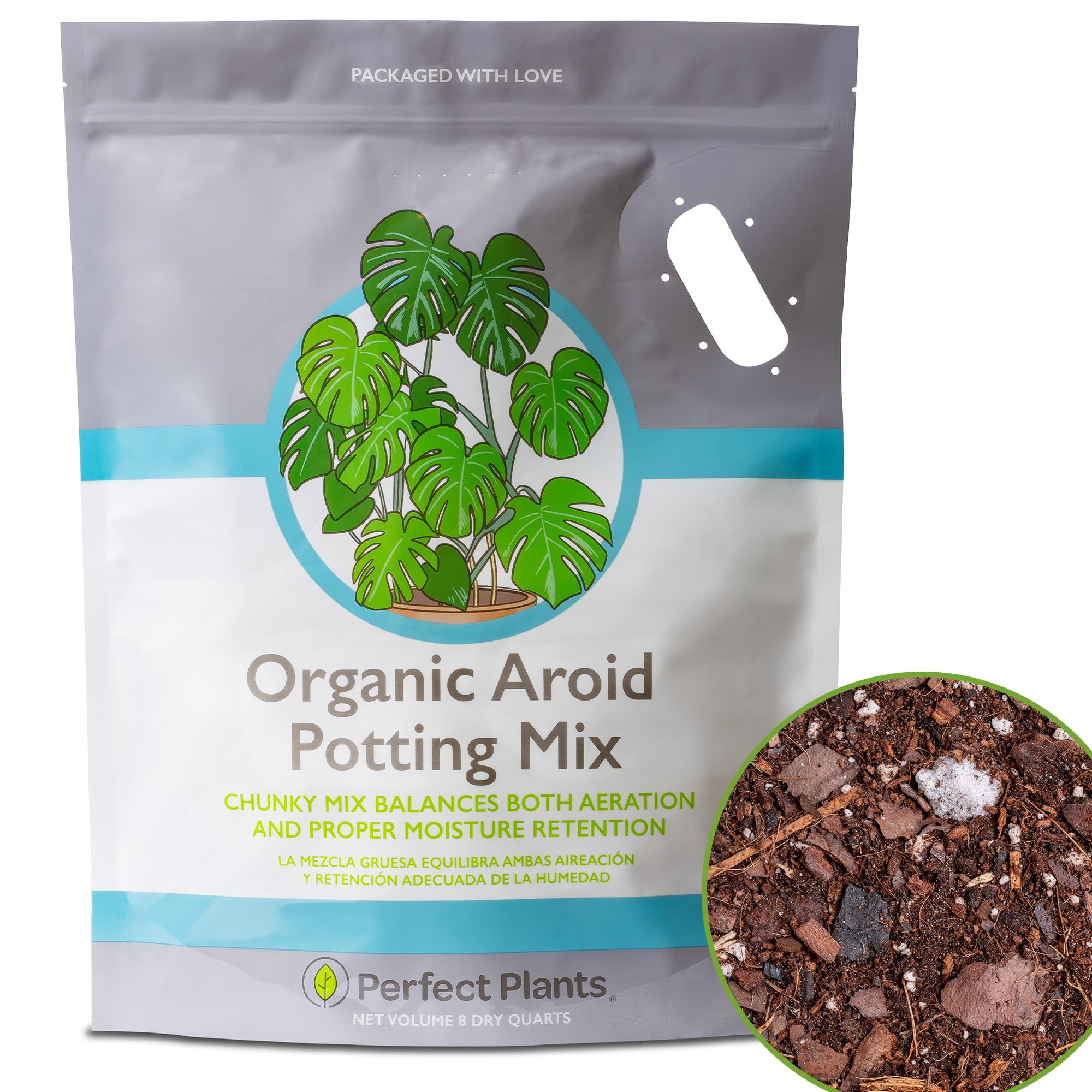
Perfect Plants delivers a chunky aroid mix that balances coarse pine bark with finer components like coco coir and peat moss to create a structure that drains well without becoming bone-dry between waterings. The inclusion of sponge rocks — a lightweight volcanic material — and horticultural charcoal adds permanent drainage channels that won’t break down over time. The 8-quart bag is notably generous, filling seven to eight 6-inch pots, which makes this one of the better options for those repotting multiple plants at once.
Customer reviews consistently praise the texture, describing it as chunky without being overly coarse, with enough fine material to fill gaps around smaller roots. Monstera owners in particular note that their plants responded with vigorous new foliage within weeks. The bag includes a resealable closure, though some users find it difficult to keep sealed properly and transfer the mix to a separate container.
The main concern is that the mix is not as coarse as some pure orchid-bark-based blends, which may be a downside for anthurium species with very air-hungry root systems. The peat component also means it will break down faster than peat-free alternatives, requiring more frequent repotting. However, for the volume and price, it offers strong performance for general aroid care.
What works
- Excellent value with 8-quart capacity
- Sponge rocks create permanent drainage channels
- Balanced texture works for most aroid types
What doesn’t
- Resealable bag design is difficult to use
- Peat component will compact faster than peat-free mixes
6. Gardenera Anthurium Potting Mix

Gardenera’s mix is explicitly labeled for anthurium and includes Canadian peat moss, New Zealand bark, perlite, charcoal, sand, and lime in a formulation designed to provide excellent drainage while maintaining adequate moisture levels. The 3-quart size is practical for single-plant repotting, reducing waste compared to larger bags that may sit open for months. The inclusion of lime helps stabilize pH levels, which is especially useful for anthuriums grown in water with high mineral content.
Users who repotted struggling anthuriums report seeing new flower stalks emerge within weeks, a strong indicator that the root environment is properly calibrated. The mix is described as easy to work with, requiring no additional amendments or sifting before use. The bag design is straightforward and pours cleanly without excessive dust.
The main drawback is the small bag volume relative to the price, which means this is significantly more expensive per quart than larger bulk options. The presence of peat moss also means the mix will degrade faster than biochar-based alternatives, requiring more frequent repotting. For those who want a targeted, no-fuss solution for a single anthurium, it works well, but cost-conscious buyers may find better value elsewhere.
What works
- Formulated specifically for anthurium growth
- Lime content helps stabilize pH in variable water
- Ready to use with no mixing or amendments
What doesn’t
- Small bag size results in higher per-quart cost
- Peat-based mix will degrade faster than peat-free
7. Top Tier Genetics AROID Potting Mix (2QT)
This 2-quart offering from Top Tier Genetics uses the same formulation as the larger 4-quart bag, combining orchid bark, coco husk, pumice, and biochar for a chunky, aerated structure that anthurium roots love. The worm castings and mycorrhizae provide a strong nutrient foundation, and the coco coir component offers balanced moisture control that keeps roots hydrated without staying soggy. This smaller size is ideal for testing the blend before committing to a larger purchase.
Buyers consistently report that plants perked up within days of repotting, with improved root development and brighter foliage. The mix is ready to use straight from the bag with no additional mixing, and the texture is described as airy and fresh. The compact 2-quart size is perfect for a single medium pot or for refreshing the top layer of several smaller pots.
The obvious limitation is the bag volume — 2 quarts goes quickly, and those with multiple plants will need two or three bags to complete a full repotting session. For established collections, the larger 4-quart version is a far more economical choice. But for beginners or those with just one or two anthuriums, this entry-level size reduces waste and upfront investment.
What works
- Same premium formula as the larger bag
- Perfect trial size for new users
- Ready to use with excellent aeration
What doesn’t
- Very small bag for the cost per quart
- Multiple bags needed for larger collections
Hardware & Specs Guide
Particle Size Distribution
The ideal anthurium soil should have particle sizes ranging from roughly 1/8 inch to 1/2 inch, with visible bark chunks and porous rock fragments. Fine particles below 1/16 inch should make up no more than 20% of the total volume, as excess fines fill the air gaps that roots need to breathe. Blends that include Douglas fir bark, pine bark fines, or orchid bark at the larger end of this range tend to hold their structure longest.
Biochar vs. Peat Base
Biochar is a carbon-rich charcoal that resists decomposition and maintains pore space for years. Peat moss, by contrast, breaks down gradually and compacts, reducing drainage over time. Biochar also hosts beneficial microbes and improves nutrient retention. For long-term anthurium health without frequent repotting, biochar-based or pumice-heavy blends significantly outperform standard peat-based mixes.
pH Buffering Ingredients
Anthuriums thrive in slightly acidic conditions (pH 5.5 to 6.5). Tree fern fiber naturally lowers and stabilizes pH to around 6.0, while lime is used in some blends to raise pH if the base ingredients are too acidic. Charcoal helps absorb impurities and maintain stable pH levels over time. A mix that includes at least one pH-buffering ingredient reduces the risk of nutrient lockout and discolored leaves.
Worm Castings and Mycorrhizae
Worm castings provide a gentle, slow-release source of nitrogen, phosphorus, and potassium without the burn risk of synthetic fertilizers. Mycorrhizal fungi form a symbiotic relationship with anthurium roots, extending their reach and improving water and nutrient absorption. Blends containing both components often produce faster establishment and more vigorous flowering compared to mixes that rely solely on chemical fertilizer additives.
FAQ
Can I use regular potting soil for anthurium?
How often should I repot anthurium into fresh soil?
What is the difference between anthurium soil and orchid mix?
Should anthurium soil be peat-free?
Final Thoughts: The Verdict
For most gardeners, the soil for anthurium winner is the Rosy Soil Aroid Mix because its biochar and pumice base provides unmatched long-term porosity while supporting beneficial microbial activity. If you want the chunkier texture of traditional orchid-bark-heavy blends, grab the Top Tier Genetics 4QT. And for those seeking an eco-friendly, pet-safe option with natural pH buffering, nothing beats the Grow Queen Craft Aroid Mix.