
Nothing ruins a tidy backyard faster than a shed whose paint is peeling, cracking, or fading into a chalky mess. The specific enemy here is moisture wicking up through untreated end grain, combined with UV rays that break down cheap binders — a double assault that makes ordinary house paint fail on sheds within a single season.
I’m Rikta — the co-founder and writer behind Lawn Gear Lab. I spend my days comparing specification sheets, studying pigment-to-binder ratios, interpreting ASTM waterproofing test results, and aggregating hundreds of owner reports to determine which coatings actually hold up on outdoor utility structures.
After cross-referencing technical data across seven different formulas, I’ve identified the coatings that resist peeling, block water penetration, and keep their color longer. This research-driven roundup helps you pick the right shed paint for your specific wood type and local weather conditions.
How To Choose The Best Shed Paint
Selecting a shed coating is not the same as picking living-room wall paint. The formulation must handle direct sun, rain runoff, temperature swings, and physical contact from tools and lawn equipment. Focus on four core criteria to avoid the frustration of premature re-coating.
Binder Type: Acrylic vs. Vinyl vs. Oil
Acrylic latex is the standard for exterior wood because it expands and contracts with the substrate rather than cracking. Straight vinyl latex is cheaper but chips faster on rough shed siding. Oil-based penetrates deep but takes much longer to dry and is harder to clean up. For most DIY shed projects, a 100% acrylic formula delivers the best balance of adhesion and flexibility.
Sheen Level: Flat vs. Satin vs. Semi-Gloss
Flat finishes hide surface imperfections well but collect dirt and show scuffs more easily. Satin offers a middle ground — enough reflectivity to shed water but low enough to mask minor wood grain. Semi-gloss is easier to wipe clean and resists mildew better, but it amplifies every bump and nail hole. For high-contact shed doors and trim, semi-gloss holds up longer.
Waterproofing and UV Resistance
Look for explicit claims like “waterproof” or “exceeds ASTM D-4446” for a sealer that truly blocks moisture. UV-resistant pigments (usually iron oxide-based) delay fading and prevent the binder from breaking down under intense sun. A shed facing south or west will degrade a standard paint much faster than one under tree cover.
Coverage Rate and Number of Coats
Manufacturer coverage estimates assume perfectly smooth, primed wood. On rough-sawn shed siding, you will get 20-30% less coverage per gallon than the label suggests. A gallon listed at 400 sq ft may only cover 250-300 sq ft on rough pine. Account for two coats in your budget — one coat almost never provides uniform protection on vertical wood.
Quick Comparison
On smaller screens, swipe sideways to see the full table.
| Model | Category | Best For | Key Spec | Amazon |
|---|---|---|---|---|
| Glidden Total Exterior All-in-One | Paint & Primer | High-impact one-coat hide | 400 sq ft/gal | Amazon |
| #1 Deck Premium Solid Stain | Solid Stain | Opaque weatherproof coverage | 100-150 sq ft/gal (2 coats) | Amazon |
| Roxil Wood Sealer Clear | Clear Sealer | Natural wood preservation | 204 sq ft/gal (2 coats) | Amazon |
| EVOLVE Barn & Fence Paint | Acrylic Latex | Fast-dry farmhouse color | 300-400 sq ft/gal | Amazon |
| KILZ Waterproofing Semi-Transparent | Semi-Transparent | UV-rated fence & siding | 250-500 sq ft/gal | Amazon |
| Thompson’s WaterSeal Semi-Transparent | Semi-Transparent | ASTM-certified waterproofing | 150-400 sq ft/gal | Amazon |
| Thompson’s WaterSeal Transparent | Transparent Stain | Subtle tint plus water block | 150-400 sq ft/gal | Amazon |
In‑Depth Reviews
1. Glidden Total Exterior Paint & Primer All-in-One
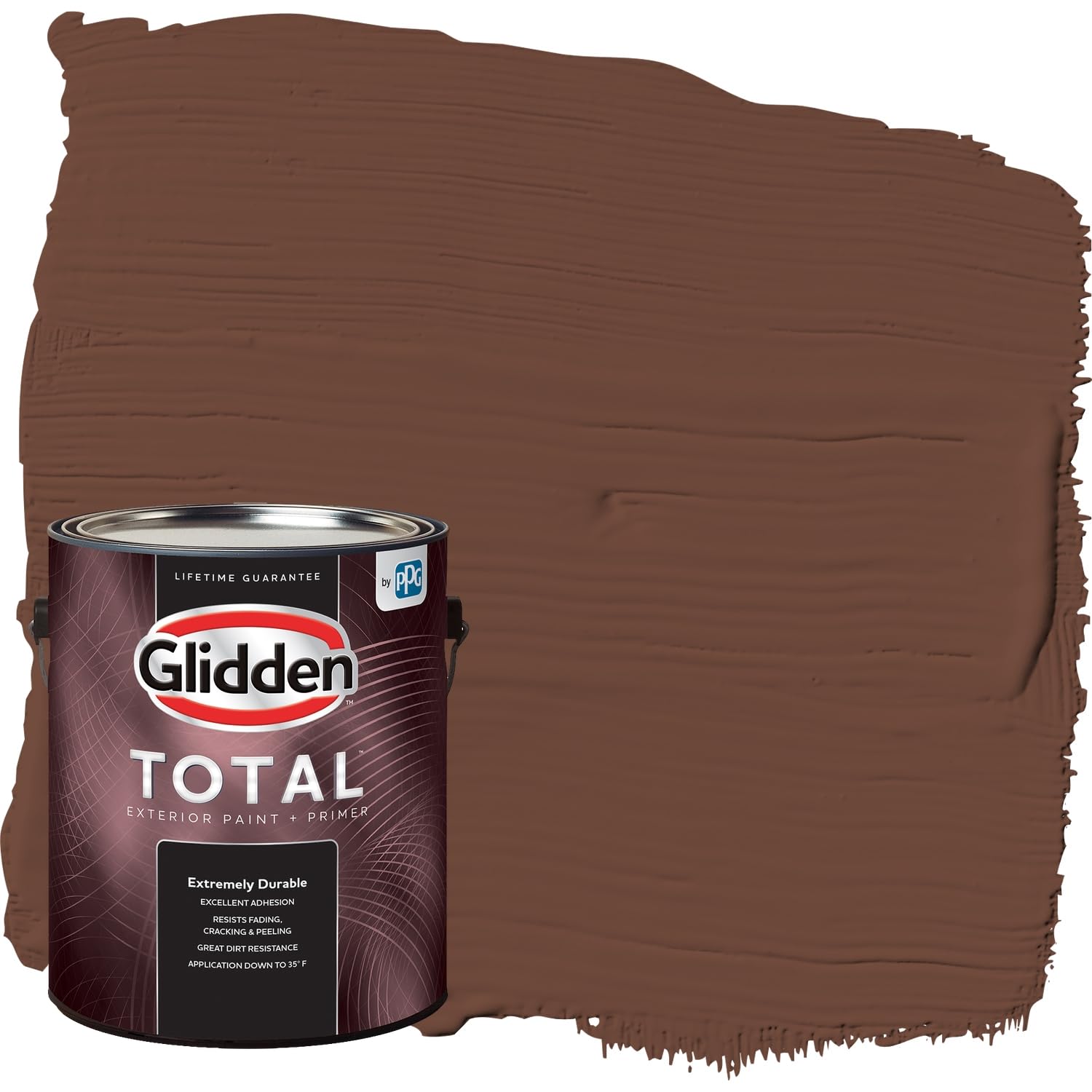
Glidden’s Total Exterior formula combines paint and primer into one semi-gloss coating that delivers one-coat coverage on previously painted or primed shed siding. Its Bird House Brown color has a warm, pigmented base that hides underlying variations without requiring a separate primer step. The 400 sq ft per gallon coverage rate means a single gallon can handle a medium garden shed with some leftover for trim.
The semi-gloss sheen provides active dirt resistance and makes rain bead-off easier, which reduces mildew habitat along the bottom edges of the shed. Unlike flat paints that absorb moisture, this surface stays clean with just a garden hose rinse. Owners consistently report that a single coat hides old color completely, and the finish remains flexible enough to avoid cracking through seasonal wood expansion.
One practical trade-off: shipping delays have been reported with this specific listing, so ordering three weeks ahead of your painting weekend is recommended. The formula also takes about four hours to fully cure, meaning a second coat (if needed) must wait a full day for best adhesion on bare wood patches.
What works
- One-coat hide saves labor on most shed surfaces
- Semi-gloss finish resists dirt and mildew effectively
- Application down to 35°F extends the painting season
What doesn’t
- Shipping delays have been reported for this listing
- Not waterproof — needs separate sealer on horizontal surfaces
2. #1 Deck Premium Advanced Solid Color Outdoor Stain
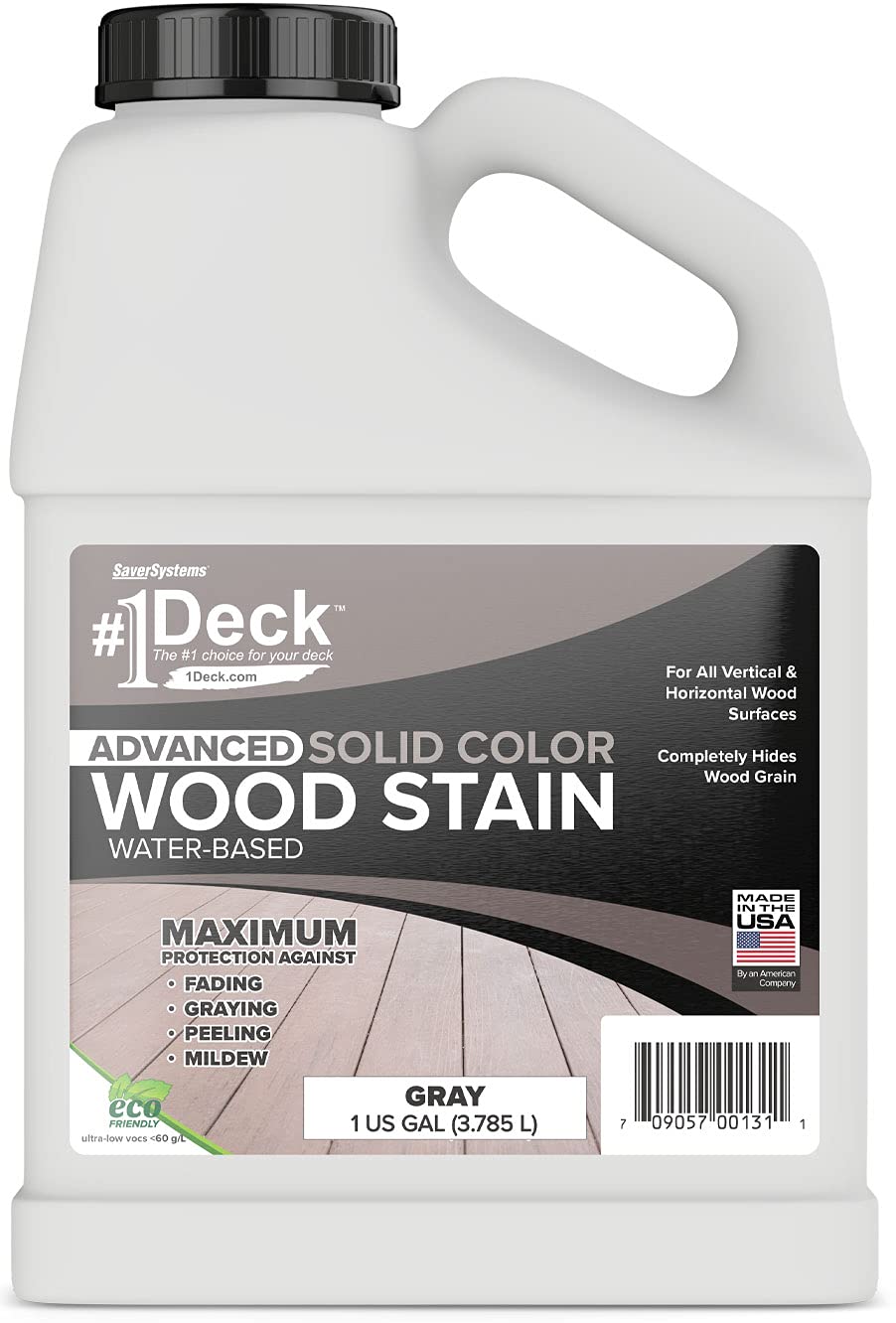
This SaverSystems product is technically a solid-color stain, meaning it penetrates wood pores rather than sitting entirely on the surface like paint. The opaque finish completely hides the wood grain while creating a breathable barrier that resists peeling — a common failure mode of thick paint layers on shed siding. Its low-VOC water-based formula has minimal odor and cleans up with plain soap and water.
The UV-resistant additives are a defining feature for sheds exposed to full southern sun. Owners report the gray shade stays true for two years with no visible fading, and the sealer component makes water bead up immediately after curing. Coverage is listed at 100-150 sq ft per gallon for two coats, which is lower than paint but reflects the deeper absorption needed on rough wood.
The biggest practical difference from paint: this stain can be applied over existing solid stains that still have good adhesion, allowing a refresh without stripping everything down to bare wood. That saves roughly half the prep time compared to repainting an older shed. The main downside is the limited color palette — only six shades are available.
What works
- Penetrates wood to resist peeling better than paint
- UV protection keeps gray color stable for two seasons
- Low odor and easy soap-and-water cleanup
What doesn’t
- Coverage is low — budget for two gallons on a standard shed
- Only six color options in the solid line
3. Roxil Wood Sealer Liquid (Clear)
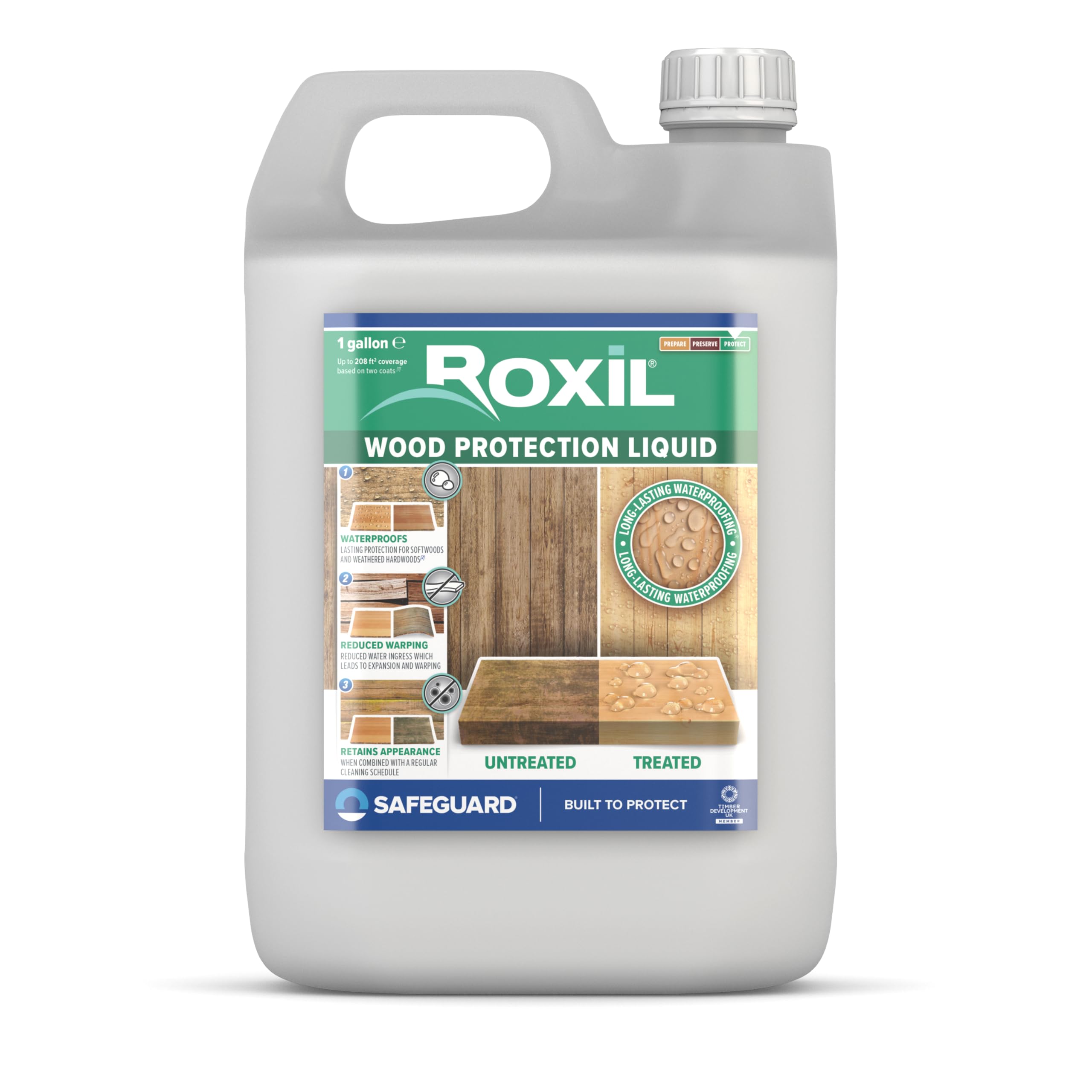
Roxil’s clear sealer is a silicone-based formula designed for owners who want to keep the natural color and grain of their shed visible. It penetrates deep into softwood timber — pressure-treated pine, cedar, fir — and polymerizes inside the fibers to create a waterproof barrier that still lets the wood breathe. The manufacturer claims a 10-year lifespan with two coats, which is exceptionally long for a clear sealer.
Application is straightforward with a brush or garden sprayer, and drying time is roughly 30 minutes in warm weather. Owner reports confirm that the sealer withstands multiple rainstorms within hours of application without washing off, and it prevents the dimensional warping that happens when moisture cycles in and out of unprotected shed walls. The clear finish means no fading or chalky residue over time.
The trade-off is purely aesthetic: if your shed has patchy, stained, or weathered boards, the clear sealer will not even out the appearance. Every knot, gray patch, and previous stain color will remain visible. This product is suited only for sheds built with uniform, attractive wood where the goal is preservation rather than transformation.
What works
- Deep-penetrating silicone blocks water without surface film
- 30-minute dry time allows quick recoating same day
- Preserves natural wood grain and color completely
What doesn’t
- Does not hide stains, knots, or weathered patches
- 10-year claim depends on exact two-coat application
4. EVOLVE Barn & Fence Paint, Flat (Red)
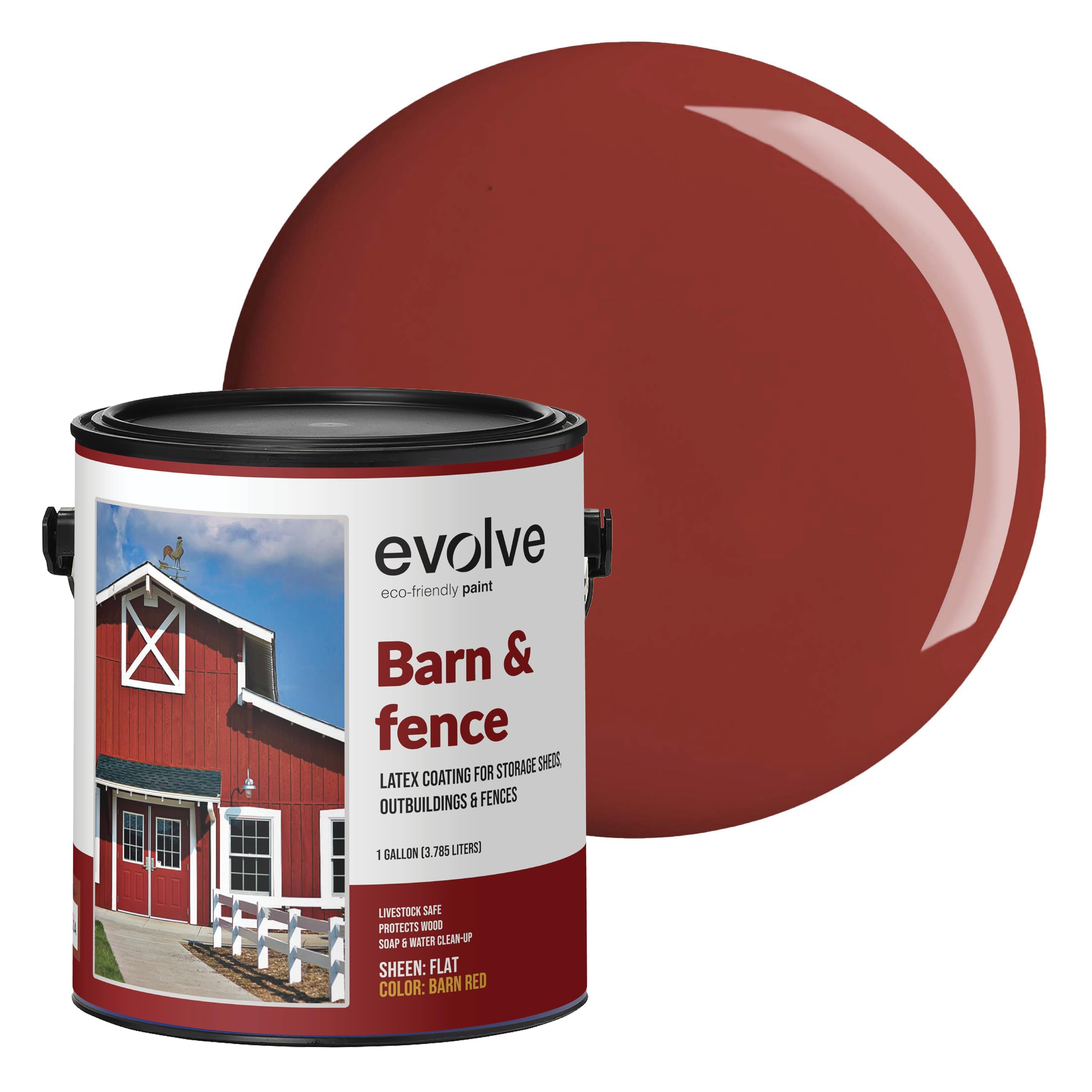
EVOLVE’s Barn & Fence Paint is a flat acrylic latex that dries fast enough for ambitious weekend projects. The red shade delivers a classic barn aesthetic, and the scratch-resistant binder holds up against leaning tools, bumping wheelbarrows, and rubbing tree branches. Coverage is rated at 300-400 sq ft per gallon, which is competitive for a flat exterior paint on rough wood.
The formula is USA-made with recycled materials and low waste, appealing to environmentally conscious buyers. Owner feedback specifically highlights how the paint soaks into wood fibers rather than sitting purely on top, creating a stained appearance that does not peel in large sheets when damaged. Several reviews note that the same can that coated a chicken coop four years ago is still holding strong.
The one caution involves color: the flat red is described by multiple users as chalky or washed-out compared to the deep red shown on packaging. If you need a vibrant barn-red, this may disappoint. The flat finish also shows dirt more readily than satin or semi-gloss, so expect to hose down the lower siding annually.
What works
- Fast-drying formula cuts project time significantly
- Scratch-resistant binder survives shed-side contact
- Made in USA with low-waste manufacturing
What doesn’t
- Flat red appears chalky — not a deep barn red
- Flat finish collects dust and requires more frequent washing
5. KILZ Waterproofing Semi-Transparent Wood Stain

KILZ brings its reputation for mildew-resistant coatings to the outdoor wood space with this 100% acrylic semi-transparent stain. The Cedar Naturaltone shade lets wood grain show through while adding enough pigment to unify weathered boards. KILZ warrants the finish for up to three years on decks and five years on fences and siding — an explicit durability commitment that most can-based paints do not offer.
The formula includes fade-resistant and UV-resistant additives that prevent the grayish oxidation that makes untreated sheds look old. Coverage is listed at 250-500 sq ft per gallon depending on wood porosity, which puts it in the mid-range for stain products. Owners with decade-old fences report that a single coat after cleaning gave uniform color and significantly improved water beading.
The main consideration is that semi-transparent coverage requires properly prepared wood. New, unweathered wood takes the stain evenly, but surfaces with existing paint or heavy mildew need thorough stripping and cleaning. The satin finish offers moderate sheen without being glossy, which helps hide small surface irregularities while still shedding rain.
What works
- Five-year warranty on siding and fences adds confidence
- 100% acrylic formula resists cracking on vertical wood
- Fade-resistant pigments delay gray oxidation
What doesn’t
- Customer reports of shipping loss with this listing
- Needs bare or well-cleaned wood for even absorption
6. Thompson’s WaterSeal Semi-Transparent Stain (Chestnut Brown)

Thompson’s WaterSeal is one of the most recognized names in outdoor wood protection, and this semi-transparent stain in Chestnut Brown is designed for homeowners who want reliable waterproofing without a full opaque cover. The formulation exceeds ASTM D-4446, the industry standard for measuring how effectively a coating prevents water absorption in wood — a critical specification for shed bottoms that sit near damp ground.
The compatibility with damp wood is a standout feature: most stains require bone-dry lumber, but Thompson’s can be applied when the surface is still slightly moist after cleaning. This flexibility is helpful for larger sheds where you cannot guarantee six hours of dry wood between rain showers. Coverage spans 150-400 sq ft per gallon, so a two-gallon purchase covers an average 8×10 shed with a second coat to spare.
The color is a known variable — multiple owners point out that Chestnut Brown dries with a distinctly reddish tone rather than the brown shown on the label. If you expect a true brown, see the color in person first. Also, one coat is rarely enough; the manufacturer and users agree that a second coat significantly improves water repellency and longevity.
What works
- Meets ASTM D-4446 standard for proven waterproofing
- Can be applied to damp wood for scheduling flexibility
- Thin consistency allows deep penetration into fibers
What doesn’t
- Chestnut Brown dries much more red than the label shows
- Requires two coats for effective long-term protection
7. Thompson’s WaterSeal Transparent Stain (Natural Cedar)

This entry-level Thompson’s WaterSeal stain uses a transparent formula that adds subtle color while keeping the wood texture fully visible. The Natural Cedar tint is very light — owners consistently describe it as more pigmented than expected for a “transparent” product, but still nowhere near the coverage of a semi-solid or solid stain. It is best suited for sheds with already attractive wood that just needs a waterproofing boost.
The key appeal is application ease: it goes on with a brush, roller, or sprayer, dries quickly, and cleans up with water. The advanced polymers in the formula provide fade resistance and UV protection that keeps the wood from turning gray prematurely. Coverage is similar to the semi-transparent variant at 150-400 sq ft per gallon, and the ability to apply to damp wood remains a practical advantage.
The main limitation is that transparent stains by nature offer little to no hide. If your shed has mixed wood colors, old stain residue, or darkened areas from previous moisture exposure, this product will not create a uniform appearance. The stain also penetrates less deeply than oil-based alternatives, so annual reapplication may be needed in high-rain climates.
What works
- Dries fast and cleans up with soap and water
- Can be applied to damp wood for flexible scheduling
- Fade-resistant polymers slow UV graying
What doesn’t
- No hiding power — all wood imperfections remain visible
- Transparent tint may appear more colored than expected
Hardware & Specs Guide
Coverage per Gallon
Coverage rates range from 100 sq ft (solid stain on rough wood, two coats) to 400 sq ft (paint on smooth primed wood, one coat). The rougher the siding, the lower your real-world yield. Always buy 20% extra for your shed size to avoid mid-project shortages.
Sheen Level
Flat finishes hide imperfections but absorb moisture and dirt. Satin offers a middle ground with reasonable washability. Semi-gloss resists mildew and cleans easily but highlights surface defects. For shed siding, satin is the safest compromise between appearance and maintenance.
Binder Chemistry
100% acrylic latex provides the best adhesion and flexibility on outdoor wood. Vinyl acrylic is cheaper but embrittles in cold weather. Oil-based alkyd penetrates deeper but takes 24+ hours to dry and requires mineral spirits for cleanup. For most DIY shed jobs, stick with acrylic.
Waterproofing Certification
ASTM D-4446 is the industry standard test for wood waterproofing. A product that explicitly mentions passing or exceeding this standard has been measured for water repellency effectiveness. Clear sealers and semi-transparent stains are more likely to carry this certification than full-body paints.
FAQ
Can I use standard house paint on a shed?
Should I use a paint or a solid stain on my shed?
How many coats of shed paint should I apply?
What is the best temperature to apply shed paint?
How do I prepare old shed wood for repainting?
Final Thoughts: The Verdict
For most gardeners, the shed paint winner is the Glidden Total Exterior All-in-One because it delivers one-coat hide on previously painted wood with a semi-gloss finish that resists dirt and lasts through wet seasons. If you want to preserve natural wood grain while blocking moisture, grab the Roxil Wood Sealer for its deep-penetrating silicone barrier. And for opaque coverage on rough, raw siding that would peel paint, nothing beats the #1 Deck Premium Solid Stain.