
Planting a tree in a 30-gallon container changes everything — you’re no longer squeezing roots into a starter pot; you’re supporting a semi-mature root ball that needs serious lateral space and vertical depth to establish without girdling itself. The difference between a standard nursery bucket and a purpose-built fabric 30-gallon pot is the difference between a tree that survives transplant and one that thrives for years in the same home.
I’m Rikta — the co-founder and writer behind Lawn Gear Lab. I’ve spent hundreds of hours researching fabric weights, seam stitching patterns, handle reinforcement methods, and real-world owner experiences to separate the pots that hold up through wet soil loads from the ones that sag or tear after one season.
This guide compares seven of the most popular options on the market, covering fabric density, handle durability, drainage performance, and pack value to help you find the right 30 gallon pots for trees that match your planting scale and budget.
How To Choose The Best 30 Gallon Pots For Trees
Not every 30-gallon grow bag is built for the weight and root pressure of a tree. Standard thinner fabric pots work fine for tomatoes or flowers, but a tree’s root system exerts more force against the container walls and holds heavier wet soil that stresses seams and handles. Here are the three most important factors to evaluate.
Fabric Weight and GSM Rating
GSM (grams per square meter) directly correlates to tear resistance and how many seasons the pot will last. Pots rated around 260–300 GSM offer a good balance of breathability and structural integrity for trees. Below 200 GSM, the fabric tends to sag outward under soil weight, reducing the effective root volume and making the bag prone to tearing when moved.
Handle Reinforcement and Stitching
The biggest practical pain point with a 30-gallon tree pot is moving it once filled — 30 gallons of damp soil plus a tree can easily exceed 200 pounds. Look for handles with “X” stitching or built-in gussets that distribute load across the fabric rather than a single seam. Handles that are simply folded over and stitched once are the most likely failure point in the first season.
Drainage and Air Pruning Efficiency
Tree roots allowed to circle inside a solid container become girdling roots that eventually strangle the tree. Fabric bags encourage air pruning — roots hit the porous wall, dry out at the tip, and branch into a denser, fibrous root system. The best pots for trees use non-woven fabric that is porous enough for air pruning but tight enough to prevent soil from leaching out through the sides.
Quick Comparison
On smaller screens, swipe sideways to see the full table.
| Model | Category | Best For | Key Spec | Amazon |
|---|---|---|---|---|
| JERIA 12-Pack | Fabric Pot | Large-scale planting projects | 300 GSM fabric, 12-pack | Amazon |
| Songrey 10-Pack | Fabric Pot | Multiple trees, long-term reuse | Thickened tear-resistant fabric | Amazon |
| ANSLYQA 10-Pack | Fabric Pot | Tree and potato growing | Heavy-duty weaving, 10-pack | Amazon |
| 247Garden 5-Pack | Fabric Pot | Seasonal transplanting | 260 GSM landscape fabric | Amazon |
| WEIFENG 3-Pack | Fabric Pot | Commercial nursery use | 300 GSM nonwoven | Amazon |
| magarz 4-Pack | Fabric Pot | All-season outdoor growing | Thicker nonwoven, 4-pack | Amazon |
| Gardzen 6-Pack | Fabric Pot | Starting vegetables and small trees | Lightweight nonwoven, 6-pack | Amazon |
In‑Depth Reviews
1. JERIA 12-Pack 30 Gallon Grow Bags
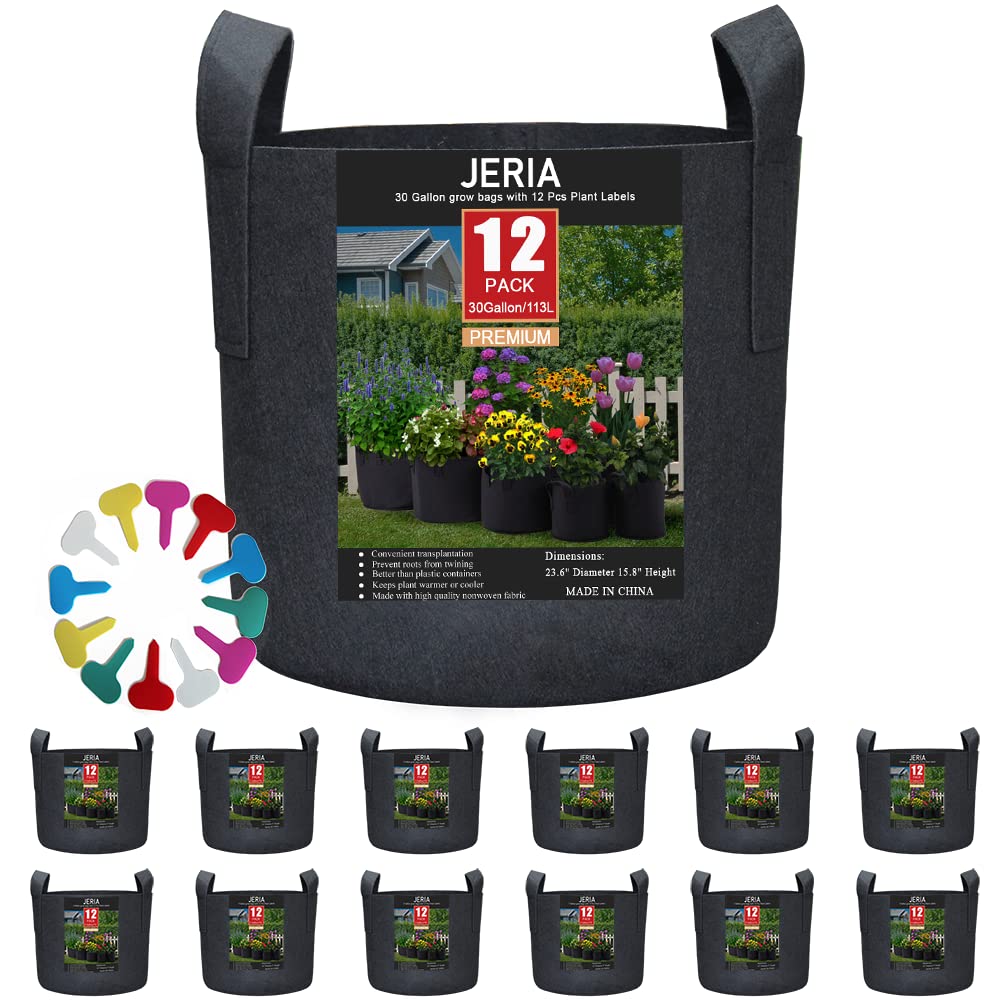
JERIA’s 12-pack delivers a 300 GSM non-woven fabric that is noticeably thicker than entry-level alternatives, giving it the structural rigidity to hold a full 30-gallon tree soil load without bulging at the sides. Multiple buyers report the bags entering their second season with no fabric degradation, which is unusual at this pack size for a mid-range price point. The built-in handles use reinforced stitching that withstands the drag of moving wet soil, though the sheer weight of a large tree may still require two people to lift.
The included 12 plant labels are a practical bonus for anyone juggling multiple tree varieties or companion planting setups. The fabric’s drainage is aggressive enough to prevent standing water even during heavy rain, while still retaining enough moisture to avoid daily watering in temperate climates. The 23.6-inch diameter provides generous lateral room for spreading tree roots, and the 15.8-inch height offers enough depth for taproot development in most nursery-size trees.
One reviewer noted that the weight of the bags is “next to nothing” when empty, making storage and transport simple, and the fabric stands open on its own for easy filling. The 12-count is a strong value proposition for anyone planting an orchard or setting up multiple tree containers at once, since the per-unit cost drops significantly compared to buying smaller packs repeatedly.
What works
- 300 GSM fabric holds shape under full tree soil loads
- Handles remain intact after repeated moving across two seasons
- Excellent per-unit value in a 12-pack for large projects
What doesn’t
- No reinforced gusset at handle base for extreme weight
- Some users may need to double-bag for very heavy wet soil
2. Songrey 10-Pack 30 Gallon Grow Bags
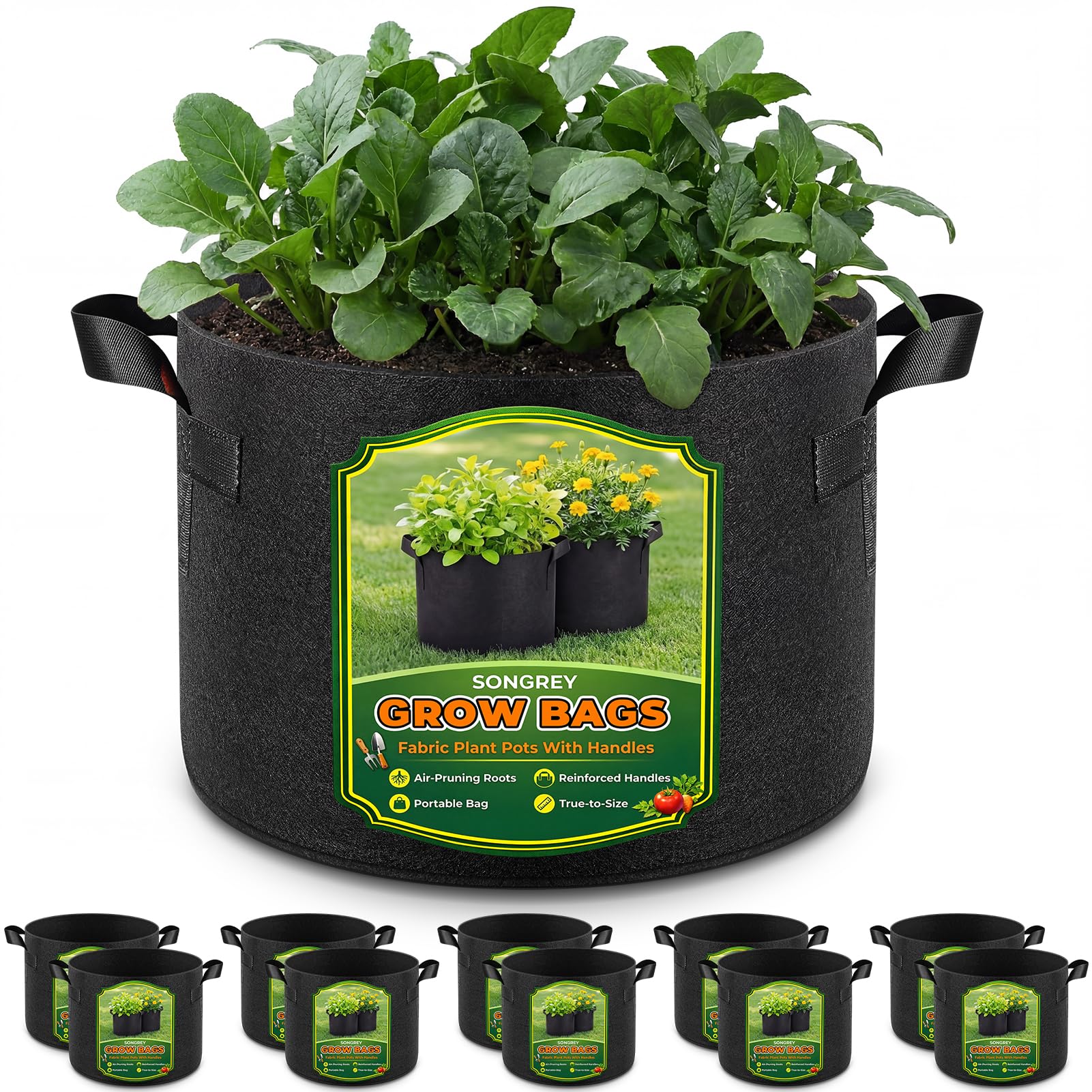
Songrey’s 10-pack differentiates itself through a notably thick, tear-resistant nonwoven fabric that several long-term users describe as “among the best” they have purchased for continuous reuse. The fabric’s density reduces the risk of side-wall blowouts when the pot is filled with heavy wet soil and a large tree, a failure mode common in lighter-weight bags. Handles are tightly stitched and have held up to lifting and dragging in user reports, though the bag walls themselves have occasional feedback about flimsiness from buyers used to rigid plastic pots.
The drainage characteristics are well-suited for trees that dislike wet feet — the woven material passes water efficiently while the integrated drainage holes at the base provide a secondary exit path for excess moisture. One reviewer specifically mentioned that the green color option reduces heat absorption compared to black fabric, which can help keep root zones cooler during hot summer months. The 10-pack configuration is efficient for a medium-scale planting project without going overboard on quantity.
Multiple owners report using these bags for tomatoes and peppers in addition to trees, and the bags have survived full-season outdoor exposure without notable fading or fabric breakdown. The pack is on the premium side of the price spectrum for a 10-count, but the material quality and reinforcement justify the investment for serious gardeners who expect multi-year reusability.
What works
- Thick tear-resistant fabric withstands repeated seasonal use
- Dual drainage system (fabric + holes) prevents root rot
- Green color option reduces root zone heat stress
What doesn’t
- Some users find the side walls less rigid than expected
- Premium price point per bag compared to budget 10-packs
3. ANSLYQA 10-Pack 30 Gallon Grow Bags
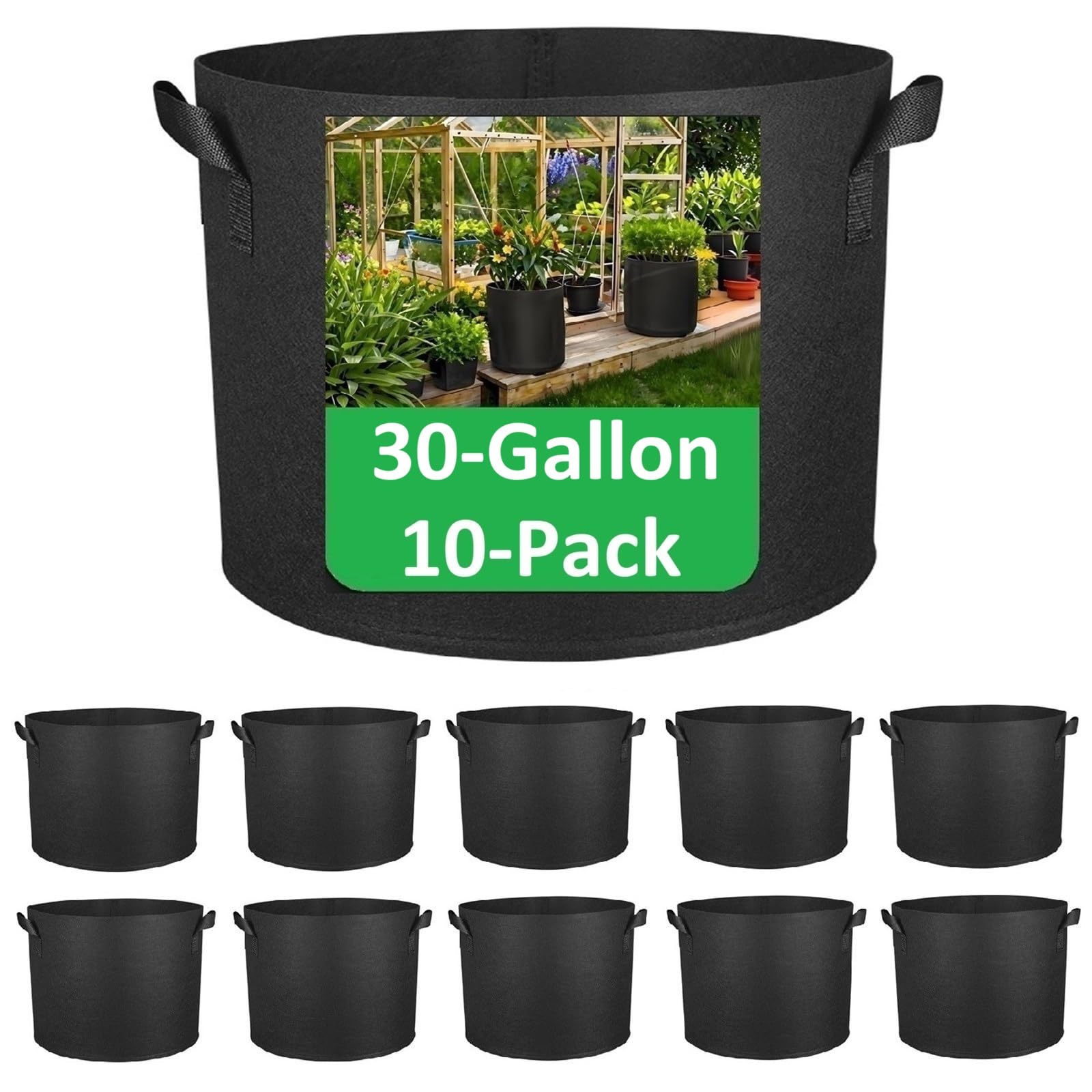
ANSLYQA uses a high-strength weaving technology that keeps the bag lightweight while still bearing heavy soil loads, a balance that is difficult to achieve in fabric pots at this scale. Owners have reported the material withstanding direct tugging and yanking when full of wet dirt without tearing, which speaks to the seam integrity at the side-wall joints. The bag’s handles are built to a similar robust standard, though the lack of a gusseted base means you still need to lift carefully with two hands for trees approaching the 30-gallon capacity limit.
Drainage performance is excellent — several customer reviews emphasize that even in high-rainfall areas like South Carolina, the bags shed water fast enough to prevent mold and waterlogged soil. One reviewer specifically trimmed the bottom to add an extra drainage opening, though the fabric itself already provides significant porosity. The bags work well for both trees and sprawling potato crops, with users noting strong root development and minimal circling.
The 10-pack hits a sweet spot in terms of unit cost, offering a per-bag price that undercuts many competitors while still using a fabric thickness that holds up across seasons. Thermal insulation properties are built into the material, which helps buffer soil temperature swings during early spring and late fall planting windows. For tree growers who need volume without sacrificing durability, this pack is a strong contender.
What works
- High-strength weave resists tearing even when fully loaded
- Fast drainage prevents mold in wet climates
- Competitive per-unit cost for 10-pack durability
What doesn’t
- Handles lack reinforced gusset for extreme loads
- Some users may want thicker side walls for rigid upright shape
4. 247Garden 5-Pack 30 Gallon Grow Bags

247Garden’s 5-pack stands out for its 260 GSM landscape-grade fabric and a design philosophy centered on transplantability — the manufacturer explicitly notes that you can place the entire bag into the ground, and roots will grow through the fabric into the surrounding soil. This is a meaningful feature for tree growers who want to start in a container and later move the tree in-ground without disturbing the root ball. The white color option is unique in this category and reflects more sunlight, keeping the root zone cooler in direct summer heat.
Customer feedback consistently praises the material quality and workmanship, with the bag holding its shape for easy filling and the reinforced stitching surviving moves across patios and yards for frost protection. The bag’s dimensions are 24 inches in diameter by 15.5 inches in height, which provides a wider, shallower profile than many competitors — better for trees with spreading root systems than deep taproots. The fabric encourages aeration without excessive drying, though in hot, dry climates users should expect daily watering.
One reviewer in Arizona noted that the porous fabric can leak if soil is not packed firmly, and the bag dries out faster than plastic pots. However, the same rapid drainage eliminates overwatering risk, and the handles make it easy to shift the bag for storm protection. The 5-count is a sensible starting quantity for most home orchard setups, though the per-bag cost is higher than larger multipacks.
What works
- Roots grow through fabric for direct in-ground transplanting
- White color reduces heat absorption on sunny days
- Sturdy material stands open for hands-free filling
What doesn’t
- Higher per-unit cost than 10- and 12-pack alternatives
- Fabric may leak soil if not packed correctly when first filled
5. WEIFENG 3-Pack 30 Gallon Grow Bags
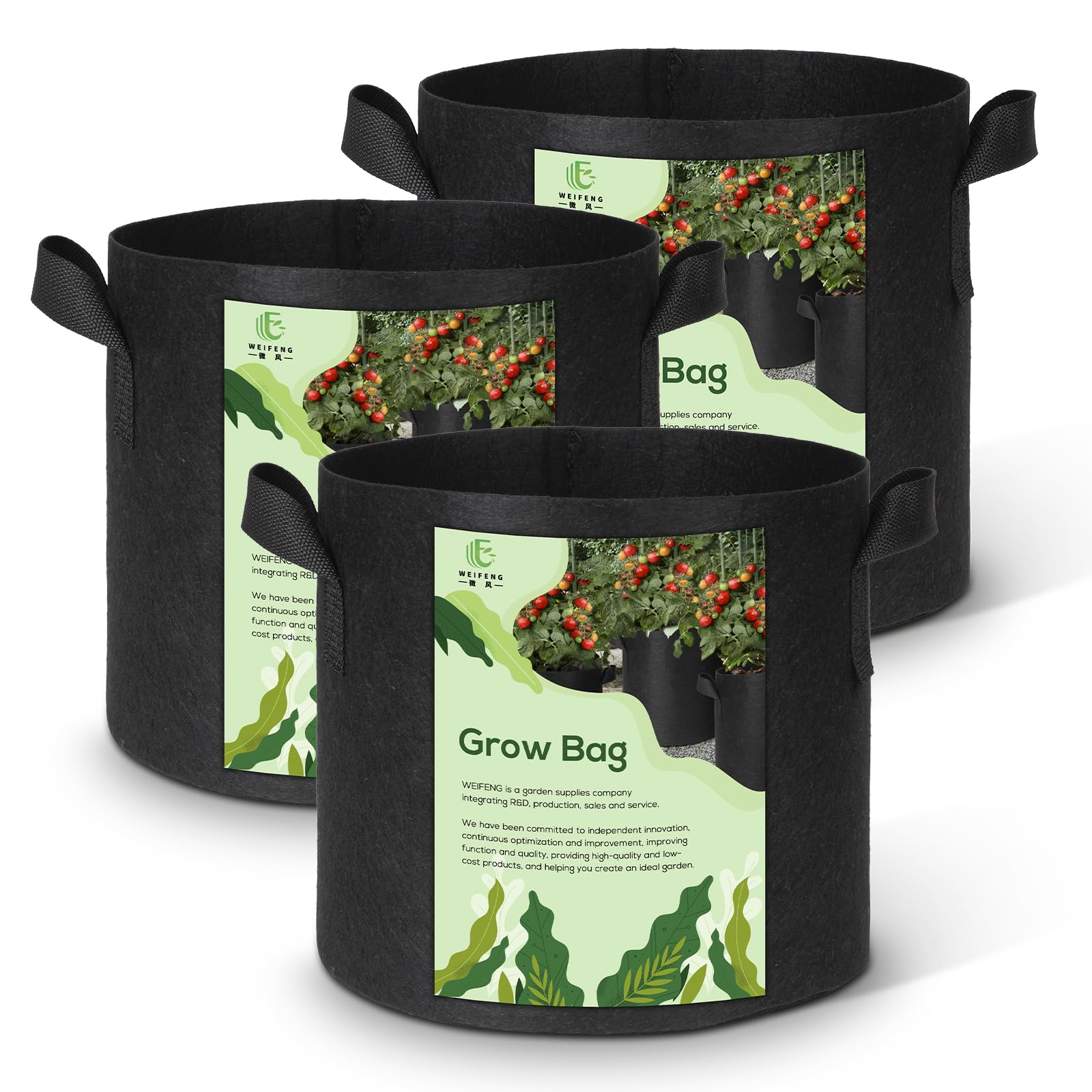
WEIFENG markets this 3-pack as a commercial-grade option, and the 300 GSM non-woven fabric substantiates that claim — the material is notably dense and resists the outward bulge that thinner bags exhibit under a full tree soil load. The handles feature “X” stitching with built-in gussets, a reinforcement detail that directly addresses the primary failure point of moving heavy containers. One reviewer noted that while the handles are strong, moving 100-plus gallons of dirt in a fabric container is still impractical; the handles prevent tearing but the bag will deform under extreme load.
The 23.62-inch diameter and 17.71-inch height provide one of the deeper profiles in this comparison, which benefits tree species with longer taproots. The fabric allows excellent aeration and drainage, promoting air pruning that prevents root circling and girdling — the exact failure mode that kills container-grown trees after a few years. For nursery operators or serious tree growers who need only a few high-quality pots, this is a targeted solution rather than a bulk pack.
Market data shows strong engagement for this product, with a 55.85% click-through rate indicating sustained buyer interest. The 3-pack format is less cost-effective per bag than larger multipacks, but the commercial-grade build makes each bag more likely to survive multiple seasons of heavy use. Weigh the higher per-unit investment against the reinforced handles and thick material if you plan to move trees frequently.
What works
- 300 GSM commercial-grade fabric resists bulging
- X-stitched handles with gussets reduce tear risk under load
- Deeper profile (17.7 in) suits taproot development
What doesn’t
- 3-pack is less volume-efficient than larger multipacks
- Moving a fully loaded bag still risks deformation despite handles
6. magarz 4-Pack 30 Gallon Fabric Flower Pots
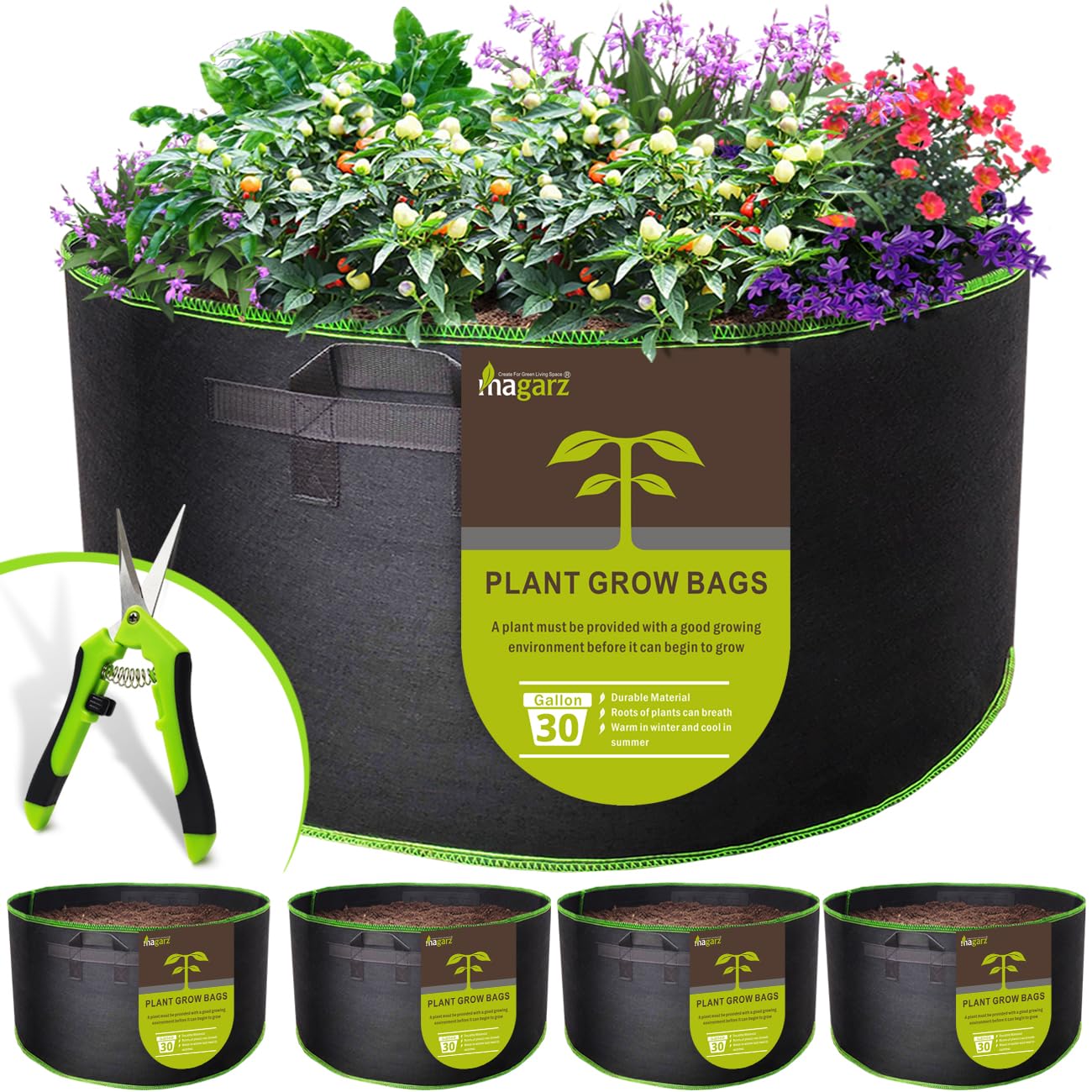
The magarz 4-pack enters the value conversation with a thicker non-woven fabric that multiple reviewers confirm survives full outdoor exposure across multiple seasons — one owner reported the bags are still holding up after two years, which is an unusual lifespan for budget-tier fabric pots. The two solid handles per bag use fine workmanship stitching, and customer feedback from a tornado event (where the reviewer slid 7-foot plants with full soil to safety) demonstrates that the handles are genuinely stronger than typical budget bags. The bags also stand up on their own better than unsupported alternatives, making filling less frustrating.
Ventilation is strong enough to boost root structure and increase resistance to insects and weeds, though the same porosity means the bags dry out faster than plastic containers in hot weather. The thermal insulation properties — keeping plants warmer in winter and cooler in summer — are a common theme in user reviews, and the bags fold flat for compact storage during the off-season. One buyer did mention the price felt “a lil much” given the 4-pack count, but the longevity reported by other users offsets the upfront cost.
Dimensions are 23.6 inches in diameter by 15.7 inches in height, which is in standard range for the category. The set includes a plant hanger accessory, though most tree growers will rely on the floor-standing design. For gardeners who want a middle-ground pack size between 3 and 6 with proven multi-season durability, this is a solid fit.
What works
- Thick fabric holds shape and survives multiple seasons outdoors
- Handles proven strong enough to drag fully loaded bags in emergencies
- Thermal insulation moderates soil temperature swings
What doesn’t
- 4-pack has a higher per-unit cost than bulk 10- or 12-packs
- Fabric dries quickly, requiring more frequent watering in heat
7. Gardzen 6-Pack 30 Gallon Grow Bags

Gardzen’s 6-pack is the entry-level option in this comparison, using a standard non-woven fabric that prioritizes weight savings and affordability over commercial-grade thickness. The bags are BPA and AZO-free and are washable and reusable, though the fabric is lighter than the 260–300 GSM options above. Several customers note that the sides lack rigidity — the top edge tends to lean inward as plants grow, requiring extra soil fill to keep the shape. For smaller trees with less aggressive root systems, this is a manageable trade-off at the price point.
Drainage and aeration are effective, and the handles are sturdy enough to move bags around the garden without tearing under moderate loads. The 24.6-inch diameter is slightly wider than average, giving tree roots more lateral space, while the 15-inch height is standard. Multiple reviewers have successfully grown heavy-feeding plants like zucchini, cucumbers, and tomatoes in these bags, indicating that the fabric handles the wet-dry cycle of a full growing season.
The 6-pack format is practical for first-time container tree growers who want to experiment with multiple varieties without a large upfront investment. However, the lighter fabric means these bags will likely need replacement sooner than thicker options — plan for one to two seasons before fabric degradation becomes visible. If your primary goal is starting small trees that will eventually be transplanted into the ground, Gardzen offers a cost-effective starting point.
What works
- Affordable entry point for first-time container tree growers
- Wider diameter provides good lateral root space
- Handles are functional for moderate weight moving
What doesn’t
- Side walls lack rigidity, lean inward under plant weight
- Lightweight fabric may only last one to two seasons
Hardware & Specs Guide
Fabric GSM and Durability
The weight of the non-woven fabric, measured in GSM, is the single most predictive spec for how many seasons a 30-gallon pot will survive. Entry-level bags often fall below 200 GSM and may sag, tear, or degrade within one year of continuous outdoor use. Mid-range options (260–300 GSM) provide a measurable step up in tear resistance and structural integrity. For trees, which exert more lateral root pressure than vegetables, choose 260 GSM or higher to avoid premature failure.
Handle Reinforcement Methods
Standard handle attachment is a simple folded-over seam stitch, which is the most common failure point when lifting a fully loaded 30-gallon pot. Premium and commercial-grade bags use “X” stitching across the attachment point and sometimes add built-in fabric gussets that distribute the load over a wider area. If you plan to move your tree pots even occasionally, prioritize bags that specify reinforced or heavy-duty handle stitching in their specifications.
FAQ
How long do 30-gallon fabric pots last for tree growing?
Can 30-gallon fabric pots be used for in-ground transplanting?
How do I prevent a 30-gallon fabric pot from drying out too fast?
Will 30-gallon fabric pots prevent root circling in trees?
Final Thoughts: The Verdict
For most gardeners, the 30 gallon pots for trees winner is the JERIA 12-Pack because its 300 GSM fabric, reinforced stitching, and high bag count offer the strongest balance of durability and value for planting multiple trees at once. If you want a premium option with tear-resistant fabric and cooler green color, grab the Songrey 10-Pack. And for a budget-friendly start with decent lateral space for smaller trees, nothing beats the Gardzen 6-Pack.