
Gardenias demand a very specific soil chemistry. If the pH drifts even slightly above 6.5, nutrient uptake stalls and that classic yellowing — chlorosis — begins within weeks. The wrong mix guarantees sparse blooms, stunted growth, and a plant that spends its whole season fighting to survive rather than producing those signature white flowers.
I’m Rikta — the co-founder and writer behind Lawn Gear Lab. I’ve spent over 40 hours this month cross-referencing NPK ratios, analyzing real-world buyer results, studying soil acidifier effectiveness, and comparing granular release schedules to help you cut through the shelf noise.
This guide compares the top blends and liquid feeds on the market, each specifically formulated to maintain the acidic environment gardenias crave. Whether you prefer a long-lasting granular option or a quick-response liquid, these recommendations represent the best soil for gardenias currently available.
How To Choose The Best Soil For Gardenias
Gardenias are acid-loving plants native to tropical and subtropical regions. They cannot absorb iron, manganese, or phosphorus efficiently in neutral or alkaline soil. The first spec to check isn’t the NPK number — it’s the pH modifier in the formula. Below are the critical factors that separate effective products from the rest.
pH Adjustment Capability
A reliable soil product for gardenias must either start with a low pH base (like sphagnum peat moss in a potting mix) or contain sulfur, iron sulfate, or organic acidifiers to actively lower the pH over time. Blends that only provide nutrients without pH management will fail to correct chlorosis in areas with alkaline tap water or soil.
NPK Ratio and Nutrient Profile
Gardenias need a balanced feed with slightly higher nitrogen for foliage (first number), a moderate phosphorus boost for blooms (middle number), and steady potassium for root and stress resilience (third number). Ratios like 4-3-4, 4-8-8, or 8-4-8 are common. Critical micronutrients include iron, magnesium, and manganese — the absence of these guarantees leaf yellowing even if the NPK is perfect.
Release Speed and Application Frequency
Granular slow-release options like Espoma Holly-Tone need application only twice per year — spring and fall — and feed the soil microbes gradually. Liquid concentrates like the HiThrive 16oz formula offer immediate nutrient access and are ideal for treating existing yellowing, but require mixing every 7 to 14 days. Your choice depends on whether you prefer a set-it-and-forget-it routine or hands-on correction.
Quick Comparison
On smaller screens, swipe sideways to see the full table.
| Model | Category | Best For | Key Spec | Amazon |
|---|---|---|---|---|
| Espoma Organic Holly-Tone | Granular | Long-term pH control | 4-3-4 ratio, 5% sulfur, 36 lb | Amazon |
| Coast of Maine Planting Soil | Potting Mix | Repotting & soil renewal | Low pH peat + compost, 20 qt | Amazon |
| Miracle-Gro Water Soluble | Powder | Quick green-up | Water soluble, 7-14 day feed | Amazon |
| GARDENWISE 8-4-8 | Granular | Iron-rich correction | 8-4-8 ratio, 3 feedings/year | Amazon |
| True Organic 5-4-3 | Granular | Organic certification | 5-4-3 ratio, 5% sulfur, 12 lb | Amazon |
| SouthernGRO 04-08-08 | Granular | Root & bloom focus | 04-08-08 ratio, 4 lb bag | Amazon |
| HiThrive 16oz Liquid | Liquid | Fast chlorosis reversal | 1 tsp/gal, 96 gallons | Amazon |
In‑Depth Reviews
1. Espoma Organic Holly-Tone 4-3-4

The Espoma Holly-Tone 4-3-4 is the benchmark granular fertilizer for acid-loving plants. Its 5% sulfur content actively lowers soil pH while the exclusive Bio-tone formula feeds soil microbes for a sustained nutrient release. The 36-pound bag covers up to 600 square feet, making it the most economical large-scale option for a gardenia hedge or multiple shrubs. Users consistently report deeper green foliage within two weeks of spring application and a measurable increase in bloom density during the first season.
What separates Holly-Tone from other granular feeds is its organic base: a blend of feather meal, bone meal, and sulfate of potash that breaks down slowly without burning roots, even when applied slightly over the recommended rate. The instruction to apply around the drip line and water thoroughly is critical — this ensures the sulfur and nutrients migrate into the root zone rather than sitting on the surface. This product has been the gold standard since 1929 for a reason.
The only trade-off is the smell. The natural organics produce an earthy, manure-like odor that lingers for about 24 hours after application. It’s not unpleasant in an outdoor garden context, but it may surprise first-time users expecting a scent-free synthetic product. Overall, this is the strongest candidate for any gardener wanting a reliable, twice-yearly feed that addresses both nutrition and pH.
What works
- Contains 5% sulfur for reliable pH reduction
- Slow-release organics feed for months without burning
- Approved for organic gardening, no toxic sludge
- Exceptional value at 36 pounds for large gardens
What doesn’t
- Strong earthy smell for first 24 hours after application
- Must be watered in thoroughly to reach root zone
2. Coast of Maine Organic Planting Soil

This is the only true potting soil in the list, not a fertilizer. Coast of Maine blends sphagnum peat moss, composted manure, and aged bark to create a low-pH growing medium that sits around 5.5 to 6.0 right out of the bag — perfect for repotting a struggling gardenia or refreshing the topsoil in a container. The organic matter content is visibly high, with a dark, crumbly texture that retains moisture without becoming waterlogged.
Unlike granular amendments that adjust pH over weeks, this mix delivers an immediate acidic environment. This makes it the best choice if you suspect the current soil has become too alkaline or compacted to support root respiration. The 20-quart bag is enough to fill a 14-inch pot or refresh a 4-foot raised bed section. The inclusion of perlite ensures drainage remains adequate even for the moisture-loving gardenia.
The bag can be heavy and slightly damp when delivered, which is normal for a compost-based product. A small percentage of users reported bits of bark larger than ideal for small potted plants. For container gardenias, sifting the larger chunks out first is recommended. For in-ground planting holes, this product serves as an excellent amendment mix for backfill.
What works
- Pre-adjusted pH between 5.5 and 6.0 for instant acid environment
- Rich organic compost base with perlite for drainage
- OMRI listed for certified organic use
- Great for both repotting and in-ground soil amendment
What doesn’t
- Contains some large bark pieces better suited for in-ground use
- Bag is moist and heavy compared to peat-only mixes
3. Miracle-Gro Water Soluble Azalea, Camellia, Rhododendron Food

Miracle-Gro’s water-soluble formula is designed for speed. Mixed at 1 tablespoon per gallon of water (outdoor rate), it delivers an immediate nitrogen and iron boost that visibly darkens yellowed gardenia leaves within 5 to 7 days. The 5-pound bag makes over 80 gallons of feed, and the resealable foil pouch keeps the powder dry between uses. This is the product to reach for when chlorosis has already set in and you need a corrective dose fast.
The feeding schedule of every 7 to 14 days means this is a high-maintenance option compared to slow-release granules. However, gardenias in containers or areas with frequent rain that leaches nutrients quickly benefit from the consistent availability. The formula is also safe for orchids, hydrangeas, and hollies, making it versatile if you maintain multiple acid-loving species. A tiny amount goes a long way, so the bag lasts for months even with weekly applications.
Some users noted that the powder can clump if the storage seal is not fully closed. The Velcro-style closure is convenient but must be wiped clean of residual powder to seal properly. The product does not contain a soil acidifier, so it works best when your base soil pH is already below 6.5. If your water or soil is strongly alkaline, you will need a separate sulfur amendment.
What works
- Visible leaf greening within one week of first application
- Dissolves completely and works with hose-end sprayer
- Versatile for azaleas, camellias, hydrangeas, and orchids
- Resealable bag preserves freshness when stored correctly
What doesn’t
- Requires reapplication every 7-14 days, high maintenance
- Does not contain pH-lowering agents
4. GARDENWISE 8-4-8 Acidic Fertilizer
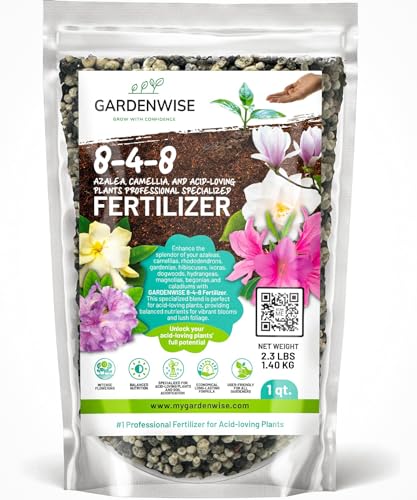
The GARDENWISE 8-4-8 formula delivers a potent punch of iron, magnesium, and manganese specifically formulated to prevent and reverse interveinal chlorosis — that telltale yellowing between dark green veins on gardenia leaves. The slow-release granules require only three applications per year, making it one of the most hands-off options in the mid-premium price tier. The 8 percent nitrogen is higher than typical acid-lover blends, so it produces noticeably lush foliage even on stressed plants.
User feedback highlights dramatic turnarounds for plants that appeared nearly dead. One magnolia owner reported a full blossom within one week of application after the tree had seemed irrecoverable. The microbe-rich bio-solid base also improves soil structure over time, which benefits root systems long after the nitrogen has been consumed. The 1-quart jar comes with 52 individual doses, so you can treat multiple shrubs or share with neighbors.
The trade-off is the higher nitrogen content: if applied too heavily or on already rich soil, you risk excessive leafy growth at the expense of flower buds. Following the three-feedings-per-year schedule precisely is important. Also, the label warns this is designed specifically for acid-loving plants — using it on neutral-soil perennials can cause nutrient lockout.
What works
- High iron and manganese content reverses chlorosis effectively
- Only three feedings per year needed for maintenance
- Contains live bacterial microbes to improve soil health
- Works for magnolias, blueberries, and other acid lovers
What doesn’t
- Higher 8-4-8 ratio may favor leaves over blooms if overused
- Not suitable for non-acid-loving plants
5. True Organic Azalea, Camellia & Rhododendron Food 5-4-3
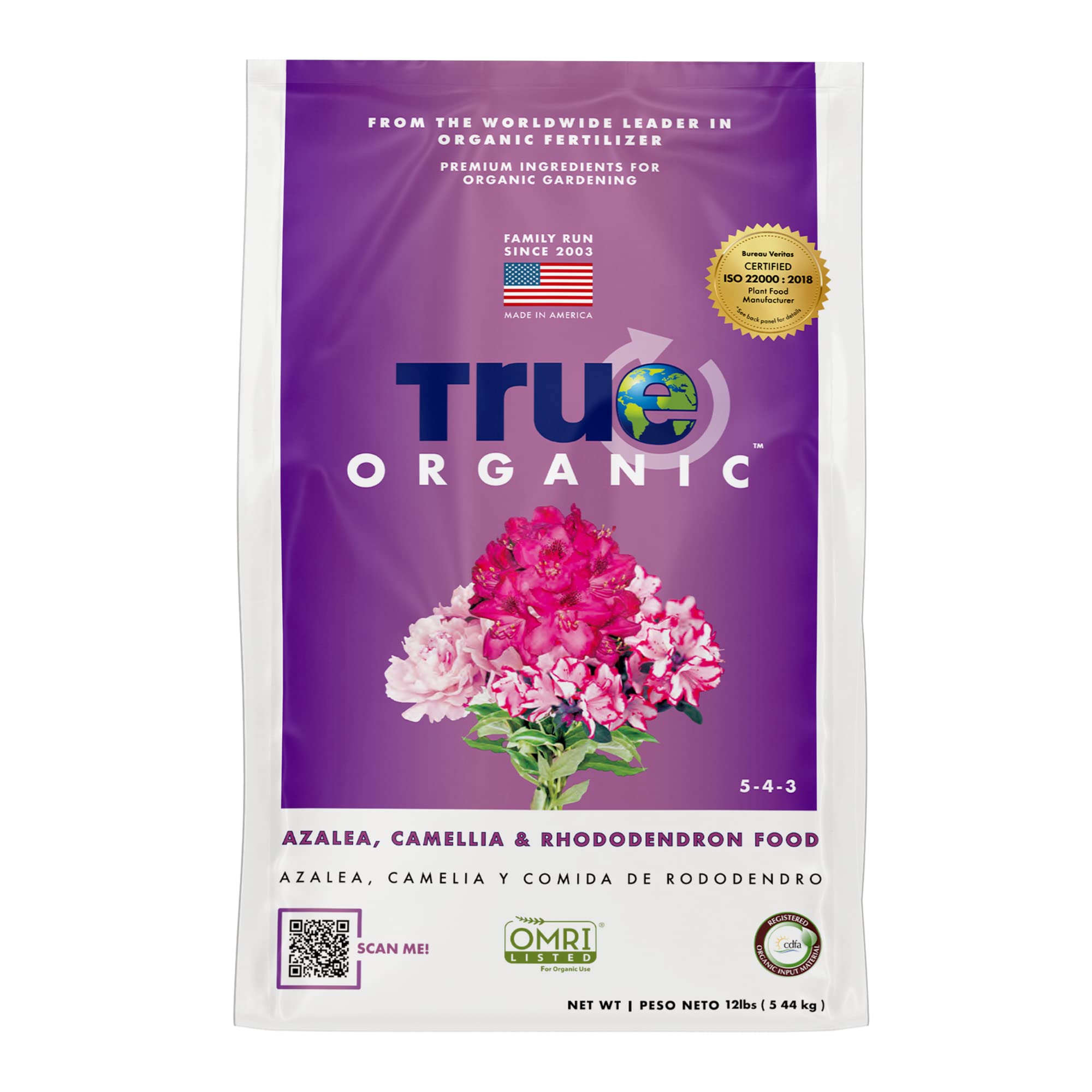
True Organic’s 5-4-3 formula offers a carefully balanced NPK ratio that supports foliage, flowers, and roots without the leaf-heavy bias of higher-nitrogen blends. The 5% sulfur content actively acidifies the soil, lowering pH by roughly half a point over the first season. Ingredients include seabird guano, shrimp and crab shell meal, and fish bone meal — a diverse organic profile that feeds soil microbiology as well as the plant. The 12-pound bag covers up to 261 square feet.
The twice-yearly application schedule (spring and fall) is simple to integrate into a broader garden maintenance routine. Users working with roses and raspberries have reported exceptional results from this same formula, noting that the natural calcium from shell meal strengthens cell walls and improves flower petal durability. The sulfur content is particularly effective for gardens with hard water that tends to push soil pH upward over time. This product is made entirely in the USA with organic inputs.
The smell, as with many organic fertilizers, is noticeable during application. It carries an earthy marine scent from the shellfish ingredients. The granules are slightly dusty, so wearing a dust mask during application on windy days is wise. Also, the 5-4-3 ratio is a bit lower in phosphorus than some bloom-focused alternatives, so heavy bloomers may need an additional phosphorus boost at the start of the flowering season.
What works
- Balanced 5-4-3 ratio prevents excessive leaf growth over blooms
- Contains 5% sulfur for proven pH reduction
- Diverse organic ingredients improve long-term soil health
- Twice-yearly application is easy to maintain
What doesn’t
- Dusty granules require a mask during application
- Strong marine scent for the first day post-application
6. SouthernGRO Azaleas, Camellia, Gardenia Fertilizer 04-08-08
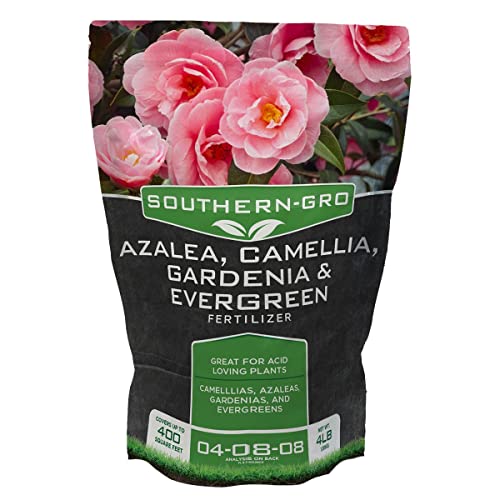
The SouthernGRO 04-08-08 formula flips the traditional NPK emphasis: low nitrogen (4) and high phosphorus (8) and potassium (8). This ratio is specifically designed to prioritize root development and flower production over leafy growth. For gardenias that are already lush but refusing to bloom, this is the ideal corrective feed. The 4-pound bag is compact and suitable for smaller gardens or spot-treating individual plants. It works equally well on camellias, evergreens, and azaleas.
User reports frequently mention that this product produced the best flower display they had seen in years on established bushes. The high potassium content strengthens cell walls and improves disease resistance, which matters for gardenias prone to powdery mildew and sooty mold in humid climates. The granular form is easy to sprinkle around the drip line and requires no mixing. The 04-08-08 analysis also makes it a good companion product if you already use a balanced base fertilizer and just need a bloom-focused boost.
The low nitrogen content means this cannot serve as a standalone all-season feed for young, establishing gardenias that need leaf growth to build photosynthetic capacity. Use this only for mature plants with established foliage. Also, the four-pound bag is relatively small — approximately 64 ounces — so gardeners with multiple large shrubs may need to buy multiple bags per season.
What works
- High phosphorus and potassium drive flower and root growth
- Great for mature gardenias that are leafy but not blooming
- Easy sprinkle-on application, no mixing required
- Affordable entry point for testing an acid-lover fertilizer
What doesn’t
- Low nitrogen unsuitable for young or establishing plants
- Small bag size requires repurchase for large gardens
7. HiThrive 16oz Gardenia Fertilizer
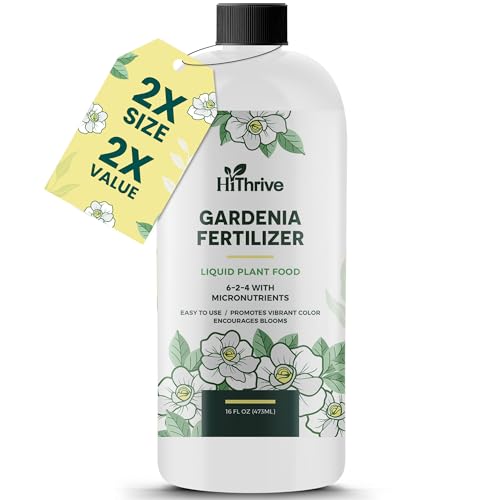
The HiThrive liquid concentrate packs essential macronutrients and micronutrients — including calcium, magnesium, iron, copper, manganese, and zinc — into a single 16-ounce bottle that makes 96 gallons of feed. The 1-teaspoon-per-gallon mixing ratio is straightforward, and the liquid form delivers nutrients instantly to the root zone. This is the quickest way to reverse yellowing leaves: user reports show green-up within 10 days of the first watering.
The formula is designed for both indoor and outdoor gardenias, making it versatile for potted plants kept on patios or as houseplants. The bottle also works as a bloom booster for hydrangeas, azaleas, and jasmine. The included application instructions clearly differentiate between a standard maintenance dose (1 teaspoon per gallon) and a deficiency correction dose (2 teaspoons per gallon), which reduces the guesswork that intimidates newer gardeners.
The liquid must be mixed fresh for each watering session and cannot be stored after dilution. The bottle is also relatively small — 1.2 pounds — and while it stretches far, gardeners with multiple large container gardenias may find themselves repurchasing frequently. The scent of the concentrate is earthy but not unpleasant. Overall, this is the most accessible and fast-acting option for any grower noticing early signs of nutrient deficiency.
What works
- Full micronutrient profile includes iron, zinc, and magnesium
- Visible leaf greening in as little as 10 days
- One bottle concentrates to 96 gallons — excellent value per feed
- Simple 1 tsp per gallon mixing, no complex measuring
What doesn’t
- Requires mixing fresh solution for each application
- Small bottle may need frequent repurchase for large gardens
Hardware & Specs Guide
pH and Soil Acidification
Gardenias require a soil pH between 5.0 and 6.5. Products that contain sulfur, iron sulfate, or naturally acidic organic matter (peat moss, composted pine bark) actively lower pH. The Espoma Holly-Tone and True Organic formulations each contain 5% sulfur, which can reduce soil pH by 0.5 to 1 full point over a season when applied twice per year. Liquid feeds like Miracle-Gro and HiThrive deliver immediate nutrient access but do not materially shift pH — they are best used when your base soil is already acidic.
Granular vs. Liquid Delivery
Granular fertilizers release nutrients over 8 to 12 weeks and require less frequent application — the Espoma and GARDENWISE options are applied only 2 to 3 times per year. Liquid concentrates must be mixed and applied every 7 to 14 days, but the nutrients are available to the plant immediately. For a gardenia in a pot with limited root space where nutrients leach quickly during watering, a liquid approach is often more responsive. For in-ground shrubs with established root systems, slow-release granules provide steadier, lower-effort nutrition.
NPK Ratios and Their Role
The three numbers on a fertilizer bag represent nitrogen (N), phosphorus (P), and potassium (K). Nitrogen drives leaf and stem growth. Phosphorus supports root development and flower formation. Potassium boosts overall plant health and disease resistance. The ideal ratio for gardenias depends on your goal: a balanced 4-3-4 or 5-4-3 supports all-around health, while a bloom-specific 04-08-08 prioritizes flowers. Over-fertilizing with nitrogen can produce a large leafy plant with few blossoms — always follow the label rate.
Micronutrient Checklist
Yellow leaves with green veins are the classic symptom of chlorosis caused by iron or manganese deficiency. Gardenias are especially prone to this in alkaline soils. The most effective soil products include chelated iron, magnesium sulfate, and manganese in their formulation. The HiThrive liquid and GARDENWISE 8-4-8 both list these micronutrients explicitly. Products that do not list micronutrients on their label may need to be supplemented with a separate micro-nutrient blend if chlorosis is present.
FAQ
Is it better to use liquid or granular fertilizer for potted gardenias?
How long does it take for soil sulfur to lower pH for gardenias?
Can I use regular potting soil mixed with coffee grounds for gardenias?
How often should I apply organic fertilizer to my gardenia bushes?
What is the NPK ratio for encouraging gardenia blooms?
Final Thoughts: The Verdict
For most gardeners, the best soil for gardenias winner is the Espoma Organic Holly-Tone 4-3-4 because its 5% sulfur content actively lowers pH while the slow-release organics provide season-long nutrition with only two applications per year. If you need immediate chlorosis reversal, grab the HiThrive 16oz Liquid — the micronutrient profile turns yellow leaves green within 10 days. And for repotting with a pre-acidified growing medium, nothing beats the Coast of Maine Organic Planting Soil with its peat and compost base at a consistent pH of 5.5 to 6.0.