
Shrubs anchor your landscape, demanding a foundation that delivers stable nutrition, proper aeration, and consistent moisture control. Selecting the wrong mix leads to poor root establishment, stunted foliage, and increased vulnerability to disease. The ideal blend provides a balanced structure that supports deep rooting and sustained vigor across seasons.
I’m Rikta — the co-founder and writer behind Lawn Gear Lab. I’ve spent countless hours cross-referencing organic certifications, NPK ratios, and customer feedback to match the specific particle size and microbial content each shrub type requires.
This guide breaks down the key features, ingredients, and application strategies that separate effective planting media from generic fill, helping you find the best soil for shrubs that encourages long-term health and year-round performance.
How To Choose The Best Soil For Shrubs
Shrub root systems are extensive. The planting medium must support vigorous lateral and taproot development while preventing waterlogging. Focus on these three factors to avoid common mistakes.
Texture and Drainage Profile
Shrubs require a loamy texture that retains moisture without becoming anaerobic. Fine particles like clay hold too much water, while sandy mixes drain too fast for deep feeding. A mix containing screened topsoil, sphagnum peat moss, and perlite or sand creates the ideal pore space. Check for visible wood chunks or excessive fibrous material — these indicate low-quality filler that decomposes unevenly and robs nitrogen.
Nutrient Content and Organic Certification
The NPK ratio reveals the primary macronutrients available. Balanced formulas like 4-4-4 work for general shrub feeding, while acid-loving species benefit from formulations with added sulfur like 4-3-4. Organic inputs such as kelp meal, lobster shell meal, and composted manure release nutrients slowly and build microbial activity. Avoid synthetic quick-release fertilizers that can burn tender roots or leach out quickly.
Bag Density and Prep Requirements
Bag weight translates to coverage — a 40-pound bag covers roughly 1.5 cubic feet, enough for a single 16-inch pot or a small planting hole. Some products require sifting to remove sticks, while premium blends arrive ready to use. Evaluate the prep effort against your planting scale; multiple bags for large beds favor cleaner, pre-screened blends.
Quick Comparison
On smaller screens, swipe sideways to see the full table.
| Model | Category | Best For | Key Spec | Amazon |
|---|---|---|---|---|
| Coast of Maine Bar Harbor Blend | Premium Organic | Rich container mix with marine-based nutrients | 16 qt, lobster & kelp meal | Amazon |
| Jobe’s Organics All Purpose Fertilizer | Organic Granular | Supplemental feeding for established shrubs | 4-4-4 NPK, 16 lbs | Amazon |
| Coast of Maine Veg & Tomato Soil | Compost Blend | In-ground beds and large containers | 20 qt, composted manure | Amazon |
| Miracle-Gro Potting Mix | All-Purpose | Container shrubs with built-in 6-month feed | 8 qt (3-pack), feeds up to 6 mo. | Amazon |
| Espoma Evergreen-Tone | Specialty Feed | Acid-loving evergreen shrubs | 4-3-4 with sulfur, 18 lb | Amazon |
| Michigan Peat Garden Magic | General Purpose | Budget-conscious potting and bed filling | 40 lb, reed sedge peat blend | Amazon |
| BACCTO Top Soil | Topsoil Base | Lawn top-dressing and tree transplant mix | 50 lbs, screened with sand | Amazon |
In‑Depth Reviews
1. Coast of Maine Bar Harbor Blend Potting Soil
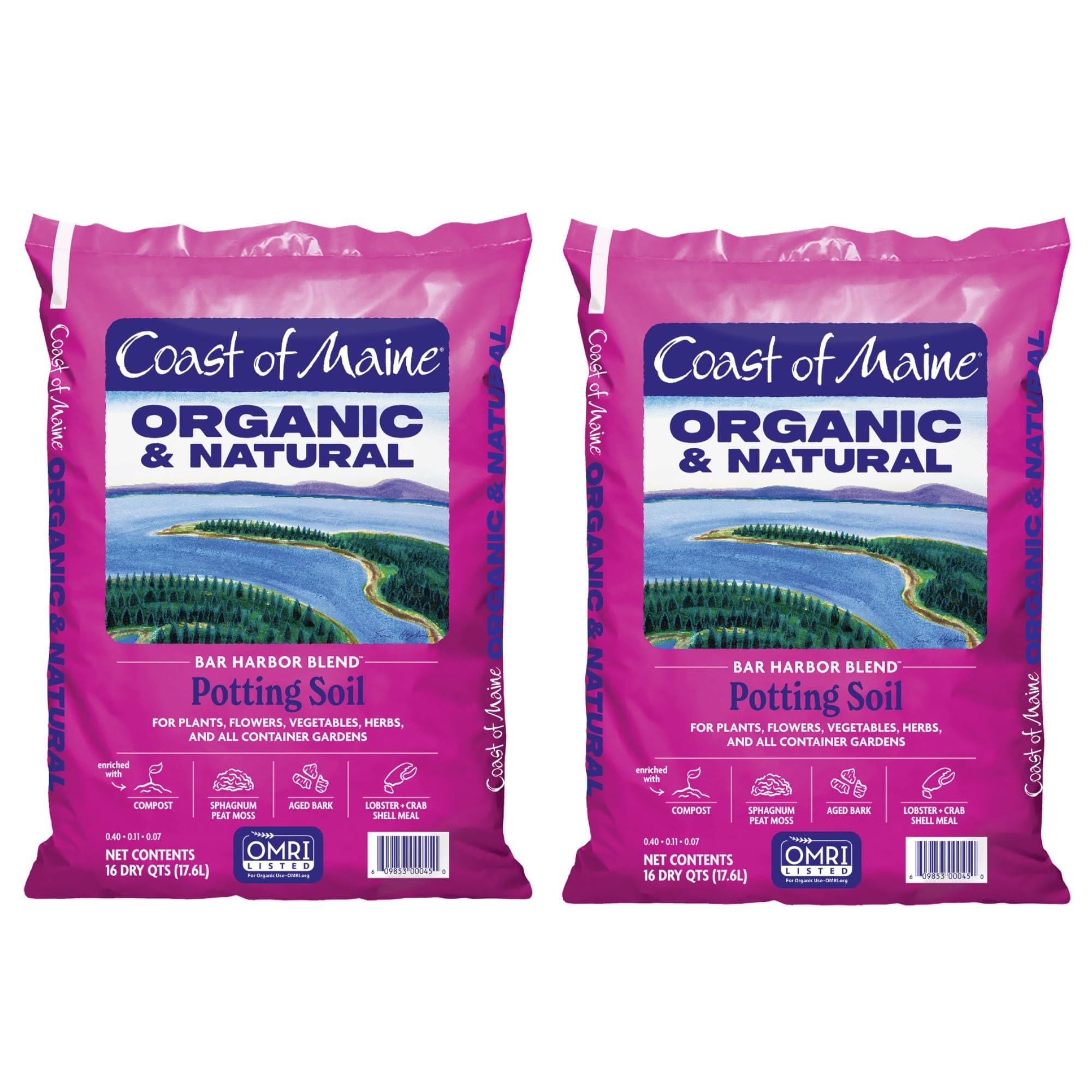
The Coast of Maine Bar Harbor Blend stands apart because it integrates marine-based inputs like lobster and crab shell meal with kelp meal, delivering a steady supply of slow-release nitrogen and trace minerals. The 16-quart bag feels dense with organic compost and perlite, providing the aeration that shrub roots require in containers. Customers consistently note the absence of weed seeds and large sticks, a sign of thorough screening.
This mix works especially well for container-grown shrubs, including broadleaf evergreens and flowering varieties. The dark color indicates a high compost-to-peat ratio, improving moisture retention without becoming soggy. I appreciate that it is OMRI listed, making it suitable for edible landscaping near vegetable beds.
Some users report that the bag can feel heavy due to the moisture content, but the medium holds structure during transplanting. For a premium organic blend that supports root establishment and sustained foliage color, this is a top-tier choice.
What works
- Marine-based ingredients provide unique micronutrients
- Excellent drainage and aeration for container shrubs
- No visible filler or sticks
What doesn’t
- Bag is heavy due to moisture content
- Premium price per quart
2. Jobe’s Organics Granular All Purpose Fertilizer

Jobe’s Organics Granular All Purpose Fertilizer uses a balanced 4-4-4 NPK ratio to feed shrubs without the risk of nutrient burn. The 16-pound bag contains dark green granules that break down steadily, and the OMRI listing confirms it meets organic standards. Many users mix it directly into the planting hole or top-dress around the drip line of established shrubs.
What sets this fertilizer apart is the versatility — it works for both in-ground and container shrubs. Gardeners report that blooms become more vibrant and leaf color deepens within two weeks of application. It can also be steeped in water to create a liquid feed for a faster nutrient boost during the active growing season.
The granules have a mild barnyard odor, which is typical for organic inputs containing feather meal or bone meal. The bag is resealable, preserving freshness between uses. For a supplemental feed that extends the life of your base soil, this is a reliable workhorse.
What works
- Balanced NPK suits most shrub species
- Can be used dry or as liquid tea
- Resealable bag keeps granules dry
What doesn’t
- Mild odor that some may find unpleasant
- Requires reapplication every 2-3 weeks
3. Coast of Maine Organic Planting Soil for Vegetables & Tomatoes
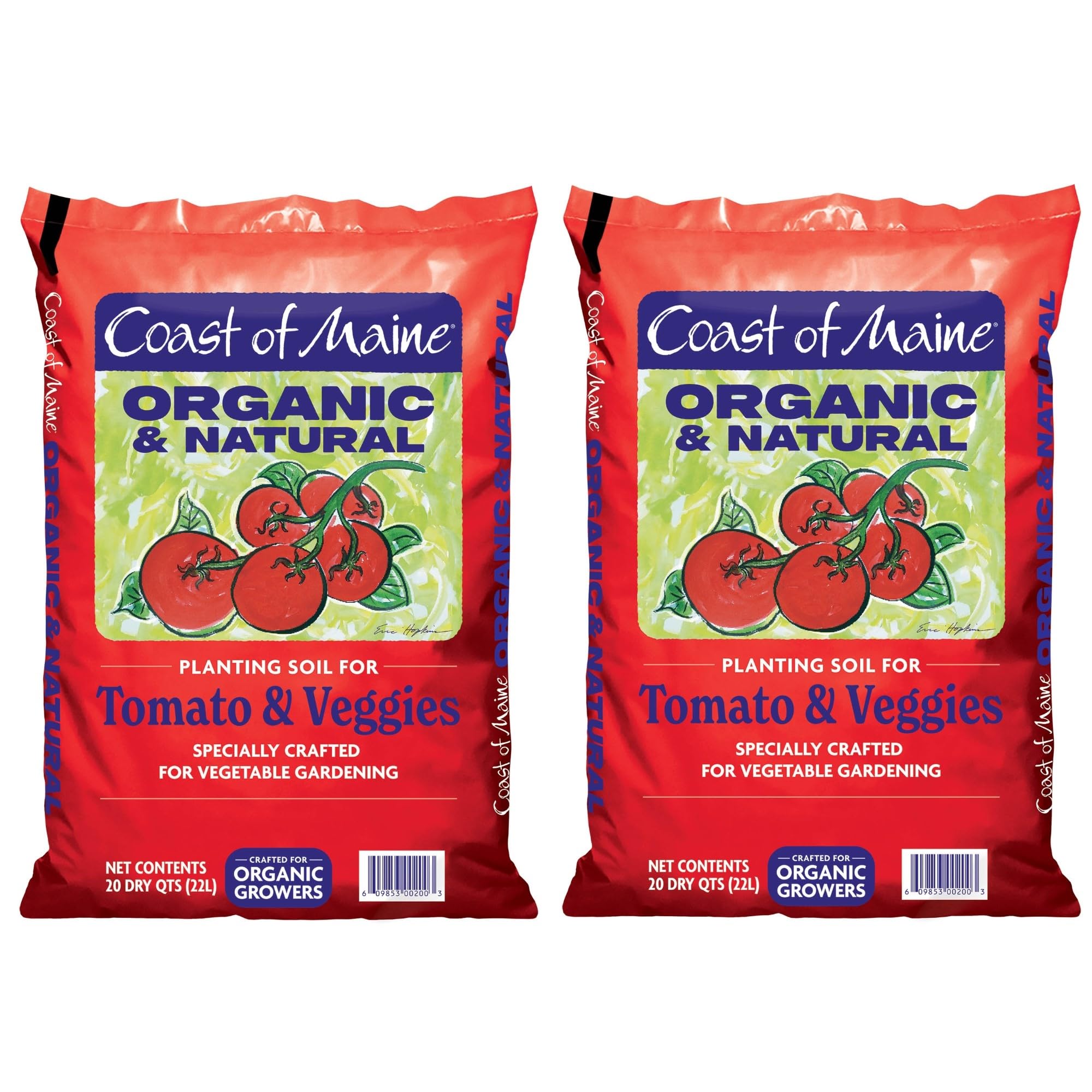
Although labeled for vegetables and tomatoes, this Coast of Maine blend performs exceptionally well as a planting soil for flowering shrubs in both in-ground beds and large containers. The 20-quart bag contains composted manure, sphagnum peat moss, and perlite, creating a lightweight medium that retains moisture while draining freely. It is OMRI listed and contains no synthetic additives.
Gardeners report that shrubs planted in this mix show rapid root spread and lush foliage within the first month. The compost base provides a rich microbial population that helps break down organic matter, releasing nutrients in sync with shrub growth cycles. It is especially effective for heavy feeders like hydrangeas and viburnums.
A small number of users have reported fungus gnats, which can occur with any organic blend stored in humid conditions. Aerating the bag before use or partially baking the soil can mitigate this. For a versatile compost blend that strengthens shrub root systems, this is a strong premium option.
What works
- Composted manure provides high organic content
- Lightweight texture that resists compaction
- Great for heavy-feeding shrubs
What doesn’t
- Potential for fungus gnats in storage
- Premium pricing for larger bed applications
4. Miracle-Gro Potting Mix 3-Pack

The Miracle-Gro Potting Mix 3-Pack offers a familiar, consistent formula for container shrubs, with built-in fertilizer that feeds for up to six months. Each 8-quart bag fills two standard 8-inch containers, and the three-pack provides excellent coverage for multiple plantings. The mix is lightweight and drains well, making it suitable for potted annuals, perennials, and smaller shrubs.
What makes this product a strong mid-range option is the convenience. The pre-fertilized blend eliminates the need for additional feeding during the first growing season, and the uniform particle size ensures even watering. Users regularly report that shrubs grow visibly fuller and bloom more heavily compared to unamended potting soil.
Because this is a potting mix rather than a true topsoil, it is best reserved for container applications rather than large in-ground beds. Some users note that the smaller bag size requires multiple purchases for larger projects. For a reliable, ready-to-use container medium with long-lasting nutrition, this pack delivers consistent results.
What works
- Built-in feeding lasts entire growing season
- Lightweight and easy to handle
- Proven germination and early growth results
What doesn’t
- Smaller bags require multiple purchases for large jobs
- Contains synthetic nutrients, not OMRI listed
5. Espoma Organic Evergreen-Tone 4-3-4 Fertilizer

The Espoma Organic Evergreen-Tone 4-3-4 fertilizer is specifically formulated for acid-loving shrubs like rhododendrons, azaleas, camellias, and all needled evergreens. The analysis includes 5% sulfur to lower soil pH, which is critical for nutrient uptake in these species. The 18-pound bag contains granules that are ready to apply without mixing, and the Bio-tone formula enhances microbial activity in the root zone.
Users consistently report a visible greening of foliage within two weeks of application, even on shrubs that appeared chlorotic. The slow-release profile means a single application in early spring and another in late fall supports steady growth without leaching. The barnyard smell is a sign of the chicken manure base, but it fades quickly after incorporation.
This product is a specialized feed, not a standalone soil. It should be top-dressed or mixed into the planting hole. For gardeners maintaining a collection of acid-loving shrubs, this is the most targeted nutritional supplement available.
What works
- Added sulfur lowers pH for acid lovers
- Organic formula with Bio-tone microbial enhancer
- Visible greening results in under two weeks
What doesn’t
- Strong barnyard odor during application
- Requires two applications per year
6. Michigan Peat Garden Magic General Purpose Potting Soil
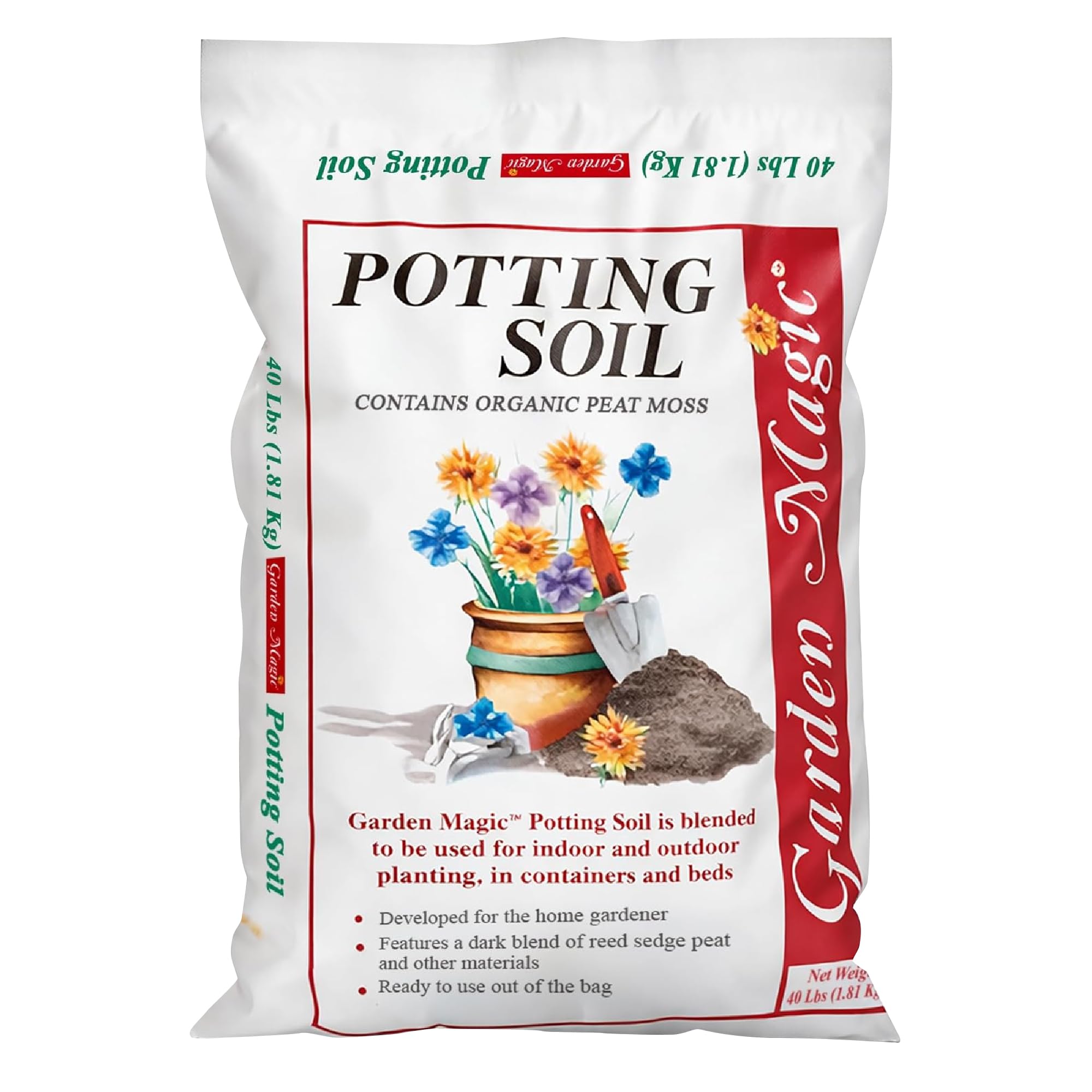
The Michigan Peat Garden Magic General Purpose Potting Soil is a 40-pound bag of reed sedge peat blended with organic peat moss, designed for both indoor and outdoor use. Its moisture retention capability makes it suitable for shrubs in pots during moderate dry spells, and the ready-to-use consistency eliminates mixing steps. The 5-quart volume is more compact than the bag size suggests, but the weight indicates a dense, water-holding medium.
Customers praise the earthy smell and the absence of insects or odors. The soil supports strong root development in container shrubs and raised beds. It works best when combined with perlite or coarse sand to improve aeration for shrub species that dislike compacted roots.
Some bags contain larger wood sticks, which can be annoying but are not detrimental to in-ground use. For entry-level pricing, this bag provides adequate moisture retention and a neutral pH range suitable for most general shrub planting.
What works
- Excellent moisture retention for dry spells
- Neutral smell and no pests
- Ready to use straight from the bag
What doesn’t
- Occasional large sticks in the mix
- Dense texture needs amendment for some shrubs
7. BACCTO Top Soil 50 lb Bag

The BACCTO Top Soil is a 50-pound screened blend of reed sedge, peat, and sand, designed for top-dressing lawns, filling planting beds, and mixing into shrub and tree transplant holes. The sand component improves drainage significantly compared to pure peat mixes, making it a better choice for in-ground shrub beds that suffer from heavy clay. The bag dimensions are manageable for the weight, and the material is ready to spread.
Customers report that this topsoil is darker and cleaner than most competitors, with minimal wood fiber content. It mixes well with native soil to improve texture and nutrient availability. For establishing new shrub beds or amending existing ones, this is a high-volume option that provides a solid foundational layer.
The main drawback is the presence of twigs and larger organic debris in some bags, requiring manual sifting for finer applications like seed beds. For transplanting shrubs or top-dressing established borders, however, the particle size is not an issue. This is a functional, heavy-duty topsoil for large-scale projects.
What works
- High volume coverage for beds and lawns
- Sand improves drainage in clay soils
- Dark, nutrient-rich appearance
What doesn’t
- Some bags contain significant twig content
- Requires sifting for fine planting work
Hardware & Specs Guide
NPK Ratio and Sulfur Content
The NPK ratio defines the percentage of nitrogen (N), phosphorus (P), and potassium (K) in the product. For shrubs, a balanced ratio like 4-4-4 supports general growth, while 4-3-4 with added sulfur (5%) targets acid-loving species by lowering soil pH. Phosphorus promotes root development at transplant time, and potassium strengthens cell walls against disease. Check the label for slow-release sources like feather meal or bone meal rather than soluble synthetic nitrates.
Drainage and Particle Sizing
Particle size determines how quickly water moves through the medium. A high-quality shrub mix contains a blend of sphagnum peat moss, perlite, and screened topsoil — avoiding large wood chips that decompose unevenly. Sand inclusions improve drainage in heavy native soils but reduce moisture retention. Test by squeezing a handful of moist soil: it should hold its shape but crumble easily when pressed, indicating ideal pore space.
FAQ
Can I use standard topsoil for container shrubs?
How often should I apply granular fertilizer to established shrubs?
What does the 4-3-4 NPK number mean for my shrubs?
Final Thoughts: The Verdict
For most gardeners, the soil for shrubs winner is the Coast of Maine Bar Harbor Blend because it combines a rich organic base with marine-derived nutrients that support deep root growth and vibrant foliage. If you want a targeted feed for acid-loving evergreens, grab the Espoma Evergreen-Tone. And for large-scale in-ground planting at a budget-friendly price, nothing beats the coverage of BACCTO Top Soil.