
Container fruit trees live or die by the soil they sit in. Unlike open ground, a pot creates a closed loop where drainage, aeration, and pH must be engineered from the start — one wrong mix leads to root rot, chlorosis, or a tree that simply refuses to fruit.
I’m Rikta — the co-founder and writer behind Lawn Gear Lab. I’ve spent weeks dissecting bag-by-bag ingredient lists, cross-referencing pH claims with customer outcomes, and mapping which organic amendments actually deliver measurable growth after three to six months in a container.
This guide separates the loose, acidic blends that support vigorous root systems from the compacted, waterlogged failures. Whether you’re planting a Meyer lemon or a dwarf fig, choosing the right soil for fruit trees in pots is the single most important decision for a healthy, productive container orchard.
How To Choose The Best Soil For Fruit Trees In Pots
Container fruit tree soil must replicate the loose, acidic, well-drained conditions of a forest floor — only compressed into a pot. The wrong mix leads to compacted roots, yellow leaves from pH lockout, or fatal root rot. Here are the three non-negotiable factors to check before buying.
Drainage Skeleton & Aeration
The physical structure of the soil matters more than the fertilizer load. Look for visible perlite, coarse sand, or pumice. A mix that feels heavy or clumps when squeezed will trap water around the root ball. The ideal blend allows water to drain within seconds while retaining just enough moisture between waterings. Chunky ingredients like coconut coir and bark create air pockets that oxygenate the root zone.
pH Range & Acidic Stability
Fruit trees in containers consume nutrients within a narrow pH band. Citrus, figs, and stone fruits all perform best when the soil pH sits between 5.5 and 6.5. Outside this range, iron and magnesium become insoluble, causing interveinal chlorosis (yellow leaves with green veins) that no fertilizer can fix. Premium mixes use sphagnum peat moss and organic acidic compost to buffer pH downward, while added dolomite lime prevents the mix from becoming too acidic over time.
Organic Fertilizer Load
Potted trees cannot forage for nutrients beyond their container walls, so the soil must carry its own food. Look for a blend that includes an organic slow-release fertilizer — typically derived from fish emulsion, crab meal, worm castings, or kelp. A six-month feed window is ideal because it matches the growing season and reduces the need for constant liquid feeding. Avoid synthetic quick-release mixes that can burn sensitive roots in the confined space of a pot.
Quick Comparison
On smaller screens, swipe sideways to see the full table.
| Model | Category | Best For | Key Spec | Amazon |
|---|---|---|---|---|
| FoxFarm Ocean Forest | Premium All-Round | Heavy feeders & long-term potting | 1.5 cu ft bag, loamy texture | Amazon |
| GARDENWISE Premium Citrus | Organic Citrus | Lemon/lime trees needing stable pH | pH 5.5–6.5, 6-month feed | Amazon |
| Miracle-Gro Cactus, Palm & Citrus | Mainstream Blend | Budget buyers & quick repotting | Fast-draining formula, 3×8 qt bags | Amazon |
| Soil Sunrise Citrus Mix | Hand-Blended | Indoor citrus & small containers | 8 qt bag, worm castings included | Amazon |
| DUSPRO Citrus Mix | Versatile Generalist | Citrus, olive, avocado in pots | 10 qt bag, includes care ebook | Amazon |
| GARDENWISE Organic Lemon Tree | Compact Citrus | Single Meyer lemon or dwarf citrus | 3 qt bag, organic fertilizer | Amazon |
| Miracle-Gro Potting Mix | General Purpose | Multi-purpose container plants | 3×8 qt bags, feeds 6 months | Amazon |
In‑Depth Reviews
1. FoxFarm Ocean Forest Potting Soil
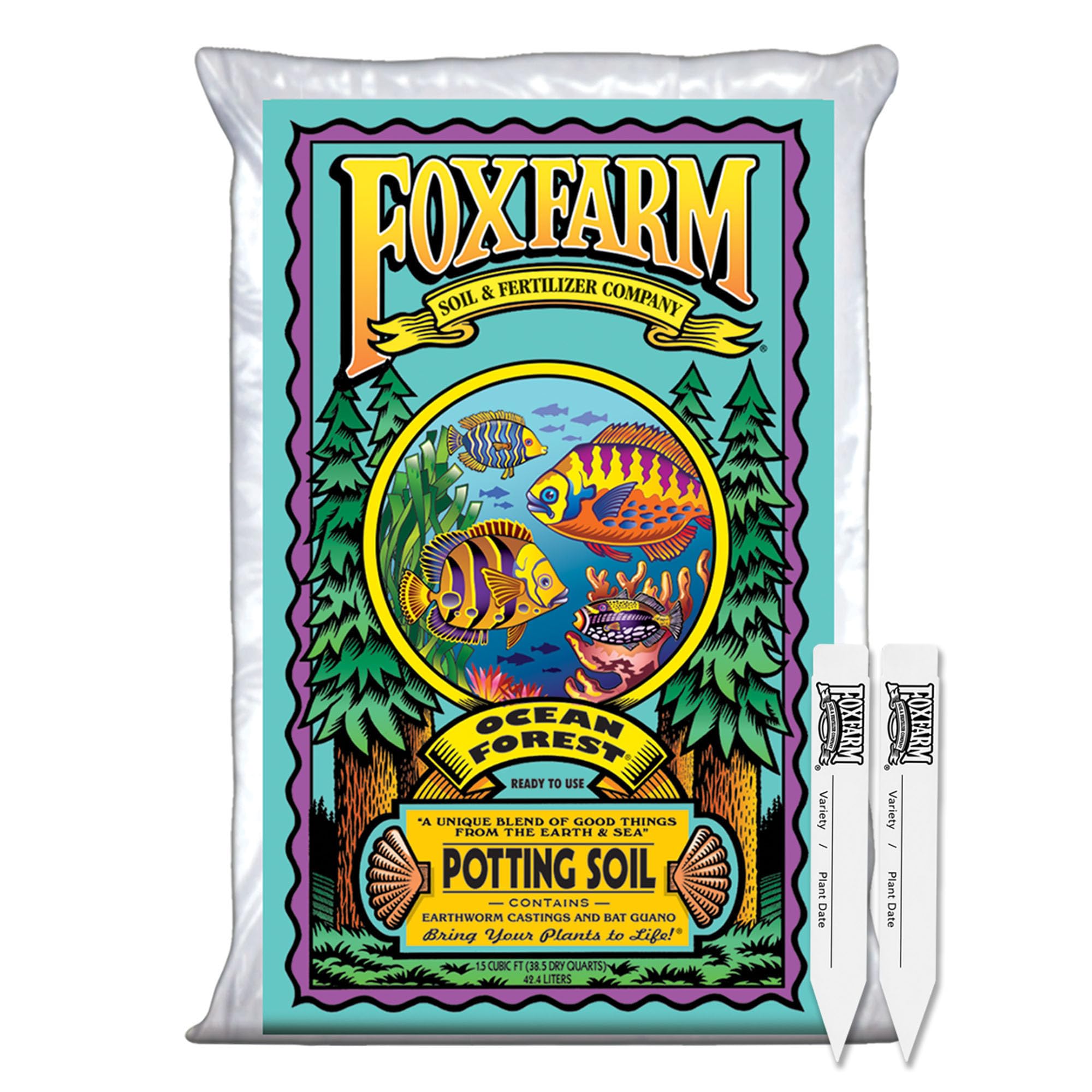
FoxFarm Ocean Forest is the gold standard for container fruit trees because its texture — a blend of aged forest products, sphagnum peat moss, perlite, and sandy loam — creates the loose, oxygenated environment that potted roots crave. The 1.5-cubic-foot bag is the largest volume review here, giving you enough to fill a 14-inch container with room to spare. The mix absorbs water immediately upon the first watering rather than beading off, which indicates proper porosity from the bag.
What separates this from cheaper blends is the fertilizer profile: derived from fish emulsion, crab meal, shrimp meal, earthworm castings, kelp meal, and oyster shell. These ingredients provide a slow-release nutrient stream that supports fruit trees through an entire growing season without additional feed. Multiple verified buyers report switching from other brands and seeing visibly larger, greener foliage within weeks of repotting.
The only downside is the cost per bag, which sits above most competitors. Some users note that the high organic content can occasionally support mushroom growth in the pot — a harmless sign of biological activity but something to be aware of. For serious container fruit growers, the premium is justified by the consistency of results.
What works
- Absorbs water instantly without runoff channeling
- Rich organic fertilizer blend supports full-season growth
- Perfect balance of drainage and moisture retention for large containers
What doesn’t
- Premium-priced compared to all-purpose potting mixes
- Bag weight at 34 pounds can be cumbersome to handle
2. GARDENWISE Premium Organic Citrus Potting Soil
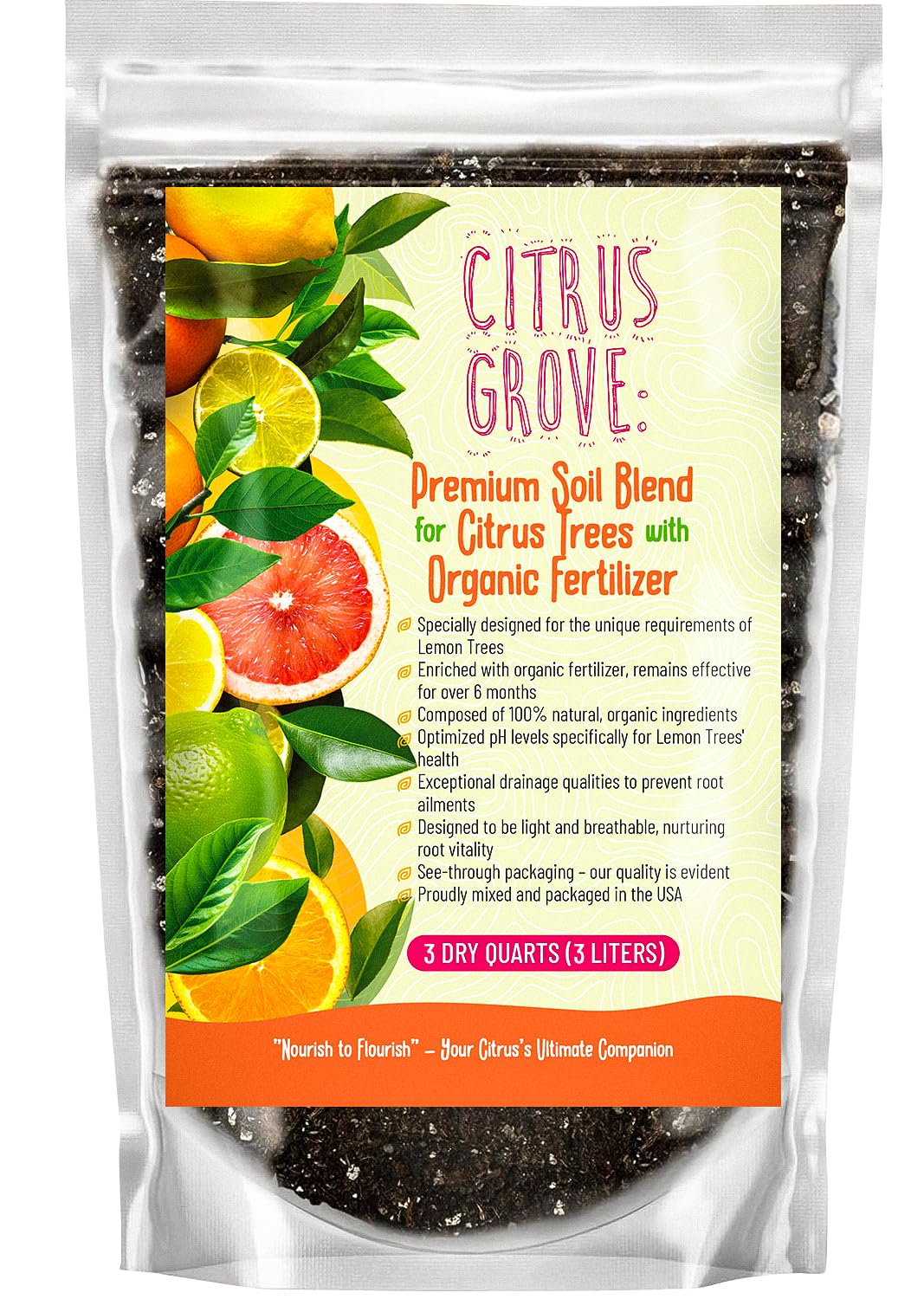
GARDENWISE’s premium citrus formula is engineered for the narrow pH sweet spot that citrus trees demand — the mix includes organic acidic compost, sphagnum peat moss, and dolomite lime to lock the range at 5.5–6.5. This is critical because a pH drift above 7.0 causes iron chlorosis, a condition that turns lemon and lime leaves yellow while the veins stay green, eventually stunting fruit production.
The drainage skeleton is an aggressive blend of extra perlite, coarse sand, and vermiculite that prevents the waterlogged conditions that kill potted citrus faster than any pest. Owners of Meyer lemons and grapefruit trees report that their plants produce dark green, thick foliage and continuous new growth after repotting. The built-in organic fertilizer delivers sustained nutrition for up to six months.
At 3 quarts, this bag is compact — ideal for a single 8-inch pot or a small Meyer lemon tree. Several buyers mention the price feels high for the volume, but for gardeners who prioritize a dialed-in acidic mix and don’t want to adjust pH manually, it works as a true plug-and-play solution.
What works
- Engineered pH stability eliminates guesswork for citrus
- Aggressive perlite/sand blend prevents root rot
- Six-month organic feed reduces maintenance overhead
What doesn’t
- Small 3-quart bag limits value per repot
- Premium-tier price per cubic inch
3. Miracle-Gro Cactus, Palm & Citrus Potting Mix

The Miracle-Gro Cactus, Palm & Citrus mix is a fast-draining formulation designed for the tricky balance between moisture retention and drainage that container citrus needs. It is lighter than a standard all-purpose potting mix, with enough coarse sand and perlite to prevent compaction over repeated waterings. Each bag in the 3-pack fills roughly two 8-inch containers, making this a cost-effective strategy for anyone managing multiple potted fruit trees.
It is not an organic mix — the included Miracle-Gro Plant Food is synthetic, which means you get rapid growth but need to monitor for salt buildup in the confined pot environment. Some experienced growers blend this 50:50 with a regular potting mix to improve moisture retention while keeping the drainage benefits. Verified buyers note that their Christmas cactus, palm, and lemon trees respond well to the formulation, pushing new growth within weeks of repotting.
The main trade-off is that this is not a specialty citrus soil; it is a general cactus and palm blend that happens to work for citrus. Gardeners who want a dedicated organic fertilizer load or precise pH control will need to supplement. For those who just need reliable drainage and a trusted brand name at a reasonable per-bag price, this is a solid workhorse option.
What works
- Fast-draining formula works well for container citrus
- Cost-effective 3-pack covers multiple pots
- Readily available from a trusted national brand
What doesn’t
- Not pH-buffered for citrus specifically
- Synthetic fertilizer can cause salt buildup in pots over time
4. Soil Sunrise Citrus Tree Potting Soil Mix

Soil Sunrise positions itself as a hand-blended, 100% natural mix built around peat moss, horticultural perlite, coarse sand, worm castings, and lime. The worm castings are the standout ingredient here — they provide a mild, steady nitrogen release and introduce beneficial microbes that help root systems stay resilient. The lime helps buffer the pH downward, keeping the mix within the acidic range that citrus trees prefer.
In practice, owners report that the mix holds moisture without becoming soggy, which is a tough line to walk in a container environment. One reviewer planted lemon seeds using two different methods (direct soil and the ziploc bag germination technique) and saw strong early root development in both cases, which speaks to the soil’s physical consistency. The 8-quart bag is a practical size for a single dwarf citrus tree or a small collection of container figs.
The packaging has drawn mild criticism — the inner plastic bag is not resealable, and some spillage occurs during shipping. It is also priced slightly above what some buyers expect for the volume. But for indoor citrus growers who want a chemical-free blend with proven microbial activity, the results justify the cost.
What works
- Worm castings add beneficial microbes and steady nitrogen
- Balanced moisture retention for indoor container environments
- Natural ingredients with no synthetic additives
What doesn’t
- Non-resealable bag packaging leads to spillage
- Slightly higher per-quart cost than general-purpose mixes
5. DUSPRO Citrus Tree Potting Soil Mix
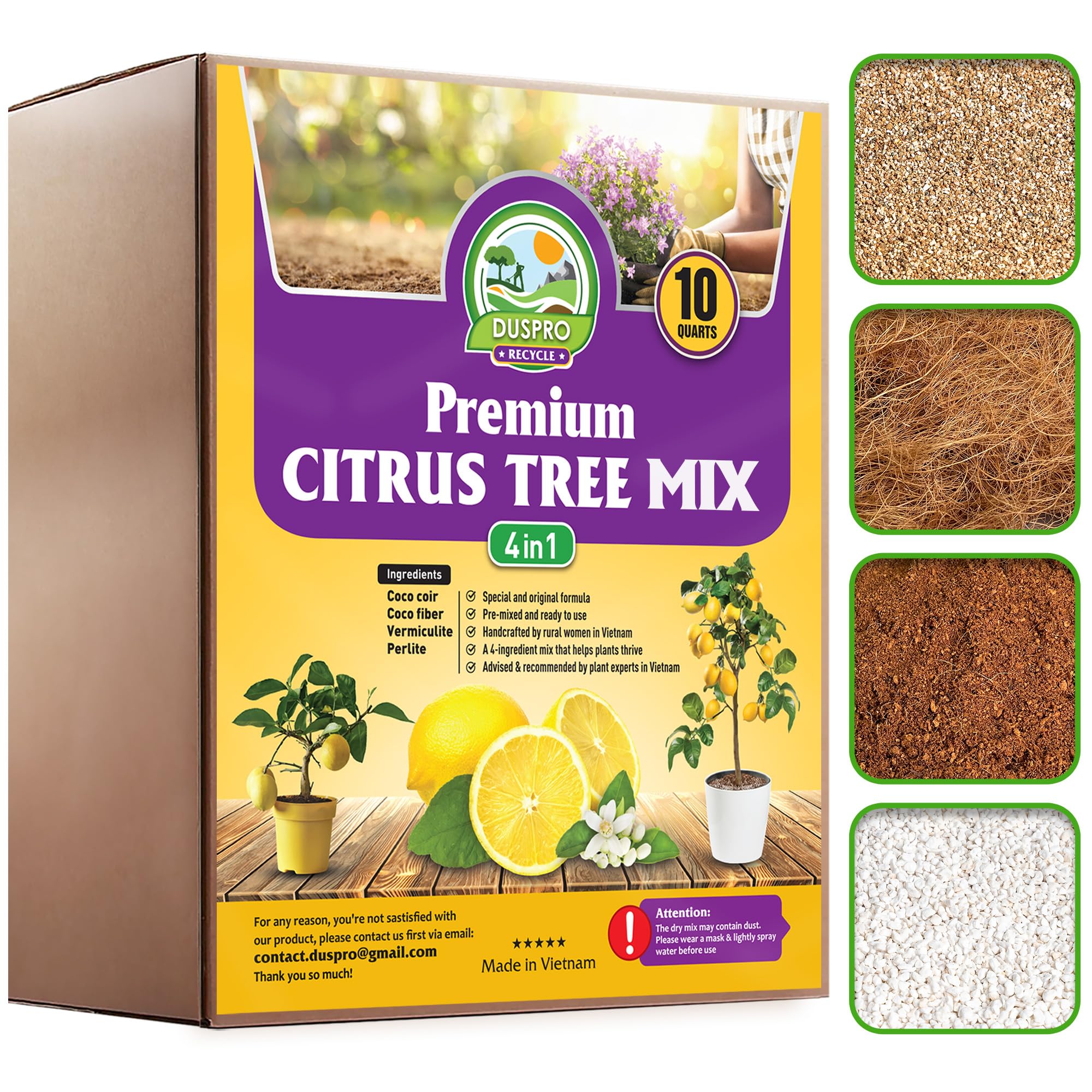
DUSPRO’s citrus potting mix is a 10-quart, double-screened blend that markets itself as a ready-to-use solution for citrus, olives, and avocados in containers. The screening process removes fines and dust that can clog pore spaces, leaving a chunky, breathable structure that supports robust root exploration. A free tree care ebook is bundled with each purchase, which beginners who are unsure about watering schedules will find genuinely helpful.
The mix is versatile enough to use alone or blend with other substrates. One owner of an orange tree reported that after replacing heavy previous soil with DUSPRO, the tree improved immediately — the loose texture allowed roots to breathe and uptake nutrients again. The formula supports multiple species, so it works as a generalist soil for a mixed container orchard. The bag size (10 quarts) hits a sweet spot: big enough to repot one medium tree, small enough to lift without struggle.
A minor hygiene concern: the bag can become dusty toward the bottom as fine particles accumulate. Wearing a mask when pouring the last portion is a sensible precaution. A few early reviewers noted the included instructions could be more detailed, but the product itself has delivered consistent results for citrus and ornamental species alike.
What works
- Double-screened mix stays chunky and breathable
- 10-quart bag is a versatile size for single-tree repotting
- Works for multiple species including citrus, olive, avocado
What doesn’t
- Dust accumulates at bottom of bag during shipping
- Packaging instructions could be more thorough for new growers
6. GARDENWISE Organic Lemon Tree Soil
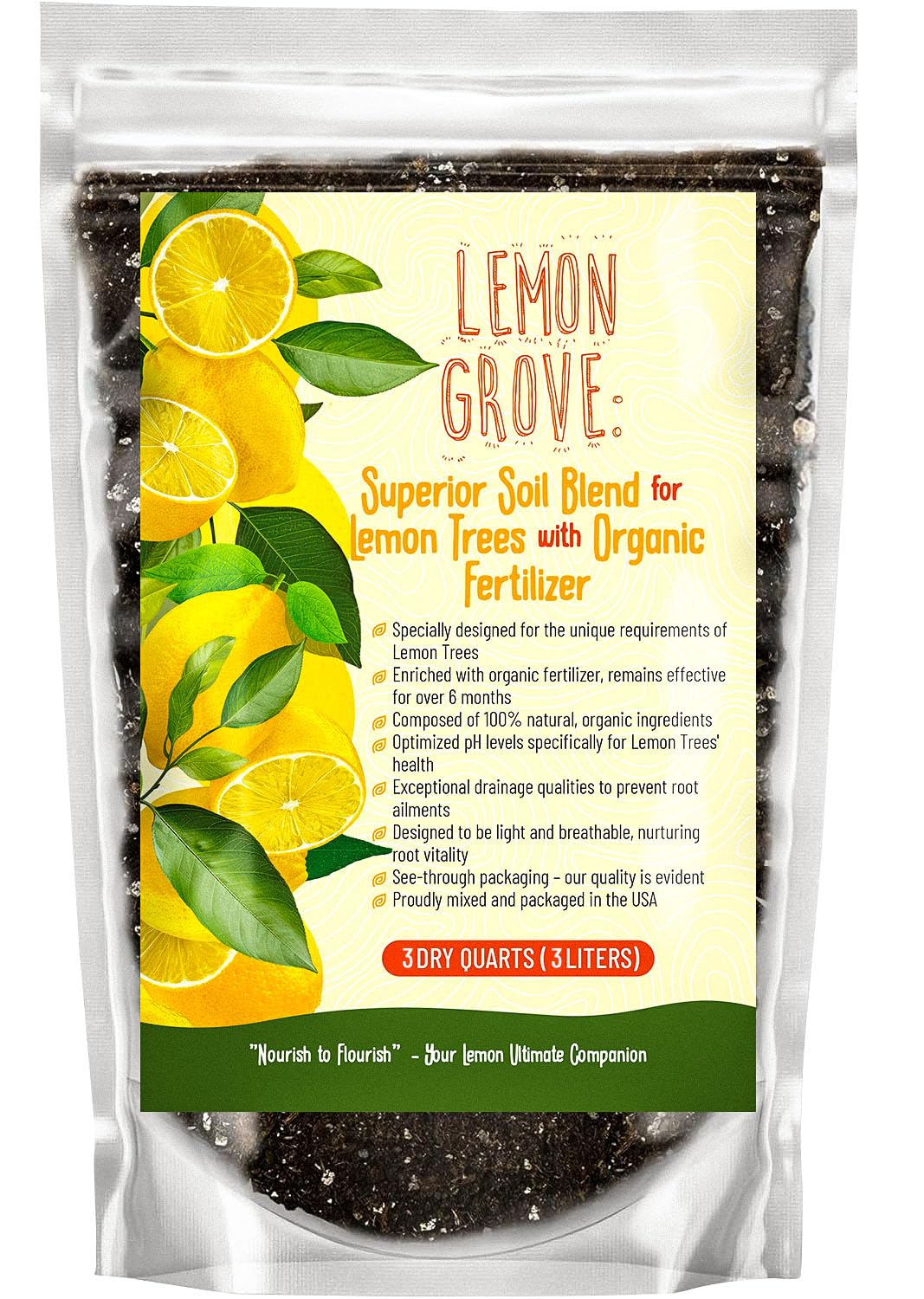
GARDENWISE’s dedicated lemon tree soil is a compact 3-quart blend designed for a single potted plant. The ingredient list includes organic acidic compost, peat moss, perlite, coarse sand, and coconut coir — a combination that creates a light, open texture specifically for citrus. The built-in organic fertilizer is formulated to release nutrients for up to six months, covering a full growing season with no additional feeding required.
Owners of Meyer lemon trees are the primary audience here, and the feedback is overwhelmingly positive: one tree showed new sprout growth in just two weeks after repotting, while another came out of dormancy and pushed fresh greenery. The mix maintains a pH range of 5.5 to 6.5, with added dolomite lime to stabilize the acidity. The inclusion of micronutrients like iron, magnesium, and manganese targets the common deficiencies seen in container citrus.
The volume limitation is the main sticking point — 3 quarts is barely enough for a standard 8-inch nursery pot, and larger trees may require two bags. The per-quart cost is higher than bulk options, so it makes the most sense for someone who owns exactly one dwarf lemon tree and wants a hassle-free solution without leftover soil storage.
What works
- Rich micronutrient package targets iron and magnesium needs
- Six-month organic feed reduces ongoing maintenance
- pH-stable formulation ideal for single Meyer lemon trees
What doesn’t
- Small 3-quart size requires multiple bags for larger containers
- Higher per-quart cost compared to bulk alternatives
7. Miracle-Gro Potting Mix

Miracle-Gro’s standard Potting Mix is the most versatile option on this list, formulated for outdoor container plants including vegetables, shrubs, annuals, and perennials. It feeds for up to six months and is designed to grow plants twice as big compared to unfed plants. While it is not specialized for fruit trees, many container gardeners use it as a base, amending extra perlite or sand to improve drainage for citrus species.
The texture is lighter than native garden soil but denser than a dedicated cactus mix. Some experienced growers report blending this 50:50 with a fast-draining citrus mix to get the best of both worlds: steady nutrition and manageable moisture retention. Verified owners praise the consistent results across many plant types, and the 3-pack of 8-quart bags offers significant volume for the price, making it a cost-effective foundation for multiple containers.
The fundamental limitation is that this is not pH-tuned for fruit trees. Plants that require acidic conditions — like citrus or blueberries — may show signs of nutrient lockout over time unless the grower adjusts pH manually. For general container use it is reliable, but for dedicated fruit trees in pots, it is best considered a supplement rather than a standalone solution.
What works
- Cost-effective 3-pack provides generous total volume
- Consistent texture works well as a base for custom blends
- Six-month feed schedule suits general container gardening
What doesn’t
- Not pH-adjusted for fruit trees — requires manual amendment
- Density can be too heavy for pure citrus without added perlite
Hardware & Specs Guide
Drainage Ingredients (Perlite & Sand)
Every bag reviewed here relies on either perlite, coarse sand, or both to create the air-filled pore space that prevents root rot. The FoxFarm and Soil Sunrise mixes use perlite and sandy loam respectively. For standard potting soils like Miracle-Gro’s general mix, the perlite content is lower — expect to add 20-30% extra perlite by volume if you are using it for fruit trees in containers. The GARDENWISE and DUSPRO citrus-specific blends lean heavier on perlite plus sand, which gives them a faster drainage profile out of the bag.
pH Buffering & Acidity Management
Fruit trees in pots require a soil pH between 5.5 and 6.5 to access iron and magnesium. The GARDENWISE Premium Citrus and GARDENWISE Lemon Tree mixes include dolomite lime and organic acidic compost to buffer pH within that range. Soil Sunrise uses sphagnum peat moss and lime for a similar effect. The FoxFarm Ocean Forest mix is naturally acidic due to its high peat and forest product content, but it does not include added lime, so it may shift more over time. Miracle-Gro’s mixes are not pH-targeted specifically for fruit trees — use a pH test strip every 4-6 weeks if you rely on those as your primary soil.
FAQ
Can I use regular garden soil for fruit trees in pots?
How often should I repot a fruit tree in a container?
Can I mix different brands of potting soil together?
Does the soil need to be different for lemons vs. figs in pots?
What is the ideal pot material for fruit tree soil?
Final Thoughts: The Verdict
For most gardeners, the soil for fruit trees in pots winner is the FoxFarm Ocean Forest Potting Soil because its loamy, well-aerated texture and rich organic fertilizer load support vigorous root growth across multiple fruit tree species with minimal amendments. If you want a dialed-in pH and a targeted citrus feed, grab the GARDENWISE Premium Organic Citrus Potting Soil. And for a budget-friendly strategy that works well blended with amendments, nothing beats the volume and consistency of the Miracle-Gro Cactus, Palm & Citrus Potting Mix.