
African violets demand a specific growing environment where moisture reaches the roots without soaking the crown or leaves. Standard containers with top watering often lead to leaf rot, crown damage, and fungal issues that kill these delicate plants. The solution is a purpose-built vessel that delivers consistent hydration from below while keeping the foliage dry.
I’m Rikta — the co-founder and writer behind Lawn Gear Lab. I’ve spent hundreds of hours analyzing wicking mechanisms, reservoir depths, material porosity, and drainage patterns across dozens of violet-specific planters to separate the designs that actually maintain stable root moisture from those that merely look the part.
This guide compares the reservoir capacity, wick efficiency, and crown-safe geometry of the seven top-rated models to help you find the right pots for african violets for your specific growing conditions.
How To Choose The Best Pots For African Violets
African violets have shallow root systems and highly sensitive foliage, so the pot must deliver water to the roots without ever contacting the leaves or crown. Every design decision — from the wick material to the rim shape — affects whether your violet thrives or declines.
Self-Watering vs. Standard Drainage
Standard pots with drainage holes require top watering, which risks splashing water onto the fuzzy leaves where it causes brown spots and rot. Self-watering designs use a cotton or synthetic wick to pull water from a bottom reservoir into the soil, keeping the foliage completely dry. For African violets, a self-watering wick system is not a luxury — it is the single most important feature for long-term plant health.
Reservoir Capacity and Watering Intervals
A shallow reservoir that holds only a few ounces dries out within two days, defeating the purpose of hands-off watering. Look for a reservoir depth of at least 1.5 inches that can sustain moisture for 7 to 10 days. Deeper reservoirs reduce the need to refill constantly, but they must still allow air circulation below the root zone to prevent anaerobic conditions.
Material and Root Temperature
Plastic pots are lightweight, durable, and retain moisture longer, but they trap heat, which can stress violet roots in warm rooms. Unglazed ceramic pots (terracotta or dolomite clay) allow the soil to breathe and wick excess moisture through the walls, reducing the risk of overwatering. Glazed ceramic pots look elegant but create a sealed environment similar to plastic. Choose the material that matches your room’s humidity and your watering habits.
Diameter and Crown Clearance
The pot should be about one-third the diameter of the leaf spread — a 4-inch pot suits a violet with an 8 to 10 inch spread, while a 6-inch pot fits larger mature rosettes. The rim must be wide enough that the crown (the center growth point) sits above the soil line and never touches the side wall. Pots with a narrow neck or deep taper can force the crown downward, causing rot.
Quick Comparison
On smaller screens, swipe sideways to see the full table.
| Model | Category | Best For | Key Spec | Amazon |
|---|---|---|---|---|
| BUYMAX Ceramic 6″ | Premium Ceramic | Mature violets needing stable humidity | Reservoir via absorbent ceramic inner pot | Amazon |
| Planterhoma 6-Pack | Mixed-Size Set | Building a violet collection from starters | Cotton wick, visible reservoir (3 sizes) | Amazon |
| Haawooky 10-Pack 4.1″ | Multi-Pack | Starting cuttings and small violets en masse | Transparent reservoir, 10-count set | Amazon |
| Aulock 6″ 3-Pack | Wick + Fill Spout | Users who detest lifting pots to refill | Integrated fill spout, green/brown color | Amazon |
| zople 5″ 5-Pack | Matte-Finish Set | Sleek decor with reliable bottom watering | 176-hole drainage system, matte plastic | Amazon |
| T4U 4″ 4-Pack | Budget Clear Pots | Entry-level self-watering on a tight budget | PET clear outer, cotton rope wick | Amazon |
| Etvski 6″ 2-Pack | Transparent PET | Visual water-level tracking without guessing | Clear reservoir, large side slits | Amazon |
In‑Depth Reviews
1. BUYMAX 6″ Ceramic Self-Watering Pot (Blue)

The BUYMAX ceramic pot uses an unglazed dolomite clay inner vessel that absorbs water from the outer glazed reservoir and passively transfers it to the soil. This eliminates the need for cotton wicks that can clog or rot over time, making it a true set-and-forget system. The glossy white-blue exterior adds an elegant pumpkin-like silhouette that fits both modern and traditional interiors.
At 6 inches in diameter, the inner pot accommodates mature violets with a 10 to 12 inch leaf spread while keeping the crown safely above the rim. The flat-bottomed inner pot can also be used as a standalone planter, giving you two pots in one. Reviewers consistently report the design helps them water only once a week without risking crown rot.
The ceramic material is heavier than plastic — 1.17 kilograms — which provides stability for top-heavy rosettes but makes moving pots less convenient. The lack of a visible water level means you must check the outer reservoir manually, but the porous inner pot naturally meters moisture delivery, preventing both dryness and saturation.
What works
- Wickless design eliminates cotton rope maintenance
- Passive absorption prevents overwatering
- Elegant ceramic appearance suitable for display
What doesn’t
- No transparent reservoir for quick water-level checks
- Heavier than plastic — not ideal for frequent repositioning
- Single size limits use for starter plants
2. Planterhoma 6-Pack Self-Watering Pots (3 Sizes)
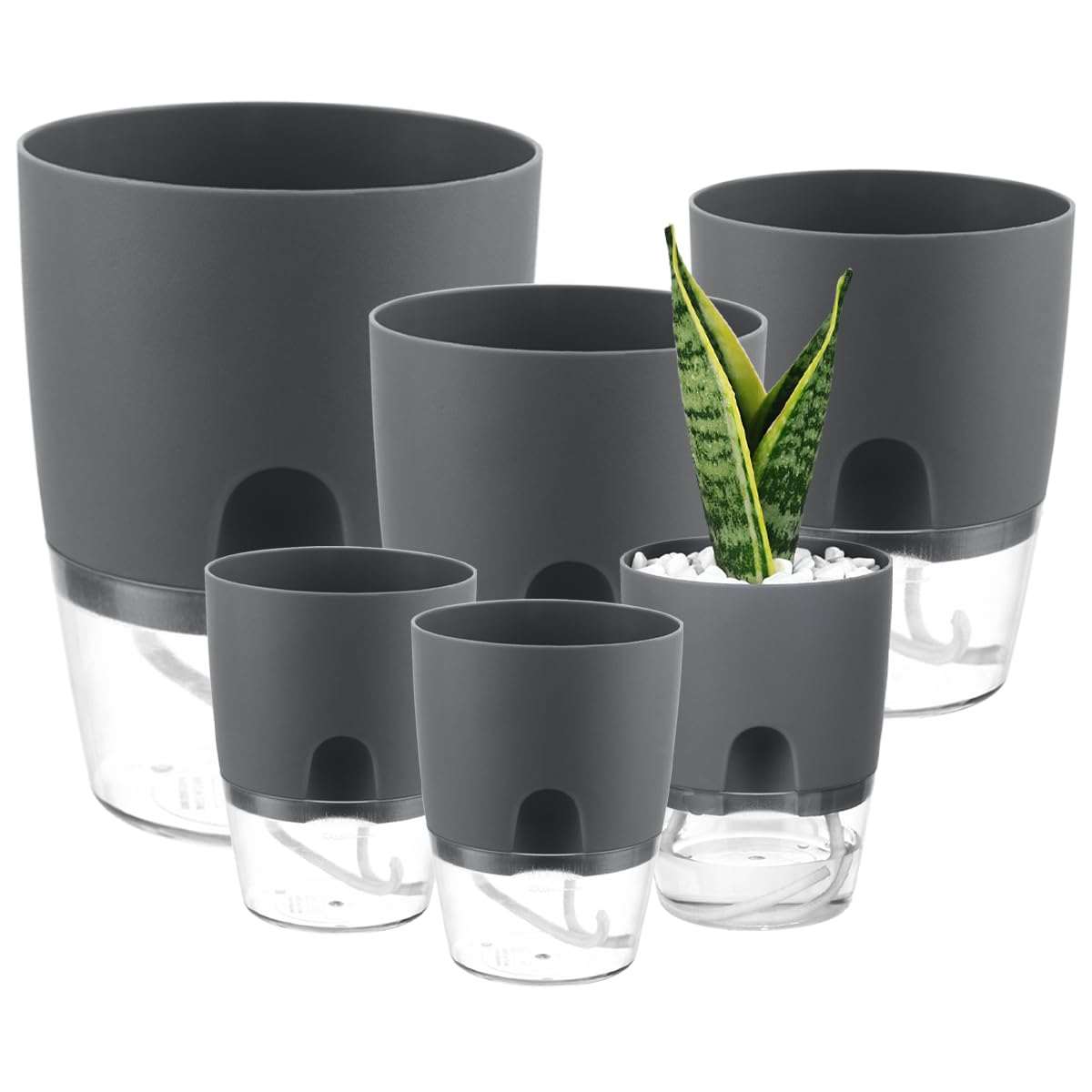
Planterhoma delivers a mixed-size bundle — three 3.2-inch, two 4-inch, and one 6-inch planter — giving you the flexibility to house violet starts, mid-size rosettes, and fully mature specimens from a single purchase. Each pot uses a cotton rope wick that draws water from a transparent lower reservoir, so you can see exactly when to refill without disturbing the plant.
The matte gray upper pot resists algae growth and looks clean on any shelf, while the clear bottom stays bright enough to monitor water level. The 176-hole ventilation pattern in the inner pot floor promotes airflow that African violet roots need — a feature often overlooked in cheaper self-watering containers. Reviewers note that their succulents and cacti also thrive in these pots, but for violets the consistent moisture from the wick system is the standout benefit.
The smallest 3.2-inch pots are ideal for rooting leaf cuttings in perlite or vermiculite. The cotton ropes are pre-installed, so assembly is just snapping the two layers together. The only drawback is that the fill spout on the 6-inch pot is narrow, making it tricky to pour water without a funnel, though the clear reservoir compensates by showing the water level directly.
What works
- Three sizes cover every violet growth stage
- Transparent reservoir enables visual water monitoring
- Ventilation holes improve root aeration
What doesn’t
- Fill spout opening is narrow on the 6-inch pot
- Lightweight plastic may tip with very top-heavy rosettes
- Cotton rope may need replacement after extended use
3. Haawooky 10-Pack 4.1″ Self-Watering Planters

The Haawooky 10-pack is built for volume — ten self-watering planters at 4.1 inches each, perfect for a collection of smaller African violets or for propagating multiple leaf cuttings simultaneously. Each pot includes a white label for plant identification, which matters when you are tracking different hybrid varieties side by side.
The clear plastic reservoir at the bottom lets you spot the water level instantly, and the cotton wick draws moisture upward reliably. Reviewers have successfully grown over 15 plants in these pots using soilless substrate, and multiple owners report that their Alocasia and violets produced more leaves compared to standard containers. The plastic is sturdy enough to survive multiple cleaning cycles without cracking.
The 4.1-inch diameter is a sweet spot for violets in the 6 to 8 inch leaf spread range, but larger rosettes will outgrow these pots within a few months. Some users note the assembly feels top-heavy when a tall plant is placed inside, and the clear reservoir is prone to algae growth if exposed to direct sunlight. The fill hole is small enough that spilling occurs without a funnel, but the clear plastic compensates by showing the water level without requiring a visual gauge.
What works
- High quantity per pack for propagation projects
- Clear reservoir allows direct water-level monitoring
- Sturdy plastic withstands repeat use
What doesn’t
- Too small for mature violets over 8-inch spread
- Clear base grows algae in bright windowsills
- Fill hole is small — easy to spill water
4. Aulock 6″ Self-Watering Pots (3-Pack)
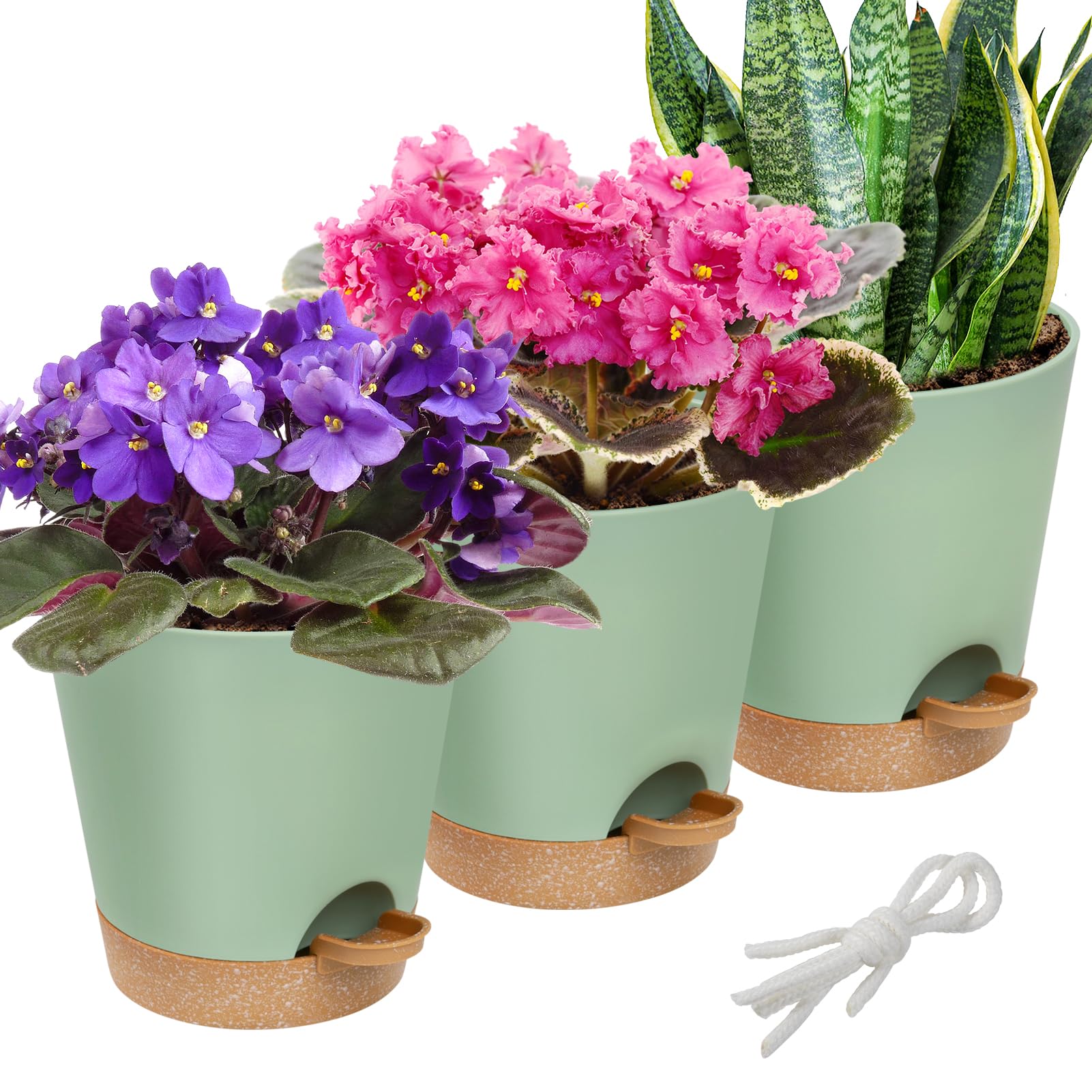
Aulock’s 3-pack stands out for its detachable fill spout, which clips onto the side of the outer reservoir so you can add water without lifting the inner pot or removing the plant. This is a meaningful convenience for African violet owners who water multiple pots at once — you just align the spout with the reservoir opening and pour.
The green upper pot paired with a light brown reservoir gives the set a refreshing, natural look that blends into indoor gardens. The wick is pre-installed through the drainage holes, and the inner pot locks into the base so the reservoir does not detach when you pick up the entire assembly. Reviewers report that violets placed in these pots showed steady growth with no crown damage, and the 6-inch diameter fits a mature specimen with room to expand.
The lightweight plastic construction makes the pot prone to tipping if the violet is tall or top-heavy. The fill spout can detach if bumped, though it snaps back easily. Some users note that the green color limits decor flexibility compared to neutral white or gray options. The reservoir depth is adequate for about 10 days of moisture, but the clear outer pot is not crystal clear — you must look closely to gauge water level through the tinted plastic.
What works
- Detachable fill spout eliminates pot lifting
- Locking base prevents accidental separation
- 6-inch size fits mature violets well
What doesn’t
- Lightweight design tips easily with tall plants
- Fill spout can detach when bumped
- Tinted outer pot makes water-level reading difficult
5. zople 5″ Self-Watering Pots (5-Pack, White)
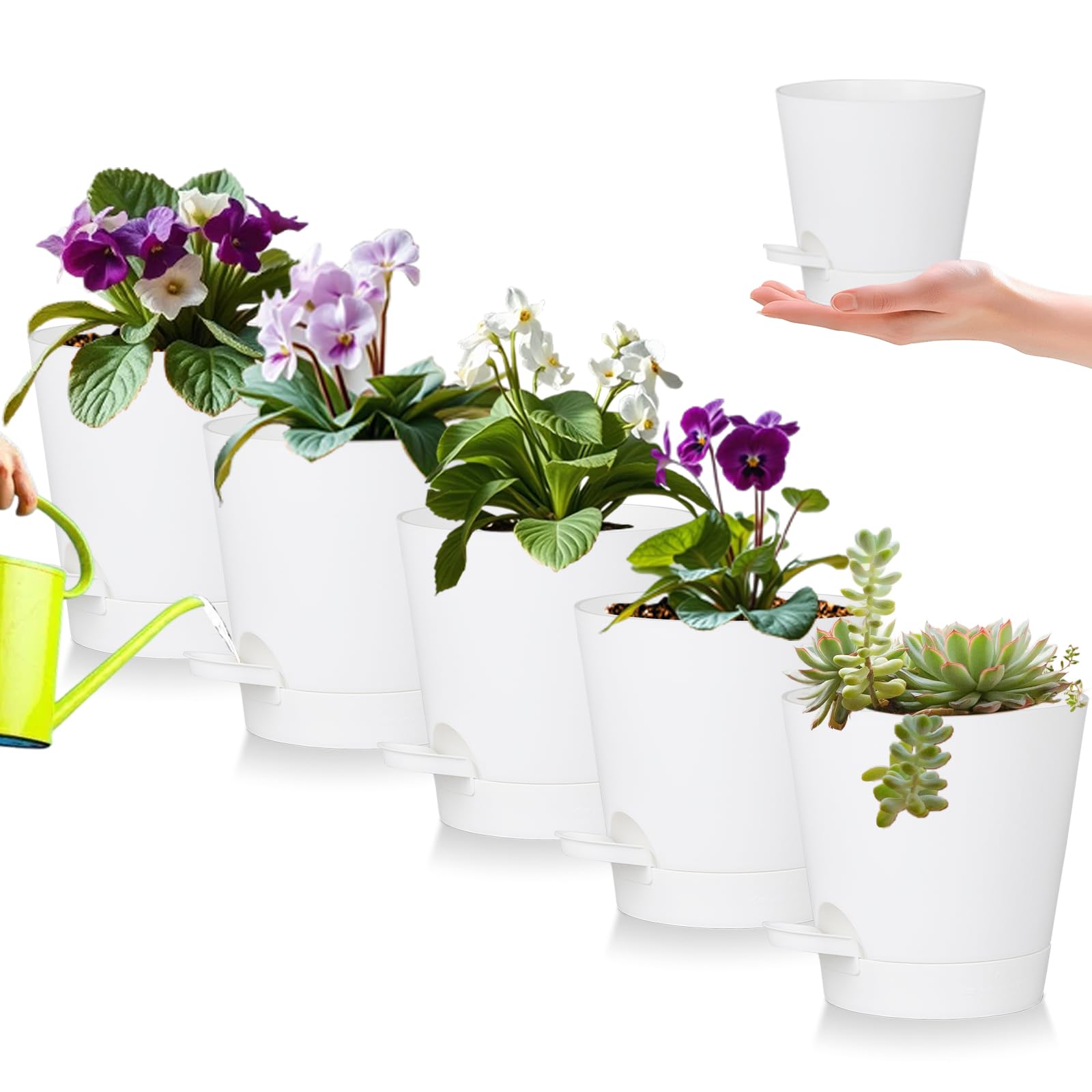
The zople 5-pack hits a superb balance between price and function. Each pot features a matte white finish that looks more expensive than its tier suggests, and the 5-inch diameter is a practical size for violets in the 8 to 10 inch leaf spread range. The 176-hole drainage system in the inner pot floor provides exceptional aeration that prevents root rot — a common killer of violets in poorly ventilated containers.
Assembly is straightforward: the inner pot rests on the reservoir base, and the included saucer catches any overflow. The bottom-watering design encourages roots to grow downward toward the moisture, which strengthens the overall root structure. Reviewers consistently report that their African violets looked better within weeks of switching to these pots, with no signs of overwatering or leaf spotting.
The 3mm thick side walls feel solid compared to thinner budget containers, and the matte texture resists scratches. The white color shows dirt more easily than darker options, and the 5-inch size may be snug for a very large violet with a 12-inch spread. The reservoir holds enough water for about 7 days, but the clear plastic is translucent rather than fully transparent, requiring a close look to read the water level.
What works
- 176-hole drainage provides superior aeration
- Matte white finish looks premium
- Thick walls feel durable and resistant to cracking
What doesn’t
- White exterior shows grime quickly
- 5-inch size is tight for very large rosettes
- Reservoir transparency is low — hard to see water level
6. T4U 4″ Self-Watering Pots (4-Pack, Clear)

The T4U 4-pack is the most affordable entry into self-watering for African violets, using clear PET plastic that shows the water reservoir and soil moisture at a glance. The cotton rope wick is pre-installed, and the double-layer design separates the inner planting cup from the outer water basin. At 4 inches in diameter, these pots are best for violet starts, leaf cuttings, or small rosettes with a spread under 8 inches.
Owners who use Fluval Stratum or similar soilless substrates report that the wick system works perfectly, delivering consistent moisture without waterlogging. The plastic is UV-resistant, so it will not yellow or become brittle in a bright windowsill. The clear design lets you spot algae buildup early, though some users prefer an opaque pot to hide the green tint entirely.
The 4-inch size limits the long-term usability — a violet will outgrow this pot within 6 to 12 months and need a larger container. The inner cup is polished and smooth, which makes it slightly slippery when lifting it out of the outer reservoir. The included cotton ropes are thin, and some owners replace them with thicker wicks for better water transfer, but out of the box the system functions reliably for small plants.
What works
- Lowest entry point for self-watering setup
- Clear PET shows water level and soil condition
- UV-resistant plastic holds up in sunlight
What doesn’t
- 4-inch size requires upgrading as violet matures
- Inner cup is slippery when wet
- Thin cotton wick may need replacement for faster absorption
7. Etvski 6″ Self-Watering Pots (2-Pack, Clear)
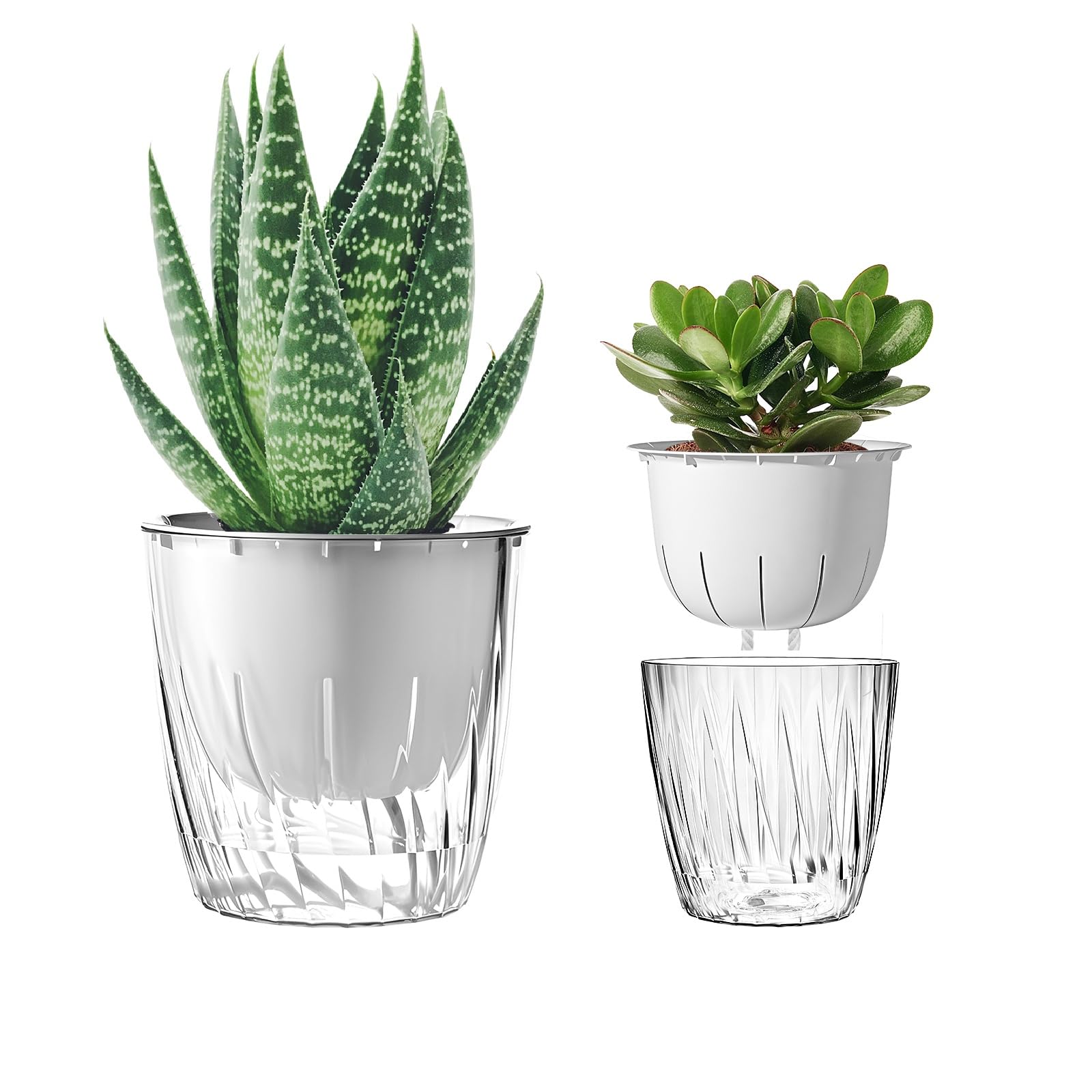
Etvski’s 2-pack uses clear PET plastic that turns the entire pot into a visual moisture gauge — you see the water level in the bottom reservoir and the soil condition in the upper chamber. The 6-inch diameter accommodates a mature violet without needing immediate repotting, making it a set-and-forget solution for a single plant or a small collection.
The wick system uses cotton rope that draws water upward into the soil, and the large side slits in the inner pot provide extra drainage and airflow. Reviewers who pair these pots with a coffee filter lining report zero soil leakage into the reservoir, keeping the water clean. The design is minimalist and works in any room, with a polished finish that resists scuffs.
The inner pot sits loosely on the reservoir — there is no locking mechanism, so picking up the assembly without holding both parts can cause the top to slide off. The side slits that improve aeration also allow fine potting mix to escape into the water below, requiring a filter layer. Some users note the clear plastic shows dirty or algae-stained water quickly, which can look unappealing in a living space.
What works
- Fully transparent design for easy moisture monitoring
- Generous 6-inch size fits mature violets
- Large air slits promote root ventilation
What doesn’t
- Inner pot lacks a locking mechanism — slides off easily
- Side slits allow fine soil to leak into reservoir
- Clear exterior shows algae and dirty water quickly
Hardware & Specs Guide
Wick Material and Density
The cotton rope wick determines how fast and how evenly water is drawn from the reservoir. Thicker, denser ropes with multiple strands transfer water faster, which matters for larger pots or drier rooms. Thin single-strand ropes work for small 4-inch pots but may struggle to keep a 6-inch pot adequately moist. Replaceable wicks extend the life of any self-watering planter.
Reservoir Depth and Capacity
African violets prefer consistent moisture, and a deeper reservoir (1.5 to 2 inches) provides 7 to 14 days of hydration before refilling. Shallow reservoirs dry out in 3 to 4 days, forcing more frequent watering that defeats the purpose of a self-watering design. The reservoir floor should be flat so the wick always contacts water even at low levels.
FAQ
Should I use a self-watering pot or a standard pot with drainage for African violets?
What pot diameter is ideal for a mature African violet?
How often should I refill the water reservoir?
Can I use a ceramic self-watering pot instead of plastic for my violet?
Why are my violet’s lower leaves turning yellow in a self-watering pot?
Final Thoughts: The Verdict
For most gardeners, the pots for african violets winner is the BUYMAX 6″ Ceramic Self-Watering Pot because its wickless ceramic design delivers consistent moisture without any maintenance. If you want a multi-size set that grows with your violet collection, grab the Planterhoma 6-Pack. And for starting a large propagation project on a budget, nothing beats the value of the Haawooky 10-Pack.