
Cutting down a sapling often just triggers a more aggressive regrowth, turning a single nuisance into a thicket of resilient sprouts that are harder to manage. A proper herbicide stops the root system entirely, preventing the cycle of cutting and regrowing that can dominate a property line or fence row for years.
I’m Rikta — the co-founder and writer behind Lawn Gear Lab. I’ve spent countless hours analyzing active ingredient concentrations, mixing ratios, and application methods specific to woody weed control, cross-referencing technical labels with hundreds of verified owner reports to separate what truly kills saplings from what merely singes their leaves.
Whether you are clearing a pasture, reclaiming a fence line, or stopping a single invasive tree from returning, this guide pinpoints the most effective chemistry and concentration for the job to help you find the best herbicide to kill saplings and end regrowth permanently.
How To Choose The Best Herbicide To Kill Saplings
Saplings differ from annual weeds because they have an established root system and a thick bark layer that resists foliar absorption. Choosing the right active ingredient and application method determines whether the tree dies cleanly or simply drops its leaves and resprouts.
Active Ingredient: Glyphosate vs. Triclopyr
Glyphosate at 41% concentration works well for most deciduous saplings when applied to fresh cuts or actively growing leaves, but it is non-selective and will kill any green tissue it touches. Triclopyr (found in products like Remedy and Crossbow) is specifically designed for woody brush and trees, providing better penetration of bark and thicker stems, and is often safer around established grass.
Application Method: Cut-Stump vs. Foliar Spray
For saplings thicker than a pencil, cut-stump treatment is the most efficient method. Applying concentrate directly to a freshly cut stump within minutes prevents the tree from sealing the wound and moves the chemical into the root system. Foliar spraying works on smaller saplings with ample green leaves, but requires careful timing during active growth and full leaf emergence.
Concentration and Surfactant
Pre-mixed consumer sprays rarely carry enough active ingredient to penetrate a woody stem. Look for concentrates in the 41% to 50% range for glyphosate products. A built-in surfactant improves adhesion to waxy leaves and bark, reducing runoff and increasing absorption.
Quick Comparison
On smaller screens, swipe sideways to see the full table.
| Model | Category | Best For | Key Spec | Amazon |
|---|---|---|---|---|
| Roundup Pro (Concentrate) | Premium Glyphosate | Large-area stump & foliar work | 41% Glyphosate, 435,600 sq ft | Amazon |
| Roundup Pro (Industrial) | Super Concentrate | Tough roots & high-density brush | 50.2% Glyphosate, 435,600 sq ft | Amazon |
| Remedy Specialty | Brush-Specific Triclopyr | Honey locust, multiflora rose | Triclopyr, 1 Gal concentrate | Amazon |
| Southern Ag Crossbow | Triclopyr + 2,4-D | Vines, shrubs, & mixed brush | Triclopyr + 2,4-D, 2.23 acres | Amazon |
| Gly Star Plus | Mid-Range Glyphosate | General weed & sapling control | 41% Glyphosate w/ surfactant | Amazon |
| Credit 41 Extra | Value Glyphosate | Budget-friendly large coverage | 41% Glyphosate, 2.5 Gal | Amazon |
| Airmax Shoreline Defense | Aquatic Glyphosate | Shoreline cattails & brush | Aquatic glyphosate, 1 Gal | Amazon |
In‑Depth Reviews
1. Roundup Pro Herbicide (Industrial, 50.2%)

This industrial-grade concentrate packs a 50.2% glyphosate concentration, significantly higher than the standard 41% found in most consumer jugs. That extra potency matters when tackling saplings with established root systems, as seen in reports of it stopping cottonwood root sprouts under a driveway after a single foliar application.
Labeled for forestry, roadside, and utility right-of-way use, it is designed to handle woody brush, vines, and trees at a rate that kills within days on annual weeds and within one to two weeks on perennials. The super-concentrate formula yields roughly 140,000 square feet of coverage, making it cost-effective for large properties despite the higher upfront cost.
Because it is a non-selective systemic, drift control is critical. Users emphasize checking the expiration date before mixing, as an expired jug loses efficacy. It requires protective gear and careful mixing, but for total root kill on tough saplings, this is the most effective glyphosate option available without a commercial applicator license.
What works
- Highest glyphosate concentration at 50.2%
- Kills deep-root systems in one application
- Excellent value per square foot of coverage
What doesn’t
- Must check expiration date before use
- Non-selective — drift kills desirable plants
2. Roundup Pro Concentrate Herbicide (41%)
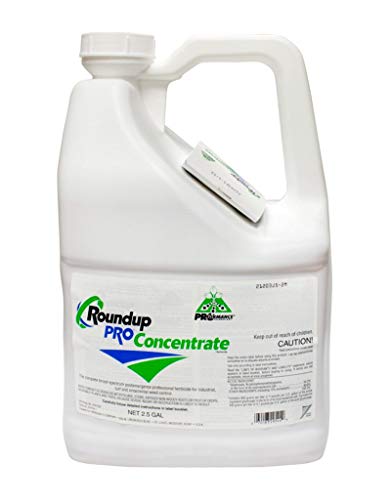
This professional-grade concentrate delivers 41% glyphosate in a 2.5-gallon jug that can make up to 150 gallons of spray solution at standard rates, giving it the highest raw coverage of any product on this list. For landowners clearing multiple acres of saplings, that volume translates into fewer refills and lower per-application cost.
Users consistently report visible wilting within three to four days on annual weeds and full kill within a week on most perennial brush when mixed at 2.5 to 3 ounces per gallon. The built-in surfactant helps the solution adhere to waxy sapling leaves, a common point of failure with cheaper concentrates that lack a wetting agent.
The 2.5-gallon jug requires a 63mm threaded pump for dispensing, as pouring is impractical. It is not labeled for sale in Wisconsin or New Jersey, so buyers in those states need an alternative. For its balance of concentration, surfactant integration, and coverage area, this is the most versatile option for mixed weed-and-sapling control.
What works
- Excellent coverage at 435,600 square feet
- Fast visible results in 3-4 days
- Built-in surfactant improves absorption
What doesn’t
- Not available in Wisconsin or New Jersey
- Large jug requires a pump for dispensing
3. Remedy Specialty Herbicide (Triclopyr)
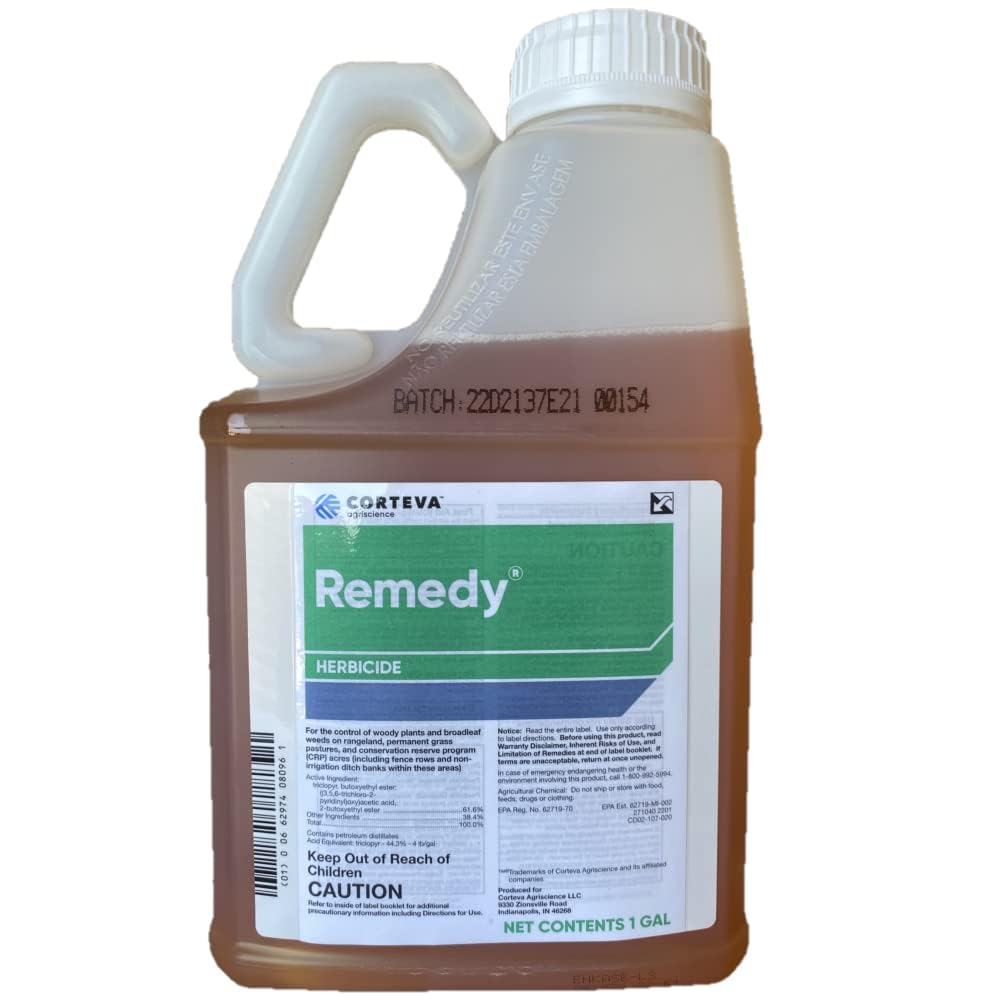
Remedy uses triclopyr, a systemic herbicide specifically formulated for woody plants, making it a superior choice for saplings with thick bark and dense root crowns. When mixed with diesel at a 1:3 ratio for basal bark application, users report near-100% success killing honey locust, multiflora rose, and wild pear trees without the stump resprouting.
Unlike glyphosate, triclopyr is selective to broadleaf plants and will not harm established grass, which makes it ideal for pasture and fence-line maintenance. It is low-odor compared to older brush killers, and when used as a foliar spray on actively growing saplings, it moves through the entire plant to kill the root within two to three weeks.
The price per gallon is the highest among the brush-specific options, but the concentration is potent enough that a single gallon goes a long way for cut-stump treatments. For property owners dealing with invasive woody species that resist glyphosate, Remedy is the targeted solution that ends regrowth.
What works
- Excellent on woody brush and invasive trees
- Selective — doesn’t kill grass
- Low odor and safe around pets when dry
What doesn’t
- Ineffective on grassy weeds
- Expensive compared to glyphosate concentrates
4. Southern Ag Crossbow Specialty Herbicide

Crossbow combines triclopyr with 2,4-D, creating a broad-spectrum brush killer that covers up to 2.23 acres per gallon. It excels on mixed vegetation — users report killing 8-foot weeds, poison ivy, small trees, and dense blackberry thickets within 48 hours, with full root death in about a week.
Its primary advantage is a short 3-day soil half-life, making it a safer alternative around desirable trees and shrubs when applied carefully to cut stems or painted onto foliage. It is particularly effective on vines and creeping woody perennials like ivy, where the combination of two active ingredients overcomes resistance that single-mode herbicides miss.
Performance varies by soil type and rainfall, with some users noting reduced efficacy on rich black soil in high-rainfall states. The strong odor is noticeable during mixing, and it is slower on wild violets. For large-scale fence-line clearing where both brush and broadleaf weeds are present, Crossbow delivers reliable results at a lower price per acre than pure triclopyr.
What works
- Dual active ingredients for broad-spectrum kill
- Short soil half-life reduces environmental risk
- Excellent value at 2.23 acres per gallon
What doesn’t
- Strong odor during mixing
- Performance drops on rich black soil
5. Albaugh Gly Star Plus Herbicide (41%)

Gly Star Plus matches the 41% glyphosate concentration of name-brand Roundup Pro but includes a fully loaded surfactant system that eliminates the need for a separate wetting agent. Users note visible results within 2 to 4 days on annual weeds and 7 to 10 days on perennial saplings when mixed at 2.5 ounces per gallon of water.
The 2.5-gallon jug is intended for professional and commercial use and is not labeled for residential application in some states. Its key advantage is the built-in surfactant, which saves a step and ensures consistent droplet adhesion on waxy sapling leaves — a common cause of spray failure when surfactants are omitted.
Reviewers consistently highlight the value proposition, calling it equal to Roundup at a lower price point. The main caution is safety: users emphasize full protective gear (boots, mask, gloves, goggles) because the high concentration poses significant health risks if absorbed through skin or inhaled during mixing.
What works
- Built-in surfactant improves leaf adhesion
- Fast visible results in 2-4 days
- Cost-effective alternative to name brands
What doesn’t
- Not labeled for residential use in all states
- Requires full PPE for safe handling
6. Plus Herbicide Credit 41 Extra (41%)

This entry-level 41% glyphosate concentrate offers the same active ingredient as higher-priced brands at a significantly lower cost per gallon. Users report effective kill on blackberry bushes, sticker bushes, and general weeds when mixed at 2 ounces per gallon, making it a viable option for large-scale sapling treatment on a tight budget.
The main trade-off is inconsistent quality control — one user found silicone sealant residue inside the jug that required filtering before use. While this appears to be an isolated manufacturing issue, it is worth inspecting the product upon arrival. The jug weighs roughly 25 pounds when full, so a pump or careful pouring is necessary.
Customer feedback highlights that this concentrate works as well as Roundup for a fraction of the price, but overspray can easily kill adjacent shrubs and grass. For budget-conscious landowners who need volume without sacrificing concentration, Credit 41 Extra delivers reliable systemic results at the lowest entry price in this lineup.
What works
- Lowest cost per ounce of 41% concentrate
- Effective on tough brush like blackberries
- Large 2.5-gallon volume for big jobs
What doesn’t
- Occasional QC issues with jug sealant
- Heavy jug requires pump for easy use
7. Airmax Shoreline Defense Emergent Weed Control
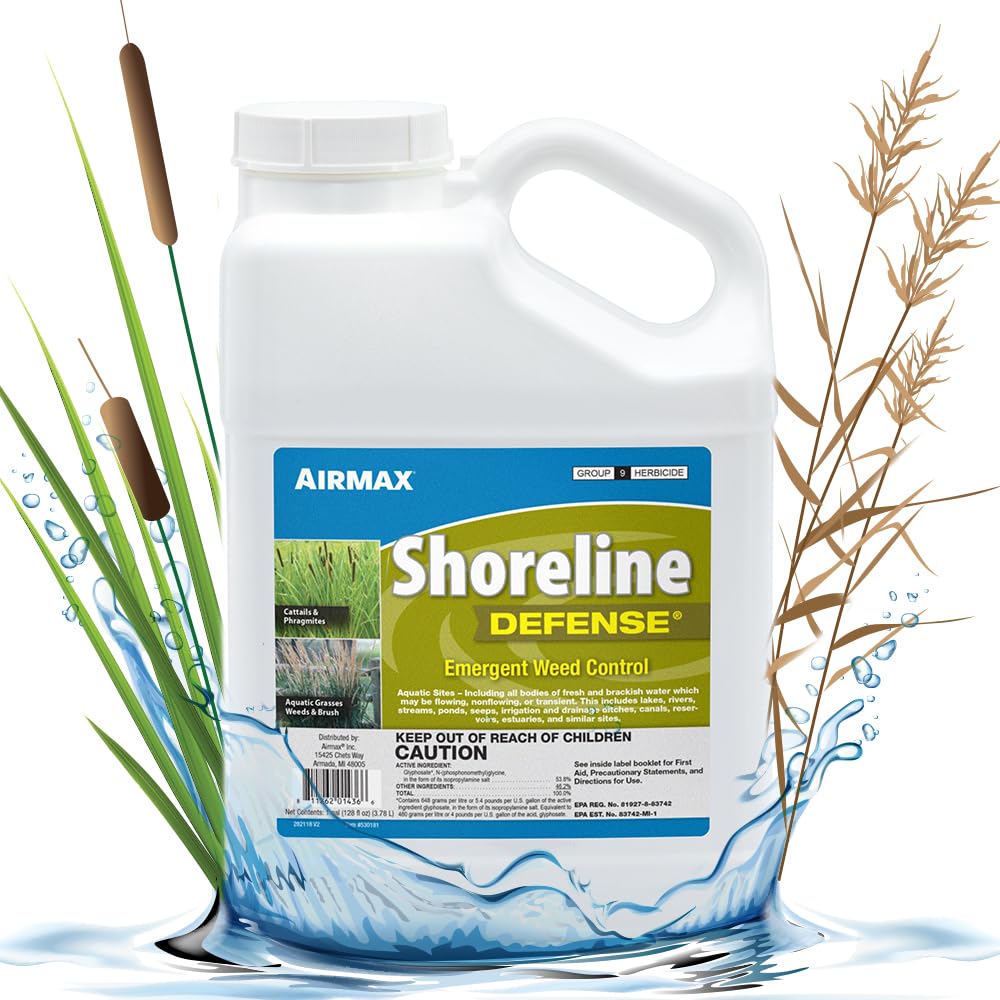
This specialized aquatic herbicide is formulated for emergent weeds like cattails, phragmites, and shoreline brush growing in fresh or brackish water. While not a first-line choice for dry-land saplings, it is the only option on this list legally labeled for use directly adjacent to lakes, ponds, rivers, and drainage ditches without harming fish or aquatic life.
The glyphosate-based formula kills down to the root and users report visible results in about two weeks, with full control of shoreline woody growth after late-summer application. A surfactant is recommended for best results, as the waxy leaves of aquatic vegetation resist plain spray solutions.
For landowners whose sapling problem runs along a shoreline or drainage canal, this is the only herbicide that solves the problem without contaminating the water.
What works
- Safe for use near fish and aquatic life
- Effective on cattails and shoreline brush
- Kills roots for long-term control
What doesn’t
- Lower coverage area per gallon
- Requires separate surfactant for best results
Hardware & Specs Guide
Glyphosate Concentration
Measured as a percentage of the acid equivalent in the concentrate. Standard consumer products often sit at 18%, while professional-grade concentrates range from 41% to 50.2%. Higher percentages allow for lower per-ounce mixing rates and better penetration of woody bark. For saplings, a minimum of 41% is recommended to ensure the chemical reaches the root system in a single application.
Cut-Stump vs. Foliar Timing
Cut-stump applications require treatment within minutes of cutting, before the tree’s natural sealing process begins. Foliar sprays work best during active growth periods (spring and early summer) when leaves are fully expanded and actively transpiring. Late-summer applications can be effective but may require higher concentrations as sap flow slows.
FAQ
How long does it take for herbicide to kill a sapling?
Can I use regular Roundup to kill saplings?
What is the best method to kill saplings without harming nearby trees?
Final Thoughts: The Verdict
For most gardeners, the herbicide to kill saplings winner is the Roundup Pro Concentrate (41%) because it offers the best balance of high concentration, built-in surfactant, and massive coverage area at a fair price. If you want a brush-specific formula that won’t harm surrounding grass, grab the Remedy Specialty Herbicide. And for shoreline or aquatic-adjacent saplings, nothing beats the Airmax Shoreline Defense for safe, effective root kill without harming fish.