
English ivy clings to brick, creeps under siding, and chokes the base of mature trees with a dense, waxy canopy that blocks sunlight and traps moisture against bark. A general-purpose weed killer barely dents this aggressive woody vine because its leaves are coated in a cuticle that repels low-potency sprays, forcing the roots to send up new shoots within days.
I’m Rikta — the co-founder and writer behind Lawn Gear Lab. I’ve spent countless hours cross-referencing triclopyr concentrations, reviewing application methods, and studying long-term owner results to find the herbicides that truly break English ivy’s regrowth cycle.
This guide cuts through the marketing claims to present the top-performing chemistry for eradicating this persistent invader. Whether you are clearing a fence line or reclaiming a shaded slope, the right herbicide for english ivy will attack the waxy foliage and woody stems that make this plant so frustrating to eliminate.
How To Choose The Best Herbicide For English Ivy
Standard weed killers often fail against English ivy because the plant’s leaves have a thick, waxy cuticle that repels water-based solutions. Selecting an herbicide requires attention to three specific factors.
Active Ingredient: Triclopyr vs. Glyphosate
Triclopyr is a systemic herbicide designed for woody plants and broadleaf weeds. It penetrates the waxy leaf coating of ivy and translocates to the root system, stopping regrowth. Glyphosate can work on young growth, but mature ivy with thick leaves often survives a glyphosate application. Look for products where triclopyr is the primary active ingredient.
Formulation: Concentrate vs. Ready-to-Use
Concentrates cost less per gallon of mixed spray and let you adjust the strength for tough vines. Ready-to-use (RTU) sprayers are convenient for small patches but are weaker and pricier for square footage. If you’re treating a large area or dense ground cover, a concentrate that mixes into a gallon of spray is the practical choice.
Application Method Compatibility
For ivy climbing trees, foliar spraying risks harming the tree. The cut-stem method — snipping the vine near the base and painting the stump with concentrated herbicide — is safer. Ensure your selected product can be applied via a sponge, brush, or wick for these targeted treatments.
Quick Comparison
On smaller screens, swipe sideways to see the full table.
| Model | Category | Best For | Key Spec | Amazon |
|---|---|---|---|---|
| Crossbow Herbicide 1 Gal | Mid-Range | Heavy brush and fence rows | 16.5% triclopyr | Amazon |
| Southern Ag Crossbow 1 Gal | Mid-Range | Vines and ivy without harming trees | 3-day soil half-life | Amazon |
| Remedy Ultra 1 Gal | Premium | Pasture and invasive tree control | Low-odor triclopyr | Amazon |
| Roundup Weed & Grass Killer₄ 1 Gal | Premium | General yard use on grassy areas | Multi-ingredient formula | Amazon |
| Roundup Poison Ivy Plus 32 oz | Mid-Range | Poison ivy and woody vines | Rainproof in 30 min | Amazon |
| Bonide Vine & Stump Killer 8 oz | Budget | Cut-stem and stump painting | Sodium metabisulfite | Amazon |
| Southern AG Brush Weed Killer 32 oz | Budget | Entry-level brush control | Triclopyr concentrate | Amazon |
In‑Depth Reviews
1. Crossbow Herbicide Brush Killer 1 Gallon
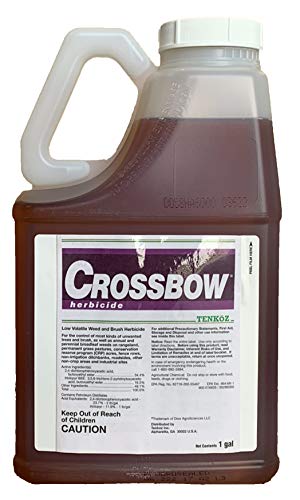
Crossbow is the formulation that farmers recommend for heavy brush, and the 16.5% triclopyr concentration explains why. English ivy requires an active ingredient that penetrates waxy foliage and moves into the rhizome network, and this product delivers visible wilting in under 24 hours with complete die-off by day two according to multiple verified buyers. The one-gallon size mixes into roughly 96 gallons of spray solution, making it the most cost-efficient option for treating dense ground cover or long fence lines.
The chemistry is non-selective on broadleaf plants, so you need to shield desirable shrubs and trees during foliar application. Users report that the residual activity lasts up to two years in some cases, which prevents ivy from re-establishing from dormant seeds in the soil. The strong chemical odor is a drawback during mixing, so a respirator and gloves are non-negotiable for safe handling.
For anyone with a moderate to large English ivy infestation — whether it is climbing a stone wall, swallowing a backyard shed, or carpeting a shaded hillside — Crossbow provides the fastest knockdown per dollar. The formula also works on poison ivy, blackberries, and multiflora rose, adding versatility beyond just ivy control.
What works
- Visible results within 24 hours on most ivy
- Excellent cost per gallon of mixed spray
- Residual control lasts months to two years
What doesn’t
- Very strong chemical smell during mixing
- Non-selective — can harm nearby desired plants
2. Southern Ag Crossbow Specialty Herbicide 1 Gal

The Southern Ag branded version of Crossbow uses a low-volatile ester formulation of triclopyr combined with 2,4-D. Verified buyers specifically mention that it kills English ivy without harming nearby trees when applied via a stem-painting technique, because the 1% solution moves systemically through the vine without drifting onto the tree canopy. The three-day soil half-life means it breaks down faster than many brush killers, reducing the risk of residual runoff into garden beds.
Users on heavy clay soil report an 85% kill rate on creeping Charlie (ground ivy) in the first week, but the same reviewer noted weaker results on rich black soil where organic matter binds the herbicide. A warm, dry window of at least three days after application improves consistency. The strong odor is still present, but several buyers mention it is milder than the Tenkoz-branded Crossbow.
This product is the best pick for homeowners who want professional-grade chemistry but need to protect ornamental trees and shrubs in a mixed landscape. The stem-painting method on climbing ivy works especially well, because you can treat the vine at waist height and let the chemical travel to the root mass.
What works
- Low-volatile formula is safer near desirable trees
- Breaks down relatively fast in soil
- Effective with stem-painting method on ivy
What doesn’t
- Strength varies by soil type and organic matter
- Needs 3-day dry window for best results
3. Remedy Specialty Herbicide 1 Gallon
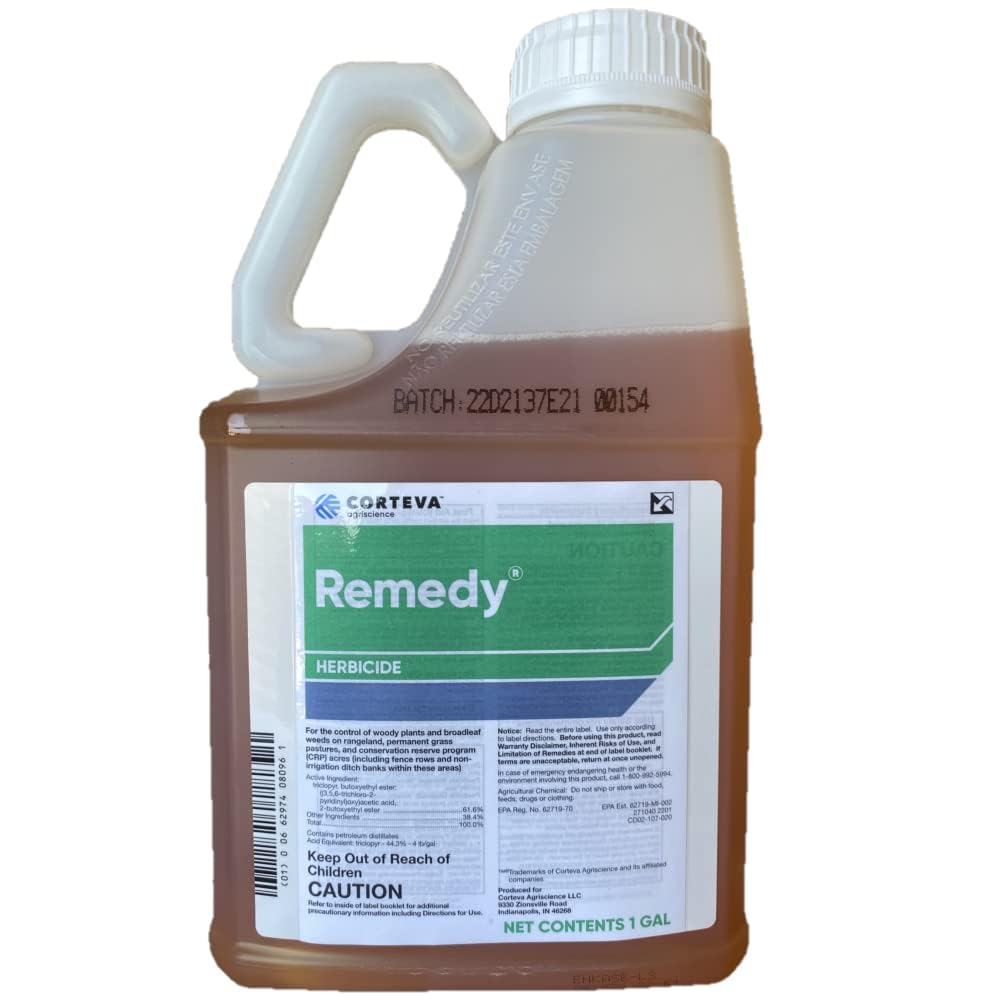
Remedy Ultra is a Dow AgroSciences product formulated specifically for rangeland and pasture brush control, and its triclopyr base is potent enough to kill cogon grass, honey locust, and multiflora rose — all of which share English ivy’s woody stem structure. Verified buyers who used it in a 1:3 mix with diesel for basal bark application on invasive trees reported that it prevented any resprouting from cut stumps. The same chemistry works on English ivy root crowns when applied as a foliar spray at label rates.
The low-odor formulation is a meaningful improvement over traditional brush killers. Users handling large quantities appreciate that the smell dissipates quickly after mixing, though the product is still not organic and requires a dry period before allowing children or pets into the treatment area. The high price point is the main barrier, but the concentration means a single gallon treats a significant area.
For landowners dealing with ivy that has merged with other invasive brush like blackberries or wild roses, Remedy Ultra handles the entire complex in one pass. It is the most expensive option in the mid-lineup, but the coverage area and lack of odor make it worth the investment for serious infestations.
What works
- Low-odor formula compared to other triclopyr products
- Excellent for cut-stump and basal bark application
- Kills woody brush species beyond just ivy
What doesn’t
- High price per gallon
- Ineffective on grassy weeds — narrow spectrum
4. Roundup Poison Ivy Plus Tough Brush Killer₂ 32 oz

Roundup’s Poison Ivy Plus formula combines triclopyr, fluazifop, and diquat dibromide — a three-way mix that attacks waxy leaves from multiple angles. Diquat dibromide provides the fast visual burn (yellowing within hours), while triclopyr and fluazifop handle the systemic translocation to the root system. Buyers with an acre and a half of mixed poison ivy and brush reported ordering multiple bottles because the concentrate works quickly and reliably on woody stems.
For large English ivy patches, you will need multiple bottles, and the cost per square foot is higher than Crossbow or Southern Ag’s gallon jugs. The rainproof window of 30 minutes is useful if you are spraying between unpredictable weather fronts.
This Roundup variant is a solid choice for moderate infestations where convenience and speed matter more than absolute low cost. The ready-to-mix concentrate works with standard hose-end or tank sprayers, and the visible wilting provides immediate confirmation that the chemistry is active.
What works
- Visible results in hours — fast visual feedback
- Rainproof in just 30 minutes after application
- Multi-active formula handles tough ivy leaves
What doesn’t
- Smaller bottle size limits value per square foot
- Requires respirator for safe mixing
5. Southern AG 01113 Brush Weed Killer 32 oz

Southern AG’s Brush Weed Killer is a pure triclopyr concentrate in a small quart bottle, making it the entry-point for homeowners who want professional active ingredients without buying a full gallon. The coverage range of 512–1,024 square feet per gallon of mixed spray is enough for treating a backyard ivy patch or a short fence line. Verified buyers report that it killed blackberry and Oregon shrub brush in about two weeks, with total browning on larger stems.
The price is the lowest on this list, but you pay for that economy in volume — the 32-ounce bottle contains less total triclopyr than the gallon jugs. For a small patch of English ivy (under 200 square feet), this is the most economical choice. Users coming from big-box store weed killers will notice the faster action and deeper root kill. One buyer specifically noted it killed strangler fig partially, which suggests the formula has limits on very aggressive tropical vines, but English ivy is well within its effective range.
Still, for a targeted first treatment on a contained ivy problem, this is the cheapest way to get triclopyr into your sprayer.
What works
- Lowest entry price for triclopyr concentrate
- Effective on blackberry and brush in 2 weeks
- Compact bottle stores easily
What doesn’t
- Small size is poor value for large infestations
- May struggle with very aggressive tropical vines
6. Roundup Weed & Grass Killer₄ Concentrate 1 Gal

Roundup’s Weed & Grass Killer₄ is the latest iteration of their flagship concentrate, now with triclopyr, fluazifop, and diquat dibromide in the mix. The formula kills weeds to the root and is rainproof in 30 minutes, making it convenient for weekend warriors tackling general yard cleanup. Verified buyers confirm that it works on poison ivy and broadleaf weeds, and when combined with glyphosate in a tank mix, it cleared an entire trail of vegetation.
The downside for ivy-specific use is that the formula is optimized for general weeds rather than woody brush. English ivy’s thick stems require higher triclopyr concentrations than this multi-purpose blend delivers. Users noted that it does not prevent new weeds from sprouting after the initial die-off, so re-treatment will be necessary. The large one-gallon bottle is helpful for covering wide areas, but the cost is high for a product that may need multiple passes on tough ivy.
This is a strong option if you have a mixed weed problem — dandelions, crabgrass, and some English ivy — and want a single product for the entire yard. For pure English ivy eradication, the brush-specific herbicides above will give you more reliable long-term control.
What works
- Good for mixed weed types beyond just ivy
- Rainproof in 30 minutes
- Large one-gallon size for wide coverage
What doesn’t
- Too dilute for thick English ivy stems
- Does not prevent regrowth from seeds
7. Bonide Vine & Stump Killer 8 oz, 2 Pack
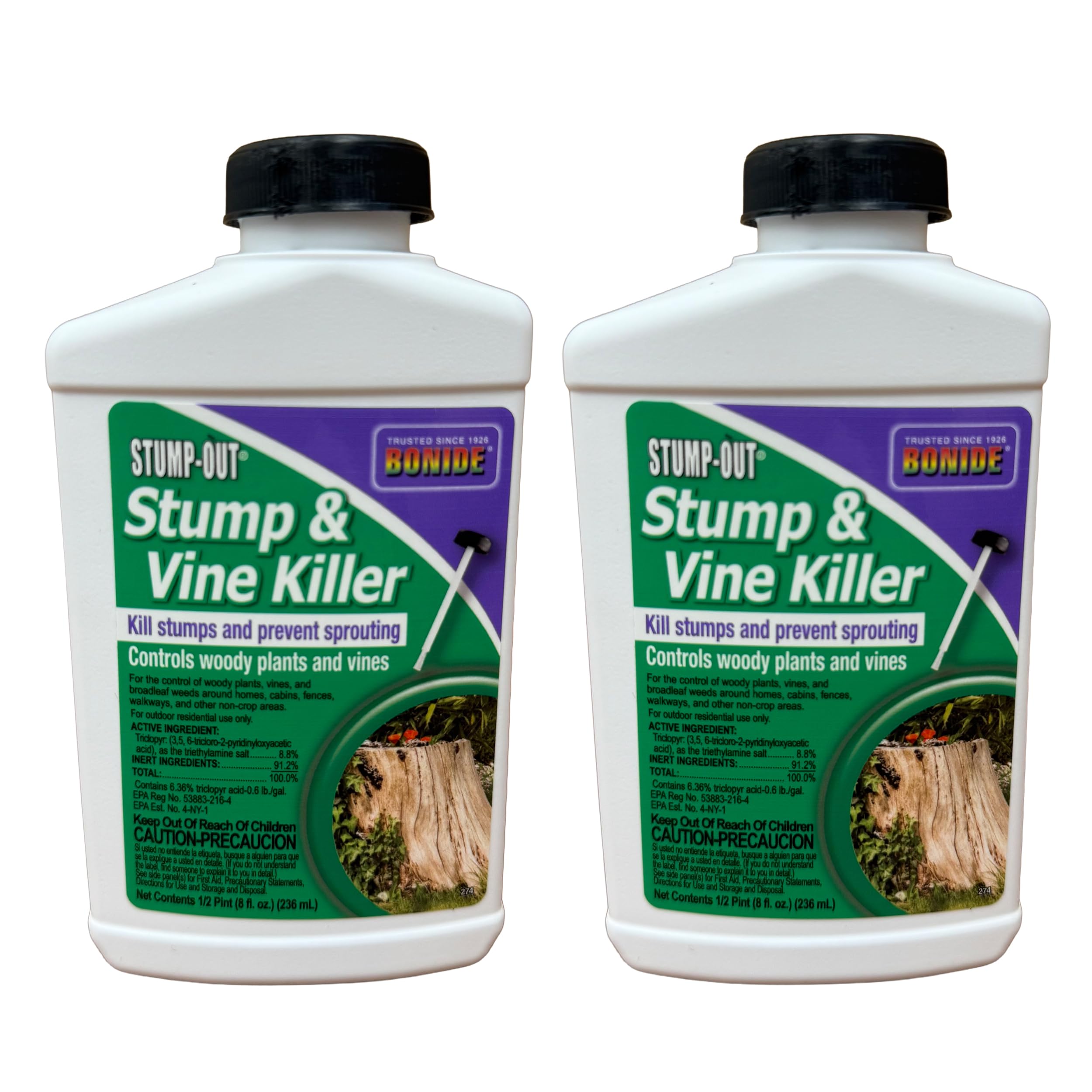
Bonide Vine & Stump Killer uses sodium metabisulfite rather than triclopyr, making it a chemical alternative for those who want a different mode of action on ivy stumps and climbing vines. The applicator tip on the bottle allows precise painting onto cut stems without wasting product. Verified buyers report great success on vines strangling maple trees by snipping the stem and brushing the concentrate into the fresh cut — the chemical travels through the vascular system and kills the root mass without affecting the tree.
The tiny bottle size (two 8-ounce bottles) limits its practical use to small patches or spot treatments. Multiple buyers received bottles that had leaked during shipping, and the price per ounce is much higher than the triclopyr concentrates. For a single ivy stump or a few climbing vines, the convenience of the ready-to-use bottle is worth the premium. For a large ground-cover infestation, you will burn through the bottles in minutes.
If your English ivy problem consists of a few mature stems climbing an oak or a fence post, this is the most targeted tool in the lineup. The chemical dries quickly and stays where you paint it, reducing the risk to nearby plants.
What works
- Precise applicator tip for targeted cut-stem use
- Works on vines without harming host trees
- Fast-drying formula stays on the cut surface
What doesn’t
- Very small bottle — poor value for large areas
- Frequent shipping leak complaints
Hardware & Specs Guide
Active Ingredient Concentration
The most important spec for English ivy is the triclopyr percentage. Products with 16–17% triclopyr (like Crossbow and Southern Ag Crossbow) penetrate the waxy cuticle faster than lower concentrations. Products with multi-active blends (Roundup variants) rely on diquat for rapid browning, but systemic root kill still depends on triclopyr content. Always compare the percentage on the front label — a higher number means more killing power per ounce of concentrate.
Mixed Spray Volume Yield
A one-gallon bottle of concentrate typically makes 96 gallons of mixed spray, covering about 2 acres of light brush. A 32-ounce bottle makes roughly 24 gallons. Calculate your coverage area before buying: for dense ivy, you need complete wetting of all leaves (not just a mist), which consumes more solution per 100 square feet than you might expect. Gals. of mixed spray per bottle is the spec that determines whether one purchase finishes the job.
FAQ
Can I spray herbicide on English ivy growing up a tree without harming the tree?
How long should I wait after application before the ivy is fully dead?
Final Thoughts: The Verdict
For most gardeners tackling English ivy on the ground or along fence lines, the herbicide for english ivy winner is the Crossbow Herbicide Brush Killer 1 Gal because its 16.5% triclopyr concentration delivers visible results in 24 hours and prevents regrowth for months. If you need to protect nearby trees while killing climbing vines, grab the Southern Ag Crossbow 1 Gal for its low-volatile formulation and safe stem-painting capability. And for small spot treatments on a single ivy stump, nothing beats the targeted precision of the Bonide Vine & Stump Killer.