
Strawberries are heavy feeders that demand acidic soil, excellent drainage, and consistent moisture—get the mix wrong and you’ll see yellow leaves, weak runners, or bland, misshapen fruit instead of the sweet, plump berries you expected. Most bagged soils are formulated for general ornamentals or tomatoes, leaving strawberry roots either waterlogged or starved of the specific micronutrients they crave.
I’m Rikta — the co-founder and writer behind Lawn Gear Lab. I’ve spent hundreds of hours comparing soil ingredient labels, studying pH ranges, analyzing aeration profiles, and sifting through verified buyer feedback to pinpoint which potting mixes actually deliver the conditions berry plants need to thrive in containers.
Whether you’re planting June-bearing or everbearing varieties in pots, grow bags, or window boxes, this guide breaks down the most critical specs to look for so you can confidently choose the right potting soil for strawberries and avoid common mistakes that sabotage your harvest before it starts.
How To Choose The Best Potting Soil For Strawberries
The wrong potting mix can turn your strawberry project into a season of disappointment. Focus on these four factors to narrow the field and pick a mix that supports vigorous root development and heavy fruit set.
pH Level & Acidity
Strawberries flourish in slightly acidic soil with a pH between 5.5 and 6.5. Outside this window, roots struggle to absorb iron and manganese, leading to chlorosis and poor fruit quality. Look for mixes that explicitly state their pH range or are naturally balanced with sphagnum peat moss—a common acidifying component. If a bag doesn’t mention pH, you may need to amend it yourself or risk weak plants.
Drainage vs. Moisture Retention
Strawberry roots rot quickly in compact, waterlogged soil. A good mix contains coarse perlite, vermiculite, or pumice to create air pockets, while peat moss or coconut coir holds just enough moisture between waterings. Avoid mixes heavy in fine sand or dense topsoil. The ideal texture should feel light and fluffy—if it clumps into a mud ball when squeezed, it’s too dense for containers.
Organic Matter & Nutrient Profile
Strawberries are heavy feeders during flowering and fruiting. Quality mixes incorporate compost, worm castings, kelp meal, or crab shell meal to supply a steady release of nitrogen, phosphorus, and potassium. Synthetic slow-release fertilizers can work, but organic options reduce the risk of salt buildup that burns tender roots. Check the ingredient list for “forest humus” or “composted manure”—these signal a rich microbial base.
Filler Content & Texture
Many budget-friendly soils pad volume with wood chips, bark fines, or large undecomposed particles that don’t hold nutrients and can harbor fungal spores. Premium mixes are screened to a consistent, fine texture. Shake the bag in-store or read reviews about “sticks and debris” — filler-heavy soils frustrate container gardeners and weaken strawberry root anchorage.
Quick Comparison
On smaller screens, swipe sideways to see the full table.
| Model | Category | Best For | Key Spec | Amazon |
|---|---|---|---|---|
| FoxFarm Ocean Forest (12 QT) | Premium Organic Blend | Nutrient-heavy container growing | pH 6.3–6.8; earthworm castings & bat guano | Amazon |
| Coast of Maine Bar Harbor Blend (16 QT) | Organic Coastal Mix | Extended feeding without fertilizer | Lobster/crab shell & kelp meal; 16 qt | Amazon |
| Brut Organic Potting Soil (1 CU FT) | Microbe-Rich Organic | Root zone biology & trace minerals | pH 6.3–6.5; Azomite & kelp | Amazon |
| Miracle-Gro Potting Mix (3-Pack, 8 qt) | Synthetic Slow-Release | Large container gardens on a schedule | Feeds up to 6 months; 3 x 8 qt bags | Amazon |
| Midwest Hearth Premium Mix (4 Dry QT) | Balanced Starter Mix | Seed starting & small pots | Peat moss, perlite, vermiculite; pH balanced | Amazon |
| Miracle-Gro Organic Indoor (2-Pack, 8 qt) | Moisture-Control Organic | Indoor pots & gnat prevention | Peat & coir blend; OMRI listed | Amazon |
| Doter Worm Castings (2.2 LB) | Organic Soil Amendment | Boosting existing soil nutrient content | Granules; mixing ratio 1:10 | Amazon |
In‑Depth Reviews
1. FoxFarm Ocean Forest Potting Soil (12 QT)
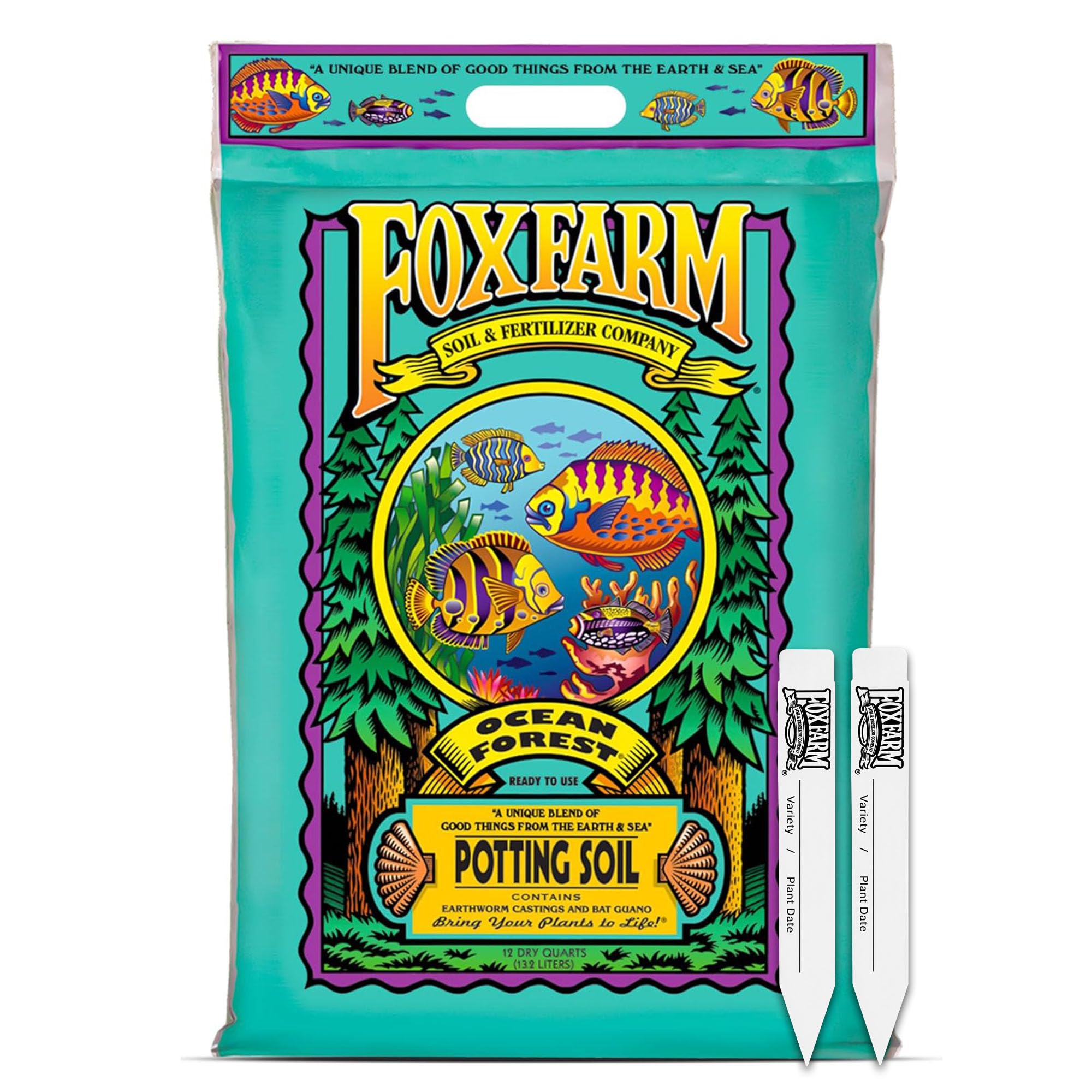
FoxFarm Ocean Forest sets the bar for container strawberry mixes thanks to its rich blend of earthworm castings, bat guano, and aged forest humus. The pH lands in the 6.3–6.8 sweet spot, and the light, aerated texture allows strawberry roots to spread freely without compaction. Users consistently report vigorous early growth and deep green foliage after switching from bargain soils, which aligns with the high organic matter content.
The 12-quart bag includes two plant tags, a small bonus for labeling everbearing vs. June-bearing varieties, and the soil is ready to use straight from the bag—no mixing required. Some gardeners add 10–20% perlite if their pot lacks drainage holes, but the existing perlite load is adequate for most standard containers. The nutrient density means you can delay supplemental feeding for several weeks.
On the downside, Ocean Forest can be “too hot” for delicate seedlings; a few reviewers mix it with FoxFarm Happy Frog to create a gentler starting medium. The price per quart is higher than mass-market blends, but the consistent quality and absence of filler debris justify the premium for serious berry growers who want one bag to carry a full season of container production.
What works
- Nutrient-dense blend fuels heavy fruiting without early fertilizer
- Light, fluffy texture prevents root compaction in containers
- pH is pre-balanced for acid-loving strawberries
What doesn’t
- May be too rich for germinating seeds—best for established transplants
- Price per quart is higher than generic mixes
2. Coast of Maine Bar Harbor Blend (16 QT)
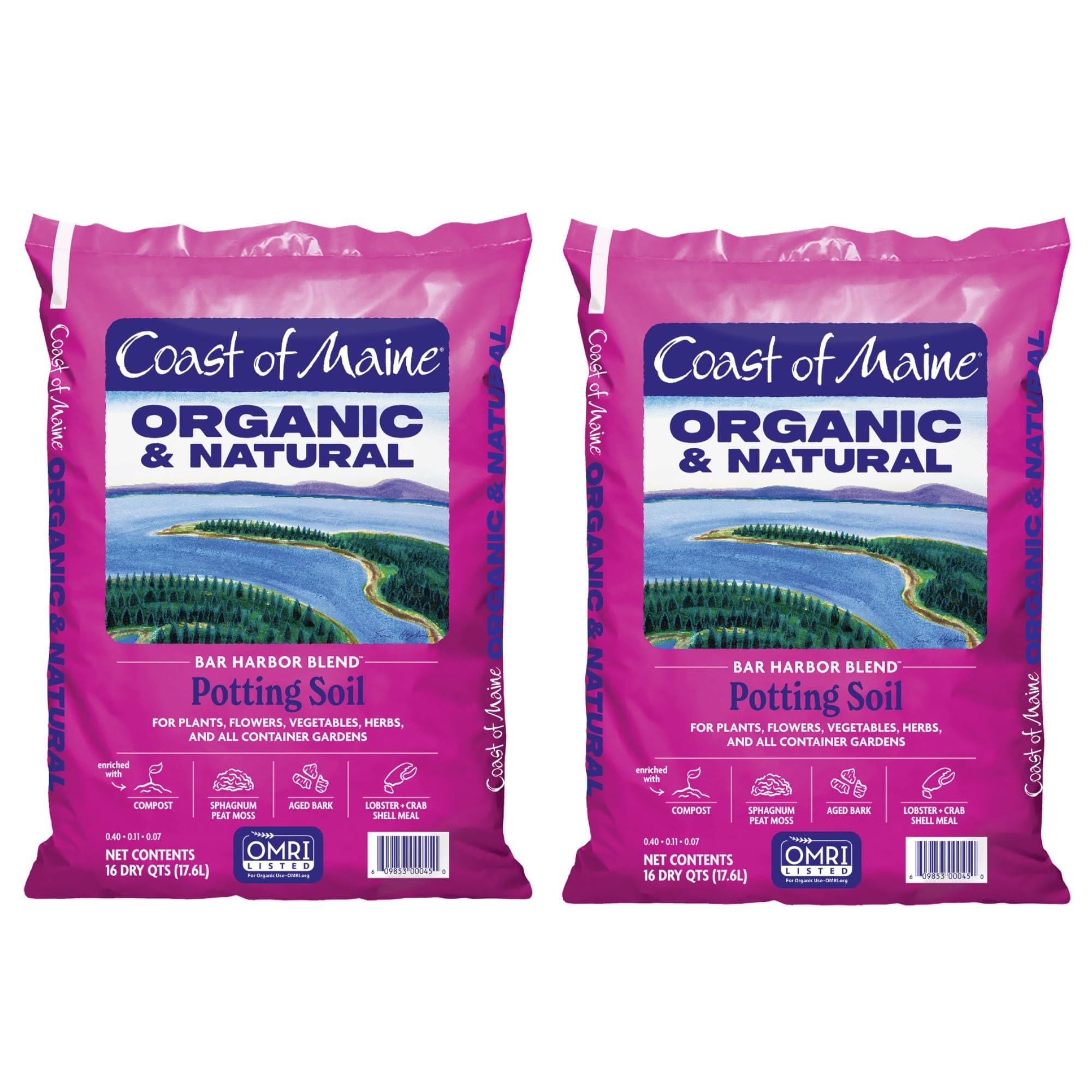
Coast of Maine’s Bar Harbor Blend brings a distinctly coastal nutrient profile to container strawberries. The inclusion of lobster and crab shell meal supplies chitin, which naturally suppresses soil-borne fungal pathogens, while kelp meal delivers trace minerals that enhance fruit sweetness. The sphagnum peat moss base keeps the pH in the acidic range strawberries demand, and the perlite load ensures water doesn’t pool around the crown.
Users who have grown tomatoes, peppers, and berries in this mix note that plants stay dark green and productive with minimal additional feeding—the slow-release nitrogen from compost and shell meal sustains growth without burning. The darker color indicates a high compost-to-peat ratio, which means better microbial activity. The 16-quart bag covers several large containers or a small raised bed.
The main drawback is availability: Coast of Maine products can be harder to find on shelves outside the Northeast. Shipping can also add cost for those buying online. A few reviewers noted the mix contains small shell fragments that are harmless but surprising if you’re used to finely screened soils. Still, for organic growers who want a single mix that feeds from root to fruit, this is a top-tier contender.
What works
- Crab/lobster shell provides natural disease suppression
- Kelp and compost deliver sustained trace nutrition
- Acidic pH matches strawberry requirements perfectly
What doesn’t
- Regional distribution limits in-store availability
- Small shell pieces can be visually off-putting
3. Brut Organic Potting Soil (1 CU FT)
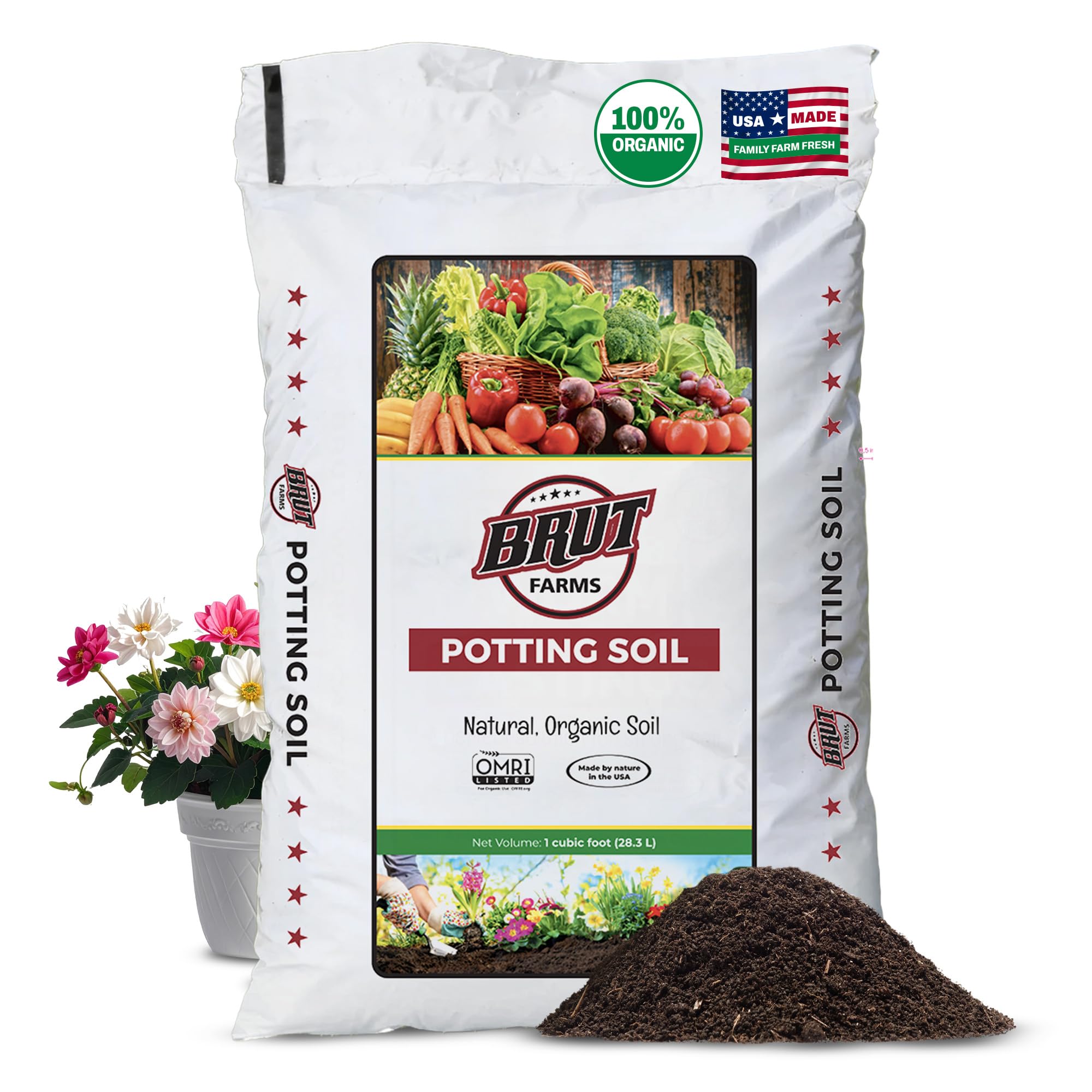
Brut Organic Potting Soil focuses on root-zone biology, packing in microbe-rich worm castings along with Azomite (a rock dust that supplies over 70 trace minerals) and kelp meal. The pH is calibrated to 6.3–6.5, right in the ideal strawberry window, and the texture is free of the wood chips and bark fines that plague cheaper blends. The 1-cubic-foot bag provides enough volume for several large pots or a tiered strawberry tower.
Growers who have used Brut for citrus and fruiting plants note rapid leaf greening and new shoot development within days of transplanting, a sign that the microbial activity is unlocking nutrients quickly. The mix is also OMRI listed, so organic gardeners can use it without compromising certification. The fine, consistent texture makes potting and root division easy.
The most common complaint is the price—this is not a budget soil. A few users felt the high cost per quart doesn’t justify the performance if they’re growing in very large beds. There’s also a minor caveat: the bag is heavy, and because it’s densely packed with organic matter, you may want to mix in a small amount of extra perlite if your containers lack drainage slits.
What works
- Azomite and worm castings deliver broad-spectrum micronutrients
- No filler debris—consistent, fine texture
- OMRI certification satisfies strict organic standards
What doesn’t
- Premium price per quart limits appeal for large projects
- Dense consistency may need extra perlite for drainage
4. Miracle-Gro Potting Mix (3-Pack, 8 qt)

For gardeners who want a set-and-forget feeding schedule, the Miracle-Gro Potting Mix 3-pack delivers synthetic slow-release fertilizer that feeds strawberries for up to six months. The base is a blend of sphagnum peat moss and perlite that provides decent aeration, and the 8-quart bags are easy to carry and store—ideal for managing several containers without opening a huge, weighty bag. Users report lush foliage and steady runner production with just weekly watering.
The mix is marketed for outdoor container plants, and it holds up well in rain and wind without compacting into a hard crust. The 3-pack format gives you 24 quarts total, which works out to a cost-effective way to fill multiple pots or a grow bag. The included fertilizer means you don’t need to buy separate plant food for the first half of the growing season.
The biggest trade-off is the synthetic fertilizer base—organic purists will want to avoid it because it doesn’t build long-term soil microbiology. Some users also note that the moisture retention is average; in hot weather, containers may need watering every day, and the peat can become hydrophobic if allowed to dry out completely. It’s a reliable workhorse, but not the most refined choice for berry connoisseurs.
What works
- 6-month feeding schedule reduces need for additional fertilizer
- 3-pack offers high volume at a reasonable per-bag cost
- Lightweight bags are easy to transport and store
What doesn’t
- Synthetic fertilizer doesn’t improve soil microbiology
- Peat can become hydrophobic when completely dry
5. Midwest Hearth Premium Potting Soil Mix (4 Dry QT)

Midwest Hearth delivers a straightforward three-ingredient blend—sphagnum peat moss, perlite, and vermiculite—that prioritizes aeration and moisture control over nutrient density. This makes it an excellent choice for starting strawberry seeds or rooting runners in small pots because the pH is balanced and the texture won’t overwhelm delicate root systems. The 4-quart bag is compact and resealable, which prevents the mix from drying out between uses.
Gardeners who used this for petunias and houseplants appreciated the “light and fluffy” feel and the absence of weeds or pests. For strawberries, it works best as a base that you then amend with worm castings or a balanced organic fertilizer because the mix itself contains no added nutrients. The vermiculite helps retain moisture around seeds without waterlogging.
Some users also note that the price per quart is higher than larger bags of similar quality. It’s a specialized tool, not a bulk solution, but for propagation and small-space growing, the formula is well-executed.
What works
- Perfectly balanced texture for germinating strawberry seeds
- Resealable bag keeps unused mix fresh
- No synthetic additives—safe for organic seed starting
What doesn’t
- Low volume—not economical for multiple mature plants
- Lacks inherent nutrients; must be amended for fruiting
6. Miracle-Gro Organic Indoor Potting Mix (2-Pack, 8 qt)

Miracle-Gro’s Organic Indoor Potting Mix blends sphagnum peat moss with coconut coir to create a soil that buffers against both over-watering and under-watering—a useful trait for strawberry pots placed on patios or windowsills where drainage isn’t always perfect. The organic formulation includes a “quick-start natural fertilizer” that gives transplants an initial boost without chemical burn. Users switching to this mix after fungus gnat issues reported a dramatic reduction in pests.
The 2-pack format provides 16 quarts total, which covers several medium-sized containers. Reviewers consistently note that houseplants and herbs respond with faster growth and deeper green leaves, and the same holds true for strawberry plants that prefer consistently moist (not soggy) root zones. The OMRI listing means it meets organic standards, so it pairs well with organic liquid feeds later in the season.
Where this mix falls short for strawberries is its intended audience—it’s built for indoor plants, so outdoor containers may require more frequent watering in direct sun because the coir component dries faster than straight peat. Also, the nutrient charge is mild; you will need to supplement with a fruit-specific fertilizer once flowering begins. It’s a solid mid-range option, not a powerhouse for heavy fruiting.
What works
- Coir-peat blend reduces risk of over- and under-watering
- OMRI listed and organic—safe for edibles
- Helps suppress fungus gnat populations
What doesn’t
- Mild nutrient charge requires supplemental feeding for fruiting
- Coir dries faster than peat in outdoor heat
7. Doter Worm Castings Organic Fertilizer (2.2 LB)

Doter Worm Castings are not a standalone potting soil but a concentrated organic amendment that you mix into a base medium at a 1:10 ratio to supercharge nutrient availability. For strawberry growers who already own a neutral potting mix, adding worm castings introduces beneficial microbes, boosts nitrogen levels, and helps buffer pH extremes without the risk of chemical burn. The granules are odor-free and non-toxic, so they’re safe for indoor and patio containers.
Users who incorporated these castings into their existing soil noticed stronger stem growth and more vibrant leaf color within two weeks. The castings also improve soil structure over time, increasing water retention in sandy mixes and aeration in clay-heavy ones. The 2.2-pound bag goes a long way when used as directed—enough for several potting sessions.
The limitation is obvious: this is a supplement, not a complete solution. If you’re starting from scratch, you’ll still need a quality base potting soil. Also, the product is manufactured in China, which gave some buyers pause, though the plants themselves showed no difference. For those looking to boost an existing mix without switching brands, this is a clean, effective choice.
What works
- Concentrated microbes and nitrogen improve any base soil
- Odor-free and safe around children and pets
- Stretches the value of a less expensive potting mix
What doesn’t
- Not a complete soil—requires a separate base medium
- Some buyers prefer domestic sourcing
Hardware & Specs Guide
pH & Acidity Management
Strawberries require a soil pH between 5.5 and 6.5 to efficiently absorb iron and manganese. Most premium mixes like FoxFarm Ocean Forest and Coast of Maine achieve this through sphagnum peat moss and composted forest products. Mixes that lack pH-stabilizing ingredients may drift alkaline over time, especially when watered with hard tap water. A simple handheld pH meter can help you monitor and adjust with elemental sulfur or acidic fertilizer as needed.
Aeration Components
Perlite, pumice, and coarse sand create the air pockets that strawberry roots need to breathe. A good mix contains at least 15–25% perlite by volume. Vermiculite serves a similar role but retains more moisture, making it better suited for seed starting than mature plants. Avoid mixes that rely on fine sand alone—it compacts quickly and suffocates roots in containers.
Organic Matter & Nutrient Delivery
Worm castings, compost, kelp meal, and crab shell meal provide slow-release nutrition that feeds plants over weeks rather than hours. These ingredients also fuel beneficial soil bacteria that convert nutrients into plant-available forms. Synthetic slow-release fertilizers, like those in Miracle-Gro mixes, deliver predictable feeding but don’t build long-term soil health. For continuous berry production across multiple seasons, organic matter is the better investment.
Filler Content & Bag Quality
Low-cost soils often contain bark fines, wood chips, and undecomposed organic debris that rob nitrogen as they break down. Premium mixes are screened to a uniform particle size, ensuring consistent drainage and root contact. Always shake the bag before buying—if you hear large chunks rattling, the mix likely contains filler. Resealable bags, like those on Midwest Hearth and Brut, help keep unused soil from drying out between uses.
FAQ
Can I use regular garden soil for strawberries in pots?
How often should I fertilize strawberries growing in potting mix?
What is the best way to improve drainage in a bagged potting soil?
Final Thoughts: The Verdict
For most gardeners, the potting soil for strawberries winner is the FoxFarm Ocean Forest (12 QT) because its balanced pH, rich organic ingredients, and light texture give strawberry roots the ideal environment for vigorous growth and heavy fruiting. If you want a mix that feeds plants with minimal additional fertilizer, grab the Coast of Maine Bar Harbor Blend for its lobster-shell disease suppression and kelp-derived trace minerals. And for starting seeds or small container projects on a budget, the Midwest Hearth Premium Mix provides a clean, well-aerated base that you can easily customize with your own amendments.