
Inside standard planters, roots hit the wall and begin to circle, eventually strangling the plant and stunting growth. Air pruning beds solve this by exposing root tips to dry air, forcing them to stop and branch out into a dense, fibrous network that absorbs water and nutrients far more efficiently.
I’m Rikta — the co-founder and writer behind Lawn Gear Lab. I’ve spent hundreds of hours dissecting the specifications of dozens of air pruning systems, cross-referencing material composition, assembly logic, and volume-to-root-density ratios to understand what separates a true root-health tool from a simple container.
This guide breaks down the core differences between rigid panel-based pots, fabric grow bags, and specialized propagation trays so you can pick the right system for your garden. We focused solely on products that deliver real air pruning to find the best air pruning beds on the market today.
How To Choose The Best Air Pruning Beds
The leap from a solid-walled pot to an air-pruning container changes two things at once: how often you water and how the root system develops. Understanding these variables is the only way to avoid a frustrating season of leggy transplants or root-bound seedlings.
Material and Wall Structure
Rigid plastic panels with interlocking seams create channels that guide air across the root zone. This design provides the most aggressive air pruning because the open slots are fixed and never collapse. Fabric containers rely on porosity to achieve the same effect, but they can sag or compress over time, reducing airflow. Heavier non-woven geotextile fabrics retain their shape better and deliver consistent pruning across multiple seasons.
Volume and Plant Lifecycle
Air-pruning beds do not simply contain roots—they redirect them. A 25-gallon panel pot is ideal for a young tree that will be transplanted within two to three years. For deep-rooted annual vegetables like tomatoes or squash, a 100-gallon fabric bed offers enough horizontal space for roots to spread without hitting the wall too soon. Smaller propagation trays (72 cells) are perfect for the first four to six weeks of a seedling’s life before transplanting into a larger bed.
Assembly and Long-Term Stability
Panel-based pots rely on screws or zip ties to hold the seams together. If the screws are not self-tapping or the pre-drilled holes are misaligned, assembly becomes a major chore. Fabric beds require no tools, but you should check the stitching quality—reinforced X-stitches on handles and double-rolled hems indicate better durability. A bed that falls apart mid-season defeats the purpose of investing in root health.
Quick Comparison
On smaller screens, swipe sideways to see the full table.
| Model | Category | Best For | Key Spec | Amazon |
|---|---|---|---|---|
| RooTrimmer 40 Gal (Pack of 2) | Panel Pot | Heavy-duty outdoor tree growing | 24 in. height x 24 in. diameter | Amazon |
| Rain Science Commercial 1 Gal (Pack of 10) | Mesh Bag | Indoor propagation and hydroponics | Plastic-coated mesh fabric | Amazon |
| Bootstrap Farmer 72 Cell Tray (5-Pack) | Propagation Tray | Seed starting with easy transplant | 0.87 in. bottom drain hole | Amazon |
| RooTrimmer 25 Gal (5-Pack) | Panel Pot | Medium nursery trees for 2-4 years | 20 in. height x 20 in. diameter | Amazon |
| SMART POT 700 Gal Soft-Sided | Fabric Pot | Massive trees and long-term landscape | 93 in. diameter x 24 in. height | Amazon |
| Bootstrap Farmer 100 Gal (3-Pack) | Fabric Pot | Large vegetables as instant raised beds | 4.16 ft. diameter x 12 in. depth | Amazon |
| Grassroots Fabric Pots 4’x4’ Living Soil Bed | Raised Bed | No-till living soil gardens | Moisture-lock liner included | Amazon |
In‑Depth Reviews
1. RooTrimmer Air Pruning Containers, 40 Gallon (Pack of 2)
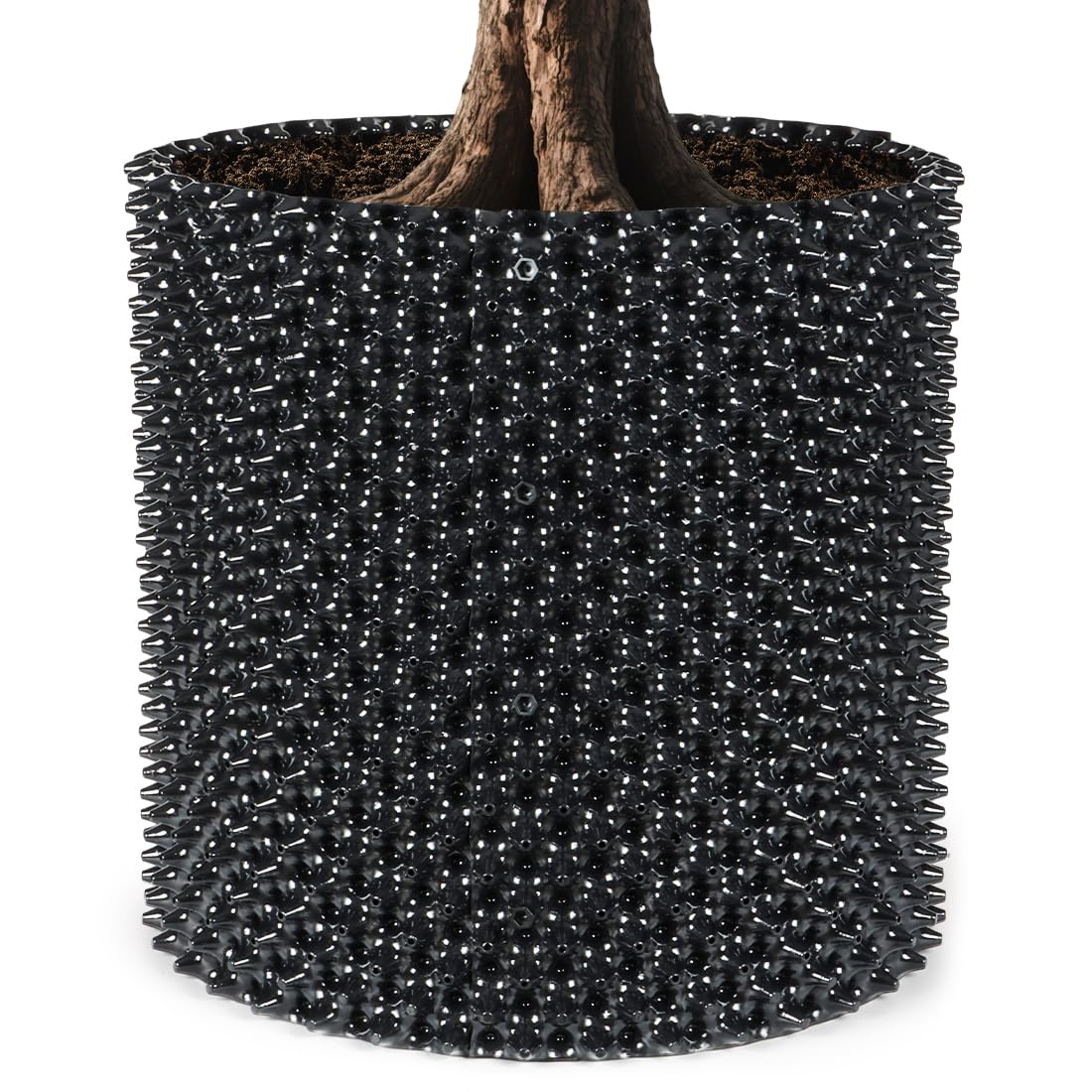
The RooTrimmer 40-gallon panel pot hits a sweet spot between structural rigidity and portability. Each unit measures 24 inches in both height and diameter, giving deep-rooted trees enough vertical column for taproot development while the interlocking side slots deliver aggressive air pruning. The thick-wall plastic feels notably tougher than cheaper blow-molded containers, and the seams hold their shape without bowing under wet soil weight. Assembly takes about five minutes per pot using the included plastic screws, though you will want to wear rubber-coated gloves to tighten them securely without stripping the threads.
Users report that the root ball stays intact when unscrewing the panels for transplant. That easy disassembly matters for anyone moving a tree after two or three years—the container comes off in sections rather than forcing you to cut or tear the pot away. The built-in drainage holes at the base and the side wall perforations work together to prevent waterlogged soil even during heavy rain. Some customers noted that the screw count feels tight for large multipack purchases, and a handful of units arrived with holes that required minor alignment. The concept behind air pruning is well executed here, and the 40-gallon volume fits a wide range of nursery and landscape trees.
For a mid-range panel pot, this delivers reliable construction and a proven air-pruning geometry. The value becomes especially clear when you consider that two pots come in the package, effectively lowering the per-container cost. If you are sizing up from a smaller nursery pot or a flimsy fabric bag, the RooTrimmer 40-gallon offers a substantial upgrade in root health and seasonal durability.
What works
- Thick-wall plastic withstands outdoor UV exposure without cracking
- Screw-together panels let you transplant without root disturbance
- 24-inch depth supports taproot development for trees
What doesn’t
- Included screw count is minimal for large deployments
- Some units require pre-drilling or hole alignment before assembly
2. Bootstrap Farmer 72 Cell Air Prune Tray (5-Pack)

The Bootstrap Farmer 72-cell tray is engineered specifically for air-pruning seedlings from day one. Each cell features vertical slots that allow air to trim root tips as they reach the side wall, preventing circling before the plant ever leaves the tray. The tray is molded from heavy-duty polypropylene that is FDA-grade and feels far more substantial than standard 1020 flats. Dimensions of roughly 19.8 inches by 9.9 inches mean these trays fit perfectly into standard bottom-watering 1020 trays without overhang, making greenhouse or indoor bench management straightforward.
The bottom of each cell includes a large 0.87-inch drain hole that doubles as a finger-pop for removing the root plug. Transplanting seedlings out of these trays is noticeably easier than prying roots from solid-cell trays because the entire plug slides out cleanly with minimal disruption. The air-pruning slits are spaced evenly around the perimeter of each cell, and early root development shows dense lateral branching rather than a single taproot circling the bottom. Users report that the polypropylene resists cracking even after repeated freeze-thaw cycles and bottom watering.
Filling the cells requires a deliberate technique—covering the bottom holes with a piece of cardboard or a spare tray bottom before pouring soil prevents media from falling straight through. Once you get the hang of it, the payoff is a seedling with a root system that explodes with feeder roots the moment it hits a larger container. For any grower who starts seeds indoors and wants to avoid transplant shock, this tray system is a precision tool rather than a generic flat.
What works
- Large bottom holes and side slits produce cleanly pruned root plugs
- FDA-grade polypropylene resists cracking and chemical leaching
- Standard 1020 footprint fits most bench and tray setups
What doesn’t
- Bottom holes require a filling trick to avoid soil loss
- Higher upfront cost compared to basic seed-starting flats
3. Bootstrap Farmer 100 Gallon Grow Bags (3-Pack)
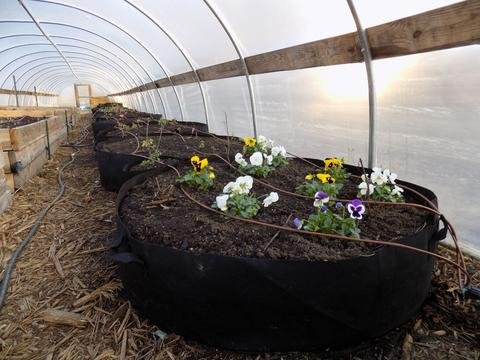
The Bootstrap Farmer 100-gallon grow bag operates as an instant raised bed with full air-pruning capability. The non-woven recycled fabric allows roots to hit the side wall and air-prune naturally, while the 12-inch depth is sufficient for shallow-rooted crops like leafy greens, peppers, and strawberries. The diameter of 4.16 feet creates a wide growing circle that supports sprawling squash or indeterminate tomatoes without the root congestion common in narrower bags. The fabric is BPA-free and food-safe, so you can grow edible crops directly in contact with the material.
Reinforced X-stitched handles are sewn into the side walls at intervals that let two people lift or drag the bag even when filled with moist soil. The handles distribute weight evenly, reducing the chance of tearing during transport. Users consistently report the bags lasting past three seasons without fabric degradation, and many reuse them for five or more years with proper winter storage. The fabric breathability also prevents heat buildup inside the root zone, a common issue with black plastic pots in direct sun.
If you are looking for a no-build alternative to wooden raised beds, these bags deploy in minutes and pack flat for storage. The only trade-off is that the 12-inch depth limits what you can grow—carrots or parsnips need deeper soil, and the wide footprint means you need floor space. For large-volume vegetable production without permanent infrastructure, this three-pack is a ready-to-use air-pruning system that outperforms most fabric pots on the market.
What works
- Wide diameter supports sprawling vegetable varieties without root binding
- Reinforced stitching and handles survive multiple seasons of heavy use
- Breathable fabric prevents root zone overheating in direct sun
What doesn’t
- 12-inch depth is too shallow for deep-rooted vegetables and trees
- Large footprint may be impractical for tight patio spaces
4. SMART POT 700-Gallon Soft-Sided Container
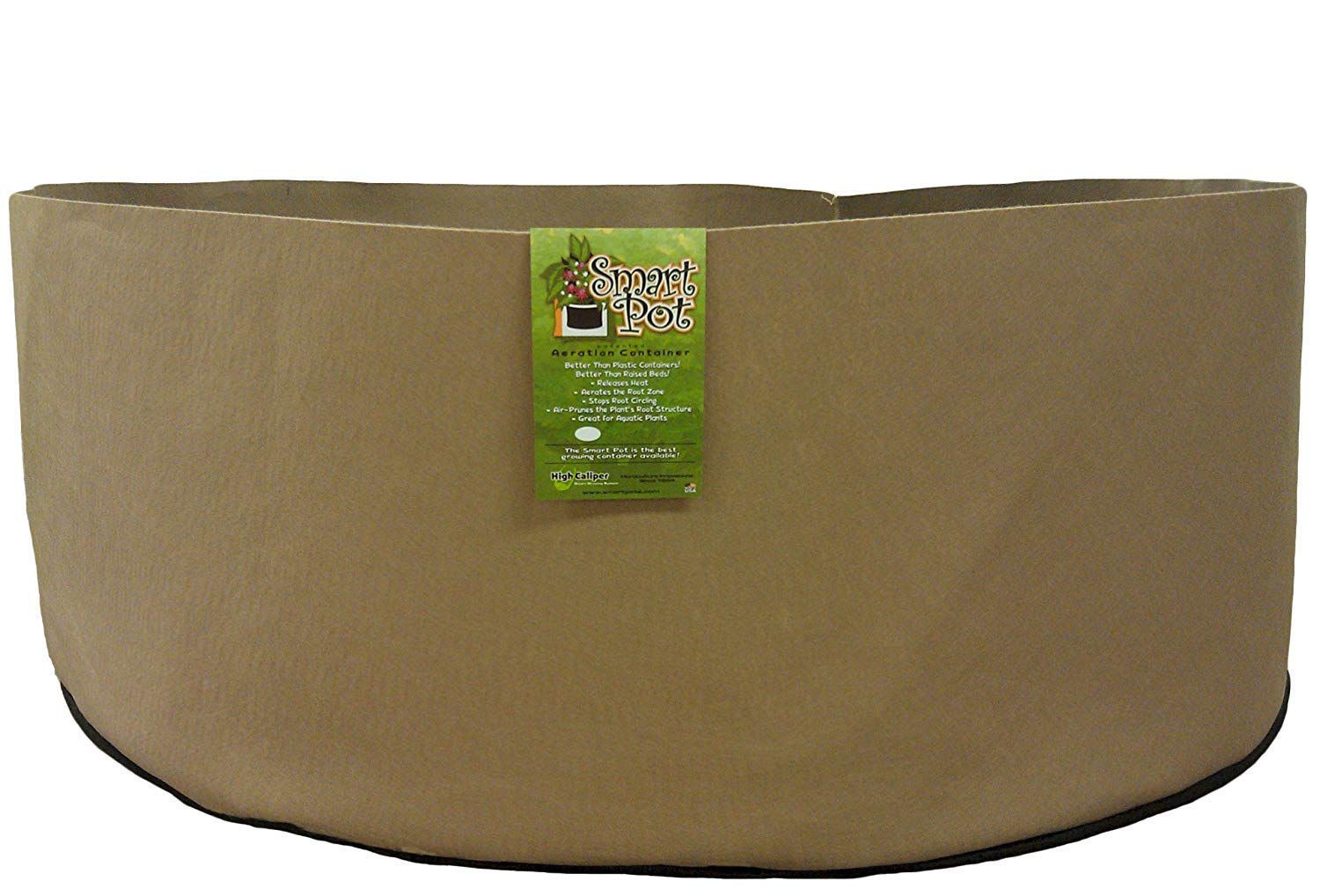
The SMART POT 700-gallon container is a commercial-grade fabric pot built for massive tree production and large-scale landscape projects. At 93 inches in diameter and 24 inches tall, it holds enough soil to support full-sized trees for years without requiring transplant. The soft-sided fabric aeration system works by allowing excess heat to escape and roots to air-prune at the container wall, creating a dense root ball that transitions smoothly into the ground when the tree is planted out. Professionals in the nursery trade have used these containers for decades because the fabric holds its shape without collapsing.
Users note that the fabric prevents waterlogging even in rainy climates because moisture wicks through the sides rather than pooling at the bottom. The 24-inch height provides enough depth for tree root establishment while keeping the overall weight manageable at 6 pounds empty. The fabric does not rot or degrade in UV exposure, and customers report using the same container for multiple growing cycles without visible wear. Transplanting is straightforward—cut the roots around the perimeter and lift the tree out, or lay the pot on its side and slide the root ball out.
For anyone growing trees from seed or sapling to saleable size in a single container, this is the most cost-effective option per gallon of soil volume. The only real drawback is the empty footprint: a 93-inch circle occupies over 47 square feet of floor space, so you need a dedicated nursery area. The investment pays off when you realize you are essentially skipping the step of uppotting multiple times over several seasons.
What works
- Massive 700-gallon capacity supports tree growth for multiple years
- Fabric construction prevents root circling and waterlogging
- Lightweight and portable when empty despite the huge capacity
What doesn’t
- Requires nearly 48 square feet of level ground per container
- Soil dries faster than plastic, requiring consistent irrigation
5. Grassroots Fabric Pots 4’x4’ Living Soil Raised Bed

The Grassroots 4×4 living soil bed is a fabric raised-bed system designed specifically for no-till and biodynamic gardening. The key differentiator here is the moisture-lock liner sewn into the bed, which routes water down through the soil column and out the bottom rather than letting it run straight through the fabric side walls. This design keeps the walls moist without waterlogging the root zone, a balance that matters for living soil microbiology. The bed holds roughly 125 to 150 gallons of soil with enough headroom for a heavy layer of mulch on top.
Assembly requires some light DIY work with PVC pipe to create the frame that holds the fabric walls upright. The PVC is not included in the package, which caught some buyers off guard. Once assembled, the fabric walls are sturdy enough to hold their shape under soil weight, and the open top gives you full access for planting, mulching, and soil amendment. Users who run no-till systems report that the bed produces monster plants because the root zone remains undisturbed season after season, and the air-pruning fabric encourages feeder roots to fill the entire volume.
This is not a set-it-and-forget-it product—you need to measure and cut PVC pipe to the correct lengths, and the instructions could be more precise about dimensions. But for growers committed to building a living soil ecosystem in a portable footprint, the Grassroots bed delivers the fabric aeration and moisture management that no wooden raised bed can replicate. Pair it with a Blumat drip irrigation kit for a hands-off watering solution that works with the moisture-lock liner.
What works
- Moisture-lock liner prevents side-wall drying while maintaining drainage
- Large 4×4 footprint supports no-till living soil practices
- Fabric aeration outperforms wood for root branching and air pruning
What doesn’t
- PVC support frame not included and requires precise cutting
- Assembly instructions could be clearer for first-time builders
6. Rain Science Commercial Grow Bag (1 Gallon, Pack of 10)
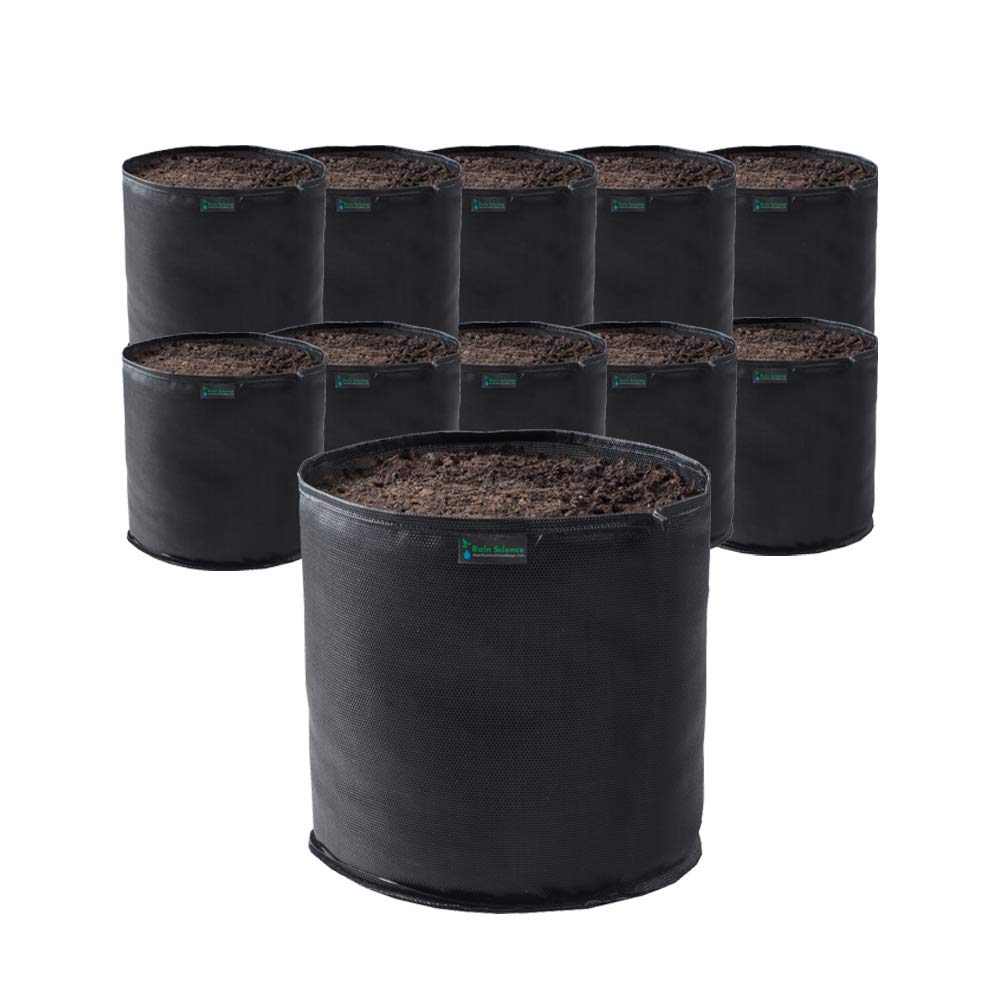
Rain Science’s commercial grow bag uses a plastic-coated mesh fabric that does not stay wet the way traditional felt pots do. This is a meaningful difference for growers who struggle with fungus gnats or root rot in standard fabric containers. The 1-gallon size is ideal for propagation, finishing clones, or growing compact herbs and flowers on a bench or shelf. The open-mesh construction provides some of the most direct air pruning available in a bag format because the airflow is not filtered through dense fabric fibers.
The commercial version omits the handles found on the retail line, which keeps the cost per bag lower but makes lifting a wet bag slightly trickier. The seams are sewn on the outside of the bag so the interior wall is smooth, reducing the chance of roots catching on stitching during transplant. Users who have tested both fabric pots and these mesh bags report that the Rain Science containers dry out faster and produce a more fibrous root ball with noticeably thicker white feeder roots. The bags are machine washable and reusable across many cycles without losing structural integrity.
The 1-gallon size limits the growth window—you will need to uppot into a larger container within four to eight weeks for most vegetable starts. But as a propagation pot for building a dense root plug before moving to a final bed, this pack of ten delivers consistent air pruning at a competitive per-unit cost. The UV-stable mesh can be used outdoors, but because the soil dries fast, you need to keep a close eye on watering frequency in hot weather.
What works
- Plastic-coated mesh dries quickly and prevents overwatering issues
- Outside seams create a smooth interior wall for clean root release
- Machine washable for easy sanitation between growing cycles
What doesn’t
- No handles make handling wet bags cumbersome
- 1-gallon volume requires early uppotting for most crops
7. RooTrimmer Air Pruning Containers, 25 Gallon (5-Pack)

The RooTrimmer 25-gallon panel pot is essentially a smaller sibling to the 40-gallon model, but the five-pack bundle makes it an attractive entry point for someone setting up multiple trees or large shrubs at once. Each pot uses the same interlocking plastic panel system with screws, and the 20-inch height by 20-inch diameter size holds roughly 100 liters of soil. The thick-wall material is identical to the larger version, so you get the same UV resistance and structural rigidity at a lower volume that is better suited for medium nursery stock.
Assembly mirrors the larger pot—sheet panels, a round base, and plastic screws that take about five minutes per pot. The root ball stays intact when you unscrew the panels for transplant, which is particularly useful for fruit trees or ornamental shrubs that you intend to move after a few years. Some users reported that the screws are not self-tapping and require a pre-drilled pilot hole, a point of frustration compared to pots with threaded holes. The 25-gallon capacity hits a sweet spot for two to four years of growth before the tree needs a larger container or in-ground planting.
For the price per pot, this five-pack lowers the barrier to adopting air-pruning technology across an entire nursery bed. The consistency of the air-pruning effect is identical to the larger RooTrimmer models, so you are not sacrificing root health for a smaller footprint. If you can work around the screw alignment issue by pre-drilling or using zip ties, the value proposition is hard to beat for multiple mid-sized trees.
What works
- Five-pack bundle brings the per-pot cost down significantly
- Panel design provides aggressive air pruning for healthy root branching
- Easy transplant by unscrewing panels without disturbing the root ball
What doesn’t
- Screws not self-tapping, often requiring pre-drilling
- Instructions are lacking detail and can be confusing
Hardware & Specs Guide
Wall Thickness and Material Density
Rigid panel pots are measured by the thickness of the plastic sheet, usually expressed in millimeters. Thicker walls resist bowing under wet soil pressure and handle UV exposure longer. For fabric pots, the weight per square yard (typically 200 to 400 grams) determines how long the bag maintains its shape. Heavier geotextiles also provide more consistent air pruning because the fabric does not compress flat under soil weight, which would close the pores that allow airflow.
Air Pruning Slot Geometry
Panel pots rely on vertical or horizontal slots cut into the side wall. The width of the slot determines how much light and air reach the root tip. Slots that are too narrow can clog with soil, while slots that are too wide let soil spill out. The ideal slot width for most rigid air-pruning containers falls between 0.125 and 0.25 inches. Fabric pots do not have discrete slots—their entire surface serves as a permeable wall, but the effective pore size depends on the weave density. Mesh bags like the Rain Science line offer the largest open area, producing the fastest drying and most aggressive pruning.
FAQ
Do air pruning beds work for all types of plants?
How often should I water plants in fabric air pruning beds compared to plastic pots?
Can I leave air pruning beds outdoors during winter?
Final Thoughts: The Verdict
For most gardeners, the air pruning beds winner is the RooTrimmer 40 Gallon 2-Pack because it combines sturdy panel construction with a 24-inch depth that works for trees, shrubs, and deep-rooted vegetables alike. If you need a precision seed-starting solution, grab the Bootstrap Farmer 72 Cell Tray 5-Pack for root plugs that transplant without shock. And for large-scale raised-bed vegetable production without wood framing, nothing beats the Bootstrap Farmer 100 Gallon 3-Pack for its wide footprint and multi-season durability.