
The metallic green and copper flash of a Japanese beetle landing on a rose bloom is a signal for war. These voracious pests skeletonize leaves from the top down, turning prized ornamentals and fruit trees into lace in a matter of days. A targeted spraying strategy is the most effective way to break their feeding cycle and protect your landscape investment.
I’m Rikta — the co-founder and writer behind Lawn Gear Lab. I’ve spent countless hours comparing formulation chemistries, studying application methods (contact vs. systemic vs. biological), and analyzing owner feedback to build this guide around the most effective solutions available.
The central challenge is matching the right delivery system to your infestation level — which is exactly what this guide to the best japanese beetle spray is designed to help you do.
How To Choose The Best Japanese Beetle Spray
Japanese beetle control is not a one-size-fits-all scenario. The right product depends on whether you need to protect a small rose bed, a large vegetable garden, or an entire lawn from grubs. The three main categories are contact sprays, systemic drenches, and biological controls, each with distinct strengths.
Contact vs. Systemic Action
Contact sprays kill beetles on impact but only protect the sprayed foliage. They need reapplication after rain or heavy feeding pressure. Systemic formulations, like those containing imidacloprid or acephate, are absorbed by the plant and provide up to six weeks of protection from the inside out, killing beetles as they feed on treated tissue.
Concentrate vs. Ready-to-Use
Concentrates offer better economy for large gardens; a 32-ounce bottle of concentrate can make over six gallons of finished spray. Ready-to-use spray bottles are convenient for spot-treating a few plants but run out faster and cost more per application.
Grub Prevention as a Long-Term Strategy
Spraying adult beetles is a reactive measure. For lasting control, treat the lawn with a biological grub killer like Milky Spore (Bacillus popilliae) to target the larval stage in the soil. This reduces next year’s adult population without harming beneficial insects.
Quick Comparison
On smaller screens, swipe sideways to see the full table.
| Model | Category | Best For | Key Spec | Amazon |
|---|---|---|---|---|
| Ortho Bug B Gon | Contact Spray | Broad-area lawn/garden defense | Kills 235 listed insects | Amazon |
| St. Gabriel Milky Spore | Biological | Long-term grub prevention | Covers up to 2,500 sq ft | Amazon |
| Catchmaster Trap | Pheromone Trap | High-population luring away | Dual lure attracts 2-5x more | Amazon |
| RESCUE! Trap | Pheromone Trap | Luring beetles away from plants | Single-season attractant cartridge | Amazon |
| Bonide Captain Jack’s | Multi-Purpose | Fruit tree & edible garden defense | 1 pint makes 6.4 gallons spray | Amazon |
| Bonide Rose Rx | Systemic Drench | 6-week rose & shrub protection | No spraying required | Amazon |
| Ortho Rose & Flower | Systemic Spray | Roses & flowering ornamentals | Dual-action contact + systemic | Amazon |
In‑Depth Reviews
1. Ortho Bug B Gon Insect Killer Ready-to-Spray
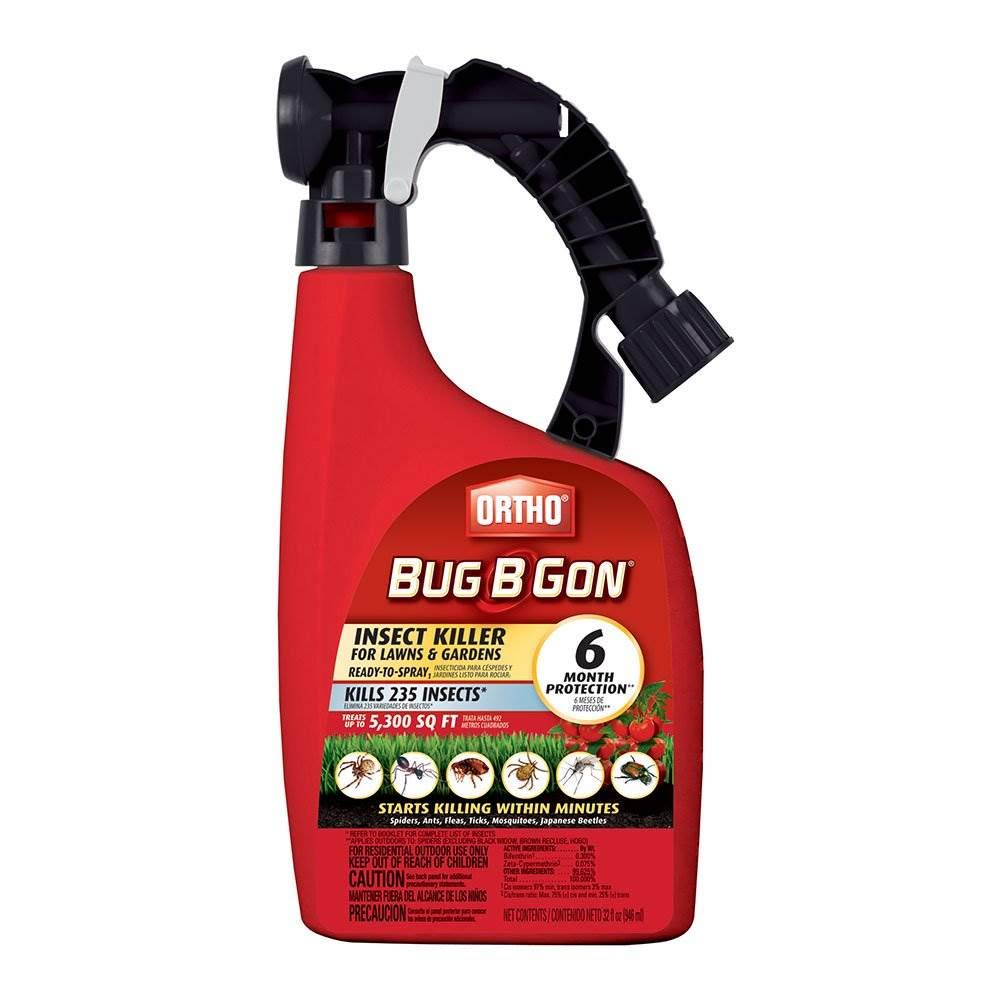
Ortho’s Bug B Gon tackles the widest spectrum of pests for its category — 235 listed insects including Japanese beetles, mosquitoes, ticks, and fleas — making it a comprehensive perimeter defense for lawns, ornamentals, and vegetable gardens. The ready-to-spray formula connects directly to a hose for extremely easy coverage of up to 5,300 square feet, and the residual protection lasts up to six months for spiders when applied around the foundation.
Reviews confirm immediate knockdown of mosquitoes and flies after a single application, with users noting that two sprays per year (spring and late fall) are sufficient to maintain control. It also eliminates ticks and fleas from the yard, which is a significant bonus for pet owners. The bifenthrin active ingredient is powerful but requires caution around blooming plants because it is highly toxic to bees and beneficial insects.
This is the go-to choice for homeowners who want one product to handle Japanese beetles along with a broader pest problem. The hose-end application eliminates mixing and measuring, though it uses more product per treatment than concentrated alternatives. Reapplication may be needed after heavy rain to maintain full effectiveness.
What works
- Extremely broad spectrum (235 pests)
- Hose-end spray treats 5,300 sq ft easily
- Up to 6 months residual control
What doesn’t
- Highly toxic to bees and aquatic life
- Must avoid spraying open blooms
2. St. Gabriel Organics Milky Spore Powder
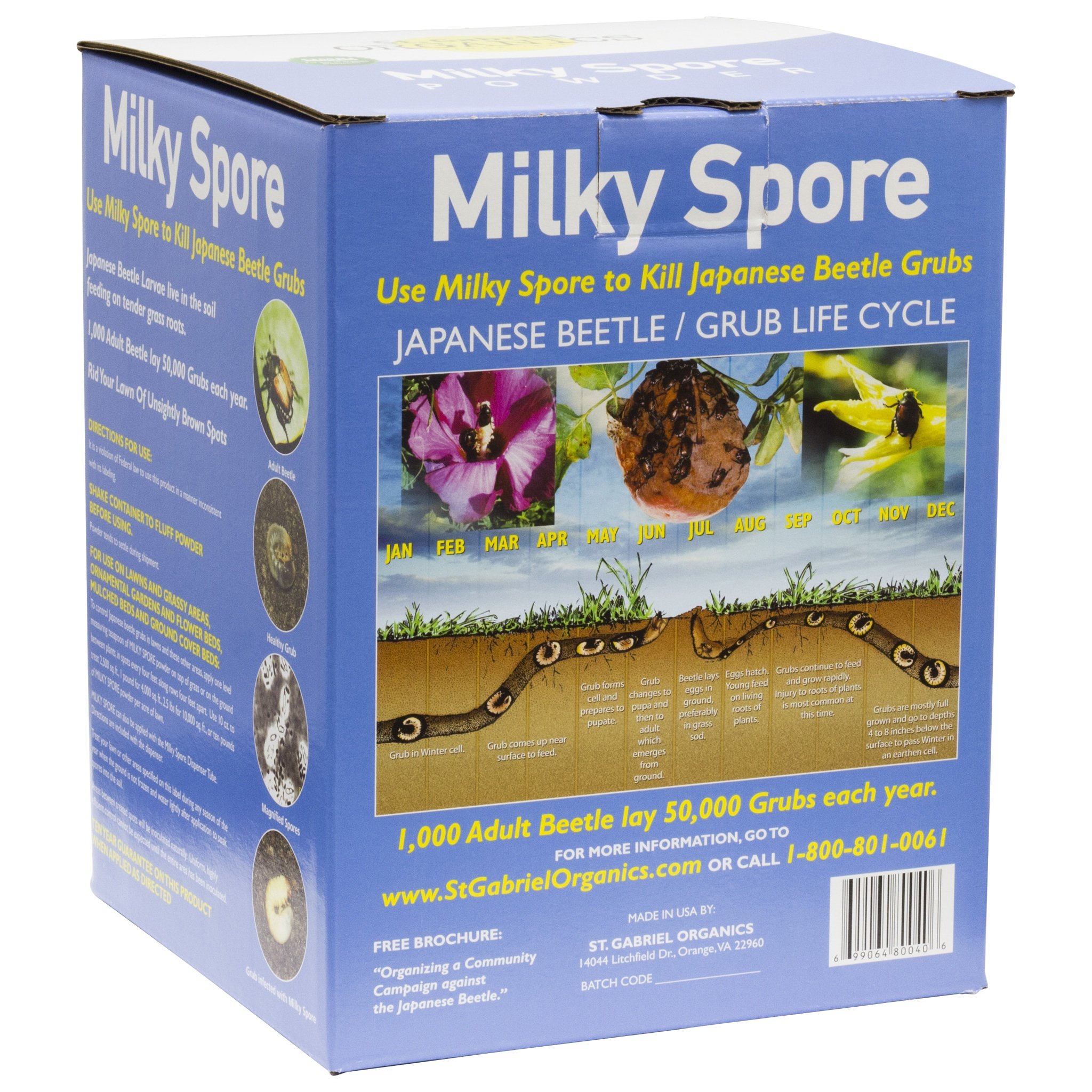
Milky Spore is not a spray — it is a biological powder containing Bacillus popilliae spores that infect and kill Japanese beetle grubs in the soil before they emerge as adults. This is the only product on this list that addresses the root cause of the infestation rather than just killing the visible beetles. Once established in the lawn, the spores multiply and can remain active for years, providing natural, self-sustaining grub control.
Users report visible recovery of brown grass patches within about a week after application, with grub damage disappearing. The fine powder is applied at a rate of one teaspoon every four feet and must be watered in to drive the spores into the soil. It is completely safe for pets, beneficial insects, and earthworms — a huge advantage over chemical insecticides that can harm pollinators.
The main drawback is time: Milky Spore does not kill adult beetles currently feeding on your plants. It works slowly over seasons to reduce the grub population, so you need a concurrent spraying strategy for immediate adult control. The price per ounce is higher than chemical options, but the multi-year persistence offsets the upfront cost.
What works
- Self-perpetuating grub control for years
- Completely safe for pets, bees, and worms
- Eliminates brown patches from grubs
What doesn’t
- No effect on adult beetles already feeding
- Slow to build up (multiple seasons)
3. Catchmaster Japanese Beetle Trap 3-Pack
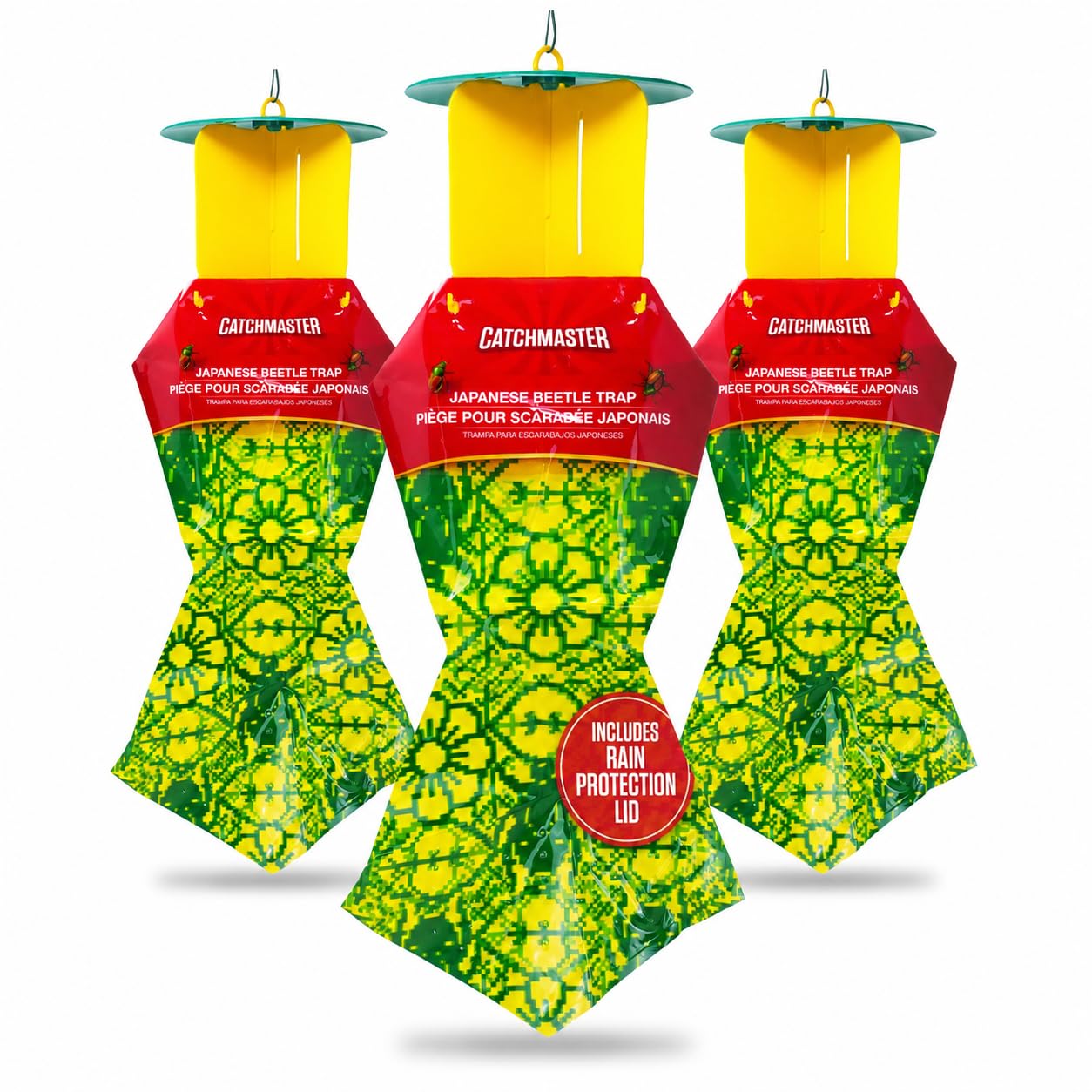
The Catchmaster trap uses a dual-lure system combining a sex pheromone and a floral/food attractant that the manufacturer claims draws two to five times more beetles than single-lure traps. Each trap covers over 5,000 square feet, and the disposable hourglass-shaped collection bags prevent escape. The rain-proof cap is a thoughtful design addition — older trap designs can fill with water and become ineffective.
Customer feedback is overwhelmingly positive, with users noting that traps began catching beetles within 24 hours and saved grape vines and rose bushes from defoliation. The assembly is described as more user-friendly than some competing brands, and the bags hold a substantial volume before needing replacement. The lures are long-lasting and can handle a full season of heavy beetle pressure.
A few users reported defective or hard-to-open bait packs, which can be frustrating. The traps must be placed 10 to 30 feet away from protected plants to lure beetles away — if placed too close, they can actually attract more beetles to the area. The bait has a noticeable smell during assembly, so set them up outdoors.
What works
- Dual-lure system attracts more beetles
- Rain-proof cap prevents bag flooding
- Simple assembly and large capacity
What doesn’t
- Some bait packs arrive defective
- Pungent odor during assembly
4. RESCUE! Japanese Beetle Trap – 3 Traps

The RESCUE! trap system is a classic pheromone-based solution that has been a staple for years. Its large green panels stun beetles on impact, causing them to fall into an attached bag where they cannot escape. Each trap comes with an attractant cartridge that lasts a full season, and the bag features an easy-lock bottom so you can dump and reuse it — reducing waste compared to disposable bag designs.
Users report astonishing capture rates, with some filling two gallons of beetles in three days. The lure is so potent that beetles often swarm the trap before you finish hanging it. Placing the trap at least 30 feet from ornamentals is critical; those who placed it 100 feet away saw fewer catches. A few owners noted that while the trap caught many beetles, their roses still had some damage, suggesting that traps work best as part of an integrated strategy rather than a standalone solution.
The attractant has a strong, sweet smell that travels well on the breeze, but some users found it unpleasant during setup. The bag’s reusability is a plus, but emptying a bag full of live beetles requires a strong stomach or a freezer to kill them first.
What works
- Incredible capture volume (gallons per week)
- Reusable bag with easy-lock bottom
- Single-season attractant cartridge
What doesn’t
- Strong scent during setup
- May not fully protect nearby plants
5. Bonide Captain Jack’s Citrus, Fruit & Nut Orchard Spray

Captain Jack’s Orchard Spray is a versatile concentrate that functions as a fungicide, insecticide, and miticide in one bottle. It targets Japanese beetles, fruit flies, caterpillars, spider mites, powdery mildew, rust, and blight — making it ideal for fruit trees (apples, citrus, peaches), vegetables, and ornamentals. The sulfur-based formulation is gentle on plants but kills Japanese beetles within about an hour of contact, with residual activity lasting days.
Users report that leaf spots on apple trees visibly disappear and foliage turns greener after just a few applications. The concentrate is economical — one pint makes up to 6.4 gallons of finished spray — and can be used up to the day before harvest, making it a top choice for edible gardens. It works well against tent caterpillars, whiteflies, and cucumber beetles in addition to Japanese beetles.
The main downside is that the sulfur leaves a slight powdery residue on leaves that some find unsightly. It is non-persistent, so heavy rain or overhead watering requires reapplication. The concentrate must be mixed using a hose-end or tank sprayer, which adds a step compared to ready-to-use options.
What works
- Fungicide + insecticide + miticide in one
- Safe for edibles up to day before harvest
- Very economical concentrate
What doesn’t
- Leaves powdery sulfur residue
- Non-persistent; reapply after rain
6. Bonide Rose Rx Systemic Drench Concentrate

Rose Rx eliminates the need for spraying altogether. This concentrate is mixed with water and poured around the base of the plant — a “drench” method that allows the plant to absorb the active ingredient systemically. It provides protection against Japanese beetles, aphids, borers, black spot, powdery mildew, and rust for six weeks per application. It works on roses, azaleas, camellias, and other flowering shrubs.
Users with large rose collections (some with 20 or more bushes) report that a single early-season drench dramatically reduces sawfly and beetle damage throughout the growing season. The product also addresses black spot and powdery mildew, making it a dual-purpose treatment for insect and disease problems. Owners appreciated that it requires no mixing with a sprayer and no concern about drift onto nearby plants.
The systemic nature means it is absorbed by pollen and nectar, so it is toxic to bees and other pollinators while active. It should never be applied during bloom or when bees are foraging. It also takes a few days to reach full concentration in the plant, so it is not an instant knock-down solution for a heavy beetle infestation already in progress.
What works
- No spraying — just pour at base
- Six weeks of continuous protection
- Controls both insects and diseases
What doesn’t
- Kills bees during active bloom
- Slow systemic uptake; not instant kill
7. Ortho Rose and Flower Insect Killer, 24-Ounce

The Ortho Rose and Flower Insect Killer is a ready-to-use spray that combines contact kill with systemic action. It kills over 100 listed insects — including Japanese beetles, aphids, and leafhoppers — on contact while the systemic component protects new growth for up to four weeks. It is specifically formulated to not harm plants or blooms, making it safe for even delicate rose petals.
Customers with small rose gardens found it highly effective against Japanese beetles, reporting that a few sprays per week eliminated the infestation entirely. The formula is gentle enough that flowers continue to bloom and produce healthy cutting stems. It also works well on indoor plants for general pest control, giving it versatility beyond the ornamental garden.
The biggest limitation is that the systemic action is relatively weak compared to dedicated systemic drenches. Some users with heavy mealybug or scale infestations found it provided only temporary knockdown and required frequent re-drenching. The 24-ounce bottle treats a limited area — expect to buy multiple bottles for larger gardens.
What works
- Safe for blooms and soft foliage
- Dual contact + systemic action
- Works quickly on visible beetles
What doesn’t
- Weak systemic; needs frequent reapplication
- Small bottle size limits coverage
Hardware & Specs Guide
Active Ingredient
The most common chemical classes for Japanese beetle sprays are pyrethroids (bifenthrin, lambda-cyhalothrin) for contact kill, and neonicotinoids (imidacloprid, acetamiprid) for systemic protection. Biological options use Bacillus popilliae (Milky Spore) or spinosad. Understanding which active ingredient your target requires is the first step in selection.
Coverage Area
Ready-to-spray hose-end products like Ortho Bug B Gon treat up to 5,300 square feet per bottle. Concentrates like Bonide Captain Jack’s dilute to over six gallons of spray, covering dozens of fruit trees. Spot-treatment sprays (24-32 oz ready-to-use) cover a small rose bed or a handful of shrubs. Always calculate your total square footage before choosing.
FAQ
Can I spray Japanese beetles and still harvest vegetables the same day?
Will Japanese beetle traps attract more beetles to my yard?
How often should I reapply Japanese beetle spray after rain?
Final Thoughts: The Verdict
For most gardeners, the best japanese beetle spray winner is the Ortho Bug B Gon because it combines broad-spectrum control with easy hose-end application, covering the entire lawn and garden perimeter in minutes. If you want long-term biological prevention, grab the St. Gabriel Milky Spore. And for protecting fruit trees with a single product that also handles fungal diseases, nothing beats the Bonide Captain Jack’s Orchard Spray.