
Roses are notoriously fussy about what sits around their root system, and standard garden soil often suffocates them with poor drainage or the wrong pH. A mix designed specifically for roses balances moisture retention with sharp aeration and delivers a steady supply of nutrients that fuels those signature blooms. The wrong bag leads to yellowing leaves, stunted growth, or the dreaded root rot that kills a bush from the bottom up.
I’m Rikta — the co-founder and writer behind Lawn Gear Lab. I’ve spent countless hours cross-referencing bagged soil formulations, comparing NPK ratios against rose-specific horticultural data, and tracking how each mix holds up through a full growing season using verified owner results.
This guide breaks down the seven most promising options on the market so you can confidently choose a potting soil for roses that fits your specific growing goals.
How To Choose The Best Potting Soil For Roses
Roses need soil that holds enough moisture to keep the root zone hydrated between waterings yet drains quickly enough that the roots never sit in standing water. They also need a steady supply of macro and micronutrients — especially phosphorus for flower production — without the risk of fertilizer burn. Here is what separates a rose-specific mix from generic potting soil.
Drainage & Aeration
The single biggest cause of rose death in containers is root rot caused by waterlogged soil. Look for mixes that contain perlite, coarse sand, composted pine bark, or coconut coir. These ingredients create air pockets that allow oxygen to reach the root system and let excess water escape. A bag that feels heavy and dense when dry is usually a warning sign of poor aeration.
Nutrient Profile & Slow-Release Fertilizer
Roses are heavy feeders. A good mix already contains balanced nutrients so you do not have to start fertilizing immediately. Pay attention to the NPK ratio (nitrogen-phosphorus-potassium). A higher middle number, like 6 or 8, indicates more phosphorus, which is critical for flower and bud development. Slow-release granular formulas dissolve nutrients gradually over many months and reduce the risk of burning tender new roots.
Organic vs. Synthetic
Organic mixes rely on ingredients like composted manure, earthworm castings, bat guano, and kelp meal to build soil life over time. Synthetic fertilizers deliver an immediate green-up but can leave salts behind that alter pH and harm beneficial microbes. Both approaches work; the choice depends on whether you want to build the soil ecosystem or if you prefer predictable, fast-available nutrition.
Quick Comparison
On smaller screens, swipe sideways to see the full table.
| Model | Category | Best For | Key Spec | Amazon |
|---|---|---|---|---|
| FoxFarm Ocean Forest (1.5 cu ft) | Premium | Vigorous root development | Aged forest products + sandy loam | Amazon |
| FoxFarm Happy Frog (2 cu ft) | Premium | Container gardens & houseplants | Mycorrhizae & humic acids | Amazon |
| Perfect Plants 8qt Rose Mix | Mid-Range | Drift & Knockout varieties | 18-6-8 slow-release, 12-month feed | Amazon |
| Coast of Maine Roses & Flowers | Mid-Range | In-ground & container beds | Composted manure, OMRI-listed | Amazon |
| Miracle-Gro Potting Mix (3-pack) | Mid-Range | Multiple container flowers | Feeds up to six months | Amazon |
| Perfect Plants 4qt Rose Mix | Budget | Single potted rose | 18-6-8 slow-release, 4qt bag | Amazon |
| Omitgoter Rose Soil (4qt) | Budget | Bonsai & small containers | 100% natural, coconut coir base | Amazon |
In‑Depth Reviews
1. FoxFarm Ocean Forest Potting Soil (1.5 cu ft)
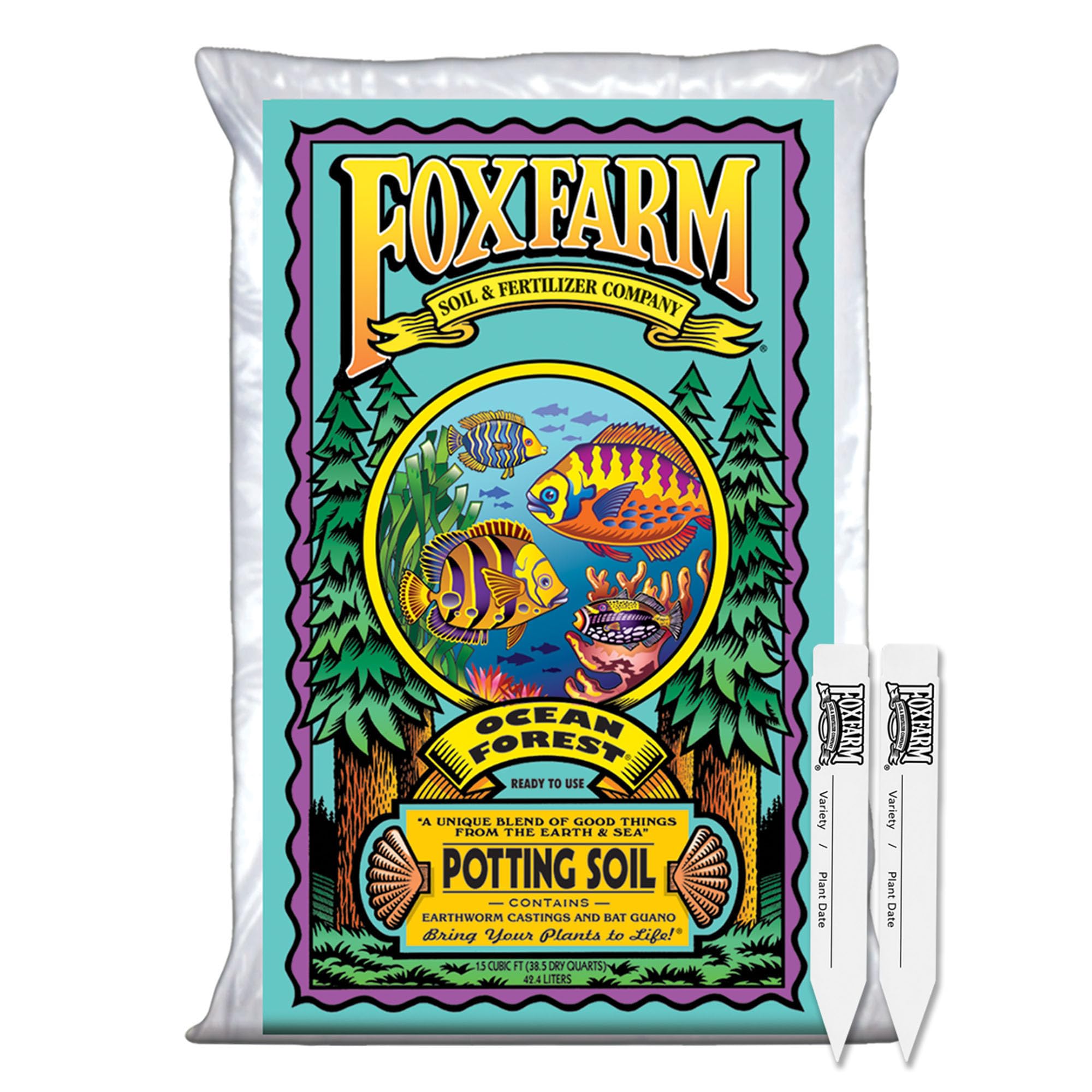
FoxFarm Ocean Forest is built on a 50-60% blend of aged forest products, sphagnum peat moss, and perlite that creates a light, aerated texture container roses thrive in. The inclusion of sandy loam gives it drainage properties that prevent the stagnant moisture conditions that cause root rot in potted roses. Straight out of the bag this mix absorbs water immediately without beading up on the surface, which means the root ball gets hydrated evenly from the first watering.
The nutrient lineup here is derived from fish emulsion, crab meal, shrimp meal, earthworm castings, kelp meal, and oyster shell — a broad spectrum of organic inputs that feed the soil food web. Roses planted in this blend show strong new growth and deep green foliage without needing supplemental fertilizer for several weeks. The 1.5-cubic-foot volume covers several medium-sized containers, making it a practical choice for a multi-bush patio setup.
Users consistently report that roses and other flowering plants look noticeably more vigorous compared to those grown in standard potting mixes. The only real downside is the higher cost per cubic foot, which pushes this beyond a casual purchase for someone with just one pot. If you are serious about getting maximum bloom performance and root health, this is the bag to open.
What works
- Light, airy texture promotes exceptional drainage and oxygen flow
- Loaded with organic nutrients from fish, crab, and worm castings
- Water absorbs immediately — no dry pockets or beading
What doesn’t
- Premium price point compared to general-purpose mixes
- Bag can be heavy and awkward to handle at 34 pounds
2. FoxFarm Happy Frog Potting Soil (2 cu ft)
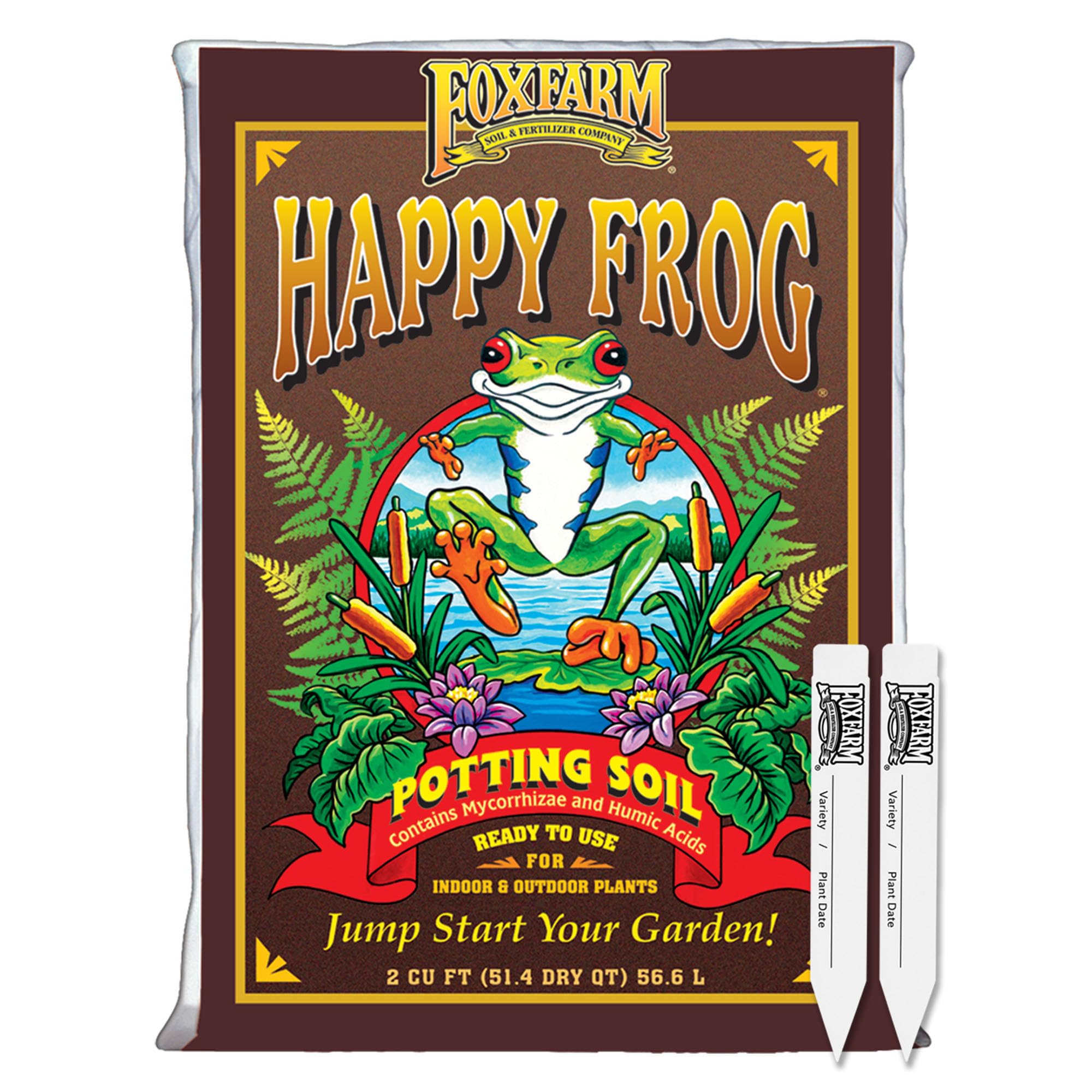
Happy Frog is formulated specifically for container gardening, and its standout feature is the inclusion of beneficial soil microbes and mycorrhizal fungi that colonize the root zone and dramatically expand the effective root surface area. For roses, this means better uptake of phosphorus and micronutrients, which directly translates to more flower buds and stronger stems. The mix also contains humic acids that help chelate nutrients so they remain available to the plant over a longer window.
The texture is slightly lighter than Ocean Forest because it uses a higher proportion of sphagnum peat moss and perlite, and the added dolomite lime helps buffer the pH into the slightly acidic range that roses prefer (around 6.0 to 6.5). Owners report that container roses planted in Happy Frog bounce back faster from transplant shock and produce noticeably larger blooms by the second month. The 2-cubic-foot bag gives you even more volume than Ocean Forest for a moderate price increase.
A few experienced growers note that the microbial activity can sometimes cause a slight earthy or mushroom smell when the bag is first opened — that is the biology at work, not a defect. If you prioritize building a living soil ecosystem inside your rose containers and want a mix that supports long-term plant health without heavy synthetic inputs, Happy Frog deserves a spot on your shortlist.
What works
- Mycorrhizal fungi and humic acids boost root efficiency
- Dolomite lime keeps pH in the rose-friendly range
- Excellent for reducing transplant shock in new roses
What doesn’t
- Heavy bag (42 pounds) can be difficult to lift and pour
- Pricey per cubic foot relative to generic potting soil
3. Perfect Plants 8qt Specialty Rose Planting Mix
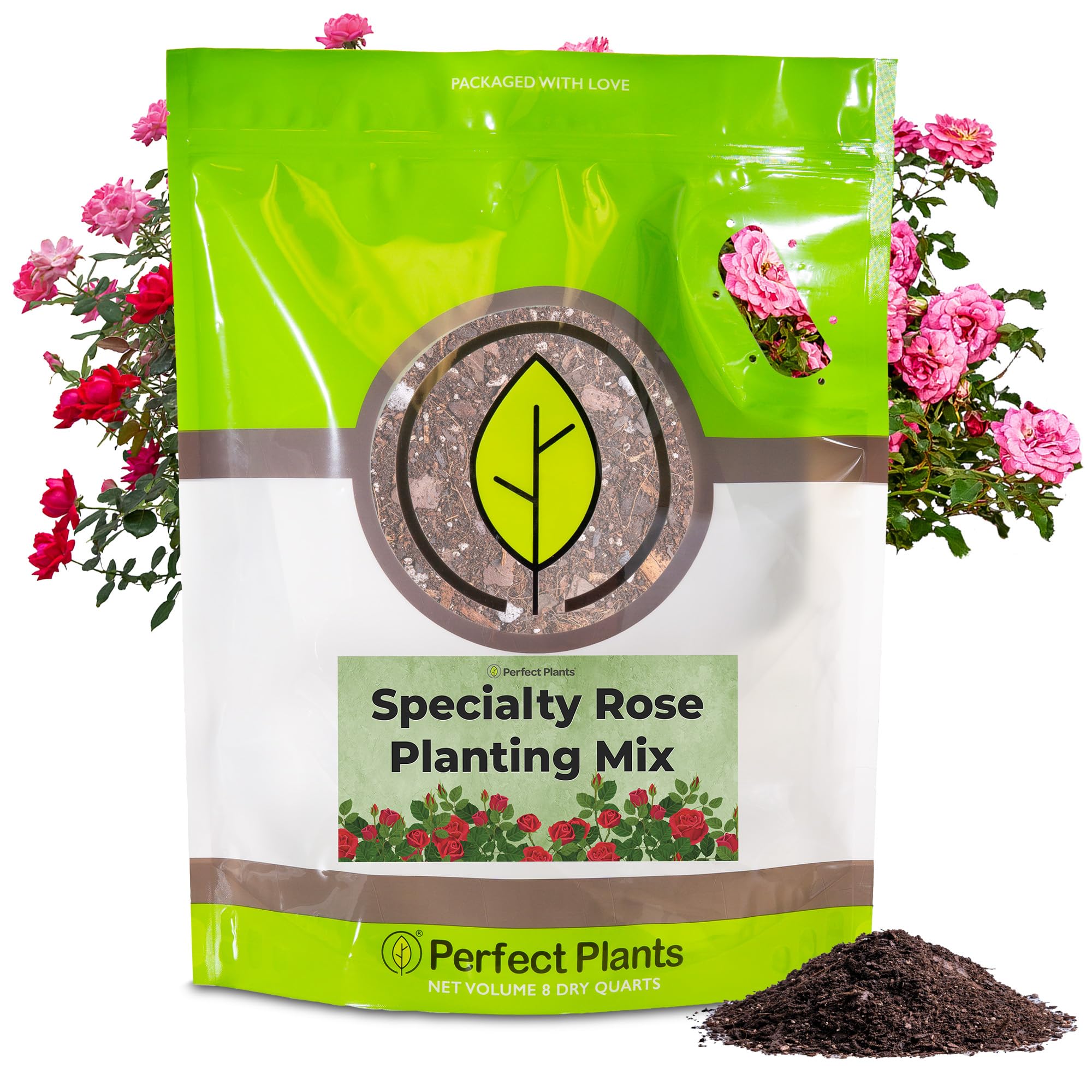
Perfect Plants targets the rose grower who wants a fully loaded mix straight from the bag, and the 18-6-8 slow-release fertilizer pre-blended into this formula is its biggest asset. The 18% nitrogen pushes lush green foliage, the 8% phosphorus supports heavy flowering, and the slow-release coating meters out those nutrients over a full 12 months with every watering. For a container rose grower who wants to set-and-forget feeding for an entire season, this removes the guesswork completely.
The physical structure uses composted pine bark chunks and granite sand to create what the brand calls medium drainage — a balance that holds enough moisture for thirsty roses while still preventing waterlogged root zones. The 8-quart resealable bag is a nice packaging detail because it keeps the remaining mix fresh for later touch-ups or repotting. Owners report that stressed roses that were drooping or yellowing perked up noticeably within a week of transplanting into this mix.
If you are container-growing specific rose varieties like Drift or Knockout, this mix is formulated with those genetics in mind. The only real disappointment is that the 8qt bag goes fast if you are filling multiple deep containers — order a couple of bags if you have more than one or two rose bushes waiting for new soil.
What works
- Pre-mixed 18-6-8 fertilizer feeds roses for 12 months
- Pine bark and sand deliver well-balanced drainage and aeration
- Resealable bag design keeps unused soil fresh
What doesn’t
- Bag size is small for multiple large containers
- Some bushes may already be too far gone to recover
4. Coast of Maine Organic & Natural Planting Soil for Roses & Flowers (20 Qt)

Coast of Maine built this blend around composted manure and sphagnum peat moss, which gives it a dark, rich texture that looks and smells like high-quality garden soil. The 20-quart bag provides generous volume for both in-ground rose beds and large container plantings at a price that undercuts many premium options. It is OMRI-listed for organic use, making it a solid pick for growers who avoid synthetic chemicals throughout their garden.
The compost-based formula balances moisture retention and drainage well, so roses in containers do not dry out as fast as they would in a lighter peat-perlite mix. Users specifically call out the dark color and textural variation as signs of mature compost. The manufacturer has been producing in Maine since 1996 and focuses on sustainable, regenerative sourcing, which adds a layer of trust for environmentally conscious buyers.
Several owners report a strong smell upon opening the bag, which is typical of active compost and should fade once worked into the soil. That odor can attract dogs or flies if the bag is left open, so plan to use it promptly or store it sealed. If the smell is a dealbreaker, look for a peat-based mix instead — but if you want a compost-heavy organic soil that gives roses a deep nutrient foundation, this bag delivers.
What works
- Large 20-quart volume at a competitive price point
- Composted manure provides rich organic matter for sustained feeding
- OMRI-listed for certified organic gardening practices
What doesn’t
- Strong compost smell can attract dogs and flies
- Heavier and denser than peat-based mixes
5. Miracle-Gro Potting Mix (8 qt, 3-Pack)

Miracle-Gro is the most widely recognized name in potting soil, and this 3-pack of 8-quart bags gives you 24 quarts total — enough to fill several standard rose containers. The mix feeds plants for up to six months with a proprietary fertilizer blend, and the company claims it grows plants twice as big compared to unfed soil. For container roses that need consistent nutrition through the main bloom cycle, this delivers predictable results without extra fertilization steps.
The texture is light and well-draining, made from processed forest products, peat moss, and perlite. It does not pack down hard over time, which is a common complaint with cheaper generic soils that turn into brick after a few waterings. Owners appreciate that the soil stays loose and allows water to penetrate to the root ball rather than running off the surface. The bags are small enough to handle easily — no wrestling with a 40-pound sack.
This is not a rose-specific formula, so it lacks the elevated phosphorus and specialized organic inputs that some serious rose enthusiasts want. If you are growing a couple of patio roses and want a dependable, easy-to-find soil that will get the job done, this 3-pack is a practical value. For dedicated rose hobbyists chasing maximum bloom size and fragrance, a specialized rose mix with a higher phosphorus ratio may produce better results.
What works
- Convenient 3-pack provides 24 quarts total volume
- Light, loose texture resists compaction over time
- Feeds container plants for up to six months
What doesn’t
- Not specifically formulated for roses — lower phosphorus than rose blends
- Synthetic fertilizer base, not organic
6. Perfect Plants 4qt Specialty Rose Planting Mix
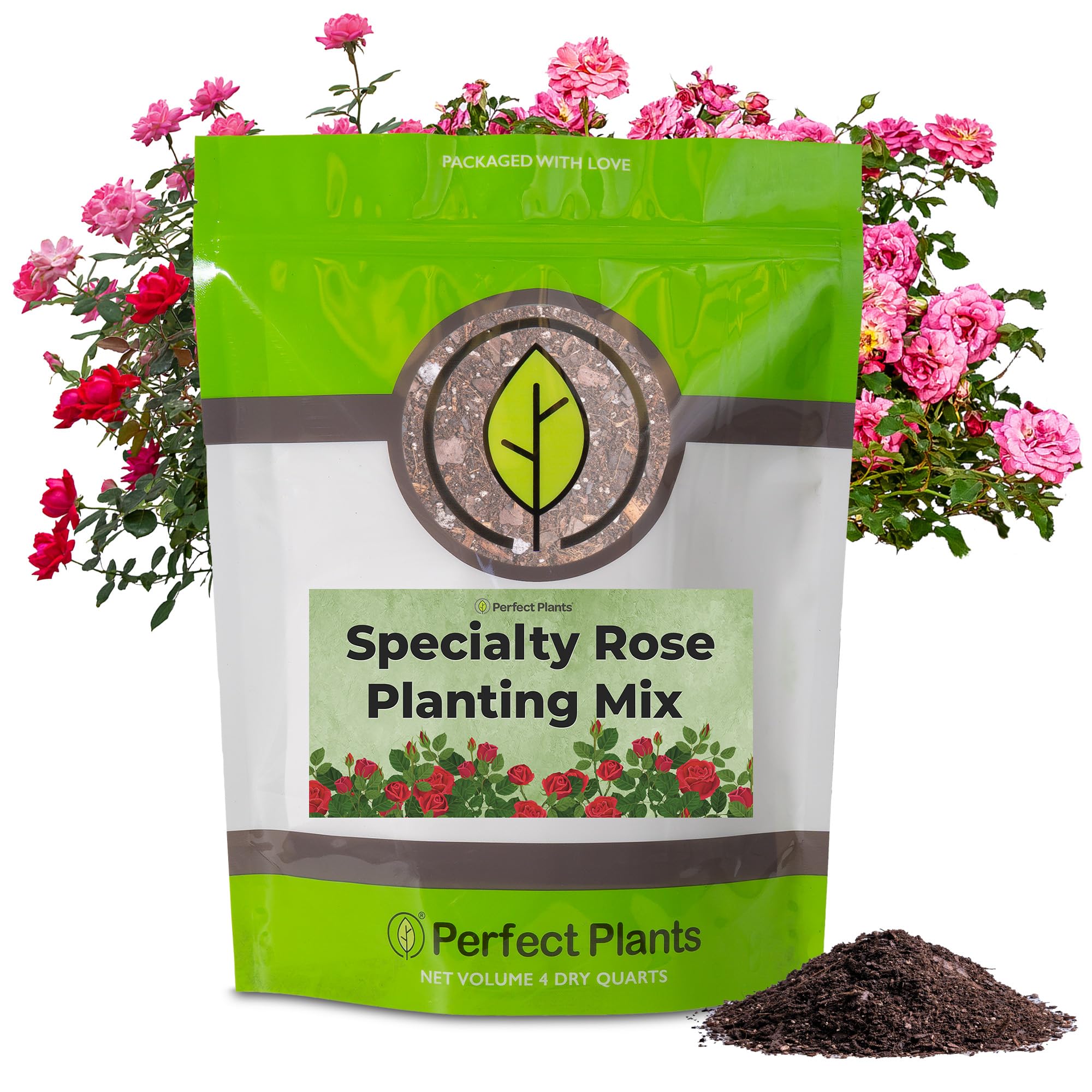
This is the smaller 4-quart version of the Perfect Plants Rose Mix featured earlier, and it shares the same 18-6-8 slow-release fertilizer and composted pine bark / granite sand structure. The 4-quart bag is perfect for repotting a single container rose or a small patio bush without having leftover soil that dries out before its next use. The resealable bag is especially useful here because it keeps the remaining soil fresh even after you dip into it.
The nutrient profile is identical to the larger bag — 18% nitrogen drives leafy growth, 6% phosphorus provides moderate bloom support, and 8% potassium strengthens stems and disease resistance. The slow-release granules are activated by watering and continue feeding for 12 months, so one bag can carry a single rose bush through an entire growing season. Owners report that roses perk up visibly after transplanting, with new buds forming within weeks.
The biggest limitation is obviously the bag size — 4 quarts fills a standard 8-inch pot with some room to spare, but it is not enough for a deep 12-inch container or multiple plants. If you only need soil for one or two pots, this keeps the upfront cost low while still giving you the specialized rose mix. For larger projects, the 8-quart version offers better value per quart.
What works
- Small bag size is ideal for single-pot projects
- Same premium 18-6-8 fertilizer blend as the larger version
- Resealable packaging preserves unused soil
What doesn’t
- Limited volume — not cost-effective for multiple containers
- Higher per-quart cost compared to bulk options
7. Omitgoter Rose Soil Potting Soil (4qt)
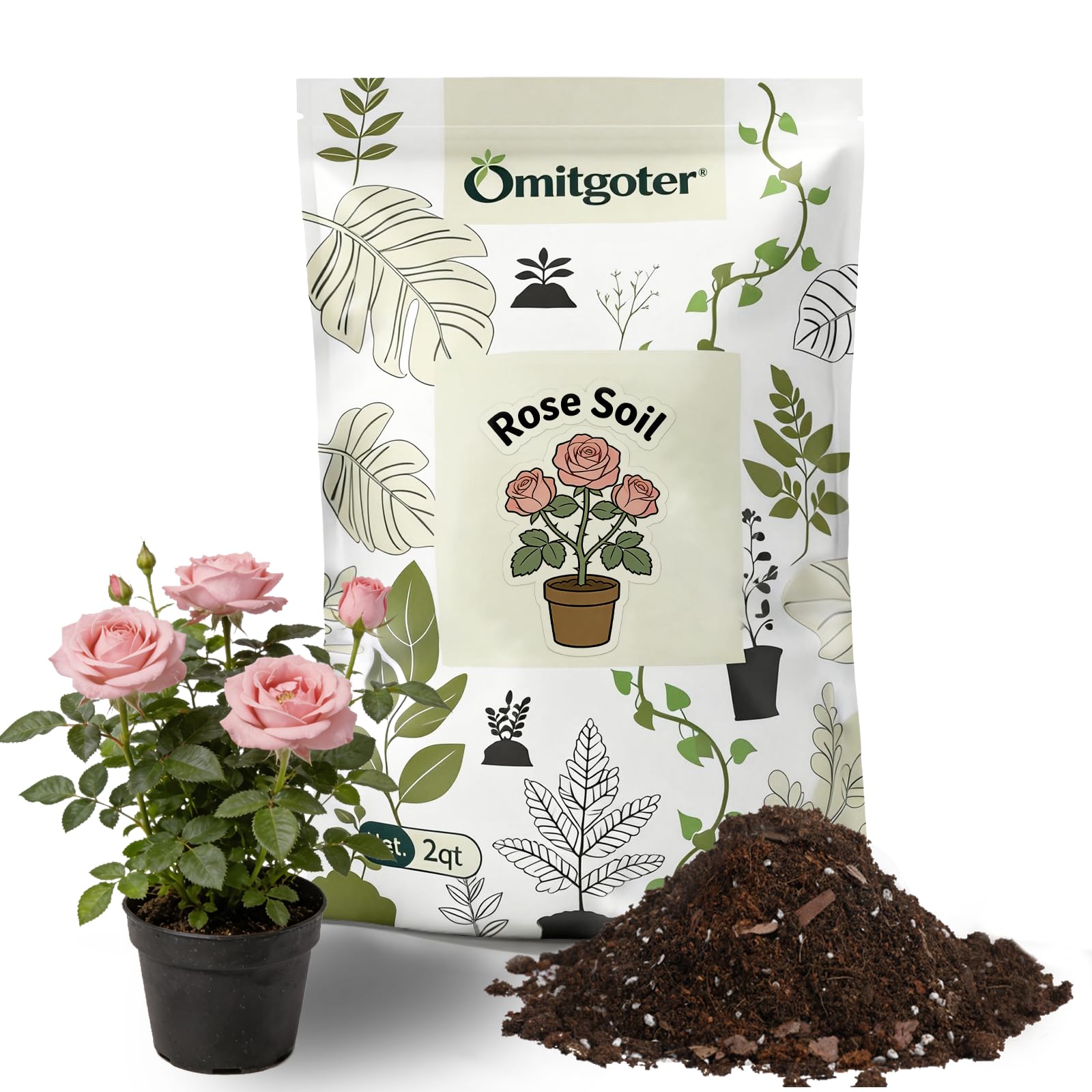
Omitgoter positions this as a 100% natural formula made from peat, coconut coir, perlite, bark, and humus — all organic ingredients with no chemical additives. The coconut coir is particularly good for moisture retention without waterlogging, which makes this mix forgiving for beginners who are not yet confident about watering schedules. The 4-quart bag is small enough to fit into tight workspaces and is ready to use out of the bag without any mixing required.
The drainage and breathability are the standout features here. The loose structure prevents the soggy conditions that rot rose roots in standard all-purpose potting soils. Several owners have used this for bonsai and small flowering plants with good results, noting that even stressed plants bounced back within days after repotting. The bag is labeled specifically for roses, so the ingredient proportions are tuned for rose root systems rather than generic houseplants.
The biggest drawback is the small volume — 4 quarts goes quickly, and several owners wish the bag were larger. The nutrient content is natural and gentle, but it does not include the same slow-release fertilizer punch that the Perfect Plants or Coast of Maine mixes offer. If you need a small batch of clean, chemical-free soil for a single rose cutting or a mini container, this is a fine entry-level choice. For a full-sized rose bush or long-term feeding, plan to supplement with fertilizer.
What works
- 100% natural ingredients with no synthetic chemicals
- Coconut coir base provides excellent moisture regulation
- Beginner-friendly — ready to use straight from the bag
What doesn’t
- Small bag size limits use to a single small pot
- No slow-release fertilizer — will need additional feeding
Hardware & Specs Guide
NPK Ratio & Slow-Release Duration
The NPK numbers on a bag tell you the percentage by weight of nitrogen (first number), phosphorus (second number), and potassium (third number). Roses need a higher phosphorus number — ideally 6 or above — to support bud development and blooming. Slow-release formulas coat each granule with a semi-permeable layer that dissolves gradually with water, extending the feeding window from a few weeks to 6–12 months. This matters because container roses cannot forage for nutrients the way in-ground bushes can — they depend entirely on what is in the pot from the start.
Drainage Components
Perlite, coarse sand, and composted pine bark are the three most common structural ingredients that create pore space in a potting mix. Perlite is volcanic glass that holds its shape and provides permanent aeration. Coarse sand adds weight and sharp drainage but can make a bag heavy. Composted pine bark chunks decompose slowly, offering both structure and a gentle source of organic matter as they break down. Coconut coir, meanwhile, excels at holding water while still allowing air flow, making it a popular base for premium blends.
FAQ
Can I use regular potting soil for roses?
What pH level does rose soil need?
How often should I repot roses with fresh soil?
Do rose potting mixes need extra fertilizer right away?
Final Thoughts: The Verdict
For most gardeners, the potting soil for roses winner is the FoxFarm Ocean Forest (1.5 cu ft) because it combines a perfectly aerated texture with a rich organic nutrient lineup that roses respond to immediately. If you want a pre-mixed slow-release feed that lasts an entire season, grab the Perfect Plants 8qt Specialty Rose Mix. And for a large organic gardening project, nothing beats the volume and compost quality of the Coast of Maine Roses & Flowers (20 Qt).