
Chicken manure is the gardener’s secret weapon—packed with nitrogen, phosphorus, and potassium—but get the ratios wrong and you will torch your prized tomatoes in a matter of days. The difference between a lush, dark-green harvest and a scorched, yellowed disaster comes down to how the manure is processed, its NPK balance, and whether those nutrients are locked in a slow-release pellet or raw and fast-acting.
I’m Rikta — the co-founder and writer behind Lawn Gear Lab. I have spent hundreds of hours cross-referencing NPK ratios, analyzing composting methods, and studying owner feedback on dozens of manure-based soil amendments to isolate the factors that separate a safe, effective product from a plant-burning liability.
After sifting through technical datasheets and real-world results, these are the core findings you need before buying. This guide breaks down the best chicken compost manure options for every garden scenario.
How To Choose The Best Chicken Compost Manure
Not all manure is created equal. The way the manure is processed—dehydrated, pelleted, or fully composted—directly affects its nutrient availability, storage requirements, and risk of burning your plants. Raw, uncomposted chicken manure can have an NPK as high as 6-4-3, which is far too hot for direct application.
NPK Ratio and Burn Potential
The three numbers on the bag—nitrogen, phosphorus, potassium—tell you exactly how potent the fertilizer is. A balanced product with an NPK around 4-2-3 provides a steady feed without overwhelming tender roots. Anything significantly higher in nitrogen should be mixed into soil weeks before planting to avoid leaf burn.
Pelletized vs. Composted Texture
Pelletized chicken manure is easy to spread by hand or with a broadcast spreader and has a lower odor. Fully composted manure has a finer, soil-like texture that mixes seamlessly into garden beds but may contain small bits of organic matter like straw or wood. Your choice depends on whether you prefer precision application or soil integration.
Quick Comparison
On smaller screens, swipe sideways to see the full table.
| Model | Category | Best For | Key Spec | Amazon |
|---|---|---|---|---|
| Fancy Chicken All-Purpose Manure | Pellets | Greener lawns & gardens | NPK 4-2.5-2 | Amazon |
| Espoma Land and Sea Compost | Compost | Transplanting & containers | Lobster & Crab Meal | Amazon |
| Brut Cow Compost | Compost | Delicate seedlings & roses | OMRI Listed, 10 qt | Amazon |
| R&M Organics Compost | Compost | Reviving stressed plants | Low Odor, 10 lb | Amazon |
| Hoffman 20505 Super Manure | Pellets | Earthworm activity boost | NPK 4-2-3 | Amazon |
| Black Kow Cow Manure | Granules | Sandy & clay soil repair | 8 qt, Slow Release | Amazon |
| Michigan Peat Baccto Wholly Cow | Compost | Raised beds & bulk use | Odor-Free, 40 qt | Amazon |
In‑Depth Reviews
1. Fancy Chicken All-Purpose Manure
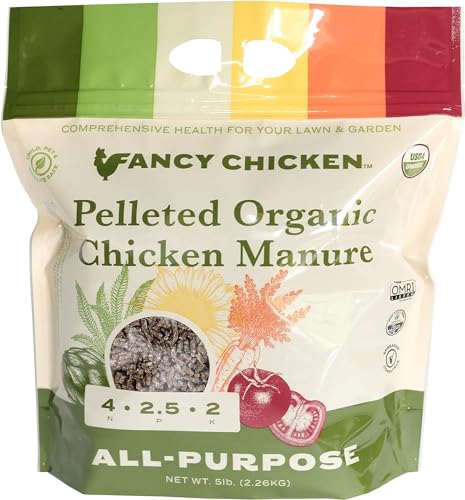
This pelleted, dehydrated chicken manure hits a near-perfect 4-2.5-2 NPK that provides comprehensive feeding without the scorching risk of raw manure. The 5-pound bag covers roughly 300 to 500 square feet, which gives you precise control whether spot-treating a lawn or side-dressing a row of tomatoes.
Users consistently report visible greening of lawns within two to three weeks, and the pellet formulation means you can apply it with a hand spreader or push spreader without the dust cloud typical of powder-based fertilizers. The OMRI status and USDA Organic certification remove any guesswork about synthetic additives.
The trade-off is the characteristic odor that accompanies any manure product—though it dissipates quickly after watering or rainfall. Because the pellets are dehydrated rather than fully composted, over-application in dry conditions can still concentrate salts, so following the label rates is essential.
What works
- Balanced 4-2.5-2 NPK feeds without burning when used correctly
- Pelleted form spreads cleanly via broadcast or hand spreader
- USDA Organic and OMRI listed for clean gardening
What doesn’t
- Initial odor noticeable until first watering or rain
- Short-term smell may linger near seating areas for a day or two
2. Espoma Organic Land and Sea Gourmet Compost

Espoma takes a different route by blending composted manure with lobster and crab meal, plus a proprietary mycorrhizae blend called Myco-Tone. This combination delivers a rich source of chitin and calcium that tomatoes, peppers, and flowering shrubs crave, while the endo and ecto mycorrhizae colonize root systems to improve nutrient uptake.
At 24 pounds per bag and a full cubic foot of volume, this is a serious soil amendment for transplanting, raised bed prep, and container mixes. Gardeners report that hostas and vegetable transplants establish noticeably faster compared to standard compost alone. The inclusion of marine-based proteins gives this product a distinct advantage for fruiting plants.
The downside is that this is not a pure manure product; it is a blend, so if you specifically want uncompromised chicken manure for a specific NPK target, this deviates from that goal. The granular form is also fairly dry and lightweight, requiring thorough mixing with existing soil to prevent it from blowing away during application on windy days.
What works
- Lobster and crab meal provide unique calcium and chitin for fruiting plants
- Myco-Tone mycorrhizae improve root development and transplant survival
- Large 1-cubic-foot bag covers substantial garden area
What doesn’t
- Not a pure manure product; includes marine-based amendments
- Dry, lightweight granules can be messy to handle in breezy conditions
3. Brut Cow Compost

Brut delivers a fully composted cow manure that is OMRI listed and completely additive-free. The texture is finely sifted to a soil-like consistency, making it ideal for blending directly into potting mixes or top-dressing delicate flower beds without clumping. The manufacturer specifically markets this as safe from root burn, confirmed by first-time growers who used it straight from the bag with no issues.
The 10-quart bag is compact but dense enough to amend several raised bed sections or a dozen large pots. Users report strong results with tomatoes—one first-time grower noted vigorous growth using a 3:2 ratio of compost to soil. The lack of odor makes it suitable for indoor container work during the off-season.
Because this is cow manure rather than chicken manure, the NPK is naturally lower and gentler, which some experienced gardeners may find less exciting for heavy-feeding crops like corn or squash. It works best as a general soil conditioner rather than a targeted high-nitrogen boost.
What works
- Fully composted, fine texture integrates easily into any soil
- OMRI certified with zero additives or fillers
- Virtually odorless, suitable for indoor use
What doesn’t
- Lower NPK than chicken manure, less nitrogen punch
- Bag size may need multiple purchases for large garden beds
4. R&M Organics Premium Organic Compost
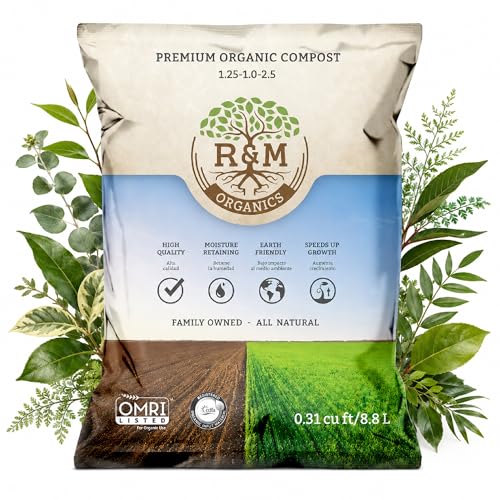
R&M Organics focuses on the soil-repair angle, using fully composted dairy cow manure that leaves behind an earthy, low-odor profile rather than the pungent ammonia smell associated with fresher manure. The 10-pound bag is compact but dense, and the compost undergoes a continuous aeration process that breaks down most impurities.
Multiple reviews highlight how this compost rescued plants that were struggling after stress events—one user revived azaleas damaged by a roof-cleaning chemical, and another saw an ailing tomato plant in a 27-gallon planter turn from yellow to deep green within a week. The texture is fine and topsoil-like, making it easy to work into existing beds without large chunks of undecomposed material.
The primary limitation is the bag size relative to the price point. For large-scale garden renovations or bulk raised bed filling, the cost-per-pound is higher than larger-volume options. It excels as a precision tool for targeted plant rescue rather than wholesale soil building.
What works
- Fully composted dairy manure with low odor and fine texture
- Rapid results visible within one week on stressed plants
- Improves moisture retention in sandy and depleted soils
What doesn’t
- Higher cost per pound compared to bulk compost options
- 10-pound bag is best for small to medium applications only
5. Hoffman 20505 Dehydrated Super Manure 4-2-3

Hoffman offers a dehydrated poultry manure in a pelletized form with a balanced 4-2-3 NPK, targeting gardeners who want slow-release feeding without the mess of loose powder. The 5-pound bag is compact and easy to store, and the pellets are small enough to scatter by hand for precise application in small garden plots or container plants.
The directions are straightforward—a single teaspoon per 6-inch pot or one tablespoon per 12-inch container—which takes the guesswork out of dosing. Reviews mention that the granules have a low odor compared to raw manure, though a dust mask is still recommended during handling to avoid inhaling fine particles. Users also note that the product encourages earthworm activity, improving soil aeration over time.
The bag lacks a resealable closure, so you will need a sealed tub to store it between uses. While the 4-2-3 ratio is effective, the lower nitrogen content relative to some competitors means heavy feeders like corn or squash may require a supplemental side-dressing later in the season.
What works
- Low-odor, pelletized formula is easy and precise to apply
- Balanced 4-2-3 NPK is safe for most garden and container plants
- Stimulates earthworm activity for better soil structure
What doesn’t
- Bag has no snap closure; requires separate storage container
- Lower nitrogen may need supplemental feeding for heavy-feeding crops
6. Black Kow Cow Manure

Black Kow is a well-known name in soil conditioning, and this composted cow manure excels at fixing two extreme soil types: sandy soils that drain too quickly and clay soils that hold water too tightly. The organic matter acts like a sponge in sandy ground, holding moisture and nutrients near the root zone, while also helping clay particles aggregate for better drainage and aeration.
The 8-quart bag contains millions of beneficial bacteria that convert nutrients into plant-available forms gradually, which makes it nearly impossible to burn roots even with generous application. Reviewers report strong results on fruit trees—peaches, apples, pawpaws—and bulbs, with many considering it a staple for any new planting hole. The slow-release nature means a single application can feed for weeks without additional work.
The smell is the main drawback. Multiple users describe it as potent, especially when first applied. While the odor fades as it works into the soil, gardeners with sensitive noses or small yards close to neighbors may want to factor in a day or two of noticeable farm-yard scent. It is also worth noting that this is cow manure, not chicken manure, so the NPK profile is milder.
What works
- Corrects both sandy and clay soil drainage issues effectively
- Beneficial bacteria release nutrients slowly with no burn risk
- Trusted brand with decades of positive gardener feedback
What doesn’t
- Strong manure odor is noticeable for a day or two post-application
- Milder NPK than chicken manure, less suitable for heavy feeders alone
7. Michigan Peat Baccto Wholly Cow Compost
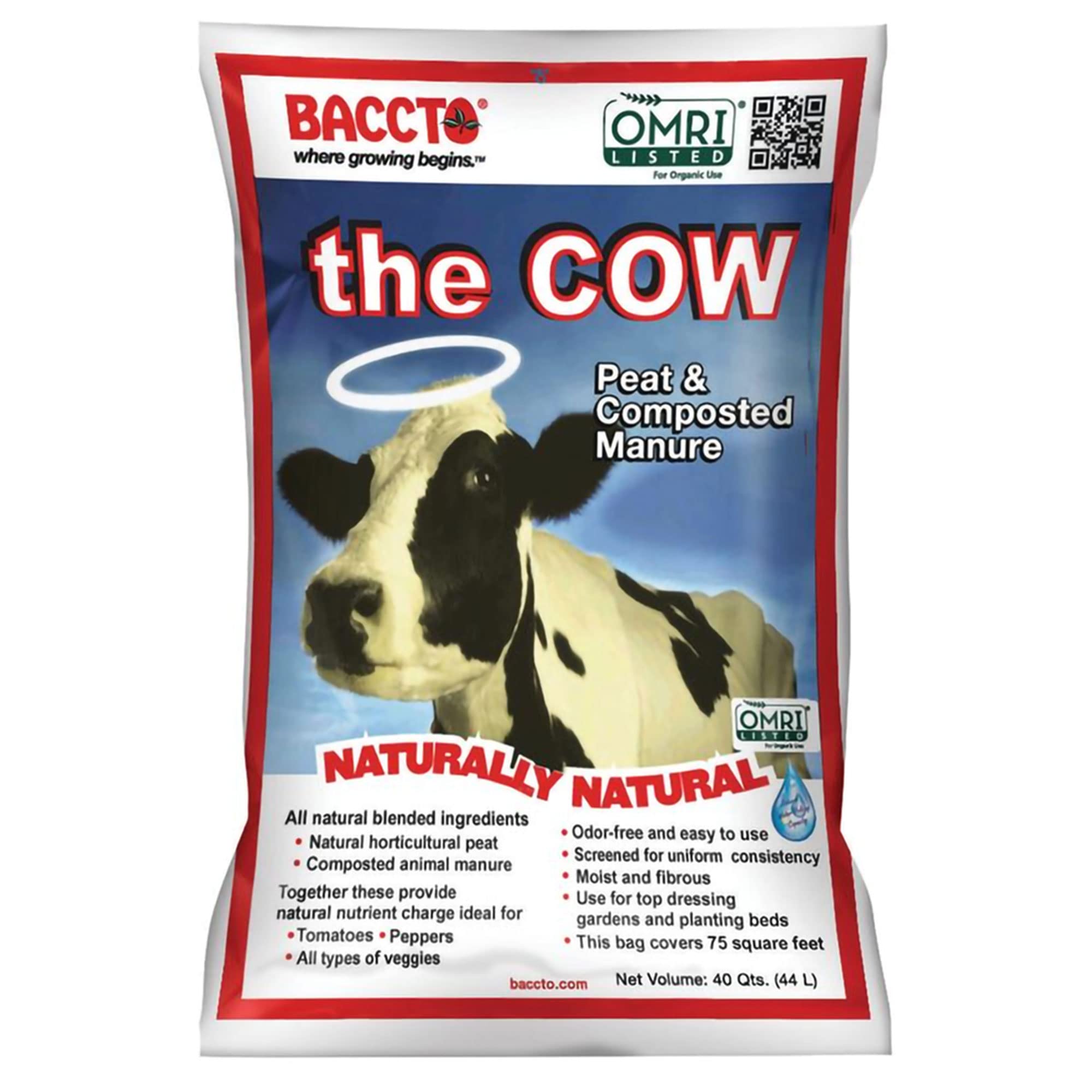
This 40-quart bag of Wholly Cow compost is the volume king of this lineup, blending natural peat with composted animal manure to create a lightweight, fluffy, dark soil amendment. The texture is screened for uniformity, and the product is specifically marketed as odor-free—a major advantage for weekend gardeners who want to work without holding their breath.
Gardeners use it for everything from raised bed filling to top-dressing lawns, and a notable subset of buyers report success using it as a mushroom substrate when mixed 1:1 with coco coir. The high manure concentration provides bumper mushroom crops in sterile conditions, which speaks to the purity of the compost. A 78-year-old gardener on sandy river-bottom soil reported that this product, mixed with coir and perlite, turned poor ground into productive raised beds.
The bag is heavy at 34 pounds, and the volume is large enough that you will need a dedicated storage spot. The peat component means it has a naturally acidic pH, which is excellent for blueberries and azaleas but may require lime adjustment for alkaline-loving vegetables. It is also not a pure manure product—the peat content dilutes the nutrient concentration compared to straight chicken manure pellets.
What works
- Large 40-quart bag provides bulk value for big garden projects
- Odor-free and pleasant to work with even in enclosed spaces
- Screened, uniform texture with no large debris or sticks
What doesn’t
- Peat content adds acidity; may need lime for certain vegetables
- Dilute nutrient concentration relative to pure manure products
Hardware & Specs Guide
Pelletized vs. Composted Texture
Pelletized chicken manure holds its shape for easy spreading and releases nutrients slowly over weeks, making it ideal for precise feeding of lawns and individual plants. Composted manure has a soil-like texture that integrates fully with garden beds, improving water retention and microbial activity but requiring more effort to distribute evenly. Choose pellets for targeted application; choose compost for bulk soil building.
NPK Ratio Interpretation
The first number (nitrogen) drives leafy green growth, the second (phosphorus) supports root and flower development, and the third (potassium) boosts overall plant vigor and disease resistance. Chicken manure typically ranges from 4-2-2 to 6-4-3 in raw form, but composting and pelletizing reduce these numbers while making them less likely to burn. A ratio around 4-2-3 is the sweet spot for all-purpose use without risk.
FAQ
Can I use chicken manure directly on my vegetable garden without composting?
How often should I apply chicken compost manure to my lawn?
What is the difference between chicken manure and cow manure for gardening?
Final Thoughts: The Verdict
For most gardeners, the chicken compost manure winner is the Fancy Chicken All-Purpose Manure because its 4-2.5-2 NPK delivers a strong, safe nutrient boost in a convenient pellet form that works for lawns, vegetables, and flowers alike. If you want a marine-enriched soil builder with mycorrhizae benefits, grab the Espoma Land and Sea Compost. And for bulk raised bed projects where odor is a concern, nothing beats the Michigan Peat Baccto Wholly Cow Compost.