
The difference between a garden that merely survives and one that explodes with produce and blooms often comes down to what you feed the soil, not the plant directly. Synthetic fertilizers deliver a quick salt-based hit that can scorch roots and kill beneficial microbes over time, while a thoughtfully chosen natural alternative feeds the entire underground ecosystem for sustained, resilient growth. Getting the NPK balance and ingredient source right for your specific crops is the single most important purchasing decision you can make.
I’m Rikta — the co-founder and writer behind Lawn Gear Lab. My deep market research involves comparing hundreds of labeled NPK ratios, studying horticultural data on organic matter breakdown rates, and analyzing aggregated owner feedback to separate genuine soil-builders from overpriced marketing blends.
This guide cuts through the noise to help you select a natural fertilizer for garden soil that matches your crop type and growing style without wasting money on ineffective fillers.
How To Choose The Best Natural Fertilizer For Garden
Picking the right organic amendment means understanding the specific nutritional demands of your plants and the form the fertilizer takes. Here are the critical factors to evaluate before you buy.
Match the NPK Ratio to Your Crop’s Stage
The three numbers on the bag (Nitrogen-Phosphorus-Potassium) tell you the primary macronutrient balance. Nitrogen fuels leafy green growth, phosphorus drives root development and flower/fruit set, and potassium supports overall plant health and disease resistance. A leafy vegetable bed needs a higher first number (like 5-1-1), while a flowering or fruiting crop like tomatoes or roses performs better with a higher middle number (like 3-9-4 or 4-10-7). Using a high-nitrogen feed on a flowering plant can produce lush foliage at the expense of blooms.
Granular vs. Liquid: Release Speed and Application Frequency
Granular organic fertilizers (like those based on bone meal, feather meal, or kelp) release nutrients slowly as soil microbes break them down. They require one or two applications per growing season and build long-term soil structure. Liquid organic fertilizers (fish emulsion, kelp extract, compost teas) provide fast-acting nutrients and are ideal for bi-weekly feeding during peak growth, but they do little to improve soil texture or microbial diversity over the long haul. Many serious gardeners use a granular base feed and supplement with liquids during heavy fruiting.
Ingredient Transparency and Third-Party Certification
Not all “natural” labels are regulated. Look for specific ingredient lists—fish bone meal, blood meal, feather meal, rock phosphate, kelp meal, greensand, and humates are classic soil-building components. Certifications like OMRI (Organic Materials Review Institute) listing provide independent verification that the product meets organic production standards and contains no prohibited synthetic additives, sewage sludge, or GMOs. A product that lists “proprietary blend” without detailing the components should raise a red flag.
Quick Comparison
On smaller screens, swipe sideways to see the full table.
| Model | Category | Best For | Key Spec | Amazon |
|---|---|---|---|---|
| Down To Earth All Natural 4-6-2 | Granular | All-Purpose Vegetable Gardens | OMRI Listed 5 lb box | Amazon |
| FoxFarm Happy Frog 6-4-5 | Granular | General Feeding & Soil Microbes | Contains Mycorrhizal Fungi | Amazon |
| Great Big Roses Liquid 32 oz | Liquid | Blooming Flowers & Soil Activation | 70+ Trace Minerals | Amazon |
| Alaska Fish Fertilizer 5-1-1 | Liquid | Leafy Greens & Vegetative Growth | OMRI Listed 115 oz | Amazon |
| The Grow Co Fish Emulsion 2-3-1 | Liquid | Fruiting Crops & Foliar Spray | 1 Gallon Concentrate | Amazon |
| Espoma Organic Garden-tone 3-4-4 | Granular | Warm & Cool Season Vegetables | Bio-tone Formula 2-Pack | Amazon |
| Dr. Earth Flower Girl 4-10-7 | Granular | Bloom Booster for Flowers & Fruit | 4 lbs Organic Blend | Amazon |
In‑Depth Reviews
1. Down To Earth All Natural 4-6-2

This mid-range granular option earns the top spot because it nails the fundamentals for the broadest range of gardeners. The 4-6-2 NPK ratio is balanced enough to support tomatoes, peppers, and leafy greens alike without burning transplants, thanks to its gentle, non-burning formula derived from fish bone meal, blood meal, and feather meal. The 5-pound box provides a full season of feeding for a typical home vegetable bed, and the OMRI listing gives organic growers confidence that no synthetic shortcuts were taken.
Real-world feedback confirms its effectiveness: gardeners report reviving pale, flimsy tomato plants within two weeks of a single application. The inclusion of rock phosphate and greensand adds long-term mineral availability that cheaper blends often skip. The smell is noticeable—typical of any meal-based organic—but it dissipates from the soil surface within a few days.
For the gardener who wants a single, reliable, all-purpose granular feed that works across vegetables, herbs, and container plants without needing to mix multiple amendments, this is the most versatile entry on the list. It builds soil microbial activity steadily without the risk of nutrient lockout that can occur with more specialized high-phosphorus bloom boosters.
What works
- Versatile 4-6-2 ratio suitable for most vegetables
- OMRI listed for organic production
- Premium ingredient list including greensand and kelp meal
What doesn’t
- Strong organic smell for first few days after application
- Slow release may not satisfy plants needing an immediate nutrient boost
2. FoxFarm Happy Frog 6-4-5

This premium granular formula stands out because it packs beneficial soil microbes and mycorrhizal fungi directly into the fertilizer, not just the standard NPK nutrients. The 6-4-5 analysis delivers a solid nitrogen punch for vegetative growth while the microbial inoculants help roots access water and nutrients more efficiently. The 4-pound bag is compact but concentrated—users report half a bag lasting through an entire season for a modest vegetable patch.
User reports are emphatic about its power: yellowing tomato and zucchini plants bounced back within a week of application, and container gardeners praise its performance on heavy-feeding ornamentals. The downside is the smell; multiple reviewers note it is very pungent, especially when used indoors or in enclosed spaces. A white mold can form on the soil surface if applied too thickly, though this is harmless and indicates active microbial life.
If you garden in raised beds or containers where soil biology is often depleted, the added microbes give Happy Frog a genuine advantage over simpler meal-based blends. It is best used as a top-dress for established plants rather than a seed-starting mix, as the high microbial activity can be too rich for delicate seedlings.
What works
- Contains beneficial soil microbes and mycorrhizae
- Quickly revives stressed or yellowing plants
- OMRI listed and suitable for organic gardening
What doesn’t
- Extremely strong odor that lingers
- Can develop surface mold if over-applied
3. Great Big Roses Liquid 32 oz
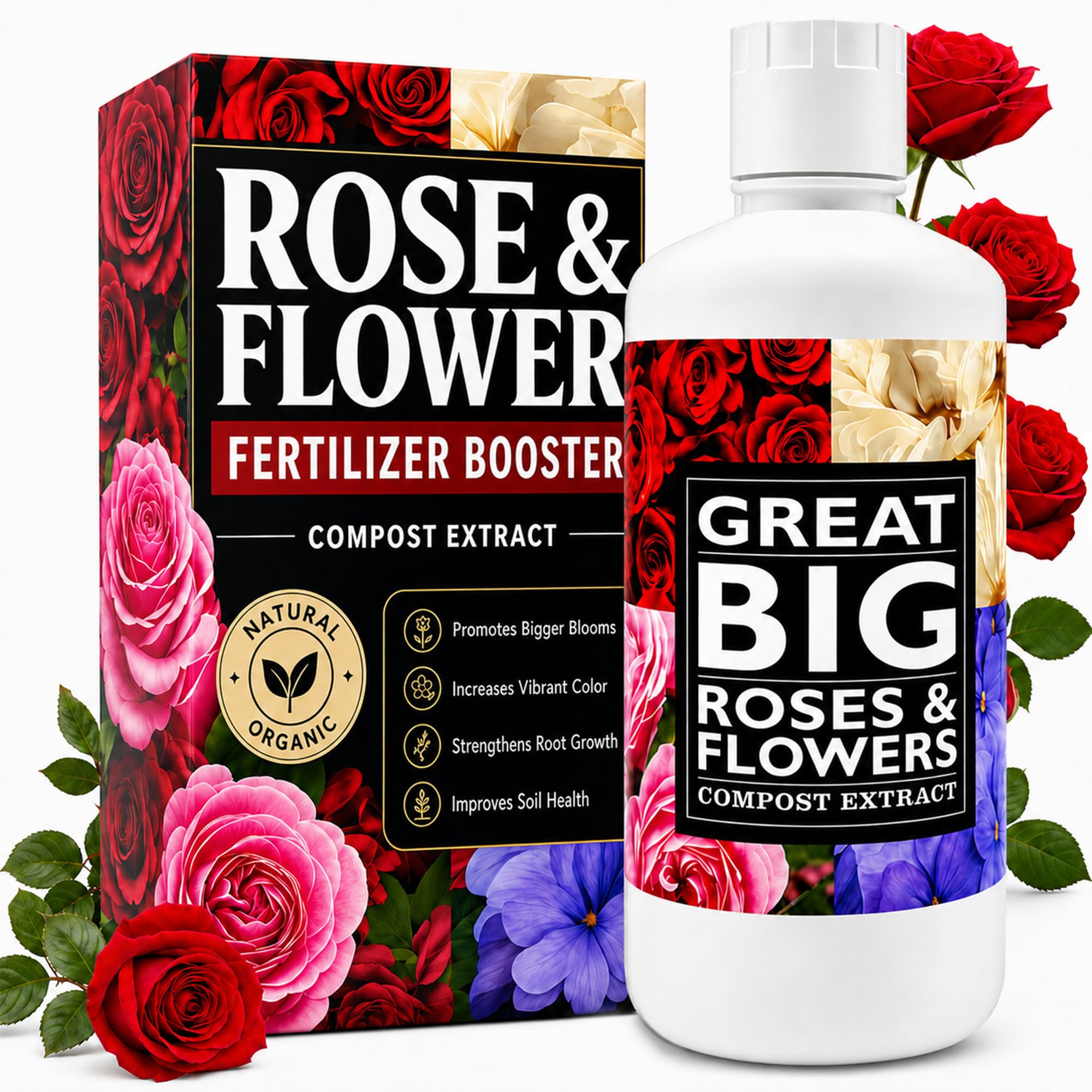
This liquid concentrate is a specialized premium product designed for flower-focused gardeners who want more than just baseline NPK. The formula delivers humic acids, seaweed extract, and over 70 chelated trace minerals directly to the root zone, acting as a soil activator that unlocks nutrients already present in the ground. With a mixing ratio of 4 ounces per gallon of water, the 32-ounce bottle makes 8 gallons of feed—enough to cover an entire growing season for most rose or hydrangea beds.
Customer feedback is extraordinary for this category: bushes that had not bloomed in years produced large, vibrant flowers within weeks of the first application. The product amplifies existing granular fertilizers rather than replacing them, making it an ideal supplement for gardeners already using a balanced base feed. The jug design is a legitimate frustration—the wide mouth makes measuring and pouring into a standard watering can messy, and spillage wastes an expensive product.
This is not an all-purpose feed for your entire vegetable garden. It is a targeted bloom and soil-conditioning booster best paired with a granular base fertilizer. For rose enthusiasts, hydrangea growers, and citrus tree owners who want dramatic flowering results, it is the most effective liquid accelerator on this list.
What works
- Delivers 70+ trace minerals for soil activation
- Rapid visible bloom improvement reported within weeks
- Works alongside existing fertilizers to amplify results
What doesn’t
- Expensive per-application cost compared to granular options
- Poorly designed jug makes accurate measuring difficult
4. Alaska Fish Fertilizer 5-1-1
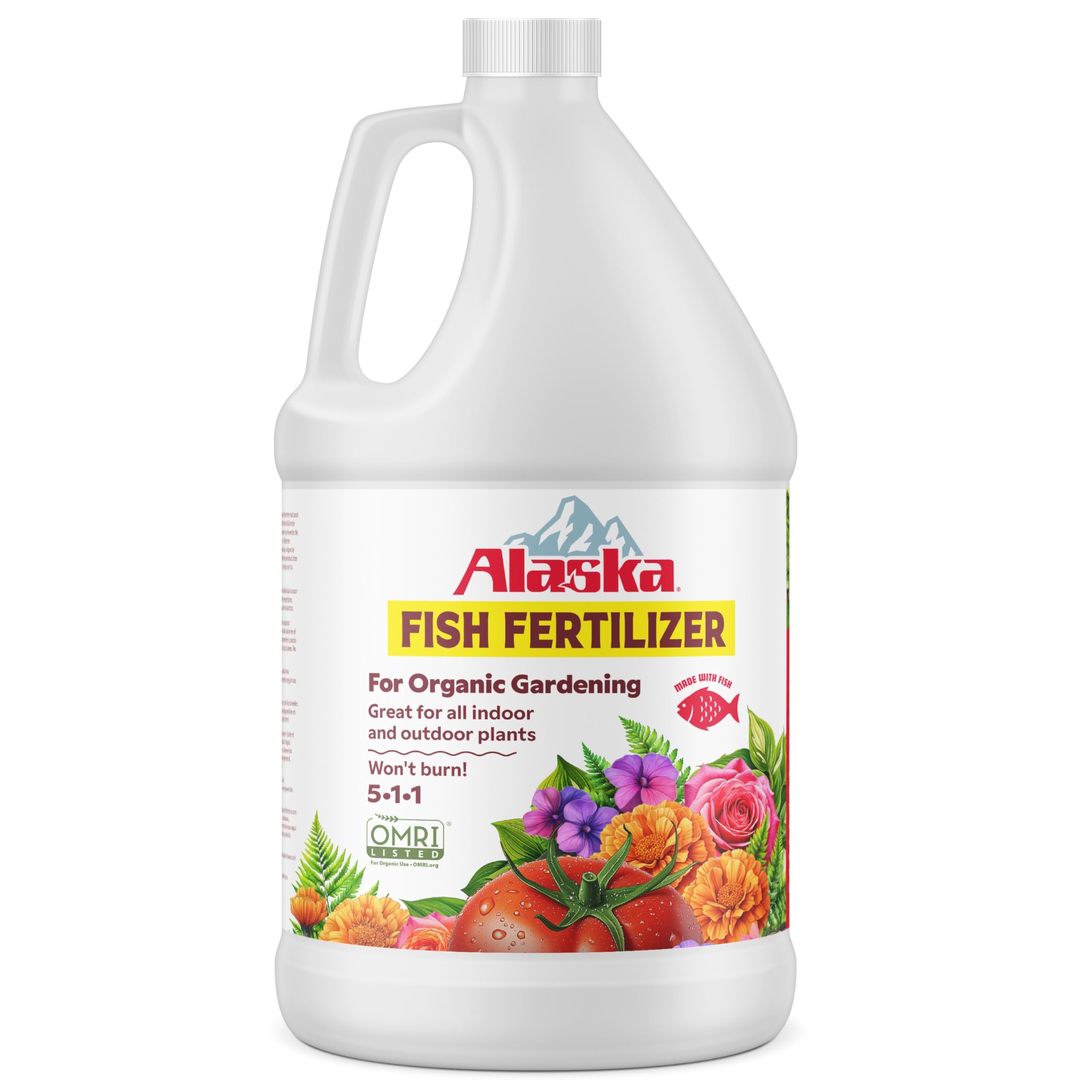
This mid-range liquid fertilizer is a decades-old staple for a reason: its 5-1-1 NPK ratio is the gold standard for promoting lush, vigorous vegetative growth across leafy greens, herbs, and transplants. The 115-ounce bottle is a massive value for the price, and the cold-processed formulation preserves amino acids and micronutrients that heat-processed competitors degrade. The OMRI listing confirms its suitability for certified organic operations.
Long-term users—some reporting over a decade of consistent use—praise its gentle, non-burning formula that produces steady, deep-green foliage without the risk of salt buildup. The fishy odor is the most significant trade-off; it is pungent upon application and can linger for a day, though it dissipates once the soil absorbs it. A few users caution that the low phosphorus and potassium levels (1-1) make it inadequate as a sole feed for flowering and fruiting crops, requiring supplementation with a bloom-oriented fertilizer during the reproductive stage.
This is the ideal choice if you grow heavy feeders like kale, lettuce, spinach, or brassicas, or if you need a reliable nitrogen source for spring green-up of perennials and lawns. It is not a complete fertilizer for tomatoes or peppers unless paired with a higher-phosphorus supplement.
What works
- Excellent nitrogen source for leafy green crops
- Large 115-ounce bottle at a strong value
- Gentle formula won’t burn plants when diluted correctly
What doesn’t
- Very low phosphorus and potassium for flowering plants
- Strong fish smell lingers for 24 hours after application
5. The Grow Co Fish Emulsion 2-3-1

This entry-level priced gallon jug offers the highest liquid volume on the list, with a 2-3-1 NPK profile tuned for flowering and fruiting stages rather than pure vegetative growth. The higher phosphorus (3) and lower nitrogen (2) make it a better match for tomatoes, peppers, and melons during bloom set compared to standard fish emulsions. The hydrolyzed, cold-pressed production method preserves the full spectrum of amino acids and vitamins.
Veteran gardeners with half a century of experience recommend this as a component in a homemade “tea” blended with kelp and rock powders for robust yields. The liquid consistency is notably thin—it does not cling to containers like some salmon-based emulsions—which makes it easy to mix but requires care to avoid over-dilution. The fish odor is real and described by users as pungent, though it fades within a day if watered in thoroughly.
The 1:100 mixing ratio means this gallon yields over 160 gallons of finished feed, making it the most economical choice for gardeners with large vegetable plots or multiple raised beds. It works well as a foliar spray for fast nutrient uptake, but the smell is more noticeable with that application method.
What works
- Gallon size provides over 160 gallons of mixed feed
- Higher phosphorus ratio supports flowering and fruiting
- Sustainably sourced, cold-pressed ingredients
What doesn’t
- Noticeable fishy smell during and after application
- Thin consistency makes measuring feel imprecise
6. Espoma Organic Garden-tone 3-4-4

This budget-friendly granular option comes as a 2-pack (two 4-pound bags), giving you a full season of coverage for a moderate-sized garden at a very accessible cost. The 3-4-4 analysis with 5% calcium is specifically formulated to support both cool-season crops (lettuce, kale, cabbage) and warm-season producers (tomatoes, peppers, squash) throughout their entire growth cycle. Espoma’s proprietary Bio-tone formula includes endo and ecto mycorrhizae to enhance root development.
Users consistently describe this as their “go-to” fertilizer, noting that it does not burn plants even if slightly over-applied—a critical safety factor for novice organic gardeners. The granules are easy to spread around the drip line, and the monthly application schedule is simple to follow. The downside is the smell (a trait shared by all meal-based organics), and some users find it slightly “hot” initially for very sensitive seedlings.
This is an excellent entry point for new organic gardeners who want a foolproof, forgiving granular feed that covers the widest range of vegetable crops. The 2-pack format also makes it convenient for split applications across two different garden areas without hauling a single heavy bag around.
What works
- Two-bag pack provides excellent coverage for the price
- Safe, non-burning formula even with slight over-application
- Contains Bio-tone mycorrhizae for root health
What doesn’t
- Moderate organic smell after application
- Can be slightly strong for very young transplants
7. Dr. Earth Flower Girl 4-10-7

This budget-friendly granular blend is engineered for gardeners who prioritize flower and fruit production over foliage. The 4-10-7 NPK ratio delivers a significant phosphorus boost to stimulate blooming, making it an ideal choice for roses, dahlias, dragon fruit, and other heavy-flowering perennials. Dr. Earth explicitly avoids GMOs, chicken manure, and sewage sludge, using a handcrafted blend of organic ingredients that is safe for people and pets.
User experiences are dramatic: one dragon fruit grower reported an increase from three blooms to twenty-five after switching to this formula. The “Misapply Certified” seal on the label is a unique point—it means the product is guaranteed to be safe even if accidentally over-applied. However, a critical note from buyers: the product listing describes it as 4-10-7, but multiple shipments arrived with a label reading 3-9-4. This discrepancy suggests a possible formula change or labeling error that buyers should verify upon delivery.
This is a specialized bloom booster, not an all-purpose feed. Use it when your plants are entering the reproductive stage and you want maximum flower set and fruit size. It should be rotated with a balanced feed during the vegetative phase to avoid phosphorus buildup in the soil.
What works
- High phosphorus ratio (4-10-7) drives prolific blooming
- Safe for people and pets with no sewage sludge
- Dramatic flower count increases reported by users
What doesn’t
- Labeling mismatch between listing (4-10-7) and actual product (3-9-4)
- Not suitable as a general-purpose feed for leafy greens
Hardware & Specs Guide
NPK Ratio
The three-number sequence on every fertilizer bag represents the percentage by weight of Nitrogen (N), Phosphorus (P), and Potassium (K). A 5-1-1 fish emulsion is 5% nitrogen, 1% phosphorus, and 1% potassium, with the remainder consisting of inert filler, micronutrients, and organic matter. For leafy greens, aim for a first number above 4; for flowers and fruit, look for a middle number above 6.
OMRI Listing
The Organic Materials Review Institute independently evaluates products against the USDA National Organic Program standards. An OMRI Listed seal means the fertilizer contains no synthetic pesticides, herbicides, fungicides, GMOs, or prohibited materials. This certification is essential for certified organic growers and recommended for any gardener wanting to avoid hidden synthetic fillers marketed under “natural” labels.
Granular vs. Liquid Release
Granular fertilizers (meal-based, pelletized) rely on soil moisture and microbial activity to break down, providing a steady nutrient supply over 4-8 weeks. Liquid fertilizers (fish emulsion, kelp extract) are water-soluble and available to roots within hours, requiring reapplication every 1-3 weeks. Granules build soil structure over time; liquids feed the plant directly without improving long-term soil health.
Microbial Additives
Mycorrhizal fungi and beneficial bacteria (Bacillus, Trichoderma) form symbiotic relationships with plant roots, extending root surface area and improving water and nutrient uptake. Products listing “mycorrhizae” or “soil microbes” on the label provide a biological advantage, especially in degraded or container soils where native microbial populations are low. These additives do not replace fertilizer but make existing nutrients more accessible.
FAQ
Can I use a high-nitrogen fish fertilizer on my tomato plants during fruiting?
How often should I apply granular organic fertilizer to my vegetable garden?
Is the smell of fish emulsion and meal-based fertilizers harmful to my pets?
Final Thoughts: The Verdict
For most gardeners, the natural fertilizer for garden winner is the Down To Earth All Natural 4-6-2 because its balanced NPK, premium ingredient list, and OMRI certification make it suitable for vegetables, herbs, and flowers without requiring multiple products. If you want a microbial boost that revives stressed plants fast, grab the FoxFarm Happy Frog 6-4-5. And for dramatic bloom production on roses and fruiting trees, nothing beats the Great Big Roses Liquid Booster.