
The problem with most “indoor” compost systems isn’t the compost — it’s the smell, the fruit flies, and the countertop eyesore that makes you hide it under the sink. A good system must handle daily kitchen scraps without turning your kitchen into a biology experiment, all while fitting into your actual workflow.
I’m Rikta — the co-founder and writer behind Lawn Gear Lab. I’ve spent dozens of hours cross-referencing technical specifications, studying microbial decomposition cycles, carbon-to-nitrogen ratios, and filtration engineering, then analyzing thousands of owner experiences to isolate which indoor composting systems genuinely deliver odor-free results without demanding a PhD in horticulture.
Whether you want a passive countertop bucket or a high-speed electric processor, finding a reliable indoor composting system means understanding how airflow, material, and capacity interact in your unique kitchen environment.
How To Choose The Best Indoor Composting System
Selecting the right system starts with matching its mechanism to your waste volume and tolerance for daily maintenance. Passive bins rely on charcoal filters to contain odors until you empty them, while electric units heat, grind, or microbially digest scraps into near-compost. Your choice determines how much counter space you sacrifice, how often you interact with the unit, and what kind of output you get for your garden or trash.
Evaluate the Filtration System
Passive bins live or die by their carbon filter. A vented lid with a replaceable charcoal pad traps volatile organic compounds before they escape. Check whether the filter is included, how often it needs changing (every 3–6 months is typical), and whether the gasket creates a true seal. Lid-free or perforated designs invite fruit flies and mold — avoid them for indoor use.
Match Capacity to Your Household Size
A 1-gallon bin works for a single person emptying every 3–4 days. Families of four should look at 1.5 to 2.5 gallons for passive bins or 4+ liters for electric units. Larger capacity means fewer trips to the outdoor pile, but also more days of decomposing material sitting on your counter — a good filter becomes critical as volume increases.
Consider the Output You Need
Passive bins simply collect raw scraps for transfer — you still need an outdoor pile or municipal pickup. Electric dehydrators grind and heat scraps into a dry, reduced-volume powder that can go directly into soil (though it isn’t truly “finished” compost). Aerobic microbial units like the Reencle produce genuine compost in 24 hours but require starter microbes and regular moisture monitoring.
Quick Comparison
On smaller screens, swipe sideways to see the full table.
| Model | Category | Best For | Key Spec | Amazon |
|---|---|---|---|---|
| WAGENSTEIGER 101oz | Passive Bin | Airtight odor control | SUS304 stainless steel body | Amazon |
| Reencle Prime | Electric Microbial | Real compost at home | 14L capacity, 28 dB noise | Amazon |
| Airthereal Revive R500 | Electric Dehydrator | Quick dry reduction | Tri-blade, 4-hour cycle | Amazon |
| Ouaken 4L Electric | Electric Dehydrator | Large family waste volume | 4L bucket, auto-clean mode | Amazon |
| Chef’n EcoCrock 3.3L | Passive Bin | Easy-carry inner bucket | Removable 0.75 gal liner | Amazon |
| KAZAI Elin 1.2 GAL | Passive Bin | Wide low-profile design | Fits 2.6–3 gal liners | Amazon |
| LALASTAR Bamboo Fiber | Passive Bin | Budget-friendly starter | Biodegradable bamboo body | Amazon |
In‑Depth Reviews
1. WAGENSTEIGER Kitchen Countertop Compost Bin 101oz
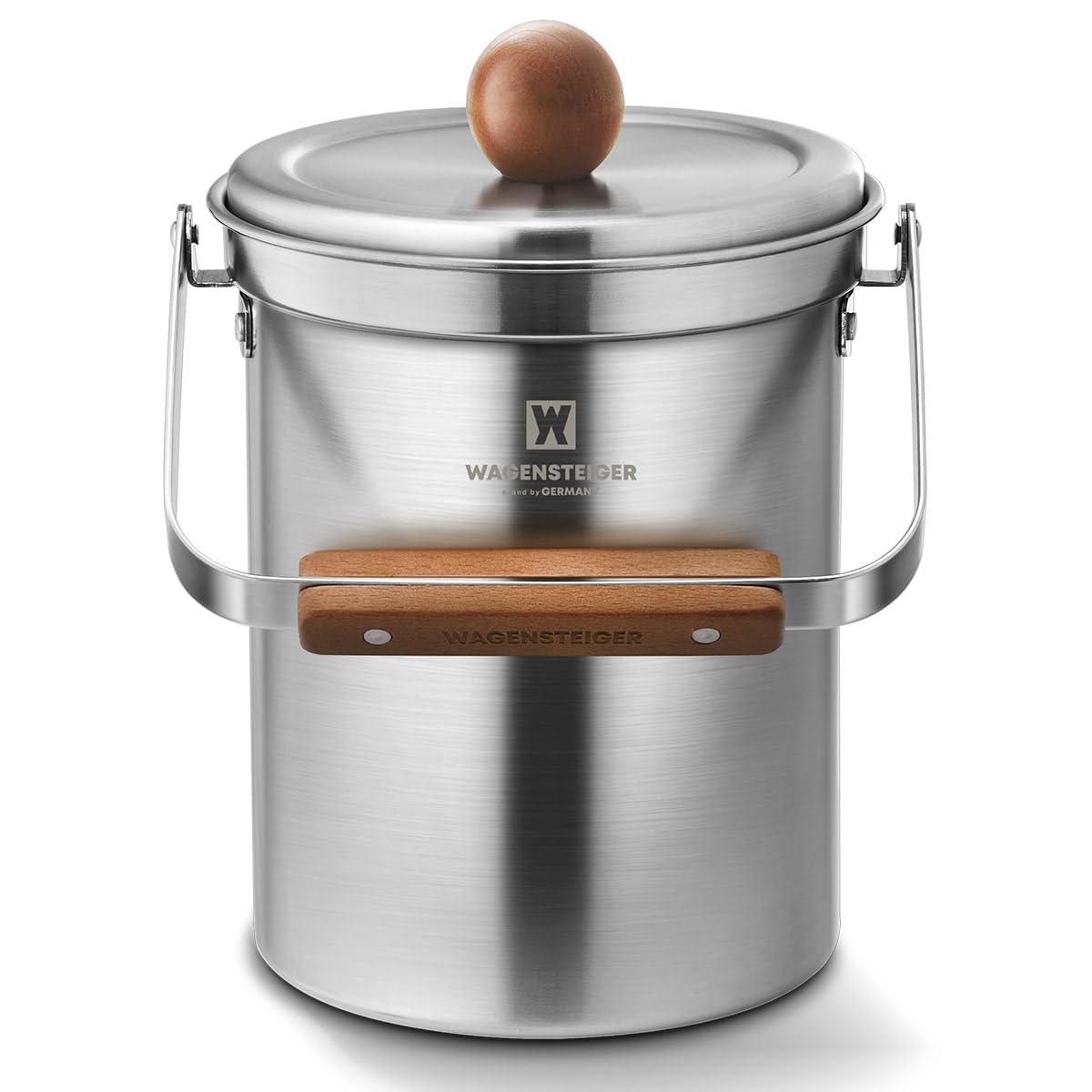
The WAGENSTEIGER is a premium passive bin built from SUS304 stainless steel, making it rust-resistant and corrosion-proof in a way bamboo or plastic bins simply aren’t after months of daily use. Its non-perforated lid creates a true airtight seal, which blocks fruit flies and locks in odors at the source — zero reliance on carbon filters that degrade over time. The polished finish and wooden handle give it a minimalist look that belongs on an open counter, not hidden in a cabinet.
At 0.8 gallons (101 ounces), the capacity sits between a single-person bucket and a family-sized bin. Most owners report needing to empty it every two to three days, a rhythm that keeps rotting material from accumulating. The manual-lift lid opens with one hand and stays secure via friction fit rather than a flimsy latch. Hand-washing is recommended to preserve the finish, but the non-porous interior rinses clean without scrubbing.
User reports confirm no detectable smell even after a week of summer heat, and the wood handle’s ergonomic swing makes transferring a full liner effortless. The label adhesive is stubborn to remove, and the lid’s metal-to-metal seal relies on tight tolerances that may loosen over time — but the overwhelming majority of owners call it the best countertop bin they’ve owned. For someone who wants a durable, odorless, no-fuss collector, this is the pick.
What works
- True airtight lid with no gasket needed — no fruit flies or smells
- SUS304 stainless steel resists rust and looks good for years
- Ergonomic wooden handle for easy transport
What doesn’t
- Label is difficult to remove without leaving residue
- Stainless steel is thinner than some competing models
- Hand-wash only to prevent finish issues
2. Reencle Prime Electric Composter
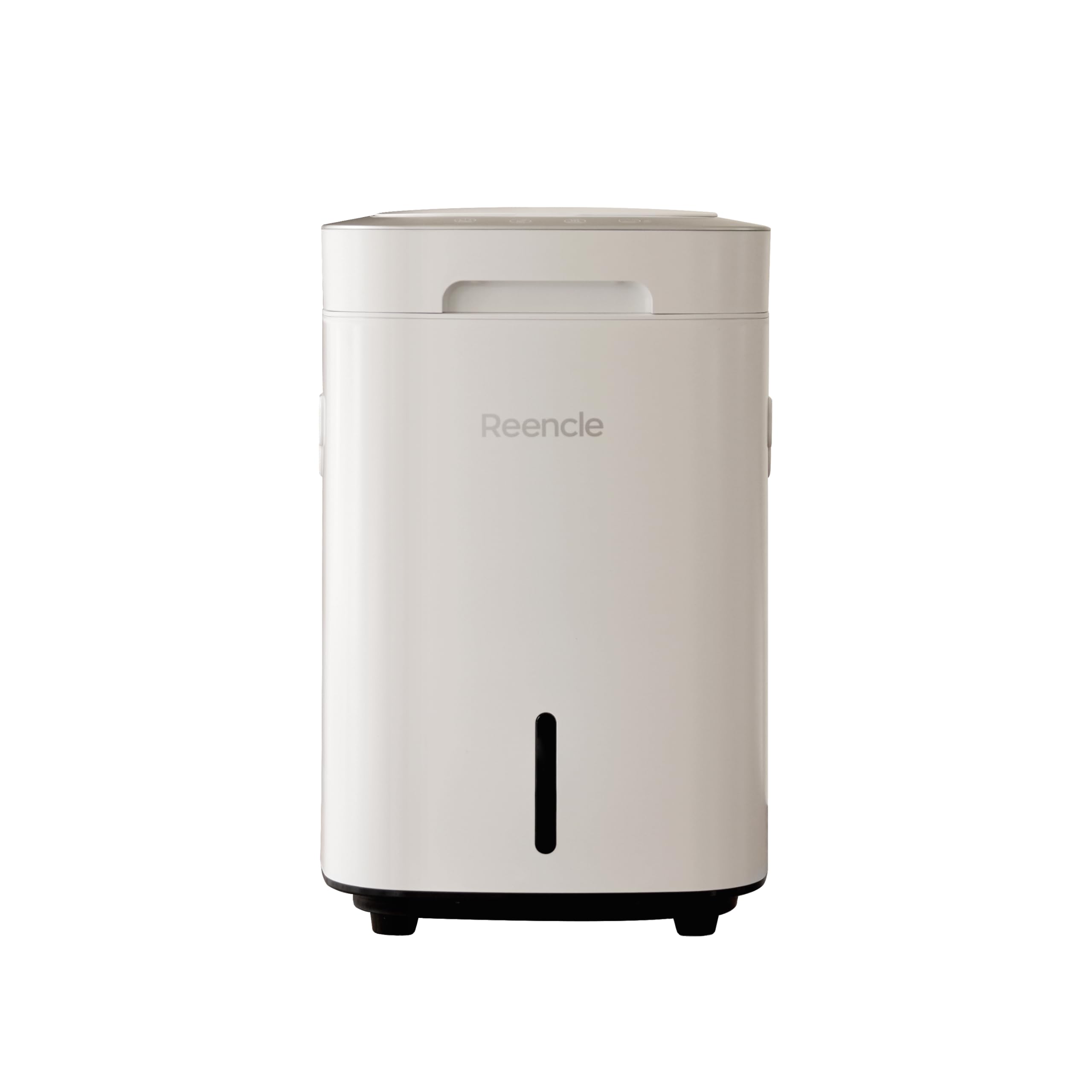
The Reencle Prime is the only electric unit here that uses aerobic microbial digestion rather than high-heat dehydration, which means it produces genuine compost instead of dried powder. Its 14-liter chamber can process up to 2.2 pounds of food waste daily, making it the highest continuous-throughput system in this lineup. The 3-layer carbon filtration combined with whisper-quiet operation at 28 dB means it runs through the night without disturbing sleep or creating odor.
Setup requires adding the included starter microbes and maintaining correct moisture levels — this is not a “press and forget” machine. Owners report that following the ingredient ratio guidelines results in scraps breaking down within 24 hours with zero smell, producing a crumbly, earthy compost suitable for indoor plants or garden beds. The unit is larger than countertop bins (18.4 inches tall) and may not fit under overhead cabinets, but its capacity means you empty it weekly instead of daily.
The internal filter occasionally needs a wipe to maintain airflow, but no replacement cartridges were needed in six months for most owners. For households serious about reducing landfill waste and getting real compost back, the Reencle justifies its investment through continuous, self-sustaining operation.
What works
- Produces real microbial compost, not just dried scraps
- 14L capacity handles two-person household waste with weekly emptying
- Near-silent 28 dB operation with effective 3-layer odor filtration
What doesn’t
- Larger footprint may not fit on every counter or under cabinets
- Requires attention to moisture and ingredient balance for best results
- Higher upfront investment compared to passive bins
3. Airthereal Revive R500 Electric Kitchen Composter

The Airthereal Revive R500 is a dehydration-based electric composter that grinds and heats food scraps into a dry, particulate powder in about four hours. Its SHARKSDEN Trinity Blade pushes material from multiple directions, handling fibrous stalks and soft fruit equally well. The 2.5-liter bucket is cast aluminum, which dissipates heat evenly and cleans easily in the dishwasher — a major advantage over plastic-lidded machines that absorb odors.
Operationally, the unit is quiet and produces no detectable odor during the cycle thanks to a replaceable carbon filter. Owners note that the output is best mixed with soil as a soil amendment rather than used as standalone potting mix, since the process is drying and grinding rather than microbial breakdown. The unit requires a balanced ratio of wet (kitchen scraps) to dry (pine needles, paper) material; pure starches or large bones can cause clogs or extend cycle time.
Customer service responsiveness has been inconsistent — some owners report quick replacement of cracked liners while others describe difficulty reaching support after the unit stopped heating. When functioning correctly, the R500 reduces scrap volume by roughly 70% and produces a clean, odorless powder ready for garden use within a single evening.
What works
- 4-hour rapid cycle turns scraps into dry powder overnight
- Cast aluminum bucket is dishwasher safe and odor-resistant
- Quiet operation with no smell during the cycle
What doesn’t
- Output is dehydrated powder, not biologically active compost
- Customer service responsiveness is inconsistent for warranty claims
- Requires balanced wet/dry mix; pure starches can cause clumping
4. Ouaken 4L Electric Composter for Kitchen

The Ouaken electric composter offers the largest dehydration bucket in this comparison at 4 liters, making it ideal for families who generate significant daily food waste. It uses a combination of high-temperature drying and low-speed, high-torque grinding to reduce waste volume by up to 90%. The clear lid lets you monitor progress without opening the unit, and the carbon filter is rated for up to five months of odor control before replacement.
A standout feature is the dedicated Clean mode, which runs an auto-cleaning cycle that simplifies maintenance compared to competitor units that require manual scraping. The unit operates below 40 dB, quiet enough for overnight use in an open-plan kitchen. Owners report that the output is a fine, dry powder that integrates easily into garden soil, though fibrous items like corn husks must be cut into small pieces to avoid straining the blades.
Long-term reliability data is still emerging — this model is newer to market. Some owners have reported blade or gear issues after several months, though warranty support provided replacement parts. The internal bucket must be emptied immediately after each cycle to prevent the dried material from rehydrating and clumping inside the fan assembly. For large households wanting a low-odor, high-volume option, the Ouaken delivers consistent results.
What works
- 4-liter capacity handles heavy daily waste from larger families
- Integrated auto-cleaning mode reduces maintenance effort
- Below-40 dB noise level allows overnight use without disturbance
What doesn’t
- Bucket must be emptied immediately to prevent clumping
- Fibrous materials need pre-cutting to avoid blade strain
- Long-term reliability still being established by owners
5. Chef’n EcoCrock Countertop Compost Bin
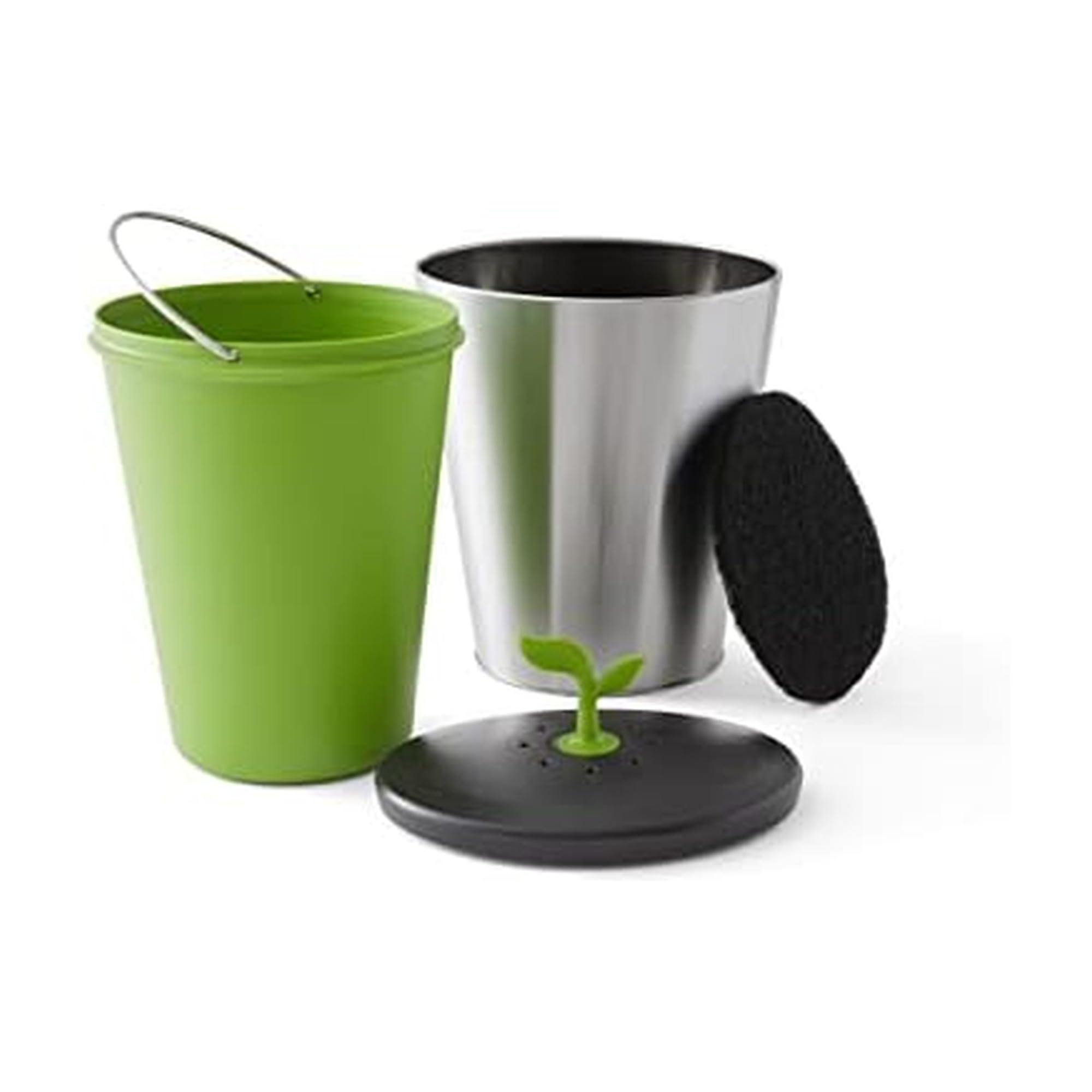
The Chef’n EcoCrock uses a two-piece design with an outer stainless steel bucket and a removable inner plastic liner that lifts out via a built-in handle. This dual-bucket system means you carry only the liner to the outdoor pile or trash, leaving the outer shell clean on the counter. At 3.3 liters (0.75 gallons), it sits between the smallest single-serving bins and the larger electric units, making it a solid mid-capacity option for a couple or small family.
The vented lid houses a replaceable natural charcoal filter that traps odors effectively, and owners consistently confirm zero fruit fly issues and minimal smell when emptied every two to three days. The inner liner is top-rack dishwasher safe, solving the common problem of buildup in one-piece bins. The stainless steel exterior resists fingerprints and matches standard kitchen appliances visually.
Some early units shipped with only one filter instead of the advertised two, but Chef’n customer service was responsive in correcting the issue. A few owners reported the plastic liner cracking after months of use, particularly when dumping heavy contents into outdoor bins — though replacement liners are available. For anyone who prioritizes easy emptying and dishwasher-safe cleanup, the EcoCrock delivers a practical, odor-free experience.
What works
- Removable inner liner makes emptying and cleaning effortless
- Charcoal filter effectively eliminates odors between empties
- Dishwasher-safe liner prevents residue buildup over time
What doesn’t
- Plastic liner may crack after extended use or heavy dumping
- Some units shipped with one filter instead of the advertised two
- Outer stainless shell is hand-wash only to maintain finish
6. KAZAI Compost Bin Kitchen ‘Elin’ 1.2 GAL

The KAZAI Elin is a wide, low-profile passive bin that sits just 6.5 inches tall while holding 1.2 gallons — a shape that fits under cabinet overhangs and doesn’t block your view across the counter. The wooden lid with integrated silicone seal and activated charcoal filter traps odors effectively, and the lid stays open when flipped back, enabling one-handed scraping of cutting boards. Its rectangular footprint accommodates standard 2.6-gallon and 3-gallon compostable liners without bunching or visible overhang.
The inner bucket is removable and dishwasher safe, and anti-slip pads keep the unit steady on any surface while scraping. Owners consistently praise the design for looking intentionally decorative — the off-white and bamboo colorway blends with neutral kitchens rather than screaming “waste bin.” The 2.07-pound weight makes it easy to carry to an outdoor pile, and the handle is sturdy enough for a full load.
The only limitation is its low height — dense, heavy scraps like multiple melon rinds may fill the visual capacity faster than you expect, requiring more frequent emptying. The silicone seal works well but may require occasional cleaning to maintain proper adhesion. For small kitchens, apartments, or anyone who wants a countertop bin that stays out of the way visually and physically, the Elin is an excellent fit.
What works
- Low 6.5-inch profile fits under cabinets without blocking sightlines
- Lid stays open for one-handed operation during food prep
- Fits standard 2.6-3 gal liners without visible overhang
What doesn’t
- Low height means dense scraps fill the visual capacity quickly
- Silicone seal may need periodic cleaning to maintain odor lock
- Bamboo lid is hand-wash only to prevent warping
7. LALASTAR Countertop Compost Bin 1 Gallon

The LALASTAR compost bin is the most affordable entry point into countertop composting, made from a blend of bamboo fiber and corn starch that is itself biodegradable. At 1 gallon with a 9-inch height, it holds roughly three days of scraps for a single person and fits neatly under a sink or on a tight counter corner. The vented lid with charcoal filter does an adequate job of containing odors for short-hold periods, though it is not truly airtight.
The cylindrical shape and cream finish look intentionally decorative, and the reeded texture adds grip for carrying. The bin is dishwasher safe, though owners report that the metal screws holding the handle rusted after the first wash — a durability compromise at this price point. With a weight of about 2.3 pounds, it is light enough to carry to an outdoor bin without strain.
User reports confirm that the charcoal filter effectively prevents fruit flies and keeps smells manageable when emptied every two days. The bamboo composite feels sturdy but can absorb liquids if left sitting too long.
What works
- Lowest entry cost for trying countertop composting
- Biodegradable bamboo fiber material is earth-friendly
- Charcoal filter controls odors and prevents fruit flies effectively
What doesn’t
- Metal screws rust after first dishwasher cycle
- Vented lid is not fully airtight for long holds
- Bamboo composite can absorb liquids if scraps sit too long
Hardware & Specs Guide
Activated Carbon Filtration
The effectiveness of a passive bin is almost entirely determined by its carbon filter. Look for a filter that is replaceable and sits between the bin interior and the external vent. A good filter will neutralize odors for 3–6 months before needing replacement. Units with perforated lids or no filter will struggle to contain smells, especially in warm kitchens or when citrus rinds and onion skins are present. The surface area of the filter matters — larger filters can process more air volume before becoming saturated.
Electric vs. Passive Mechanisms
Electric composters fall into two categories: dehydrators that heat and grind scraps into dry powder, and microbial units that maintain an aerobic environment for bacteria to break down material. Dehydrators produce a stable, sterile output in 4–6 hours but require a balanced wet/dry input and need immediate emptying to prevent clumping. Microbial units produce real compost in 24 hours but require starter microbes, moisture monitoring, and consistent feeding. Passive bins simply collect material — they require no power but need an outdoor pile or municipal service to process the raw scraps.
FAQ
Can I put citrus peels and onions in my indoor compost bin?
How often should I replace the charcoal filter in a countertop bin?
Do electric composters really produce finished compost?
Will a passive countertop bin attract fruit flies in summer?
What size indoor composting system do I need for a family of four?
Final Thoughts: The Verdict
For most gardeners, the indoor composting system winner is the WAGENSTEIGER 101oz Bin because its SUS304 stainless steel and airtight lid provide odor-free, durable performance without electricity or complex maintenance. If you want genuine microbial compost that feeds your soil, grab the Reencle Prime. And for a budget-friendly entry point to test the habit, nothing beats the LALASTAR Bamboo Fiber Bin.