
Basil is a thirsty, sun-loving annual that responds to the wrong soil mix with yellow leaves, stunted growth, and root rot within a week. The difference between a bushy, aromatic plant and a leggy, failing one is almost always what’s underneath the surface—specifically, the balance of drainage, aeration, and moisture retention in the potting medium.
I’m Rikta — the co-founder and writer behind Lawn Gear Lab. I’ve spent many hours analyzing potting-media recipes, comparing organic certifications, and cross-referencing owner-reported performance data to see which bagged mixes actually deliver on their drainage and nutrient claims for basil.
Whether you’re starting seeds on a windowsill or transplanting into a patio container, this guide narrows down the top contenders to help you pick the right soil for basil that supports strong root development and vigorous leaf production without the guesswork.
How To Choose The Best Soil For Basil
Basil requires a mix that drains excess moisture within seconds while retaining enough water to keep the root zone consistently damp—not soggy. The wrong soil leads to root rot or rapid drying that stresses the plant into bolting. Here are the three most important factors to evaluate before buying.
Drainage & Aeration
Basil roots need oxygen. A mix that compacts into a dense brick after watering suffocates the root system. Look for visible perlite, pumice, or coarse sand in the bag. Ingredients like pine bark chunks or horticultural charcoal also create air pockets. If the bag feels heavy for its volume, it likely lacks enough structural amendment.
pH Level
Basil performs best in a slightly acidic to neutral range of 6.0 to 7.0 pH. Most high-quality potting mixes are pre-adjusted, but if you are blending your own, test the pH with a probe. Coastal mixes using compost or worm castings often land closer to neutral, while peat-heavy blends can drift below 6.0 and require garden lime to balance.
Organic vs. Synthetic Fertilizer
Basil is a fast-growing herb that benefits from a slow-release nitrogen source, but synthetic time-release pellets can cause fertilizer burn in small containers. Organic inputs like worm castings, kelp meal, or crab shell meal provide a gentler nutrient release that supports sustained leaf growth without the risk of chemical overdose during the first few weeks.
Quick Comparison
On smaller screens, swipe sideways to see the full table.
| Model | Category | Best For | Key Spec | Amazon |
|---|---|---|---|---|
| Coast of Maine Bar Harbor Blend | Premium Organic | Large containers & raised beds | 16 qt, added kelp & lobster meal | Amazon |
| Perfect Plants Aroid Mix | Peat-Free Chunky | Maximum aeration for basil in deep pots | 8 qt, chunky pine bark & charcoal | Amazon |
| Miracle-Gro Organic Indoor Mix | Mid-Range Organic | Indoor basil in standard pots | 8 qt, OMRI listed, coir blend | Amazon |
| Perfect Plants Indoor Soil | Indoor All-Purpose | Houseplant-compatible basil mix | 4 qt, pine bark & sand & lime | Amazon |
| Doter Organic Potting Mix | Small Batch Organic | Seed starting & single pots | 4 qt, worm castings & coir | Amazon |
| Midwest Hearth Premium Mix | Budget Starter | Small batches & germination trials | 4 qt, pH controlled, perlite/vermiculite | Amazon |
| Rosy Soil Cactus Mix | Specialty Well-Draining | Very small pots that dry fast | 4 qt, peat-free, microbial | Amazon |
In‑Depth Reviews
1. Coast of Maine Bar Harbor Blend
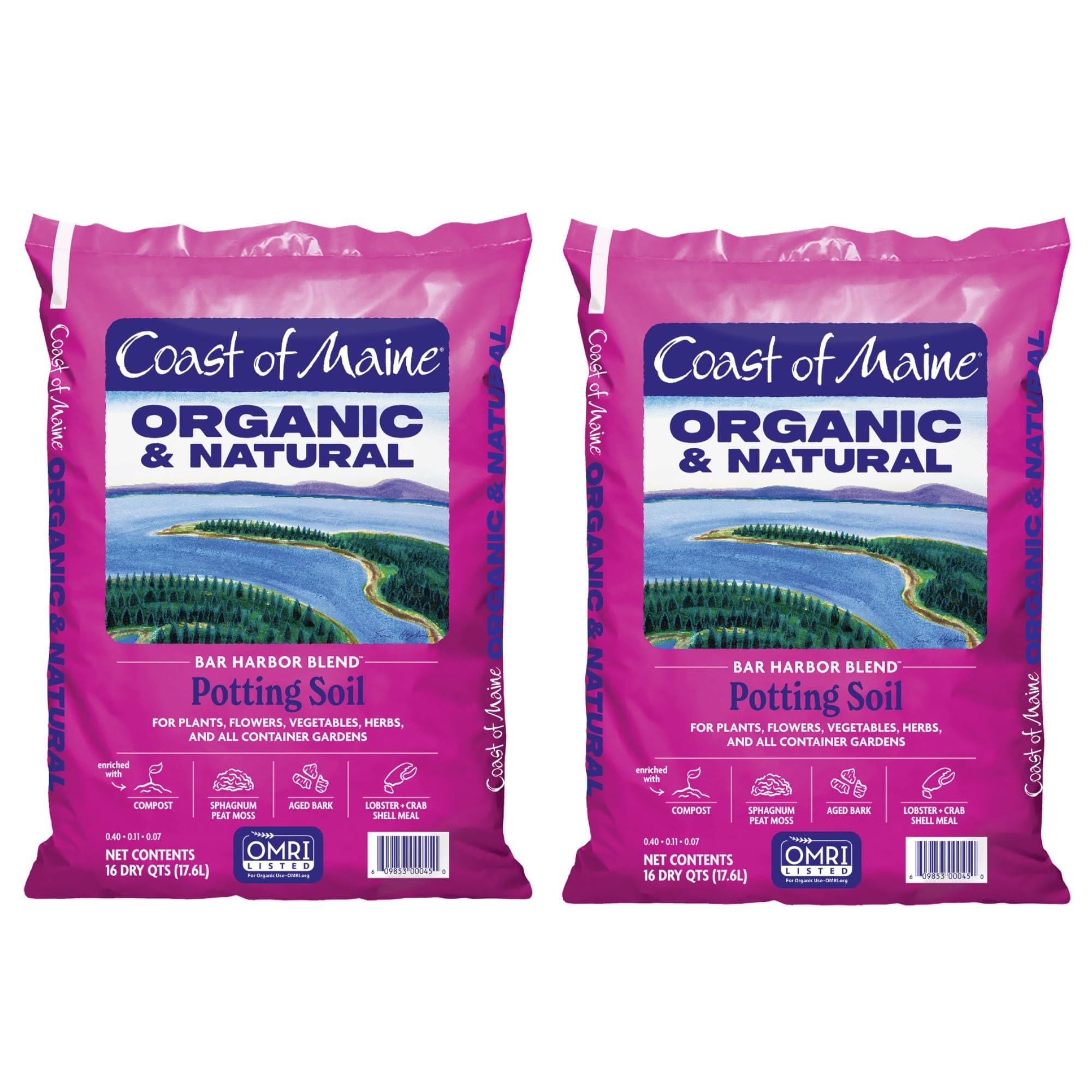
This 16-quart bag is the most versatile premium option for serious basil growers. The formulation uses sphagnum peat moss as a base, then adds compost, perlite, lobster shell meal, and kelp meal. That combination delivers a slow-release nitrogen supply that sustains basil through its entire growing cycle without the risk of synthetic fertilizer burn in a confined container. The perlite content is generous enough to keep the mix light and drainable even after repeated watering.
Multiple owners report that this soil pushed their tomato and herb plants well past what they got from mass-market big-box blends. The mix has a dark, earthy color and a texture that feels more like a rich garden bed than a fluffy potting medium. It holds moisture longer than peat-only mixes, so you need to dial in your watering frequency, especially if you are growing basil indoors in non-porous plastic pots.
The bag is large, making it ideal for bigger containers, raised bed patches, or multiple 8-inch pots. Some users noted it contains fine compost particles that can settle slightly after watering, but the perlite keeps the structure open enough for basil’s sensitive roots. If you want a single mix that works for basil, tomatoes, and peppers, this is the most cost-effective premium choice on the list.
What works
- Rich nutrient profile from organic marine meals
- Excellent moisture retention without becoming sodden
- Large bag covers multiple large containers
- No surprise weeds or synthetic pellets
What doesn’t
- Heavier weight than standard peat-based mixes
- May drain too slowly for basil in glazed ceramic pots
2. Perfect Plants Aroid Potting Mix
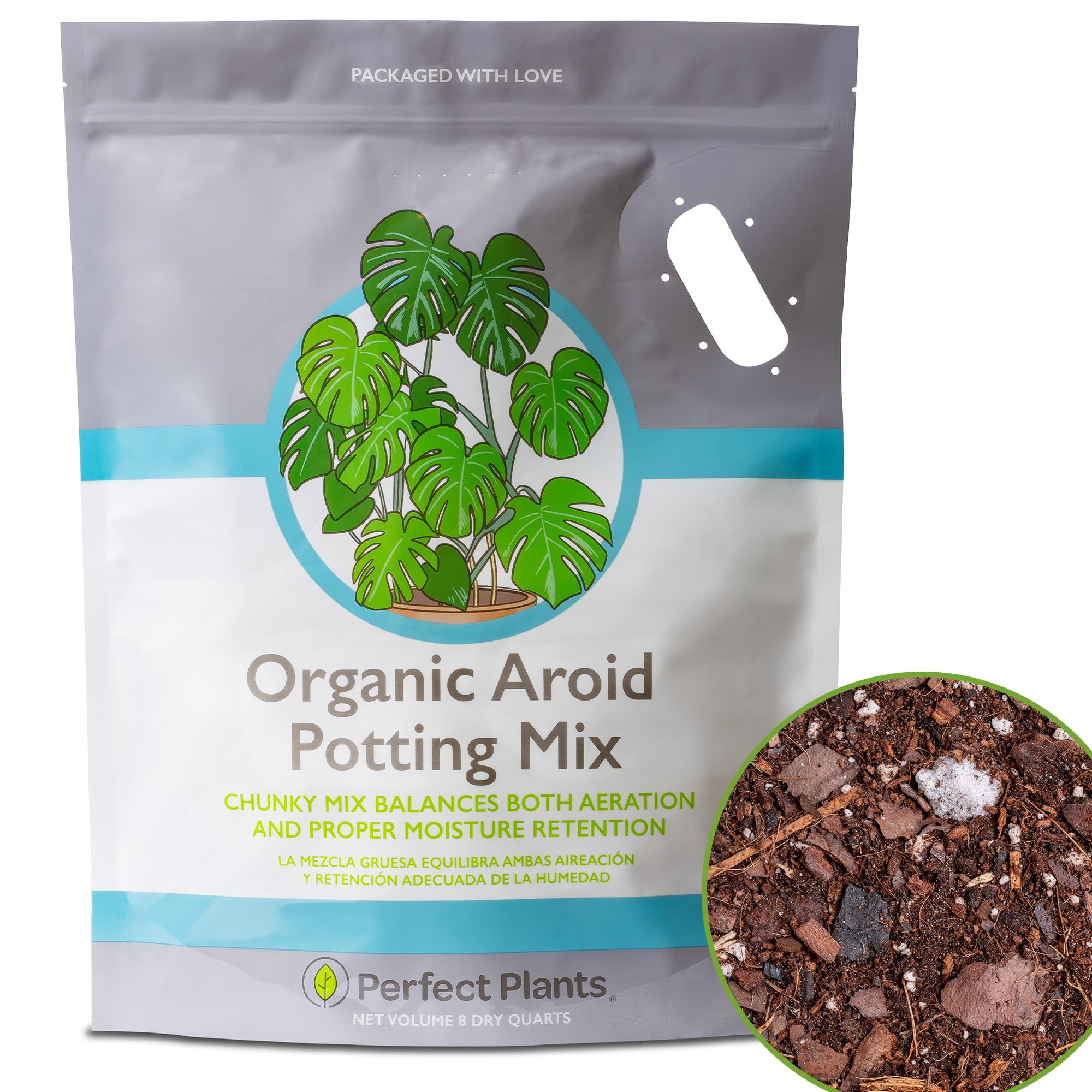
This chunky aroid mix is a left-field pick for basil that works brilliantly if you struggle with overwatering. The recipe skips peat entirely and instead combines pine bark chunks, perlite, sponge rock, coco coir, and horticultural charcoal. The result is an extremely open, fast-draining medium that allows oxygen to reach the root zone almost immediately after watering. Basil in this mix will dry out faster than in a standard potting soil, which actually encourages stronger root growth in many cases.
Owners have used it successfully with Monstera and other tropicals, but the drainage profile is also nearly perfect for basil in terracotta pots or fabric grow bags. The worm castings and mycorrhizae provide a gentle nutrient base that feeds the plant without sudden spikes. The 8-quart bag is enough for three to four 8-inch pots, making it a solid mid-volume option for someone with a small collection of herb plants.
The main downside for basil is that the bag is resealable in theory but quite difficult to close fully in practice, so you may want to transfer leftover mix to a separate container. Also, because the mix is so chunky, it can feel too coarse for very small 3-inch starter pots. But for an established basil plant in a 6- to 8-inch container, this mix delivers unmatched airflow.
What works
- Extremely chunky texture prevents compaction
- Peat-free formula encourages rapid drainage
- Mycorrhizae and worm castings for mild feeding
- Ideal for terracotta and fabric pots
What doesn’t
- Bag seal is weak and hard to close properly
- Too coarse for very small seed-starting cells
3. Miracle-Gro Organic Indoor Potting Mix (2-Pack)

Miracle-Gro’s organic indoor formula uses sphagnum peat moss, coir, and a quick-start natural fertilizer to create a reliable baseline for indoor basil. The moisture-regulation claim is real—the coir and peat work together to absorb water quickly and release it gradually, which reduces the chance of both overwatering stress and underwatering wilt. Many owners reported that this mix resolved persistent fungus gnat issues they had with other brands, likely because the coir-based blend dries more evenly than straight peat.
In terms of texture, this mix is finer and more uniform than the chunky options. That makes it perfect for seed starting and for filling 4-inch nursery pots where you want good contact between the mix and the seed. The organic certification matters if you plan to harvest basil leaves continuously—no synthetic residues to worry about. Multiple reviewers specifically said their houseplants and herbs looked noticeably healthier after switching from standard Miracle-Gro potting soil to this organic version.
The 2-pack is convenient if you have multiple plants, but each 8-quart bag is individually useful. The bag material is standard plastic and not particularly heavy-duty. Some users noted that the mix can hold water a bit too well if the pot lacks drainage holes, so pair this with a container that has at least one large drainage hole. For a straightforward, widely available organic mix, this is the most predictable entry-level premium option.
What works
- Consistent texture suitable for seeds and transplants
- Moisture-regulation reduces risk of root rot
- OMRI listed for organic growing
- Helps reduce fungus gnat populations
What doesn’t
- Can retain too much water in non-draining pots
- Bag packaging is not heavy-duty
4. Perfect Plants Indoor Plant Soil

Perfect Plants formulates this indoor mix with pine bark, coco coir, perlite, sand, and garden lime. The sand and pine bark give it a noticeably different texture from standard peat-based mixes—it feels grittier and drains faster. That is a major advantage for basil grown indoors in pots that lack perfect drainage. The garden lime helps keep the pH stable in the 6.0–6.5 range, which is exactly where basil wants to be. Owners consistently rave about the complete absence of fungus gnats, a common plague with bargain-bin soils.
Users who switched to this mix from large-national-brand soils reported that their plants looked greener and more vibrant within two weeks. The texture is light and airy, which makes repotting easy and reduces the shock to basil roots. The 4-quart bag is small—it is enough for two to three 6-inch pots—so you may need multiple bags if you are planting a larger container garden. The resealable bag is genuinely functional, unlike some of the other entries here.
While the price per quart is higher than bulk options, the quality control and lack of contaminants make it a strong choice for growers who have had bad experiences with soil-borne pests. The sand content means it can settle slightly over time, but a quick stir before use solves that. For indoor basil in medium pots, this is one of the safest bets on the market.
What works
- Completely free of gnats and weed seeds
- Sand and bark create fast drainage for basil
- Garden lime keeps pH basil-friendly
- Light, fluffy texture for easy repotting
What doesn’t
- Small 4-quart bag limits coverage per dollar
- Sand can settle to the bottom over time
5. Doter Organic Potting Soil Mix
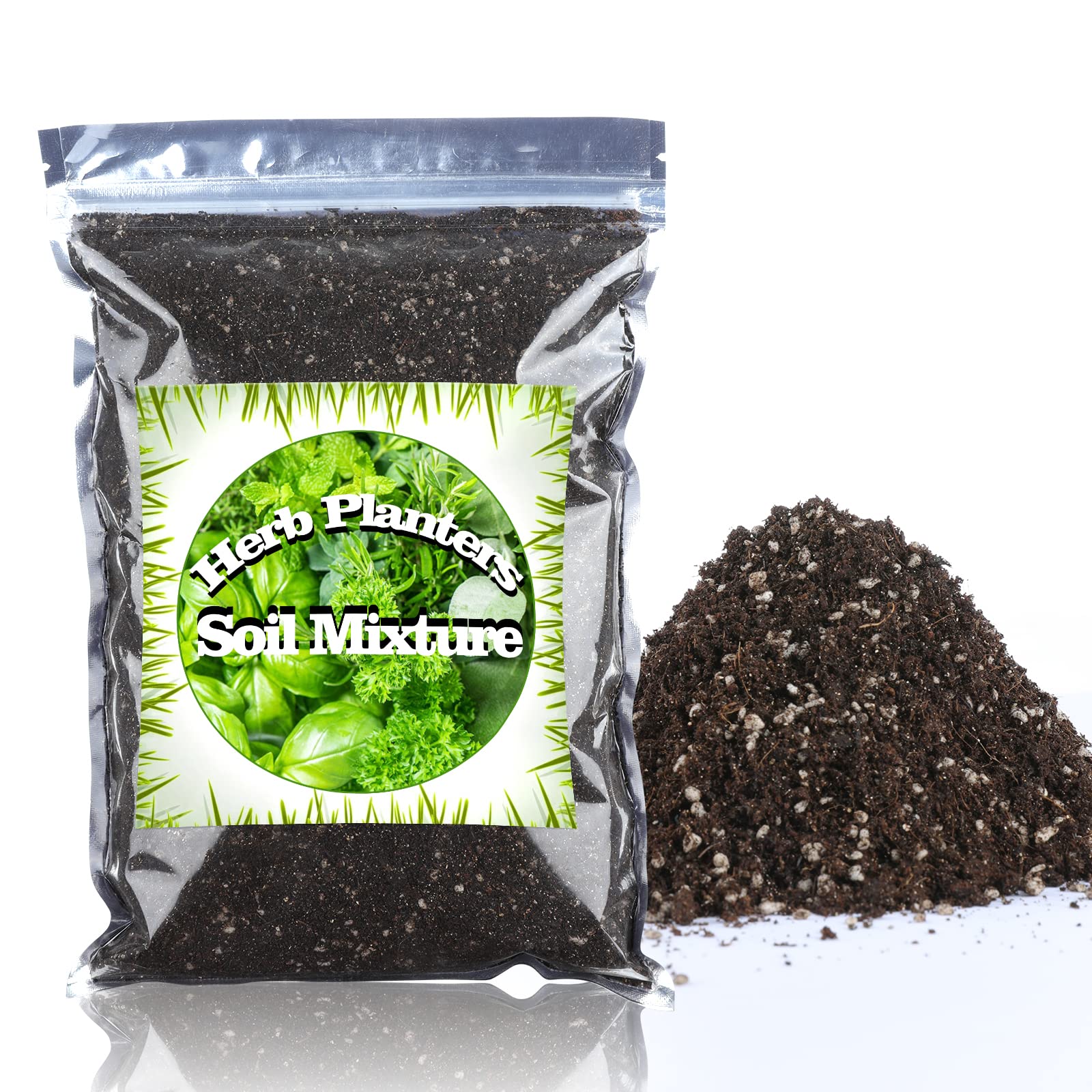
Doter’s mix combines peat moss, perlite, coconut coir, and worm castings into a well-balanced formula that hits the right notes for basil without overcomplicating the recipe. The worm castings provide a mild, consistent nitrogen release that is hard to beat for leafy herbs. Owners noted that seeds sprouted in as little as four days and that basil plants remained healthy and productive for over two months in a small indoor pot. The addition of coir improves moisture retention compared to straight peat, which helps if you tend to forget a watering day.
Several buyers highlighted the absence of odor and the lack of visible gnats, which is a strong indicator of proper composting and sterilization at the production facility. The texture is light and crumbly, making it easy to work with in small starter pots and 4-inch containers. It is also odorless, which matters if you are mixing it on a kitchen counter or near a dining area where you intend to grow your basil.
The bag size is the main limiting factor—4 quarts is clearly a small-batch product. If you are growing a single basil plant or a few herb pots, this is perfect. If you need to fill a 12-inch planter, you will need multiple bags. The price per quart is reasonable for the organic ingredients, but not the best bang for your buck if you are scaling up. Consider this a premium small-batch option for the herb enthusiast.
What works
- Clean, odorless, and gnat-free
- Worm castings provide gentle, sustained feeding
- Fast germination reported with basil seeds
- Light texture reduces transplant shock
What doesn’t
- 4-quart bag is small for multiple containers
- Per-quart cost is higher than bulk mixes
6. Midwest Hearth Premium Potting Soil Mix

Midwest Hearth markets this as a professional-grower-formulation mix, and it delivers a solid three-part structure of peat moss, perlite, and vermiculite. The vermiculite is the standout inclusion here—it holds moisture and nutrients within its crystalline structure and releases them slowly, which is useful for basil if you are using a fast-draining container. The pH is pre-adjusted to a broad range that covers basil’s needs, and the bag is resealable with a practical zipper closure.
Customers have used this mix for germinating petunias, herbs, and flowers with strong results. The texture is fluffy and light right out of the bag, and it does not develop the hard crust that some peat-only mixes form after a few waterings. Some users noted that you may want to soak the soil before use to fully hydrate the peat and vermiculite, as dry peat can repel water initially. That is a standard step for any peat-based mix, not a flaw specific to this product.
The 4-quart bag is small but very affordable, making it a great entry point for someone testing basil growing for the first time. It does not include any fertilizer, so you will need to supplement with a liquid feed after the first few weeks. For the price, this is the most honest budget option that still delivers a proper texture and pH control.
What works
- Light, fluffy texture ideal for seed starting
- Vermiculite aids moisture and nutrient retention
- pH balanced for a wide range of herbs
- Very budget-friendly per quart
What doesn’t
- No added fertilizer; requires supplementation
- Peat can repel water if not pre-soaked
7. Rosy Soil Cactus & Succulent Mix
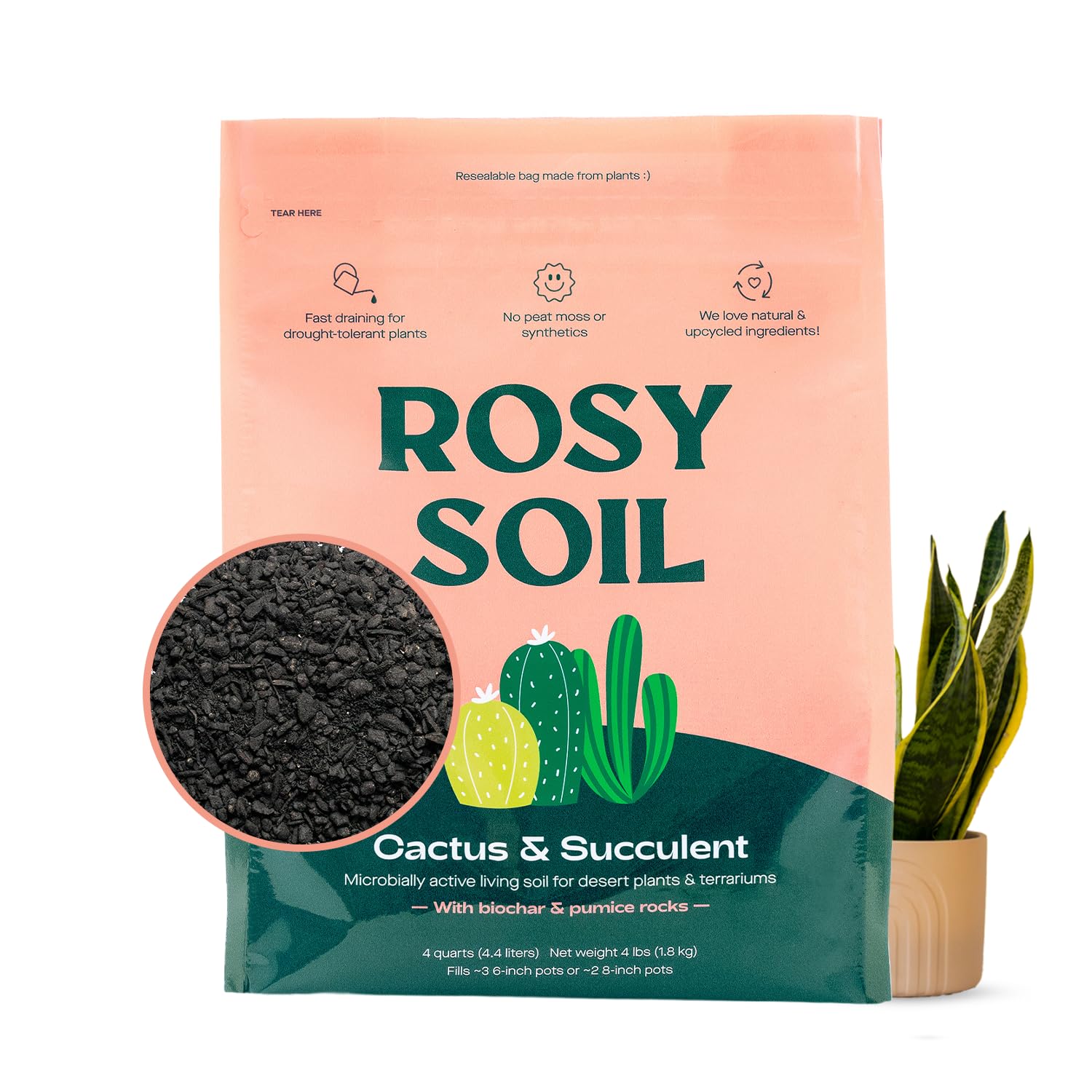
Rosy Soil’s cactus mix is a peat-free, chunky, fast-draining formula built around worm castings and beneficial microbes. For basil, this works only in very specific conditions—if you are growing in a tiny 3-inch terracotta pot on a hot windowsill that dries out fast, the rapid drainage of this mix prevents the root rot that would occur with a denser soil. The living-soil approach introduces fungi and microorganisms that can help basil roots access nutrients, but the mix holds very little moisture overall.
Owners report that this mix works well for aloe and succulents, and some have successfully used it for ZZ plants. The key insight for basil is that you cannot treat this like a standard potting soil. You need to water more frequently, possibly daily in warm conditions. The mix contains no peat, so it does not swell or compact over time. The chunky texture ensures that water flows through in seconds, which is excellent for preventing overwatering but requires you to stay on top of your watering schedule.
The 4-quart bag is small and the resealable zipper is difficult to close completely. The mix is also relatively dry and dusty when first opened—a quick misting before potting helps settle the dust. If you are an overwaterer who kills basil with kindness, this mix may be your saving grace. For anyone else, it is a niche specialist that works best as a component in a custom blend.
What works
- Extremely fast drainage prevents root rot
- Living microbes support root health
- Peat-free and environmentally sustainable
- No compaction or settling over time
What doesn’t
- Drains too fast for most basil potting regimens
- Bag closure system is poorly designed
- Dusty consistency on first opening
Hardware & Specs Guide
Texture & Drainage
Basil requires a mix that drains freely but retains enough moisture between waterings. Look for visible perlite or pumice as the primary drainage agent. Vermiculite can supplement but should not dominate, or the mix becomes too water-retentive. Chunky ingredients like pine bark or charcoal increase air porosity, which reduces compaction over the lifecycle of the plant.
Organic Inputs & Certifications
OMRI-listed products guarantee that no synthetic pesticides, herbicides, or fertilizers were used in production. Worm castings provide a gentle nitrogen source, while kelp and crab meal offer trace minerals and a slow-release nutrient profile that matches basil’s steady growth. Avoid mixes with visible time-release synthetic prills if you plan continuous leaf harvest.
Bag Size Planning
One quart of soil fills roughly one 4-inch nursery pot. A single 8-inch pot requires about 2 to 3 quarts. For a typical windowsill grower managing three to four 6-inch pots, a 8-quart bag is the minimum practical size. Large containers or raised bed patches quickly demand 16 quarts or more, making bulk bags more economical for volume growers.
pH and Lime Additives
Basil grows best at a pH between 6.0 and 7.0. Almost all commercial potting soils are pre-adjusted, but peat-heavy mixes can drift below 6.0 over time. Mixes that include garden lime (calcium carbonate) act as a buffer, preventing the pH from dropping too low. A simple probe pH meter can confirm whether your soil is in the safe zone before planting.
FAQ
Can I use standard garden soil for basil in containers?
Should I mix perlite into bagged potting soil for basil?
Is peat-free soil better for growing basil indoors?
Final Thoughts: The Verdict
For most gardeners, the soil for basil winner is the Coast of Maine Bar Harbor Blend because it combines organic marine-meal nutrition, excellent moisture management, and a generous bag size that suits both containers and small raised beds. If you want maximum aeration to prevent overwatering, grab the Perfect Plants Aroid Mix. And for a bug-free, pH-stable indoor mix in smaller volumes, nothing beats the reliability of the Perfect Plants Indoor Soil.