
Canadian sphagnum peat moss is the backbone of countless seed-starting mixes, soil amendments, and carnivorous plant substrates because of its uniquely high water-holding capacity and naturally acidic pH that suppresses damping-off pathogens. The challenge for most buyers is that a bag labeled “peat moss” can vary wildly in fiber length, compaction, and the amount of woody debris, making the difference between a fluffy aerated mix and a dense sludge that suffocates roots.
I’m Rikta — the co-founder and writer behind Lawn Gear Lab. I’ve spent hundreds of hours comparing the measurable specs of peat bale compression ratios, fiber length distribution, pH ranges, and nutrient-binding capacities across the most common retail brands, then cross-referencing this data with aggregated owner feedback to identify which products actually deliver on their label claims.
This guide reviews seven distinct products to help you select the right canadian sphagnum peat moss for your specific growing application, from seed germination to heavy clay soil remediation.
How To Choose The Best Canadian Sphagnum Peat Moss
Choosing the right peat moss is largely about matching the product’s physical form and purity to your specific task. The three decisions below cover the key variables that separate a successful purchase from a disappointing bag of dust.
Fiber Length & Compression Level
Long-fiber sphagnum peat moss retains its structure longer, creating air pockets that roots need, while shorter fibers break down faster and can lead to compaction. Some bales are compressed at extremely high pressure to save shipping space, which crushes the fibers and makes rehydration difficult — you’ll need to break apart the compressed block by hand and soak it thoroughly. If you’re using peat moss primarily as a soil amendment for heavy clay, a more compressed bale works fine. If you need it for a delicate seed-starting mix, choose a product known for loose, long-fiber consistency.
pH & Nutrient Profile
Canadian sphagnum peat moss typically has a pH between 3.5 and 4.5, which is ideal for acid-loving plants like blueberries, rhododendrons, and azaleas, as well as carnivorous species. The acidity also helps buffer alkaline soils and reduces the availability of certain pathogens. However, if you plan to use it for general vegetables or annuals, you will need to add garden lime to raise the pH back toward neutral. Always check whether the product is straight peat or a pre-blended mix that includes lime and other amendments.
Packaging Size & Rehydration Ease
Peat moss is sold in volumes ranging from small 8- to 18-quart bags to large 3.8-cubic-foot bales that weigh around 40 pounds when dry but expand to several times that volume after wetting. A smaller bag is more convenient for container gardening and indoor plants, while the large bales deliver the best cost per cubic foot for large garden beds or lawn top-dressing. The trick with large compressed bales is that they resist absorbing water if simply poured on — you must fluff the moss, add warm water, let it sit, and stir repeatedly to achieve uniform moisture.
Quick Comparison
On smaller screens, swipe sideways to see the full table.
| Model | Category | Best For | Key Spec | Amazon |
|---|---|---|---|---|
| Hoffman 37029 | Coarse Peat Moss | Carnivorous plants & seed starting | 18 Quart loose fill | Amazon |
| Coast of Maine Acid-Loving | Premixed Soil | Blueberries & azaleas | 20 Qt, low pH blend | Amazon |
| Esbenshade’s Potting Mix | Soilless Mix | Containers & raised beds | 14 Qt, peat + perlite + bark | Amazon |
| Root Riot Starter Cubes | Cloning Cubes | Cuttings & seed germination | 100 cubes, pre-moistened | Amazon |
| Sun Gro Black Gold | Organic Potting Soil | All-purpose organic gardening | 2 cu ft, earthworm castings | Amazon |
| Premier Pro Mix BX | Professional Media | Greenhouse & seedling trays | 2.8 cu ft, with mycorrhizae | Amazon |
| Premier 0082P Bale | Large Bale Peat | Lawn top-dressing & clay soil | 3.8 cu ft compressed | Amazon |
In‑Depth Reviews
1. Premier Pro Mix BX with Mycorrhizae (2.8 cu ft)
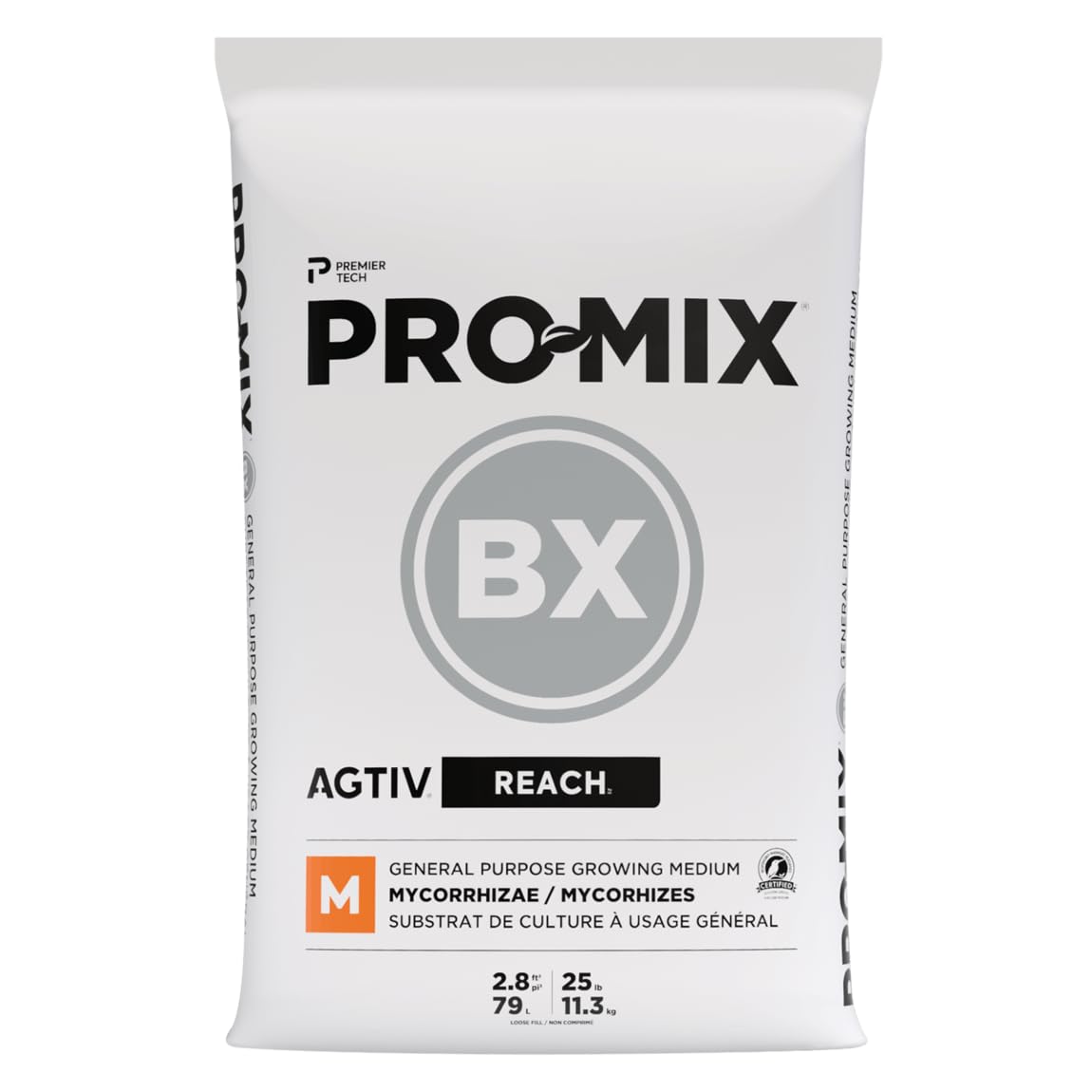
Premier’s Pro Mix BX is a standardized peat-based growing media used by commercial greenhouses and serious hobbyists. The base is a consistent, fine-textured Canadian sphagnum peat that has been blended with perlite and a proprietary wetting agent, ensuring fast rehydration and even moisture distribution. The inclusion of Glomus intraradices mycorrhizae gives this mix a biological edge, fostering a symbiotic root-fungi relationship that boosts water and nutrient uptake, particularly during transplant shock periods.
At 2.8 cubic feet loose-fill, this bag provides a substantial volume that fluffs up nicely without the extreme compaction seen in some bales. Growers consistently report excellent results with seedlings, African violets, and tree cuttings, noting the texture stays airy and does not shrink away from pot sides. While the mycorrhizae benefit is real, the effect is most noticeable in sterile or stressed environments rather than rich compost-based setups.
The only consistent drawback is the lack of a built-in fungicide in current formulations — older versions contained one, and some long-time users miss that protection. However, for anyone building a reliable, repeatable potting medium from scratch, this is the benchmark for what a professional peat-based mix should deliver.
What works
- Consistent particle size with good perlite distribution for drainage.
- Mycorrhizal inoculant improves root development in transplant scenarios.
- Rewets easily and maintains volume without excessive compaction.
What doesn’t
- No longer includes an antifungal ingredient as in older batches.
- Premium per-cubic-foot cost compared to raw peat bales.
2. Premier 0082P Sphagnum Peat Moss (3.8 cu ft)

If you are rehabilitating heavy clay soil, top-dressing a large lawn, or mixing your own bulk potting medium, the Premier 0082P is the volume champion. This 3.8-cubic-foot compressed bale expands to roughly double its dry volume once properly hydrated. Users report that the fiber quality is high, with minimal woody debris or root fragments — it fluffs into a light, springy mass that integrates well with native soil.
The compressed format requires deliberate rehydration: break the bale into chunks, place in a wheelbarrow or tub, add warm water, and work it with your hands or a trowel until the moss absorbs moisture and expands. Owner reviews highlight its effectiveness for aeration of red clay soil and for creating a consistent seedbed, with many noting the resulting lawn grass came in thick and vibrant after a single top-dressing application.
The price per cubic foot is the best of all products in this guide, but the physical labor of breaking down the bale is real. If you only need a bag or two for a small garden, the smaller loose-fill options will save you the effort of wrestling with a dense 40-pound block.
What works
- Exceptional cost per cubic foot for large-area projects.
- High-purity sphagnum with very little stem or dirt content.
- Expands significantly to cover lawn or garden beds efficiently.
What doesn’t
- Requires considerable manual effort to break apart and hydrate.
- No added lime or amendments — must be pH-adjusted for non-acid-loving plants.
3. Sun Gro Black Gold Natural and Organic (2 cu ft)

Sun Gro’s Black Gold is not pure peat moss but rather a finished organic potting soil that uses Canadian sphagnum peat as its primary base, supplemented with screened earthworm castings, perlite, and pumice. The result is a rich, dark, loamy mix that feels alive — users frequently comment on its earthy smell and the presence of beneficial bacteria that keep the soil active for multiple growing seasons in containers.
The peat component gives this blend excellent moisture retention, while the pumice and perlite maintain aeration that prevents the mix from becoming waterlogged even in heavy rain. It is particularly well-suited for vegetable gardens in raised beds and for plants that prefer slightly acidic conditions. A notable number of long-term container gardeners report the soil structure remains fluffy for a year or more, unlike cheaper mixes that turn into hard-packed clumps.
The main caution is that some batches have been reported to harbor fungus gnats, a common issue with any organic potting soil that contains compost or castings. A proactive treatment with BTI-based mosquito bits usually resolves this, but it is something to be aware of if you are starting seeds indoors where gnat pressure is high.
What works
- Rich in organic matter and beneficial microbes for sustained plant health.
- Light, fluffy texture that does not compact over multiple seasons.
- Balanced moisture retention and drainage for general container use.
What doesn’t
- Occasional fungus gnat issues due to the organic compost ingredients.
- Heavier per bag than pure peat due to the castings and pumice content.
4. Root Riot Plant Starter Cubes (100 Count)
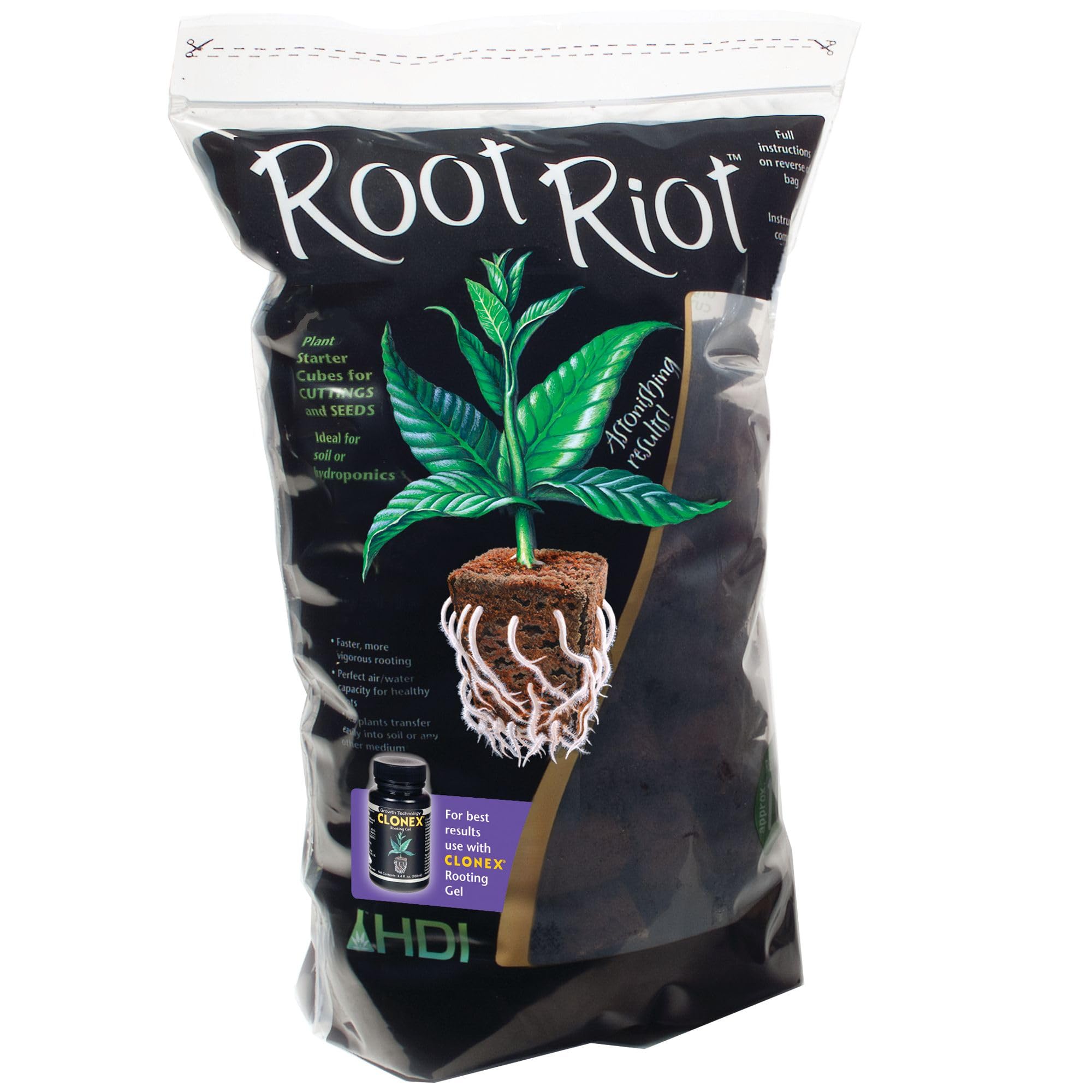
Root Riot cubes are a specially engineered propagation medium made from compressed sphagnum peat moss formed into individual plug-shaped cubes. The key advantage is the pre-moistened, spongy consistency that maintains an optimal air-to-water ratio for root development — the cubes absorb water without becoming waterlogged, and they hold their shape during transplant without crumbling apart.
These are the go-to choice for cloning cannabis, ornamental cuttings, and starting expensive seeds where failure is not an option. Users report consistent 95-99% rooting success rates, with roots visibly emerging through the cube walls within 7–14 days for most species. The cubes come with a small amount of beneficial micronutrients already present, which supports early growth without requiring immediate fertilization.
The per-unit cost is higher than making your own peat-based propagation mix, but the convenience and reliability justify the premium for small-scale propagators. For anyone attempting cuttings for the first time, these cubes remove the variables of moisture consistency and compaction that commonly cause rot in homemade mixes.
What works
- Near-perfect moisture and aeration balance for sensitive cuttings.
- Pre-moistened and ready to use straight out of the bag.
- Sturdy cube structure holds together during transplant handling.
What doesn’t
- Higher price per unit compared to bulk peat mixes.
- Limited to propagation use — not suitable as a general potting medium.
5. Hoffman Canadian Sphagnum Peat Moss (18 Quart)

Hoffman’s 18-quart bag is a straightforward entry point into using Canadian sphagnum peat moss for small-scale projects: mixing a custom potting medium for a few houseplants, top-dressing a small patch of grass seed, or creating a substrate for carnivorous plants like Venus flytraps. The fiber is described by users as coarse and light, with minimal junk material such as roots or bark bits that sometimes plague lower-grade peat bags.
Several verified buyers report excellent results mixing this peat with perlite for carnivorous plant trays, noting the plants produced new shoots within a week of transplant. Another common use is lightly sprinkling the moss over fresh grass seed to hold moisture during germination, where its natural acidity helps discourage fungal growth on the seed surface. The 18-quart volume is manageable for these tasks without the storage challenge of a large bale.
The trade-off for the low entry cost is that this is not a ready-to-use potting mix — it lacks perlite, lime, or any fertility amendments. You must supplement with aeration agents and pH adjusters depending on your target plants. For users who know exactly what they need to add, this is a solid, clean base material at a very accessible price.
What works
- Clean, coarse fibers with minimal woody debris or roots.
- Ideal size and texture for carnivorous plant substrates.
- Small bag format is easy to handle and store.
What doesn’t
- Requires additional mixing with perlite and lime for most applications.
- Not as compressed, so the volume per dollar is lower than large bales.
6. Coast of Maine Acid-Loving Planting Soil (20 Qt)

Coast of Maine targets a very specific niche: gardeners growing acid-loving plants such as blueberries, azaleas, rhododendrons, strawberries, and ferns. This blend starts with Canadian sphagnum peat moss as the base, then adds composted manure and aged bark to create a low-pH, nutrient-rich mix that is OMRI-listed for organic use. The peat component keeps the overall pH in the 4.5–5.5 range, which is exactly where Vaccinium species and ericaceous plants thrive.
Users emphasize that this is not a pure peat product but a complete planting soil — you can use it straight from the bag without mixing in additional amendments for most acid-loving perennials. The manure component adds gentle fertility, and the bark improves drainage. Blueberry growers specifically mention that this soil revived their tired planters and produced vigorous new growth with heavy fruit set.
The limitation is the reverse of the acid advantage: this soil is not appropriate for vegetables, annuals, or lawns that prefer neutral to alkaline conditions unless you are willing to adjust the pH upward substantially. It also comes in a relatively small 20-quart bag, which may not be economical for large blueberry patches without purchasing multiple units.
What works
- Ready-to-use formulation specifically tuned for acid-loving plants.
- Contains composted manure for slow-release organic fertility.
- OMRI-listed, meeting organic gardening standards.
What doesn’t
- Not suitable as a general-purpose potting mix without pH adjustment.
- Small bag size limits its use to containers and small garden beds.
7. Esbenshade’s Professional Potting Mix (14 Qt)
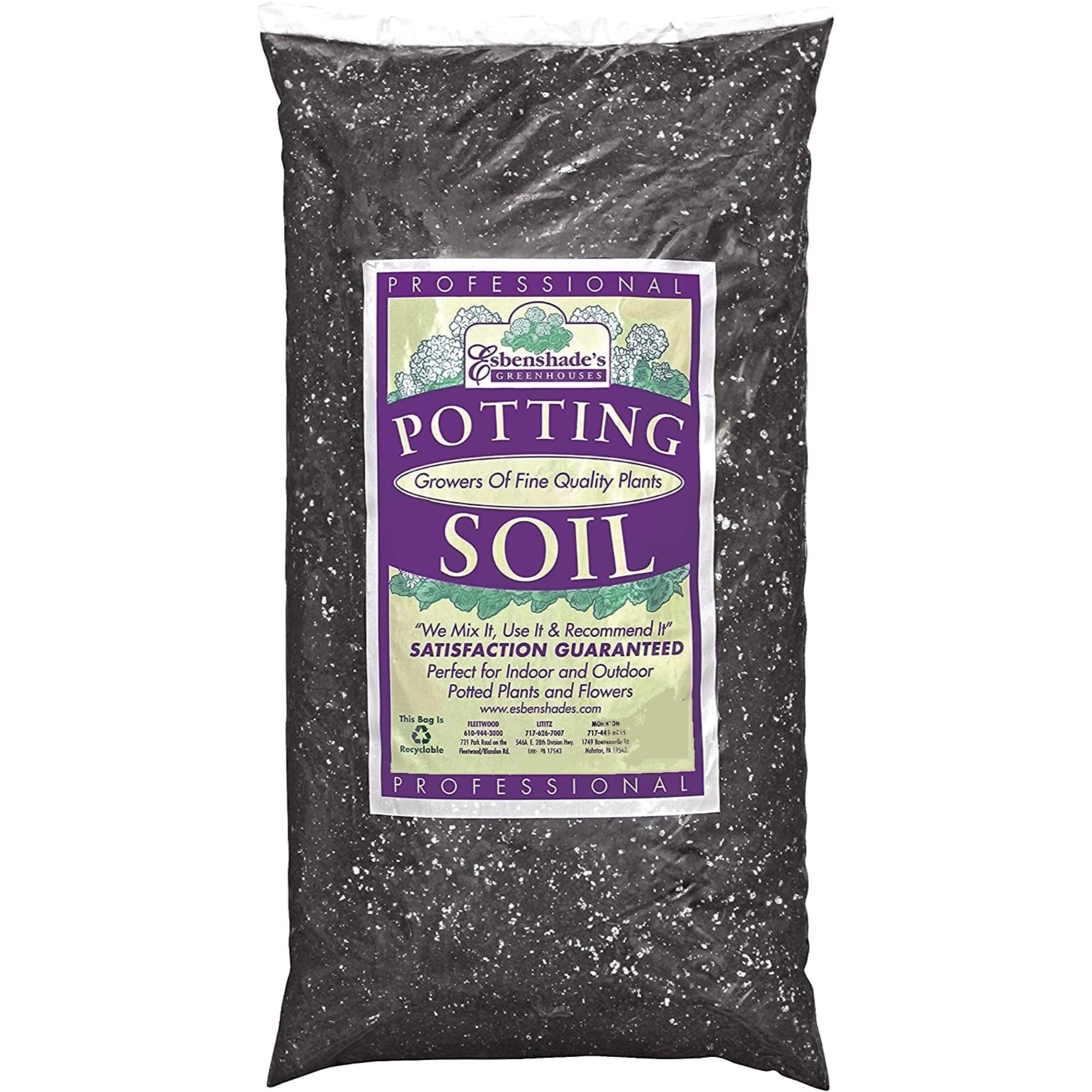
Esbenshade’s Professional Lightweight Potting Mix is a soilless blend built on a foundation of Canadian sphagnum peat moss, with added perlite, pine bark, and lime. The lime is the critical addition here — it raises the pH of the naturally acidic peat to a neutral range (around 6.0–6.5), making this mix immediately suitable for a wide variety of vegetables, herbs, and annual flowers without needing to calculate your own lime addition.
Users who have done side-by-side trials report that this mix outperformed major national brands like Miracle-Gro in terms of plant vigor for peppers, tomatoes, and eggplants, with taller stems and more flowers. The perlite content creates a visible airy structure that resists compaction through multiple watering cycles. The bag stays moist and fluffy, and it rewets easily after drying out — a common point of failure for cheap peat-based mixes that become hydrophobic.
The only note of caution is that the texture is quite light, which means tall or top-heavy plants may require a heavier soil amendment or a stake for stability. Also, the 14-quart size is relatively small for the price compared to buying pure peat and perlite separately, so volume-focused growers may prefer to buy components in bulk.
What works
- Pre-buffered with lime, so it is ready for general vegetable and flower use.
- Light, fluffy texture with excellent perlite distribution for drainage.
- Proven performance in side-by-side comparisons against big-box brands.
What doesn’t
- Small bag size — less economical for large container gardens.
- Very lightweight mix may need staking for heavy or tall plants.
Hardware & Specs Guide
Fiber Length Classification
Canadian sphagnum peat moss is graded by the length of its plant fibers. Long-fiber peat (also called coarse grade) retains its structure for months, providing sustained aeration in potting mixes. Short-fiber or milled peat breaks down more quickly, which can lead to compaction but creates a finer texture ideal for seed-starting trays where you want uniform moisture contact. For perennial containers, choose long-fiber; for germination flats, short-fiber is acceptable.
pH Neutralization Requirement
Raw Canadian sphagnum peat moss has a pH of 3.5 to 4.5. To raise the pH for most vegetables and annuals, add ½ cup of dolomitic limestone per cubic foot of peat moss and mix thoroughly before planting. For acid-loving plants like blueberries or rhododendrons, do not add lime — the natural acidity is a feature, not a defect. Always test your final mix pH with a soil probe if your plants are sensitive.
Water Holding Capacity vs Drainage
Sphagnum peat moss can hold up to 20 times its dry weight in water, making it one of the most effective moisture-retention amendments available. However, dry peat becomes hydrophobic and repels water if allowed to dry out completely. To prevent this, always pre-moisten peat before mixing into potting blends, and consider adding a wetting agent or a small amount of liquid soap to the first watering of very dry bales.
Compression Ratio and Rehydration
The compression ratio of a peat bale determines how much you need to fluff and wet it before use. Premium bales from Premier and Sun Gro typically expand to 2–3 times their dry volume. To properly rehydrate a compressed bale: break it into chunks, place in a large container, add warm water at a ratio of roughly 1 gallon per cubic foot, let it sit for 30 minutes, then work it with your hands until all fibers are moist and separated.
FAQ
Is Canadian sphagnum peat moss the same as sedge peat?
Can I use Canadian sphagnum peat moss for vegetables?
How do I rehydrate a dry compressed bale of peat moss?
Is Canadian sphagnum peat moss a renewable resource?
Final Thoughts: The Verdict
For most gardeners, the canadian sphagnum peat moss winner is the Premier Pro Mix BX with Mycorrhizae because it combines a high-quality peat base with added perlite and beneficial fungi in a ready-to-use professional formulation. If you want raw bulk peat for large-scale lawn or clay soil projects, grab the Premier 0082P 3.8 cu ft Bale. And for precise, high-success propagation of cuttings, nothing beats the Root Riot Starter Cubes.