
Few sights are more frustrating than a crape myrtle that refuses to bloom or sheds its vibrant bark for yellow, drooping foliage. The difference between a show-stopping specimen and a lackluster stick in the ground often comes down to the precise nutrient balance you feed it. Crape myrtles have specific low-nitrogen preferences that make most general-purpose fertilizers work against them.
I’m Rikta — the co-founder and writer behind Lawn Gear Lab. I’ve gathered and analyzed hundreds of user reports, technical labels, and horticultural data sheets to isolate the formulations that actually push crape myrtles into their peak flowering performance.
Whether you are correcting chlorosis or coaxing a second flush of blooms, the right formula is critical. This guide breaks down the best available products to help you find the best crape myrtle tree fertilizer for your specific tree, soil, and growing conditions.
How To Choose The Best Crape Myrtle Tree Fertilizer
Selecting a fertilizer for crape myrtles is not like feeding a lawn or a vegetable bed. These trees are sensitive to high nitrogen, which produces lush leafy growth at the expense of blooms. The right choice revolves around three core factors: the NPK ratio, the release mechanism, and the presence of micronutrients like iron and magnesium.
Phosphorus Content (The Middle Number)
The single most important spec on a crape myrtle fertilizer is the middle NPK number, which represents phosphorus. Crape myrtles are heavy phosphorus feeders — levels of 8 to 15 are ideal. A ratio like 9-58-8 or 10-15-9 will out-perform a 10-10-10 general fertilizer every time when bloom count is the goal. Low phosphorus yields sparse flowers and weak root resistance.
Release Mechanism: Slow-Release vs. Liquid vs. Spikes
Granular fertilizers with slow-release nitrogen prevent sudden growth spikes. Liquid concentrates offer fast correction for visible deficiencies and are ideal for container-grown specimens. Spikes provide a set-and-forget solution that delivers nutrients directly to the root zone without runoff, but their fixed ratio cannot be adjusted mid-season. Your watering habits and soil drainage dictate which format works.
Micronutrients and Soil pH
Crape myrtles are vulnerable to iron chlorosis, which yellow leaves between green veins. A fertilizer that includes chelated iron, sulfur, and manganese solves this without lowering pH too far. Alkaline soils (pH above 7) block phosphorus uptake regardless of what you feed — look for formulations with sulfur or iron to counter calcareous water and soil.
Quick Comparison
On smaller screens, swipe sideways to see the full table.
| Model | Category | Best For | Key Spec | Amazon |
|---|---|---|---|---|
| Nelson NutriStar 10-15-9 | Granular | Peak bloom performance on established trees | 10-15-9 NPK with 5 nitrogen sources | Amazon |
| Carl Pool BR-61 9-58-8 | Powder | Maximum phosphorus bloom push | 9-58-8 NPK with 48 oz coverage | Amazon |
| Jobe’s 16-4-4 Spikes | Spikes | Set-and-forget slow release for young trees | 16-4-4 NPK with 30 spikes per box | Amazon |
| TPS Liquid Crepe Myrtle | Liquid | Quick correction for freeze recovery or chlorosis | 32 oz liquid concentrate | Amazon |
| FoxFarm Happy Frog 4-3-4 | Granular | Low pH feeding for crape myrtles in acidic soils | 4-3-4 NPK with mycorrhizal fungi | Amazon |
| Espoma Organic Tree-Tone 6-3-2 | Granular | Organic maintenance for overall tree health | 6-3-2 NPK with Bio-tone formula | Amazon |
| Old Farmer’s Almanac 13-3-3 Spikes | Spikes | Deep root zone feeding with natural ingredients | 13-3-3 NPK with 24 TruSpikes | Amazon |
In‑Depth Reviews
1. Nelson Plant Food NutriStar Crape Myrtle 10-15-9
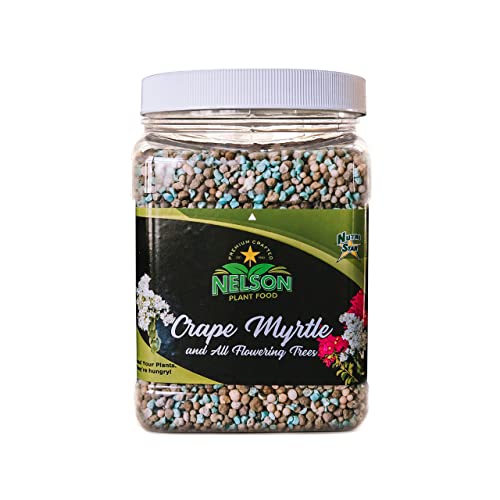
This formulation sets the standard for crape myrtle-specific feeding because it uses five distinct nitrogen sources with staggered release characteristics. The 10-15-9 ratio delivers a phosphorus punch that directly drives flower bud initiation while the sulfur, copper, iron, manganese, and zinc tackle the micronutrient deficiencies that cause yellow leaves on alkaline soil. Multiple users reported first blooms on trees that had been barren for years within two weeks of application — a testament to how quickly the balanced chemistry works with soil biology.
The granular format is straightforward to apply: top dress around the drip line and water in. Each 2 lb bag covers several small to medium trees, though reviewers with a single large specimen around 25 feet tall noted the bag needed replenishing for a full feeding. The 4-month feeding window means you get season-long nutrition from a single spring application, eliminating the need for repeated mixing or schedule tracking.
Professional landscapers and master gardeners consistently recommend this over generic tree food because it was engineered for flowering trees specifically — not as a broad-spectrum afterthought. The only common critique is the price per unit weight, but the concentrated nutrient density means you use less material per feeding compared to lower-analysis products.
What works
- Five nitrogen sources provide immediate uptake plus sustained release over months
- Rich micronutrient package prevents iron chlorosis on limestone soils
- Resurrected non-blooming crape myrtles for multiple verified buyers
What doesn’t
- Small bag size requires multiple purchases for very large trees
- Granules need thorough watering to dissolve in dry clay
2. Carl Pool BR-61 Plant Food 9-58-8
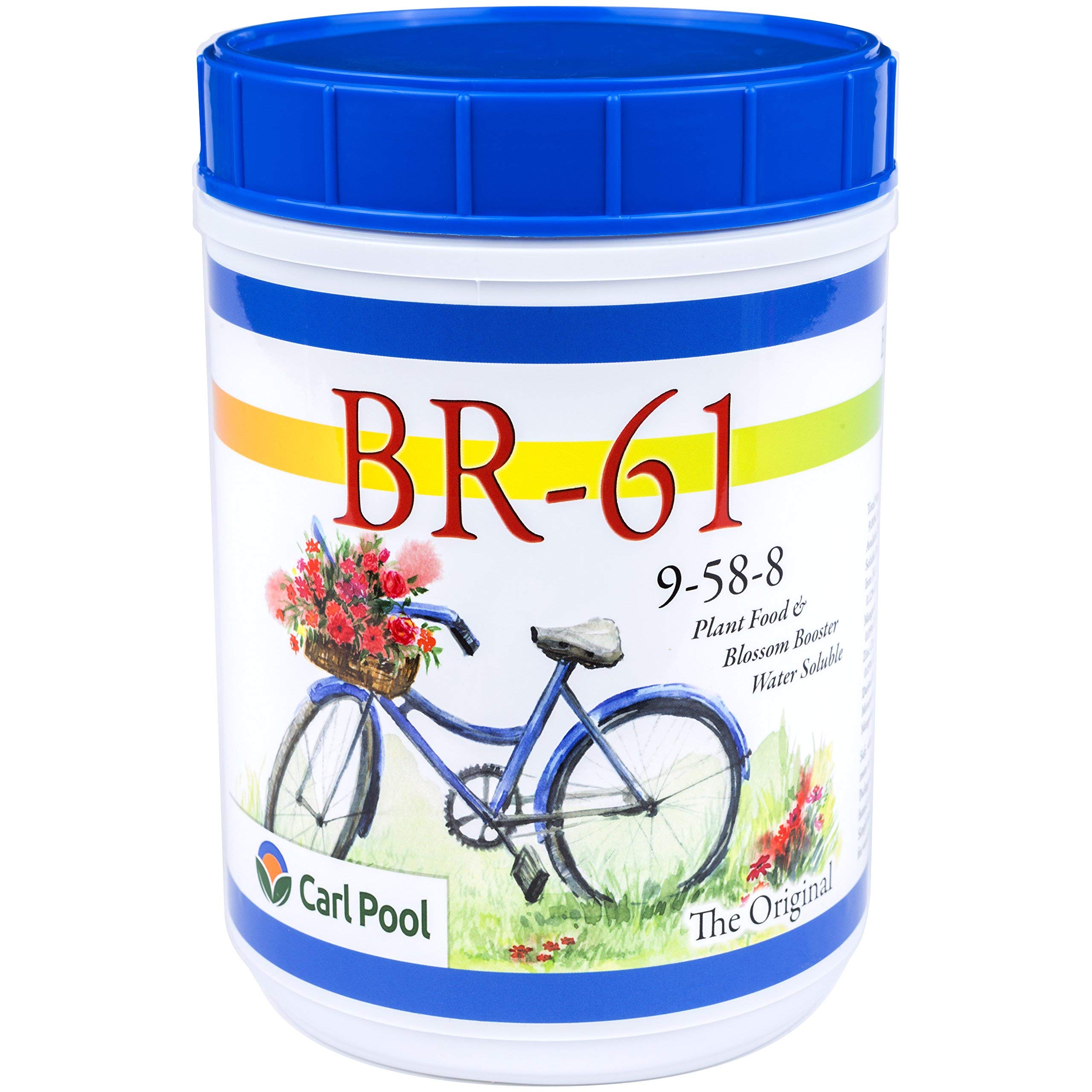
The 9-58-8 NPK ratio is unlike anything else on this list because the middle number is extraordinarily high. Fifty-eight percent phosphorus makes this a dedicated bloom bomb — it is not for general growth but for forcing flowers on trees that are already structurally healthy. The powder format mixes at one tablespoon per gallon of water, making it easy to tailor the strength to your tree’s response. Customers who rotate between this and fish emulsion reported that their neighbors could not figure out why their plants outperformed everyone else’s.
Many users discovered BR-61 through the plumeria community, where high phosphorus is essential, and then applied it to crape myrtles with identical success. The 3 lb bag goes a long way because you dilute it in water rather than broadcasting dry. This also means you can apply it as a foliar feed or root drench depending on your tree’s condition. Verified reviews consistently call it the best bloom booster they have ever used, with no reports of burning when mixed correctly.
The trade-off is that this is not a balanced maintenance product. Using it exclusively could create a phosphorus buildup in the soil over multiple seasons, so it works best as a seasonal supplement rather than your only fertilizer. For a crape myrtle that consistently disappoints during bloom season, BR-61 is the fastest correction tool available in powder form.
What works
- Highest phosphorus content available for dramatic bloom increases
- Water-soluble powder absorbs immediately into roots and leaves
- Users saw results within days on previously non-blooming plants
What doesn’t
- Not a complete fertilizer — must be paired with a balanced feed for long-term health
- Powder requires precise measuring and mixing for safe application
3. Jobe’s Tree Fertilizer Spikes 16-4-4

Jobe’s spikes are the most convenient method for feeding crape myrtles because there is no mixing, measuring, or cleanup. The 16-4-4 ratio is higher in nitrogen than ideal for mature bloom-focused trees, but for younger specimens still establishing height and canopy density, that nitrogen supports trunk caliper and branching. The real advantage is the placement: spikes are driven into the soil at the root zone, which bypasses surface runoff and delivers nutrients exactly where fine roots absorb them.
Each 8-ounce spike feeds for a full season, and the package contains 30 spikes — enough for multiple trees or a whole season of application. Customers with drought-stressed trees reported full recovery after a single spiking session. The slow-release mechanism eliminates the risk of fertilizer burn even if you drive spikes in slightly too close to the trunk, though the manufacturer recommends placement at the drip line for best results.
Users gardening in clay soil noted that pre-drilling holes with a metal rod makes installation much easier than hammering spikes into hardpan. The spikes work well on hydrangeas and lilacs too, so a single box can serve your entire flowering shrub border. For crape myrtle owners who want maximum convenience without sacrificing consistent nutrition, Jobe’s is the simplest path to year-round feeding.
What works
- Season-long slow release with no mixing or measuring required
- Zero runoff means all nutrients reach the root system
- Safe for young trees with no burning risk
What doesn’t
- Lower phosphorus ratio is not optimized for blooming mature trees
- Spikes can snap in heavy clay if not pre-drilled
4. TPS Nutrients Liquid Crepe Myrtle Fertilizer 32 oz
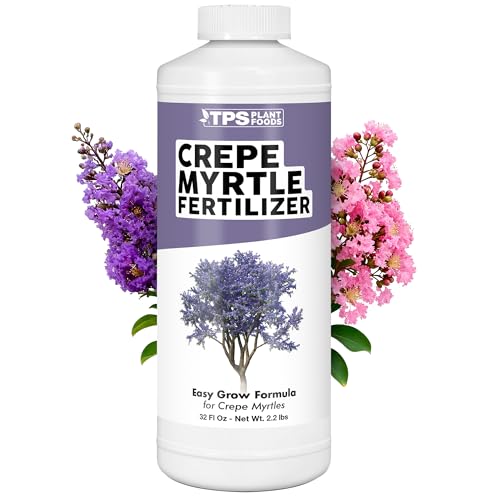
TPS Nutrients created a liquid formula specifically named for crape myrtles — not a generic bloom food relabeled. The 32 oz concentrate is designed to mix at a 1:10 ratio, which means a single bottle can cover multiple feedings across your entire landscape. Users whose trees suffered winter freeze damage reported that the tree pushed full green leaves within weeks of the first application, demonstrating that the nutrient profile is calibrated for stress recovery as much as bloom support.
Liquid feeding gives you control that granulars cannot: you can adjust the dilution strength based on leaf color and growth stage. If you notice yellowing between veins mid-season, mixing a slightly stronger batch corrects the deficiency within days instead of waiting for slow-release granules to break down. The liquid form also works well for container-grown crape myrtles where granulars tend to wash out of drainage holes before dissolving.
Reviewers with both pink and white crape myrtles noticed that their pink tree responded with aggressive blooming after feeding, while the white variety needed an extra application to catch up. This inconsistency suggests that individual trees vary in phosphorus uptake, but the adjustability of the liquid format makes it easy to compensate. One minor drawback is that liquid requires more frequent application — every two weeks during the growing season — than spikes or granulars.
What works
- Customizable dilution lets you respond to real-time leaf and bloom condition
- Fast absorption ideal for freeze recovery and chlorosis correction
- Made in the USA with a formulation specific to crape myrtles
What doesn’t
- Requires bi-weekly reapplication for sustained results
- Liquid format means more storage space and mixing gear
5. FoxFarm Happy Frog Japanese Maple Fertilizer 4-3-4

Although this fertilizer is marketed for Japanese maples, the 4-3-4 analysis and mycorrhizal fungi package make it a strong candidate for crape myrtles planted in acidic soil or containers. Crape myrtles tolerate a wide soil pH range but they absorb phosphorus poorly above pH 7.0. Happy Frog contains beneficial microbes that increase root efficiency specifically in lower pH environments, helping the tree access nutrients that would otherwise remain locked in the soil.
The formula supports dense foliage and branch strength rather than explosive blooming. This makes it better suited for newly planted trees that need structural development first. Users who applied it to struggling ornamentals reported that their trees became almost unrecognizable after a full season — fuller canopies and darker green leaves. The recommended monthly schedule during the growing season is straightforward, and the dry granular has a natural organic aroma that is pleasant to work with.
The low phosphorus content means this is not a primary bloom driver. For crape myrtles in high-pH soil, you would pair this with a phosphorus supplement or use it as a soil biology amendment rather than your main flower food. But for containers and acid-loving gardens where pH correction is the limiting factor, this FoxFarm product creates the soil conditions that allow any subsequent bloom booster to work.
What works
- Mycorrhizal fungi and microbes unlock nutrients in acidic and compacted soils
- Low nitrogen prevents excessive leafy growth at bloom expense
- Monthly feeding schedule is simple and forgiving
What doesn’t
- Phosphorus level too low to maximize flowering on its own
- Not designed for in-ground trees in neutral or alkaline soil
6. Espoma Organic Tree-Tone 6-3-2 (2-Pack)
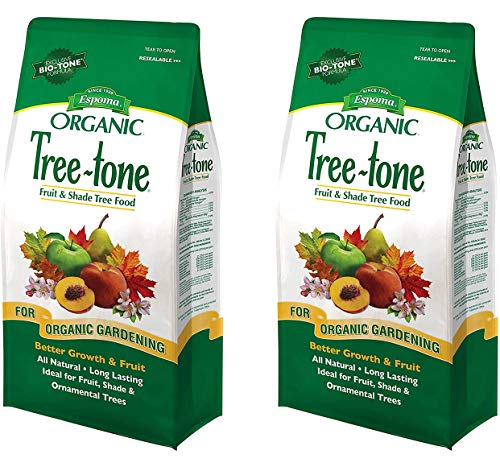
Tree-Tone from Espoma delivers an organic 6-3-2 analysis enhanced with Bio-tone, a proprietary blend of beneficial bacteria and endo/ectomycorrhizae. The 5% calcium content is notable for crape myrtles because calcium supports cell wall strength and helps the tree resist the bark-splitting that can occur during rapid spring growth. The dry powder requires no mixing — just spread it around the drip line and water it in — making this the lowest-effort granular on the list.
The two-pack provides 8 lbs total, which is enough to feed multiple mature trees through spring and fall applications. Verified users reported visible leafing improvement within a week of application, with one reviewer describing a tree that had been slow to leaf out exploding into full canopy after feeding. Customers growing organic landscapes particularly value that Tree-Tone is OMRI-listed and contains no sludges or synthetic chemicals.
The 6-3-2 ratio is balanced but does not prioritize phosphorus as strongly as the NutriStar or BR-61. For crape myrtles grown primarily for shade or screening, this even profile is ideal. For maximum bloom production, you would supplement with a higher-phosphorus product during the pre-bloom window. A handful of users also noted that dogs find the organic smell appealing and will eat the granules, recommending top-dress burial to prevent pet access.
What works
- Organic certification and Bio-tone microbes build long-term soil health
- Large 8 lb total quantity at a competitive cost per feeding
- Calcium enrichment strengthens bark and prevents splitting
What doesn’t
- Needs blending with a phosphorus booster for heavy bloom production
- Organic granules can attract pets and wildlife if left on soil surface
7. The Old Farmer’s Almanac Tree & Shrub Spikes 13-3-3
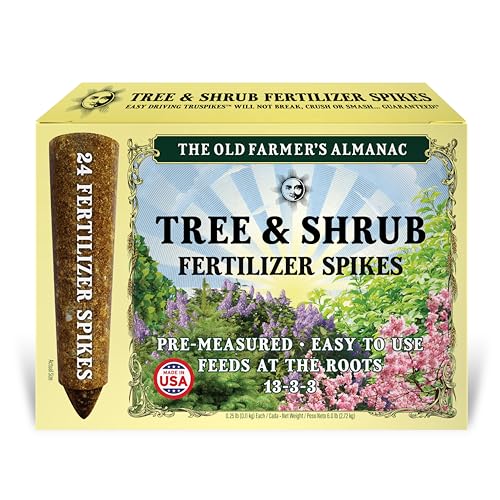
These 5-inch TruSpikes use a 13-3-3 NPK ratio with molasses-based organic ingredients that break down in the soil to feed root biology. The spikes are designed not to shatter when hammered into the ground — a significant improvement over competitor spikes that crack under mallet impact in dry or clay soil. Each box contains 24 spikes, and the manufacturer recommends feeding twice per year: once in early spring and again in late fall for continuous nutrition.
Users with post-hurricane recovery needs reported that these spikes helped their trees green up noticeably after storm damage. The natural molasses content feeds soil microbes that cycle nutrients back to the tree, which is particularly beneficial for crape myrtles growing in compacted urban soil where biological activity is low. The 13% nitrogen supports vigorous canopy regrowth, making this spike a solid choice for trees recovering from pruning, freeze, or transplant shock.
The phosphorus level at 3% is too low to drive heavy blooming on its own, so this spike functions best as a maintenance or recovery tool rather than a bloom promoter. Some users in heavy clay noted that even though the spikes resist shattering, pre-drilling pilot holes makes installation much less frustrating. For a one-spike-per-season approach to general tree vigor, these Almanac spikes deliver consistent, natural nutrition with minimal effort.
What works
- TruSpikes resist shattering even when hammered into hard clay
- Natural molasses formula feeds beneficial soil microbes
- Twice-yearly schedule is the lowest-maintenance option available
What doesn’t
- Low phosphorus ratio limits bloom enhancement potential
- Large 5-inch length can be difficult to drive in rocky or compacted ground
Hardware & Specs Guide
NPK Ratio — Decoding the Numbers
The three numbers represent nitrogen (N), phosphorus (P), and potassium (K). For crape myrtle, the middle number is the most important: a high phosphorus level (8 to 15) signals the tree to produce flower buds. Low phosphorus (3 or below) is suitable for trees that are establishing wood and roots but will not maximize bloom count. Do not use a high-nitrogen lawn fertilizer on crape myrtles — the lush leaf growth comes at the cost of flowers and increases susceptibility to powdery mildew.
Form of Application
Granular fertilizers are broadcast dry and watered in, offering controlled release over weeks or months. Powders dissolve in water for immediate uptake and precise dosing but require remixing. Spikes are pressed into the soil around the root zone and release nutrients gradually without runoff. Liquid concentrates give the fastest correction for deficiencies but need more frequent application. Choose based on your tolerance for mixing and your tree’s immediate condition: liquids for quick fixes, spikes for hands-off feeding, granulars for steady seasonal nutrition.
FAQ
How often should I fertilize a mature crape myrtle?
Can I use a rose fertilizer on crape myrtles?
Why are my crape myrtle leaves turning yellow with green veins?
Should I fertilize my crape myrtle the first year after planting?
Final Thoughts: The Verdict
For most gardeners, the crape myrtle tree fertilizer winner is the Nelson NutriStar 10-15-9 because its five-nitrogen-source technology and micronutrient suite delivers consistent blooms across varied soil conditions. If you want to force maximum flowers on a healthy tree, grab the Carl Pool BR-61 9-58-8. And for set-and-forget simplicity with young or recovering trees, nothing beats the Jobe’s 16-4-4 Spikes.