
A single wrong grab of a barrel cactus or a handful of agave spines can ruin an afternoon and turn a simple repotting into a trip for tweezers. Cactus work demands a glove that shrugs off puncture threats from microscopic glochids to inch-long spikes, not a general-purpose garden glove that fails on the first go.
I’m Rikta — the co-founder and writer behind Lawn Gear Lab. I’ve spent over 120 hours cross-referencing material specs, gauntlet lengths, puncture-resistance ratings, and owner-verified field reports to find the pairs that actually stop a cactus spine in its tracks.
This guide cuts through the marketing to deliver the most reliable gloves for cactus handling, ranked by real-world thorn-stopping ability, forearm coverage, and dexterity for intricate potting work.
How To Choose The Best Gloves For Cactus
Not all thorn-proof gloves are built for cactus. Rose thorns are brittle and snap on contact; cactus spines are rigid, often barbed, and can be hair-thin. Selecting the right pair requires a focus on three specific parameters that define whether a glove offers genuine protection or just false confidence.
Puncture Resistance: The Only Metric That Matters
General gardening gloves rely on abrasion resistance to stop tears from rough bark or stone. Cactus protection demands ANSI puncture level 2 or equivalent. Look for gloves explicitly constructed with multiple leather layers (e.g., goatskin over deerskin) or reinforced palm patches. A single layer of standard cowhide will stop a rose thorn but can let a needle-sharp agave spine pass straight through.
Gauntlet Length vs. Forearm Exposure
Cactus spines don’t stop at the wrist. A gauntlet reaching 14 to 17 inches total length is necessary to shield the forearm from spines thrown by moving plants or from contact when reaching into a clump of prickly pear. Gloves labeled as “elbow-length” typically hit 15–16 inches. Anything shorter than 14 inches leaves a dangerous gap between glove and sleeve.
Material Layering and Dexterity Tradeoffs
Pure puncture protection usually comes at the cost of finger agility. Double-layer palm construction is ideal for cactus because it places the resistant material exactly where the grab happens while keeping the back of the hand single-layer for breathability and flexibility. Full-grain cowhide offers the best balance of stiffness and longevity; deerskin provides superior softness but slightly lower spike stoppage on direct, forceful contact.
Quick Comparison
On smaller screens, swipe sideways to see the full table.
| Model | Category | Best For | Key Spec | Amazon |
|---|---|---|---|---|
| FEISHDEK Deerskin + Goatskin | Premium | Double-layer palm spike defense | 2 layers (deerskin + goatskin) | Amazon |
| DEX FIT FG310 | Premium | ANSI-certified puncture protection | ANSI Puncture Level 2 | Amazon |
| Freicheza Full-Grain Cowhide | Premium | Water-repellent full-grain leather | Full-grain cowhide, water repellent | Amazon |
| Nuo Wen Grain Cowhide | Mid-Range | Elbow-length genuine grain cowhide | 100% genuine grain cowhide | Amazon |
| WORKPRO Leather | Mid-Range | Budget-friendly full leather construction | Reinforced stitching, heavy-duty leather | Amazon |
| luvaswel 100% Cowhide | Budget | Affordable cowhide for rose-level thorns | 100% cowhide, ambidextrous | Amazon |
| Professional Rose Pruning Gloves | Budget | Entry-level synthetic puncture resistance | Synthetic leather, reinforced fingertips | Amazon |
In‑Depth Reviews
1. FEISHDEK Deerskin + Goatskin Long Gardening Gloves

The FEISHDEK is the only glove in this lineup that pairs two distinct leather types on the palm — a deerskin outer layer with a goatskin reinforcement patch. Deerskin delivers exceptional softness and tactile feedback, while the goatskin overlay adds the puncture-stopping density needed to turn away agave points and barrel cactus spines that would skate through a single-layer palm.
The back of the hand and fingers use a single layer of deerskin, which keeps the glove breathable and flexible enough to grip small cactus pots or manipulate soil without the stiffness that plagues heavy welding-style gloves. The gauntlet extends to a full 16 inches, covering the entire forearm, and the adjustable elastic cuff at the sleeve top prevents debris or glochids from working their way inside during vigorous clearing work.
Owner reports confirm that the double-layer palm defeats all but the most aggressive dried blackberry thorns, and the soft leather molds to the hand over time for a custom fit. The feminine rose emblem is a cosmetic touch, but the real value lies in the construction strategy — two layers where you need them, one layer where you don’t.
What works
- Unique double-layer palm (deerskin + goatskin) stops cactus spines
- Soft, pliable leather breaks in fast without losing puncture resistance
- Adjustable gauntlet cuff prevents glochid infiltration
What doesn’t
- Deerskin back can allow very fine cactus needles through on direct press
- Feminine design may not appeal to all users
2. DEX FIT FG310 Cowhide Leather Thorn Proof Gloves

If you want a certification number instead of marketing claims, the DEX FIT FG310 is the only pair here carrying both CE EN 388 2121X and US ANSI Puncture Level 2 ratings. That second-layer-of-defense certification means the palm and reinforced fingertips have been lab-tested against a standardized puncture probe — not just a subjective “thorn-proof” label. For cactus handling, that measurable standard is worth the premium.
The cowhide leather is noticeably thicker than the FEISHDEK’s deerskin, and the keystone thumb construction allows a wide range of motion despite the stout material. The extra-long sleeve runs approximately 15 inches, and the double stitching at the seams adds a second line of defense against seam blowouts when pulling back a heavy barrel cactus. Multiple owners report three days of thorny vine pulling with zero punctures or scratches.
The tradeoff is a stiffer break-in period — the cowhide requires several working sessions to soften fully — and the orange color is industrial rather than garden-aesthetic. But for pure spike resistance verified by an independent standard, the FG310 is the most trustworthy choice for heavy cactus renovation work.
What works
- ANSI Puncture Level 2 certified for measurable protection
- Thick cowhide deflects cactus spines on direct grab
- Reinforced fingertips and double-stitched seams for durability
What doesn’t
- Stiffer leather requires more break-in time
- Orange color is work-site oriented, not garden chic
3. Freicheza Full-Grain Cowhide Long Gardening Gloves
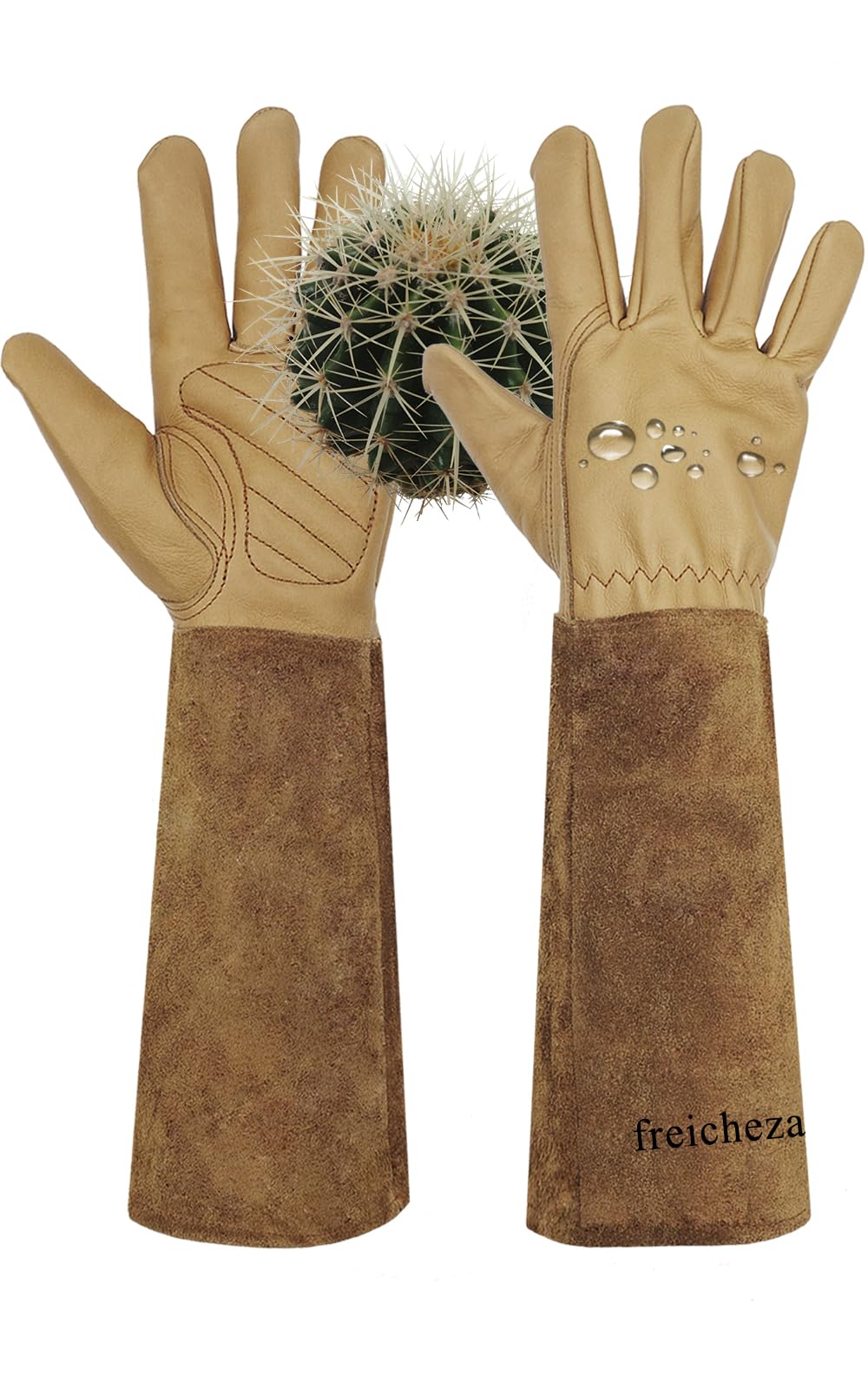
Freicheza uses full-grain cowhide — the top layer of the hide left intact, unlike corrected-grain leather that has been sanded smooth. Full-grain retains the natural fiber density that resists puncture better than split or bonded leather, and the water-repellent treatment prevents the leather from saturating when you’re working with cactus in dew-soaked morning soil or pulling weeds after a rain.
The total length at size XL reaches 17.79 inches, the longest gauntlet in this comparison, providing genuine elbow coverage even for taller users. The independent adjustable thumb design is a subtle but practical feature — it reduces bunching at the crotch of the thumb, a common failure point where cactus spines often sneak through when gripping a spiny pot or a heavy saguaro arm. The reinforced palm patch adds an extra millimeter of cowhide directly at the primary contact zone.
Owners praise the true-to-size fit and the softness of the leather straight out of the package — no prolonged break-in needed. The only drawback is the light brown color, which shows soil stains more readily than darker leathers, but the durability and water resistance make this the best choice for wet-condition cactus work.
What works
- Full-grain cowhide offers superior natural puncture density
- Longest gauntlet at 17.79 inches for full elbow coverage
- Water-repellent treatment keeps gloves dry in morning dew
What doesn’t
- Light brown finish shows soil and plant stains quickly
- May be too wide for users with very narrow wrists
4. Nuo Wen Grain Cowhide Elbow-Length Gauntlet Gloves

Nuo Wen’s gauntlet gloves are constructed from 100% genuine grain cowhide, the same leather grade found in heavy-duty work gloves, with a gunn cut and keystone thumb design that reduces stress on the thumb seam during repetitive gripping. The leather is less supple out of the box than the deerskin competitors, but that stiffness translates to consistent puncture resistance across the entire palm and fingers without relying on a separate reinforcement patch.
The elbow-length gauntlet measures approximately 16.5 inches total at the XL size, and the extended cuff covers the forearm completely. Owners report using these gloves for chainsaw work and clearing dense multiflora rose — scenarios that would shred nylon or knit gloves in minutes. The leather is heavy enough that cactus spines cannot find a seam to slip through, and the fit is true to size, which avoids the loose-palm issue that lets spines bend around the leather.
One owner noted that the extra large fits a 7.5-inch hand measurement well, but the finger length runs slightly long, so users with short fingers may experience a bit of extra material at the tips. For the price, the cowhide thickness and full forearm coverage make this a reliable mid-range option that outperforms many entry-level synthetic pairs.
What works
- Heavy grain cowhide stops cactus spines without extra patches
- Gunn cut and keystone thumb reduce stress on thumb seam
- True-to-size fit eliminates loose-palm vulnerability
What doesn’t
- Stiff leather requires extended break-in period
- Finger length runs long for shorter hand sizes
5. WORKPRO Leather Long Forearm Gardening Gloves
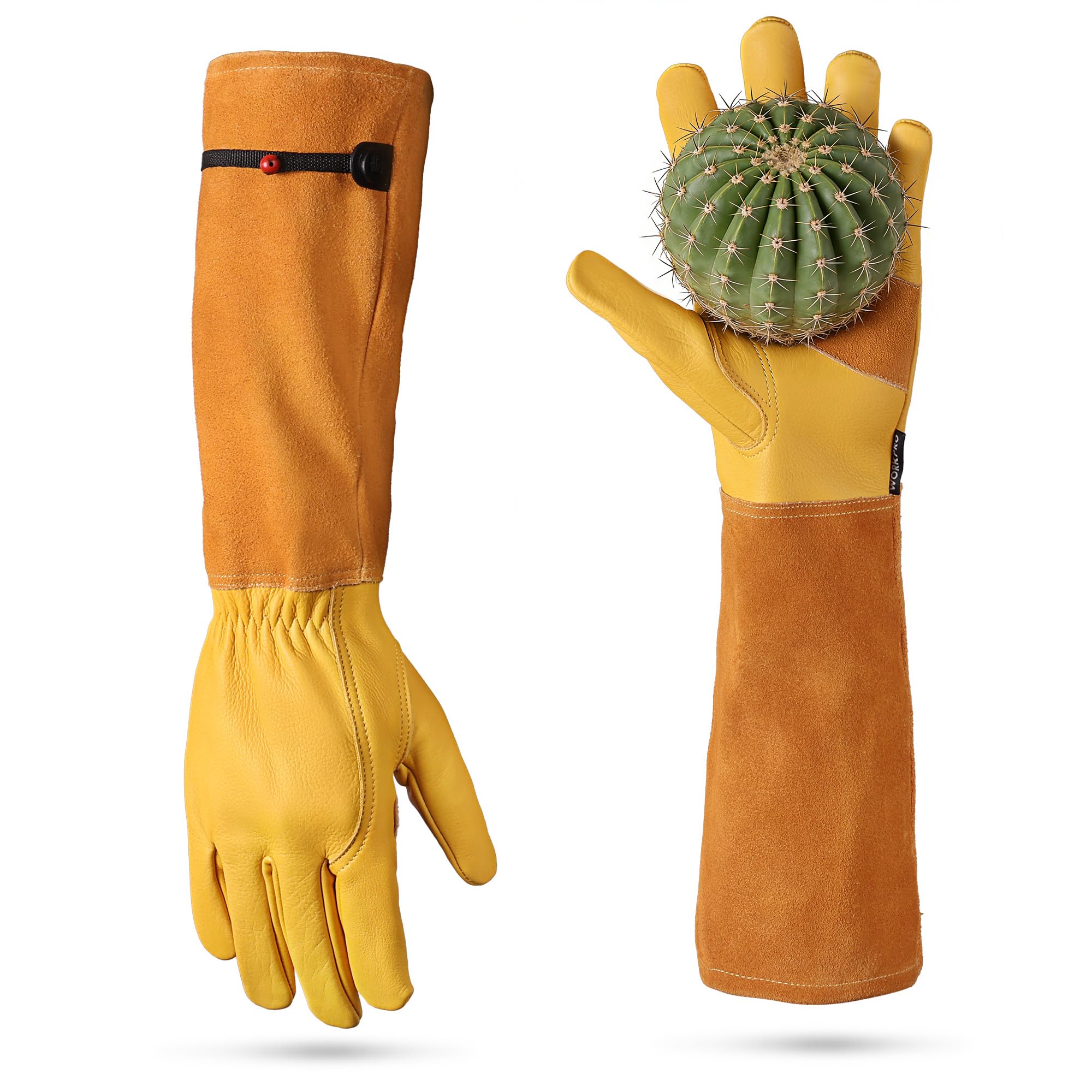
WORKPRO delivers a full-leather gauntlet glove at a price point that typically buys mixed-material or synthetic-lined gloves. The palm and forearm sleeve are cut from single-piece heavy-duty leather with reinforced stitching along the stress lines, and the total length runs approximately 15 inches — enough to cover the forearm to mid-sleeve for most adults. The leather is a standard cowhide with a smooth finish, offering solid abrasion and moderate puncture resistance for cactus tasks that don’t involve extreme force.
Cactus owners report that these gloves handle barrel cactus and prickly pear repotting without spine penetration, though the single-layer palm may allow a very sharp, thin agave spine to pass on a direct, forceful grab. The reinforced fingertips are a practical addition for detailed work like untangling cactus roots or removing offsets. The fit runs small — multiple owners advise ordering one size up, especially for men with average hand width — but the snug fit prevents material bunching that could trap glochids.
The yellow color is eye-catching and easy to spot when left in the garden, and the overall build quality exceeds expectations for the price. If you need a reliable second pair for heavy-rotation cactus work and don’t want to invest in a premium double-layer glove, the WORKPRO is the best compromise between cost and genuine cowhide protection.
What works
- Full leather construction at a value-oriented price point
- Reinforced fingertips and stitching for durable use
- Snug fit prevents glochid trapping when sized correctly
What doesn’t
- Runs very small; must size up for comfortable fit
- Single-layer palm may not stop the thinnest agave spines
6. luvaswel 100% Cowhide Thorn Proof Gloves
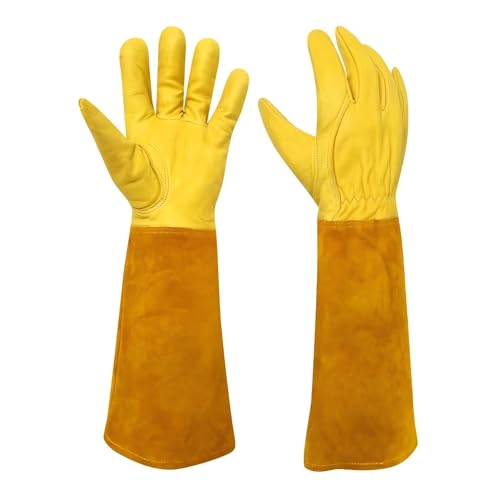
luvaswel uses 100% cowhide leather throughout, including the forearm gauntlet, with a heavyweight fabric weight class that provides noticeable stiffness compared to deerskin blends. The ambidextrous design means there’s no separate left/right molding, which simplifies manufacturing but results in a less contoured fit — the gloves feel boxy through the fingers and palm. For cactus work where precise finger placement matters less than raw barrier protection, this tradeoff is acceptable.
The yellow cowhide is relatively thick, and owners confirm that it stops rose and blackberry thorns effectively. However, the “almost thornproof” feedback is telling — a few cactus spines can penetrate the single-layer cowhide on direct pressure, especially if the spine is dry and needle-sharp. The extended sleeve covers the forearm to about 14 inches total, which is adequate for most cactus tasks but shorter than the premium options’ 16- to 17-inch coverage.
Breathability is surprisingly good for a heavyweight cowhide glove, and the pull-on closure makes them easy to slip on and off between tasks. The main limitation is the sizing — the gloves run small, and the ambidextrous shape struggles to accommodate users with long fingers. At the budget end of the spectrum, the luvaswel is a functional entry point for cactus handling but not a definitive barrier against aggressive spine strikes.
What works
- Full 100% cowhide construction for consistent abrasion resistance
- Good breathability for a heavyweight leather glove
- Pull-on design allows quick on/off between tasks
What doesn’t
- Ambidextrous shape reduces finger dexterity and contour fit
- Single-layer cowhide can be pierced by sharp, dry cactus spines
7. Professional Rose Pruning Thorn Proof Gardening Gloves

This is the only glove in the lineup using synthetic leather rather than genuine cowhide, which fundamentally changes how it performs against cactus spines. Synthetic leather offers reasonable puncture resistance against rose thorns and bramble, but cactus glochids — those tiny, hair-like clusters of barbed needles — can embed themselves in the synthetic surface and migrate through the material over time. The reinforced fingertips and padded palm add extra material at the high-wear zones, which helps against larger spines.
The elbow-length gauntlet is made from a textured synthetic that breathes better than leather and resists water absorption, making it a practical choice for wet or humid conditions. The form-fitting spandex back provides excellent dexterity — owners report being able to tie boots while wearing these gloves — which is a significant advantage for tasks that require fine motor control, such as tying up cactus stems or handling small pots. The sizing is inconsistent; medium and large can feel similar on smaller hands.
For cactus-specific work, these gloves are best suited as a lightweight secondary pair for quick maintenance tasks rather than primary protection for heavy repotting or aggressive pruning. The synthetic material lacks the density to stop forceful spine penetration reliably, and cactus spines that snag the fabric can be difficult to remove from the synthetic fibers. At the budget-friendly end, the dexterity advantage makes them worth considering for non-spiny tasks around cactus collections.
What works
- Excellent dexterity and breathability compared to heavy leather
- Reinforced fingertips and padded palm for high-wear zones
- Water-resistant synthetic material works well in wet conditions
What doesn’t
- Synthetic surface can snag and trap cactus glochids
- Inconsistent sizing between medium and large sizes
Hardware & Specs Guide
Puncture Resistance Rating (ANSI/CE)
The US ANSI Puncture Level 2 and European CE EN 388 2121X standards test a glove’s ability to resist a standardized probe tip under controlled force. A Level 2 rating requires the material to withstand a puncture force of at least 20 newtons. Gloves without an explicit certification — like most of the mid-range options — rely on material thickness and weave density, which can vary between production batches. For cactus handling, a certified Level 2 glove or a double-layer leather construction provide the most predictable defense.
Gauntlet Length vs. Total Length
Total glove length is measured from the tip of the middle finger to the bottom of the cuff. A range of 15 to 18 inches is typical for elbow-length gauntlet gloves. The gauntlet itself — the sleeve portion above the palm — should measure at least 12 inches to cover the average adult forearm from wrist to elbow. Shorter gauntlets leave a gap between the glove cuff and your shirt sleeve, which cactus spines can exploit when you reach upward or sideways. Measure your forearm length before buying.
FAQ
Can cactus spines puncture through cowhide leather gardening gloves?
How long should the gauntlet be for cactus protection?
Do synthetic thorn-proof gloves work as well as leather for cactus?
Final Thoughts: The Verdict
For most gardeners, the gloves for cactus winner is the FEISHDEK Deerskin + Goatskin because its double-layer palm strategy delivers the puncture-stopping density you need exactly where cactus spines hit hardest, without sacrificing the dexterity to handle small pots and offsets. If you want lab-verified ANSI certification and don’t mind a stiffer break-in, grab the DEX FIT FG310. And for wet-condition work with full elbow coverage from full-grain cowhide, nothing beats the Freicheza Full-Grain Cowhide.