
Blueberry bushes bear fruit for just a few precious weeks, yet birds, squirrels, and raccoons can strip a mature bush of every berry in a single afternoon. A lightweight, poorly-constructed net tangles on branches, tears at the first gust of wind, and leaves your harvest exposed exactly when it matters most. The right blueberry netting forms an impenetrable, breathable barrier that lets sunlight and rain through while locking every single berry safe until you decide to pick it.
I’m Rikta — the co-founder and writer behind Lawn Gear Lab. My buying guides are built on weeks of cross-referencing material science, mesh density data, tensile strength ratings, and thousands of verified owner reports to separate marketing claims from real-world performance in the garden.
Whether you are covering a few dwarf bushes or a full row of mature plants, choosing the right netting for blueberry bushes means understanding mesh size, material weight, UV resistance, and ease of installation — the four factors that determine whether your net lasts one season or five.
How To Choose The Best Netting For Blueberry Bushes
Protecting blueberry bushes is different from covering a vegetable bed. Bushes are tall, irregularly shaped, and often thorny. The netting must drape without snagging, stay in place during storms, and still allow pollinators to access flowers before fruit sets. Here are the key factors to evaluate before buying.
Mesh Size and Density
For blueberry bushes, a mesh opening of ½ inch to ¾ inch is the sweet spot. Any larger and small birds like sparrows and finches squeeze right through. Any smaller and you risk blocking tiny beneficial insects during bloom. Ultra-fine mesh (0.04 inch) offers superior insect protection but should only be applied after pollination is complete to avoid interfering with bees.
Material Weight and UV Resistance
Standard bird netting weighs between 6 g/m² and 9 g/m² and tears easily. For bushes that remain covered for weeks, look for HDPE netting weighing at least 20 g/m² to 30 g/m². This heavier material resists UV degradation, stays flexible in freezing temperatures, and won’t shred when brushed against rough branches. Nanometer PPT and HDPE offer the best longevity for multi-season reuse.
Tangling and Ease of Installation
Nothing ruins the setup experience faster than netting that knots itself the moment you pull it from the package. Woven netting with bonded cross-threads stays flat and cuts cleanly without fraying. Look for netting that mentions “non-tangling” or “woven” construction — these varieties drape over blueberry bushes smoothly and can be removed, folded, and stored without creating a mess.
Quick Comparison
On smaller screens, swipe sideways to see the full table.
| Model | Category | Best For | Key Spec | Amazon |
|---|---|---|---|---|
| JUNKOGO 25×50 Ft | Heavy Duty | Large blueberry patches | 1 in mesh, 20 g/m² HDPE | Amazon |
| POYEE 25×25 Ft | High Density | All-around bush coverage | ½ in mesh, 30 g/m² HDPE | Amazon |
| RIFNY 13×40 Ft | Multi-Season | Cold climate gardens | ⅝ in mesh, HDPE blend | Amazon |
| Abimars 10×33 Ft | Ultra Fine | Insect + bird defense | 0.04 in ultra-fine, Nano PPT | Amazon |
| POYEE 20×20 Ft | Best Value | Entry-level coverage | ½ in mesh, 30 g/m² HDPE | Amazon |
| RIFNY 2 Pack 10×33 Ft | Ultra Fine | Small raised beds | 0.04 in ultra-fine, PE | Amazon |
| Rohuis 10×50 Ft | Budget | Large area low cost | Ultra-fine, PE, 10×50 ft | Amazon |
In‑Depth Reviews
1. JUNKOGO Bird Netting 25×50 Ft

The JUNKOGO netting stands apart because of its woven HDPE construction at 20 g/m² — more than double the density of basic nets. The 1-inch mesh spacing is wide enough to allow pollinator access during bloom yet tight enough to block blue jays, robins, and squirrels. One verified owner reported that this netting survived a 60 MPH storm without any stress signs while covering their blueberry bushes, which speaks directly to the material’s tear resistance and UV stability.
At 25 feet by 50 feet, this roll provides enough material to cover a substantial row of mature bushes or a large berry patch. The woven strands resist tangling far better than cheap single-strand nets, and the black color blends into the garden without looking obtrusive. Owners consistently praise how easily the net lifts from fence posts for harvest access and how well it deters opossums, raccoons, and armadillos without requiring a complex support frame.
The diamond-shaped weave does mean that stretching in different directions can shift the effective dimensions, so plan your cuts with a few extra inches of margin. The netting arrives neatly folded, not tangled, which makes solo installation far less frustrating than cheaper alternatives.
What works
- Woven HDPE strands resist tearing and tangling far better than standard nets
- Proven storm survival with no visible damage or fraying
- Large coverage area suitable for entire blueberry rows
What doesn’t
- Actual dimensions may run slightly oversize compared to advertised measurements
- 1-inch mesh may still admit very small birds in some regions
2. POYEE Bird Netting 25×25 Ft
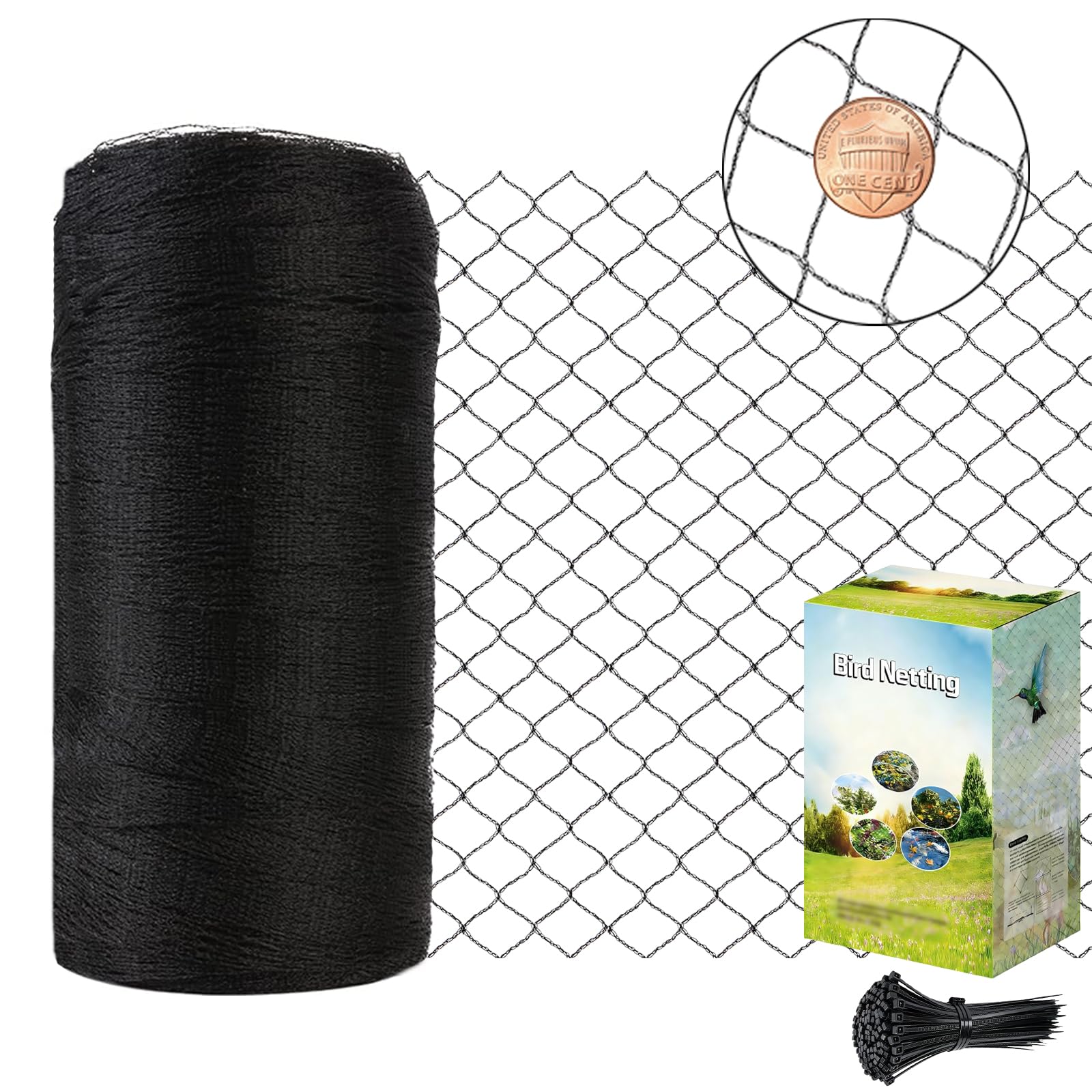
POYEE’s 25×25 ft netting offers the highest material density in this lineup at 30 g/m², making it roughly five times heavier than the 6 g/m² budget nets. The ½-inch mesh is specifically sized to exclude sparrows, finches, and even small chipmunks while still admitting beneficial insects and direct rainfall. This weight class is ideal for blueberry bushes because the netting drapes with authority — it doesn’t flutter loose in strong wind and stays weighted against the bush canopy.
Owners have used this netting for multiple seasons covering fruit trees, chicken runs, and blueberry bushes, reporting that it remains flexible even after two winters of freezing temperatures. The HDPE material resists rot and UV aging, and the netting can be cut to custom shapes with scissors without unraveling. Several reviews highlight that the netting is easy to lift for periodic harvest checks, then re-secure using the included accessories or simple ground staples.
Because the ½-inch mesh is so tight, you may need to manually lift the netting during blueberry bloom to ensure bees can access the flowers. A few owners note that the holes run slightly larger than advertised, but the overall effectiveness against birds remains very high.
What works
- 30 g/m² density provides exceptional tear and UV resistance for long-term reuse
- ½-inch mesh blocks most bird species and small mammals effectively
- Rolls out smoothly and cuts to size without fraying
What doesn’t
- Heavier weight can bend tender young branches if not supported
- May require temporary removal during peak pollination for bee access
3. RIFNY Bird Netting 13×40 Ft
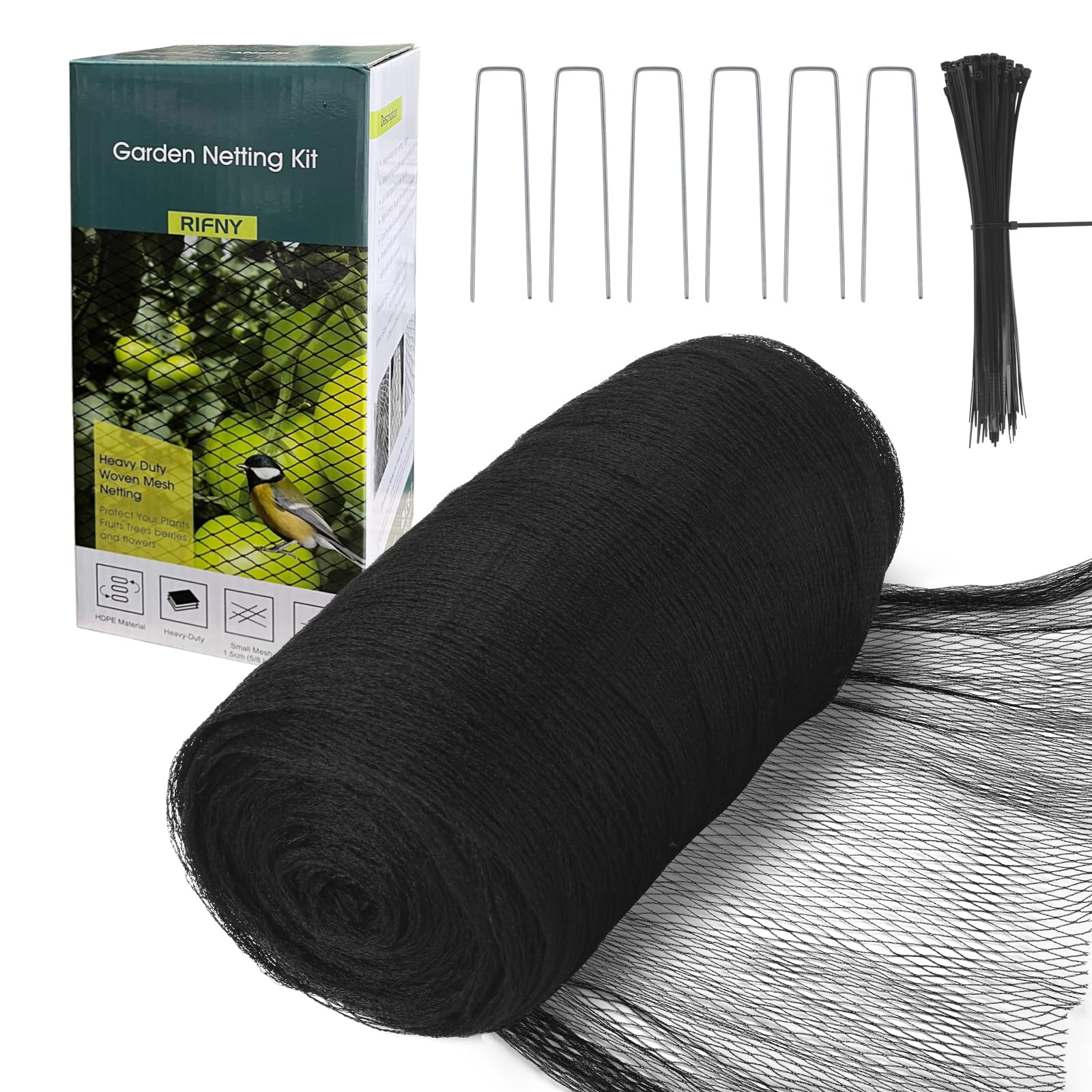
RIFNY’s 13×40 ft netting differentiates itself with an unusually wide temperature tolerance range spanning from -58°F to 212°F. This makes it the best choice for northern growers who leave netting on blueberry bushes through early frosts or unexpected cold snaps. The ⅝-inch mesh size strikes a practical balance — tight enough to exclude most songbirds yet slightly larger than ½-inch alternatives, which makes it noticeably easier to see through when checking berry ripeness.
The included pack of landscape staples and twist ties simplifies installation significantly. Owners consistently remark that this netting does not tangle during unrolling, a common pain point with other brands. Several verified buyers have reordered multiple times, noting that the netting survives full sun exposure across entire growing seasons without becoming brittle. The 13-foot width provides generous overhang for covering tall blueberry bushes while still leaving enough material to anchor at the base.
Some users note that the ⅝-inch mesh may let through very small bird species like wrens or chickadees, so if those are a problem in your area, you may want to double-layer or choose a tighter mesh. The netting is lightweight enough to drape without crushing bushes yet dense enough to resist tearing when snagged on branches.
What works
- Exceptional temperature tolerance for all-season and cold-climate use
- Comes with staples and twist ties, saving a separate purchase
- Stays tangle-free during unrolling and folds neatly for storage
What doesn’t
- ⅝-inch mesh may admit the smallest bird species
- Lightweight material can shift in high winds without adequate anchoring
4. Abimars Thicker Garden Mesh Netting 10×33 Ft
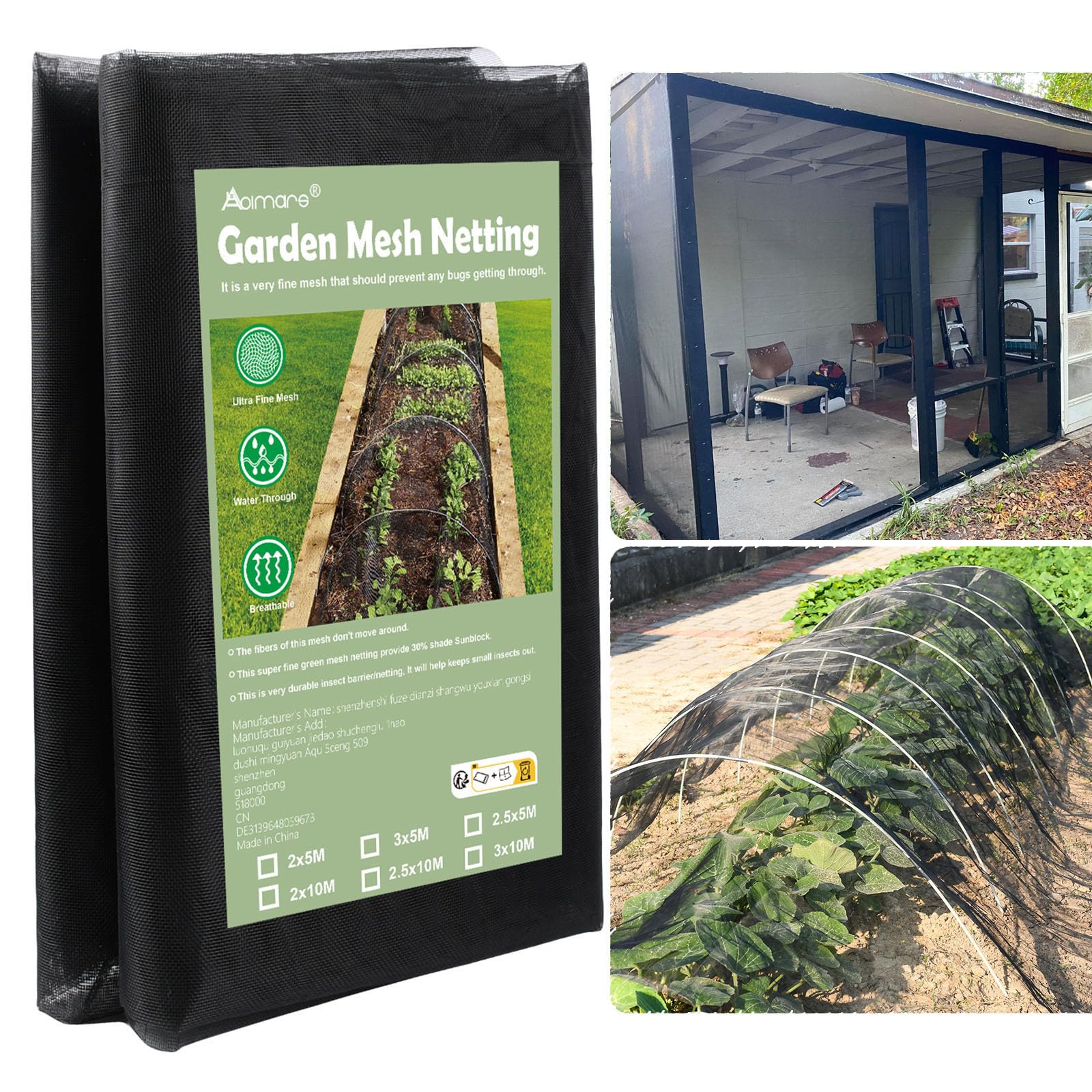
Abimars takes a fundamentally different approach by using Nanometer PPT, a nanocomposite material that resists tearing far better than standard polyethylene. With an ultra-fine mesh of 0.04 inches, this netting stops not only birds but also Japanese beetles, caterpillars, and even the tiniest insects from reaching your blueberry bushes. The 30% shade rate also helps keep bushes cooler during heat waves, reducing water stress on hot afternoons.
The bonded cross-thread construction means the netting does not shift or develop holes when pulled, and it can be cut cleanly without frayed edges. Owners have used this netting for multiple seasons, with several purchasing a second roll because the first held up so well. The black color provides good visibility through the mesh, allowing you to monitor berry development without lifting the cover. It also functions as an effective mosquito barrier for patios and greenhouses when not on the bushes.
The super-fine mesh blocks all insects, including pollinators, so this netting should only be draped over blueberry bushes after flowers have been fully pollinated and fruit has set. The material is thicker and stiffer than PE nets, which can make it slightly harder to mold tightly around irregular bush shapes.
What works
- Nanometer PPT material is significantly more tear-resistant than standard PE netting
- 30% shade factor reduces heat stress on bushes during peak summer
- Cuts cleanly without fraying and maintains shape after multiple seasons
What doesn’t
- Blocks pollinators, so it must be installed after fruit set is complete
- Thicker material is less drapable than lightweight PE nets
5. POYEE Bird Netting 20×20 Ft
POYEE’s 20×20 ft netting shares the same premium 30 g/m² HDPE material as its larger sibling but at a lower entry point, making it the best value play for gardeners with a modest number of blueberry bushes. The ½-inch mesh provides the same bird and small mammal exclusion as the top-tier option, and the UV-resistant construction holds up through multiple seasons without becoming brittle. This is the same netting owners have used successfully over chicken runs, fruit trees, and blueberry bushes for two or more years.
The 20-foot square is well-suited for covering 3 to 5 average-sized blueberry bushes with enough overhang to anchor the edges with stones or landscape staples. The netting rolls out without tangling and can be cut to irregular shapes for oddly positioned bushes. Verified buyers specifically highlight that the netting effectively keeps deer and rabbits away from tender plants, extending its usefulness beyond just bird control.
Some owners note that the holes run slightly larger than the advertised ½ inch, which may allow especially tiny birds or large insects to pass. The netting is also lightweight enough that it requires secure anchoring — loose edges can blow up in wind, creating gaps for pests.
What works
- 30 g/m² density at a competitive entry point offers serious value for the price
- ½-inch mesh provides reliable bird and mammal exclusion for multiple seasons
- Easy to cut, unrolls without tangling, and stores compactly
What doesn’t
- Mesh openings may run slightly larger than stated dimension
- Requires thorough anchoring to prevent wind from lifting edges
6. RIFNY Garden Netting 2 Pack 10×33 Ft

RIFNY’s two-pack offers 660 total square feet of ultra-fine 0.04-inch mesh, making this the strongest insect barrier in the budget-friendly tier. The oblong hole construction allows air, water, and light to pass while blocking mosquitoes, cicadas, and small beetles. For blueberry bushes, this netting is ideal during the fruit-ripening stage when berry flies and small wasps become a threat, though you should not leave it on during flowering.
Each 10×33 ft piece is lightweight and easy to manipulate, and the white color reflects sunlight to prevent heat buildup under the cover. Owners find the netting simple to cut with scissors and quick to install over raised bed frames or simple PVC hoops. The see-through material allows clear observation of berry color changes without needing to lift the cover repeatedly. Several buyers have used this netting successfully to protect young fruit trees and grapevines from both birds and insects simultaneously.
The PE material is not as strong as HDPE or Nanometer PPT, and the ultra-fine mesh is vulnerable to tearing if squirrels or larger animals try to push through. The netting also blocks bees, so you must time its installation carefully around the blueberry pollination window.
What works
- Ultra-fine 0.04-inch mesh blocks both birds and tiny insects
- Two-pack provides generous coverage for multiple beds or bushes
- White color and oblong holes allow light and rain to pass through easily
What doesn’t
- PE material is less tear-resistant than HDPE or Nanometer PPT options
- Blocks pollinators, requiring removal during blueberry bloom
7. Rohuis Garden Netting 10×50 Ft
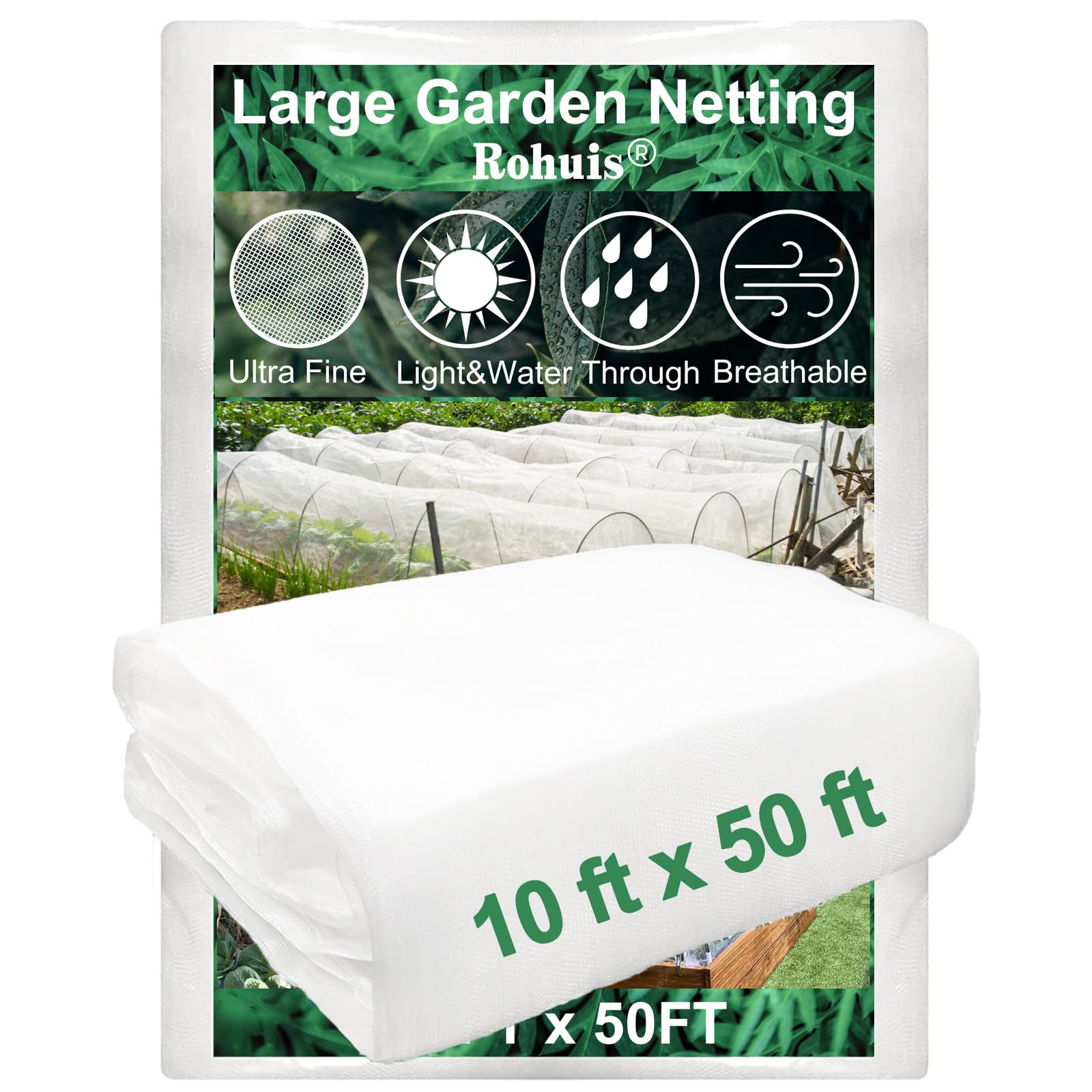
The Rohuis 10×50 ft netting delivers a massive 500-square-foot coverage area at an entry-level price point, making it the most economical choice for covering a large blueberry patch on a tight budget. The ultra-fine mesh blocks birds, cicadas, mosquitoes, and other flying pests effectively, and the white PE material reflects heat rather than absorbing it. The netting can be cut freely with scissors to fit any bush shape, and the edges stay relatively clean without excessive fraying.
Owners have used this netting successfully on raised beds, over grapevines, and around young fruit trees. Multiple verified reviews confirm that the material keeps birds off blueberry plants and allows rain and sunlight to penetrate directly. The netting is lightweight enough to drape without support sticks but benefits from a simple PVC or wire frame to prevent sagging onto the bush canopy.
The PE material is the lightest in this roundup and will not withstand heavy abuse from squirrels or raccoons attempting to push through. A few owners report that the netting snagged on rough wood edges during installation, though careful handling usually prevents tearing. The ultra-fine mesh also blocks pollinators, so it must be timed correctly around the blueberry flowering period.
What works
- 500-square-foot roll provides exceptional coverage for large blueberry patches
- Ultra-fine mesh stops birds, cicadas, and mosquitoes effectively
- Lightweight and easy to cut for custom bush shapes
What doesn’t
- Lightest PE material is prone to tearing if snagged or pushed by animals
- Blocks pollinators, so cannot remain on bushes during bloom
Hardware & Specs Guide
Mesh Size vs. Protection Level
Mesh opening size directly determines what pests the netting excludes. A 1-inch mesh stops robins and jays but lets sparrows through. A ½-inch mesh excludes nearly all songbirds and small mammals like chipmunks. Ultra-fine 0.04-inch mesh blocks insects but also prevents pollinator access — use this only after blueberry blossoms have been fertilized. For most home growers, ½-inch to ⅝-inch mesh offers the best balance of bird protection, airflow, and minimal interference with beneficial insects.
Material Density and Weave
Netting weight is measured in grams per square meter (g/m²). Budget nets weigh 6–9 g/m² and tear easily when stretched over rough branches. Mid-range HDPE nets weigh 20–30 g/m² and resist UV damage, rot, and tearing across multiple seasons. Premium options use Nanometer PPT, a nanocomposite that offers even higher tear strength without adding significant weight. Woven nets with bonded cross-threads hold their shape and cut cleanly, whereas cheap extruded nets develop holes at the first snag.
FAQ
Should I remove netting from blueberry bushes when they flower?
How do I measure the right netting size for a mature blueberry bush?
Can blueberry netting be left on through winter?
Final Thoughts: The Verdict
For most gardeners, the netting for blueberry bushes winner is the JUNKOGO 25×50 Ft because its woven HDPE construction offers the ideal balance of tear resistance, large coverage, and storm-rated durability without blocking pollinators during bloom. If you want ultra-fine insect defense and superior tear strength, grab the Abimars 10×33 Ft. And for a budget-friendly entry that still delivers solid bird protection, nothing beats the POYEE 20×20 Ft.