
A frozen root ball is a death sentence for perennials and shrubs planted in exposed beds. Without a protective layer, the freeze-thaw cycle heaves plants out of the ground, exposes crown tissue, and kills the fine feeder roots that store energy for spring growth. The right winter mulch acts as a thermal blanket, moderating soil temperature, retaining moisture, and preventing the sudden temperature swings that crack root systems.
I’m Rikta — the co-founder and writer behind Lawn Gear Lab. For this guide I cross-referenced manufacturer insulation claims, analyzed moisture retention data, and studied hundreds of verified owner reports on how each material performed through actual subfreezing events and wet winters.
A well-chosen mulch for winter protection must balance insulation value, moisture permeability, wind resistance, and decomposition speed so it stays effective through the entire dormant season without matting into an impermeable crust.
How To Choose The Best Mulch For Winter Protection
Not all mulch materials perform equally when temperatures drop below freezing. The ideal winter mulch must provide a stable insulating air layer, resist compaction from snow and rain, and allow excess moisture to evaporate so the root zone does not become waterlogged. These are the four criteria that separate a usable winter cover from one that actually damages plants.
Air-Trapping Structure Over Density
Fine, dense mulches like shredded bark or compost pack down into a heavy mat that holds moisture against the crown and conducts cold into the soil. The best winter mulches — straw, pine needles, and coarse wood chips — maintain an open, fibrous structure that traps stationary air. That trapped air is the actual insulator, not the material itself. Look for products with long fibers or irregularly shaped particles that resist settling.
Moisture Permeability and Evaporation
A winter mulch must allow rainfall and snowmelt to drain through without pooling on the surface. If the mulch layer becomes a saturated blanket, it increases thermal conductivity and encourages crown rot. Coarse materials like pine straw and wheat straw shed some water and aerate naturally. Fine bark or cocoa hulls can form a crust that traps water underneath, which is dangerous in a freeze-thaw cycle.
Decomposition Timing
Certain organic mulches break down rapidly in wet conditions, losing insulating value before the coldest months arrive. Wheat straw and cocoa bean shells decompose within a single season, which is fine for winter-only application. Pine needles and hardwood chips last multiple seasons and may need to be pulled back in spring to allow soil warming. Match the decomposition speed to how often you want to reapply.
Pest and Weed Seed Contamination
Lower-quality straw bales often contain viable grass and weed seeds that germinate in the warmth of spring before desired plants emerge. Premium suppliers clean and screen their material to reduce seed load. Cocoa shell mulch can attract squirrels or dogs due to its chocolate scent, and some nutshell mulches are toxic if ingested in large quantities. Verify the label for seed-free guarantees if you plan to leave the mulch through the growing season.
Quick Comparison
On smaller screens, swipe sideways to see the full table.
| Model | Category | Best For | Key Spec | Amazon |
|---|---|---|---|---|
| HealthiStraw GardenStraw | Wheat Straw | General winterizing | 3 cu ft compressed bale | Amazon |
| Longleaf Pine Straw Roll | Pine Needles | Wind-prone beds | 125 sq ft coverage | Amazon |
| Back to the Roots Organic Mulch | Wood Fines | Winter and spring look | 25.7 qt bag | Amazon |
| Coco Coir 6-Pack | Coconut Husk | Multi-season amendment | 12.5 gal expanded volume | Amazon |
| Out-Grow Wheat Straw | Natural Straw | Animal shelter liners | 1 cu ft box | Amazon |
| Hull Farm Cocoa Shell Mulch | Cocoa Bean Shells | Scented winter cover | 2 cu ft bag | Amazon |
| Rio Hamza Houseplant Mulch | Bark Chips | Indoor potted perennials | 8 qt bag | Amazon |
In‑Depth Reviews
1. HealthiStraw GardenStraw
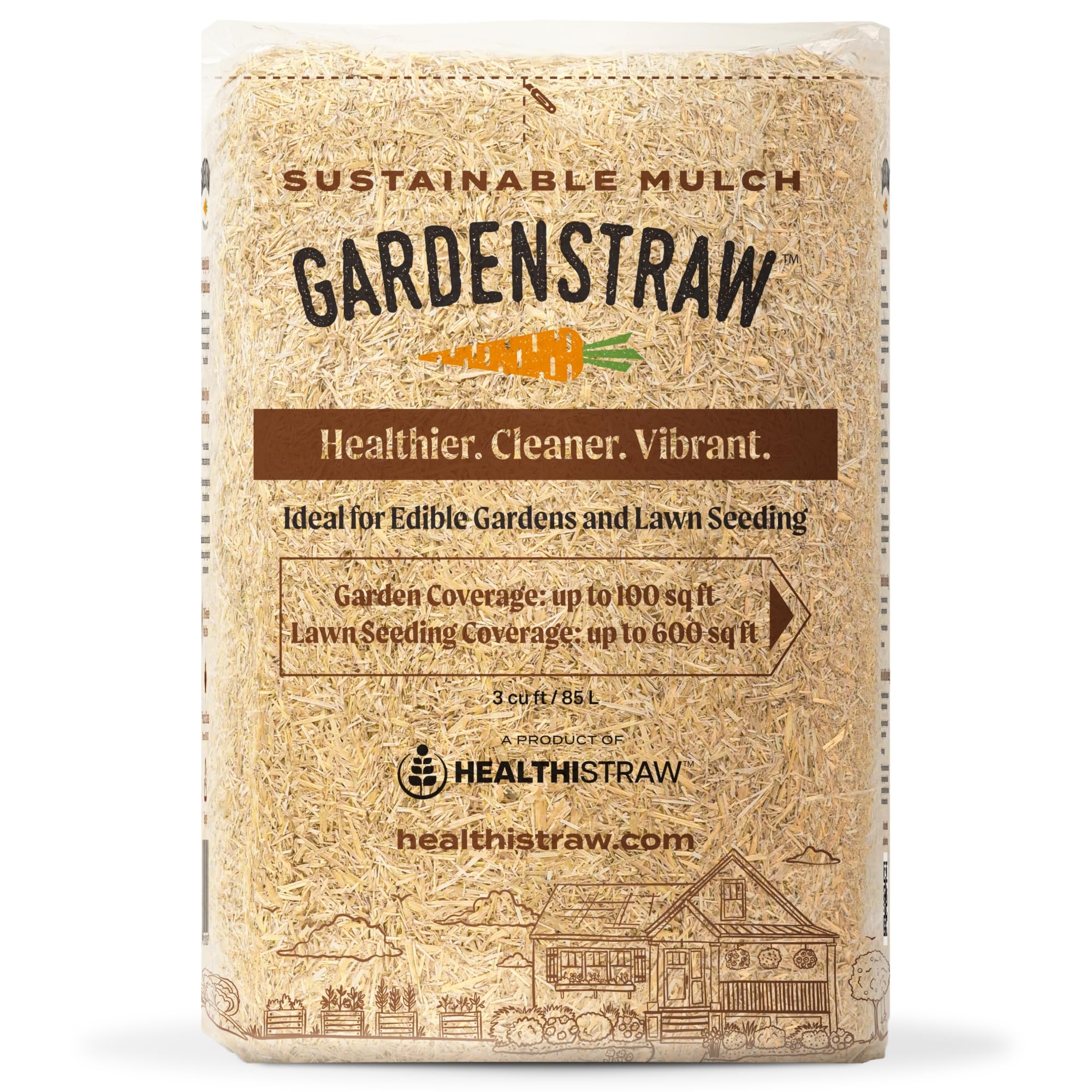
This three-cubic-foot compressed bale of non-GMO wheat straw is the most versatile winter mulch in this lineup. The straw is mechanically filtered to remove dust, dirt, and the vast majority of weed seeds — a critical advantage over commodity straw bales that often germinate aggressively in spring. Each fiber is cut long enough to interlock when wetted, which prevents the layer from blowing off in gusty winter winds that would scatter lighter mulches across the yard.
The open structure of the straw creates deep air pockets that insulate the root zone without trapping excessive moisture against the crown. Owner reports consistently note that soil under a three-inch layer of this straw stays consistently moist through dry cold snaps and drains freely during rainy thaws. A single compressed bale covers up to 100 square feet at the recommended two-to-three-inch depth, making it economical for entire perennial borders.
One con: a small number of grass seeds still make it through the cleaning process, so a few stray blades may appear in spring. This is far less than typical bale straw, but gardeners who want absolutely sterile material should consider coco coir or pine needles instead. On balance, the combination of insulation, cleanliness, coverage volume, and wind resistance makes this the most reliable choice for broad winter applications.
What works
- Low weed-seed content compared to generic straw
- Long fibers lock together, resisting wind scatter
- One bale covers 100 sq ft at effective depth
What doesn’t
- A few grass seeds may still sprout in warm spring weather
- Bulky packaging requires storage space
2. Longleaf Pine Straw Roll

Longleaf pine needles are the gold standard for professional landscapers winterizing southern gardens, and this roll delivers exactly what the trade demands: needles approximately fourteen inches long with minimal debris. The key advantage over hardwood mulches is the interlocking needle mat — once settled, the layer stays put under heavy rain and high wind, which is the single biggest failure point for loose bark or straw in exposed sites.
The UV-resistant pigment added during processing slows needle fading from red to gray, extending the visual life of the layer by two to four times compared to untreated pine straw. That matters for winter protection because the material retains its structural integrity through spring, reducing the need for a full reapplication when temperatures warm. The open needle structure drains exceptionally well, preventing the waterlogged conditions that cause frost heave in clay soils.
Some buyers note that compressed bales from other suppliers offer more consistent volume, though this roll is cleaner and freer of sticks than any bulk option. If you winterize exposed, windy beds, the interlocking needle mat is the most secure solution here.
What works
- Needles interlock to resist wind and water erosion
- UV coating extends visual and structural life
- Very low debris content
What doesn’t
- Coverage varies between rolls
- Higher cost per square foot than straw options
3. Back to the Roots Organic Premium Mulch

This twenty-five-point-seven-quart bag of wood-fine mulch is designed for gardeners who want a single product that works for both winter protection and spring aesthetics. The base material is upcycled plant matter and wood fines from U.S. sources, processed into a dark, consistent texture that looks clean and intentional around foundation plantings and raised beds. Unlike bark nuggets, these fine particles settle into a cohesive layer that does not wash away easily.
The addition of yucca extract improves water penetration, helping rain and snowmelt move through the mulch rather than pooling on top. Dolomitic limestone balances pH, which is relevant for beds that receive heavy winter rainfall and tend to acidify over time. Owners report that the dark color absorbs solar radiation during short winter days, which can slightly warm the soil surface on sunny afternoons — a subtle benefit for marginal hardiness zones.
Value perception is the main friction point. Several buyers note that the bag is smaller than it appears and that comparable local bulk mulch costs significantly less. For a single raised bed or a small grouping of shrubs, the convenience and formulation justify the cost. For covering a large perennial border, you would need multiple bags, and the price per square foot becomes hard to defend against straw or pine needles.
What works
- Dark color absorbs winter sun for slight soil warming
- Yucca extract prevents water pooling on surface
- Peat-free and sustainably sourced
What doesn’t
- High cost per square foot for large beds
- Fine texture can compact if applied too thick
4. Plantonix Coco Coir 6-Pack

Coco coir is not the first material that comes to mind for winter mulch, but this compressed-brick format has distinct advantages for the job. Each 650-gram block expands into roughly two gallons of fluffy, fibrous material that can be spread as a surface layer or worked into the top inch of soil. The high cation exchange capacity means it holds onto nutrients that would otherwise leach out during winter rains, keeping them available for spring root uptake.
The pre-rinsed and pre-screened processing removes the sand, rock, and fiber fragments that plague cheaper coir bricks, resulting in a consistent texture that does not compact into a solid sheet. Owners report that the material expands fully with hot water and fills seedling trays with a fluffy medium that insulates roots while allowing gas exchange. The neutral pH is a bonus for beds where wood mulches would acidify the soil over winter.
The biggest limitation is coverage area — six bricks expand to 12.5 gallons total, which covers only a small raised bed or a collection of large containers. For in-ground perennial borders, the cost per square foot is high compared to straw or pine needles. This pack works best for overwintering potted perennials, tender shrubs moved into a cold frame, or seedlings that need root-zone insulation through the last frost.
What works
- Pre-screened for sand and rocks
- Expands to fluffy, aerated structure
- Neutral pH suits acid-sensitive plants
What doesn’t
- Small expanded volume for the price
- Requires rehydration before use
5. Hull Farm Cocoa Bean Shell Mulch

Cocoa bean shell mulch provides a rare combination of winter insulation and light fertilization. The shells carry an approximate NPK value of 2.5-1-3, meaning they release small amounts of nitrogen, phosphorus, and potassium as they break down over the dormant season. This is a genuine advantage for overwintering bulbs and shallow-rooted perennials that need accessible nutrients in early spring before the soil has fully warmed for biological activity.
The shells have a coarse, lightweight texture that creates good air space for insulation, and the natural chocolate scent is strong for the first week after application. Owners report that established squirrels are less interested in digging through cocoa shells compared to pecan or walnut shell mulches. The material retains moisture well without forming a crust, which reduces the number of times you need to water container plants during dry winter spells.
The safety concern is real and non-negotiable: cocoa bean shells contain theobromine, which is toxic to dogs if consumed in large amounts. If you have a dog that eats mulch, this is not a viable option. Additionally, the shells are lightweight enough that dry conditions or wind can scatter them onto adjacent lawns, requiring weekly clean-up. For protected beds and container plants in dog-free yards, the nutritional boost during winter breakdown is unmatched.
What works
- Releases NPK during winter decomposition
- Strong chocolate scent deters some wildlife
- Does not crust or compact
What doesn’t
- Toxic to dogs if ingested
- Lightweight shells blow in open areas
6. Out-Grow 100% Natural Wheat Straw

This one-cubic-foot box of all-natural wheat straw is a straightforward, additive-free winter mulch for gardeners who only need to cover a small area. The straw is grown without chemical treatments and contains no dyes or binders, making it suitable for organic beds and edible gardens. The natural brown color blends into the winter landscape without the bright golden tone of hay.
Owners report that the clean, low-dust straw works well inside cold frames and as bedding for outdoor cat shelters, a testament to its ability to trap air without releasing particulates. Moisture retention is good — the hollow straw shafts hold water near the soil surface and release it slowly during dry periods. At one cubic foot, the box is compact enough to store indoors and easy to carry to the planting site without dealing with a full bale.
The limited volume means it covers only about eight to ten square feet at the recommended three-inch winter depth. For a single large shrub or a small grouping of perennials, that is sufficient. Gardeners who need to cover a full bed will find the per-square-foot cost to be higher than buying a larger compressed bale. Also, the straw is not screened for weed seeds, so some germinations may occur in spring, though owners report they are manageable.
What works
- Chemical-free and safe for edible gardens
- Compact box is easy to store and carry
- Low dust content for indoor cold frame use
What doesn’t
- Limited coverage for the cost
- Not screened for weed seeds
7. Rio Hamza Trading Houseplant Mulch

This eight-quart bag of small bark wood chips is designed specifically for indoor potted plants, but it works as a fine-textured winter mulch for small outdoor containers and window boxes. The chips are uniformly sized at roughly half an inch, creating a tidy surface that does not look agricultural. The natural brown color stays consistent and does not fade to gray as quickly as shredded hardwood.
Moisture retention is the primary benefit — the bark layer slows evaporation from the potting soil surface, which matters in heated indoor environments where winter air is extremely dry. Owners report that the chips do not introduce pests or fungal spores, a common problem with outdoor-sourced bark that has been sitting in bulk piles. The texture is pleasant to handle and does not produce dust when poured.
The volume is small — eight quarts covers roughly two to three medium-sized pots at a half-inch depth. For a large collection of overwintering houseplants or a row of patio containers, you will need multiple bags. The per-ounce cost is higher than buying a bulk bag of orchid bark or pine fines, but the convenience of a pre-cleaned, pest-free product that can go directly onto potting soil justifies the premium for indoor use.
What works
- Pest-free and safe for indoor potting soil
- Uniform chip size for a clean appearance
- Slows evaporation in dry indoor air
What doesn’t
- Small volume — limited coverage per bag
- Higher cost per ounce than bulk alternatives
Hardware & Specs Guide
Compressed Volume vs. Fluffed Volume
Straw bales and coco coir bricks are shipped in compressed form to reduce shipping weight, but the actual coverage area depends on how much the material expands once opened. A three-cubic-foot compressed straw bale can nearly double in volume when fluffed by hand. Always calculate coverage based on the manufacturer’s expanded estimate, not the compressed package dimensions. For winter mulch, the fluffed layer should be two to three inches deep to achieve effective insulation.
Fiber Length and Interlocking
Wheat straw fibers cut to six inches or longer tend to interlock when wetted. This natural matting effect prevents the layer from sliding off slopes or scattering in wind. Pine needles, at fourteen inches or more, form an even stronger interlocking network. Shorter materials like bark chips or cocoa shells rely on friction and weight alone, which makes them less suitable for exposed sites. Check the product description for fiber length if wind is a concern in your winter location.
FAQ
When should I apply winter mulch for frost protection?
How deep should the winter mulch layer be?
Can I leave winter mulch on through spring?
Will winter mulch attract rodents or pests?
Final Thoughts: The Verdict
For most gardeners, the mulch for winter protection winner is the HealthiStraw GardenStraw because it combines low weed-seed content, excellent insulation from interlocking fibers, and expansive coverage per bale at a price that works for whole borders. If you want a material that stays put in high wind without blowing or washing, grab the Longleaf Pine Straw Roll. And for winterizing a few large containers or a small cold frame, nothing beats the Plantonix Coco Coir 6-Pack for clean handling and neutral pH performance.