
Chickweed can take over a lawn in a single cool, damp season, forming dense mats that smother your grass. Standard broadleaf herbicides often miss it, requiring a targeted formulation that works on this specific weed. Finding a formula that kills chickweed without damaging your turf is the core challenge for any homeowner or lawn enthusiast.
I’m Rikta — the co-founder and writer behind Lawn Gear Lab. I’ve spent hundreds of hours digging into herbicide labels, comparing active ingredient concentrations, and cross-referencing real owner reports to find which products reliably eliminate chickweed from lawns.
This guide cuts through the marketing to deliver a practical comparison of the top formulas on the market, giving you the data you need to confidently select the best weed killer for chickweed for your specific grass type and infestation level.
How To Choose The Best Weed Killer For Chickweed
Selecting an effective chickweed killer hinges on your grass type, the stage of the infestation, and your preference for concentrate versus ready-to-use formulas. Using the wrong chemistry can damage your lawn or leave chickweed to regrow from root fragments.
Match the Active Ingredient to Your Turf
Not all herbicides are safe on all lawns. Products with Dicamba and Mecoprop-P (like the BioAdvanced concentrate) are reliable on many northern and southern grasses, while Triclopyr (found in Bonide’s chickweed-specific killer) works well on cool-season turf but can harm some warm-season varieties. Mesotrione offers a unique bleaching action that targets chickweed while being safe on centipede and St. Augustine grass when used at the correct rate.
Concentrate vs. Ready-to-Use
A 32-ounce concentrate can treat over 16,000 square feet, making it far more economical for large lawn areas than a ready-to-use spray bottle. Ready-to-use formulas, like the Ortho Weed B Gon pack, provide convenience and consistency for spot-treating isolated patches of chickweed without mixing.
Rainfast Window and Temperature
Chickweed thrives in cool weather, so you need a formula that works in lower temperatures. SpeedZone excels in cool-weather performance, showing visible effects within hours. Also check the rainfast window—some products become rainproof in three hours, while others require six hours of dry weather to fully absorb into the leaf tissue.
Quick Comparison
On smaller screens, swipe sideways to see the full table.
| Model | Category | Best For | Key Spec | Amazon |
|---|---|---|---|---|
| SpeedZone EW | Premium | Fast action in cool weather | 20 fl oz concentrate | Amazon |
| PBI/Gordon Trimec | Premium | Hard-to-control broadleaf weeds | 1 gal (128 fl oz) | Amazon |
| Ortho Weed B Gon 2-Pack | Premium | Convenient spot treating | 64 fl oz total (RTU) | Amazon |
| Spectracide Large Plot | Mid-Range | Large yard coverage per gallon | 128 fl oz concentrate | Amazon |
| Bonide Chickweed & Clover Killer | Mid-Range | Chickweed-specific spot treatment | 128 fl oz RTU spray | Amazon |
| Liquid Harvest Mesotrione | Mid-Range | Pre- and post-emergent control | 8 fl oz concentrate | Amazon |
| BioAdvanced Weed Killer | Budget | Value for broad-spectrum weeding | 32 fl oz concentrate | Amazon |
In‑Depth Reviews
1. SpeedZone EW Lawn Weed Killer

SpeedZone EW is a professional-grade formula that packs carfentrazone-ethyl for rapid visual burndown. Users report visible curling and browning of chickweed leaves within hours of application, with full knockdown in two days. The 20-ounce bottle mixes to cover a substantial area, and the rainfast window is just three hours, giving you flexibility when unpredictable weather threatens your spray window.
The formulation is specifically engineered for cool-weather performance, which is critical because chickweed germinates and grows most aggressively in spring and fall soil temperatures between 40°F and 70°F. Many weed killers lose efficacy below 60°F, but SpeedZone maintains its activity level in those cooler conditions. It is labeled for use on Kentucky bluegrass, tall fescue, and bermudagrass, among others.
One owner noted the lack of a measuring cup in the bottle, though the cap is marked at roughly 0.2 fluid ounces for mixing reference. Professional lawn care operators frequently recommend this as their go-to for stubborn weeds like ground ivy, spurge, and chickweed. For homeowners dealing with a heavy chickweed mat in early spring, this delivers the fastest visible outcome you can buy without a commercial license.
What works
- Visible results in hours, not days
- Performs well in cool spring/fall temperatures
- Reseed in as little as 7 days
What doesn’t
- No measuring cup included with the bottle
- Requires careful application to avoid grass damage
2. PBI/Gordon Trimec Lawn Weed Killer

Trimec is the classic three-way herbicide trusted by professionals for decades, containing a proprietary blend of 2,4-D, Dicamba, and Mecoprop. The one-gallon container treats between 32,000 and 64,000 square feet, depending on the mixing rate you choose. This volume makes it one of the best value options per square foot for large properties with persistent chickweed patches.
Users consistently report excellent control of hard-to-kill weeds like creeping Charlie, Virginia buttonweed, and chickweed. Several reviews note that when tackling heavy infestations, using the higher end of the mixing rate delivers decisive results. The concentrate mixes easily with water in a pump sprayer and the solution is stable once mixed for the duration of a typical spraying session.
One experienced reviewer mentioned that the product is primarily labeled for cool-season grasses, so warm-season lawn owners should verify compatibility before use. The tank-mix flexibility is high, meaning you can combine Trimec with other compatible products if you are dealing with a multi-species weed outbreak. For a homeowner who wants a single, proven concentrate to handle chickweed across an entire season, this is a dependable choice.
What works
- Extremely economical coverage per gallon
- Proven three-way formulation for tough broadleaf weeds
- Flexible mixing rates for mild vs. heavy infestations
What doesn’t
- Primarily labeled for cool-season turf grasses
- May require multiple applications on mature chickweed
3. Ortho Weed B Gon Chickweed, Clover & Oxalis Killer
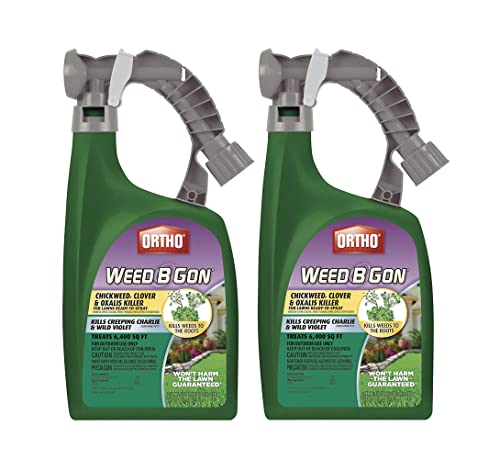
Ortho’s Weed B Gon is formulated specifically for chickweed, clover, and oxalis, with triclopyr as the key active ingredient. The pack of two 32-ounce ready-to-use bottles covers 12,800 square feet when used with a hose-end sprayer, making spot treatment of chickweed patches simple. The ready-to-use format eliminates mixing errors, which is beneficial for gardeners who want consistency without measuring concentrates.
User reports indicate this product is effective on zoysia and other warm-season lawns when used according to label instructions. The typical results timeline shows chickweed browning within two to three days, with full root kill within a week. The rainfast window is six hours, which is sufficient for most application schedules but slightly longer than premium concentrates.
Some owners noted that creeping Charlie came back after treatment, suggesting that particularly well-established weed mats may need a second application. For early-season chickweed that has not formed a dense mat, a single pass with this ready-to-use spray is often sufficient. The included bottle works best for small to medium lawns where walking the entire perimeter with a hose is manageable.
What works
- No mixing required for spot application
- Effective on warm-season turf like zoysia
- Specifically formulated for chickweed, clover, and oxalis
What doesn’t
- May need reapplication for established creeping Charlie
- 6-hour rainfast window is longer than premium alternatives
4. Spectracide Large Plot Weed Stop for Lawns Concentrate

This gallon-sized concentrate from Spectracide offers the highest total coverage in the list, treating up to 32,000 square feet of northern grasses or 42,500 square feet of southern turf. The chemistry is designed to kill more than 200 weed types including chickweed, clover, and dandelion, and it is rainproof in just six hours. The formula is labeled as safe for centipede grass, which is a major plus for southern lawns.
Users with large properties appreciate the economy of scale—a single gallon covers an entire season’s worth of spot treatment for most homeowners. Reviews describe fast results on chickweed and dollar weed, though some tougher weed species required a third application. The concentrate mixes easily with water and can be applied with a standard hose-end sprayer or pump sprayer.
Several reviews mentioned that the product was slower-acting on rosette weeds and foxtails, but consistently effective on chickweed. For homeowners managing a large lawn with scattered chickweed infestations, this gallon jug provides the volume needed without requiring multiple bottle purchases. It represents a strong mid-range option for those prioritizing coverage area over speed of action.
What works
- Best cost-per-square-foot for large lawns
- Safe on centipede grass when used as directed
- Rainproof in 6 hours for flexible application timing
What doesn’t
- Slower visible results compared to premium formulations
- Ineffective on rosette weeds without repeated application
5. Bonide Chickweed, Clover & Oxalis Killer RTU

Bonide specifically names chickweed in the product title, a strong signal that this formula was designed with that weed in mind. The active ingredient triclopyr is well-documented for its effectiveness against chickweed and clover, and it is nearly odorless when sprayed. The 128-ounce ready-to-use bottle saves you the step of mixing concentrate, making it convenient for immediate spot treatment.
Coverage is rated at 10,000 square feet, which is reasonable for a ready-to-use product. User feedback confirms that chickweed and clover show wilting within a day, with full browning in three days. One reviewer recommended using a surfactant to improve adhesion on the waxy leaves that chickweed sometimes produces. The formula is safe on most cool-season turf grasses when applied at the recommended rate.
A few owners reported mixed results on clover specifically, with some clover patches only slightly browning after heavy spraying. The included hand sprayer is a standard attachment, and some users with large lawns opted to transfer the chemical to a backpack pump sprayer for wider distribution. For homeowners with a defined chickweed patch rather than a full-lawn infestation, this is a targeted and reliable tool.
What works
- Specially named for chickweed control
- Nearly odorless application experience
- Clear results visible within 24 hours
What doesn’t
- Hand sprayer is less effective for very large lawns
- Clover control can be inconsistent
6. Liquid Harvest Mesotrione Concentrate

Mesotrione is a unique active ingredient that works both pre-emergent and post-emergent, meaning it can kill chickweed seedlings before they appear and also control actively growing plants. This Liquid Harvest concentrate targets 46 species, including chickweed, carpetweed, and crabgrass. The mode of action is different from traditional auxin-mimicking herbicides—it inhibits photosynthesis, causing susceptible plants to turn white and die within two to three weeks.
This product is safe on many turf types including centipede grass, St. Augustine grass (sod only), and Kentucky bluegrass, but it should not be used on bentgrass or Poa annua. Users love that it can be used to overseed immediately after spraying, since Mesotrione does not affect germinating grass seed. The 8-ounce bottle is highly concentrated—one teaspoon mixes with two gallons of water for spot treatment.
Some owners warned about the bleaching effect on turf if too much is applied, especially on heat-stressed or drought-stressed grass. A spray dye is recommended to avoid overlapping application. For gardeners who want a single product that can prevent chickweed from emerging in the fall and kill existing chickweed in spring, this dual-action chemistry is a smart investment.
What works
- Effective as both pre-emergent and post-emergent
- Safe to use with overseeding programs
- Controls 46+ weed species in one concentrate
What doesn’t
- Slow action—takes 2-3 weeks for full kill
- Can bleach turf grasses if applied too heavily
7. BioAdvanced Weed Killer for Lawns Concentrate

BioAdvanced (formerly Bayer Advanced) offers a straightforward three-way herbicide mix of Dicamba, Mecoprop-P, and dimethylamine salt. The 32-ounce concentrate covers 16,000 square feet, making it an entry-level option that still delivers yard-wide coverage. It is labeled for both northern and southern lawns, which is rare at this price tier, and it kills to the root with a single application on most listed weeds.
User reviews highlight its effectiveness on dollar weed and dandelion, with many owners reporting that it matches the power of more expensive products. The spray mechanism includes a “press the tab” feature for the hose-end attachment, though some users found it stiff on the first use. The formula requires about two hours before watering, which is a shorter wait time than several competitors.
A few customers had mixed results, with one report of temporary browning on Bermuda grass and another noting that nutgrass only reduced rather than eliminated. For those just starting to tackle chickweed and looking to keep initial investment low, this is a functional concentrate that covers a generous area. It won’t match the speed of premium formulas like SpeedZone, but it will get the job done over a week to ten days.
What works
- Covers 16,000 sq ft from a single 32 oz bottle
- Works on both northern and southern grass types
- Short wait time before watering
What doesn’t
- Some users reported temporary turf browning
- Not as fast-acting as premium cool-weather formulas
Hardware & Specs Guide
Active Ingredient Selection
The active ingredient is the chemical responsible for weed death. Dicamba and Mecoprop-P are broad-spectrum systemic options that move through the plant to the roots. Triclopyr is excellent for chickweed and clover specifically but can be harsh on some turf types. Mesotrione provides a unique bleaching action and is safe for overseeding. Always check the label to confirm the active ingredient is compatible with your grass species.
Concentrate vs. Ready-to-Use (RTU)
Concentrate formulas require mixing with water in a pump or hose-end sprayer, offering the lowest cost per square foot. Ready-to-use bottles attach directly to your garden hose and are pre-mixed, providing convenience for spot treatment but often at a higher price per application. For a standard residential lawn of 5,000 to 10,000 square feet, a 32-ounce concentrate is usually the sweet spot between cost and effort.
FAQ
When is the best time to apply chickweed killer for maximum effectiveness?
Will these chickweed killers harm my lawn if I use them on the wrong grass type?
Final Thoughts: The Verdict
For most gardeners, the weed killer for chickweed winner is the SpeedZone EW because it delivers the fastest visible burndown, works in cool weather when chickweed thrives, and is rainfast in three hours. If you want professional-grade volume at the lowest per-square-foot cost, grab the PBI/Gordon Trimec. And for convenient spot treatment without mixing chemicals, nothing beats the Ortho Weed B Gon Chickweed & Clover Killer.