
Bamboo’s reputation for being an unstoppable, fast-growing giant hides a secret: most home landscapes fail it within the first six months because the soil around its roots gets waterlogged or becomes too alkaline. Unlike the jungle floors where bamboo naturally thrives—loose, rich, and consistently moist—the dense clay or compacted fill dirt found in most suburban yards chokes the rhizomes, turning a promising grove into a yellow, stunted disappointment.
I’m Rikta — the co-founder and writer behind Lawn Gear Lab. I’ve spent countless hours cross-referencing soil chemistry guidelines for running and clumping bamboo species, sifting through hundreds of verified owner reports on water retention and nutrient profiles, and analyzing bagged potting blends to find which formulations actually deliver the drainage, aeration, and slight acidity that bamboo demands.
This guide walks you through the specific pH targets, texture requirements, and organic amendments that separate a thriving screen of bamboo from a slow decline into root rot, so you can buy with confidence when searching for the best soil for bamboo to match either container-grown culms or direct-ground planting.
How To Choose The Best Soil For Bamboo
Bamboo is a grass, not a tree, and its root system behaves like one—rhizomes spread horizontally just beneath the surface, and they demand a loose, well-aerated medium that stays consistently damp without ever becoming soggy. Picking the wrong bag mix leads to yellow leaf tips, stunted cane growth, or rhizome rot within a season.
pH Level and Acidity
Bamboo prefers a slightly acidic soil pH between 5.5 and 6.5. When the pH drifts above 7.0, iron and manganese become unavailable to the plant, causing interveinal chlorosis (yellowing between green veins) that no fertilizer can fix. Look for bagged mixes that list peat moss, sulfur, or pine bark as primary ingredients, since these naturally lower pH. If you are amending garden bed soil, plan to test the pH with a probe before planting.
Texture and Drainage
The ideal bamboo soil feels crumbly and light in your hand, not sticky or powdery. Heavy clay holds water around the rhizomes and suffocates them; pure sand drains too fast and starves the plant of moisture. The perfect texture comes from a blend of coarse organic matter (like pine bark fines or coco coir), a drainage agent (perlite or pumice), and a moisture-retaining component (sphagnum peat or worm castings). A mix that clumps into a solid ball when squeezed is too dense for bamboo.
Nutrient Profile and Organic Content
Bamboo is a heavy feeder, especially of nitrogen, which fuels its rapid cane and leaf production. A soil mix with compost, worm castings, or slow-release organic fertilizer built in gives the plant a steady supply without the risk of nitrogen burn that synthetic salts can cause. Avoid mixes that list “slow-release synthetic fertilizer” on the label, as the concentrated salts can damage the sensitive rhizome tips. Organic humus also supports the beneficial microbes that break down organic matter into usable nutrients.
Container vs. Ground Planting
Bamboo grown in containers needs a more aerated mix than ground-planted bamboo because the confined space restricts natural drainage. For pots, choose a soil that includes a higher percentage of perlite or pumice (around 30 percent) and skip any mix that contains moisture-retaining crystals, which can keep the rhizomes too wet. For in-ground planting, focus on amending the native soil with plenty of organic matter rather than replacing it entirely.
Quick Comparison
On smaller screens, swipe sideways to see the full table.
| Model | Category | Best For | Key Spec | Amazon |
|---|---|---|---|---|
| Coast of Maine Acid-Loving | Premium Organic | In-ground bamboo beds | pH 4.5–5.5 (low) | Amazon |
| Midwest Hearth Premium Mix | All-Purpose | Container bamboo | 8 dry quarts volume | Amazon |
| Perfect Plants Indoor Soil | Indoor Mix | Small potted bamboo | 4 qt resealable bag | Amazon |
| Soil Sunrise Lucky Bamboo | Specialty Mix | Lucky bamboo (Dracaena) | 4 qt with worm castings | Amazon |
| Rosy Soil Cactus Mix | Peat-Free | Bamboo in dry climates | 4 qt, peat-free | Amazon |
| FANTIAN Pumice Pebbles | Drainage Additive | Amending heavy soil | 5 lbs, ¼ inch size | Amazon |
| Miracle-Gro Cactus & Palm | Value 3-Pack | Multiple small pots | 3 x 8 qt bags | Amazon |
In‑Depth Reviews
1. Coast of Maine Organic & Natural Planting Soil for Acid Loving Plants

This 20-quart bag from Coast of Maine is the most category-specific formulation in this review, designed explicitly for plants that demand a low pH—and bamboo falls squarely into that group. The blend combines composted manure, sphagnum peat moss, and aged bark to create a texture that stays loose enough for rhizome spread while holding just enough moisture to mimic bamboo’s native forest floor habitat. At 20 quarts, it provides enough volume to fill several large containers or to amend a 3-foot by 3-foot in-ground planting hole, making it the most economical premium option for serious bamboo growers.
Owner feedback consistently praises the soil’s ability to revive struggling azaleas, blueberries, and ferns—all plants with similar root sensitivity to bamboo. Multiple buyers report that their plants produced noticeable new growth within weeks of transplanting into this mix, and the composted manure provides a steady nitrogen release that supports bamboo’s fast-growing canes without the burn risk of synthetic fertilizers. The OMRI listing also matters for organic gardeners who want to keep their soil chemical-free.
The primary trade-off is that this soil is formulated for ground beds and large containers rather than small houseplant pots. Its density is higher than a purely peat-based mix, so if you are planting a single bamboo cutting in a 4-inch nursery pot, you may want to cut this with additional perlite or pumice to improve aeration. For any serious bamboo planting, though, the pH precision and organic richness make this the top contender.
What works
- Correct naturally acidic pH (4.5–5.5) for bamboo’s nutrient uptake
- 20-quart bag provides excellent value for larger projects
- OMRI-certified organic with composted manure for steady nitrogen
What doesn’t
- Denser than pure peat mixes—needs amendment for small pots
- Heavy bag weight makes shipping more expensive
2. Midwest Hearth Premium Potting Soil Mix

Midwest Hearth’s 8-quart mix is the most versatile all-purpose option on this list, and it works exceptionally well for bamboo grown in containers because its three-part formula—peat moss, vermiculite, and perlite—delivers the exact balance of moisture retention and drainage that potted rhizomes need. The peat provides the slightly acidic environment bamboo craves (the manufacturer specifies pH-controlled levels), while the vermiculite holds water against the root zone and the perlite prevents compaction in the confined space of a nursery pot or decorative planter.
Verified buyers highlight how easy this soil is to work with compared to cheaper bagged mixes that arrive compacted like a brick. The texture is described as light and fluffy right out of the bag, meaning you can pour it directly around the rhizomes without needing to break up clumps first. Many users report using it as a seed-starting mix for flowers and vegetables, which confirms that the particle size is fine enough to make good contact with small roots—a trait that also helps bamboo cuttings establish faster.
The 8-quart size is ideal for two to three medium bamboo pots (8 to 10 inches in diameter), but if you are planning a large ground planting, you will need multiple bags to get the volume needed. Also, the mix does not include any slow-release fertilizer or compost, so you will need to supplement with a balanced organic feed every four to six weeks during the growing season to keep your bamboo’s nitrogen levels up.
What works
- Light, fluffy texture eliminates compaction around rhizomes
- Vermiculite-perlite combo provides both drainage and moisture retention
- pH controlled for broad plant compatibility, including bamboo
What doesn’t
- No built-in fertilizer—requires supplemental feeding
- Small bag size means multiple purchases for large beds
3. Perfect Plants Indoor Plant Soil 4qt

Perfect Plants blends pine bark, coco coir, perlite, sand, and garden lime into a 4-quart mix that hits many of the right notes for indoor bamboo, especially if you are keeping a single container-grown species like Bambusa vulgaris or a dwarf clumper on a patio. The pine bark adds the coarse organic fraction that creates air pockets for rhizome breathing, while the coco coir holds moisture without becoming soggy—a crucial trait for bamboo, which needs consistent dampness but dies in standing water. The garden lime is a minor concern because it raises pH slightly, but the overall blend still lands in the acceptable range for most bamboo varieties.
Customer feedback is overwhelmingly positive about the lack of fungus gnats, which is a persistent problem with cheaper, poorly sterilized soils. Multiple owners mention that their houseplants—including sensitive species like aglaonema and spider plants—showed immediate improvement after repotting, and one reviewer saved a dying ivy plant simply by moving it into this mix. The heavy-duty resealable bag is a practical bonus for small-space growers who do not use a full bag in one session.
At only 4 quarts, this bag is best for a single small pot or for refreshing the top few inches of an existing container. For anyone planting multiple bamboo divisions or setting up a large container specimen, the small volume becomes a limitation quickly. Additionally, while the drainage is strong, the sand content can make the mix slightly heavier than a pure peat-based alternative.
What works
- Bug-free, sterilized mix eliminates gnat infestations indoors
- Pine bark and coco coir create excellent aeration for bamboo roots
- Resealable bag keeps leftover soil fresh for months
What doesn’t
- Small 4-quart bag requires multiple purchases for larger projects
- Sand and lime slightly increase pH and weight
4. Soil Sunrise Lucky Bamboo Plant Potting Mix

Despite its name, “Lucky Bamboo” is actually a Dracaena species, but this 4-quart mix from Soil Sunrise still serves real bamboo growers well because its ingredient list—peat moss, perlite, worm castings, and lime—creates a light, nutrient-rich medium that bamboo responds to aggressively. The worm castings add a concentrated dose of organic nitrogen and beneficial microbes that feed the rhizomes without burning them, while the peat provides the acidic environment that both bamboo and Dracaena prefer. The perlite content is generous enough to keep the soil fluffy even after repeated watering.
Verified buyers report dramatic turnarounds with plants that were showing signs of root binding or general decline. One reviewer specifically notes that their bamboo-like plant was “starting to die” in its original tiny pot, and after transplanting into this mix, it recovered and began putting out new growth. The resealable bag is another practical feature, and users consistently describe the texture as “light and airy”—exactly what you want to hear about a mix intended for oxygen-hungry roots.
The main catch is the price-to-volume ratio, which multiple reviewers flag as high relative to the 4-quart size. For the cost, you get just 1 gallon of mix, which fills roughly one 8-inch pot. If you have multiple bamboo containers or are amending a garden bed, this becomes an expensive option quickly. The lime content is also worth watching if your tap water is already alkaline, as it can push pH upward over time.
What works
- Worm castings deliver natural nitrogen boost for fast cane growth
- Light, airy texture prevents rhizome compaction
- Resealable bag maintains freshness between uses
What doesn’t
- Expensive per quart compared to bulk alternatives
- Lime content risks raising pH in already alkaline conditions
5. FANTIAN 5 lbs Succulent Cactus Soil Potting Mix
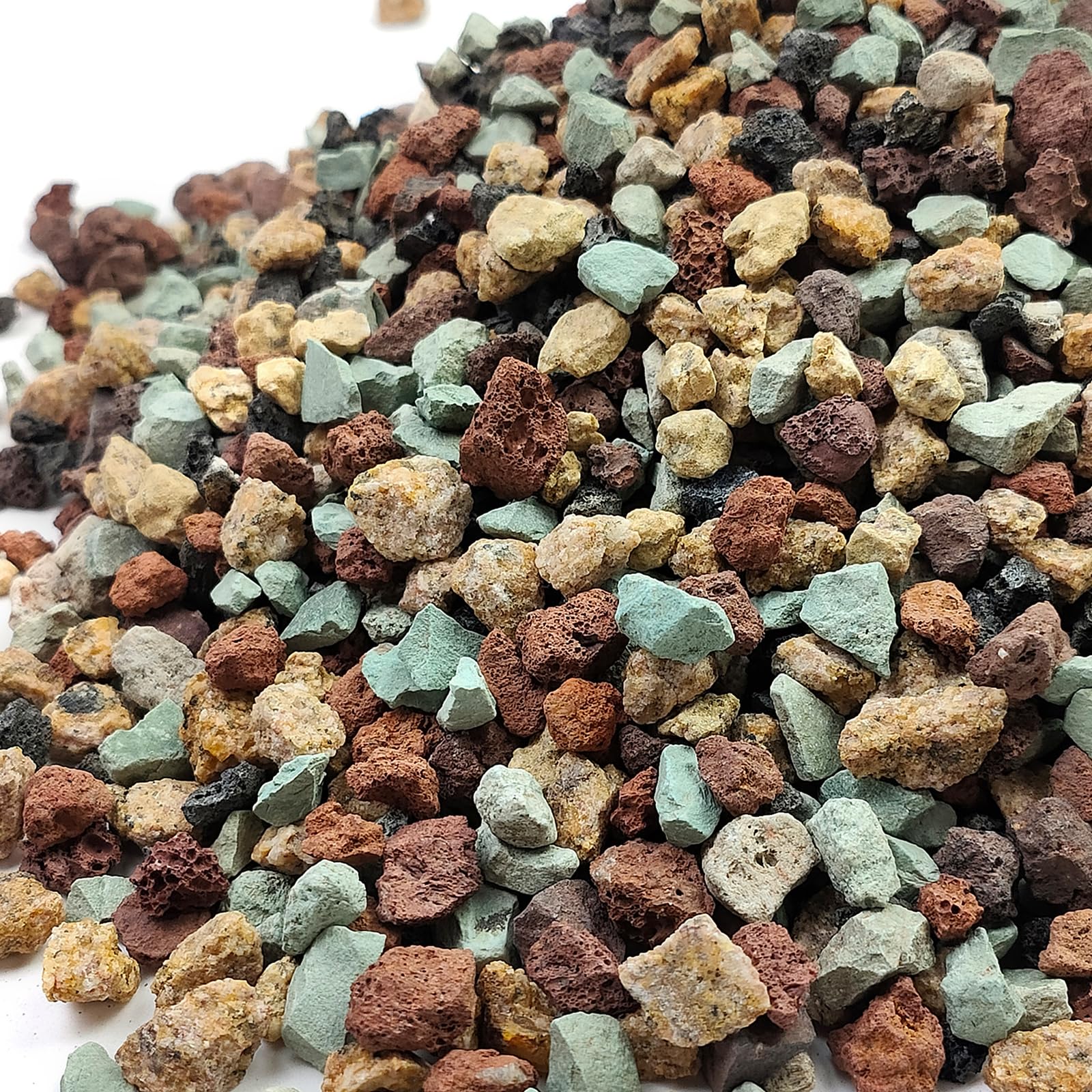
This is not a standalone potting soil—it is a 5-pound bag of pumice pebbles and lava rock particles sized at roughly ¼ inch, designed to be mixed into denser soils to improve aeration. For bamboo growers dealing with heavy native clay or a potting mix that holds too much water, adding 20 to 30 percent of this material by volume transforms the texture dramatically. The porous lava rock retains a thin film of moisture on its surface while allowing excess water to drain away instantly, which is exactly the balance bamboo needs.
Customer reviews highlight the consistent particle size and the fact that the rocks do not float or shift to the top of the pot after watering, unlike lighter perlite. One science teacher even tested them against the float test and confirmed they sink, which means they stay distributed throughout the root zone rather than migrating upward. The stones are slightly dusty straight out of the bag, but a quick rinse before mixing solves that issue entirely.
The limitation is obvious: you cannot use this alone as a potting medium for bamboo because it has no organic matter, no moisture retention in the traditional sense, and no nutrients. It is purely a structural amendment. If you are looking for a complete soil, skip this. But if you already have a good organic mix that needs better drainage—especially for a large container—this is the single best additive on the list.
What works
- Porous lava rock provides superior aeration for rhizomes
- Uniform ¼-inch particles stay mixed and do not float
- Prevents waterlogging in heavy clay or dense potting blends
What doesn’t
- Not a standalone soil—requires blending with organic mix
- Dusty out of bag; needs rinsing before use
6. Rosy Soil Cactus & Succulent Potting Mix
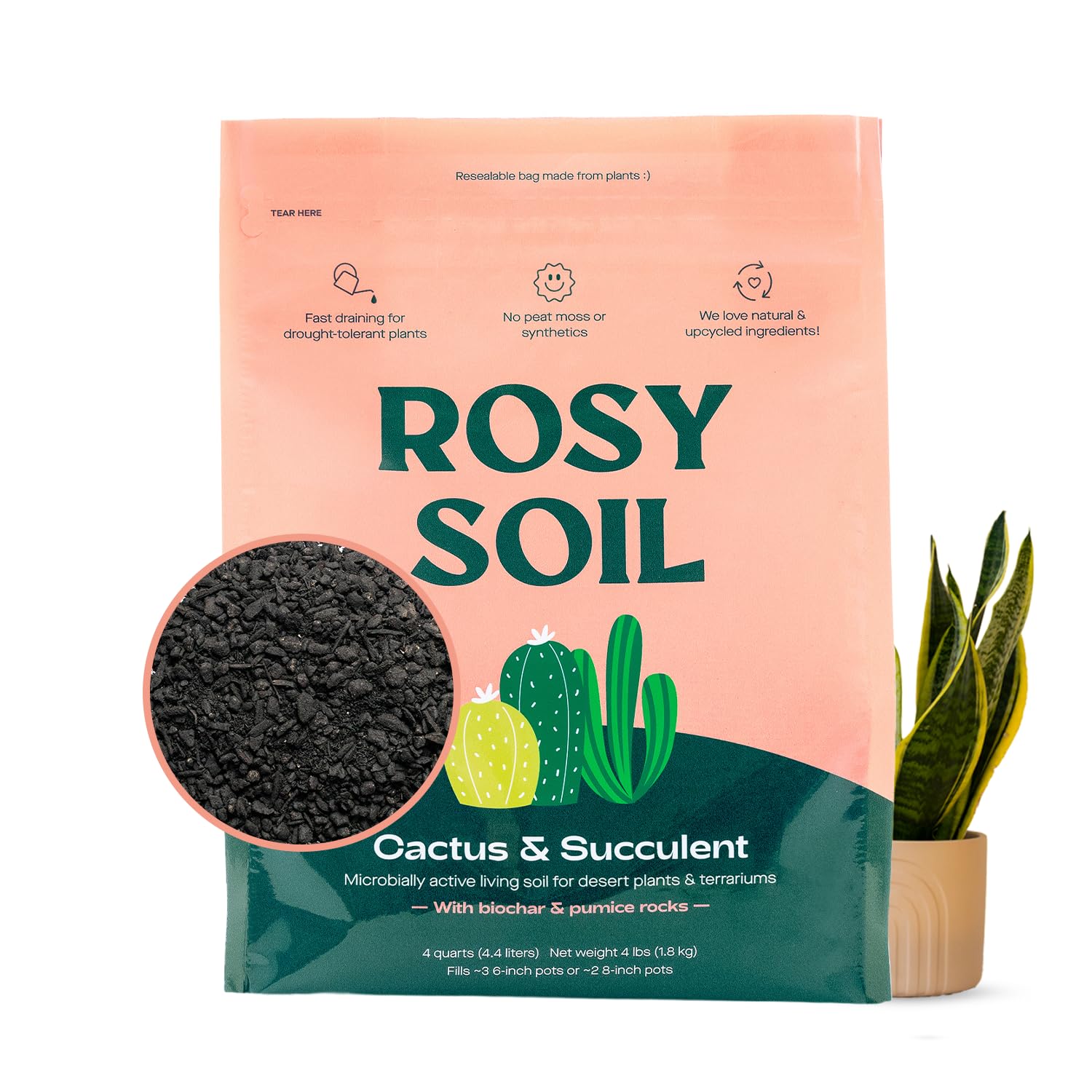
Rosy Soil’s cactus and succulent mix takes a peat-free approach, relying instead on a chunky blend of aged bark, coco coir, pumice, and worm castings to create the fast-draining structure that succulents need—and that bamboo also benefits from when grown in containers. The absence of peat means the mix naturally resists becoming waterlogged, and the pre-loaded beneficial fungi and microbes create a living soil ecosystem that helps break down organic matter into nutrients that bamboo can access directly. The 4-quart resealable bag is plastic-neutral and made in the USA.
Owner feedback is enthusiastic, with multiple buyers noting that their drought-tolerant plants—including ZZ plants, aloe, and snake plants—thrived after repotting into this mix. One reviewer specifically mentions that after a month, their succulents showed vigorous new growth with no signs of stress. The texture is described as dark, even, and clean, with no bugs detected across multiple bag purchases. For bamboo, this mix works best in drier climates where the rapid drainage is an asset rather than a liability.
The peat-free formula has a trade-off: without peat’s natural moisture-holding capacity, you will need to water container-grown bamboo more frequently, especially in hot weather or in terracotta pots that wick moisture away. Some owners also note that the bag’s resealable zipper is difficult to close reliably, so you may need to transfer leftover soil into a separate container. For bamboo growers in humid or rainy regions, this mix may drain too fast to maintain consistent moisture levels.
What works
- Peat-free formula prevents overwatering issues in containers
- Pre-loaded microbes support nutrient cycling around roots
- Chunky texture stays loose and airy for rhizome expansion
What doesn’t
- Drains too fast for bamboo grown in humid or rainy environments
- Small 4-quart bag; resealable closure can be frustrating
7. Miracle-Gro Cactus, Palm and Citrus Potting Mix

Miracle-Gro’s formulation for cacti, palms, and citrus is a fast-draining, peat-based mix that comes in a 3-pack of 8-quart bags, giving you 24 quarts total—the largest volume on this list by a significant margin. The formula is enriched with Miracle-Gro plant food, which provides a built-in nutrient boost that supports the initial growth surge of newly potted bamboo. The fast-draining nature of the mix helps prevent root rot in species that dislike wet feet, and the three-bag bundle provides enough soil to fill a half-barrel planter or several medium pots.
Customer reviews are generally positive, with users reporting healthy growth in Christmas cactus, palms, and succulents after repotting. Some gardeners note that mixing this cactus blend 50/50 with a standard potting soil creates a more balanced medium for plants that need some moisture retention—a useful hack for bamboo growers who find the straight mix drains too quickly. The bags are lightweight and easy to handle, and the brand recognition gives confidence in consistent quality.
The downsides center on two factors. First, the pH of this mix tends to run neutral to slightly alkaline due to the limestone used for buffering, which is the opposite of what bamboo prefers. Second, while the synthetic fertilizer in the mix provides a quick nutrient boost, it does not support the long-term soil biology that bamboo’s root system benefits from. If you use this, expect to supplement with organic amendments and monitor pH carefully.
What works
- Excellent volume with 24 quarts total across three bags
- Fast-draining formula helps prevent Rhizome rot in containers
- Pre-mixed with plant food for initial growth support
What doesn’t
- pH tends neutral-alkaline, requiring amendment for bamboo
- Synthetic salts in fertilizer can stress sensitive root systems
Hardware & Specs Guide
pH and Acidity Control
The single most critical spec for bamboo soil is its pH level. Bamboo evolved on forest floors where decomposing leaves create a slightly acidic environment (pH 5.5–6.5). Soils at pH 7.0 or above lock up iron and manganese, causing chlorosis even with proper watering and fertilization. The most reliable way to hit the target is to choose a mix that lists sphagnum peat moss or pine bark as the primary ingredient, and to avoid mixes that mention lime as a pH adjuster unless you are certain your water is highly acidic.
Drainage and Aeration
Bamboo rhizomes need oxygen to stay healthy, and that oxygen comes from air pockets in the soil. A mix that holds too much water—like pure compost or clay-heavy garden soil—suffocates the roots within days. The best indicator of aeration potential is the presence of perlite, pumice, or coarse sand in the ingredient list. For container-grown bamboo, a mix that contains at least 20 percent drainage amendment by volume is ideal. For ground planting, you may need to add pumice or lava rock to the native soil to achieve the same effect.
FAQ
Can I use regular garden soil for bamboo?
What pH level does bamboo need in its soil?
How often should I water bamboo after planting in new soil?
Final Thoughts: The Verdict
For most gardeners, the best soil for bamboo winner is the Coast of Maine Organic & Natural Planting Soil for Acid Loving Plants because its low pH, high organic content, and generous 20-quart volume directly match bamboo’s rhizome needs without requiring additional amendments. If you want a light container-specific mix that drains fast and stays fluffy, grab the Midwest Hearth Premium Potting Soil. And for a budget-friendly large-volume option that works for multiple pots, nothing beats the Miracle-Gro Cactus, Palm and Citrus 3-Pack.