
Aloe vera is a desert-native succulent that evolved to store water in its fleshy leaves, which means its root system is genetically programmed to rot in dense, moisture-retentive soil. Most standard potting mixes, even those labeled for general use, hold far too much water for aloe, turning what should be a low-maintenance houseplant into a constant battle against yellowing leaves and mushy roots. The single most critical factor in keeping an aloe alive is the physical texture and drainage speed of the medium it sits in.
I’m Rikta — the co-founder and writer behind Lawn Gear Lab. I’ve spent countless hours cross-referencing ingredient lists, testing drainage rates against published botanical data for aloe species, and analyzing aggregated owner feedback to determine which bagged mixes consistently deliver the fast-drying, gritty conditions aloe roots demand.
Whether you are repotting a mature aloe or rooting a fresh offset, the medium you choose dictates everything from watering frequency to long-term root health. This guide breaks down the best aloe potting soil options for every budget, from premium organic blends to budget-friendly multi-bag packs.
How To Choose The Best Aloe Potting Soil
Aloe vera does not simply tolerate dry conditions — it requires them. Choosing the right soil is not about holding moisture near the roots; it is about moving water away from them as fast as possible. Here are the key factors to evaluate when comparing mixes.
Drainage & Aeration Texture
Aloe roots demand large air pockets between soil particles. Look for a mix that includes chunky mineral aggregates such as perlite, pumice, lava rock, or calcined clay. A fine, dusty texture that compacts when wet is a warning sign. The ideal mix should feel loose and gritty, with visible particles of different sizes that prevent the soil from settling into a dense block. If you squeeze a handful, it should crumble apart rather than hold a tight, muddy shape.
Organic vs. Inorganic Composition
Pure mineral substrates (like pumice and lava rock) drain fastest but provide almost no nutrients. Organic components like peat moss, coco coir, pine bark, and worm castings add fertility and help retain a small amount of moisture needed for root hydration. The balance is critical: too much organic matter turns the mix into a sponge, while too little leaves roots without a nutrient reservoir. A good aloe soil typically uses organic matter for roughly 20-30% of the volume, with the remainder being mineral aggregates.
pH Level & Nutrient Profile
Aloe vera prefers a slightly acidic to neutral pH range, roughly 5.5 to 7.0, which matches most commercial cactus and succulent mixes. However, some budget blends may have unadjusted pH that skews alkaline. Cheaper mixes might also lack any slow-release nutrients, requiring you to supplement with a balanced liquid fertilizer during the growing season. Premium blends often include worm castings or mycorrhizal fungi, which create a microbial buffer that stabilizes pH naturally.
Quick Comparison
On smaller screens, swipe sideways to see the full table.
| Model | Category | Best For | Key Spec | Amazon |
|---|---|---|---|---|
| Rosy Soil Cactus & Succulent | Premium Organic | Living soil with microbes | Peat-free, 4qt resealable | Amazon |
| Miracle-Gro Cactus, Palm & Citrus | Mid-Range Bundle | High-volume repotting | 8qt x 3 bags bundle | Amazon |
| Hoffman Organic Cactus & Succulent | Mid-Range Value | Budget-friendly 2-pack | 10qt x 2 bags | Amazon |
| Tinyroots Succulent Soil | Premium Fine Grit | Small succulents & lithops | Double-sifted pine bark, 2.25qt | Amazon |
| Midwest Hearth Cactus & Succulent | Entry-Level | Ready-to-use, small pots | 4 dry quarts, pH balanced | Amazon |
| Avolution Lava Rock Pumice | Mineral Amendment | Customizing existing mixes | 2.4lb bag, 38.4 fl oz | Amazon |
| Duspro Succulents Potting Mix | Entry-Level 7-in-1 | Small repotting projects | 1QT volume | Amazon |
In‑Depth Reviews
1. Rosy Soil Cactus & Succulent Potting Mix
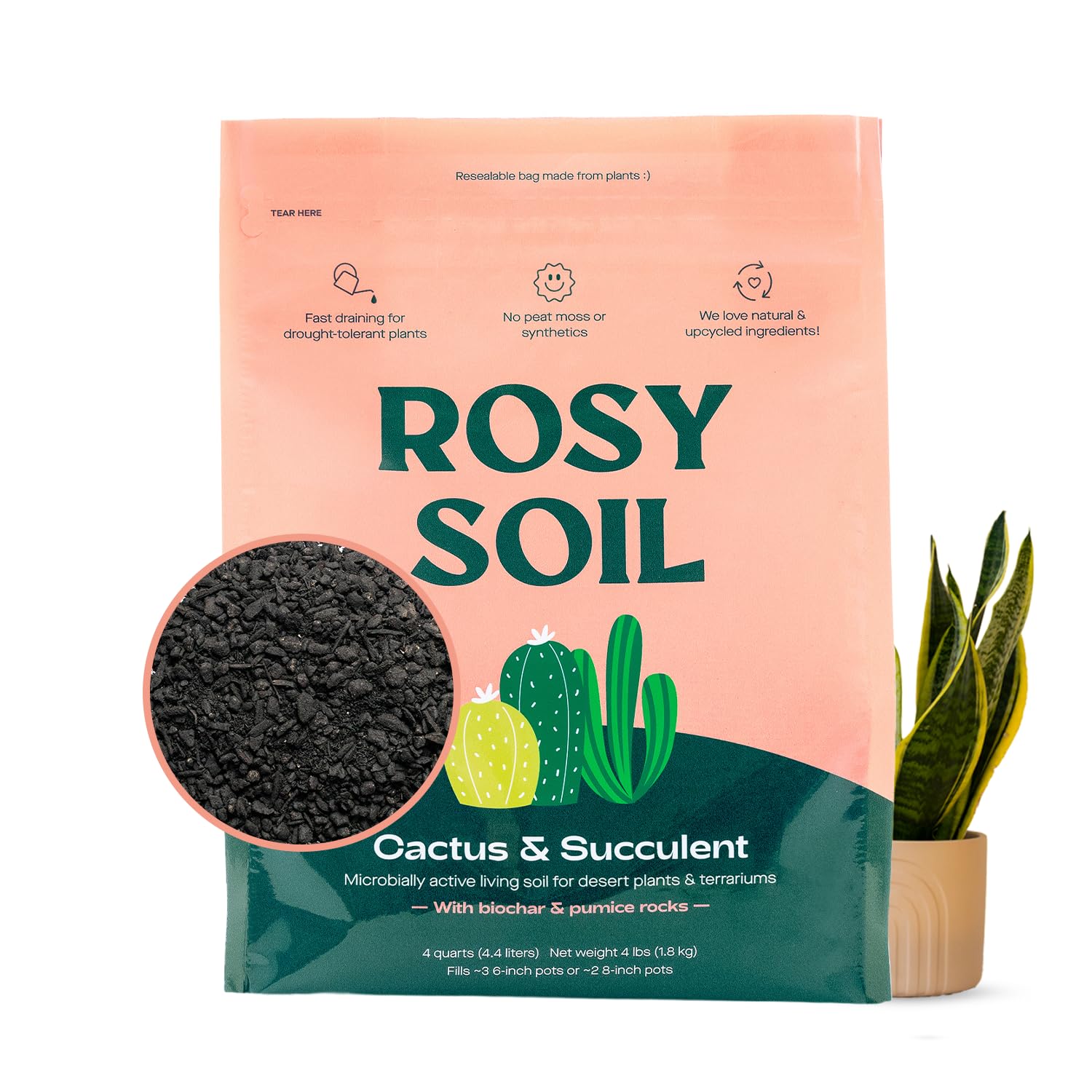
Rosy Soil has engineered a peat-free formula that prioritizes drainage without sacrificing biological activity. The chunky texture — built from pine bark fines, pumice, and lava rock — stays open and airy, allowing water to drain completely within seconds rather than minutes. This is exactly the kind of physical structure aloe roots need to avoid the soggy conditions that trigger rot. The 4-quart resealable bag fills two to three standard pots, and the absence of peat means the mix does not become hydrophobic when it dries out completely.
What sets this blend apart from most competitors is the inclusion of beneficial fungi and microorganisms alongside organic worm castings. These components create a living soil ecosystem that continuously cycles nutrients, reducing the need for synthetic fertilizers. For aloe growers who prefer a set-and-forget approach, this biological buffer helps maintain healthy root function even if watering schedules slip. The bag thickness and resealable closure also keep the remaining mix fresh for weeks between uses, a practical detail that cheaper thin-film bags often overlook.
Some users report that the mix arrives slightly moist, which is normal for a living soil product. A few reviewers note that very top-heavy aloe specimens may benefit from adding extra gravel or pumice for stability, but as a standalone product, this delivers among the best drainage-to-nutrient ratios available in the mid-premium tier. It handles jade, lithops, and snake plant equally well, making it a versatile choice for any succulent collection.
What works
- Peat-free formula drains significantly faster than peat-based competitors.
- Pre-loaded microbes and worm castings reduce reliance on synthetic fertilizers.
- Resealable bag keeps the mix fresh between uses.
What doesn’t
- May require additional grit for very large or top-heavy aloe plants.
- Moisture content upon arrival can surprise first-time buyers.
2. Miracle-Gro Cactus, Palm & Citrus Potting Mix 3-Pack

Miracle-Gro is a household name for a reason, and this cactus-specific formulation delivers the fast drainage aloe needs without forcing you to hunt for boutique brands. The 3-pack provides 24 total quarts of mix, which is enough to repot a dozen medium-sized aloe plants or handle multiple seasonal repotting sessions. The formula includes Miracle-Gro Plant Food already blended in, giving new transplants an immediate nutrient boost that helps reduce transplant shock. This is a practical choice for anyone managing a larger collection or multiple succulent varieties.
The texture is noticeably lighter and grittier than standard Miracle-Gro potting soil, with visible perlite and sand particles that prevent compaction. Water runs through the bag in a steady stream rather than pooling on top, which is the primary litmus test for aloe compatibility. The mix works well both indoors on sunny windowsills and outdoors in containers on patios, though aloe kept indoors will need especially careful watering since the evaporation rate is lower. The 3-pack format also makes it economical to reserve one bag for aloe and another for palm or citrus if you grow those as well.
Where this mix falls short of premium alternatives is in its reliance on peat moss, which can become hydrophobic if the bag is left open for weeks. Some users report that the fine particles settle to the bottom of the pot over time, reducing aeration unless you periodically stir the top layer. For dedicated aloe enthusiasts who want a single perfect mix without amendments, this may feel slightly too moisture-retentive when used straight from the bag. Adding 20% perlite by volume solves this easily, but that is an extra step not required by the higher-end blends.
What works
- Massive 24-quart total volume at a very competitive per-quart cost.
- Pre-added plant food supports new transplants and offsets.
- Light, gritty texture drains noticeably faster than standard potting mix.
What doesn’t
- Peat base can become hydrophobic if stored improperly.
- Fine particles may settle and reduce aeration over time.
3. Hoffman Organic Cactus and Succulent Soil Mix 2-Pack

Hoffman’s organic cactus mix earns its place on this list through sheer utility. The 2-pack delivers 20 total quarts of soil at a price point that undercuts most premium single-bag options, making it the go-to choice for anyone repotting a large aloe specimen or managing a greenhouse full of succulents. The formula skips peat entirely, relying on a blend of sand and organic compost to create the loose, well-draining structure aloe requires. Users consistently report that this mix dries out quickly between waterings, which is the single most important trait for preventing root rot in aloe vera.
The texture is noticeably coarser than standard organic potting soils, with visible sand grains and fibrous organic matter that create irregular air pockets. When poured into a pot, the mix settles into a stable bed that holds offsets upright without excessive compaction. The bag design includes a pour spout and resealable closure, making it easier to dispense exactly the amount you need without spilling gritty dust across your workspace. For aloe propagation, where you are rooting multiple pups in individual containers, being able to portion out soil cleanly saves significant time.
The main drawback is that this mix can retain more moisture than advertised if used in a very humid environment or in non-terracotta pots. Several long-term users recommend mixing in 25% perlite or pumice for aloe vera specifically, since the organic fraction holds moisture longer than pure mineral substrates. The bag weight also means shipping costs can be higher, so factor that into your total cost if you are ordering a single unit rather than buying locally.
What works
- Excellent per-quart value with 20 total quarts in the 2-pack.
- Peat-free formula dries out quickly between waterings.
- Bag design with pour spout minimizes mess during repotting.
What doesn’t
- Organic fraction may hold too much moisture in humid climates.
- Recommended to amend with extra perlite for optimal aloe drainage.
4. Tinyroots Succulent Soil Premium Blend

Tinyroots has developed a soil specifically for the small-scale succulent grower, and its composition reflects a deep understanding of how fine-rooted plants interact with their medium. The blend combines double-sifted pine bark fines with calcined clay, pumice, and lava rock, resulting in a texture that is far more uniform than budget mixes. The smaller particle size means this soil settles into tight spaces around delicate aloe offsets and dwarf cultivars, providing root contact without leaving large voids. The 2.25-quart bag is intentionally sized for precision work — ideal for a single mature aloe or several small pots.
What makes this mix particularly effective for aloe is the inclusion of calcined clay, which absorbs excess moisture then releases it slowly as the soil dries. This buffering effect prevents the sudden wet-dry swings that stress aloe roots, especially in the first few weeks after repotting. The sand component contributes weight and stability, helping tall aloe leaves stay upright without needing external supports. Users who have struggled with overwatering in the past report that this mix almost eliminates the risk, as the water runs through the pot in under ten seconds even with heavy saturation.
The premium pricing per quart is the main barrier here. For a single aloe or a few small specimens, the cost is reasonable, but for large repotting projects the price adds up quickly. The bag size also means you will likely need to purchase multiple bags if you are working with more than two or three plants. Some users find the texture too fine for very large aloe species that prefer chunkier substrates, though mixing in extra pumice solves this.
What works
- Uniform fine particle size provides excellent root contact for small aloes.
- Calcined clay buffers moisture, reducing overwatering risk.
- Heavy sand content stabilizes tall aloe leaves in the pot.
What doesn’t
- Higher per-quart cost compared to larger bag options.
- Texture may be too fine for very large, mature aloe specimens.
5. Midwest Hearth Cactus & Succulent Potting Soil Mix
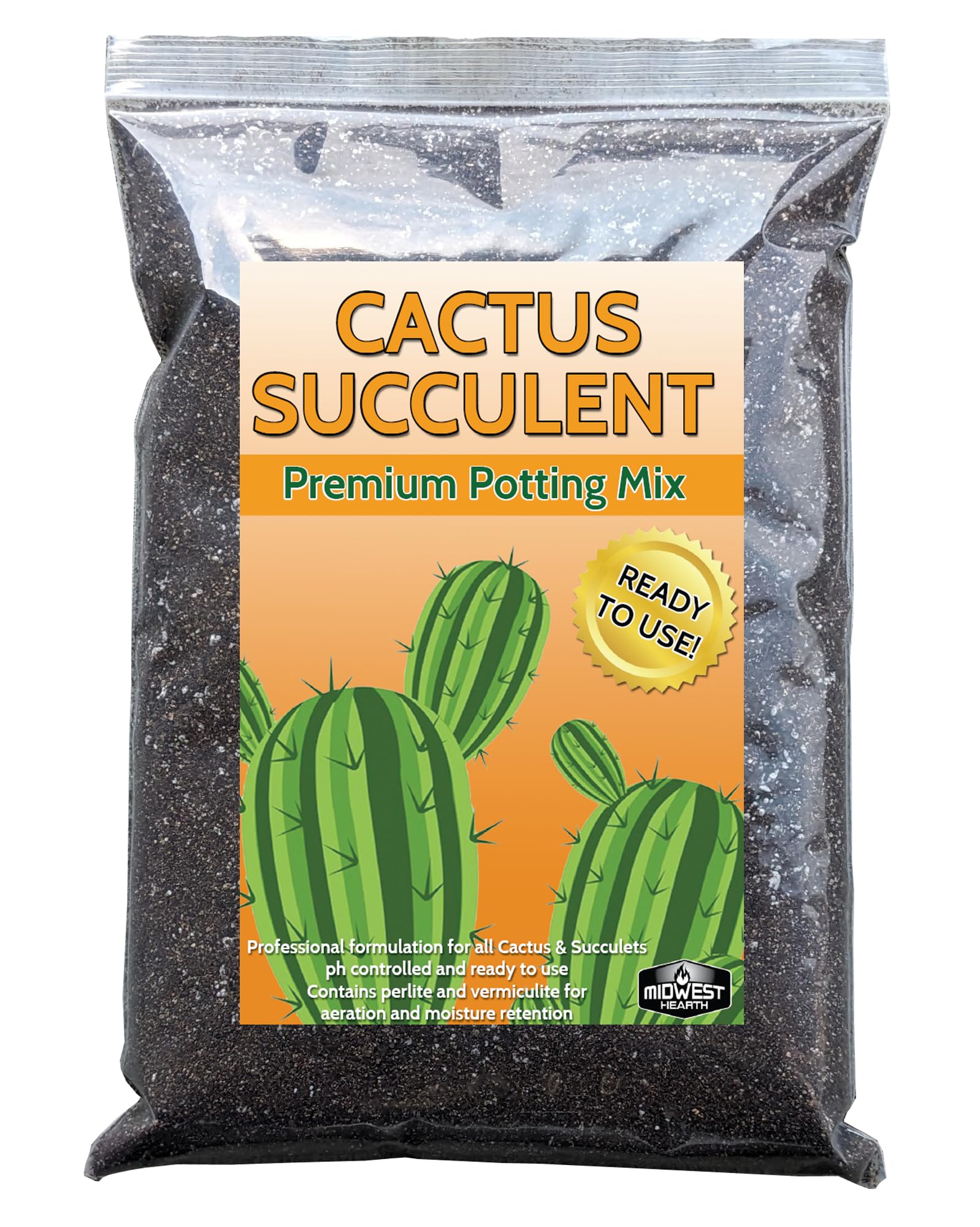
Midwest Hearth offers a straightforward, no-fuss formula that emphasizes fast drainage without any exotic ingredients. The blend of peat moss, perlite, and vermiculite creates a light, fluffy texture that water flows through rapidly, which is the baseline requirement for any aloe potting soil. The pH is pre-adjusted to match the needs of succulents and cacti, removing one variable that can cause leaf discoloration and poor root development in aloe vera. The 4-quart bag is large enough for two to three standard-sized aloe pots, making it a practical choice for someone repotting a single collection.
What sets this mix apart in the entry-level tier is the consistency of the ingredient quality. Many budget blends contain large bark chunks and irregular particles that create uneven moisture zones, but Midwest Hearth delivers a uniformly blended medium with visible but not overwhelming perlite content. The resealable bag closure keeps unused soil fresh, which matters because this mix can dry out if left open too long. The ready-to-use claim holds true — no mixing, measuring, or amending is required for most standard aloe varieties.
The primary limitation is the inclusion of peat moss, which tends to repel water when fully dry and can become soggy when oversaturated. Aloe growers who tend to underwater may find the peat re-wetting difficult, while those who overwater may find the peat retains moisture longer than desired. Additionally, the light weight of the mix means it can blow off windowsills if you leave pots by open windows, as noted by some users who reported dusty tops. For indoor aloe kept on stable surfaces, this is a reliable and affordable option.
What works
- Pre-adjusted pH eliminates the guesswork for aloe vera.
- Light, fluffy texture drains quickly and prevents compaction.
- Resealable bag keeps soil fresh for multiple uses.
What doesn’t
- Peat moss can become hydrophobic when fully dry.
- Lightweight particles may blow off windowsills in breezy conditions.
6. Avalution Horticultural Lava Rock Pumice Pebbles

This product is not a standalone potting soil but a mineral amendment that can dramatically improve the drainage profile of any existing mix. The 2.4-pound bag contains grey lava rock pumice pebbles that range from fine grit to small pebble size, providing the kind of permanent pore space that organic components like peat cannot sustain over time. For aloe growers who already own a bag of standard cactus soil and want to boost its drainage, adding 20-30% of this pumice by volume transforms a mediocre medium into one that drains efficiently.
The key advantage of pumice over perlite is its weight and stability. Pumice does not float to the top of the pot when watered, which is a common issue with perlite in top-watering routines. The porous surface of lava rock also provides colonization sites for beneficial bacteria, enhancing the biological activity of the root zone over time. As a top dressing, the pebbles act as a protective barrier against soil gnats and prevent the top layer of organic mix from blowing away, a feature appreciated by users with windowsill plants.
It is important to note that this product requires rinsing before use, as the bags contain fine dust and sediment from the crushing process. Users who skip this step report cloudy runoff and compacted dust layers in the first few waterings. As a straight potting medium for aloe, pumice alone provides no nutrients, so it must be mixed with at least some organic matter or supplemented with liquid fertilizer. This is a specialist tool for growers who want fine control over their soil physics, not a ready-to-use solution.
What works
- Permanent mineral structure does not break down like organic components.
- Adds significant weight and stability to pots, preventing toppling.
- Porous surface supports beneficial microbial colonization.
What doesn’t
- Requires thorough rinsing before use to remove dust.
- Provides no nutrients on its own; must be blended with organic matter.
7. Duspro Succulents Soil Potting Mix 7-in-1
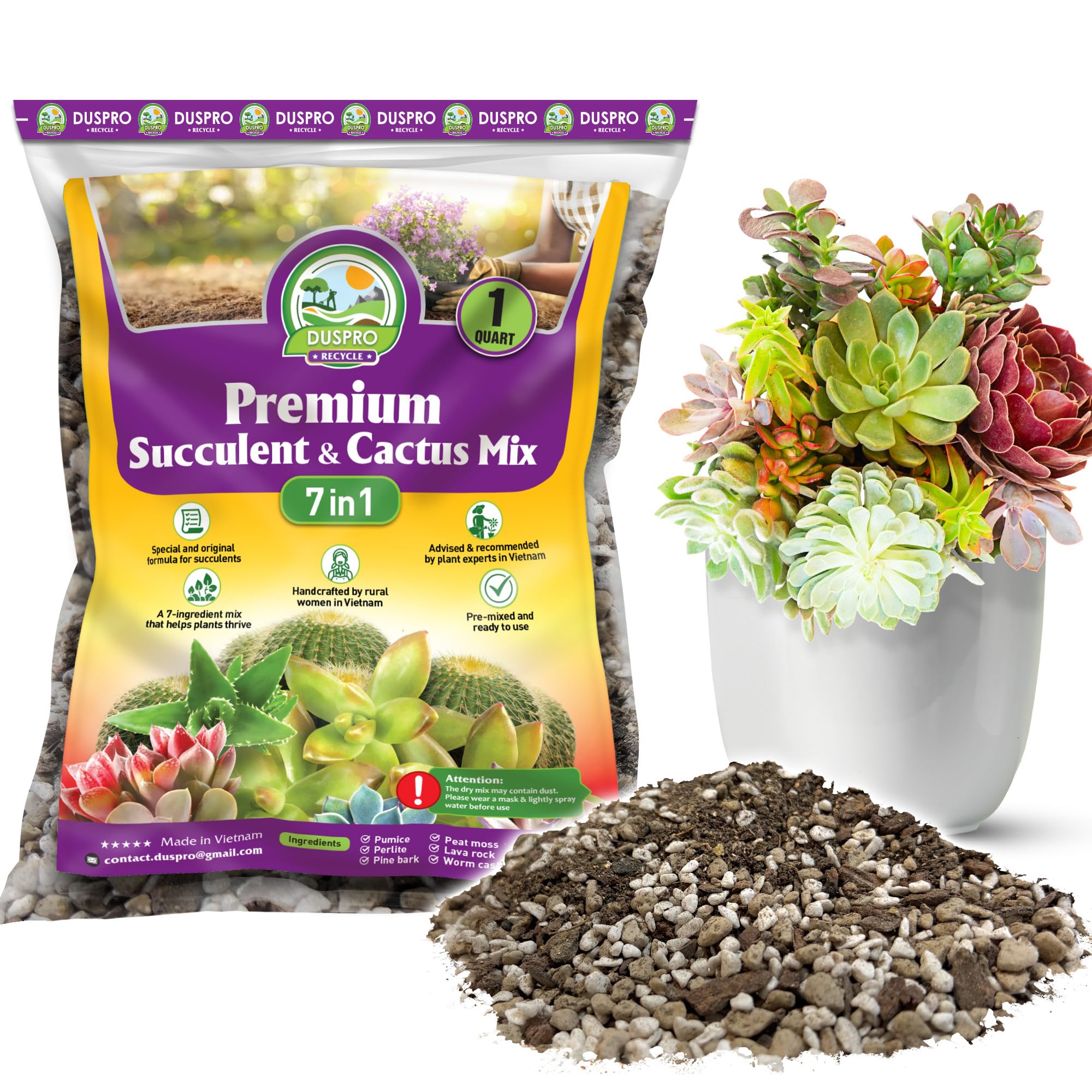
Duspro has crammed seven different ingredients into a single 1-quart bag, aiming to provide a complete ready-to-use solution in a compact package. The blend includes perlite, pumice, lava rock, peat moss, pine bark, worm castings, and vermiculite, covering both the drainage and nutrient aspects required by aloe vera. The 1-quart size is specifically designed for very small repotting tasks — it fills exactly two 4-inch pots or one 6-inch pot, making it ideal for someone who just bought their first aloe pup and does not want to commit to a large bag of soil.
The visual texture is noticeably chunky, with visible lava rock and pine bark pieces that create pronounced air channels. Water runs through the bag quickly, and the inclusion of worm castings provides a slow-release nutrient source that does not overwhelm young roots. The bag is resealable, though the thin plastic film can tear if you stretch it too hard. For the price per quart, this offers one of the most diverse ingredient lists in the ultra-small size category, which is helpful if you want to see exactly what a 7-ingredient blend looks like before buying a larger batch.
The biggest trade-off is the cost per volume. Some users also note that the bag can arrive with a slightly compacted texture due to shipping, requiring you to break it up by hand before use. For very small jobs or for testing the formula before committing to a larger bag, this is a convenient option, but serious aloe collectors will want a bigger volume for their money.
What works
- Seven-ingredient blend provides a balanced drainage and nutrient profile.
- Compact 1-quart size avoids waste for single-plant repotting.
- Visible lava rock and bark pieces create excellent air channels.
What doesn’t
- Very expensive per-quart compared to larger bag options.
- Thin bag material can tear easily during opening.
Hardware & Specs Guide
Particle Size Distribution
The physical size of soil particles directly determines drainage speed. Aloe potting soil should contain a mix of particles ranging from fine sand (0.05-2 mm) to coarse pebbles (2-8 mm). Uniformly fine particles pack tightly and create capillary action that holds water, while a broad size distribution creates irregular pore spaces that allow water to flow through freely. Premium blends typically screen their components so that no single particle size dominates more than 40% of the total volume.
Cation Exchange Capacity (CEC)
CEC measures the soil’s ability to hold and exchange positively charged nutrient ions like calcium, magnesium, and potassium. Organic matter such as peat moss, coco coir, and worm castings have high CEC, which means they act as nutrient reservoirs that release food gradually to aloe roots. Mineral components like pumice and lava rock have very low CEC, so a mix with too many minerals and too little organic matter will require more frequent liquid fertilization to prevent nutrient deficiencies.
FAQ
Can I use regular potting soil for aloe vera?
How often should I repot aloe vera into fresh soil?
Should I add sand to aloe potting soil for better drainage?
Final Thoughts: The Verdict
For most gardeners, the aloe potting soil winner is the Rosy Soil Cactus & Succulent Mix because it combines peat-free drainage with a living microbial ecosystem that supports aloe roots without constant fertilizer inputs. If you want the best value for large-scale repotting, grab the Miracle-Gro 3-Pack and consider adding perlite. And for the budget-conscious grower working with a single aloe, the Midwest Hearth mix offers reliable performance without any complexity.