
Choosing the wrong weed barrier means spending every weekend pulling stubborn shoots that punched right through a flimsy layer. A quality woven polypropylene fabric blocks sunlight, stabilizes soil, and lets water and air reach plant roots—but only if the density, weave, and thickness match your specific project, whether that’s a vegetable bed, gravel pathway, or flower border.
I’m Rikta — the co-founder and writer behind Lawn Gear Lab. I’ve spent hundreds of hours cross-referencing polypropylene weight specifications, tensile strength ratings, and water permeability data to separate the fabrics that actually suppress weeds from those that just look good on the roll.
My research zeroed in on the models that hold up under mulch, gravel, and foot traffic, culminating in this guide to the best garden fabric for lasting, low-maintenance weed control.
How To Choose The Best Garden Fabric
Not all landscape fabrics are created equal. The right choice depends on fabric weight, weave type, and water permeability. Here’s what to look for.
Fabric Weight and Density
Fabric weight is measured in ounces per square yard (oz/sq.yd). A 3.2 oz fabric works well for flower beds and light mulch, while 5 oz commercial-grade fabric handles gravel driveways and heavy foot traffic. Heavier fabric blocks more light and resists tearing when rocks or staples are pressed into it.
Woven vs. Non-Woven Construction
Woven polypropylene uses threads interlaced in a grid, offering high tensile strength and good water flow. Non-woven felt is softer and initially more permeable, but it can clog with soil particles over time and tears more easily under stress. For long-term installations under stone or mulch, woven fabric is the more reliable choice.
Water Permeability and Soil Health
A fabric that blocks all water will drown plant roots or cause runoff that erodes soil. Look for materials that allow water to pass through while still blocking sunlight. High-permeability fabrics keep the soil moist and aerated, which is critical for vegetable gardens and flower beds.
Quick Comparison
On smaller screens, swipe sideways to see the full table.
| Model | Category | Best For | Key Spec | Amazon |
|---|---|---|---|---|
| Snail 5oz | Premium | Commercial-grade projects | 5 oz/sq.yd weight | Amazon |
| VIVOSUN 5oz | Mid-Range | Vegetable garden rows | Dual-layer 5 oz | Amazon |
| Grassclub 3x300ft | Value | Large area coverage | 400 LBS tensile strength | Amazon |
| Groweco 6x100ft | Mid-Range | Walkways and driveways | 3.2 oz PP | Amazon |
| Pattiumo 3x300ft | Value | Long flower bed rows | Dual-layer 3.2 oz | Amazon |
| UWIOFF 4x100ft | Value | General mulch beds | 3.2 oz PE fabric | Amazon |
| Vanver 4x300ft | Premium | Heavy gravel applications | 3.2 oz anti-aging PP | Amazon |
In‑Depth Reviews
1. Snail Weed Barrier Landscape Fabric Premium 5oz, 4ft x 100ft

This premium fabric uses a 5 oz/sq.yd woven polypropylene construction that sits in the commercial-grade category. Its density blocks nearly all sunlight while the tight weave allows water to percolate through at a rate that keeps soil aerated and roots hydrated. The roll measures 4 feet by 100 feet, offering enough material for several large flower beds or a substantial vegetable patch.
Installation feedback highlights that the fabric lays flat without curling, cuts cleanly with scissors, and holds landscape staples firmly. Users burning holes for planting report that the material doesn’t fray excessively when the cut edges are sealed with a torch. The one-year warranty and free replacement policy add confidence for long-term use under gravel or mulch.
Several reviewers noted that the fabric is thicker than standard felt barriers from big-box stores and that it has stayed intact for multiple seasons without weed breakthrough even under heavy foot traffic. The UV-stabilized construction resists degradation from direct sun exposure, making this a reliable choice for open landscapes.
What works
- Full 5 oz density stops aggressive weed species effectively.
- High water permeability keeps planted beds healthy without puddling.
- UV-stabilized material holds up for multiple seasons in full sun.
What doesn’t
- Dense weave can be tough to cut with basic household scissors.
- Premium weight means it’s heavier to unroll and position alone.
2. VIVOSUN Premium Weed Barrier Landscape Fabric Heavy Duty, 3ft x 50ft
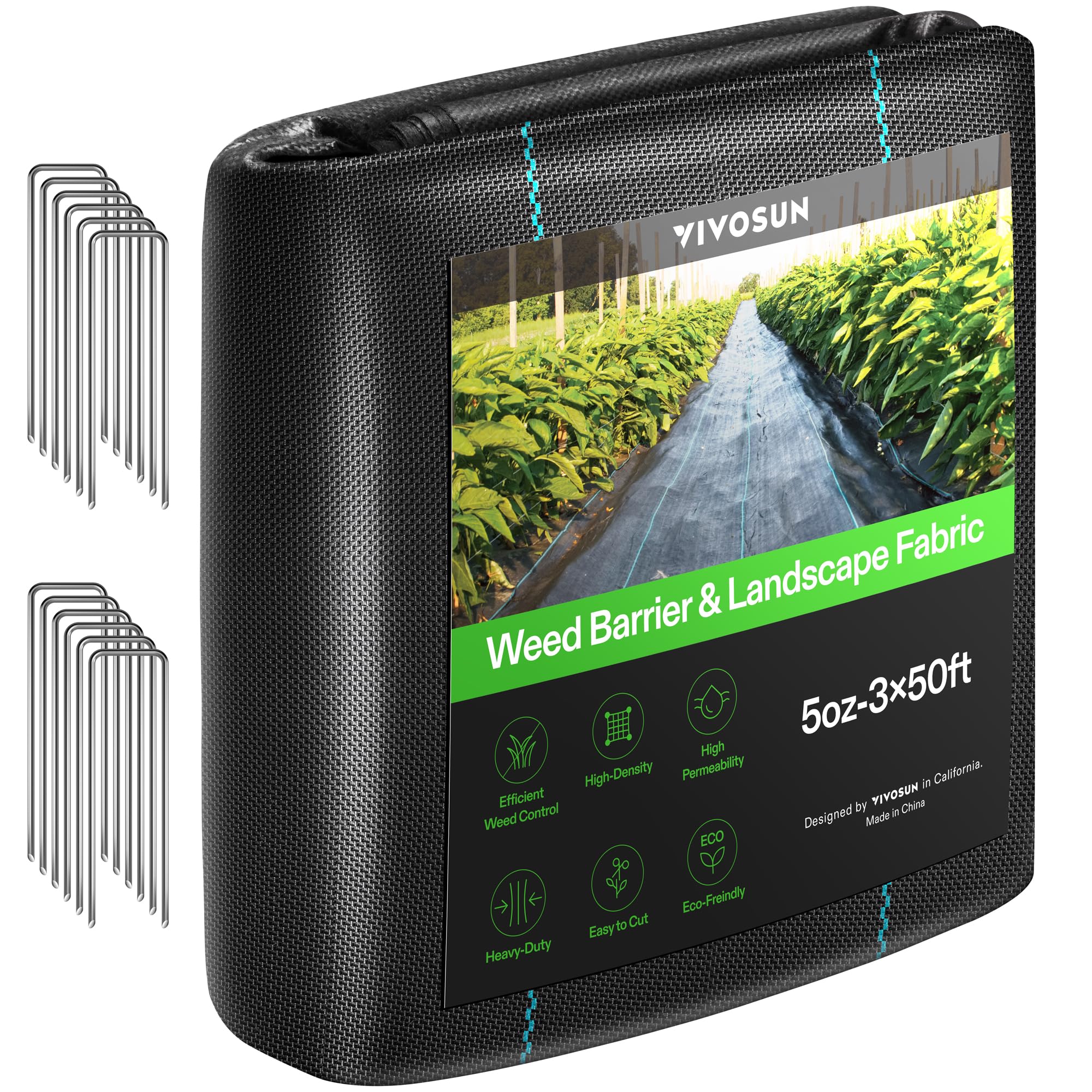
VIVOSUN uses an innovative dual-layer design that combines a non-woven top layer with a woven bottom layer via a needle-punching process. This construction creates small channels that pull water downward through molecular attraction, delivering six times higher water permeability than standard woven covers. The 5 oz total weight provides robust weed suppression while the fuzzy underside grips the soil to prevent shifting.
Gardeners using this in vegetable rows report that it cuts neatly along the green line guides every foot, which simplifies plant alignment. The woven layer’s small holes block sunlight effectively, and the non-woven fibers aid root aeration. Reviewers describe it as significantly thicker than home improvement store alternatives, with one noting it outperformed all previous barriers in a raised bed expansion project.
A common workaround mentioned in feedback is to seal cut edges with a flame to prevent unraveling, though the dual-layer construction naturally reduces fraying compared to single-layer fabrics. Users walking on it daily around garden beds confirm it holds up without tearing, and the included 12 landscape staples help get installation started immediately.
What works
- Needle-punched dual-layer design enhances water permeability dramatically.
- Fuzzy underside grips soil, reducing fabric shifting on slopes.
- Green line guides every foot speed up plant spacing alignment.
What doesn’t
- Cut edges still fray; flame sealing is recommended for clean results.
- 50-foot length runs out faster for large landscaping projects.
3. Grassclub 3ft x 300ft Weed Barrier Landscape Fabric Heavy Duty

Grassclub’s 3.2 oz woven polypropylene fabric stands out for its 400-pound tensile strength rating, making it suitable for load-bearing applications like gravel driveway underlayment and stone pathways. The 3-foot width by 300-foot length provides 900 square feet of coverage, enough for extensive projects without needing to splice multiple rolls. The high-density weave prevents soil erosion while stabilizing the ground beneath heavy materials.
Customer reports confirm that after a full year of use under mulch and river stone, the fabric continues to block weeds effectively without tearing. The material allows water to pass through without washing away soil, which helps maintain soil quality in sloped areas. Several users specifically mention it solved quack grass invasions that had overwhelmed previous barriers.
Some early feedback noted that water beaded on the surface initially, but after a brief settling period the permeability normalized. One reviewer successfully used a propane torch to cut holes without fraying, a technique that extends the fabric’s lifespan. The eco-friendly polypropylene material is also suitable for organic gardening setups where chemical weed killers are avoided.
What works
- 400 LBS tensile strength handles gravel, rocks, and foot traffic.
- 900 sq.ft. coverage minimizes seams and overlap waste.
- Effective against aggressive rhizome weeds like quack grass.
What doesn’t
- Water permeability improves only after initial use and settling.
- Heavy roll at nearly 14 pounds requires two people for easy handling.
4. Groweco 6FT x 100FT Weed Barrier Landscape Fabric Heavy Duty
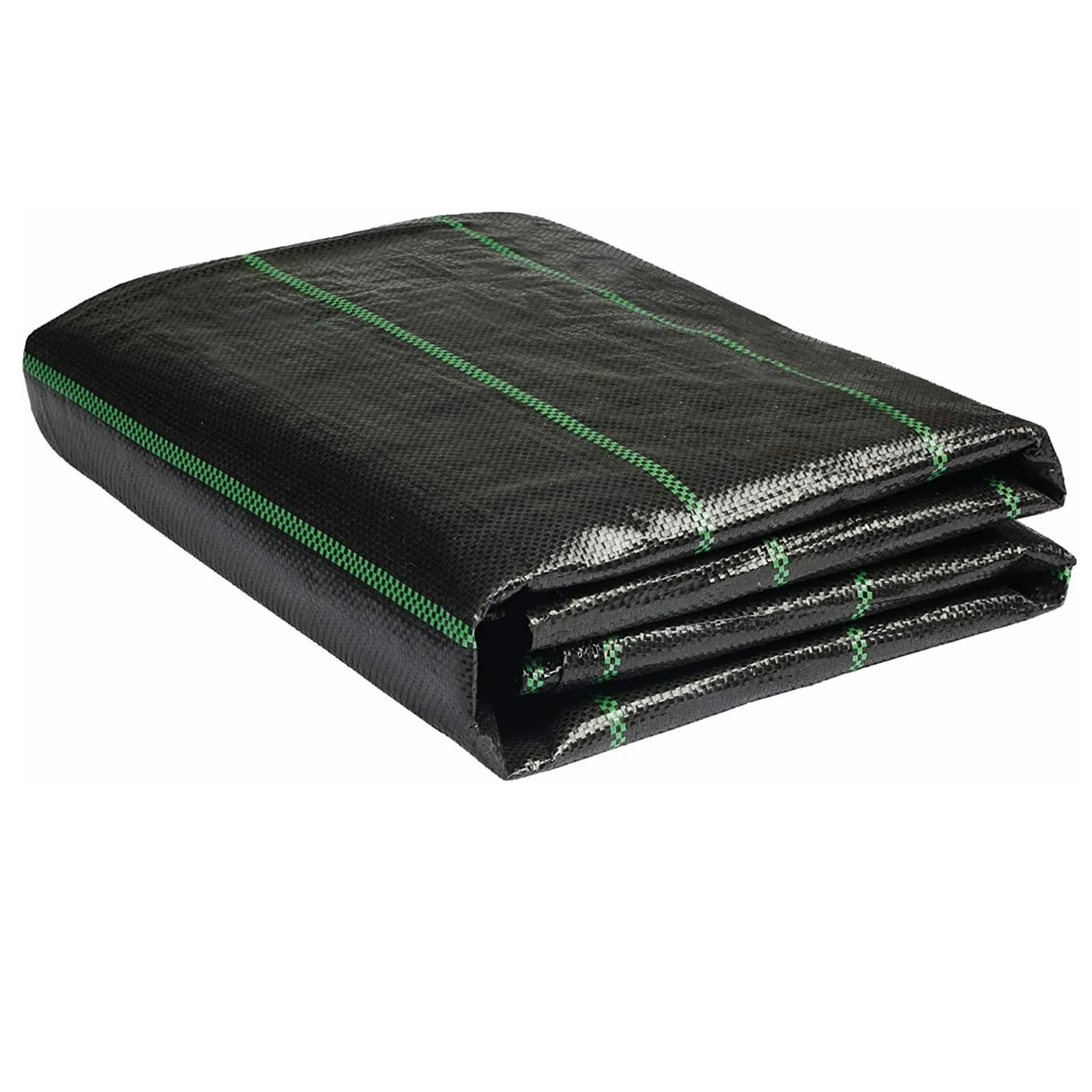
The Groweco fabric measures 6 feet wide by 100 feet long, making it an excellent choice for wide walkways, driveway bases, or raised bed pathways where fewer seams reduce installation labor. The 3.2 oz polypropylene build is a common mid-weight specification that balances durability with flexibility, allowing the fabric to conform to irregular ground contours without tearing.
User feedback emphasizes how the green stripe guides make straight cuts simple, and the material’s weight feels substantial enough to resist punctures from sharp gravel. One reviewer described it as a “plastic barrier” rather than a soft felt, noting that no plants managed to push through after a full summer season. The high permeability rating means water drains rapidly, preventing muddy patches even after heavy rain.
Some installers recommend overlapping seams by at least 6 inches and using plenty of landscape staples to secure the fabric against wind uplift before adding mulch or stone. The material has performed well under decomposed granite in one reported project, maintaining its integrity without degradation. For organic gardeners, the polypropylene composition is inert and doesn’t leach chemicals into the soil.
What works
- 6-foot width reduces the number of seams for wide installations.
- Sturdy enough for gravel driveways and decomposed granite bases.
- High water permeability prevents surface puddling and runoff.
What doesn’t
- Fabric edges can fray if not trimmed with a hot knife or torch.
- Heavier weight makes precise positioning awkward on windy days.
5. Pattiumo Weed Barrier Fabric 3x300FT Landscape Fabric 3.2oz

Pattiumo’s 3.2 oz fabric uses a needle-punched dual-layer construction that combines tightly cross-woven polypropylene strands. This method creates an opaque barrier that blocks light effectively while remaining permeable to air and water. The 300-foot length is ideal for long flower bed rows or continuous orchard ground cover where minimizing splices saves time.
Long-term users report the fabric has held up for three years under wood mulch and river stone with no visible degradation. The woven plastic texture is more durable than soft felt barriers, though it is thinner than the 5 oz premium alternatives. Reviewers note that weeds may eventually grow in the mulch layer on top, but the fabric prevents them from rooting into the soil below, making removal simple.
One critical observation from users is that the fabric can channel water away from raised planting holes, so slow-drip irrigation or careful watering practices are recommended. The material is easy to cut and position, and sealing edges with a flame prevents unraveling. For large-scale installations where budget matters, this roll offers substantial linear footage per dollar.
What works
- 300-foot length covers long rows without multiple joins.
- Opaque weave starves weeds of light effectively.
- Durable woven construction resists tearing under foot traffic.
What doesn’t
- Thinner than 5 oz premium fabrics; less puncture resistance against sharp rocks.
- Water may run off planting holes; drip irrigation adjustments needed.
6. UWIOFF 4ft x 100ft Garden Weed Barrier Landscape Fabric
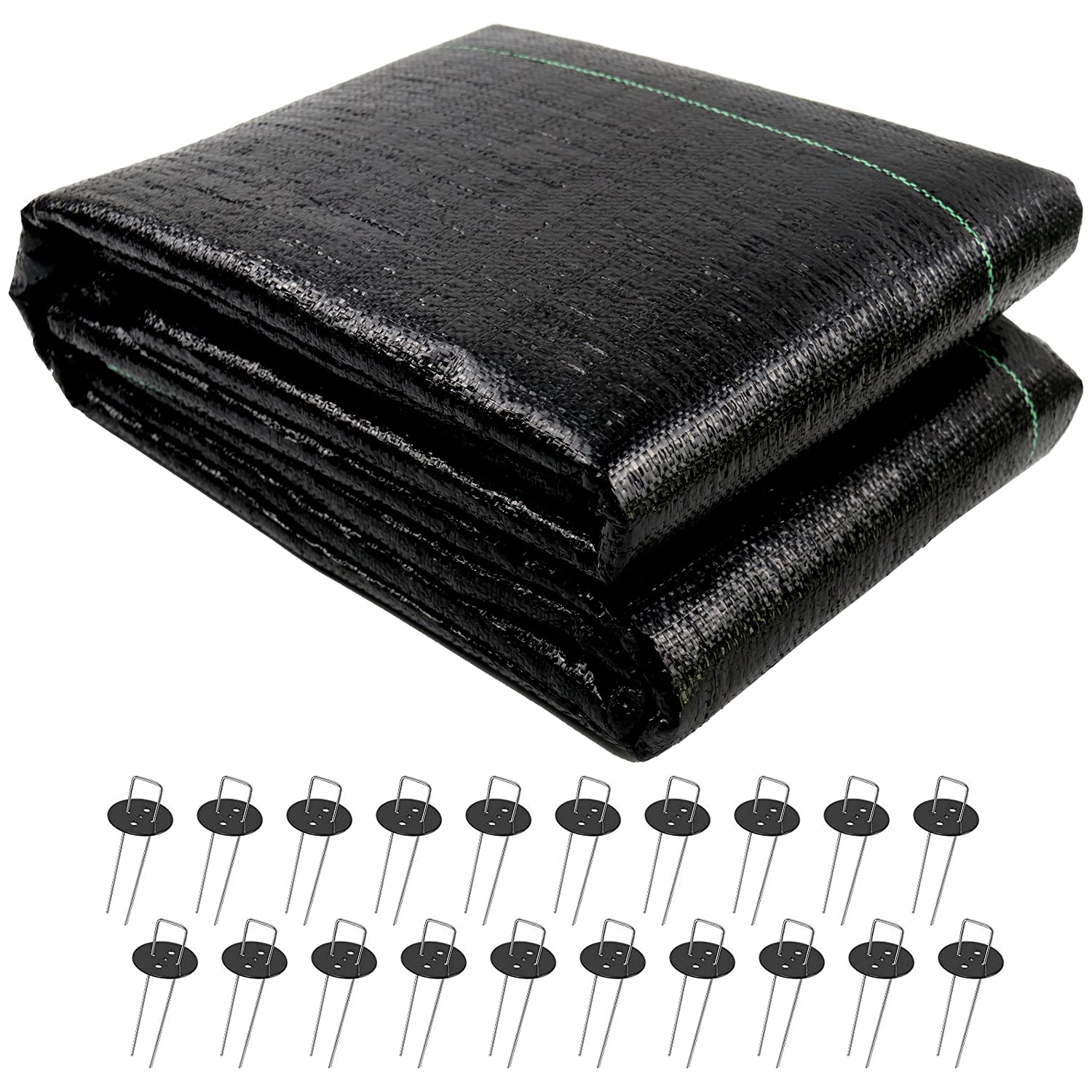
UWIOFF uses a 3.2 oz polyethylene fabric that differs from standard polypropylene. PE material offers good flexibility and aging resistance, which makes it easier to shape around curved flower beds and tree rings. The 4-foot by 100-foot dimensions provide generous coverage for medium-sized home gardens, and the UV-resistant formulation is designed to withstand sun exposure for over five years.
Customers report that the fabric cuts cleanly and lays flat without curling at the edges. The green stripes help with alignment, and the material stays in place once stapled. One user who installed it under a stone flower bed cover noted that no weeds have pushed through after several months, though some early reviews warn that cut edges unravel quickly if not secured with tape or a flame seal.
The permeability is sufficient to allow water through without pooling, preserving soil moisture for plant roots. However, the PE material can feel slightly less robust than woven PP options when handling, and the unraveling issue at cut edges requires extra attention during installation. For budget-conscious gardeners, this fabric still delivers effective weed suppression when proper edge-sealing techniques are used.
What works
- Flexible PE material conforms easily to curved garden borders.
- UV-resistant formulation rated for over five years of outdoor use.
- Good water permeability prevents soil moisture loss.
What doesn’t
- Cut edges unravel aggressively; tape or flame sealing is mandatory.
- PE material feels less substantial than woven PP alternatives.
7. Vanver 4ft x 300ft Garden Landscape Fabric Weed Barrier Fabric Heavy Duty
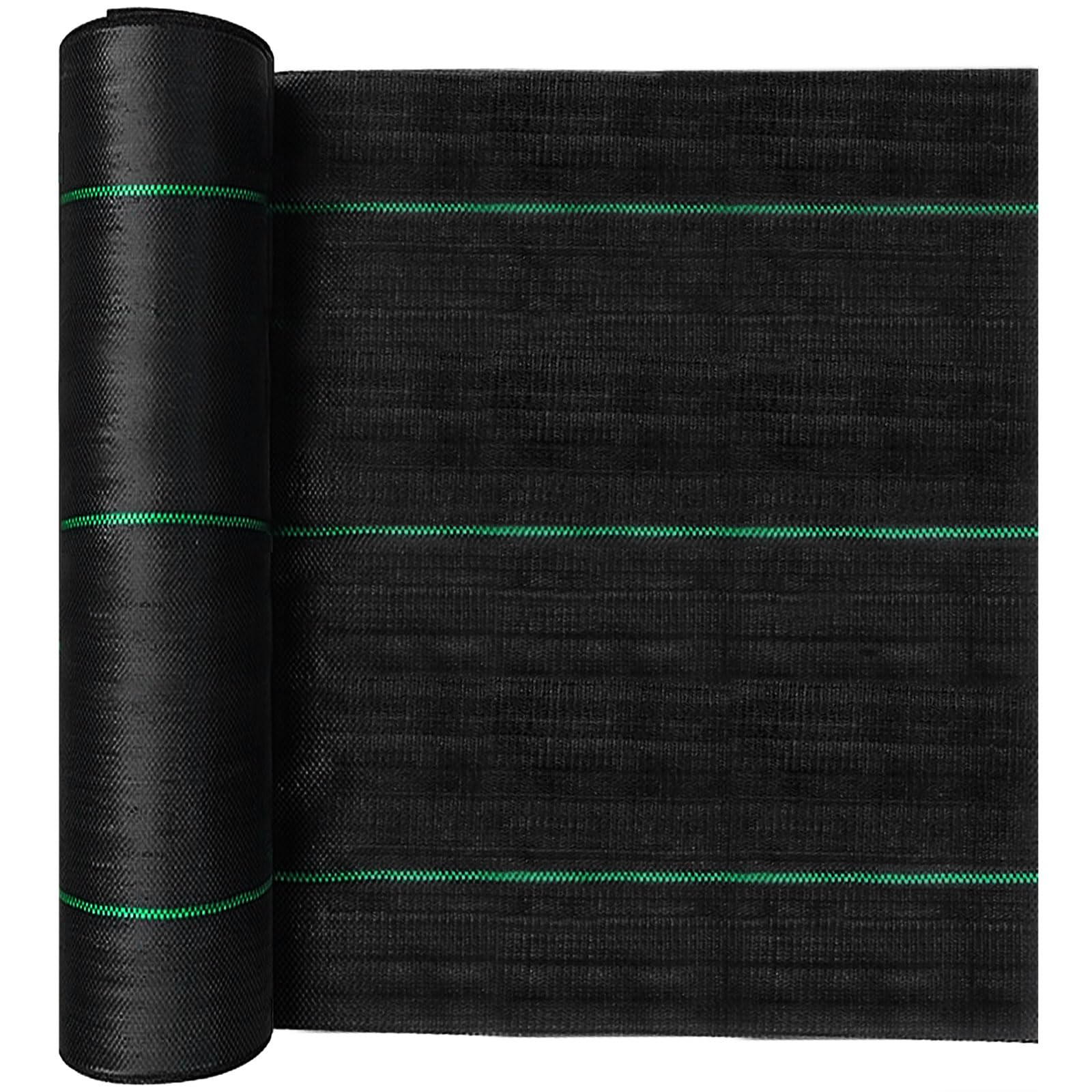
Vanver’s 3.2 oz woven polypropylene fabric incorporates anti-aging additives that extend its lifespan in direct sunlight and harsh weather conditions. The 4-foot by 300-foot roll provides 1,200 square feet of coverage, making it one of the largest volume options available for commercial-scale landscaping. The warp and weft weave structure allows slow exchange of air, water, and nutrients while blocking light penetration.
User installations include use under decomposed granite pathways, where the fabric remained sturdy with minimal staples. The material’s opacity prevents weed germination effectively, and reviewers mention it outperforms store-bought fabrics that allowed breakthrough within months. The large roll weight of over 25 pounds means it’s best handled with a partner or for projects where multiple helpers are available.
The anti-aging material should provide several years of reliable service, especially when covered with a thick layer of mulch or gravel. For property owners tackling large driveways, long pathways, or extensive orchard ground cover, this fabric offers the most square footage per roll in the lineup.
What works
- Massive 1,200 sq.ft. coverage for large commercial projects.
- Anti-aging additive extends lifespan in full-sun conditions.
- Warp and weft weave provides balanced strength in all directions.
What doesn’t
- Some weeds may still push through; not a 100% impermeable barrier.
- Extremely heavy roll requires multiple people or equipment to position.
Hardware & Specs Guide
Fabric Weight (oz/sq.yd)
This spec determines the material’s thickness and puncture resistance. A 3.2 oz fabric works for standard mulch beds and flower gardens, while 5 oz fabric handles gravel driveways, heavy foot traffic, and commercial-grade installations. Heavier fabric also blocks more light, reducing the chance of vigorous weeds punching through.
Tensile Strength (LBS)
Tensile strength measures how much pulling force the fabric can withstand before tearing. Ratings around 400 LBS are common for woven polypropylene and indicate the fabric can support loads from stones, soil erosion, and ground movement. Higher tensile strength is essential for driveway underlayment and sloped landscapes.
Water Permeability
Permeability refers to how quickly water passes through the fabric. High-permeability materials prevent puddling and allow rainwater to reach plant roots. Dual-layer or needle-punched designs often achieve higher flow rates than standard woven fabrics, making them better for planted beds that need consistent soil moisture.
UV Stabilization
UV-stabilized fabric contains additives that resist degradation from sunlight exposure. Non-stabilized fabric can become brittle and crack within a single season. For open landscapes without heavy mulch coverage, UV stabilization is critical for maintaining the fabric’s structural integrity over multiple years.
FAQ
Can I use garden fabric under gravel for a driveway?
Will 3.2 oz fabric stop quack grass or Bermuda grass?
How do I prevent garden fabric from fraying when cut?
Should I use landscape fabric in a vegetable garden?
Final Thoughts: The Verdict
For most gardeners, the best garden fabric winner is the Snail 5oz Premium Barrier because its commercial-grade weight, UV stability, and high water permeability strike the ideal balance for both flower beds and gravel pathways. If you want dual-layer construction with superior water flow for vegetable rows, grab the VIVOSUN 5oz Dual-Layer. And for covering large areas with high tensile strength under heavy stone, nothing beats the Grassclub 3x300ft.