
A D-shaped moss pole isn’t just a stake — it’s a wall for aerial roots. The flat face lets Monstera and Philodendron nodes sink in and size up. Round poles push roots away; a D-shape pulls them close. Choosing the wrong material or length means leggy growth and a plant that won’t hold.
I’m Rikta — the co-founder and writer behind Lawn Gear Lab. I study plant support systems by dissecting material specs, reviewing thousands of user reports, and comparing how each design holds moisture, resists rust, and keeps large aroids stable over months of vertical growth.
Buying your next d-shaped moss poles means deciding between metal DIY kits and modular plastic stacks, each with a different trade-off in durability versus ease of setup.
How To Choose The Best D-Shaped Moss Poles
A D-shaped moss pole lives or dies on three variables: material, backed design, and stackability. The right combination turns a trailing vine into a specimen with fenestrated leaves.
Material Strength And Rust Resistance
Plastic poles won’t rust but can snap under heavy Monstera weight. Metal mesh poles with vinyl-coated galvanized iron support mature plants for years without corrosion. If you plan on a single, long-term setup, the metal DIY kit delivers the highest load capacity. For smaller plants or frequent rearrangement, thick-gauge plastic stacks are sufficient.
Flat Face And Moisture Retention
The key spec is the flat D-surface. It provides a broad contact area for aerial roots to attach naturally. The curved plastic backing keeps sphagnum moss from drying out within hours — something open-mesh round poles fail to do. Look for a closed back that seals moisture in and reduces how often you need to water the pole.
Stackability And Height Customization
Stackable sections let you increase height as the plant matures without repotting. Modular plastic poles with locking tabs or stakes are easy to extend. Metal DIY kits require cutting mesh and plastic sheeting but give you total control over final dimensions. For a large, mature plant, prioritize systems that connect firmly without loosening over time.
Quick Comparison
On smaller screens, swipe sideways to see the full table.
| Model | Category | Best For | Key Spec | Amazon |
|---|---|---|---|---|
| HOLANHING 6-Pack | Metal DIY Kit | Large aroid collections | 3 sizes up to 60 in. | Amazon |
| HYYZ Self-Watering Pole | Plastic Modular | Low-maintenance hydration | 240 ml reservoir | Amazon |
| ADGYULB DIY Kit 12ft | Metal DIY Kit | Custom length builds | 13 ft mesh roll | Amazon |
| ADGYULB DIY Kit 4ft+6ft | Metal DIY Kit | Budget-friendly start | 10 ft mesh roll | Amazon |
| Haispring 6-Pack Stackable | Plastic Modular | Multi-plant support | 6 units, 17 in. | Amazon |
| Sisher 4-Pack Stackable | Plastic Stackable | Medium pot builds | 16 in. per section | Amazon |
| DVAURLIAN 4-Pack Clear | Plastic Stackable | Budget-conscious planters | 24 in. clear plastic | Amazon |
In‑Depth Reviews
1. HOLANHING 6-Pack Metal D-Shaped Moss Pole

This kit delivers three pole heights (24, 40, and 60 inches) across six units — two of each — making it the most versatile option for a mixed collection of aroids. The metal mesh provides a rigid 360-degree climbing surface, while the thickened PP backing forms the classic D-shape that traps moisture and prevents the fast evaporation typical of open coir poles. Gloves, zip ties, and Velcro ties are all included, so no additional trips to the hardware store are needed.
The black wire mesh sits flush against the flat face, giving aerial roots a rough surface to grip almost immediately. Owners report that Monstera and Philodendron nodes root into the mesh within two weeks when the sphagnum is kept damp. The semi-transparent backing allows you to check root development and moisture levels without disassembling the pole. Stacking is handled by extending the metal mesh — you zip tie the next section for a nearly seamless seam.
Downsides center on assembly time: you will need to zip tie each plastic sheet to the mesh, which takes about five minutes per pole. Some users found guiding existing aerial roots through the grid before tightening the ties easier than trying to feed them through afterward. For growers with multiple large plants, the included zip tie count (300) and the variety of heights justify the extra setup effort.
What works
- Three distinct heights suit different plant stages
- Metal mesh resists bending under heavy Monstera
- Translucent backing lets you see moss moisture
- Full accessory kit (ties, gloves, Velcro)
What doesn’t
- Requires manual assembly of each section
- Feeding aerial roots through grid is tricky after assembly
2. HYYZ Self-Watering D-Shaped Moss Pole
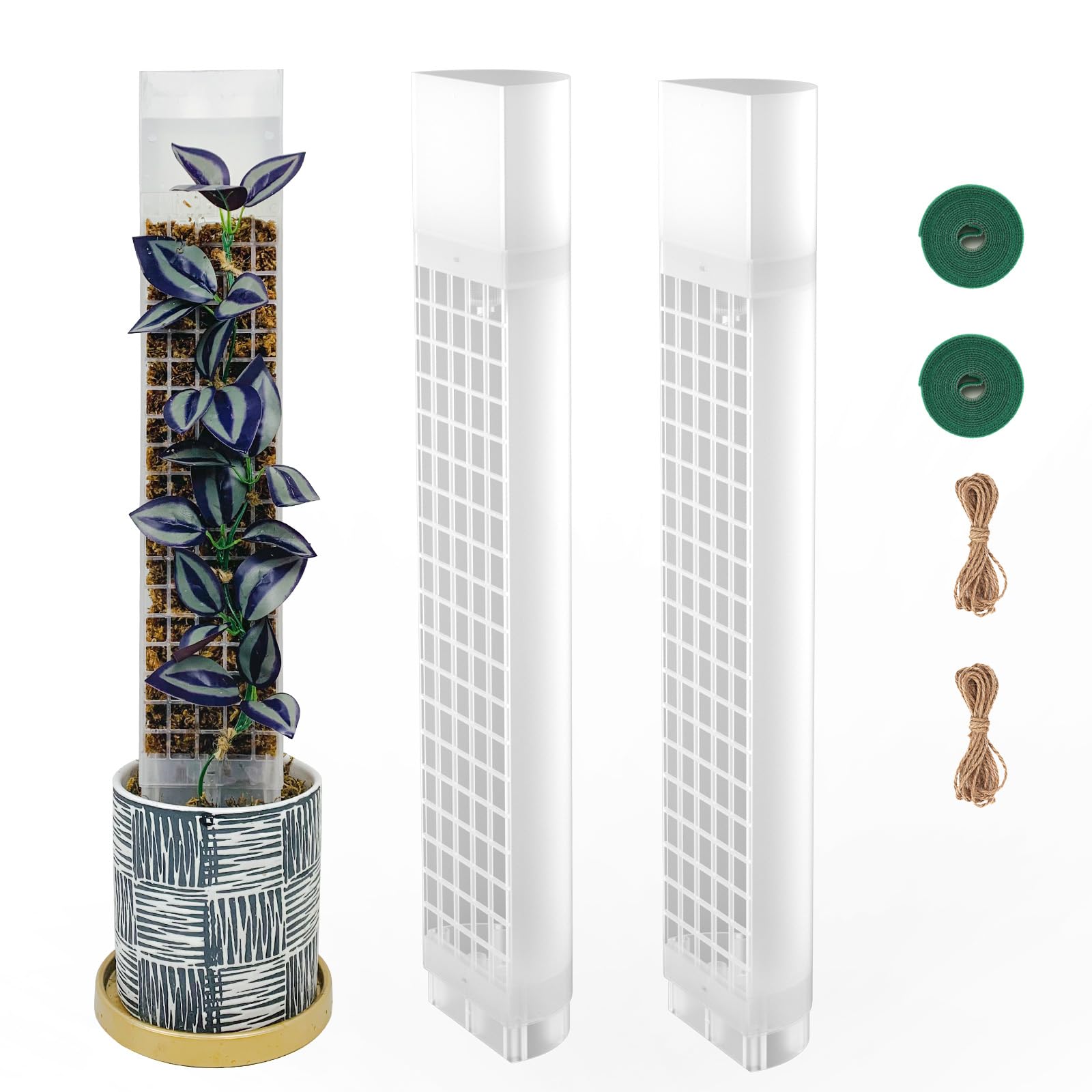
This is the only model in the list with a built-in watering system — a 240 ml reservoir sits at the top and drips down through the moss, keeping the pole consistently damp for three to four days. The D-shaped plastic body includes a bottom valve that lets you control drip rate, making it ideal for busy plant owners who can’t spray the pole daily. The grid pattern on the flat face provides ample attachment points for aerial roots without sharp edges.
Assembly is straightforward: insert the plastic stakes, pack the sphagnum, and clip the sections together. The stackable design uses a twist-lock mechanism that feels secure and doesn’t shift when the plant grows heavy. Owners consistently mention that moisture retention is superior to any open-mesh pole they had used before, and the steady humidity encourages faster root penetration into the moss.
The biggest drawback is the stake count — the pole has six holes for stabilizing stakes but only includes four, and the non-standard diameter (7.05 mm) makes it difficult to find replacements. Also, pushing dry moss down the narrow top requires a stick or dowel. For those who prioritize hydration convenience over raw strength, this design is a clear step forward.
What works
- Reservoir provides days of consistent moisture
- Valve lets you adjust drip speed
- Durable plastic won’t rust or corrode
- Simple twist-lock stacking
What doesn’t
- Only four stakes supplied for six holes
- Hard to pack moss into the top section
3. ADGYULB 12ft D-Shaped Metal Moss Pole DIY Kit
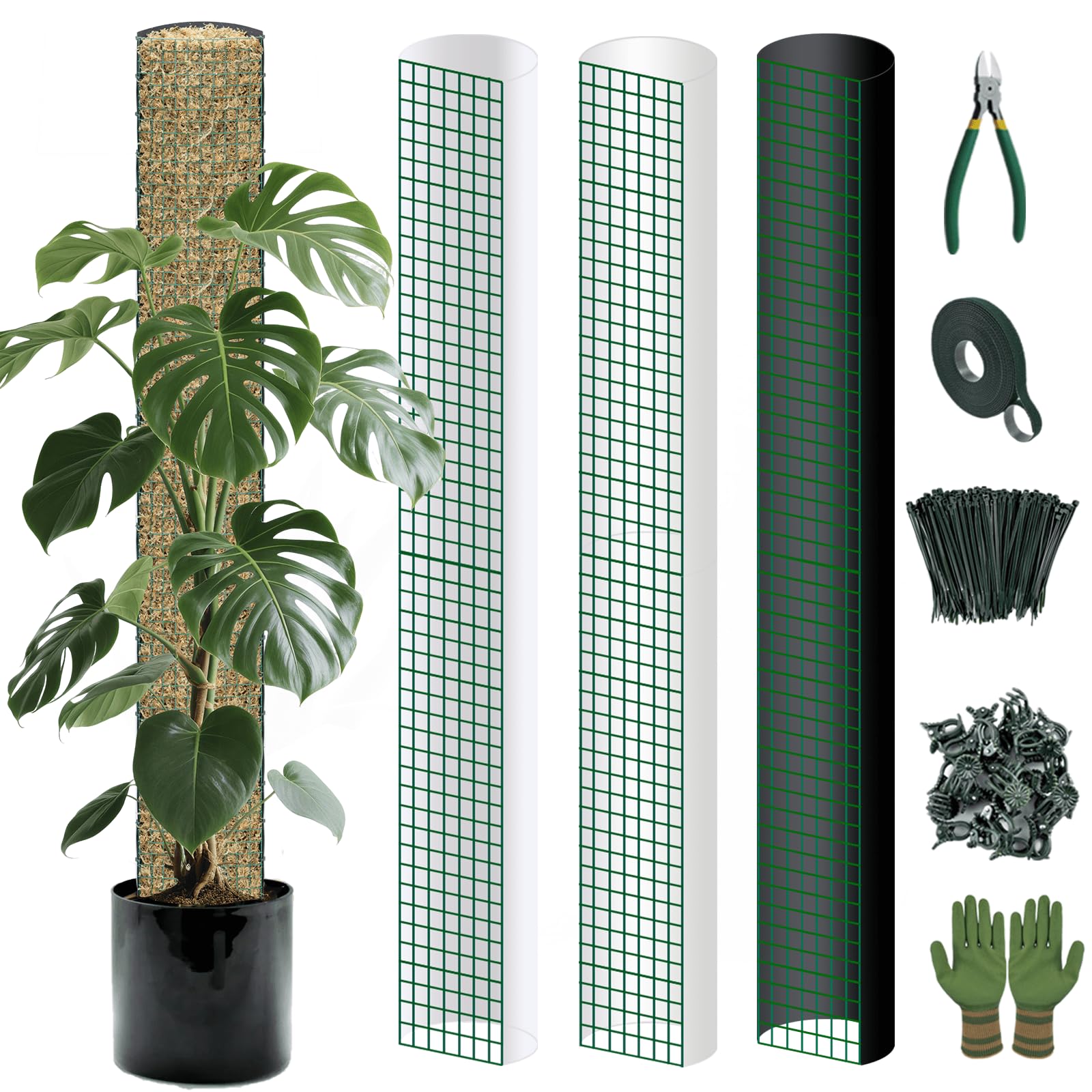
This DIY kit provides 13 feet of vinyl-coated galvanized iron mesh and three pre-cut 4-foot plastic sheets, giving you the freedom to construct poles in any combination up to 12 feet total. The metal mesh is noticeably thicker than budget alternatives, resisting deformation even when supporting a mature Monstera with multiple branches. The kit also bundles wire-cutting pliers, non-slip gloves, 200 zip ties, and plant tape — everything except the sphagnum moss itself.
The vinyl coating on the mesh prevents rust, which is critical for poles that stay damp for years. Owners report that a single 20-inch pole section, when extended with a second section using the included ties, remains stable without wobbling. The black backing sheet hides moisture stains and root growth, giving a clean finish. For propagation, you can cut the mesh at a node and transplant the rooted section directly.
The main trade-off is that the mesh is one-sided — the flat climbing face is great for Monstera and Philodendron, but plants like Hoya or Pothos that prefer 360-degree surface coverage will lose the ability to root on the curved back. Some users noted that the sphagnum dried within 24 hours in low-humidity rooms; dry moss becomes hydrophobic and can pool water at the pot base, increasing rot risk if the pot lacks drainage.
What works
- Premium vinyl-coated mesh resists rust
- Customizable length up to 12 feet
- Includes pliers, gloves, tape, and ties
- One-piece construction avoids weak seams
What doesn’t
- Mesh is one-sided, no back rooting for Hoya
- Sphagnum can dry fast in arid conditions
4. ADGYULB D-Shaped DIY Kit (4ft D-Shape & 6ft Round)

This starter kit includes a 4-foot D-shaped plastic sheet and a 6-foot round mesh section, giving you two pole configurations in one box. The 10-foot vinyl-coated wire mesh roll lets you cut custom lengths, and the accessory set (pliers, gloves, 100 zip ties, plant tape, and 25 clips) covers every assembly need. The D-shaped backing uses thickened polypropylene that holds its curve better than cheaper, flimsy plastics found in budget poles.
Customer feedback highlights the value: the kit costs less than two pre-built poles of equal height, and the materials feel robust. The flat mesh face provides a wide attachment area for Monstera roots, and the closed back slows moisture evaporation noticeably compared to all-mesh cylinders. The included clips are particularly useful for delicate vines that can’t handle strong zip tie pressure.
Weaknesses mirror the larger ADGYULB kit: sphagnum in the D-shaped section dries fast if room humidity drops below 40%, and the round pole section doesn’t have a backed design, so moisture escapes quicker. Some first-time DIY assemblers found matching the mesh to the plastic sheet’s curve initially fiddly. For beginners wanting to test the D-shape concept without a high investment, this is the most cost-effective entry.
What works
- Two pole shapes in one package
- Thickened PP backing holds shape well
- Complete tool set included
- Clips are gentle on soft stems
What doesn’t
- Round mesh section lacks moisture-backing
- Moss dries quickly in low humidity
5. Haispring 6-Pack Stackable Plastic Moss Pole
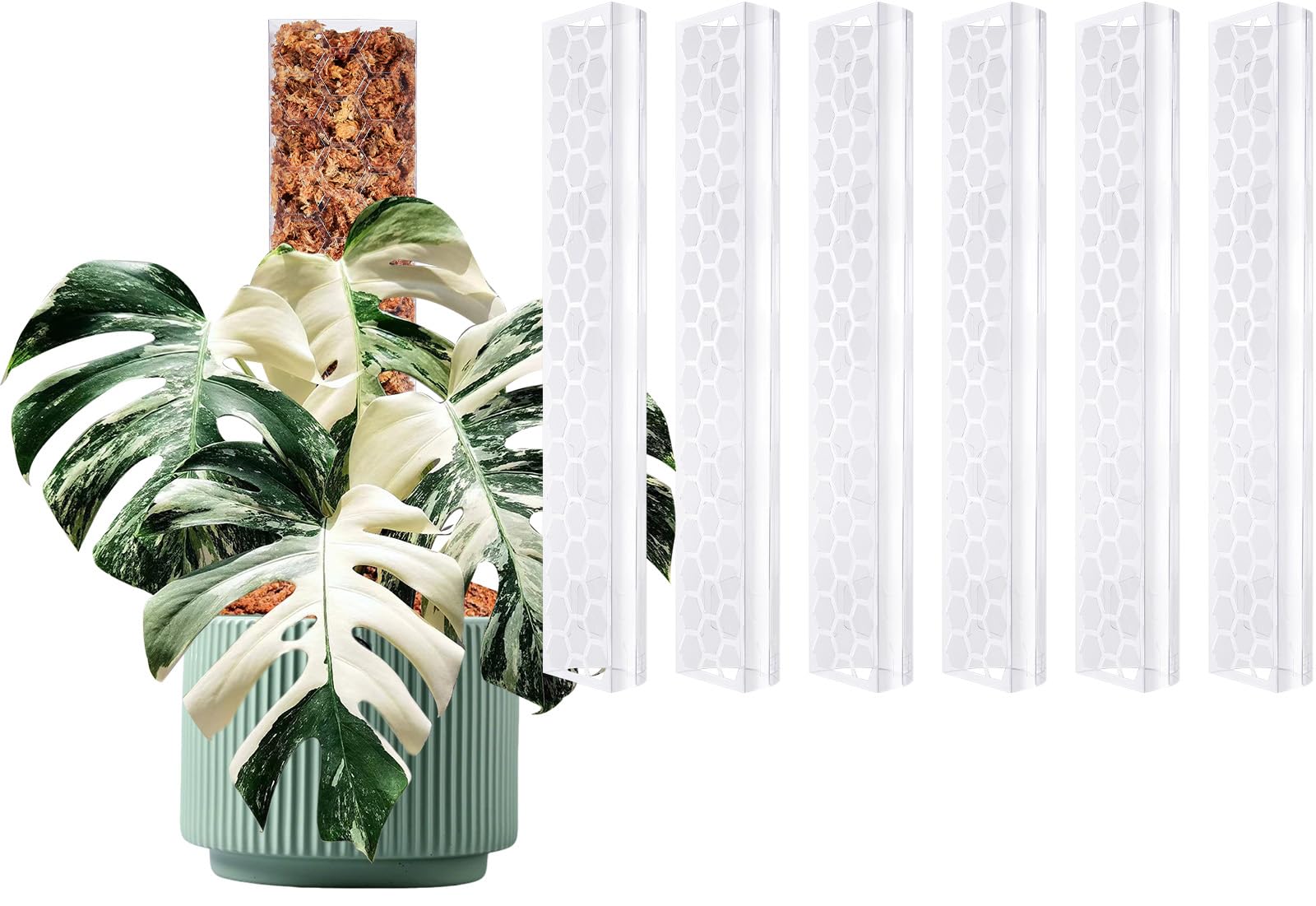
Haispring’s six-piece set uses a honeycomb-inspired grid on the flat face, offering dozens of small openings for root penetration while maintaining structural rigidity. Each 17-inch section is made from thick polypropylene that snaps together via locking tabs. The design is fully modular: you can stack three or four sections to reach over four feet without losing stability. The transparent material lets you inspect root growth and moss moisture without opening the pole.
Assembly requires folding the plastic sheet along two crease lines — don’t roll it into a cylinder or the locking tabs won’t align. Owners note that once the technique is learned, each section takes under a minute to assemble. The pole holds moisture well; many users report watering every two to three days instead of daily. The wide D-shape provides a generous trough for packing sphagnum moss, which supports consistent aerial root development.
The locking tabs can pop out if assembled too loosely or if the pole is placed in a narrow pot that forces the curve inward. Some units arrived with a permanent crease from shipping packaging, though this didn’t affect the pole’s function. For growers managing multiple plants, the six-unit count offers good coverage at a moderate per-pole cost.
What works
- Honeycomb grid offers excellent root grip
- Transparent material for easy monitoring
- Fast section assembly once creases are folded
- Sturdy enough for mature Philodendron
What doesn’t
- Locking tabs can pop if not fully seated
- Permanent crease from shipping reported
6. Sisher 4-Pack 16-Inch Plastic Moss Pole
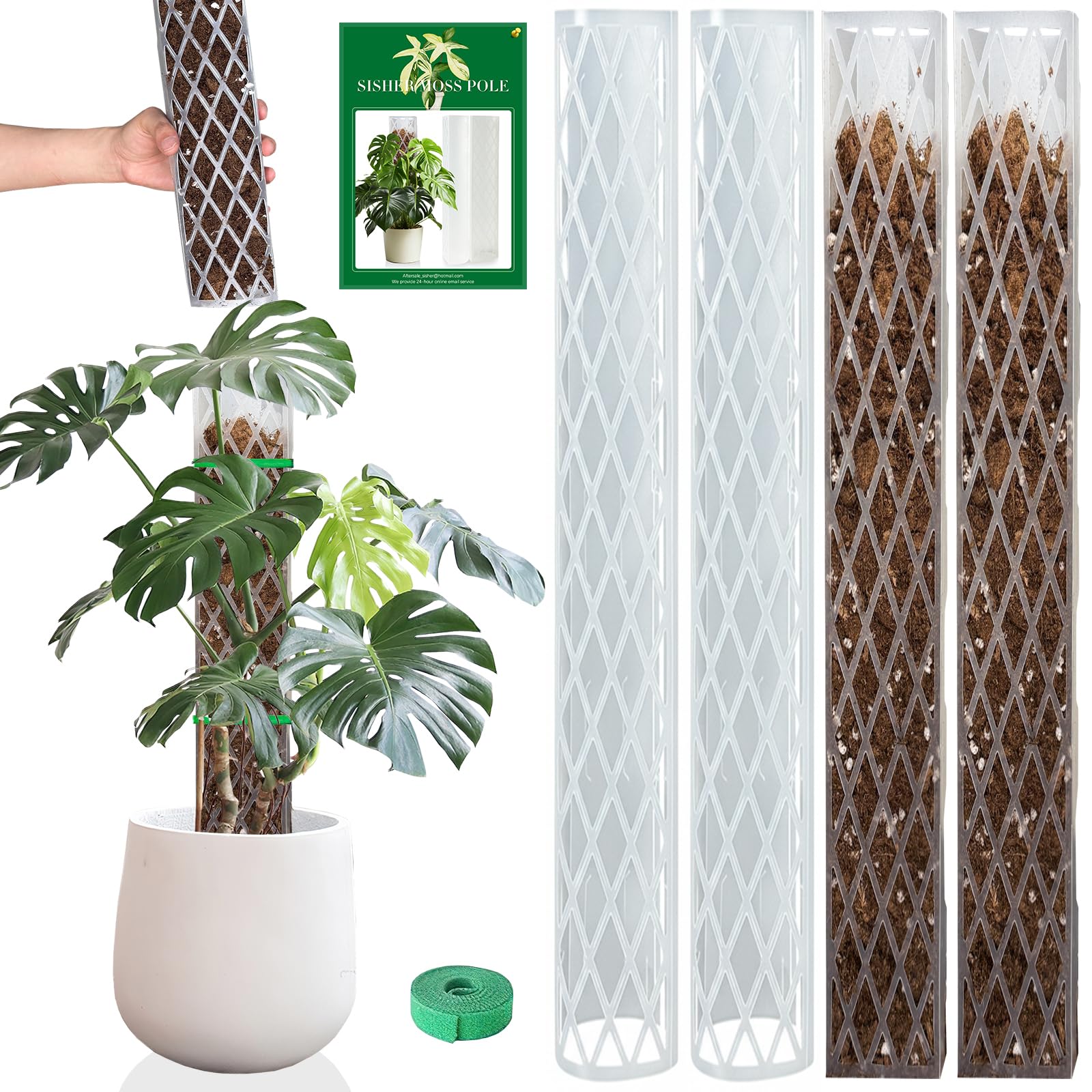
The Sisher pole is built for medium pots (8–12 inches) and ships as a four-pack of 16-inch sections. Each unit is a single-piece white plastic D-shape with a diamond hole pattern that provides a climbing surface and holds sphagnum in place. The closed semi-circular back traps humidity, and the white color blends into bright interiors better than dark mesh or clear plastic. Assembly is minimal — just pack the moss and stake it into the soil.
Owners praise the stackable feature: you can connect multiple sections to create a taller support without the pole becoming top-heavy. The included plant ties are gentle on stems and adjustable as the plant grows. Users with Monstera specifically note that the 16-inch height is perfect for young to medium plants, and the flat face encourages roots to dig into the moss rather than circling the pot.
The supplied Velcro ties are too short for thick stems — a few wraps won’t hold a heavy branch securely. Some users replaced them with longer ties or reusable clips. The plastic, while thick enough for medium plants, flexes under the weight of a fully mature Monstera with dozens of leaves. Best suited for plants under three feet tall or for early training of larger specimens.
What works
- White finish looks clean in modern decor
- Closed back retains moss moisture well
- Stackable without tools
- Works well for smaller Monstera and Pothos
What doesn’t
- Velcro ties too short for thick vines
- Flexes under very heavy mature plants
7. DVAURLIAN 4-Pack 24-Inch Clear Plastic Moss Pole
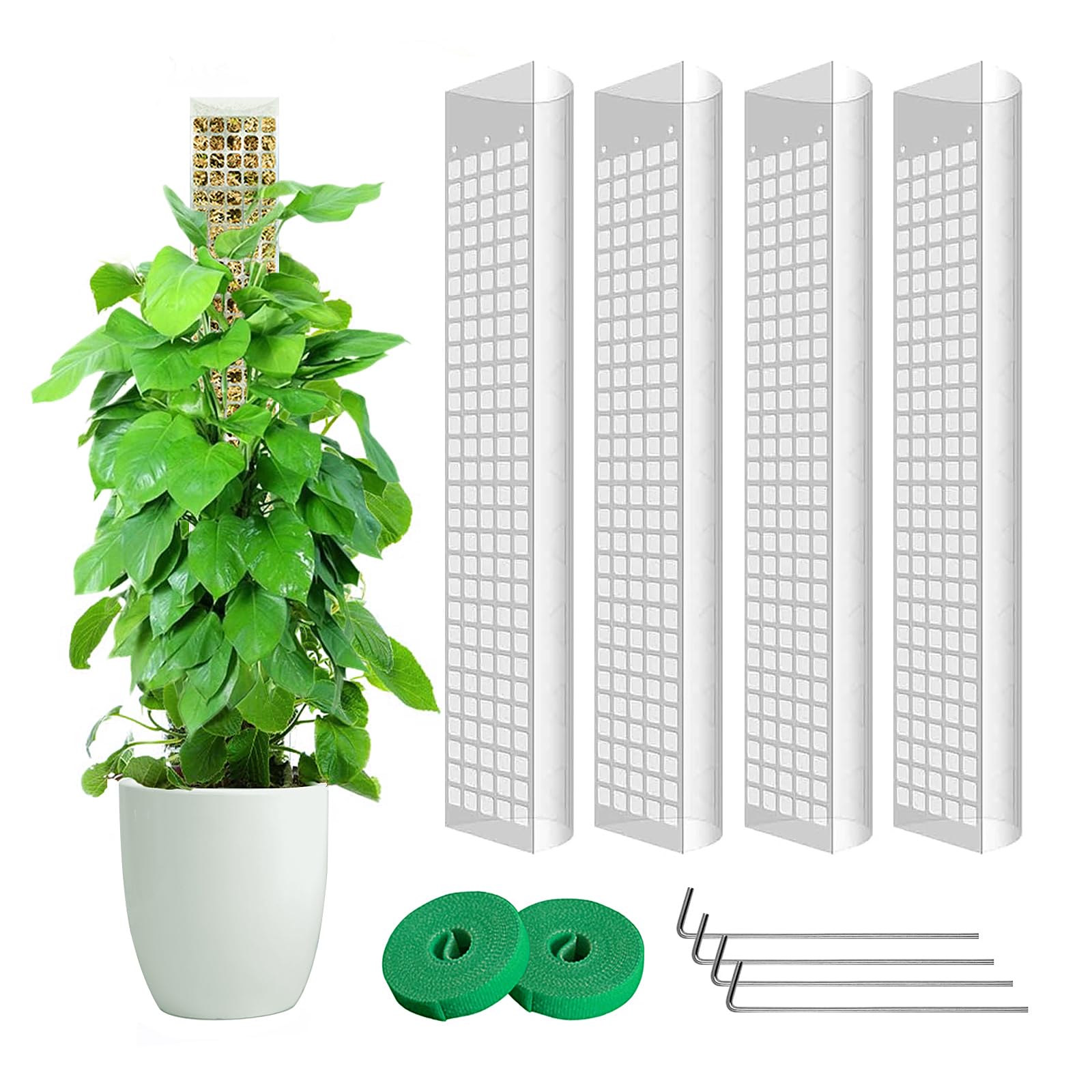
This four-pack of 24-inch clear plastic poles is the most affordable way to test D-shaped support across multiple plants. The plastic is thin but functional — fold along the crease lines to form the semi-cylinder, then fill with moss. The clear material is a real advantage: you can spot root rot, dry spots, and moss decomposition without pulling the pole apart. Water trickles evenly through the column, and the closed back reduces moss drying speed compared to open mesh.
Owners on a budget appreciate that they can stack sections for taller plants, though the thin plastic connectors can feel loose when you reach three sections or more. The flat face has large openings that give aerial roots easy access, and the lightweight build makes it simple to move the pole when repotting. The design works well for Pothos, small Philodendron, and young Monstera.
The thin plastic is the primary limitation — it won’t support a heavy, mature Monstera without bending or buckling. Stacking beyond 4 feet becomes unstable, and the locking mechanism can break if you press too hard in reverse. Algae may grow on the clear interior if exposed to direct sunlight, but this is cosmetic. This set is a solid entry point for plant owners who want D-shape benefits without spending on a premium kit.
What works
- Clear plastic enables root and moisture checks
- Large grid openings for easy root entry
- Very affordable for a 4-pack
- Closed back slows moisture loss
What doesn’t
- Plastic bends under heavy plant weight
- Stacking gets unstable above 4 feet
- May grow algae in direct sun
Hardware & Specs Guide
Metal Mesh Thickness
The gauge of the wire determines long-term load capacity. Vinyl-coated galvanized iron mesh (as in ADGYULB and HOLANHING kits) resists rust for over two years of constant dampness and won’t sag under a 5-foot Monstera. Plastic poles rely on the PP sheet’s thickness — look for at least 1.5 mm to prevent buckling.
Closed Back vs. Open Mesh
A closed D-shaped back retains sphagnum moisture three to four times longer than open mesh or coir wraps. The PP sheet acts as a vapor barrier, meaning you water the pole every 2–3 days instead of daily. Open mesh designs allow 360-degree rooting for plants like Hoya but require more frequent misting to stay damp.
FAQ
What is the advantage of a D-shape over a round moss pole?
How do I keep the sphagnum moss from drying out too fast?
Can I extend a D-shaped moss pole later without repotting?
Final Thoughts: The Verdict
For most gardeners, the d-shaped moss poles winner is the HOLANHING 6-Pack because it combines metal durability, three height options, and a complete accessory kit at a moderate per-pole cost. If you want consistent hydration without daily spraying, grab the HYYZ Self-Watering Pole. And for a fully custom build with premium rust-resistant mesh, nothing beats the ADGYULB 12ft DIY Kit.