
A standard leaf rake glides over stones like a boat over water, doing nothing but surface work. When you need to actually extract, grade, or move rock from soil, the tool has to be built for a different fight — one where the tines bite in and the frame handles the load without bending. A purpose-built bow rake with a wide, rigid head and a strong handle is the difference between an hour of frustration and a job done in one clean pass.
I’m Rikta — the co-founder and writer behind Lawn Gear Lab. I’ve spent hundreds of hours comparing tine gauges, head widths, handle materials, and weld construction across this specific category, cross-referencing over a thousand verified owner experiences to separate heavy-duty tools from the ones that buckle under pressure.
For anyone facing stubborn soil or rock-strewn beds, the right choice comes down to steel thickness, tine count, and handle core rigidity. This guide walks through the strongest contenders and explains exactly what to look for when picking a rake for rocks that will hold up season after season.
How To Choose The Best Rake For Rocks
Rock raking demands a tool that can penetrate, scrape, and drag without the tines splaying or the handle cracking. Choosing the right one requires looking past the marketing and focusing on three structural metrics that determine real-world durability.
Tine Gauge and Steel Grade
The thickness of the steel tines is the single most important factor. Standard garden rakes often use thin 16-gauge metal that bends when it hits a buried stone. Look for 10-gauge or heavier steel heads, especially in brands that specify the gauge. Heat-treated or manganese steel adds extra wear resistance for rocky soil. Ribbed tines and reinforced ridges at the bow also prevent head deformation under heavy loads.
Head Design: Bow Rake vs. Leveling Rake
For extracting rocks from soil, a traditional bow rake with curved tines is the best choice — the tines dig in and lift debris while the soil sifts through. For spreading gravel or smoothing stone beds, a flat leveling rake with a solid plate works better because it drags material evenly without digging in. Consider your primary task: extraction or grading. Some premium leveling rakes now offer adjustable angles to handle both roles.
Handle Material and Length
A longer handle (65 inches or more) provides better leverage for heavy pulling, reducing back strain. Fiberglass handles absorb vibration better than steel or wood and won’t splinter or rot. Steel handles are strong but add significant weight, which can fatigue the user. Look for a rubber grip that remains secure when wet, and avoid hollow-core handles that can crack at the ferrule connection under high stress.
Quick Comparison
On smaller screens, swipe sideways to see the full table.
| Model | Category | Best For | Key Spec | Amazon |
|---|---|---|---|---|
| Bully Tools 92309 | Bow Rake | Heavy rock extraction | 10-gauge steel, 16 tines | Amazon |
| Dremmt 30×10 | Leveling Rake | Spreading gravel/sand | 2mm stainless steel plate | Amazon |
| BlumeTrec Bow Rake | Bow Rake | Versatile rock & soil work | Manganese steel, 17 tines | Amazon |
| Bully Tools 92312 | Thatching Rake | Rock & debris removal on lawn | Tempered steel, 24 tines | Amazon |
| BlumeTrec Leveling Rake | Leveling Rake | Leveling soil/gravel beds | 30″x10″ alloy steel plate | Amazon |
| WORKPRO W153026 | Bow Rake | Budget light rock removal | Aluminum head, 17 tines | Amazon |
| DIIG Bow Rake | Bow Rake | Entry-level rocky soil | Stainless steel, 17 tines | Amazon |
In‑Depth Reviews
1. Bully Tools 92309 Bow Rake 16-Inch
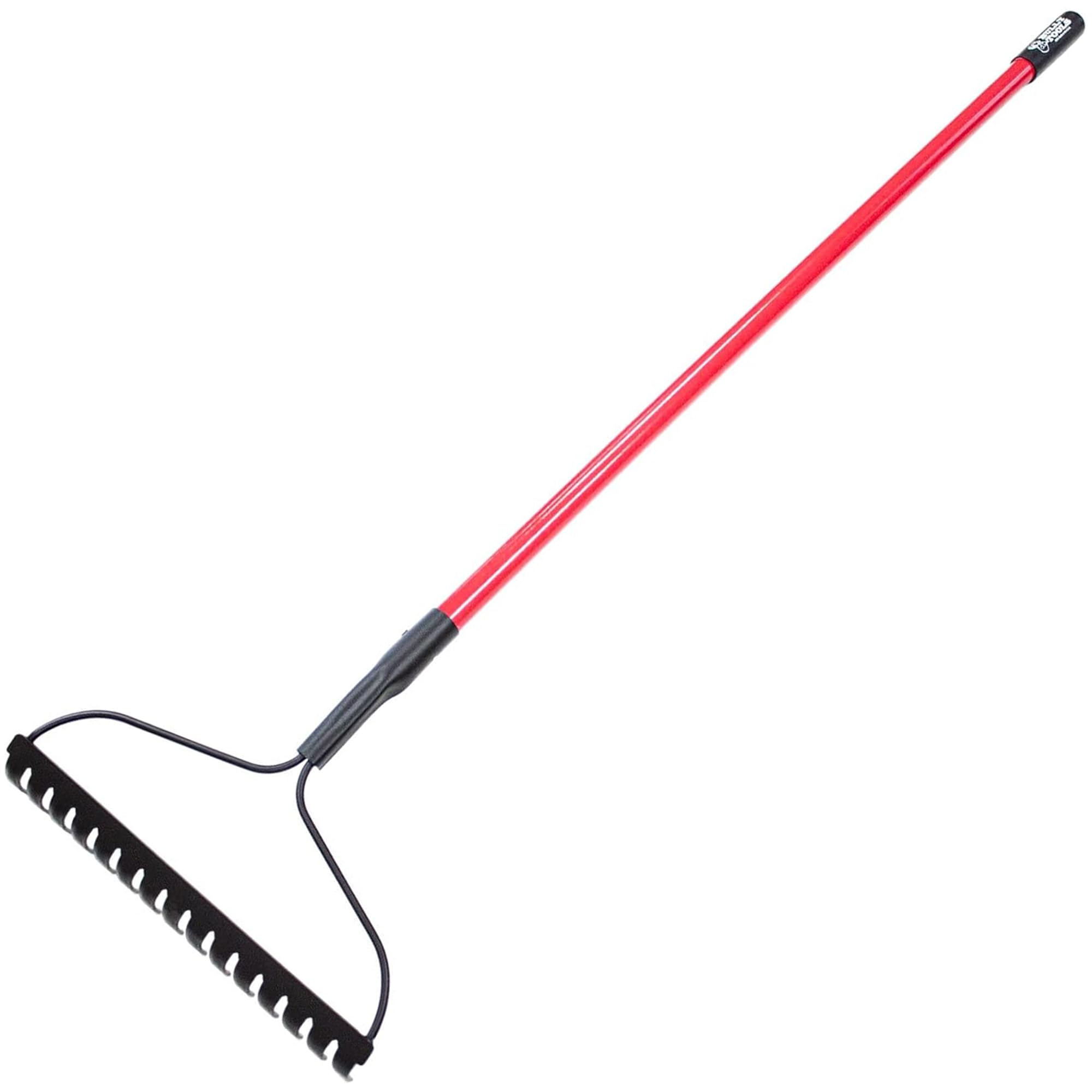
The Bully Tools bow rake sets a clear benchmark for rock-grade durability. Its head is constructed from true 10-gauge American steel, which represents a significant thickness advantage over the standard 14- or 16-gauge heads found on most budget rakes. The robotically overwelded connections reinforce the weakest point of any bow rake — the joint where the tines meet the frame — preventing separation when dragging heavy loads of stone and compacted clay.
The 16 tines feature ribbed reinforcement and a 16-inch working width that strikes a practical balance between coverage and digging power. Owners consistently report pulling rocks the size of cantaloupes without any tine deflection. The fiberglass handle uses a polyester veil coating that prevents splintering even after repeated exposure to moisture, and the rubber grip remains secure during sweaty or rainy work sessions.
This is a heavy tool at 3.5 pounds, but the weight is a trade-off for the structural rigidity that keeps it productive in rocky terrain. The 58-inch handle length provides adequate leverage for most users, though taller individuals may prefer the 66-inch variant. Assembly requires a Phillips head screwdriver and takes under a minute.
What works
- 10-gauge steel head resists bending under heavy rock loads
- Reinforced welds at the bow joint prevent head separation
- Fiberglass handle with rubber grip reduces vibration and fatigue
What doesn’t
- Higher overall weight can tire shoulders during extended use
- Standard 58-inch length may feel short for tall users
2. Dremmt Lawn Leveling Rake 30×10

The Dremmt leveling rake is engineered for a specific but critical rock-related task: spreading and grading gravel, sand, and topsoil to create a smooth, level surface. Unlike a bow rake that digs in, this tool uses a solid 30-by-10-inch stainless steel plate that glides over the ground, dragging material into low spots without catching or flipping. The 2mm plate thickness provides enough rigidity to handle heavy wet sand without warping.
The 72-inch handle allows the user to walk upright while pulling, which significantly reduces lower back strain compared to shorter tools. The ergonomic curve transfers pulling force directly into the plate, keeping it flat against the ground. Owners note that it works equally well in both push and pull directions, which speeds up the leveling process. The head angle is fixed, which improves stability — no hinges to wobble under load.
This rake excels in post-excavation cleanup, where you need to distribute soil back over a rocky bed or smooth out a gravel pathway. It is not designed for deep extraction of buried stones, but for surface grading it outperforms every bow rake on this list. Assembly is straightforward with the included hardware, and the stainless steel construction requires minimal maintenance beyond hosing off dirt.
What works
- Solid steel plate provides stable, skip-free leveling
- 72-inch handle allows upright operation to protect the back
- Rust-resistant stainless steel handles wet conditions well
What doesn’t
- Not effective for extracting buried rocks from soil
- Can be heavy to maneuver in tight garden beds
3. BlumeTrec Bow Rake 68-Inch
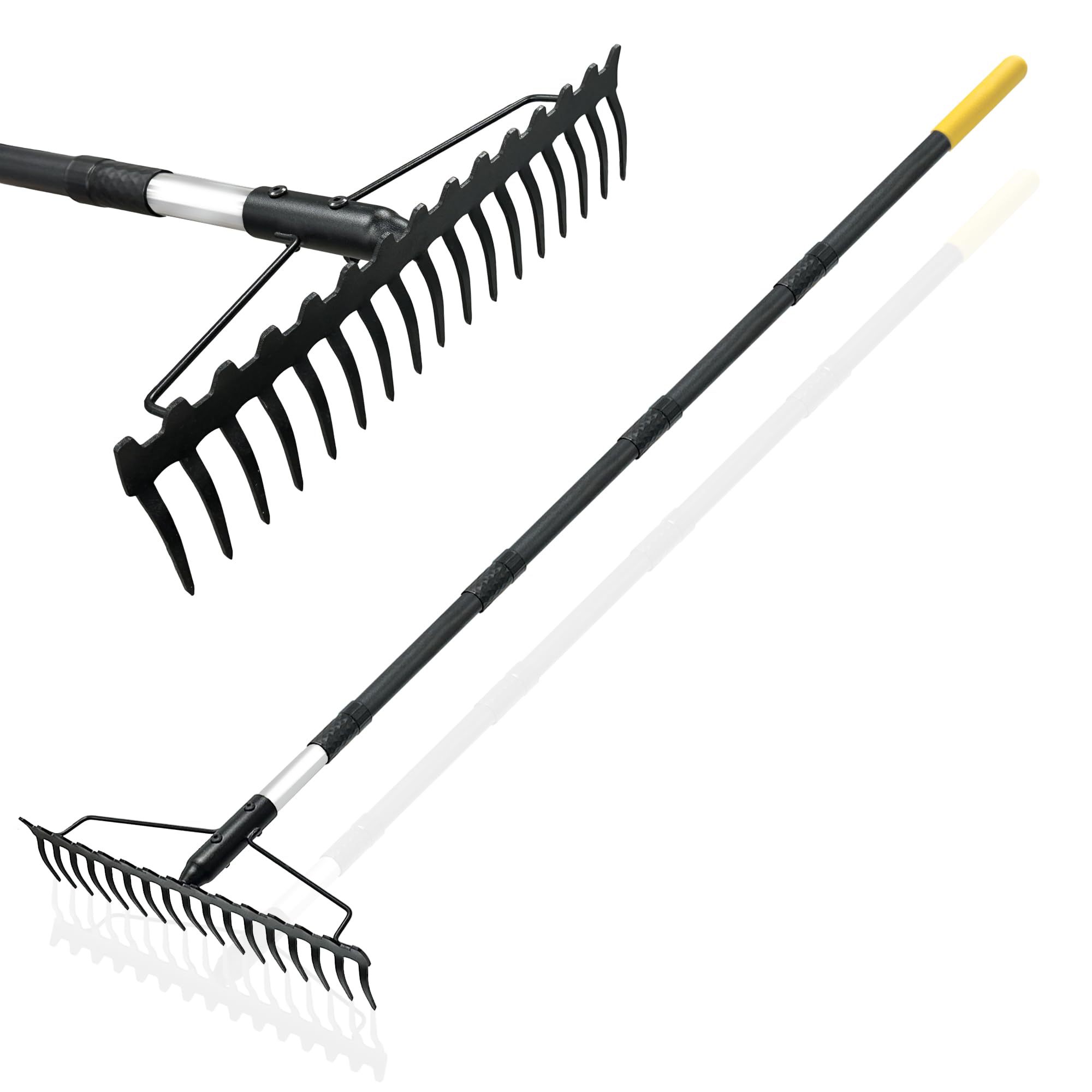
The BlumeTrec bow rake stands out for its forged manganese steel head, a material choice that offers superior hardness and wear resistance compared to standard carbon steel. This is particularly relevant in rocky soil where tines experience constant abrasion. The 17 tines are welded to the bow frame in a way that distributes stress evenly, reducing the risk of individual tines loosening over time.
A key differentiator is the dual-sided head design. One side features longer tines for digging into compacted soil and extracting rocks, while the opposite side uses shorter tines for leveling and spreading mulch or gravel. Rotating the head switches tasks in seconds, making this a two-in-one tool that reduces the need to carry multiple rakes. The 68-inch adjustable handle uses a multi-section pole system that lets users customize the length from roughly 48 to 68 inches.
Owners consistently mention the handle length as a standout feature, noting that it reduces bending during rock removal. The stainless steel handle sections thread together securely, and the soft non-slip grip adds comfort during extended use. Assembly is simple, taking about five minutes. The head width of 17 inches provides good coverage without becoming unwieldy in tighter spaces.
What works
- Manganese steel head resists wear from abrasive rocky soil
- Dual-sided design offers both digging and leveling capability
- Adjustable handle length accommodates different user heights
What doesn’t
- Multi-section handle can feel less rigid than a single-piece handle
- Threaded connections may loosen over time if not checked
4. Bully Tools 92312 24-Tine Thatching Rake

Although marketed as a thatching rake, the Bully Tools 92312 is built on the same heavy-duty philosophy as its bow rake sibling. The 24 tempered steel tines are constructed from 100% USA-made steel and are overwelded to the frame to withstand extreme pulling forces. This makes it an effective tool for raking rocks, sticks, and heavy debris off lawns before mowing, where a standard leaf rake would shred or bend.
The 23.5-inch wide head covers substantial ground in a single pass, which is useful when clearing large areas after a grading or excavation project. The tines are spring-tempered to flex without permanent deformation, so they can handle the jolt of catching a hidden stone without snapping. The fiberglass handle uses triple-wall construction with a polyester veil coating, preventing the splintering that plagues budget fiberglass rakes.
Owners note the weight at 3.9 pounds, which is on the heavier side for a thatching rake, but the trade-off is unmatched durability. The rubber grip reduces hand fatigue, though some users mention the 68-inch handle could be 6 to 12 inches longer for better leverage. This tool is best suited for clearing rock debris from grass surfaces rather than digging rocks out of bare soil. Assembly requires two Phillips head screwdrivers and takes seconds.
What works
- Tempered steel tines resist bending on impact with rocks
- Wide 23.5-inch head covers large lawn areas efficiently
- Overwelded connections prevent head separation under stress
What doesn’t
- Heavy weight can cause fatigue during long clearing sessions
- Not designed for digging into compacted rocky soil
5. BlumeTrec Lawn Leveling Rake 30×10
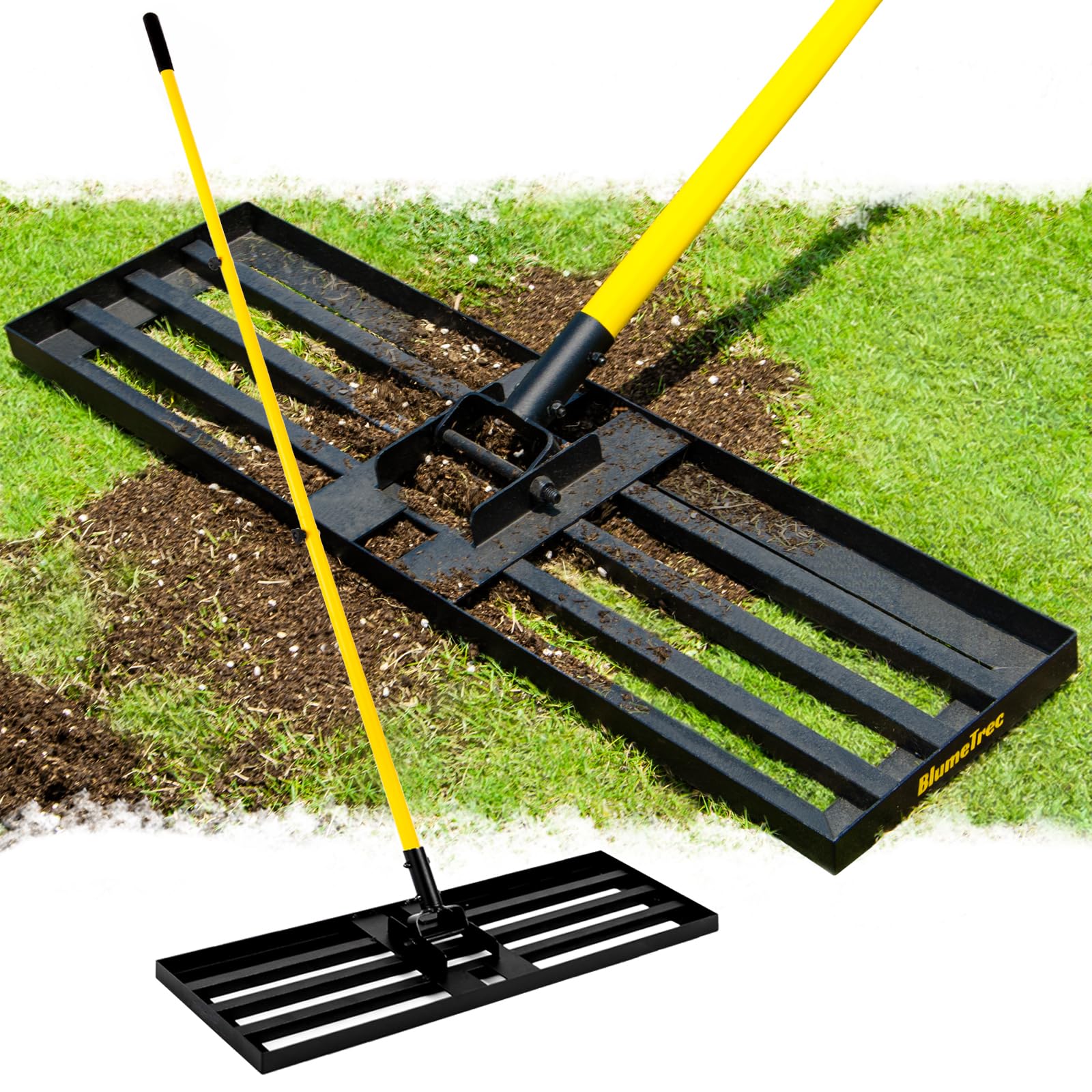
The BlumeTrec leveling rake brings an adjustable angle feature that sets it apart from fixed-plate competitors. The head pivots from 0 to 90 degrees, allowing the user to switch between a flat drag for spreading gravel and an angled position for pushing material into low spots. This makes it more versatile than a standard leveling rake when dealing with uneven rock beds or freshly tilled soil with embedded stones.
The 30-by-10-inch alloy steel plate is powder-coated to resist rust, and the full welding at the joints eliminates the wobble that can plague adjustable tools. The 7-foot handle is made from alloy steel and can accommodate users up to about 6 feet 4 inches without forcing a stoop. Owners report effective performance on Bermuda, Kentucky Bluegrass, and Fescue lawns when spreading topdressing sand over a rocky base.
One limitation is the pull-push resistance in thick gravel — the plate can be hard to drag when fully loaded. The adjustable hinge adds a mechanical point that requires periodic tightening. Assembly is straightforward with the included tools, and the head detaches for compact storage. This is a strong option for homeowners who need a single tool for both leveling soil and spreading stone.
What works
- Adjustable head angle provides push and pull versatility
- 7-foot handle reduces back strain for taller users
- Powder-coated alloy steel resists rust in damp conditions
What doesn’t
- Hinge mechanism can loosen during prolonged heavy use
- Dragging through thick gravel requires significant effort
6. WORKPRO W153026 Bow Rake 65-Inch

The WORKPRO bow rake delivers reliable performance at a price point that sits well below many competitors, making it a strong entry-level choice for rocky soil. The head is constructed from aluminum with 17 tines and a 5-inch head depth that provides good soil penetration without excessive weight. The overall tool weighs about 3.1 pounds, which is noticeably lighter than the Bully Tools options, reducing fatigue during longer sessions.
The adjustable handle extends to 65 inches and features a convenient hanging hole for storage. The telescoping sections lock securely, though the aluminum construction means the handle is less rigid than fiberglass or steel. Owners report that it handles small to medium rocks effectively, and the 17-tine design provides sufficient spacing to let soil sift through while retaining larger debris.
Where this rake falls short is under extreme stress. The aluminum head, while lightweight, is more susceptible to bending if you hit deeply buried large rocks or roots with full force. It is best suited for maintaining established beds and clearing surface-level stone rather than breaking new ground. Assembly requires a few minutes, and the rake breaks down for compact storage.
What works
- Lightweight design reduces arm fatigue during extended use
- Adjustable handle adapts to different user heights and tasks
- 17-tine head provides efficient rock sifting
What doesn’t
- Aluminum head can bend under heavy rock extraction stress
- Handle rigidity is lower than fiberglass or steel alternatives
7. DIIG Bow Rake 77-Inch

The DIIG bow rake offers the longest handle in this comparison at 77 inches, which provides exceptional leverage for users who want to maximize reach and minimize bending. The head features 17 tines with a 17-inch working width and 3mm thickness, which is thicker than many budget options. The triple-weld connection at the bow adds extra security against head detachment during rock pulling.
The handle is made of multi-section stainless steel, allowing the user to adjust the length by adding or removing sections. This modular design makes storage easy — the pole breaks down into compact pieces. Owners have reported successfully raking dry clay and rocks up to cantaloupe size without the tines bending or the head separating. The anti-rust coating helps protect the metal in damp environments.
Where this rake compromises is in the feel of the handle. The threaded stainless steel sections can sometimes develop a slight wobble at the connection points under high lateral stress. The grip is bare stainless steel with no rubber or foam padding, which can become slippery when wet. It is an excellent value for those on a tight budget who need a long-reach rake for light to moderate rock work.
What works
- Long 77-inch reach reduces back strain significantly
- Triple-welded head resists detachment under heavy loads
- Adjustable multi-section handle stores compactly
What doesn’t
- Threaded handle sections may wobble under stress
- Bare steel handle lacks a comfortable grip cushion
Hardware & Specs Guide
Tine Gauge and Steel Grade
The thickness of the steel tines is measured in gauge — the lower the number, the thicker the metal. Standard rakes use 14- or 16-gauge steel, which flexes under heavy rock loads. Premium models like the Bully Tools 92309 use 10-gauge steel, offering about 30% more rigidity. Manganese steel, used in the BlumeTrec bow rake, adds hardness and abrasion resistance specifically beneficial for rocky soil where tine wear is accelerated.
Handle Material and Core Construction
Fiberglass handles with a polyester veil coating provide the best balance of strength, weight, and vibration absorption. Solid wood handles can splinter over time, while steel handles add substantial weight. Avoid handles with hollow cores that connect to the head with a compression ferrule — these are the first failure point under heavy pulling. Look for handles that thread into the head or are secured with through-bolt hardware for maximum structural integrity.
FAQ
Can I use a leaf rake to remove rocks from soil?
What is the ideal tine count for extracting rocks?
How do I prevent the rake head from detaching from the handle?
Final Thoughts: The Verdict
For most gardeners, the rake for rocks winner is the Bully Tools 92309 because its 10-gauge steel head and reinforced welds provide the structural rigidity needed to extract heavy stones without bending. If you need a dual-purpose tool for both digging and leveling, grab the BlumeTrec Bow Rake. And for spreading gravel or smoothing stone beds with minimal back strain, nothing beats the Dremmt Lawn Leveling Rake.