
The moment a tender seedling leaves its humidity dome for a pot or garden bed, its root system is the most vulnerable it will ever be. A heavy, compacted soil can crush delicate root hairs, while one that drains too fast leaves them gasping for moisture. The difference between success and transplant shock often comes down to the specific texture and pH of the medium you choose.
I’m Rikta — the co-founder and writer behind Lawn Gear Lab. I’ve spent countless hours comparing product formulations, studying horticultural science on aeration and nutrient availability, and analyzing aggregated owner feedback to determine which mixes give young transplants the best start without the guesswork.
This guide cuts through the bag labels to put the finest selection of soil for transplanting seedlings into a clear, spec-driven comparison that prioritizes root health and consistent germination.
How To Choose The Best Soil For Transplanting Seedlings
The essential criteria for a transplant medium are finer and more controlled than general potting mixes. You need a balance of structure, moisture, and nutrients that encourages rapid root expansion into new territory.
Texture & Particle Size
Seedlings push delicate roots. A mix with large bark chunks or dense clay forces roots to detour or break, stalling growth. Look for a fine, hand-screened texture — it should feel fluffy and light, allowing roots to spread unimpeded. Coarse sand or sharp perlite adds the needed drainage without blocking root passage.
Moisture Retention vs. Drainage
New transplants hate both soggy feet and a dry crust. The best media use dual agents: peat moss or coco coir for water-holding capacity, balanced with perlite or vermiculite for pore space. A mix that holds moisture like a wrung-out sponge — never saturated — reduces watering frequency while preventing root rot.
Nutrient Load & pH Balance
Seedlings require a gentle start. Heavy fertilizer loads can burn tender roots, while sterile mixes (soilless) let you control feeding precisely. The pH should sit between 5.5 and 6.5 for most vegetables and flowers. Lime is often added to buffer the natural acidity of peat, keeping essential nutrients available for uptake.
Quick Comparison
On smaller screens, swipe sideways to see the full table.
| Model | Category | Best For | Key Spec | Amazon |
|---|---|---|---|---|
| Espoma Organic Seed Starter | Premium Organic | Organic gardeners seeking mycorrhizae | 16 qt bag, Myco-Tone included | Amazon |
| Duspro Peat-Free Mix | Peat-Free | Eco-conscious seed starting | 4-in-1 coco coir blend | Amazon |
| Hoffman Seed Starter Mix | Soilless Mix | Superior germination rates | 10 qt bag, wetting agent | Amazon |
| Soil Sunrise All Natural Mix | Organic Blend | Heirloom & organic seed starting | 8 qt, 6 ingredients | Amazon |
| Jiffy Organic Seed Starting Mix | Organic Traditional | Value-packed fine texture | 10 qt, peat/vermiculite/lime | Amazon |
| Rio Hamza Propagation Mix | Soilless Propagation | Cuttings and delicate rooting | 4 qt, no pre-added fertilizer | Amazon |
| Midwest Hearth Potting Mix | Budget Starter | Small batch transplanting | 4 qt, pH controlled | Amazon |
In‑Depth Reviews
1. Espoma Organic Seed Starter Premium Potting Soil Mix
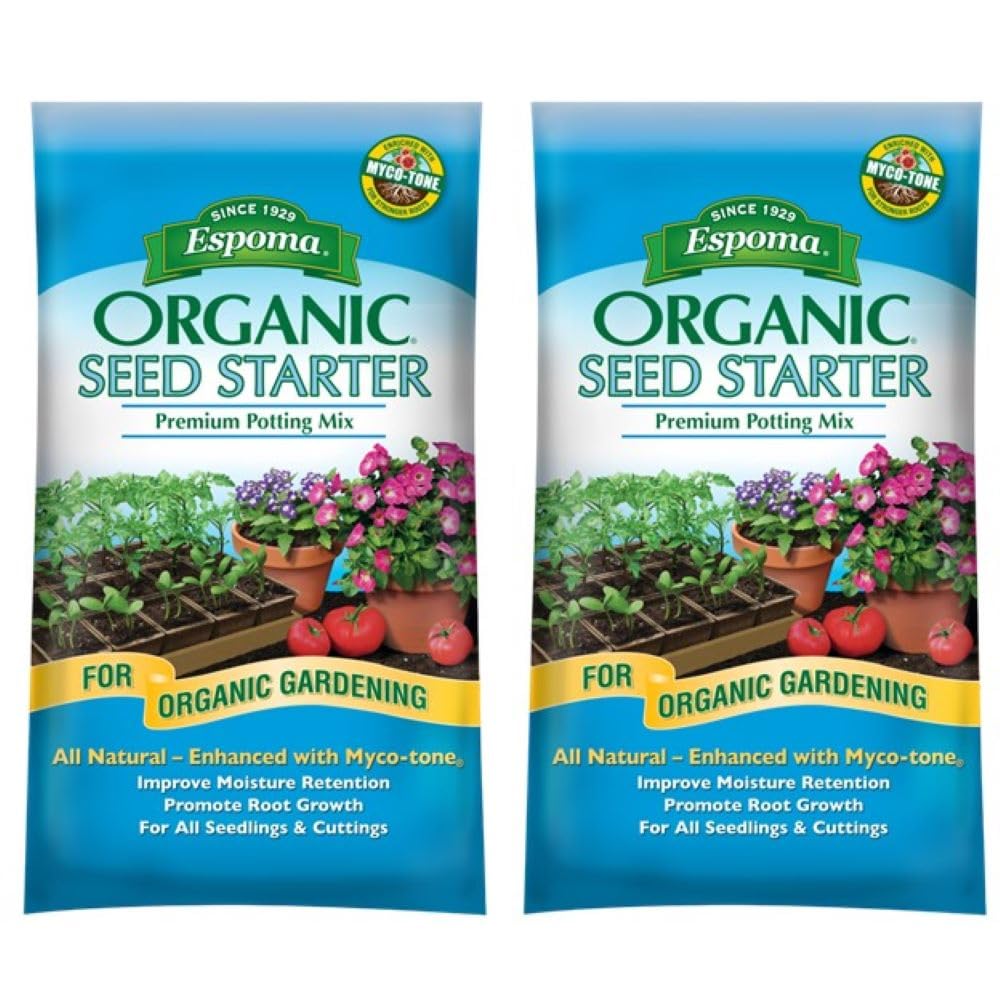
Espoma leads this list by combining a fine, light texture with a biological edge. The blend of sphagnum peat moss and perlite creates the ideal fluffy structure for transplanting, while yucca extract acts as a natural wetting agent to ensure even moisture distribution. The addition of lime brings the pH into the sweet spot for vegetables and flowers, preventing nutrient lock-up.
What sets this mix apart is the inclusion of Myco-Tone — a proprietary blend of endo and ecto mycorrhizae. These beneficial fungi form a symbiotic relationship with the root system immediately upon contact, dramatically increasing water and nutrient absorption. For a transplant moving into a larger pot or garden bed, this biological head start reduces wilting and accelerates establishment.
Each pack contains two 16-quart bags, a generous volume that fills several trays or a large raised bed section. The organic certification ensures zero synthetic chemicals, making it safe for edible crops from day one. Gardeners report consistently high germination rates and vigorous early growth without having to supplement with fertilizer for the first two weeks.
What works
- Mycorrhizae boost root development immediately after transplant
- Light, airy texture prevents compaction even after repeated watering
- Generous 16 qt bag size offers great per-volume value
What doesn’t
- Higher upfront cost compared to commodity brands
- Peat-based sourcing may not appeal to all eco-conscious buyers
2. Duspro Seed Starter Potting Soil Mix
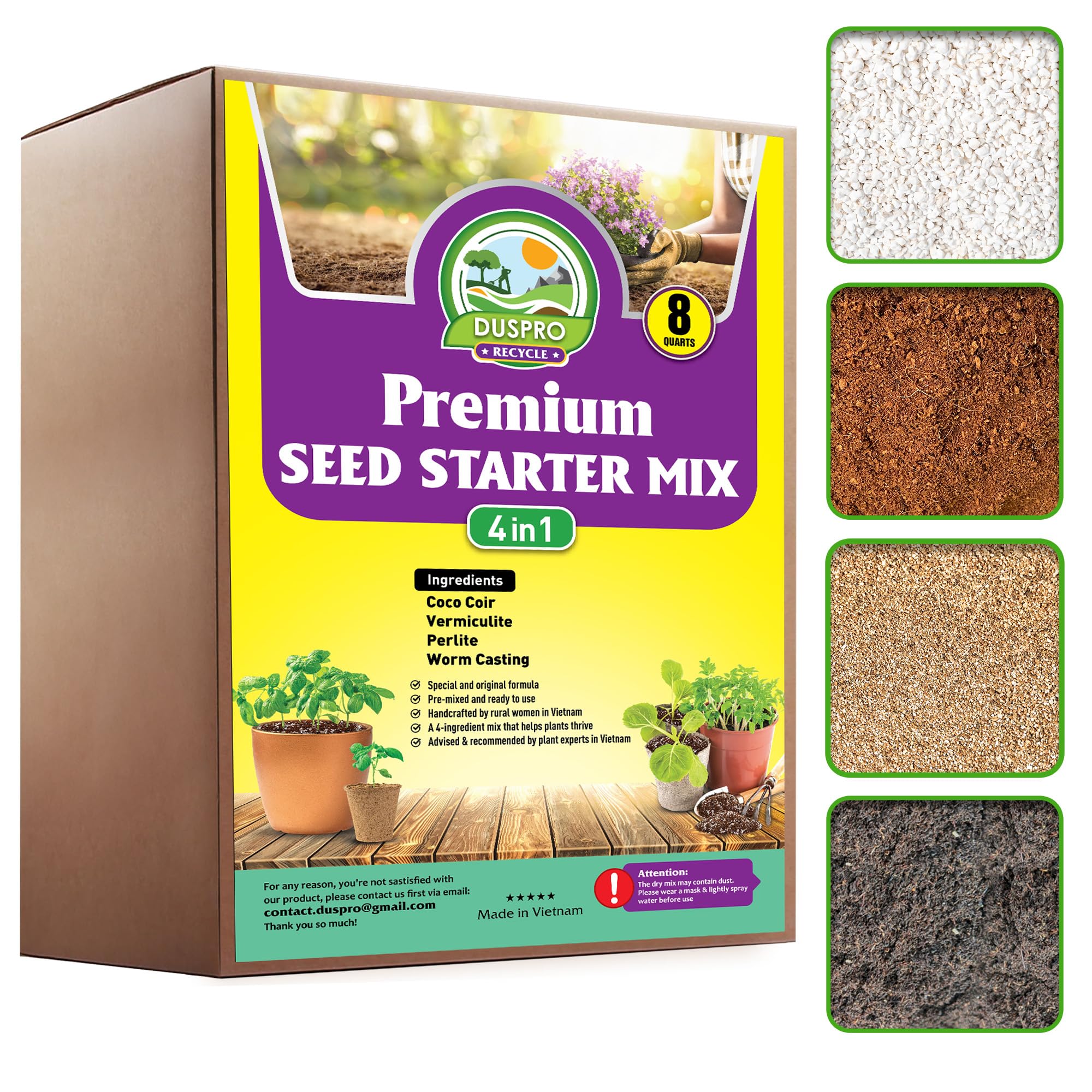
For gardeners looking to avoid peat moss, Duspro delivers a 4-in-1 coco coir blend that rivals traditional mixes. The base of coco coir provides excellent water-holding capacity — it can absorb up to eight times its weight — while perlite and vermiculite create the pore space needed for oxygen exchange around developing root tips. Worm castings add a gentle, slow-release nutrient charge that won’t burn tender transplants.
The hand-screened texture is notably fine, which is critical for seed-to-soil contact during germination and for preventing large particles from heaving tiny seeds out of place. This mix is specifically formulated for transplanting into cell packs and starter pots, where consistency matters more than raw volume. Users report that it avoids the sogginess common with some peat-based starters, maintaining a balanced moisture profile even under wick-watering systems.
Duspro markets this as an alternative for those concerned with peat harvesting, and the performance holds up in side-by-side trials. The 8-quart bag is a practical size for a season of home seed starting, and the resealable packaging keeps the mix fresh for staggered planting.
What works
- Excellent moisture distribution without sogginess
- Screened fine texture ensures great seed contact
- Contains worm castings for gentle initial nutrition
What doesn’t
- Price per quart is higher than peat-based alternatives
- Coarser perlite chunks may float to the surface after watering
3. Hoffman Seed Starter Potting & Planting Mix

Hoffman’s Seed Starter has earned a dedicated following among serious gardeners who value reliability above all. This soilless mix is composed of six finely balanced components — primarily peat, vermiculite, and perlite — plus a built-in wetting agent that solves the common problem of dry peat repelling water. When you hydrate this mix, it absorbs uniformly instead of beading up on the surface, ensuring every root zone reaches the same moisture level.
The fine consistency is a standout feature. Users consistently note the absence of large bark chunks or uncomposted debris that can introduce weed seeds or physically obstruct root growth. The inclusion of agricultural lime brings the pH to a neutral range, and the formula contains minimal fertilizer — exactly what you want for transplanting, as it allows you to control the nutrient schedule without risking salt burn on sensitive seedlings.
In comparative trials, Hoffman’s mix has been shown to produce higher germination percentages than standard potting soils or pure coco coir. The 10-quart bag represents a solid mid-range volume, enough to seed several dozen standard flats or to fill a large propagation tray. For the gardener who wants a no-surprises medium, this is a proven performer.
What works
- Wetting agent eliminates hydrophobic dry spots instantly
- Fine, debris-free texture supports delicate root structures
- Low nutrient load allows precise feeding control
What doesn’t
- Does not contain beneficial mycorrhizae or worm castings
- Price point is noticeable compared to budget brands
4. Soil Sunrise All Natural Seed Starting Mix
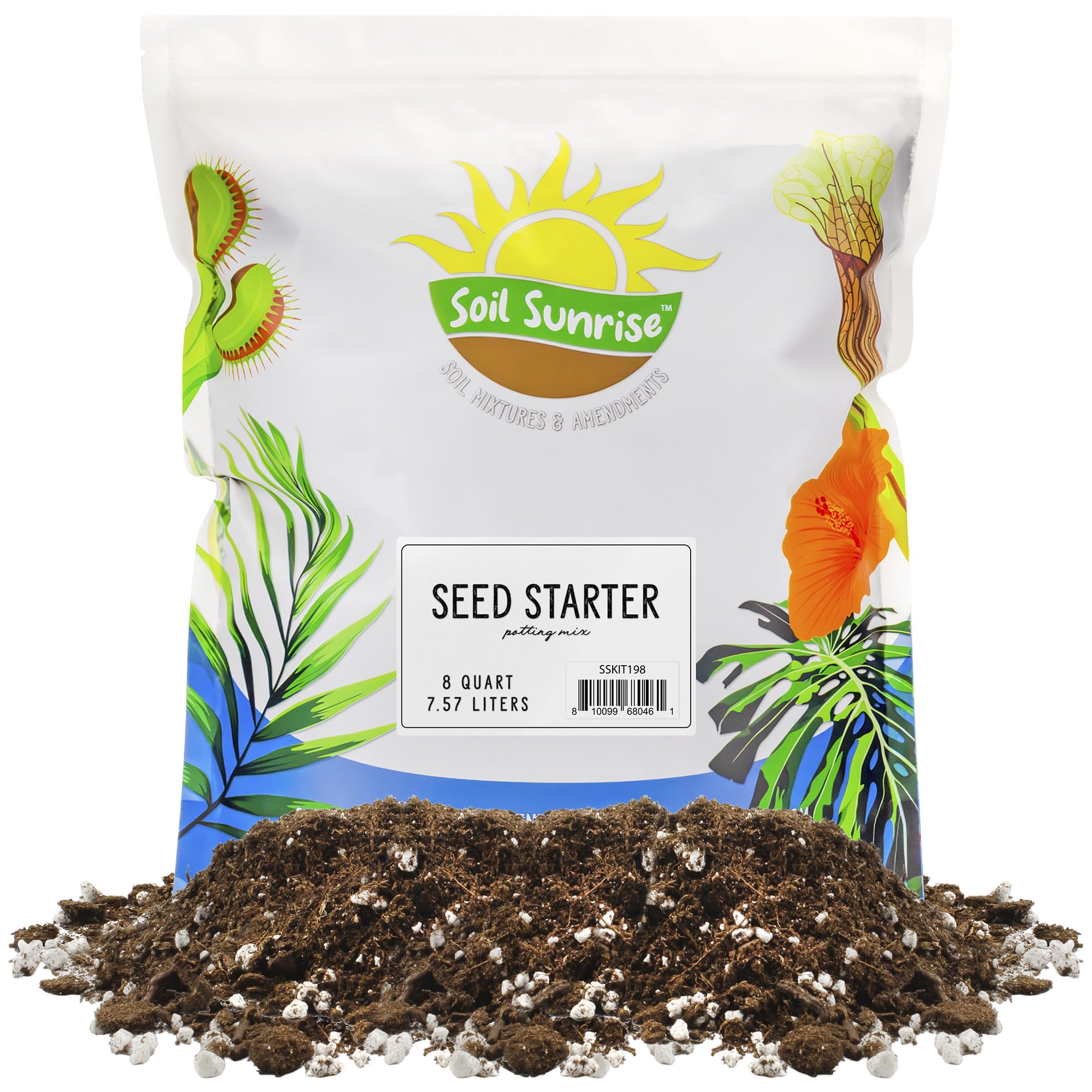
Soil Sunrise takes a hand-blended, multi-ingredient approach that appeals to the organic gardener who wants everything in one bag. The formula includes peat moss, perlite, worm castings, coarse sand, coco coir, and lime — six distinct components that each serve a specific function. The coarse sand adds a weight and structure that helps the mix hold its form around a transplant root ball without collapsing, while the coco coir and peat double down on moisture retention.
The presence of worm castings is a key advantage for transplanting. Unlike synthetic fertilizers that release nutrients in a quick burst, worm castings provide a gentle, microbe-rich feeding that supports root hair development and builds soil biology. This makes the mix particularly effective for heirloom and open-pollinated varieties that benefit from a more natural growing environment. The 8-quart size hits a sweet spot — enough for a season’s indoor starts without creating a surplus that dries out in storage.
Users report that seedlings grown in this mix show strong, stocky growth rather than becoming leggy, a sign that the moisture and aeration balance is correct. The mix is also suitable for transplanting into raised beds or outdoor containers, giving it versatility beyond the initial potting stage.
What works
- Hand-blended with six distinct components for balanced physics
- Worm castings provide natural, slow-release nutrition
- Suitable for both starting seeds and transplanting into beds
What doesn’t
- Coarse sand can feel heavy compared to a lighter perlite-only mix
- Price per quart falls into the premium range
5. Jiffy Natural & Organic Seed Starting Soil Mix

Jiffy is a household name in seed starting, and this Organic Seed Starting Mix reinforces why. The simple three-component formula — peat moss, vermiculite, and lime — has been refined over decades to deliver consistent results. Peat moss can hold up to twenty times its weight in water, while vermiculite prevents compaction and improves aeration by absorbing three to four times its own volume in liquid. The lime stabilizes pH, counteracting the natural acidity of peat.
The texture is noticeably fine, without the large bark chunks that plague some general-purpose potting soils. This fine consistency is critical for transplanting because it allows the root ball to remain intact during the move from plug tray to container. Gardeners report that the mix holds together well when lifted from a cell pack, reducing transplant shock compared to coarser media. The 10-quart bag offers one of the better cost-per-volume ratios in this list, making it a smart choice for gardeners starting large numbers of plants.
While the formula lacks the worm castings and mycorrhizae of premium competitors, it performs exactly as a base medium should. For growers who prefer to add their own amendments or who feed with a soluble fertilizer, this clean slate is actually an advantage.
What works
- Proven, simple formula with excellent moisture retention
- Fine texture supports root ball integrity during transplant
- Low price per quart for high-volume seed starting
What doesn’t
- No added nutrients or biological amendments
- Peat can become hydrophobic if allowed to dry out completely
6. Rio Hamza Trading Plant Propagation Soil Mix
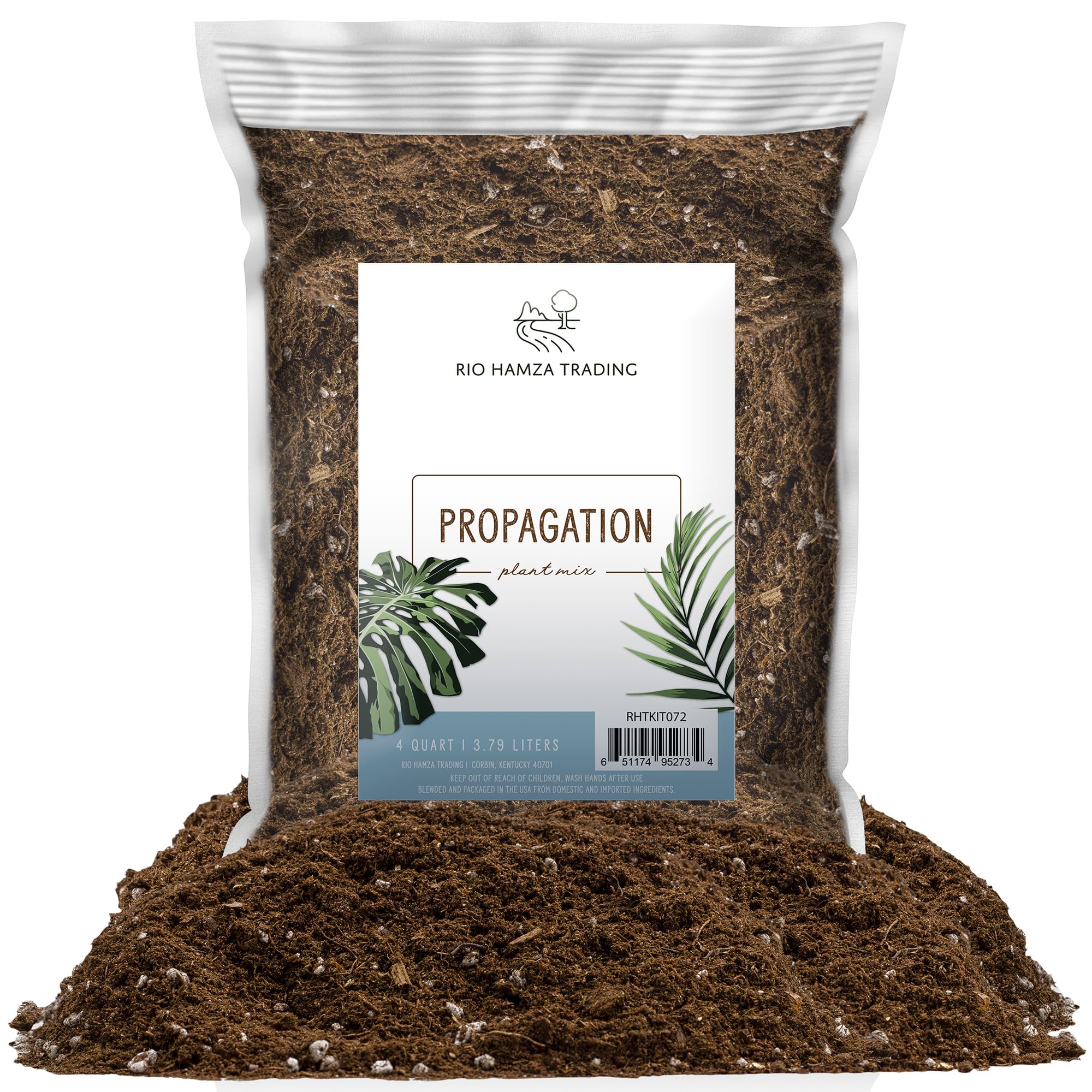
This mix from Rio Hamza Trading is engineered for a specific task: root stimulation in propagation scenarios. It is a soilless blend with a high proportion of perlite, giving it an exceptionally lightweight texture that drains rapidly. The absence of pre-added fertilizer is deliberate — for cuttings and newly severed transplants, nutrient salts can actually inhibit root initiation by creating osmotic pressure that draws moisture out of tender cells.
Users have had notable success with this mix for rooting rose cuttings, succulent offsets, and tropical plant propagations. The open structure allows fresh roots to push through without resistance, and the rapid drainage prevents the rot that commonly claims cuttings in denser media. It is also a match for cactus and succulent transplants that demand a lean, gritty environment. The 4-quart bag is small, but for the propagation enthusiast who values success rates over volume, it is a targeted tool.
One drawback for general transplanting use is the lack of moisture buffering. This mix dries quickly, so it requires more frequent monitoring than a peat-based blend. However, for those who understand the water needs of their plants and want maximum control, the sterile and predictable nature of this product is a benefit.
What works
- Excellent drainage prevents rot on sensitive cuttings
- No added fertilizer allows full control over feeding
- Light texture encourages easy root penetration
What doesn’t
- Dries quickly and requires more frequent watering
- Small bag size limits large-scale transplant sessions
7. Midwest Hearth Premium Potting Soil Mix

Midwest Hearth enters the list as an accessible option for the home gardener who needs a reliable mix without committing to a large bag. This 4-quart ready-to-use blend combines peat moss, perlite, and vermiculite in a formulation that mirrors the professional growing mixes used by commercial greenhouse operators. The pH is pre-adjusted to a neutral range, suitable for a broad spectrum of plant types from herbs to flowers.
The texture is fluffy and well-aerated, avoiding the clumpy, compressed feel of some bargain soils. Users report that it remains loose around the root ball, rather than hardening into a crust after the first watering. The resealable packaging is a practical touch — you can open it, use what you need for a small transplant session, and store the remainder without moisture loss. The made-in-USA origin adds a layer of quality confidence for the price.
Where this mix falls short is in volume. Four dry quarts is enough for a single tray of 36-cell inserts or a few 4-inch pots, but it will run out quickly for gardeners starting a full vegetable garden. It is best viewed as a starter pack for the small-scale or first-time transplant project, where the low commitment matches the low volume needed.
What works
- Balanced pH suitable for a wide range of plants
- Light, fluffy texture prevents root binding
- Resealable bag keeps leftover mix fresh for later use
What doesn’t
- Small 4-quart size limits larger transplanting projects
- No added organic nutrients or biological inoculants
Hardware & Specs Guide
Aeration Ingredients
Perlite and vermiculite are the two most common aerating agents in transplant mixes. Perlite is a volcanic glass that expands when heated, creating hard, porous white particles that resist compaction and drain excess water. Vermiculite is a mica mineral that expands into accordion-like flakes; it holds more water than perlite and also creates air channels. A good mix uses both: perlite for structural drainage, vermiculite for moisture buffering. The ratio of these ingredients determines how often you need to water and how much risk of root rot you carry.
pH and Lime Buffer
Most peat moss has a natural pH between 3.5 and 4.5, which is too acidic for most vegetable and flower seedlings. Lime (calcium carbonate) is added to raise the pH to the ideal 5.5–6.5 range. Without lime, essential nutrients like phosphorus and calcium become unavailable to the plant, leading to stunted growth. Organic certification requires mined or ground limestone rather than synthetic pH adjusters. Always check the label for lime inclusion — a mix without it may perform poorly until you adjust the pH yourself.
Biological Additives
Mycorrhizal fungi and worm castings are two biological enhancements that create a living soil environment. Mycorrhizae attach to plant roots and extend the root system’s effective reach for water and phosphorus. Worm castings add humic acids and beneficial bacteria that break down organic matter into plant-available nutrients. These ingredients are not essential for germination, but they give transplants a measurable head start by reducing transplant shock and supporting faster root establishment.
Bag Volume and Storage
Transplant mixes are sold by dry quart or liter volume, not by weight. A 4-quart bag (~3.8 liters) is ideal for one or two trays, while 8 to 16 quarts suit a full season of starts. Once opened, the mix should be stored in a cool, dry place and the bag sealed or transferred to a bucket. Peat-based mixes can absorb moisture from humid air, reducing their fluffiness and introducing mold spores. For staggered planting, portion out only what you need and seal the rest immediately.
FAQ
Can I use garden soil directly for transplanting seedlings?
Should I add fertilizer to a transplant mix right away?
Why does my peat-based mix repel water after drying out?
What is the ideal moisture level for a transplant mix?
Final Thoughts: The Verdict
For most gardeners, the soil for transplanting seedlings winner is the Espoma Organic Seed Starter because its mycorrhizae and balanced organic formula give transplants the strongest biological start with zero guesswork. If you want a peat-free alternative, grab the Duspro Peat-Free Mix for its coco coir base and fine hand-screened texture. And for high-volume, budget-conscious seed starting, nothing beats the consistency and value of the Jiffy Organic Seed Starting Mix.