
Selecting a mix that actually drains well without turning into concrete after a week is the defining challenge of container vegetable gardening. Most bagged soils either hold too much water, rotting the roots, or dry out so fast you’re watering twice a day. The difference between a thriving basil plant and a yellowing one often comes down to the texture and nutrient load in the bag.
I’m Rikta — the co-founder and writer behind Lawn Gear Lab. I’ve spent hundreds of hours cross-referencing ingredient labels, studying particle-size distribution, and analyzing thousands of verified buyer reports to separate the genuinely effective blends from the overpriced filler sacks in this category.
This guide breaks down six competitive blends on measurable specs like aeration porosity, organic certification status, and nutrient longevity so you can confidently choose the best potting soil for vegetables and herbs without wasting money on a mix that will suffocate your plants.
How To Choose The Best Potting Soil For Vegetables And Herbs
Not all bagged dirt is created equal. A mix designed for a fern will kill a tomato plant. Understanding a few critical specs will prevent you from hauling home compost that looks more like mulch than soil.
Organic Certification vs. “Natural” Claims
OMRI (Organic Materials Review Institute) listing is the only real third-party verification. Some brands slap “natural” on the bag but still use synthetic wetting agents or slow-release chemical fertilizers. If you’re growing edible herbs and vegetables, an OMRI stamp means every ingredient — from the kelp meal to the peat — has been vetted for organic production.
The Aeration Triangle: Peat, Perlite, and Compost
The best container mixes use sphagnum peat moss for moisture-holding capacity, perlite for drainage and oxygen exchange, and a composted organic base (like worm castings or aged manure) for slow-release nutrients. If the bag lists “forest products” without specifying the ratio, you are likely buying bark mulch that will rob nitrogen from your plants as it decomposes.
pH Range and Nutrient Longevity
Vegetables and herbs need a soil pH between 6.0 and 7.0 to efficiently access nutrients like nitrogen, phosphorus, and potassium. Premium mixes often come pre-buffered with dolomitic limestone. Also check if the mix includes a “starter charge” of fertilizer — some blends that claim to feed for six months actually spike nitrogen early then crash, causing leggy green growth with zero fruit production.
Quick Comparison
On smaller screens, swipe sideways to see the full table.
| Model | Category | Best For | Key Spec | Amazon |
|---|---|---|---|---|
| Espoma Organic Potting Mix | Premium | Edible container gardens | 2 cu ft / Myco-Tone beneficial fungi | Amazon |
| FoxFarm Ocean Forest | Premium | Fruiting vegetables & seedlings | 1.5 cu ft / Fish emulsion & crab meal | Amazon |
| Coast of Maine Tomato & Veggie | Mid-Range | Tomatoes & multi-use plots | 20 qt / Composted manure base | Amazon |
| Brut Organic Potting Soil | Mid-Range | Filler-free indoor/outdoor pots | 1 cu ft / pH 6.3 to 6.5 | Amazon |
| LGM 11-Ingredient Organic Mix | Entry-Level | Apartment potted herbs | 0.5 cu ft / Volcanic ash & kelp meal | Amazon |
| Michigan Peat BACCTO | Entry-Level | Budget large containers | 50 lbs / Reed sedge peat & slow-release fertilizer | Amazon |
In‑Depth Reviews
1. Espoma Organic Potting Soil Mix

Espoma’s AP2 is the industry standard for a reason: it hits the trifecta of aeration, organic certification, and nutrient longevity without any synthetic additives. The proprietary Myco-Tone blend introduces endo and ecto mycorrhizae directly into the root zone — a biological advantage that the other blends here cannot match. The base of sphagnum peat moss, humus, and perlite creates a loamy, chunky texture that resists crusting even after repeated wet-dry cycles.
Customer reports consistently note that this mix supports robust germination for vegetables like tomatoes and peppers while maintaining excellent moisture-holding capacity without waterlogging. The 2 cubic foot bag provides substantial volume for a full container garden or multiple raised bed refreshes. The inclusion of earthworm castings and alfalfa meal delivers a steady nitrogen release rather than the sharp spike common in lesser soils.
The one trade-off is the upfront cost — per cubic foot, Espoma runs higher than entry-level options. Users blending it with cheaper filler to extend the volume miss the point; the value is in the biological inoculants that cheaper soil cannot replicate. For any gardener serious about organic vegetable production in containers, this mix justifies its premium position.
What works
- Proprietary mycorrhizae blend improves root nutrient uptake
- Loamy texture doesn’t turn dense or crusty over time
- OMRI listed organic with zero synthetic chemicals
What doesn’t
- Premium price per cubic foot versus bulk mixes
- Large bag may be heavy for small-space apartment gardeners
2. FoxFarm Ocean Forest Potting Soil
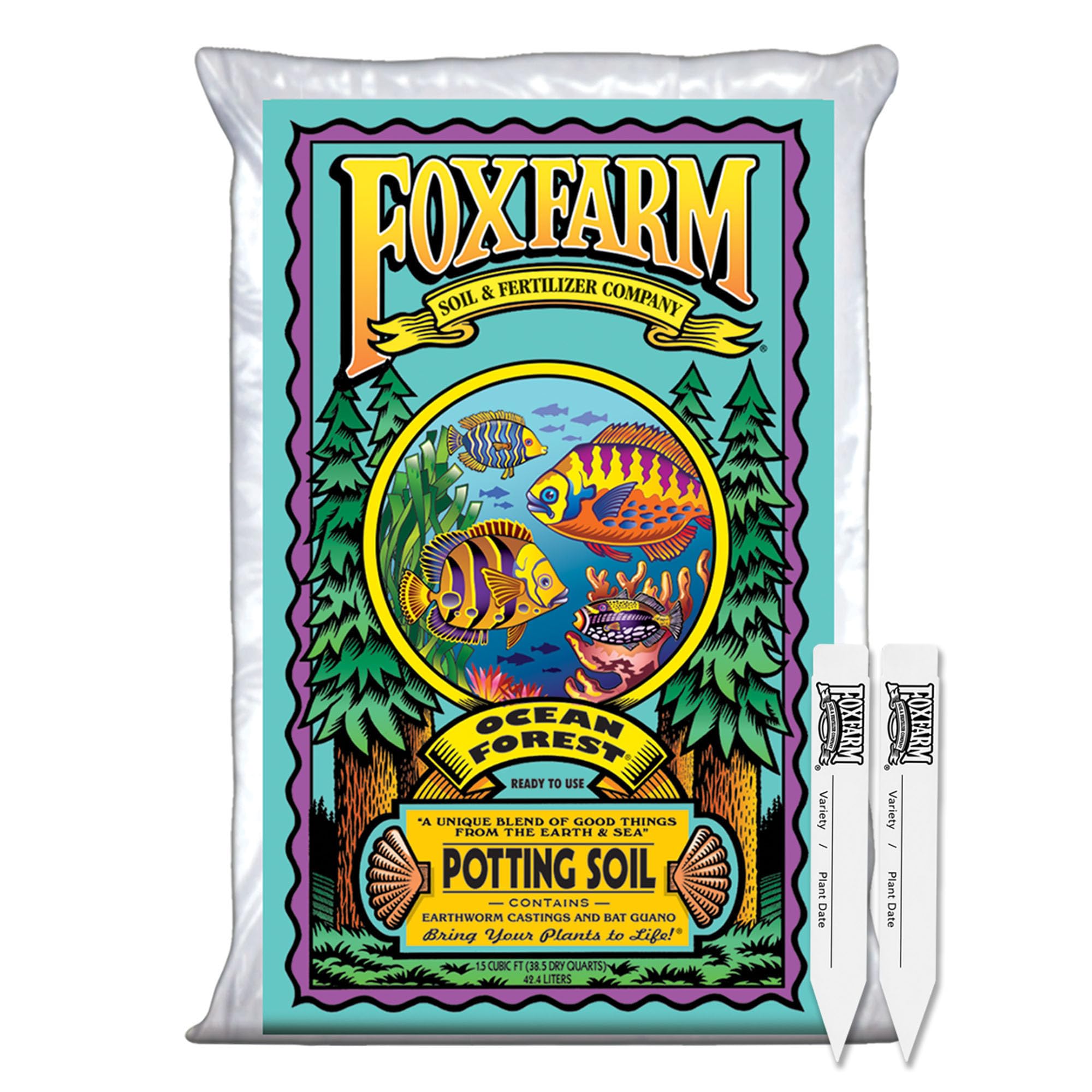
FoxFarm Ocean Forest is the heavy-hitter for growers who prioritize flower and fruit production over simple foliage growth. The ingredient list reads like a marine biology lab — fish emulsion, crab meal, shrimp meal, and oyster shell provide a comprehensive mineral profile that is particularly effective for tomatoes, peppers, eggplants, and squash. The light, aerated texture comes from aged forest products and perlite, which means water absorbs immediately rather than pooling on the surface.
Side-by-side grow tests from verified buyers show Ocean Forest producing noticeably thicker stems and earlier fruit set compared to standard all-purpose mixes. The sandy loam component adds weight for stability while ensuring drainage that prevents root rot in containers. This mix is ready to use straight from the bag — no additional fertilizer needed for the first three to four weeks of growth.
The high concentration of organic marine-based nutrients can attract flies if the bag is left open or if the soil is used outdoors without a sand top-layer barrier. Some users also report mushroom growth in humid conditions, which signals rich undecomposed organic matter. For heavy-feeding vegetables in containers, the nutrient density is an advantage that outweighs the need for minor pest management.
What works
- Exceptional nutrient density for fruiting vegetable plants
- Immediate water absorption and excellent drainage
- Includes two customizable plant tags for labeling
What doesn’t
- Can attract flies if bag is left exposed outdoors
- Rich organic matter may encourage mushroom growth in wet conditions
3. Coast of Maine Organic & Natural Planting Soil

Coast of Maine positions itself as a specialist for tomatoes and vegetables, and the composted manure base delivers exactly what heavy-feeding crops need — a steady supply of organic nitrogen without the burn risk of chemical fertilizers. The lightweight texture from the sphagnum peat moss and compost blend allows strong root penetration while the cedar and aromatic wood content acts as a natural insect deterrent. This dual functionality makes it effective for both in-ground beds and container planting.
Buyers growing heirloom tomatoes report rapid root establishment and visible growth within the first two weeks. The moisture retention-drainage balance is notably good: the mix stays damp enough to reduce watering frequency but never feels soggy. Many users specifically call out the “wife approval factor” for the lack of unpleasant odor and the clean handling texture.
The main drawback is the bag size relative to the price — at 20 quarts, it covers fewer containers than the 2-cubic-foot Espoma or the 50-pound Michigan Peat. Some users also reported fungus gnats in the bag, which is a common risk with any organic mix that ships with natural moisture content. A short pre-treatment of letting the soil dry for 24 hours before planting resolves this for most gardeners.
What works
- Composted manure base provides steady organic nitrogen
- Aromatic wood content naturally deters some insects
- Lightweight structure allows fast root development
What doesn’t
- Smaller bag volume for the price bracket
- Fungus gnats can appear if bag is stored without drying
4. Brut Organic Potting Soil
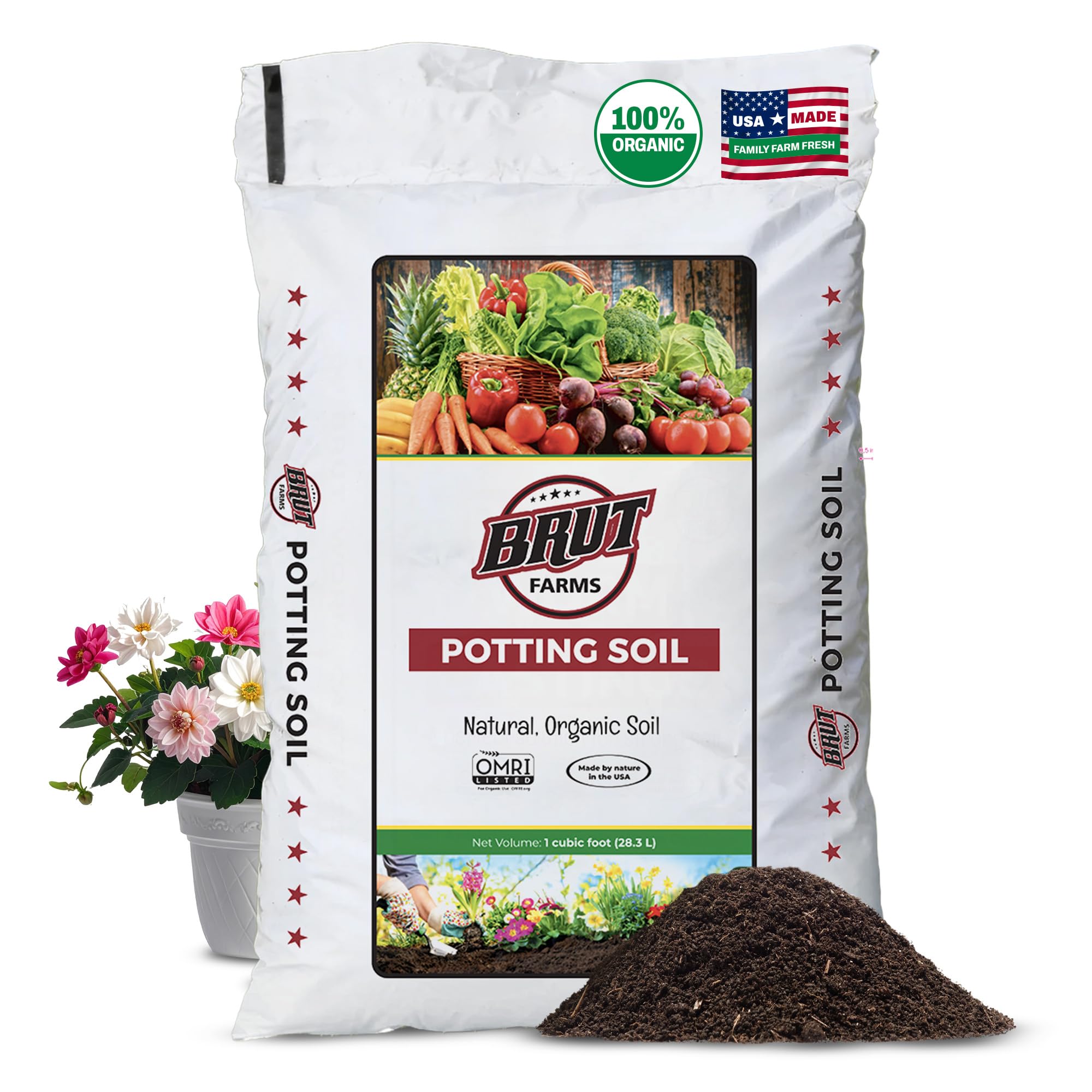
Brut stands out for its uncompromising ingredient purity — no sticks, no wood chips, no artificial additives. The mix is packed with microbe-rich worm castings and trace minerals from Azomite and kelp meal, feeding plants directly at root level. The pH is precisely buffered between 6.3 and 6.5, which is the sweet spot for most edible vegetables and leafy herbs like basil and parsley. This is a true one-bag-solution for container gardeners who do not have space or inclination to blend their own amendments.
User reports highlight the fine particulate texture as easy to work with, and plants show deep green leaves and new growth rapidly after transplanting. The OMRI listing confirms the organic integrity, making it a trustworthy choice for anyone growing food in small spaces. The 1-cubic-foot size is manageable for carrying and fits multiple standard 10-inch pots.
The higher cost per cubic foot relative to larger bulk options is the primary hesitation. Some users noted the presence of fish and bone meal attracted flies when containers were moved outdoors — a simple layer of sand or gravel on top of the soil prevents this. For the quality of the base ingredients, the price reflects a premium that the filler-free guarantee supports.
What works
- Zero filler ingredients — no sticks, chips, or synthetic additives
- Precisely buffered pH at 6.3—6.5 for vegetables and herbs
- OMRI listed with microbe-rich worm castings and Azomite
What doesn’t
- High cost per cubic foot compared to bulk mixes
- Organic fish/bone meal can attract flies without a top layer
5. LGM 11-Ingredient Organic Potting Soil Mix
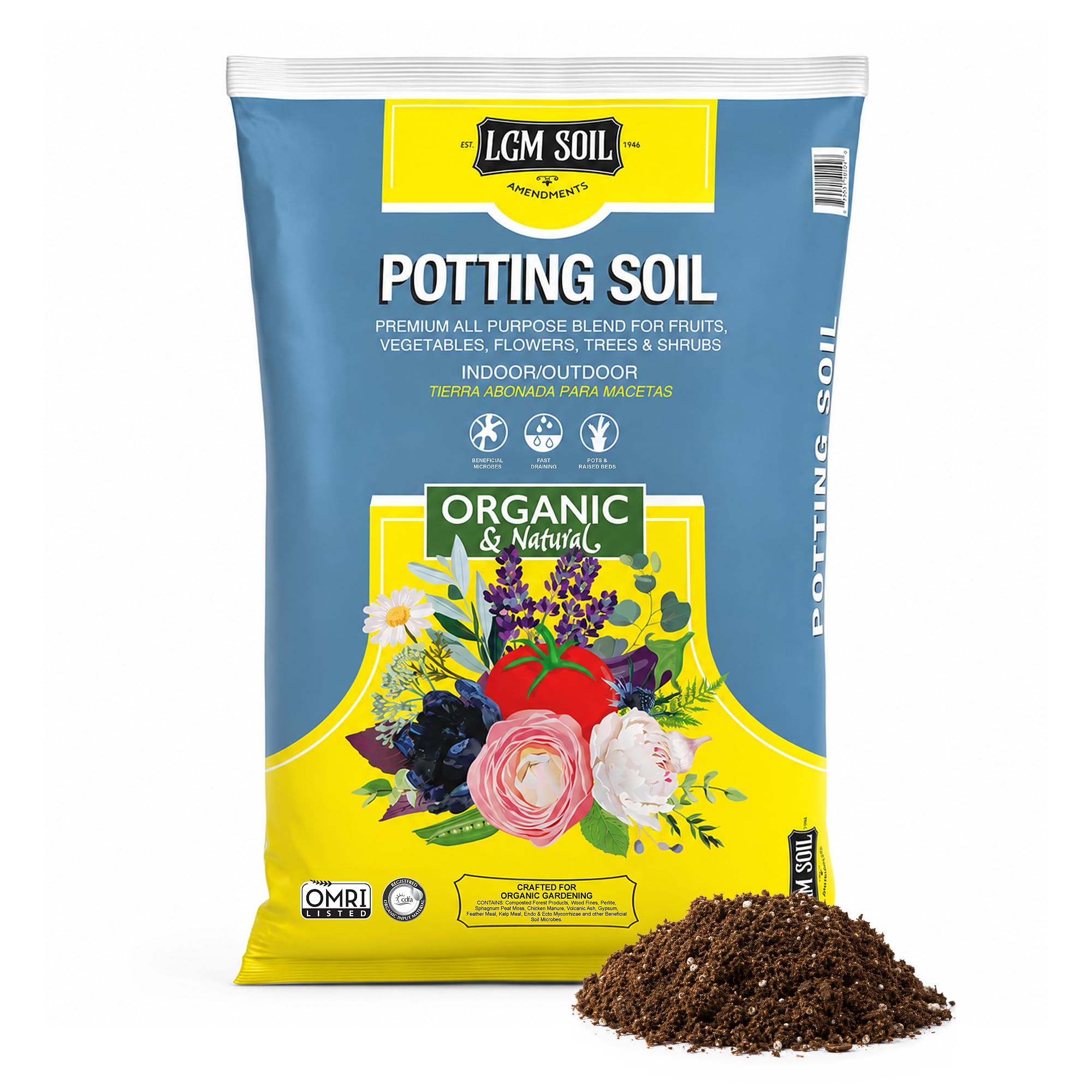
LGM designed this mix specifically for apartment and small-space gardeners who need a right-sized bag without hauling 40 pounds of soil. The 0.5-cubic-foot bag is light and stores easily under a sink or on a balcony shelf. The ingredient list is legitimately complex — 11 natural inputs including volcanic ash, kelp meal, sphagnum peat moss, and perlite — providing a balanced nutrient profile without synthetic fertilizers. The texture stays soft and well-draining, making it effective for repotting indoor herbs like mint and chives.
Buyers report that the moisture retention is strong without waterlogging, reducing the guesswork for less experienced container gardeners. The lack of unpleasant odors makes it suitable for indoor kitchen gardens where soil bags are often stored near food prep areas. For its category, the nutrient density is surprisingly high — not just sphagnum and perlite filler.
The small bag size means the value proposition falls apart for anyone planting multiple large containers or a raised bed. A single bag covers about three 8-inch pots or one 14-inch planter. Some user reports mention the soil contains sandier particles that did not support seed germination well — it is better suited for transplanting established seedlings than starting seeds.
What works
- Right-sized for apartment gardeners with limited storage
- No synthetic fertilizers and no unpleasant odors
- Complex 11-ingredient formula with kelp meal and volcanic ash
What doesn’t
- Small bag volume is inefficient for large container gardens
- Sandy texture may not support direct seed germination
6. Michigan Peat BACCTO All Purpose Premium Potting Soil

Michigan Peat BACCTO is the workhorse option for gardeners filling large planters or multiple raised beds on a tight budget. The 50-pound bag delivers the lowest cost per pound in this comparison, yet it still includes starter and slow-release fertilizers. The base of reed sedge peat, perlite, and sand provides a solid structure suitable for a wide range of container vegetables and flowers.
The texture arrives moist and ready to use directly from the bag — no blending or wetting needed. Users appreciate the value for quantity, calling it “good dirt” that meets the baseline needs of annual vegetables like lettuce, kale, and bush beans. The slow-release fertilizer component reduces the need for immediate supplemental feeding for the first few weeks.
The main limitation is the lower-quality base compared to the premium blends above. Multiple user reports mention fungus gnat infestations emerging from the bag, a common issue when peat-based mixes sit in warm storage. This mix also lacks the specialized organic amendments (worm castings, mycorrhizae, kelp meal) that the higher-tier products include. Treat it as a cost-effective foundation soil that benefits from user-added compost or organic fertilizer amendments for best vegetable yields.
What works
- Very low cost per pound for filling large containers
- Includes starter and slow-release fertilizers for baseline nutrition
- Ready-to-use moist texture straight from the bag
What doesn’t
- Fungus gnats are a recurring issue in many bags
- Lacks organic amendments like mycorrhizae or worm castings
Hardware & Specs Guide
OMRI Listing vs. Organic Claims
OMRI (Organic Materials Review Institute) listing is the only standard that verifies every ingredient in the bag complies with USDA organic production rules. Some brands use the word “organic” loosely without third-party certification. When growing vegetables and herbs for consumption, OMRI listing removes the guesswork about synthetic wetting agents or chemically derived fertilizers that might still be labeled “natural.”
Particle Size & Aeration
Mix particle size determines how freely roots grow and how quickly water drains. A good vegetable mix contains visible perlite (white volcanic glass) and fibrous peat in roughly a 1:4 ratio. Mixes that are too sandy compact quickly, while mixes dominated by large bark chips create air pockets that dry out the root ball. Fine, crumbly texture that holds shape when squeezed is the gold standard for container herbs and vegetables.
FAQ
Can I use garden soil from my backyard for pots instead?
Why do some potting soils attract fungus gnats and others do not?
How often should I add fertilizer to organic potting soil?
Final Thoughts: The Verdict
For most gardeners, the potting soil for vegetables and herbs winner is the Espoma Organic Potting Soil Mix because its Myco-Tone mycorrhizae and balanced loamy texture provide the best biological foundation for edible container plants. If you want heavy fruit production and immediate results, grab the FoxFarm Ocean Forest. And for budget-conscious gardeners filling multiple large planters, nothing beats the sheer volume-per-dollar of the Michigan Peat BACCTO.