
Lilacs demand soil that leans acidic, with a pH sweet spot around 6.5 to 7.0, and a feeding schedule built around phosphorus for blooms rather than nitrogen for leaves. The wrong NPK ratio pushes your shrubs to grow leggy foliage while the flower clusters stay sparse and pale — a frustration every lilac grower knows.
I’m Rikta — the co-founder and writer behind Lawn Gear Lab. I’ve spent weeks comparing granular analyses, water-soluble NPK profiles, sulfur percentages, and organic certification claims, then cross-referencing them against verified owner feedback to isolate what actually drives bloom mass and root vigor in lilacs.
This guide ranks seven targeted formulations by their ability to lower pH effectively, supply sustained phosphorus, and avoid nitrogen burn. Finding the right fertilizer for lilacs means knowing which analysis matches your soil test results and your shrub’s growth stage.
How To Choose The Best Fertilizer For Lilacs
Lilacs are moderate feeders that respond best to a balanced or bloom-focused analysis — typically something in the 5-10-10 or 4-3-4 range. Too much nitrogen forces leafy growth at the expense of flowers and makes the plant more susceptible to powdery mildew.
NPK Ratio — Feed the Blooms, Not Just the Leaves
The middle number in the NPK trio represents phosphorus, which drives root and flower development. For lilacs, a phosphorus number at least equal to or higher than the nitrogen number prevents leafy overgrowth. A ratio like 17-6-6 works because the phosphorus stays meaningful even if nitrogen looks high, while a 30-10-10 can cause soft growth that attracts pests.
Soil pH & Sulfur Content — Unlock Nutrient Availability
Lilacs prefer slightly acidic to neutral soil (pH 6.5–7.0). If your soil tests alkaline above 7.5, phosphorus and iron become locked up chemically and your lilac can’t access them no matter how much fertilizer you apply. Products containing elemental sulfur or ammonium sulfate help lower pH gradually. Fast-acting sulfur granules work within weeks; slower organic options like Holly-tone rely on Bio-tone microbes to acidify over months.
Release Mechanism — Granular Slow-Release vs. Water-Soluble
Granular slow-release fertilizers (like Espoma’s Holly-tone or Azalea-tone) feed over 6–8 weeks with one application in early spring and again in fall. Water-soluble options (like Jack’s Classic Acid Special) deliver nutrients immediately and let you adjust frequency based on growth response — ideal for container-grown lilacs or a targeted mid-season boost when buds are swelling.
Quick Comparison
On smaller screens, swipe sideways to see the full table.
| Model | Category | Best For | Key Spec | Amazon |
|---|---|---|---|---|
| Espoma Organic Azalea-Tone 4-3-4 | Organic Granules | Established shrubs & organic gardens | 4-3-4 NPK + 5% Sulfur | Amazon |
| Espoma Organic Holly-Tone 4-3-4 | Organic Granules | Year-round acid-loving plant care | 4-3-4 NPK + Bio-tone microbes | Amazon |
| Jack’s Classic Acid Special 17-6-6 | Water-Soluble Powder | Precise feeding & container lilacs | 17-6-6 + Micronutrients | Amazon |
| Earth Science Fast Acting Sulfur | Sulfur Granules | Lowering high soil pH fast | Nutri-Bond Technology | Amazon |
| FoxFarm Happy Frog Acid Loving | Organic Powder | Mycorrhizal root enhancement | 4 lb bag + Soil Microbes | Amazon |
| Walt’s Organic Sulfur Pellets | Elemental Sulfur | Low-dust pH correction | 5 lb Pellet Form | Amazon |
| Cz Garden Ammonium Sulfate 21-0-0 | Nitrogen + Sulfur | Soil acidification & leafy boost | 21% N + 24% Sulfur | Amazon |
In‑Depth Reviews
1. Espoma Organic Azalea-Tone 4-3-4

Espoma formulated Azalea-Tone specifically for flowering evergreens, and lilacs fit squarely in that target zone. The 4-3-4 analysis delivers a moderate nitrogen level that won’t trigger runaway leaf growth, while the 5 percent sulfur content actively nudges soil pH downward over repeated applications. The Bio-tone microbial blend improves nutrient cycling in the root zone without the risk of synthetic salt burn.
Owners report reversing yellowing foliage and weak bloom sets within a single growing season. The organic granules release slowly, so a single spring feeding feeds for roughly 8 weeks — ideal for lilac shrubs that prefer steady nutrition rather than sharp spikes. The 4-pound bag covers about 12 medium shrubs, making it cost-efficient for a border planting.
The notable downside is the strong organic odor during application — several users describe it as similar to a chicken coop. The smell dissipates after watering and is normal for compost-based organic fertilizers, but it can be off-putting if you are applying near windows or outdoor seating areas.
What works
- Balanced 4-3-4 NPK prevents nitrogen-heavy leaf growth
- Bio-tone microbes improve long-term soil fertility
- Safe for organic gardening — OMRI registered
What doesn’t
- Strong organic manure-like smell until watered in
- Slow release means you won’t see instant results on severely deficient plants
2. Espoma Organic Holly-Tone 4-3-4
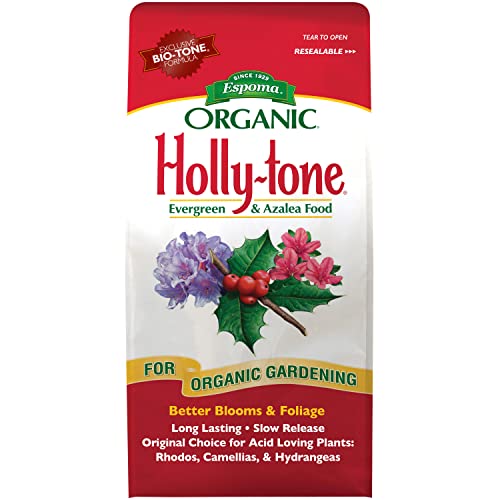
Holly-tone is essentially the cousin to Azalea-tone with the same 4-3-4 analysis but formulated for a broader spectrum of acid-loving plants including lilacs. The Bio-tone technology here includes a proprietary blend of endo and ectomycorrhizal fungi that colonize lilac roots, improving phosphorus uptake even in alkaline soil conditions that would normally lock that nutrient away.
This pack ships as two 4-pound bags, giving you 8 pounds total — enough to feed a mature lilac hedge twice in one season. Users who apply it in early spring and again in late fall report denser flower clusters and deeper green foliage by the second year. The granules need to be scratched into the top inch of soil around the drip line and watered thoroughly to activate the microbes.
The primary limitation is that Holly-tone works best as a maintenance product. If your lilac is already showing severe chlorosis or stunted growth from high pH, you will need a faster-acting sulfur amendment alongside it to correct the soil chemistry before the organic microbes can do their work.
What works
- Dual-package value covers larger plantings
- Mycorrhizal fungi enhance phosphorus availability
- Safe, non-burning formula even on young shrubs
What doesn’t
- Requires correct soil pH range to unlock full benefits
- Coarse granules can be difficult to scratch into tight, mulched beds
3. Jack’s Classic Acid Special 17-6-6

Jack’s Classic Acid Special is a water-soluble powder that gives you full control over feeding frequency and concentration. The 17-6-6 analysis has a higher nitrogen number than typical lilac fertilizers, but the presence of elevated iron and sulfur counters the leafy overgrowth risk by encouraging chlorophyll synthesis and maintaining acid soil conditions. You mix one teaspoon per gallon of water and apply as a root drench or foliar spray.
This product shines for container-grown lilacs or shrubs in sandy soil that leaches nutrients quickly. Users feeding every two weeks during the growing season report faster new cane development and larger individual florets. The measuring spoon included in the package removes guesswork, which is critical because the water-soluble form can burn roots if over-concentrated.
The trade-off is the frequency of application. Unlike granular slow-release formulas that work for weeks with one application, Jack’s requires mixing and reapplying every 7–14 days. That level of maintenance is a dealbreaker for gardeners who want a set-it-and-forget-it approach, but ideal for those who want to adjust feed based on real-time plant response.
What works
- Complete micronutrient package including iron and sulfur
- Can be used as foliar spray for rapid leaf correction
- Low NPK ratio for an acid fertilizer — reduces burn risk versus 30-10-10 blends
What doesn’t
- Requires biweekly mixing and application
- 16-ounce bag goes quickly if feeding multiple shrubs
4. Earth Science Fast Acting Sulfur Granules

Earth Science Fast Acting Sulfur is not a complete fertilizer — it is a soil acidifier designed to lower pH rapidly. Lilacs struggling with pale leaves and weak blooms are often suffering from alkaline soil that locks up iron and phosphorus, not from a lack of NPK. This product uses elemental sulfur with patented Nutri-Bond Technology that binds the sulfur to soil particles, reducing runoff and speeding the pH drop compared to raw sulfur dust.
Users see measurable pH changes within two to three weeks on clay and loam soils. The 5-pound bag covers roughly 500 square feet at an application rate that lowers pH by one full point. It works well as a preparatory treatment before applying a balanced fertilizer — correcting the soil chemistry first ensures your main feed actually reaches the roots.
The main catch is timing: sulfur takes microbial activity to convert into sulfuric acid, so it works fastest in warm, moist soil above 55°F. Applying it in cold early spring before the ground thaws will delay results. It also does not contain any nitrogen, phosphorus, or potassium, so you must pair it with a complete fertilizer for overall shrub health.
What works
- Noticeable pH drop in 2–3 weeks on warm soil
- Nutri-Bond reduces wash-away during heavy rain
- Safe for pets and children — no harsh chemicals
What doesn’t
- Requires soil temperatures above 55°F for microbial activity
- Must be paired with a complete NPK feed — no nutrients here
5. FoxFarm Happy Frog Acid Loving Plants Fertilizer

FoxFarm Happy Frog Acid Loving Plants Fertilizer is a lightweight powder that includes beneficial soil microbes and mycorrhizal fungi alongside its nutrient profile. For lilacs, this is valuable because the fungi extend the root system’s reach, helping the shrub access phosphorus and trace minerals that would otherwise remain chemically bound in neutral or slightly alkaline soil.
The formula is designed to be gentle — owners report seeing flower buds and new leaf growth within 10 days on stressed plants, even gardenias and strawberries that are notoriously sensitive to over-feeding. The 4-pound bag mixes at a ratio of 1/16 cup per gallon of water, making it a concentrated option that stretches further than its weight suggests.
Where this product falls slightly short for lilac specialists is its broad-spectrum target. Happy Frog works wonderfully for a wide range of acid lovers, but it does not contain the higher sulfur percentage that a dedicated lilac or azalea formula provides. If your soil pH is already in the ideal 6.5–7.0 range, this is excellent. If you are correcting from 7.5 or higher, you will still need a sulfur supplement.
What works
- Mycorrhizal fungi improve phosphorus absorption
- Fast visual results — users see improvements in under two weeks
- OMRI listed and safe for organic vegetable gardens
What doesn’t
- Lower sulfur content — not ideal for heavy pH correction
- Powder form can be dusty during mixing; wear a mask
6. Walt’s Organic Fertilizer Co. Elemental Sulfur Pellets
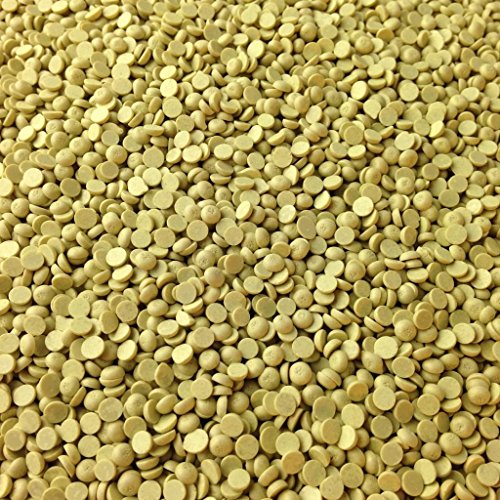
Walt’s Organic Sulfur Pellets are a straightforward, low-dust option for gardeners who need to lower soil pH without adding any NPK. The pelletized form is significantly less messy than powdered sulfur — you can broadcast it by hand or with a spreader without clouds of yellow dust coating your clothes. Each 5-pound bag supplies elemental sulfur that soil bacteria convert into sulfuric acid over several weeks.
Lilac growers using this product alongside a balanced organic fertilizer report that it effectively brings pH down from the 7.5–8.0 range into the 6.5–7.0 sweet spot over a single growing season. The pellets are slow enough that you do not risk an abrupt pH crash that can stress roots, but fast enough that you see leaf color improvement by mid-summer.
The main drawback is the price per pound compared to raw agricultural sulfur. You are paying a premium for the pelletized format and the Walt’s brand name. If you have a large lilac hedge or multiple shrubs spread across a big yard, bulk elemental sulfur may be more economical even though the dust handling is less convenient.
What works
- Pellet form reduces airborne dust during application
- Suitable for spreader use on large areas
- Gentle pH drop — low risk of root shock
What doesn’t
- Higher cost per pound than bulk sulfur options
- Slow conversion in cold soil — plan for spring application
7. Cz Garden Ammonium Sulfate 21-0-0

Cz Garden Ammonium Sulfate is a high-nitrogen, high-sulfur granular fertilizer with zero phosphorus or potassium. The 21-0-0 analysis is not a complete feed for lilacs — you cannot use this as a standalone bloom fertilizer. Where it fits into a lilac program is as a soil acidifier and early-season green-up tool. The 24 percent sulfur content drives pH down aggressively, making it useful for alkaline soils where lilac leaves show interveinal chlorosis.
The resealable pouch holds 4 pounds of water-soluble granules that mix at a rate of 1 cup per 5 gallons of water. Users growing onions and acid-loving ornamentals report visible greening within a week. For lilacs, apply this only in early spring before flower buds set, then switch to a phosphorus-rich formula as bloom time approaches. Using it past early growth will push leaves and suppress flower development.
This is not a beginner-friendly product. The high nitrogen content can burn foliage and roots if over-applied or applied to dry soil without immediate watering. It also lacks the phosphorus and potassium that support flower bud formation, so it requires careful rotation with another fertilizer. For the price-conscious gardener who understands NPK management, it is a cheap pH-lowering tool.
What works
- High sulfur content rapidly lowers soil pH
- Resealable pouch keeps granules dry between uses
- Very cost-effective for large-scale soil acidification
What doesn’t
- Zero phosphorus — will not support bloom development alone
- High burn risk if misapplied or under-watered
Hardware & Specs Guide
NPK Ratio — The Bloom Versus Leaf Trade-Off
The first number (N) drives leaf and stem growth. The second number (P) drives root mass and flower bud formation. The third number (K) supports overall plant hardiness and disease resistance. For lilacs, a P number at least equal to or higher than N prevents the shrub from wasting energy on excessive foliage. A 4-3-4 ratio delivers gentle, balanced feeding, while a 17-6-6 ratio supplies higher nitrogen but includes enough sulfur and iron to avoid leafy overgrowth.
Sulfur Percentage — The pH Correction Lever
Sulfur content is listed either as elemental sulfur (S) or as part of ammonium sulfate. Each 1 percent sulfur in a granular product contributes roughly 10 pounds of actual sulfur per ton. For lilacs growing in soil with pH above 7.2, a product with at least 5 percent sulfur (like Espoma Azalea-tone) or a dedicated sulfur supplement (like Earth Science Fast Acting Sulfur) is necessary to unlock iron and phosphorus availability. Without adequate sulfur, even a perfect NPK ratio stays inaccessible.
FAQ
Can I use a general all-purpose fertilizer on my lilac?
When is the best time of year to apply fertilizer to lilacs?
Final Thoughts: The Verdict
For most gardeners, the fertilizer for lilacs winner is the Espoma Organic Azalea-Tone 4-3-4 because it delivers the ideal NPK balance for blooming, includes sulfur for pH maintenance, and is OMRI-listed for organic gardens. If you want precise, water-soluble control over feeding frequency, grab the Jack’s Classic Acid Special 17-6-6. And for correcting high soil pH before you feed, nothing beats the Earth Science Fast Acting Sulfur.