
That yellowing leaf on your Monstera or the leggy stretch of your Pothos isn’t a mystery—it’s a nutrient deficiency screaming for a targeted NPK fix. Unlike outdoor plants that can scavenge minerals from soil life, potted houseplants rely solely on what you feed them, and the wrong ratio can cause salt burn or root rot. The decision points are razor-sharp: water-soluble powder, concentrated liquid, slow-release tablets, or organic blends.
I’m Rikta — the co-founder and writer behind Lawn Gear Lab. My buying guides are built from weeks of cross-referencing NPK values, mixing ratios, customer cultivation data, and species-specific feedback to help you kill the guesswork.
Whether you’re caring for a fiddle leaf fig or a collection of tropical aroids, this deep dive into the best indoor plant food will arm you with the specs and strategies to make your foliage flourish.
How To Choose The Best Indoor Plant Food
Selecting the right fertilizer comes down to NPK priorities, form factor, and your specific plant species. A high-nitrogen formula (like 24-8-16) pushes rapid green leaf growth but can burn sensitive roots if over-applied, while a balanced blend (like 6-2-4 or 3-1-2) supports steady foliage and root development across a wider variety of houseplants. The form matters too: water-soluble powders let you adjust dose per watering, liquid concentrates offer direct absorption, and tablets eliminate the guesswork entirely.
Decoding the NPK Ratio for Houseplants
The three numbers on the label represent Nitrogen (N) for leaf and stem growth, Phosphorus (P) for root and flower development, and Potassium (K) for overall plant health and stress resistance. Foliage plants like Pothos and Monstera thrive on a higher first number (N), whereas flowering houseplants like Peace Lilies prefer a more balanced ratio. Beginners should start with a quarter-strength dose of any formula to test plant tolerance before ramping up.
Liquid vs. Powder vs. Tablet: Which Form Fits Your Routine?
Liquid concentrates like Dyna-Gro Foliage Pro feed instantly and are ideal for growers who want precise control and rapid results. Water-soluble powders, such as the all-purpose Miracle-Gro, are economical and cover large quantities, but require thorough mixing to avoid undissolved granules settling on the soil. Self-dissolving tablets, like Instant Plant Food, eliminate measuring completely and are perfect for beginners or for plants in self-watering pots where you want a slow, steady release without the risk of over-concentration.
Organic vs. Synthetic: When It Matters
Organic indoor plant foods, like Espoma’s liquid concentrate, are gentler on the soil microbiome and safe around pets and children, making them ideal for households with frequent foot traffic. They often contain natural minerals and fermentation byproducts that feed the soil as well as the plant, but the trade-off is a noticeable odor (often described as manure-like) that dissipates after watering. Synthetic formulas deliver mineral salts in a more immediately available form, resulting in faster visible growth, but carry a higher risk of root burn if mixing instructions aren’t followed precisely.
Quick Comparison
On smaller screens, swipe sideways to see the full table.
| Model | Category | Best For | Key Spec | Amazon |
|---|---|---|---|---|
| Dyna-Gro Foliage Pro 32oz | Premium Liquid | Hydroponics & foliage plants | 9-3-6 NPK (3:1:2) | Amazon |
| Growth Technology GT Foliage Focus 8.5oz | Premium Specialty | Aroids, ferns & tropicals | Dosage: 3-5 ml/L soil | Amazon |
| Espoma Organic Indoor 8oz (2-pack) | Organic Liquid | Safe around kids & pets | ½ cap per quart water | Amazon |
| Instant Plant Food 4 Tablets | Tablet Slow-Release | No-mess precision feeding | 4-3-6 NPK per tablet | Amazon |
| Medina Garrett Juice Plus 1 Qt | Growth Booster | Damaged plant restoration | Dilution: 1:32 (1/2 cup/gal) | Amazon |
| Miracle-Gro Water Soluble 3 lb | Water-Soluble Powder | Large-volume feeding | 24-8-16 NPK | Amazon |
| HiThrive Houseplant Fertilizer 16oz | Concentrated Liquid | Budget-friendly coverage | 6-2-4 NPK, makes 85+ gal | Amazon |
In‑Depth Reviews
1. Dyna-Gro Foliage Pro 32oz
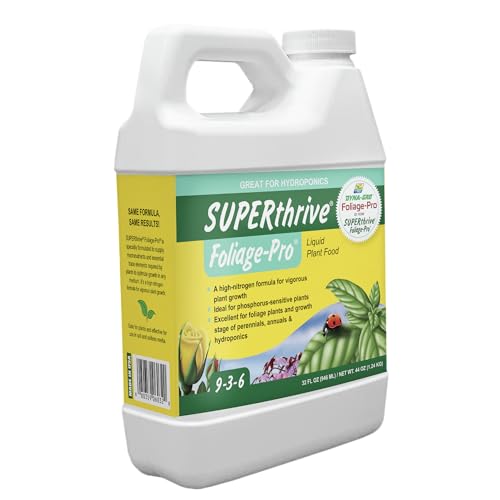
Dyna-Gro Foliage Pro is a go-to for serious houseplant enthusiasts, with a 9-3-6 NPK (3:1:2 ratio) that targets robust foliage and strong root systems without encouraging excessive flower or fruit growth. The formula includes all essential macro and micronutrients, meaning you can use it as a sole nutrient source for everything from Monstera to Ficus, and it works equally well in soil, soilless mixes, and hydroponic setups.
Users consistently report new leaf growth within days. The liquid concentrate requires only a tiny dose per gallon, so a 32-ounce bottle lasts many months even with regular watering. The precision dosing—typically 1 teaspoon per gallon of water—gives you fine control, but the active mineral salts demand careful measuring. Over-application can quickly damage roots, as reported by several users who overdosed.
For growers running low-light interiorscapes or maintaining a diverse collection of tropical plants, this is a versatile, long-lasting solution. The main downside is the lack of an organic label, but for pure performance and consistency across multiple growing mediums, it’s tough to beat.
What works
- Complete 3:1:2 NPK that drives lush leaf growth and healthy roots
- Works in soil, hydroponics, and semi-hydro setups
- Highly concentrated; a small bottle lasts months
What doesn’t
- Over-application causes severe root burn—measuring must be precise
- Not OMRI-listed for organic certification
2. Growth Technology GT Foliage Focus 8.5 oz
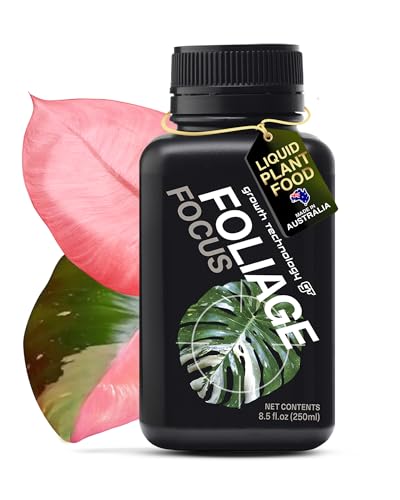
Growth Technology’s Foliage Focus is precision-formulated for leafy tropicals—think Alocasia, Monstera, Philodendron, and ferns—with a nitrate-nitrogen base that supports steady chlorophyll production and deep green coloration. The balance of potassium, calcium, and magnesium helps prevent common issues like leaf tip browning and weak stems, especially important for aroids grown indoors.
The dosing is straightforward: 3–5 ml per liter of water for soil or potting mixes, and 5–7 ml per liter for hydroponics. It can also be used as a foliar spray to give leaves a direct micronutrient boost. Users note that new leaves emerge larger and more vibrant, with no signs of chemical burn when directions are followed. Monthly flushing with plain water prevents mineral salt accumulation.
At 8.5 ounces, the bottle is compact, but the concentrated formula means you’re mixing only a few milliliters at a time—it goes a very long way. The main trade-off is the premium cost per ounce, but for growers who specialize in rare tropicals or run a small indoor jungle, the consistent results justify the investment.
What works
- pH-buffered formula prevents nutrient lockout
- Versatile as a soil drench or foliar spray
- Leads to noticeably larger leaves and stronger stems
What doesn’t
- Higher cost per bottle than generic alternatives
- Some users report leaks during shipping due to the bottle cap design
3. Miracle-Gro Water Soluble All Purpose 3 lb

Miracle-Gro All Purpose is the most recognized indoor plant food on the market, offering a high-nitrogen 24-8-16 NPK that delivers a rapid green-up on a wide range of plants. The 3-pound container dissolves completely in water—simply mix half a teaspoon per gallon for indoor use—and feeds approximately 1,200 square feet of garden area. It includes chelated iron and five other trace elements that help prevent chlorosis (yellowing leaves).
Customer feedback is overwhelmingly positive, with users reporting doubled plant size, greener leaves within a week, and revival of struggling tomatoes and ferns. The powder dissolves quickly, but the fine dust can stick to skin and clothes if poured carelessly. It also contains synthetic mineral salts, so it’s not suited for organic setups or users who want a gentler, slow-release approach.
This is the workhorse choice for high-volume feeding, especially if you have a large collection or also maintain outdoor annuals. Just be cautious with sensitive species: the high nitrogen load can burn young or delicate plants if you use the outdoor mixing ratio indoors. Stick to the labeled indoor dose of half a teaspoon per gallon.
What works
- Extremely fast-acting—visible results in under a week
- Very affordable cost per feeding, 3-pound bag goes far
- Works for houseplants, containers, and outdoor gardens
What doesn’t
- Fine powder can blow in the wind and stain surfaces
- High 24-8-16 ratio can burn plants if not measured precisely for indoors
4. Espoma Organic Indoor Plant Food 8 oz (2-pack)

Espoma’s Organic Indoor Plant Food delivers a gentle, naturally derived nutrient profile safe to use around kids and pets. The liquid concentrate is mixed at half a cap per quart of water, applied every 2–4 weeks, and is specifically formulated for common houseplants like Pothos, Snake Plants, and Fiddle Leaf Figs. The 2-pack offers excellent coverage for multi-plant households.
Many long-time organic growers consider this the most effective liquid organic they’ve used, noting that even a single application encourages new growth and improved root vigor. The formula contains a rich blend of natural minerals, and the accompanying odor—commonly described as manure-like—is a sign of active biological ingredients rather than synthetic chemicals. The smell does dissipate quickly once watered in.
While the organic composition reduces the risk of chemical burn, the odor can be off-putting for first-time users, especially in enclosed spaces. Also, the liquid form requires consistent monthly application for best results, so forgetful owners may not see the same benefit as they would from a slow-release tablet.
What works
- OMRI-listed organic—safe around children and pets
- Gentle enough to use every watering without burning roots
- Encourages strong root development and vibrant leaf color
What doesn’t
- Distinct manure-like smell after mixing (dissipates after watering)
- Requires regular monthly application for sustained results
5. Instant Plant Food Self-Dissolving Tablets 4 Count
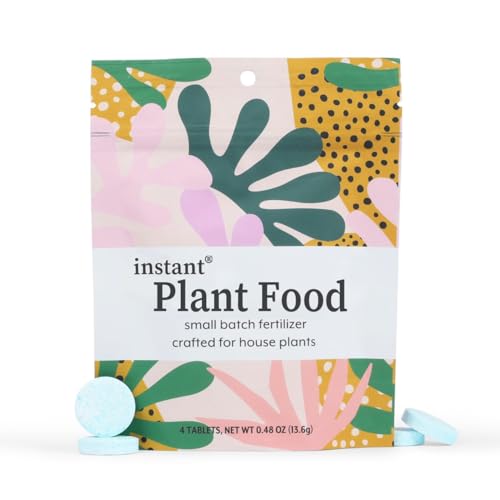
Instant Plant Food tablets eliminate the measuring, mixing, and mess of traditional liquid or powder fertilizers. Each pre-proportioned tablet delivers a 4-3-6 NPK formula that dissolves completely in a glass of water or watering can. One tablet can feed a large houseplant or several smaller ones for up to three months, making the system incredibly low-maintenance.
Beginner plant parents especially appreciate the simplicity: drop a tablet in water, wait for it to dissolve, and water as usual. Experienced growers will note that the 4-3-6 ratio is slightly higher in potassium, which supports stress resistance and general plant health rather than pushing explosive leaf growth. The ingredients are derived from naturally occurring minerals and fermentation, and the product is certified vegan and cruelty-free.
The biggest limitation is that you get only four tablets per purchase. If you have a large collection, you’ll need to restock frequently. Additionally, while the slow-release nature prevents over-fertilization, it means you can’t fine-tune the dose for specific plant needs the way you can with liquid concentrates.
What works
- Zero measuring or mixing—drop in water and dissolve
- Effective for up to three months per tablet
- No odor and leaves no residue on soil surface
What doesn’t
- Small packet: only 4 tablets per purchase
- Fixed ratio limits you to one feeding strategy for all plants
6. Medina Garrett Juice Plus 1 Qt
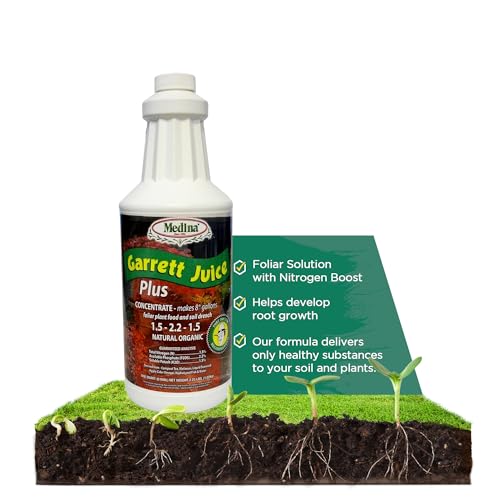
Medina Garrett Juice Plus is a nitrogen-rich liquid fertilizer that also functions as a soil health enhancer, making it a dual-purpose tool for indoor and outdoor gardeners. The formula includes molasses, which increases brix levels in plants—a measure of sugar content that correlates with pest resistance and overall vigor. It’s often used biweekly at a dilution of 1/2 cup per gallon of water.
Users praise its restorative power on cold-damaged shrubs and struggling plants. The gentle nature of the organic base makes it safe for seedlings and sensitive species when used at half-strength. The sweet molasses content, however, can attract ants or other insects if the mixed solution is left standing in trays or open watering cans.
This product stands out for growers who want to move beyond basic NPK feeding and address soil biology. The 1-quart bottle is cost-effective for the coverage it provides, lasting a full season for moderate-sized indoor collections. The primary drawback is the insect attraction risk and the fact that it’s not specifically tailored for indoor foliage plants alone—it’s a general-purpose soil tonic.
What works
- Improves soil health and plant brix levels for natural pest resistance
- Gentle enough for seedlings and damaged plants
- Excellent value per quart, lasts a full season
What doesn’t
- Molasses content can attract ants if solution is left exposed
- More of a soil amendment than a precise indoor foliage feeder
7. HiThrive Houseplant Fertilizer 16 oz

HiThrive’s Houseplant Fertilizer delivers a 6-2-4 NPK ratio packed into a 2X concentrated liquid that makes over 85 gallons of finished solution from a single 16-ounce bottle. The formula is designed for a broad range of houseplants including Monstera, Peace Lily, Pothos, and Fiddle Leaf Fig, providing a balanced nitrogen boost for greener leaves plus potassium for resilience.
Users consistently report increased blooming and thicker foliage after regular use. The dosing is simple: one teaspoon (half a capful) per gallon of water, and the liquid can also be used as a foliar spray. The mild ratio (6-2-4) is forgiving compared to the high-nitrogen synthetics, making it a safer pick for new plant parents who aren’t confident with measuring.
At this price point, the cost per gallon is among the lowest on our list. The main limitation is that the lower NPK concentration means you’ll need to feed slightly more often than with a super-concentrated formula like Dyna-Gro. Some users also suggest spacing out applications to every other watering to prevent overfeeding on sensitive species like ferns.
What works
- Highly concentrated: 16 oz makes over 85 gallons of plant food
- Forgiving 6-2-4 ratio reduces risk of root burn for beginners
- Versatile—works as a soil drench or foliar spray
What doesn’t
- Lower NPK concentration may require more frequent application
- Some users find that biweekly feeding works better than every watering
Hardware & Specs Guide
NPK Ratio: What Those Numbers Mean
The three numbers on any indoor plant food label represent the percentage by weight of Nitrogen (first number), Phosphorus (second), and Potassium (third). For foliage houseplants like Pothos or Monstera, a ratio with a higher first number (e.g., 24-8-16 or 9-3-6) pushes leaf and stem growth. For flowering plants like Peace Lilies or African Violets, a more balanced ratio (e.g., 4-3-6 or 6-2-4) encourages blooms without sacrificing root strength. A 3:1:2 ratio is widely considered ideal for most indoor foliage.
Mixing Ratio: Teaspoons Versus Gallons
The mixing ratio is the single most important parameter for avoiding root burn. Water-soluble powders like Miracle-Gro recommend 1/2 teaspoon per gallon for indoor use, while liquid concentrates range from 1 teaspoon (HiThrive) to 5 ml per liter (Growth Technology). Always start at half the recommended dose for sensitive plants. Over-concentration can cause leaf tip browning, salt buildup in the potting mix, and stunted growth that takes months to reverse.
FAQ
How often should I feed my indoor plants with liquid fertilizer?
Can I use outdoor plant food on houseplants?
Why does my organic indoor plant food smell so strong?
Final Thoughts: The Verdict
For most gardeners, the best indoor plant food winner is the Dyna-Gro Foliage Pro 32oz because its 3:1:2 NPK ratio, hydroponic compatibility, and super-concentrated formula offer precise, professional-grade feeding for everything from Pothos to rare tropicals. If you want an organic solution that is safe around kids and pets, grab the Espoma Organic Indoor 2-pack. And for a no-mess, beginner-friendly routine where you simply drop a tablet and water, nothing beats the Instant Plant Food tablets.