
A bypass pruner that crushes stems instead of slicing them cleanly is the fastest way to invite disease into your woody ornamentals and fruit trees. The difference between a ragged tear and a smooth, scissor-like cut is the quality of the blade geometry, the hardness of the steel, and the precision of the pivot alignment — not marketing hype. Every pair reviewed here was selected because its bypass action keeps the lower blade passing cleanly past the upper blade, leaving cambium tissue intact for rapid healing.
I’m Rikta — the co-founder and writer behind Lawn Gear Lab. I’ve spent hundreds of hours breaking down the metallurgy, ergonomic contours, and owner-reported durability data of hand pruners so you can buy a tool that still feels sharp three seasons from now.
Whether you are deadheading roses or shaping mature maple limbs, the right tool determines how healthy your cuts recover — this guide to the bypass pruning shears market separates precision-engineered blades from designs that crush plant tissue on every snip.
How To Choose The Best Bypass Pruning Shears
A bypass pruner is not a single-purpose tool; it is a cutting instrument whose performance is governed by blade steel, handle geometry, and maintainability. Understanding these three pillars will keep you from buying a pair that binds on green wood and leaves crushed bark on every limb.
Blade Steel Composition and Hardness
Japanese high-carbon steel heat-treated to Rockwell C60 holds a razor edge far longer than untreated stainless, but it requires prompt cleaning after sap exposure to avoid pitting. Titanium coatings reduce friction and resist rust, but a coated blade is only as good as the steel underneath. Carbon steel blades that are replaceable extend the tool’s life indefinitely — check whether the manufacturer sells spare blades before committing to a sealed, non-serviceable design.
Cutting Capacity and Leverage Geometry
Cutting capacity is measured in millimeters — a 20 mm rating handles most rose canes and small hardwood branches, while 24-25 mm models tackle older woody growth on fruit trees. Longer handles increase leverage, reducing the force required to sever a thick limb, but they also shift the balance point. Ambidextrous models with rotating lower handles reduce wrist deviation, a critical factor for anyone pruning more than thirty minutes at a stretch.
Maintainability and Spare Parts Availability
A bypass pruner that cannot be disassembled, sharpened, and reassembled is a disposable tool. Look for adjustable pivot bolts, replaceable return springs, and manufacturer-backed spare parts programs. Brands that offer individual replacement parts (blade, spring, anvil, bolt) let you keep the same handle set for a decade — this is the real measure of long-term value, not the sticker price.
Quick Comparison
On smaller screens, swipe sideways to see the full table.
| Model | Category | Best For | Key Spec | Amazon |
|---|---|---|---|---|
| Felco F2 | Premium | Professional daily pruning | 1 in. cutting capacity, 9.25 in. length | Amazon |
| Corona BP 6250 | Mid-Range | Heavy backyard pruning | 1 in. cutting capacity, 10.8 in. length | Amazon |
| Bahco PX-M2 | Premium | Ergonomic low-fatigue work | 20 mm cutting capacity, 9.2 in. length | Amazon |
| Felco F5 | Mid-Range | All-steel durability | 1 in. cutting capacity, 8.9 in. length | Amazon |
| Gardena PremiumCut Pro | Mid-Range | Precise fresh-wood cuts | 24 mm cutting capacity, 8.66 in. length | Amazon |
| Haus & Garten EnduroPRO | Budget-Friendly | Value-conscious gardeners | 1 in. cutting capacity, 8.3 in. length | Amazon |
| Original LÖWE 14.104 | Budget-Friendly | Lightweight rose & flower trimming | 22 mm cutting capacity, 7.48 in. length | Amazon |
In‑Depth Reviews
1. Felco F2 Pruning Shears
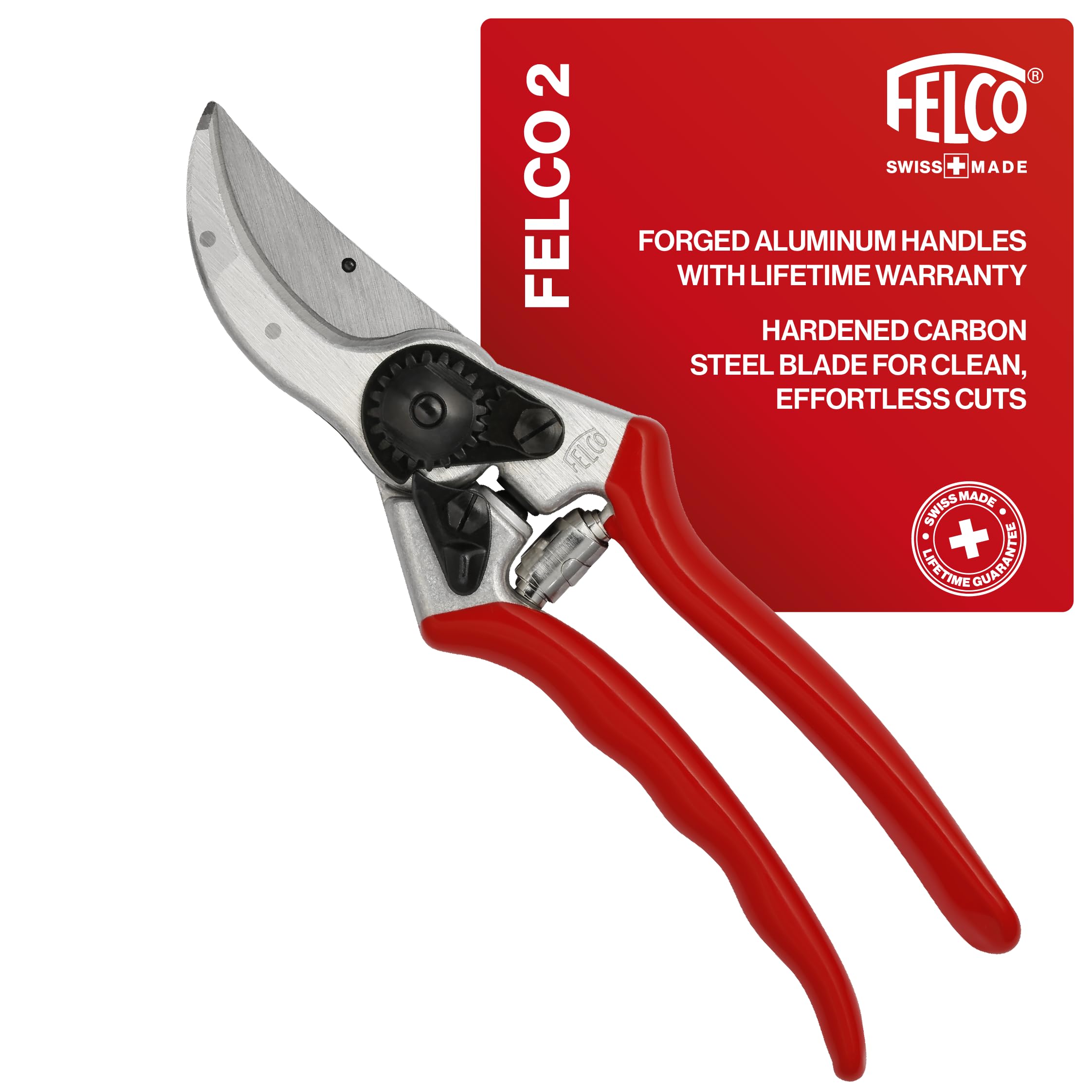
The Felco F2 has been the global benchmark for bypass pruners since 1948, and the current generation retains every feature that made it the go-to tool for arborists and estate gardeners. Its forged aluminum handles keep weight low while delivering enough leverage to cleanly slice through a 1-inch hardwood branch without requiring a second squeeze. The hardened steel blade arrives sharp enough to cut paper and holds its edge through several hundred cuts before needing a touch-up on a diamond file.
Every single component — blade, spring, anvil, pivot bolt, and handle cushion — is available from Felco as a spare part, which means this tool can be rebuilt indefinitely. The right-handed design uses an angled head that aligns the wrist naturally, reducing fatigue during extended sessions. Owners consistently report that the F2 outperforms box-store competitors even after years of heavy service, with most citations pointing to the clean, non-crushing bypass cut as the reason their plants heal faster.
The single notable trade-off is the tool’s origin as a right-handed model — left-handed users will need the Felco F2 LEFT version for proper blade orientation. At this premium price point you are paying for Swiss manufacturing tolerances and a serviceable design that no budget alternative matches over a decade of use.
What works
- Fully rebuildable with official replacement parts extending tool life indefinitely
- Clean bypass cut on branches up to 1 inch with minimal hand force required
- Ergonomic angled head reduces wrist deviation and fatigue during repetitive pruning
What doesn’t
- Right-hand-only design forces left-handed users to seek the alternate model
- Premium pricing puts it above casual gardeners’ typical tool budget
2. Corona Tools BP 6250 MAXFORGED Aluminum Bypass Pruner
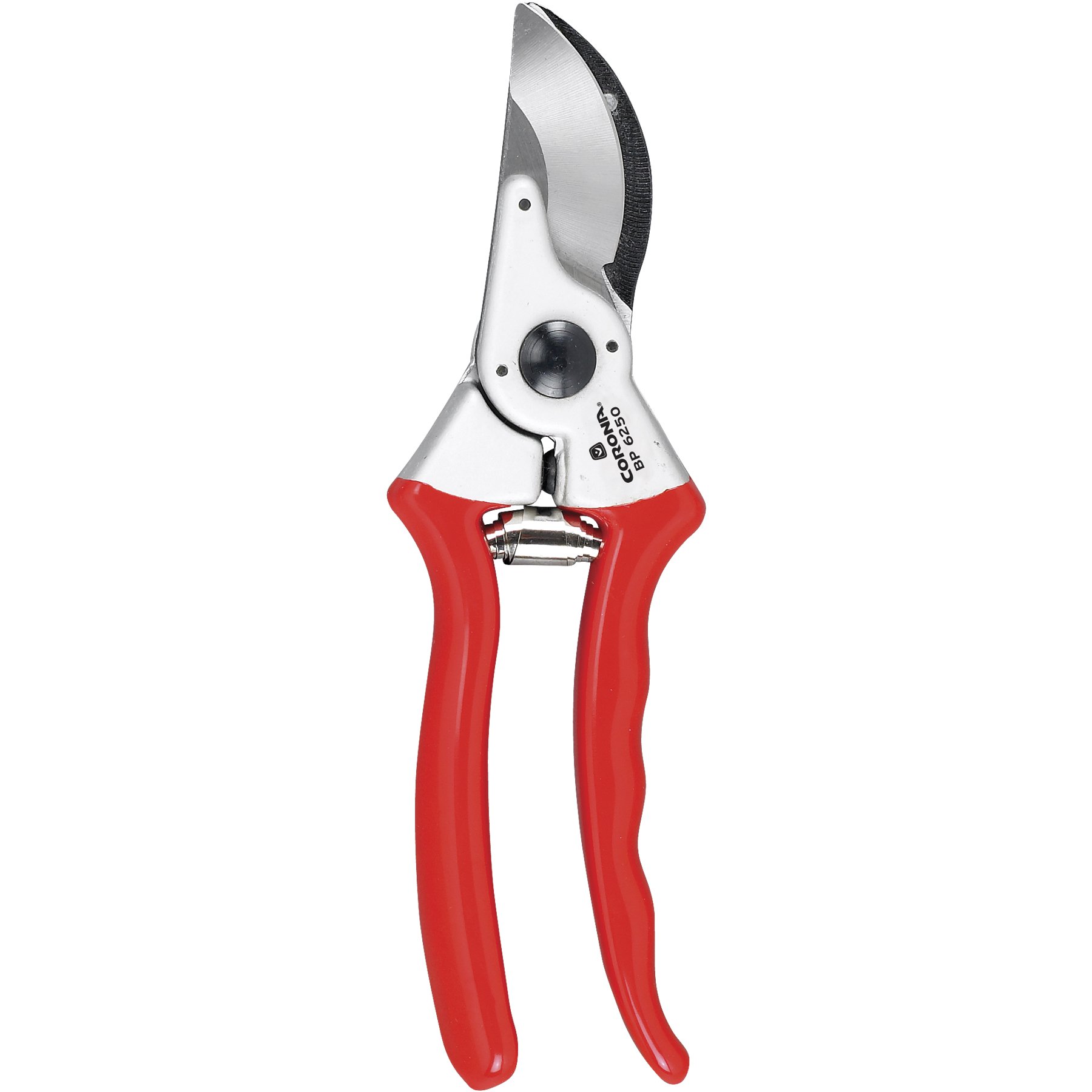
The Corona BP 6250 has earned a cult following among homeowners and part-time landscapers because it delivers Felco-level cutting performance at nearly half the investment. Precision-honed forged steel meets a replaceable high-carbon blade, and the 1-inch cutting capacity handles everything from rose canes to mature privet limbs. The wire-cutting notch near the pivot is a practical bonus that reduces the temptation to dull the blade on fencing materials.
Forged aluminum handles keep the overall weight to 9.6 ounces while providing excellent leverage, and the contoured non-slip red grips are easy to spot when you drop them into mulch or leaf litter. The self-cleaning sap groove prevents resin from binding the pivot, and the adjustable tension bolt lets you fine-tune the cutting action as the blade wears. Owners who maintain a light oil film on the blade report the edge stays serviceable across an entire pruning season.
The only recurring complaint is packaging — the pruner arrives with a locking mechanism that can be confusing to open without watching a setup video. Some users also note that the blade requires thorough wire-brushing after heavy sap exposure to prevent rust spotting, but this is standard care for non-stainless carbon steel.
What works
- Forged steel blade cuts 1-inch hardwood branches with minimal binding
- Lightweight aluminum construction reduces arm fatigue during extended use
- Wire-cutting notch and self-cleaning sap groove prevent common field problems
What doesn’t
- Lock mechanism can be tricky to disengage without published instructions
- Carbon steel requires regular oiling to prevent rust after sap-heavy jobs
3. Bahco BAHPX-M2 Pruner PX Medium
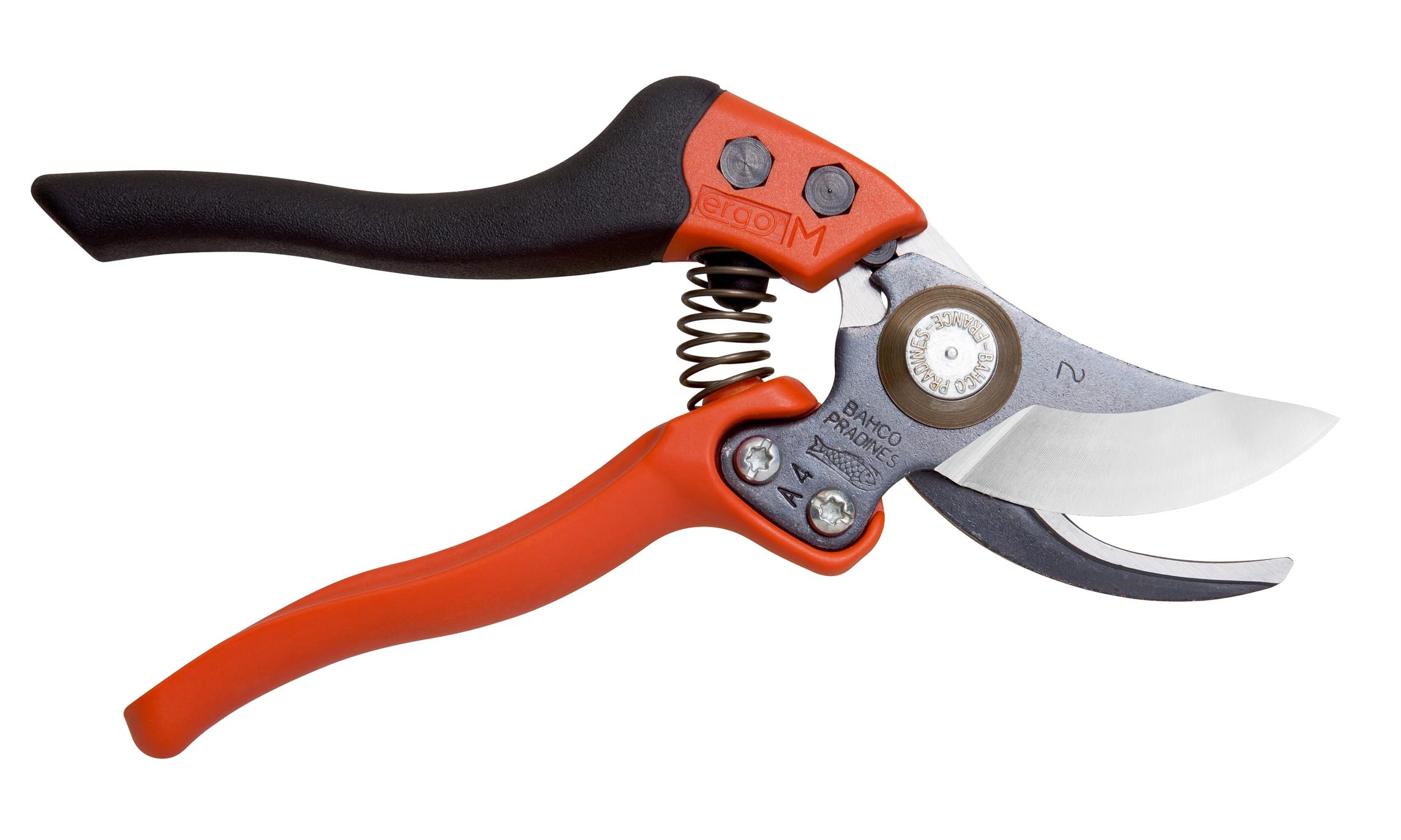
The Bahco PX-M2 uses a patented Slicing Cut blade geometry that channels cutting energy into a single, clean shearing motion rather than crushing the stem. This design difference matters most on green, fibrous wood — the blade slips through without the tearing action common on cheaper pruners. The medium-sized handle fits hands that find the Felco F2 slightly cramped, and the lightweight plastic-over-steel construction keeps the tool at a nimble 7.5 ounces.
What sets the PX-M2 apart from other mid-range options is its angled head, which positions the wrist in a neutral, straight-line posture that reduces tendon strain during repetitive cuts. Horticulturists and arborists who prune high-volume nursery stock report that the ergonomic advantage allows them to work longer without the thumb fatigue that plagues straight-handled designs. The powder-coated carbon steel blade resists sap adhesion better than raw steel, though the finish does require occasional cleaning to maintain friction-free operation.
The 20 mm cutting capacity keeps this pruner squarely in the medium-branch category — limbs over 3/4 inch require multiple bites, and some owners wish the pivot tension was easier to adjust with a tool-less mechanism. The packaging is notoriously difficult to open without damaging the blade coating, but once freed the tool delivers professional-grade precision for daily pruning tasks.
What works
- Slicing Cut blade produces clean, non-crushing cuts on green and fibrous wood
- Angled head promotes neutral wrist position to reduce repetitive-strain fatigue
- Lightweight build with replaceable parts extends tool life across seasons
What doesn’t
- 20 mm cutting capacity limits use on branches thicker than 3/4 inch
- Difficult packaging risks blade coating damage before first use
4. Felco F5 Pruning Shears
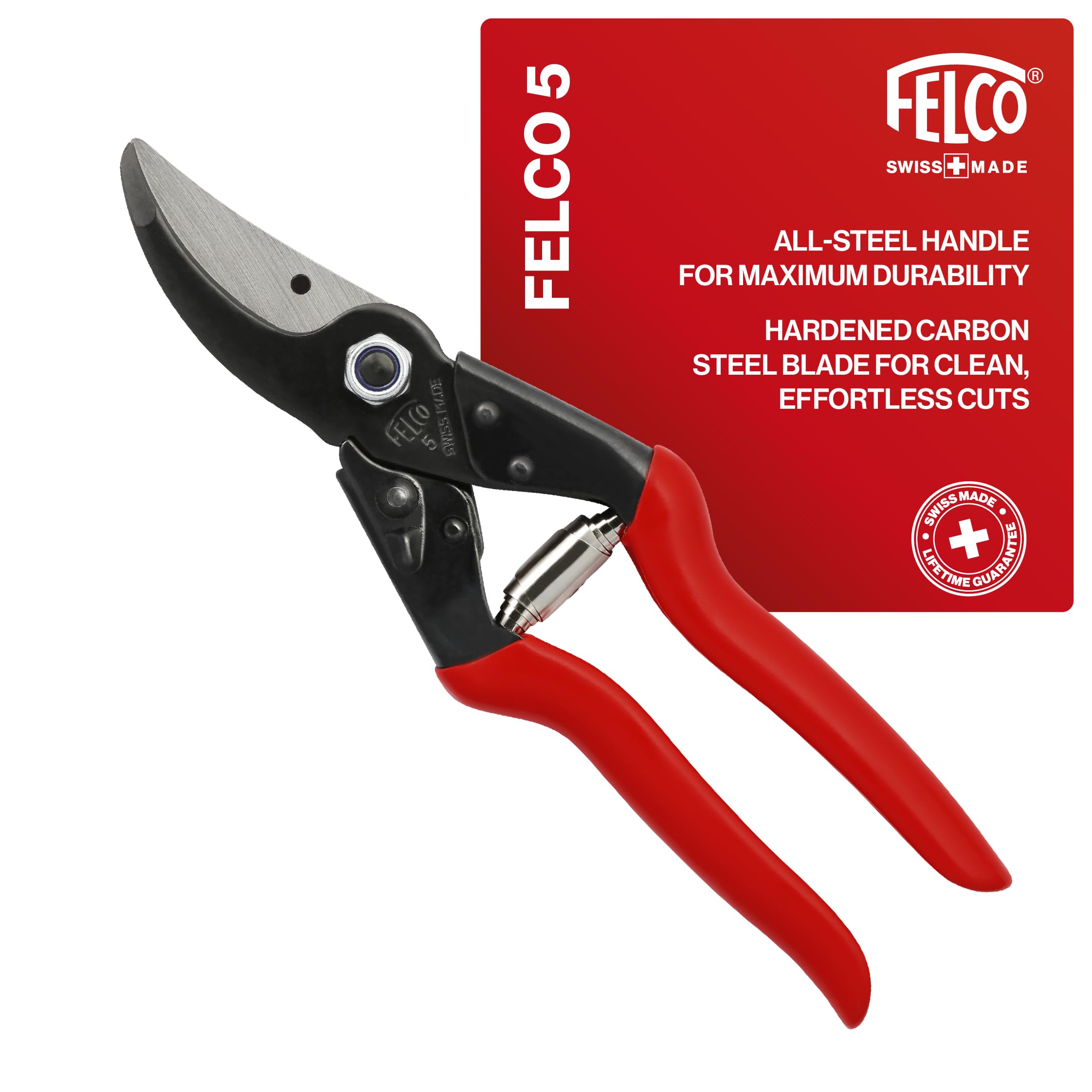
The Felco F5 is the steel-handled younger sibling of the iconic F2, and it shares the same Swiss precision in blade geometry and heat treatment. Where the F2 uses forged aluminum to shed weight, the F5 employs heavy-duty steel handles wrapped in rubberized phalate grips — a design choice that makes the tool feel incredibly solid in the hand and provides maximum leverage for thick, stubborn limbs. The 1-inch cutting capacity is identical to the F2, and the carbon steel blade retains a sharp edge through heavy pruning without frequent touch-ups.
What differentiates the F5 from the F2 is its ambidextrous compatibility — the rubberized grip pattern works equally well for left and right hands, making it a better choice for households where multiple users share the same tool. Every part, from the blade to the return spring, is available as a Felco replacement component, so a single purchase can last indefinitely with proper care. The steel handles add about 30 percent more weight than the aluminum F2, which some users prefer for the extra momentum it provides when cutting seasoned wood.
The trade-off is that the steel handle construction makes the F5 noticeably heavier during overhead or extended pruning sessions — it is best reserved for ground-level work where the extra heft aids cutting force rather than causing fatigue. The blade stained quickly from blackberry sap despite alcohol wiping, and the pivot requires periodic lubrication to maintain smooth operation.
What works
- Heavy-duty steel handles provide maximum leverage for thick, woody limbs
- Ambidextrous design fits both left and right hands comfortably
- Fully replaceable parts supported by Felco’s decades-long spare program
What doesn’t
- Steel handle construction adds weight that fatigues during overhead pruning
- Stain-prone carbon steel blade needs aggressive cleaning after sap exposure
5. Gardena PremiumCut Pro Fresh Wood Secateurs
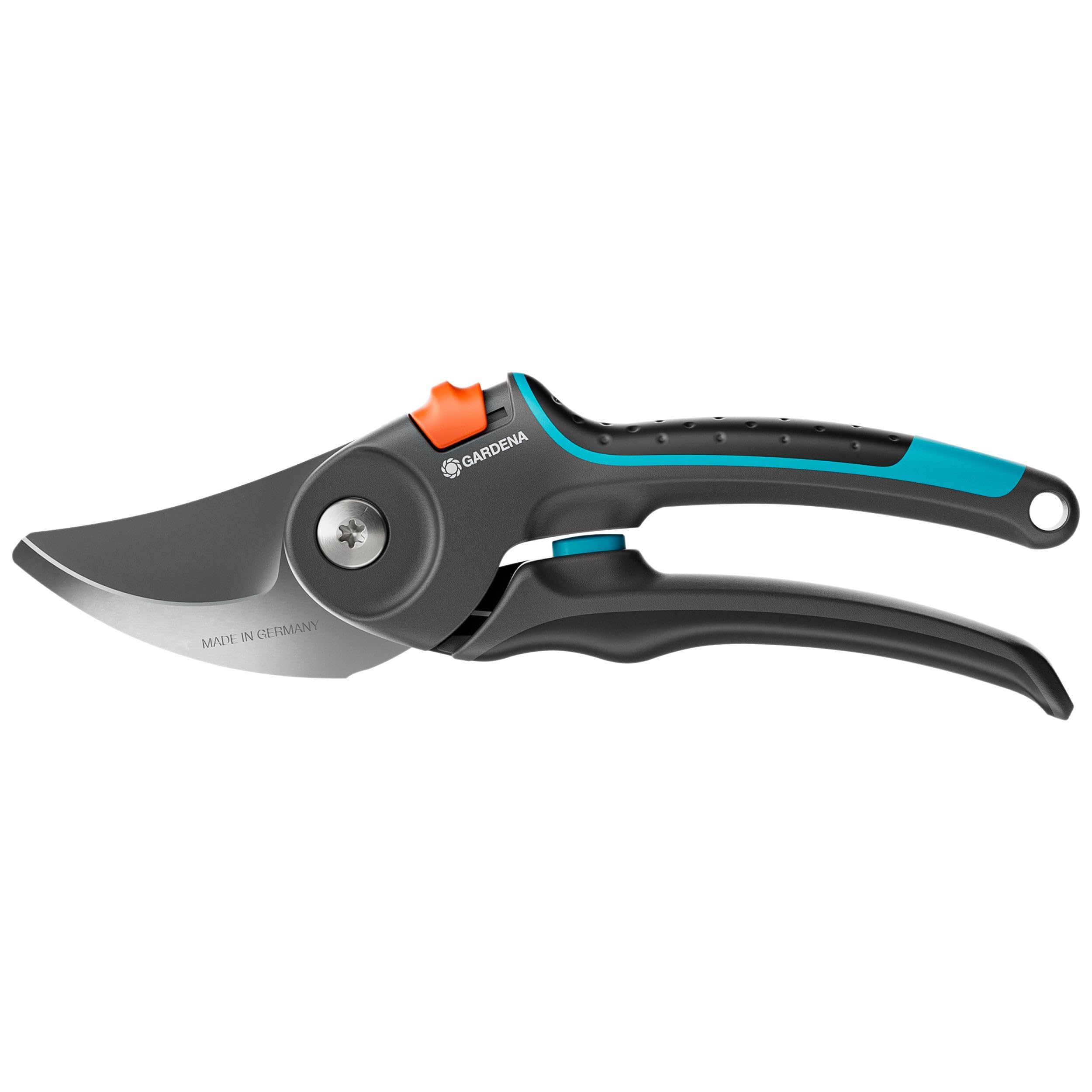
The Gardena PremiumCut Pro is a German-engineered bypass pruner designed specifically for fresh-wood cuts thanks to its patented PowerCoating, a low-friction layer that prevents green sap from adhering to the precision-ground steel blades. The 24 mm cutting capacity is notably higher than most mid-range alternatives, allowing it to sever branches up to nearly one inch in a single, clean pass. The ErgoTec handle uses a wood core wrapped in a soft-grip turquoise surface that feels warm and stable even in wet conditions.
Gardena backs this tool with a 25-year warranty and commits to making spare parts available for the same duration — a manufacturer confidence statement that few competitors match. The blade geometry is optimized for live, green wood rather than dry deadwood, which means it excels at rose pruning, vine trimming, and shaping young fruit trees. The ambidextrous handle shape accommodates both hand orientations naturally, and the locking mechanism is a simple push-button design that engages without fumbling.
Users who primarily cut dry, seasoned branches have found the tool less effective on hardened wood, requiring multiple compressions on limbs at the upper end of its diameter range. The wood handles, while comfortable, can develop surface cracks if stored in direct sun or excessive humidity over multiple seasons. Some early reports note that the PowerCoating wears thin after heavy use, though the underlying blade remains sharp with regular maintenance.
What works
- 24 mm cutting capacity handles larger live wood than most mid-range shears
- PowerCoating resists sap adhesion for consistent cutting through green growth
- 25-year spare-part warranty reflects exceptional manufacturing confidence
What doesn’t
- Optimized for fresh wood; struggles with dry, hardened branches
- Wood handle cores may crack if exposed to prolonged sun or high humidity
6. Haus & Garten EnduroPRO Ergonomic Bypass Pruners
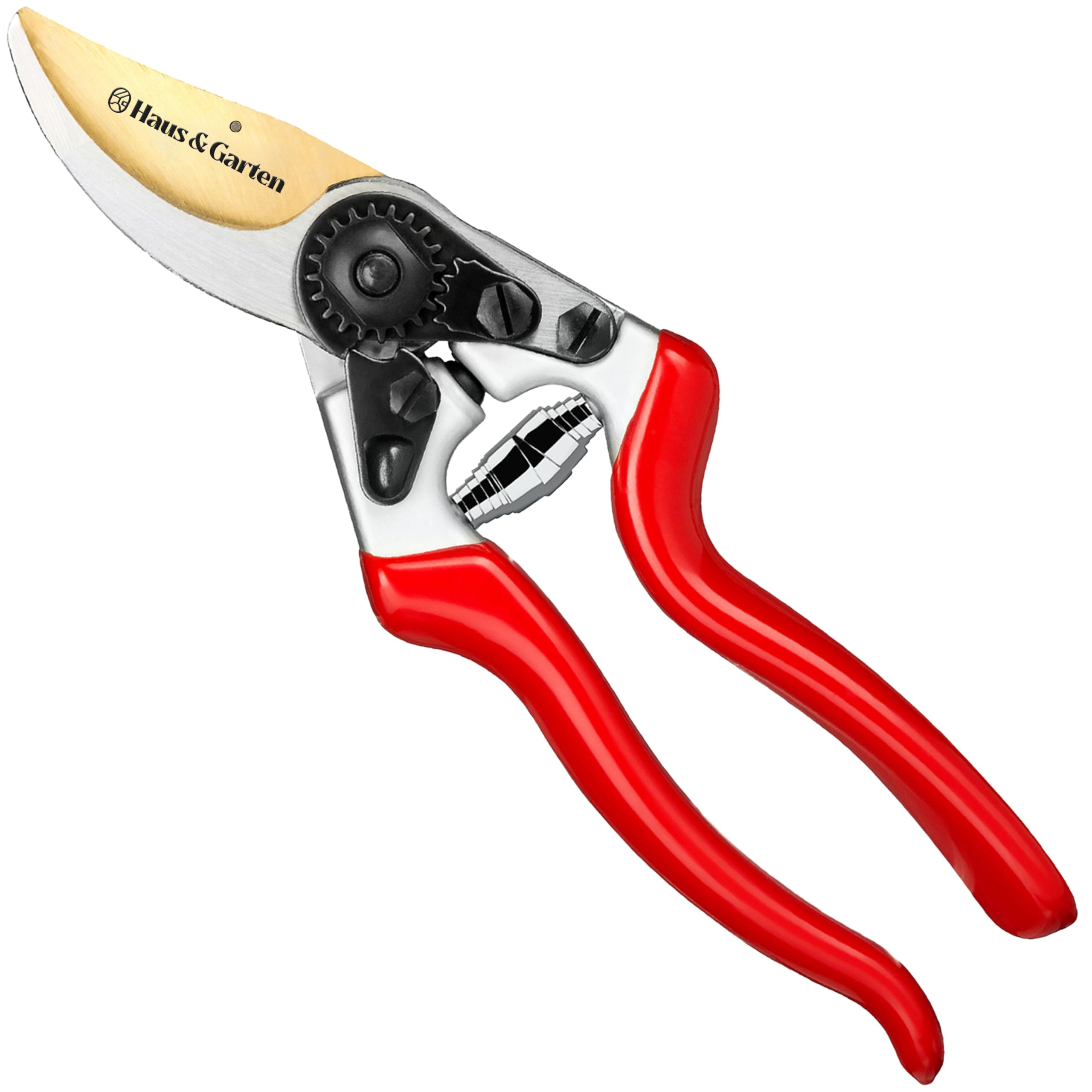
The Haus & Garten EnduroPRO puts a titanium coating over a Japanese high-carbon steel blade — a treatment that reduces friction during the cut and provides a measure of corrosion resistance that bare steel cannot match. The ergonomic handle design aligns the wrist in a neutral plane, which owners with mild arthritis specifically note as a game-changer for reducing pain during a full afternoon of deadheading. The anodized aluminum body and drop-forged handles keep the tool at 8.6 ounces without feeling flimsy.
Cutting capacity is listed at 1 inch, and user reports confirm it handles green wood up to that diameter cleanly, though larger dry limbs require repositioning. The straight blade edge contrasts with the serrated edges found on some other mid-range models, which means it produces a smoother cut but requires more frequent sharpening if used on gritty, dirty branches. The red anti-slip soft grips are wider than average, providing a secure hold for medium to large hands.
Some users with smaller hands find the grip circumference too large for comfortable one-handed operation, and the pivot tension is not adjustable — a drawback if you prefer a looser or tighter cutting action. The titanium coating has been reported to show wear on the blade edge after extended use, though the underlying carbon steel remains sharp with routine honing.
What works
- Titanium coating reduces friction and adds corrosion resistance to the carbon steel blade
- Ergonomic handle profile reduces wrist strain for arthritic or sensitive hands
- Lightweight anodized aluminum body and drop-forged handles survive heavy seasonal use
What doesn’t
- Wide grip circumference feels bulky for users with smaller hands
- Non-adjustable pivot tension limits customization of cutting feel
7. Original LÖWE Bypass Pruner 14.104

The Original LÖWE 14.104 is a German-made bypass pruner that strips away complexity in favor of a simple, lightweight design — it weighs just 6.35 ounces and measures only 7.48 inches in length. The sliding lacquer treatment on the carbon steel blade provides corrosion protection and reduces friction without adding thickness, allowing the tool to slide through rose stems and small twigs with minimal resistance. The 22 mm cutting capacity suits light pruning tasks like deadheading flowers, trimming cut stems, and shaping softwood shrubs.
What stands out about the LÖWE is the one-hand safety lock, which is a simple slider mechanism that users can engage and disengage without dropping their grip. The standard handle shape fits medium to large hands well, and the open-close action is notably smooth right out of the box thanks to the low-friction blade coating. Owners who have used it for a full season report that the blade shows no rust despite being stored in a damp garage, a testament to the lacquer’s protective qualities.
The trade-off is that the 22 mm diameter limit means the LÖWE is not suitable for heavy hardwood pruning — attempting to cut dry oak or maple limbs could damage the blade edge. The serrated blade edge is designed to grip stems and prevent slipping, but it leaves a slightly rougher cut surface than a straight-edge design. Some users find the plastic handles less durable than metal alternatives, though no widespread handle failures have been reported.
What works
- Ultra-lightweight 6.35-ounce design reduces hand fatigue during delicate trimming
- Sliding lacquer coating protects against rust while reducing friction during cuts
- One-hand safety lock allows quick engagement without changing grip
What doesn’t
- 22 mm cutting capacity is unsuitable for hardwood branches or thick dry limbs
- Serrated blade edge leaves a slightly rougher cut surface than straight-edge designs
Hardware & Specs Guide
Blade Steel and Hardness
High-carbon steel (typically Japanese or Swedish grades) heat-treated to Rockwell C58-C62 provides the best balance of edge retention and chipping resistance. Softer stainless blades at Rockwell C50-C55 dull faster on woody stems but require less maintenance against rust. Titanium or lacquer coatings add a friction-reducing layer that prevents sap adhesion, but they wear off over time and do not change the hardness of the underlying steel.
Cutting Capacity and Handle Length
Cutting capacity is measured as the maximum branch diameter the blade can sever in one clean pass — common values range from 20 mm (light pruning) to 25 mm (heavy work). Handle length directly correlates with leverage: longer handles (9-11 inches) multiply cutting force but add weight, while shorter handles (7-8 inches) improve portability and control for detail work. The cutting capacity figure is always for green, live wood — dry hardwood will require roughly 30 percent more force at the same diameter.
FAQ
What is the difference between bypass and anvil pruning shears?
How often should I sharpen my bypass pruning shears?
Can I use bypass shears to cut dead wood or dry branches?
How do I clean and maintain my bypass pruning shears?
Final Thoughts: The Verdict
For most gardeners, the bypass pruning shears winner is the Felco F2 because its forged aluminum handle, hardened steel blade, and fully replaceable parts deliver professional-grade cutting that survives decades of regular use. If you want a forged steel blade with a wire notch and a lighter wallet impact, grab the Corona BP 6250. And for lightweight, ergonomic precision on medium-diameter stems, nothing beats the Bahco PX-M2.