
Blueberry roots demand acidic soil with a pH between 4.5 and 5.5 — anything above 5.8 starves them of iron, producing sickly yellow leaves and sparse fruit. Most bagged “garden soil” is neutral or alkaline, so buying a dedicated mix or amendment is the only way to give your bushes the low-pH environment they actually need to thrive.
I’m Rikta — the co-founder and writer behind Lawn Gear Lab. I spend my days digging through technical soil analyses, studying NPK ratios, measuring pH buffering capacity, and filtering real owner experiences to find the blends that deliver measurable results for acid-loving plants.
After methodically comparing pH levels, nutrient profiles, and organic certification across dozens of products, I’ve narrowed the field to the top tier options in this guide to the best soil for blueberries.
How To Choose The Best Soil For Blueberries
Choosing the wrong blueberry soil wastes money and can stunt or kill your plants. Every blueberry grower must focus on three core variables: starting pH level, nutrient ratio, and the form of the product (mix vs. amendment vs. fertilizer).
Starting pH and Soil Acidifiers
Blueberries are obligate acidophiles. If your native soil reads above pH 6.0, a bagged potting mix alone will not hold the pH low enough long-term. You need elemental sulfur or a soil acidifier to drive the pH down to the 4.5–5.5 target. Sulfur granules require several weeks and soil moisture to convert to sulfuric acid, so apply them before planting.
NPK Ratio: 4-3-6 Is the Blueberry Standard
A balanced 10-10-10 fertilizer pushes excessive leaf growth at the expense of fruit buds. The ideal blueberry formula uses a 4-3-6 ratio, which supplies moderate nitrogen (preferably from organic sources like cottonseed meal) and a higher dose of potassium to encourage fruit set and winter hardiness. Avoid formulas with high chloride levels.
Ready-to-Use Mix vs. Amendment vs. Liquid Feed
Ready-to-use acid potting mixes (like peat and pine bark blends) are perfect for container blueberries or raised-bed topdressing. Soil acidifiers and elemental sulfur products lower pH without adding bulk fertility. Liquid fertilizers deliver quick nutrition during the growing season but do not fix pH. Many growers combine a pH-adjustment layer with a slow-release granular feed for season-long results.
Quick Comparison
On smaller screens, swipe sideways to see the full table.
| Model | Category | Best For | Key Spec | Amazon |
|---|---|---|---|---|
| Down To Earth Acid Mix 25 lb | Granular Fertilizer | Large established blueberry patches | 4-3-6 NPK, 25 lb | Amazon |
| Espoma Soil Acidifier 2-Pack | Soil Amendment | Lowering pH quickly in alkaline soil | Elemental sulfur, 6 lb each | Amazon |
| Coast of Maine Acid Mix | Potting Mix | Container blueberries and raised beds | Peat moss compost, 20 Qt | Amazon |
| Soil Sunrise Acid Mix | Potting Mix | Premium container growing | Pine + peat + perlite, 12 Qt | Amazon |
| Down To Earth Acid Mix 5 lb | Granular Fertilizer | Small blueberry plantings | 4-3-6 NPK, 5 lb | Amazon |
| Earth Science Sulfur Granules | Soil Amendment | Adjusting pH without adding nutrients | 5 lb fast-acting sulfur | Amazon |
| Bloom City Liquid Berry Fertilizer | Liquid Plant Food | Quick seasonal feeding in containers | 32 oz, organic liquid | Amazon |
In‑Depth Reviews
1. Down To Earth All Natural Fertilizers Organic Acid Mix 4-3-6, 25 lb
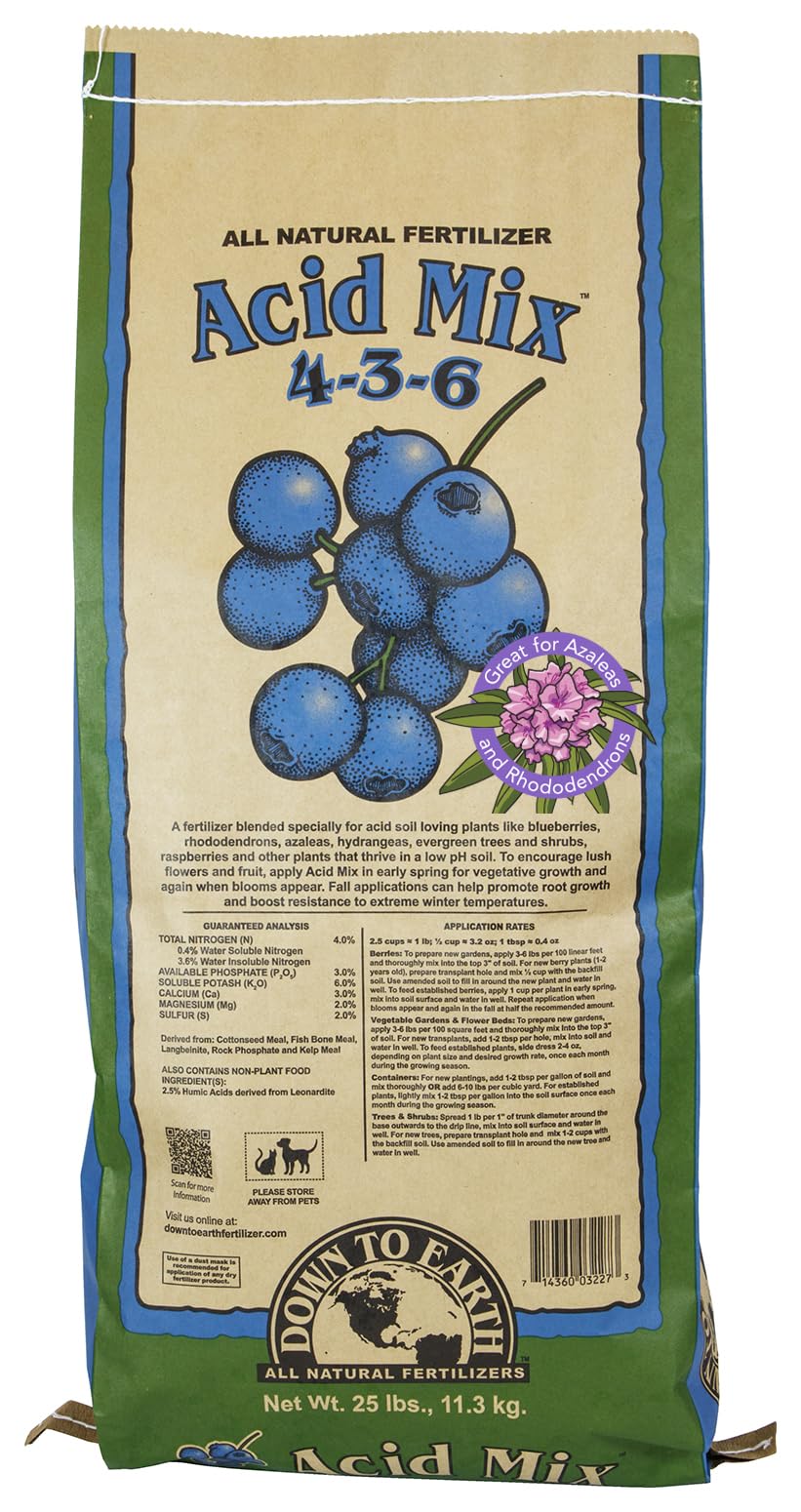
This 25-pound box of Down To Earth Acid Mix delivers the ideal 4-3-6 NPK ratio that blueberry bushes demand for heavy fruit set. Cottonseed meal, langbeinite, fish bone meal, and kelp meal provide a naturally slow-release nutrient profile that feeds for an entire season — one application in early spring plus a repeat after bloom covers a large patch of 6 to 8 mature bushes.
The organic ingredients are sustainably sourced and OMRI-compliant, so you avoid synthetic salt build-up that can burn delicate blueberry roots. Reviewers consistently report noticeably larger berries and deeper green foliage within weeks of application. The resealable box is sturdy for storage but should be kept on a dry shelf to prevent the bottom from dampening.
For the price per pound, this is the most cost-efficient way to fertilize multiple blueberry plants without switching to synthetic blends. It is a maintenance fertilizer, not a pH adjuster — pair it with a sulfur amendment if your starting soil pH is above 6.0.
What works
- Perfect 4-3-6 ratio tailored to fruiting bushes
- Slow-release organic granules feed all season long
- Excellent value for large blueberry patches
What doesn’t
- Does not lower soil pH — must use a separate acidifier
- Bag can get damp if stored on concrete floor
2. Espoma Organic Soil Acidifier 6 lb (Pack of 2)
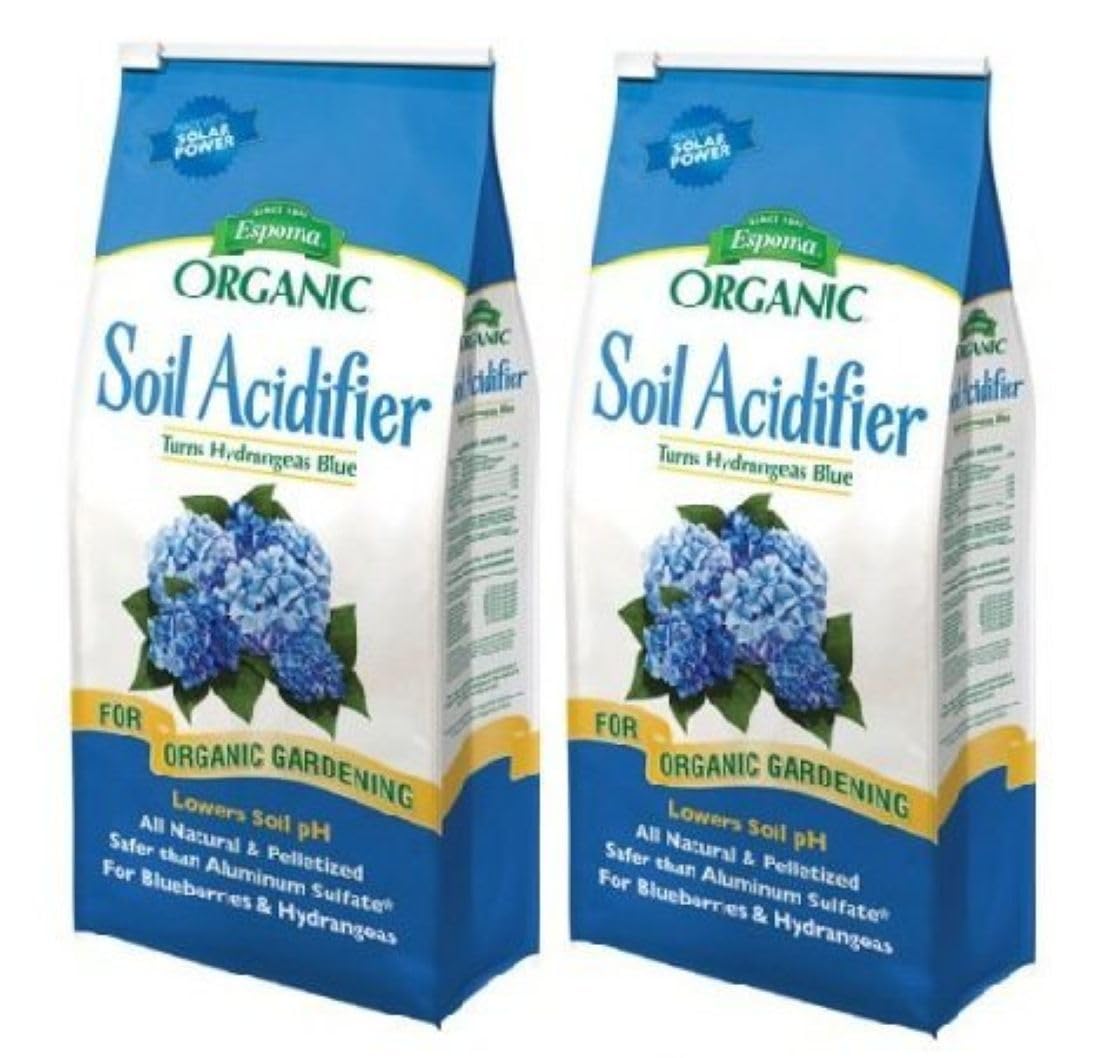
Espoma’s Soil Acidifier uses elemental sulfur blended with gypsum to drive soil pH down quickly and reliably. When your blueberry leaves show interveinal chlorosis — yellowing between green veins — that is iron deficiency caused by alkaline soil. A single application of this granular acidifier starts converting within a week, releasing available iron and turning those leaves dark green again.
The pack of two 6-pound bags covers roughly 100 square feet when applied at the standard rate, making this ideal for a row of blueberry bushes or a mixed acid-loving bed with azaleas and rhododendrons. It is OMRI-listed for organic production and safe for people and pets after watering in. Reviewers note it effectively turns hydrangea blooms blue, which confirms the pH shift is real.
Use this as a foundational pH amendment before planting blueberries in alkaline soil, then reapply annually as needed based on soil tests. It provides zero NPK nutrition, so you must pair it with a balanced fertilizer like the Down To Earth Acid Mix.
What works
- Fast-acting elemental sulfur lowers pH within days
- Organic and safe for edible gardens
- Two-bag pack provides good coverage for multiple bushes
What doesn’t
- Contains no NPK — must supplement with fertilizer
- Granules need consistent moisture to activate fully
3. Coast of Maine Organic & Natural Planting Soil for Acid Loving Plants, 20 Qt

Coast of Maine’s blend combines composted manure, sphagnum peat moss, and aged bark into a ready-to-use acid potting mix. Blueberries planted in containers or raised beds benefit immediately from the low starting pH and the lightweight structure that prevents waterlogged roots. The 20-quart bag is the perfect size to refresh two large blueberry planters or top-dress a small bed.
OMRI-listed and made in Maine, this mix prioritizes sustainable ingredients without synthetic wetting agents. Owners report that their strawberries and blueberries establish quickly with no transplant shock. The perlite content improves aeration, which is critical for blueberry roots that suffocate in dense clay-rich potting soils.
One bag may not be enough to fully fill a deep raised bed; plan on multiple bags if you are building a new bed from scratch. For container growers, this is the simplest way to get the right pH and drainage without mixing your own components.
What works
- Ready-to-use low pH mix for containers
- Lightweight with perlite for excellent drainage
- OMRI organic and sustainably produced
What doesn’t
- Not sufficient alone for large raised-bed projects
- Long-term pH stability requires periodic testing
4. Soil Sunrise Acid Loving Plant Potting Soil Mix, 12 Quarts
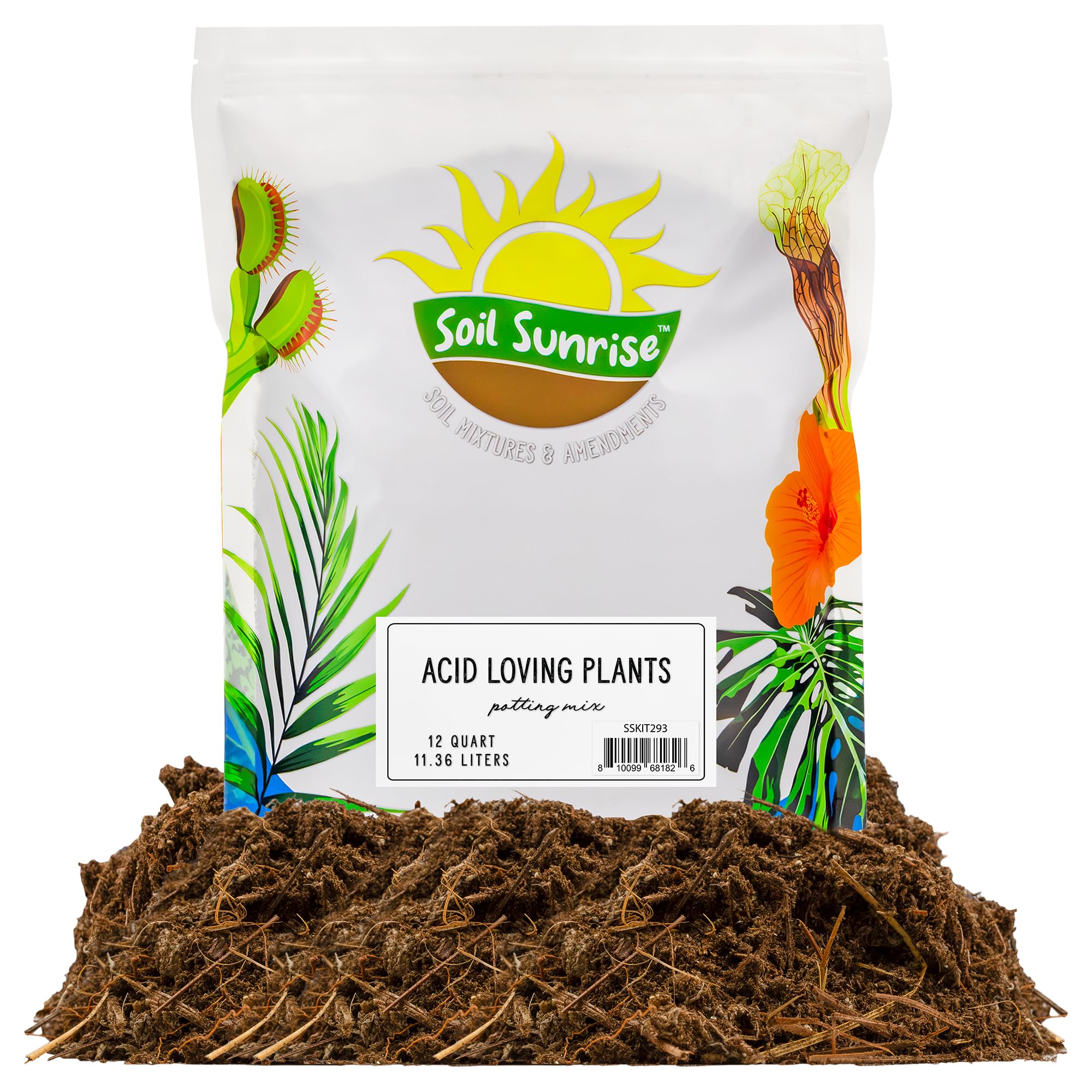
Soil Sunrise’s artisan-crafted blend uses peat moss, pine needle mulch, pine bark mulch, sphagnum moss, and vermiculite to create a fluffy, acid-rich medium that blueberries love. The inclusion of pine materials naturally boosts acidity without chemical additives, and the vermiculite helps retain just enough moisture between waterings.
This mix is handcrafted in Kentucky and arrives neatly packaged. Owners who repotted struggling blueberries or gardenias into this mix report dramatic growth rebounds within weeks — a coffee plant doubled in size over three years after switching to this soil. The one downside is the bag is small (12 quarts) compared to the product photo, so budget for multiple bags if you have more than two containers.
First-time users should thoroughly moisten the mix before potting; the high peat content can become hydrophobic when dry. Once properly wetted, it rehydrates normally and maintains excellent aeration for root development.
What works
- Rich, fluffy texture with excellent drainage
- Pine mulch naturally enhances acidity
- Proven results for potted blueberries and acid lovers
What doesn’t
- Bag is smaller than expected from photos
- Requires pre-wetting to avoid hydrophobicity
5. Down To Earth All Natural Fertilizers Organic Acid Mix 4-3-6, 5 lb

This 5-pound box of Down To Earth Acid Mix shares the same proven 4-3-6 formulation as the 25-pound version but in a more manageable size for gardeners with just two or three blueberry bushes. The organic blend of cottonseed meal, kelp meal, and fish bone meal provides a gentle, slow-release feed that eliminates the risk of fertilizer burn common with synthetic high-nitrogen products.
Owners report that one application in early spring, followed by a second application when blooms appear, produces significantly more fruit and stronger root systems. The formula is also excellent for raspberries, azaleas, and hydrangeas. The pungent organic smell attracts dogs and wildlife — store the box securely in a sealed bin if you have curious pets.
For small gardens, the 5-pound box provides enough granules for an entire growing season. Like the larger bag, this is a fertilizer only — use a separate soil acidifier if your starting pH is too high for blueberries.
What works
- Perfect 4-3-6 ratio for fruit production
- Safe organic slow-release feed
- Right size for small blueberry patches
What doesn’t
- Strong smell may attract animals
- Does not lower soil pH on its own
6. Earth Science Fast Acting Sulfur Granules, 5 lb

Earth Science’s sulfur granules use patented Nutri-Bond Technology to bind with soil particles, reducing runoff and keeping the acidifying agents where you put them. While labelled “fast acting,” the granules do require several waterings to fully dissolve and begin lowering pH — a point echoed by several owners who note that patience pays off as the soil gradually shifts toward the ideal blueberry range.
The 5-pound pouch covers a generous area and is safe for people and pets immediately after watering in. The product works well on any grass type or garden bed, making it a versatile tool for anyone managing multiple acid-loving plants beyond just blueberries. Owners of hydrangeas report vibrant blue blooms after consistent application.
This is a straight pH amendment — it provides no NPK nutrition. Apply it before planting or early in the season, then follow with an organic fertilizer like the Down To Earth Acid Mix to supply actual plant food.
What works
- Nutri-Bond technology reduces nutrient runoff
- Safe for people and pets after watering
- Effective long-term pH correction
What doesn’t
- Not truly fast acting — requires multiple waterings
- No NPK content — must pair with fertilizer
7. Bloom City Organic Berry Fertilizer – Liquid Plant Food, 32 oz

Bloom City’s liquid berry fertilizer delivers water-soluble organic nutrition that blueberry roots absorb immediately — ideal for giving potted bushes a mid-season boost when they show signs of slow growth. The 32-ounce bottle dilutes at a rate of 3 tablespoons per gallon, and owners report visible new growth and even early fruiting within weeks of starting a biweekly feeding schedule.
This product is formulated specifically for blueberries and strawberries, with a nutrient balance that supports both foliage health and fruit development. It works equally well in garden beds and containers, making it a versatile tool for the growing season. The liquid form is especially useful for plants that are already stressed and need fast delivery of micronutrients.
Do not rely on this liquid feed as your primary pH solution — it is a fertilizer, not a soil acidifier. Also, several users note the liquid has a strong unpleasant smell, which is typical of organic fish-based formulas. Store the bottle sealed tightly to avoid attracting pests.
What works
- Fast-absorbing liquid for quick nutrient delivery
- Designed specifically for blueberry and strawberry plants
- Suitable for container and in-ground use
What doesn’t
- Does not lower soil pH
- Strong organic smell in the bottle
Hardware & Specs Guide
Soil pH and Elemental Sulfur
Blueberry roots cannot absorb iron above pH 5.8. Elemental sulfur granules (like those in Espoma and Earth Science products) oxidize into sulfuric acid over several weeks, permanently lowering pH. Apply 1 pound per 100 square feet to drop pH by one full point. Test soil monthly with a pH meter to avoid overshooting below 4.0, which can damage roots.
NPK Ratio 4-3-6
The 4-3-6 ratio is specifically formulated for fruiting bushes. Nitrogen (4) supports leaf growth without becoming excessive. Phosphorus (3) aids root and flower development. Potassium (6) is the highest number because it directly improves fruit size, sugar content, and winter hardiness. Avoid high-nitrogen lawn fertilizers that trigger soft green growth at the expense of berries.
Organic Matter and Drainage
Blueberry roots are fibrous and shallow; they rot quickly in heavy clay or compacted soil. The ideal growing medium contains at least 30% organic matter — sphagnum peat moss, pine bark fines, and composted manure. Products like Coast of Maine and Soil Sunrise incorporate perlite or vermiculite to create air pockets that keep roots oxygenated.
Liquid vs. Granular Fertilizer
Granular organic fertilizers (Down To Earth) release nutrients over 4 to 6 months, matching the blueberry growing season with one or two applications. Liquid fertilizers (Bloom City) provide instant uptake within 24 hours, ideal for correcting deficiencies mid-season, but require biweekly reapplication and offer no pH correction. Most experienced growers use granules as a base and keep liquid as a rescue tool.
FAQ
What pH level do blueberries need in their soil?
Can I use regular potting soil for blueberries?
How often should I fertilize blueberry bushes?
Is it safe to use sulfur acidifier around pets and children?
Should I buy a 5 lb or 25 lb bag of Down To Earth Acid Mix?
Final Thoughts: The Verdict
For most gardeners, the soil for blueberries winner is the Down To Earth Acid Mix 25 lb because its 4-3-6 ratio is scientifically matched to blueberry fruit production and the large bag keeps costs low for serious patches. If you need to fix alkaline soil pH first, grab the Espoma Soil Acidifier 2-Pack and apply it before planting. And for container growers who want a no-mix ready-to-use medium, nothing beats the Coast of Maine Acid Mix for its balanced moisture retention and low pH starting point.