
The difference between a rhododendron that sulks for years and one that explodes with softball-sized blooms often comes down to what’s happening a few inches underground. These shallow-rooted acid lovers demand a specific pH range, consistent organic matter, and soil structure that holds moisture without drowning the roots — get the recipe wrong and you get yellow leaves, bud drop, and stunted growth.
I’m Rikta — the co-founder and writer behind Lawn Gear Lab. I’ve spent countless hours comparing fertilizer ratios, studying soil amendment science, and cross-referencing verified owner results to identify exactly which products deliver the pH correction and nutrient profile rhododendrons actually need.
Whether you’re planting a new shrub or trying to revive a faded one, this guide breaks down the top-performing mixes, conditioners, and feeds so you can pick the right soil for rhododendron without guesswork.
How To Choose The Best Soil For Rhododendron
Rhododendrons are not forgiving when it comes to soil chemistry. Selecting the wrong mix or skipping pH correction is the most common reason these shrubs fail within two seasons. Focus on these three factors when comparing products.
pH Level and Acidifying Power
Rhododendrons require a soil pH between 4.5 and 6.0. Above 6.5, the plant cannot access iron and manganese, causing chlorosis (yellowing leaves with green veins). Look for products containing elemental sulfur, peat moss, or sulfur-coated urea. The listed sulfur percentage — 5% is a common benchmark — tells you how aggressively the product lowers pH. Fast-acting sulfur granules begin working within weeks, while organic blends lower pH more gradually over months.
Organic Matter and Drainage
Rhododendron roots are fibrous, shallow, and intolerant of compacted soil. The mix must contain sphagnum peat moss, composted bark, or worm castings to create air pockets and retain moisture without waterlogging. A heavy clay-based soil suffocates the roots; a mix that drains too fast (pure sand or perlite) dries out before the roots can drink. The ideal texture feels like a wrung-out sponge — moist but not muddy.
Nutrient Ratio and Release Mechanism
Rhododendrons are light feeders compared to vegetables, but they need a steady supply of nitrogen for leaf growth and phosphorus for blooms. A fertilizer ratio around 4-3-4 or 5-4-3 works well. Slow-release organic sources — feather meal, seabird guano, or soybean meal — feed the plant over 8 to 12 weeks without burning the delicate roots. Avoid high-nitrogen synthetic lawn fertilizers that force weak, rapid growth and leave the shrub vulnerable to pests.
Quick Comparison
On smaller screens, swipe sideways to see the full table.
| Model | Category | Best For | Key Spec | Amazon |
|---|---|---|---|---|
| FoxFarm Happy Frog Acid Loving | Fertilizer | Slow-release feeding | 4 lb bag, OMRI listed | Amazon |
| Coast of Maine Planting Soil | Soil Mix | New plantings & repotting | 20 Qt, low pH blend | Amazon |
| True Organic Azalea, Camellia & Rhododendron Food | Fertilizer | Large gardens & shrubs | 12 lb, 5% sulfur | Amazon |
| Espoma Organic Holly-Tone | Fertilizer | Established shrubs | 4.1 lb, 4-3-4 ratio | Amazon |
| Earth Science Fast Acting Sulfur | Soil Amendment | pH correction | 5 lb granules, Nutri-Bond | Amazon |
| Dr. Earth Organic MINI Acid Lover | Fertilizer | Small-space containers | 1 lb, non-GMO verified | Amazon |
| Back to the Roots Worm Castings | Soil Amendment | Organic soil enrichment | 5 lb, pure vermicompost | Amazon |
In‑Depth Reviews
1. FoxFarm Happy Frog Acid Loving Plants Fertilizer

The FoxFarm Happy Frog formula delivers a controlled nutrient release that rhododendrons respond to without the shock of synthetic salts. Its 4-pound bag contains mycorrhizal fungi and beneficial soil microbes that improve phosphorus uptake — a critical factor for bud set and flower density. The mixing ratio of 1/16 cup per gallon makes it easy to incorporate into existing beds without over-application.
This product shines for established rhododendrons showing signs of nutrient stress. Gardeners report visible greening within 10 to 14 days after application, and the slow-release mechanism feeds the shrub for roughly 8 to 10 weeks. The OMRI listing confirms it meets organic production standards, which matters if you’re using the same bed for edible acid lovers like blueberries.
One trade-off: the powder form requires measuring and incorporation into the top inch of soil rather than surface broadcasting. If you prefer a granular formula you can sprinkle and water in, this demands a bit more hands-on mixing. Still, for consistent, gentle feeding, it’s a top contender.
What works
- Mycorrhizal fungi enhance root nutrient absorption
- Gentle slow-release prevents fertilizer burn
- Works well for container-grown rhododendrons
What doesn’t
- Powder form needs mixing before application
- 4-pound bag covers only a few medium shrubs
2. Coast of Maine Organic Planting Soil for Acid Loving Plants

This is a true soil mix rather than a fertilizer, making it ideal for planting new rhododendrons or refreshing raised beds. The blend combines sphagnum peat moss, composted manure, and aged bark to create an airy, moisture-retentive structure that rhododendron roots colonize quickly. The pH is pre-adjusted for acid lovers, which removes the guesswork for new gardeners.
The 20-quart bag provides enough volume to fill two large containers or amend a 3-foot by 3-foot planting bed. Gardeners note that the texture is significantly lighter than standard garden soil — essential for rhododendrons that suffocate in heavy clay. The OMRI listing confirms no synthetic additives, and the composted manure adds a steady trickle of nitrogen without burning.
If you are top-dressing existing shrubs rather than planting new ones, this soil mix requires more effort to work in around established root zones. It performs best when used as the primary growing medium at planting time rather than as a surface amendment.
What works
- Pre-balanced pH eliminates need for immediate sulfur addition
- Light, fluffy texture promotes healthy root spread
- Large bag size suits multiple planting projects
What doesn’t
- Less convenient for top-dressing existing plants
- Heavier shipping weight increases delivered cost
3. True Organic Azalea, Camellia & Rhododendron Food
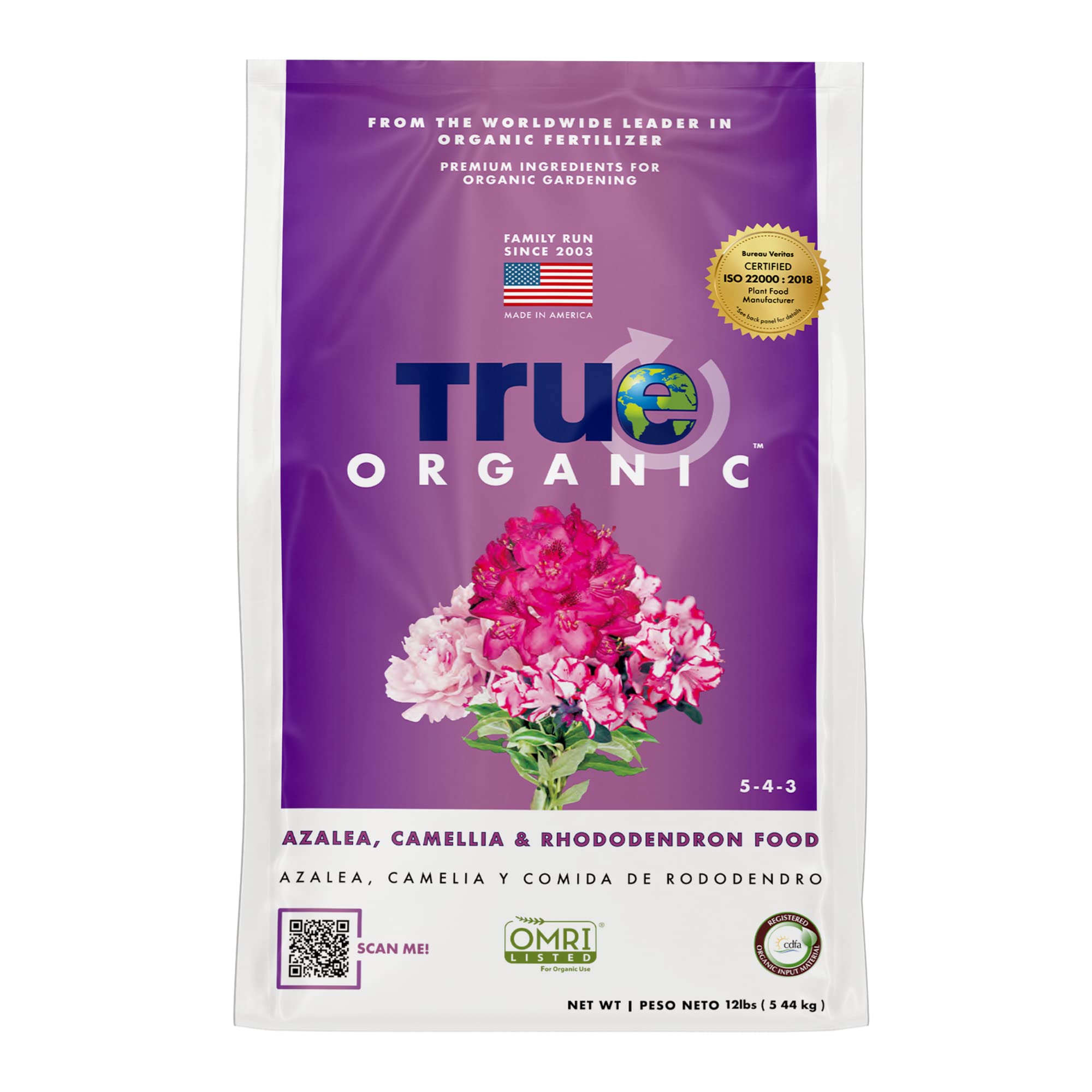
The True Organic formula stands out because it combines a 5-4-3 NPK ratio with 5% elemental sulfur in a single granular product. That means you correct soil pH while feeding the plant, saving you a separate amendment step. The 12-pound bag covers up to 261 square feet, making it the most cost-effective option for gardeners with multiple shrubs or a large acid-loving border.
Ingredients like seabird guano and shrimp-and-crab shell meal provide a broad micronutrient profile that supports both foliage density and flower production. Gardeners report that rhododendrons treated with this formula show deeper green leaves within two weeks and more flower buds the following spring. The twice-yearly application schedule — spring and fall — aligns perfectly with rhododendron growth cycles.
The only downside is the modest sulfur content. If your soil pH is severely alkaline (above 7.5), you may need an initial boost of fast-acting sulfur before this product can maintain the right range.
What works
- Combines fertilizer and pH amendment in one bag
- Large coverage area for the price
- Organic ingredients with broad micronutrient range
What doesn’t
- 5% sulfur may not correct highly alkaline soil alone
- Granules need thorough watering to activate
4. Espoma Organic Holly-Tone 4-3-4
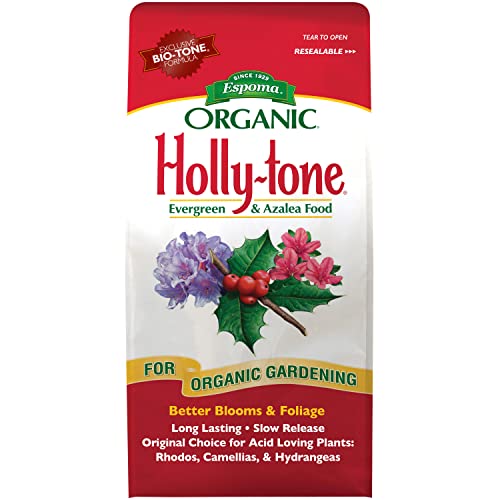
Holly-Tone has been the benchmark for acid-loving plant nutrition since 1929, and its formula still holds up for rhododendrons. The 4-3-4 analysis provides a balanced nutrient profile that supports steady growth without forcing excessive foliage at the expense of flowers. The Bio-Tone microbes enhance root development and help the plant access nutrients already locked in the soil.
The granular form is ready to use straight from the bag — no mixing required. Apply it around the drip line in spring and again in fall, then water in. Gardeners consistently report that established rhododendrons green up within a week and produce more flower clusters the following season. The 4.1-pound bag covers roughly 80 square feet, adequate for three to four medium shrubs.
The sulfur content is lower than dedicated pH-lowering products, so this works best as a maintenance feed for soil that is already in the 5.0–6.0 range. If your soil reads above 6.5, pair Holly-Tone with a separate sulfur amendment for the first season.
What works
- Decades of proven results for acid-loving shrubs
- No mixing needed, apply dry and water in
- Bio-Tone microbes improve long-term soil health
What doesn’t
- Not strong enough to fix high-pH soil alone
- Bag size is small for large gardens
5. Earth Science Fast Acting Sulfur Granules

This product is not a fertilizer — it is a dedicated soil acidifier. If your soil pH is above 6.5 and your rhododendron shows yellowing leaves with green veins (iron chlorosis), this sulfur granule is the fastest non-chemical fix. The Nutri-Bond Technology helps the sulfur bind to soil particles rather than washing away with rain, which improves efficiency over standard agricultural sulfur.
Gardeners report measurable pH drops within three to four weeks, and the 5-pound bag treats a significant area. Apply it in early spring before new growth emerges for best results. It is safe for people and pets, so you can use it around walkways and lawn borders without restricting access after application.
The “fast acting” label is relative — sulfur still requires soil moisture and microbial activity to convert to sulfuric acid. In dry conditions or cold soil, the process slows. For immediate results on severely chlorotic plants, combine this with an iron chelate foliar spray while the sulfur works through the root zone.
What works
- Effectively lowers pH within weeks
- Nutri-Bond reduces runoff waste
- Safe for lawns and ornamental beds
What doesn’t
- Contains no nutrients — must be paired with fertilizer
- Requires consistent moisture for activation
6. Dr. Earth Organic MINI Acid Lover Fertilizer

The Dr. Earth MINI Acid Lover is formulated specifically for small spaces — container-grown rhododendrons, single specimen shrubs, or patio plants. The 1-pound bag is compact, but the formula is dense with multi-minerals, proteins, and humic acids that improve soil structure over time. It is the only non-GMO Project Verified fertilizer in this category, which matters if you prioritize purity standards.
Gardeners report that a single application can revive a struggling rhododendron that has not bloomed in two years. The powder form can be mixed into water to create a compost tea or sprinkled dry and watered in. The organic ingredients break down slowly, feeding the plant for roughly 6 to 8 weeks without risk of burn.
The small bag size means you will need multiple bags for a garden with several mature shrubs. For a single container-grown rhododendron or a small patio arrangement, however, it is perfectly sized and highly effective.
What works
- Non-GMO verified with traceable ingredients
- Humic acids improve long-term soil biology
- Safe for pets and children
What doesn’t
- 1-pound bag covers only a small area
- Powder can clump if not stored in dry conditions
7. Back to the Roots Organic Worm Castings

Worm castings are not a complete fertilizer nor a pH adjuster — they are the ultimate soil conditioner. The Back to the Roots 5-pound bag delivers pure vermicompost packed with beneficial microbes that improve nutrient cycling and water retention. For rhododendrons planted in poor or sandy soil, mixing castings into the root zone creates the organic sponge these shrubs need.
Gardeners use this as a top dressing or soil amendment at planting time. The castings hold moisture well, which is a double-edged sword — in heavy clay soils, they can contribute to waterlogging if not balanced with perlite or bark. In well-drained beds, however, they significantly reduce watering frequency during dry spells. The organic matter also feeds earthworms, which naturally aerate the root zone.
Because castings provide a broad but low-concentration nutrient profile, you must pair them with a dedicated acid-loving fertilizer or sulfur amendment to meet rhododendron-specific pH and nutrient needs. They are best thought of as a long-term soil health investment rather than a quick-fix feed.
What works
- Improves soil texture and water retention
- Zero risk of fertilizer burn
- Encourages beneficial soil biology
What doesn’t
- Does not lower pH or provide concentrated nutrition
- Moisture retention can be excessive in clay soils
Hardware & Specs Guide
pH Range and Sulfur Content
The most critical number for rhododendron soil is the pH. Products listing 5% elemental sulfur, like the True Organic formula, can lower pH by roughly 0.5 to 1.0 points over a season. Fast-acting sulfur granules from Earth Science can shift pH by 1.0 to 1.5 points within 4 to 6 weeks in moist, warm soil. Always test your soil before applying — adding sulfur to already-acidic soil can drop below 4.0, which damages roots and locks out calcium.
NPK Ratio and Release Timing
Rhododendrons perform best with a low-to-moderate nitrogen ratio — a 4-3-4 or 5-4-3 analysis is ideal. Higher nitrogen ratios (above 10) push rapid leaf growth that outpaces root capacity, leading to floppy branches and reduced flower bud formation. Slow-release organic sources feed for 8 to 12 weeks per application, while fast-acting granular sulfur provides no nutrients and must be paired with a balanced fertilizer.
FAQ
How do I know if my rhododendron needs sulfur or fertilizer?
Can I use coffee grounds to acidify my rhododendron soil?
How often should I apply soil amendment for established rhododendrons?
What is the difference between soil mix and fertilizer for rhododendrons?
Final Thoughts: The Verdict
For most gardeners, the soil for rhododendron winner is the FoxFarm Happy Frog Acid Loving Fertilizer because it combines slow-release nutrition with mycorrhizal fungi in a single, proven formula that works for both containers and in-ground shrubs. If you want a ready-to-use soil mix for new plantings, grab the Coast of Maine Planting Soil. And for high-pH soils that need aggressive correction, nothing beats the Earth Science Fast Acting Sulfur as the first step before feeding.